Sky lantern safety and environmental impact: the honest take
Are sky lanterns actually bad for the environment?
Yes, in measurable, documented ways: released lanterns come down as litter across farmland, waterways, and forest, their wire or bamboo frames pose fire and ingestion risk to livestock, and mass releases create a genuine aviation hazard, Chiang Mai's airport adjusted or cancelled over 160 flights around the 2025 Yi Peng festival for exactly this reason. Officially organized, biodegradable-lantern events with coordinated timing reduce but don't eliminate these risks compared to small, uncontrolled personal releases.
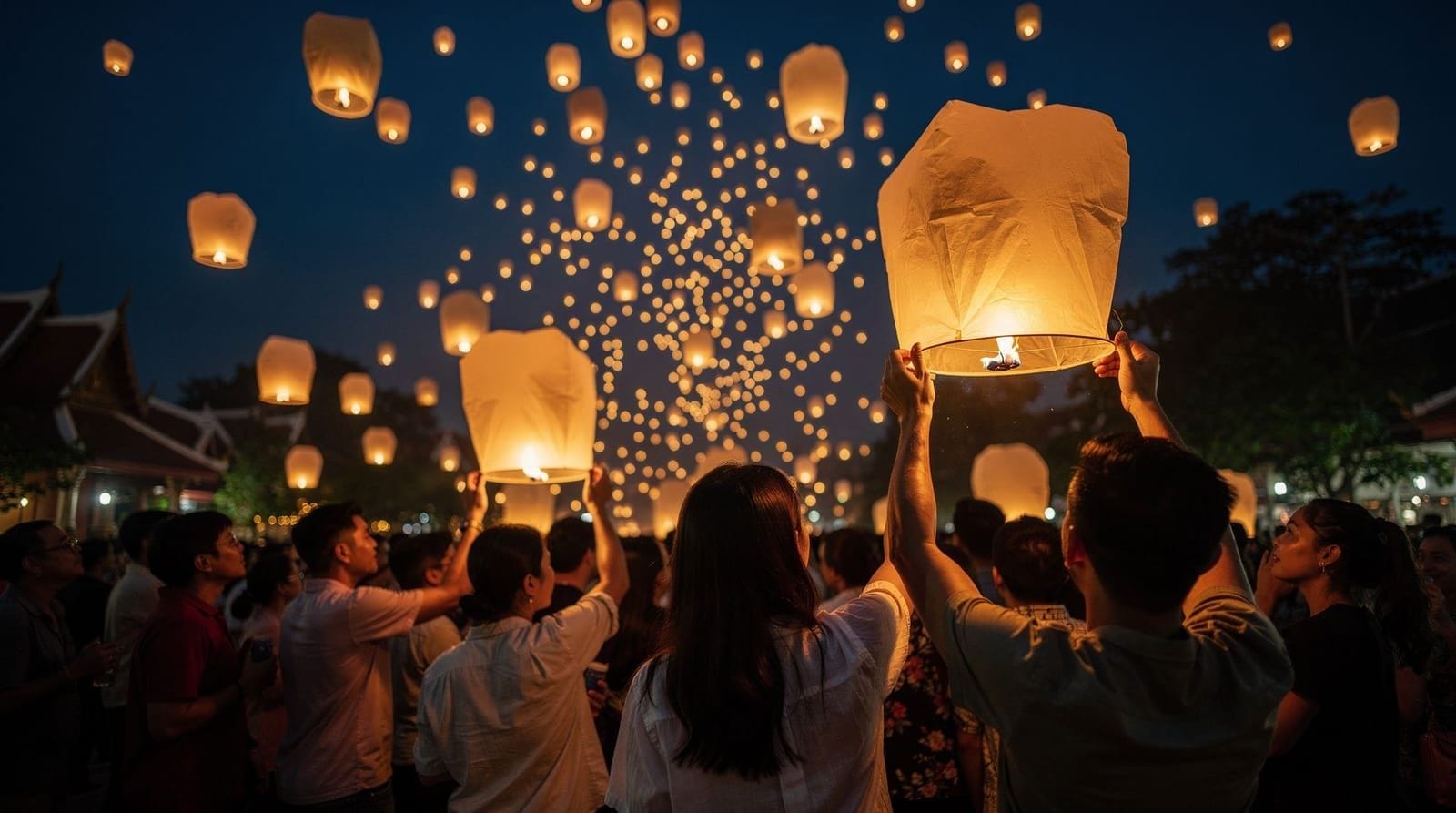
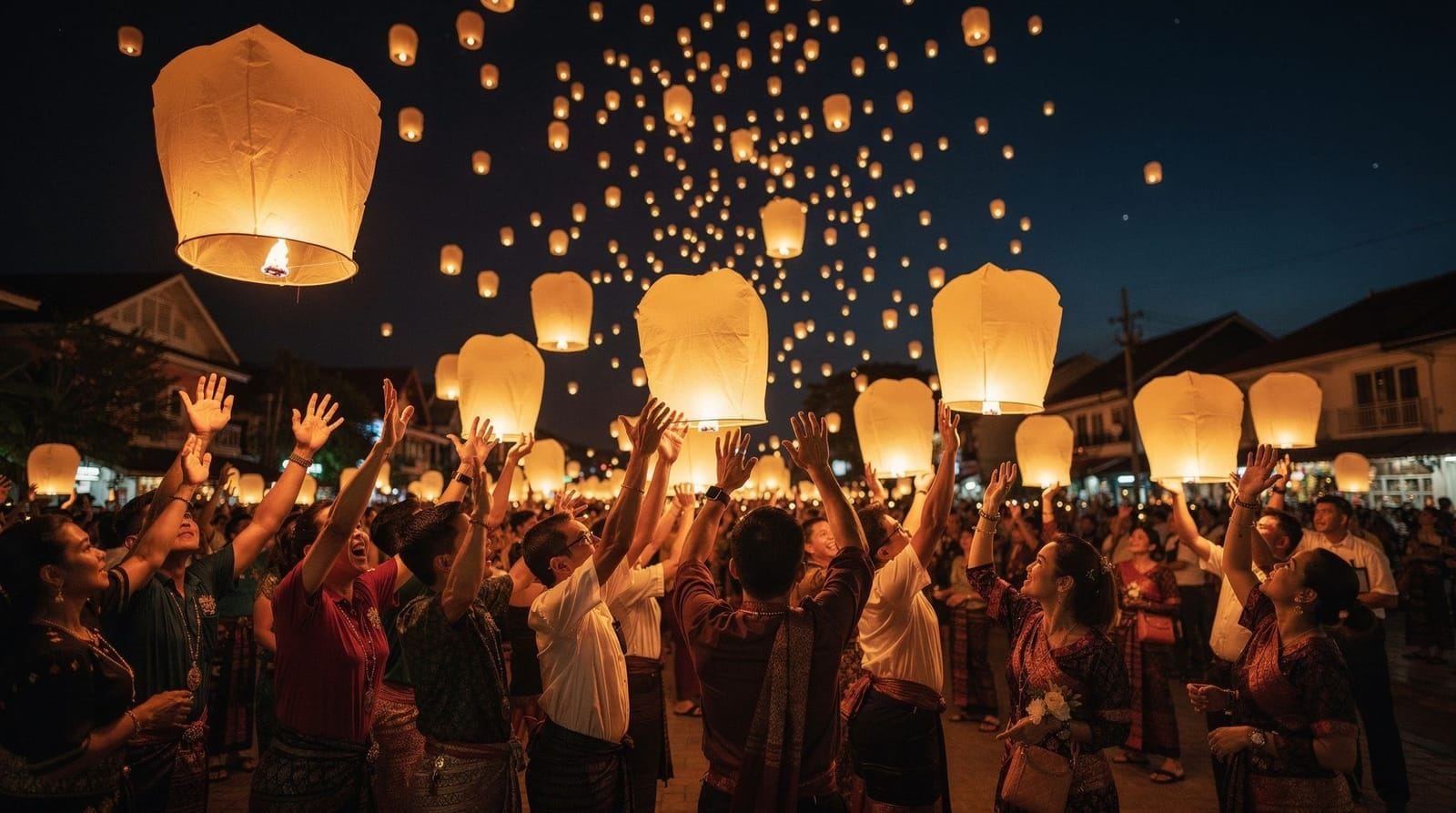
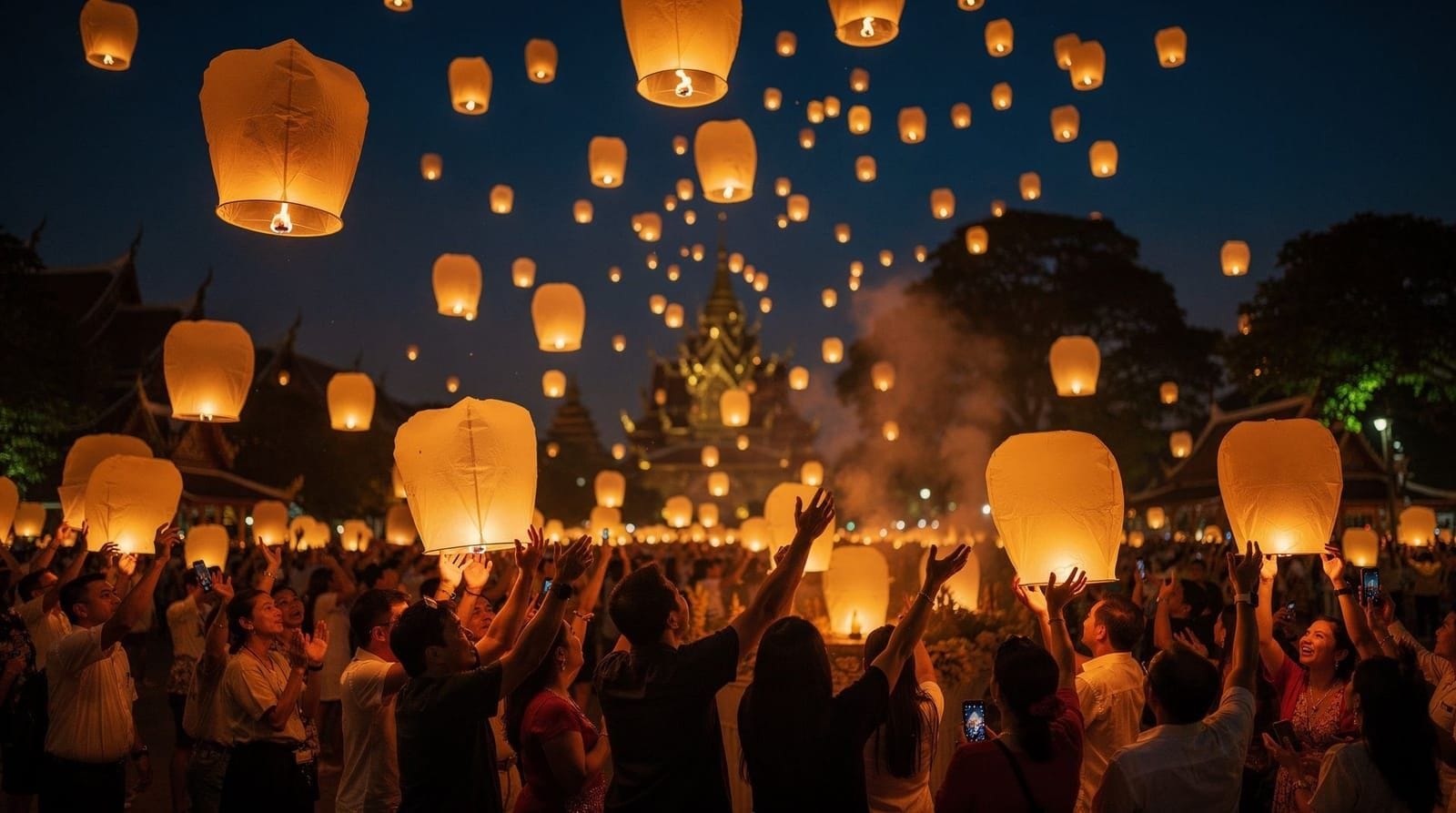
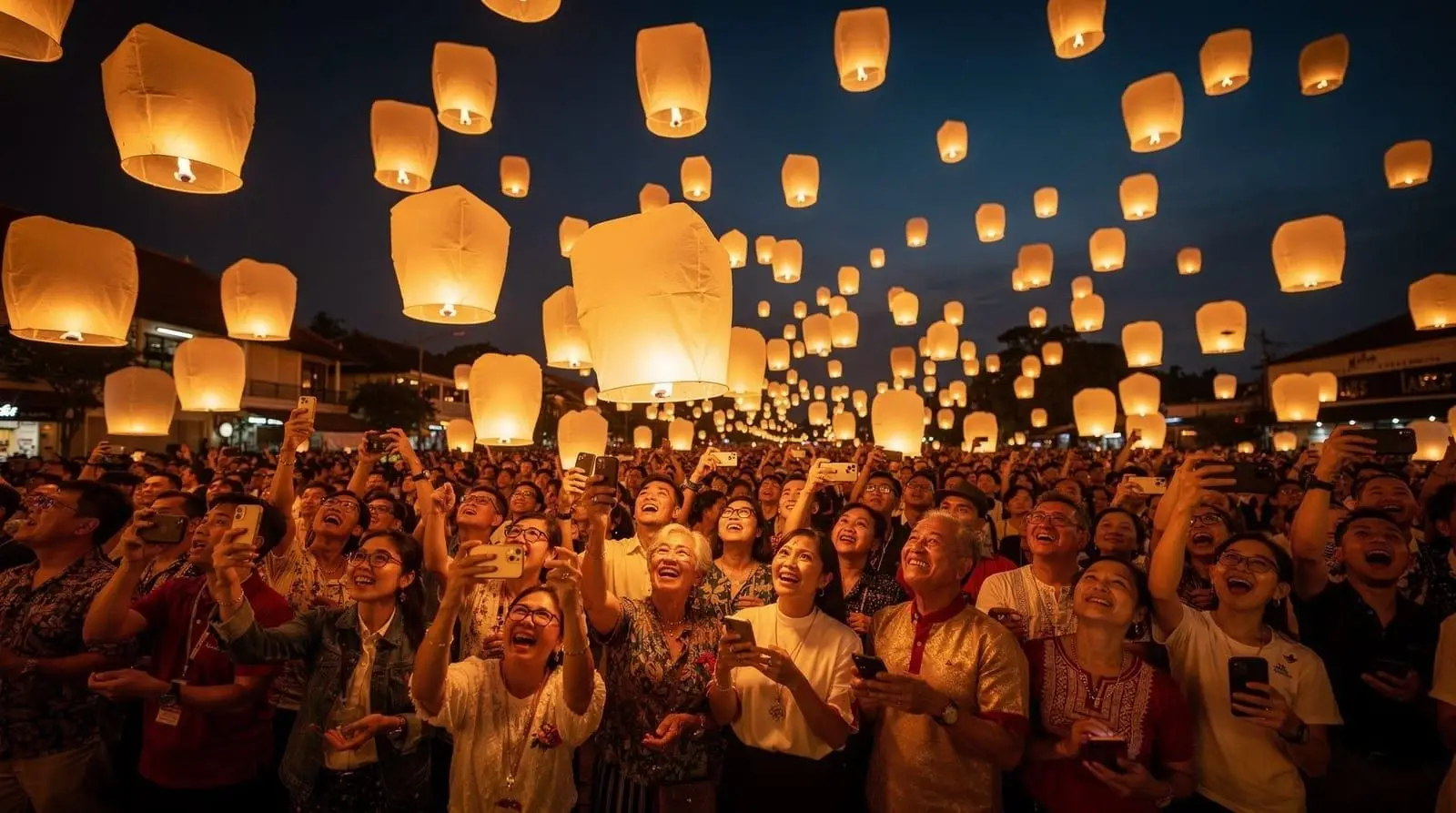
Chiang Mai’s tourism marketing around Yi Peng leans almost entirely on the visual: hundreds of glowing lanterns rising together into the night sky. What that marketing rarely mentions is where those lanterns actually go, and what happens on the ground, and in the airspace, once they’ve drifted out of frame. None of this is a reason to avoid the festival altogether, but it’s a real set of tradeoffs worth understanding before you decide whether to release a lantern yourself, and if so, how.
The aviation hazard, documented and real
This is the least ambiguous part of the story, because it’s officially measured and publicly reported every year rather than a matter of speculation. Chiang Mai International Airport adjusts its flight schedule specifically around Yi Peng’s peak release nights, and the scale of that adjustment is substantial: in the 2025 festival, roughly 65 flights were cancelled (a mix of domestic and international) and close to 100 more rescheduled, with flight operations on the two main nights sometimes ending by 7pm entirely to keep the airspace clear. The airport also increases runway inspection rounds during festival week, from six to eight daily rounds, specifically to clear lantern debris that comes down on or near the runway.
This isn’t a sign that the festival is reckless or poorly managed; quite the opposite, it reflects Thai aviation authorities taking a real hazard seriously and building in a substantial operational buffer rather than hoping for the best. But it does mean that if you’re flying in or out of Chiang Mai during the festival window, your flight has a real, non-trivial chance of being affected, and checking your specific flight’s status in the days beforehand is a genuinely practical step, not excessive caution.
Where lanterns actually land
Once a lantern’s flame burns out or its heat source is exhausted, it descends wherever the prevailing wind has carried it by that point, which can be a considerable distance from the release site, farmland, forest, waterways, rooftops, and occasionally power infrastructure are all realistic landing zones. Thailand’s Department of National Parks and various provincial authorities have documented lantern debris causing brush and forest fires in the weeks around Yi Peng in past years, a genuine fire risk in a region that, as it happens, is already dealing with a separate but related air-quality problem from agricultural burning during the dry season (covered in our burning season guide).
Livestock and farmland present a related concern: wire or bamboo lantern frames left in fields pose an ingestion and injury risk to grazing animals, and farmers in areas downwind of major release sites have raised this as a recurring, practical complaint rather than an abstract environmental worry.
Personal safety: burns, fire, and handling risk
Beyond the aviation and environmental questions, there’s a more immediate, personal safety layer worth knowing about if you’re planning to release a lantern yourself. A khom loi is inflated and launched using an open flame at its base, and injuries, typically minor burns to hands or fingers, happen most often during the launch moment itself, when a lantern catches a gust of wind, tips, or is released before it has enough hot air to lift cleanly. At official events, staff are usually on hand to assist with lighting and launching, which meaningfully reduces this risk compared to a first-timer attempting it alone in the dark with no guidance. If you do release your own lantern, launching in a genuinely open area, away from dry grass, overhanging trees, buildings, and other people’s lanterns mid-flight, and waiting for a still moment rather than launching into a gust, are the basic precautions worth following.
What to do if you find a downed lantern
If you come across a lantern frame while hiking, visiting a rural temple, or exploring farmland in the weeks around the festival, the responsible response is simple: pick it up if you can do so safely and dispose of it properly, or leave it for local cleanup crews if it’s in a location you can report (some temples and community groups organize post-festival cleanup specifically for this purpose). Handling any lantern still showing signs of a fully extinguished flame source is generally safe, but treating anything with visible char or heat with caution, and not attempting to relight or repurpose a found lantern, is sensible practice.
Biodegradable materials: a real improvement, not a full solution
Officially organized events, including the ticketed CAD Yi Peng release, generally market their lanterns as made from rice paper with bamboo or reduced-metal frames, designed to break down considerably faster than older designs using synthetic paper or full metal-wire frames. This is a genuine, meaningful improvement over uncontrolled personal releases using whatever materials happen to be cheapest, and it’s worth treating as one concrete reason an official event is the more responsible way to participate if you’re going to release a lantern at all.
It’s not, however, a complete solution. “Biodegradable” describes the rate of breakdown, not instant disappearance; a rice-paper-and-bamboo lantern still takes time to decompose and can still pose a temporary litter, fire, or ingestion hazard in the interim, particularly if it lands in a waterway or dense brush rather than open farmland where it’s more likely to be noticed and cleared.
How organized events reduce the risk (and where they don’t)
A few concrete ways officially organized mass-release events differ from an uncontrolled personal release: they coordinate release timing directly with aviation authorities, generally use more biodegradable materials, choose venues away from flight paths and dense forest where possible, and in some cases arrange post-event cleanup within their own release zone. What they can’t fully control is where the wind carries lanterns after release, since a coordinated launch still produces hundreds of individually drifting objects subject to the same weather conditions as an uncontrolled release, just launched with more planning around the moment of release itself.
This is the honest core of the tradeoff: an official event meaningfully reduces risk per lantern released compared to an individual buying an uncertain-quality lantern from an informal vendor and releasing it wherever they happen to be standing, but it doesn’t eliminate the downstream environmental footprint of releasing a large number of open-flame objects into uncontrolled airspace.
If you want to take part without releasing a lantern
You don’t have to release a lantern yourself to experience Yi Peng’s atmosphere. A few lower-impact ways to participate:
-
Attend an official mass-release event as an observer of the shared moment rather than treating your personal lantern as the point, since the visual spectacle comes from the collective release regardless of whether you personally launch one.
-
Float a krathong instead, the Loy Krathong practice that runs alongside Yi Peng in Chiang Mai; a biodegradable offering set on water carries a meaningfully smaller environmental footprint than an airborne lantern, and our Loy Krathong vs Yi Peng guide explains the distinction between the two traditions in more depth.
-
Visit the lit-up temple decorations (khom fai) around the Old City during festival week, a static, non-airborne form of the same lantern tradition that carries essentially none of the release-related risk.
-
Ask about a shared or single-release format at official events if you’re in a group; some ticket tiers already include a fixed number of lanterns per person rather than per group, so checking the specifics before booking can reduce the total number released without changing your experience of the event much.
-
Learn the temple-based origin of the practice before deciding, since understanding the tradition’s actual religious meaning, rather than only its photo value, tends to shift how people weigh the tradeoff for themselves.
None of these choices are a judgment on anyone who does release a lantern, whether at an official event or otherwise; it’s a genuinely personal call, and this guide’s goal is making sure that call is informed rather than made purely from a marketing photo.
Sky lanterns versus fireworks: a useful comparison
It’s worth situating sky lanterns within the broader landscape of festival pyrotechnics rather than treating them as uniquely hazardous. Fireworks, common at Thai New Year celebrations and countdown events, carry their own well-documented risks: burns, eye injuries, and fires from stray sparks, along with air and noise pollution concentrated in a short burst rather than distributed over an evening. Sky lanterns spread a comparable fire and litter risk over a wider geographic area and a longer descent time, but without the explosive and noise-related injury profile fireworks carry. Neither is risk-free, and the honest comparison is less “which is worse” than “these are different risk profiles that call for different precautions,” which is part of why Thai regulation treats fireworks and sky lanterns as separate categories with separate rules around timing and permitted zones during festival periods.
The growing local pushback, briefly
It’s worth acknowledging that the environmental conversation around sky lanterns isn’t purely a foreign or outside-observer concern; Thai environmental groups, some farmers in areas downwind of major release sites, and, in past years, aviation officials themselves have all raised versions of the concerns covered in this guide publicly. This has led to the tightening of no-lantern zones near the airport, increased runway inspection frequency, and a general industry shift toward marketing lanterns as biodegradable, changes that reflect real, ongoing local pressure rather than a static, unchanging tradition. It’s reasonable to expect further adjustments, whether tighter zoning, different materials standards, or altered event timing, in future years as this conversation continues.
How Thai authorities regulate the tradition
Rather than banning sky lanterns outright, which would run against a genuinely rooted cultural and religious practice, Thai authorities focus regulation on timing, location, and materials. Provincial and airport authorities designate no-lantern and no-fireworks zones in parts of Chiang Mai during the festival period, particularly close to flight paths, and coordinate directly with organized event promoters on release windows that minimize overlap with active flight operations. This regulatory approach reflects a considered balance rather than either extreme, neither ignoring the documented risks nor eliminating a tradition with genuine religious and cultural meaning to Northern Thai communities.
The counterargument worth hearing too
None of the above should be read as a case against the tradition existing at all. For many Lanna Buddhist practitioners, releasing a khom loi carries genuine religious and cultural weight, a physical act of letting go tied to specific beliefs about merit and misfortune that predate mass tourism by centuries. Treating the practice purely as an environmental liability, without acknowledging that weight, risks flattening a living cultural tradition into a simple pollution statistic. The more useful framing, and the one this guide tries to hold, is that the tradition’s cultural value and its environmental cost are both real at the same time, and informed visitors can weigh both rather than dismissing either.
The bottom line
Sky lanterns are a real, beautiful, centuries-old tradition, and they also carry a documented, non-trivial environmental and safety cost that the festival’s tourism marketing doesn’t often mention up front. Choosing an officially organized event over an informal personal release, understanding that biodegradable materials reduce but don’t eliminate the footprint, and considering a krathong or the temple-decoration side of the festival as lower-impact alternatives are all reasonable, informed ways to engage with Yi Peng honestly rather than purely through the lens of the photograph. Our full Yi Peng lantern festival guide covers how to book an official event with these considerations already factored in.
What this means in practice for your itinerary
Concretely, this guide’s content changes very little about how you’d actually plan a Yi Peng visit, it mainly changes what you choose once you’re deciding between an official ticketed event, a free public spot, or skipping the lantern-release element altogether. Building five minutes of this reading into your pre-trip research, alongside checking dates and ticket tiers covered in our other festival guides, is enough to make that specific choice an informed one rather than an automatic one.
A closing thought on informed participation
The goal of this guide isn’t to talk you out of anything, it’s to replace a marketing photo with a fuller picture so that whatever you decide, releasing a lantern at an official event, floating a krathong instead, or simply watching from the sidelines, is a genuinely informed choice rather than one made on the strength of a single striking image. That distinction matters more than which specific option you land on.
Frequently asked questions about sky lantern safety and environmental impact
Do sky lanterns actually cause plane crashes or accidents?
There’s no need to overstate the risk to make the point: the documented response from Chiang Mai’s airport authority is proactive schedule adjustment and flight cancellation specifically to avoid any incident, not a record of frequent crashes. In 2025, roughly 65 flights were cancelled and close to 100 rescheduled around the festival’s peak nights precisely because aviation authorities treat a floating open-flame object in a flight path as a genuine, serious hazard worth actively preventing rather than an exaggerated concern.
Are all sky lanterns biodegradable?
No. Officially organized festival events generally use lanterns made from rice paper and bamboo or wire frames marketed as biodegradable, which break down considerably faster than lanterns with metal wire frames or synthetic paper sold by informal vendors. Even biodegradable versions take time to break down fully and can still pose a temporary litter and ingestion hazard to animals before they do.
What happens to a lantern after it comes down?
It typically lands wherever the wind carries it, farmland, forest, waterways, or occasionally rooftops and power lines, with no guaranteed collection process for informally released lanterns. Officially organized mass-release events in some cases coordinate cleanup crews for their specific release zone, but lanterns can travel a considerable distance on wind currents before landing, well outside any organizer’s control or cleanup radius.
Is it more responsible to attend an official event or release my own lantern?
An official event is the more responsible choice if you want to participate at all, since organizers generally use biodegradable materials, coordinate release timing with aviation authorities, and choose venues with safety and cleanup planning in mind. An individually purchased lantern released without any of that coordination carries meaningfully higher fire, litter, and aviation risk per lantern, even though it’s cheaper and requires no ticket.
Should I skip releasing a lantern altogether?
That’s a legitimate, defensible choice, and plenty of visitors make it. If you’d rather experience the festival’s atmosphere without the environmental tradeoff, watching an official release rather than launching your own lantern, floating a krathong instead, or visiting the lit-up temple decorations are all ways to take part in Yi Peng’s spirit without contributing an additional lantern to the sky.
Does the Thai government regulate sky lanterns?
Yes, to a degree. Thai authorities designate no-lantern and no-fireworks zones in parts of Chiang Mai province during festival periods, particularly near the airport’s flight paths, and coordinate with aviation authorities on timing restrictions during peak release nights. Regulation is more about managing timing, location, and materials for organized events than an outright nationwide ban, since the tradition itself remains legal and culturally protected.