What it's actually like to release a lantern at Yi Peng
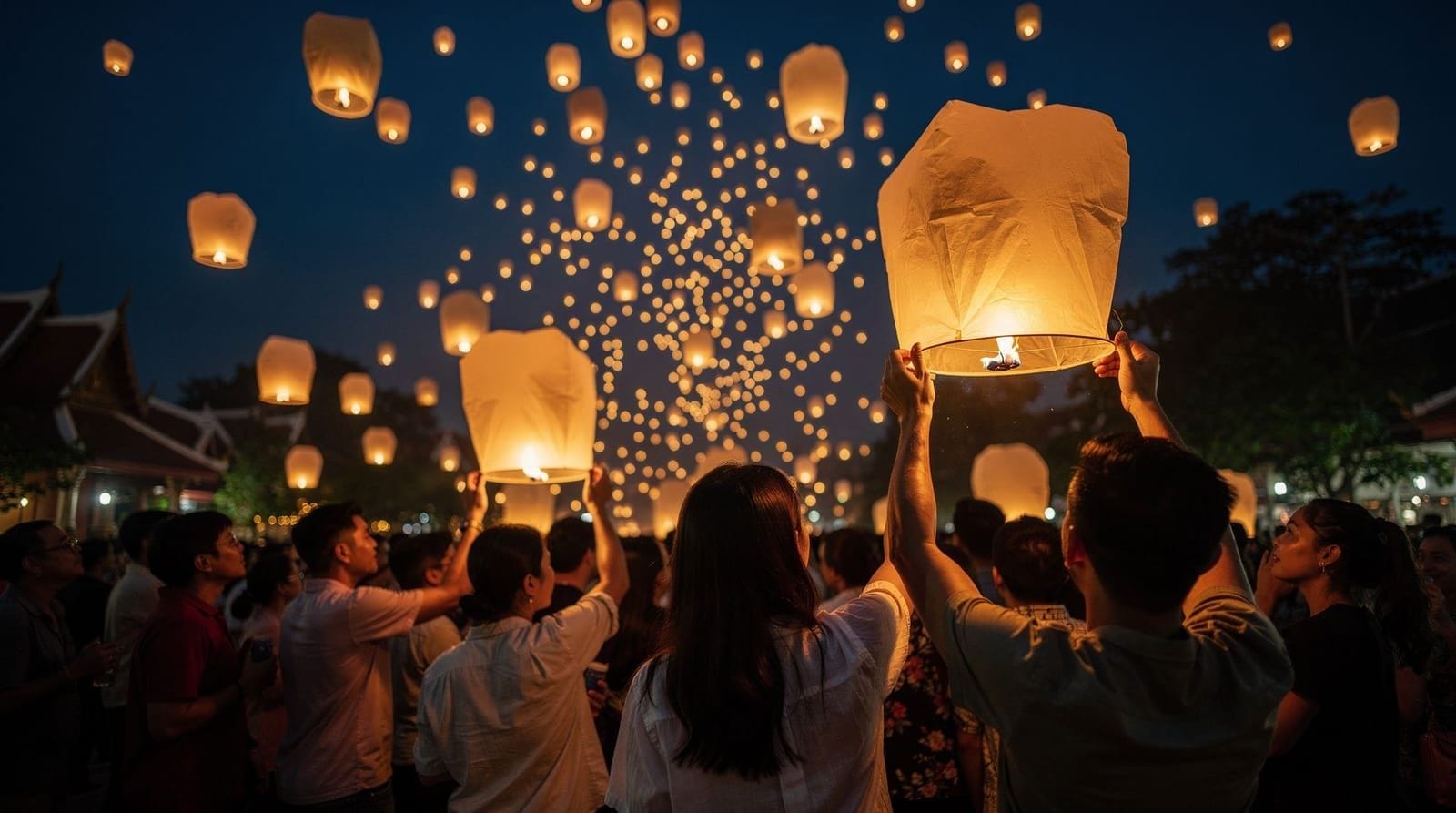
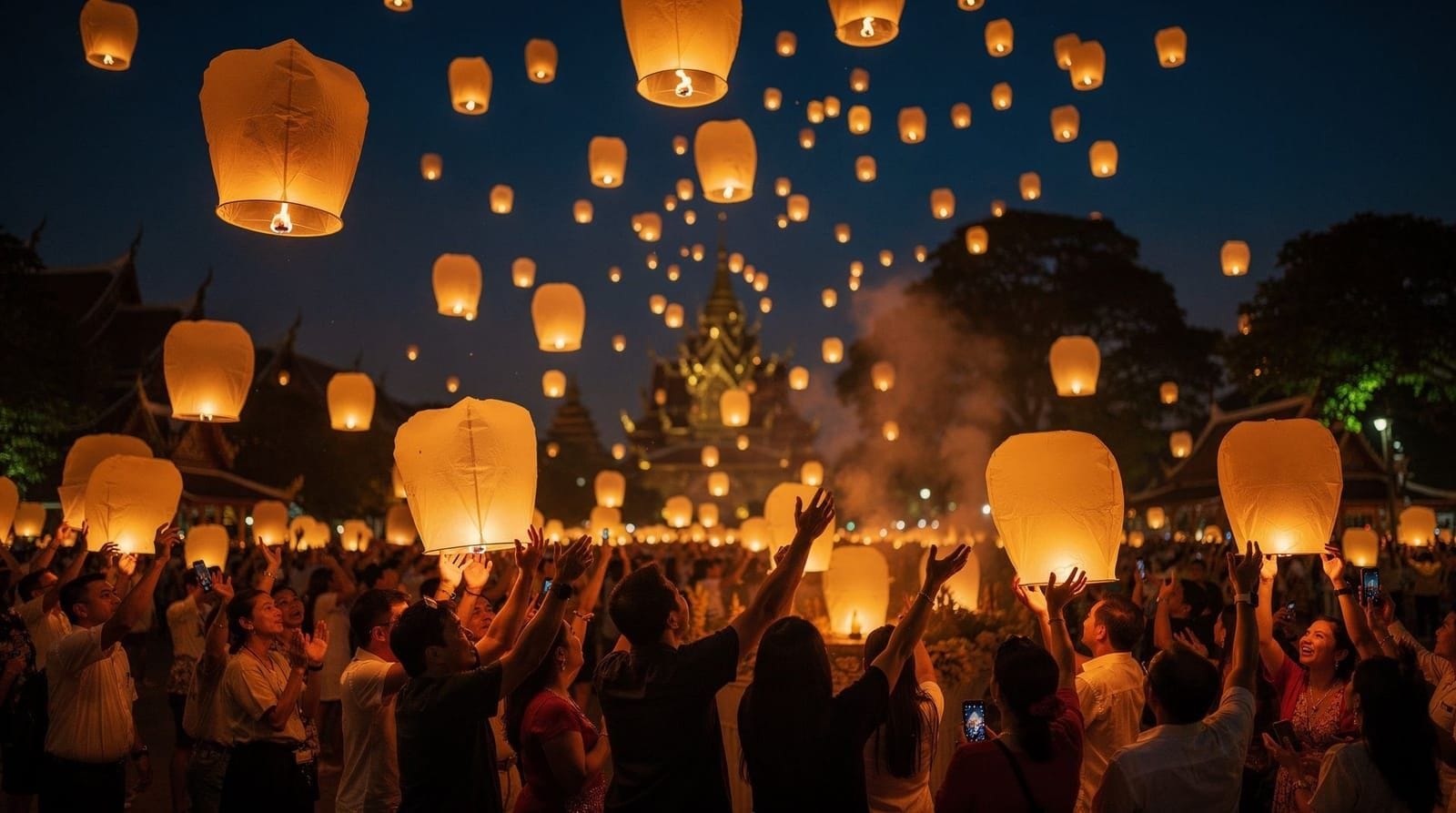
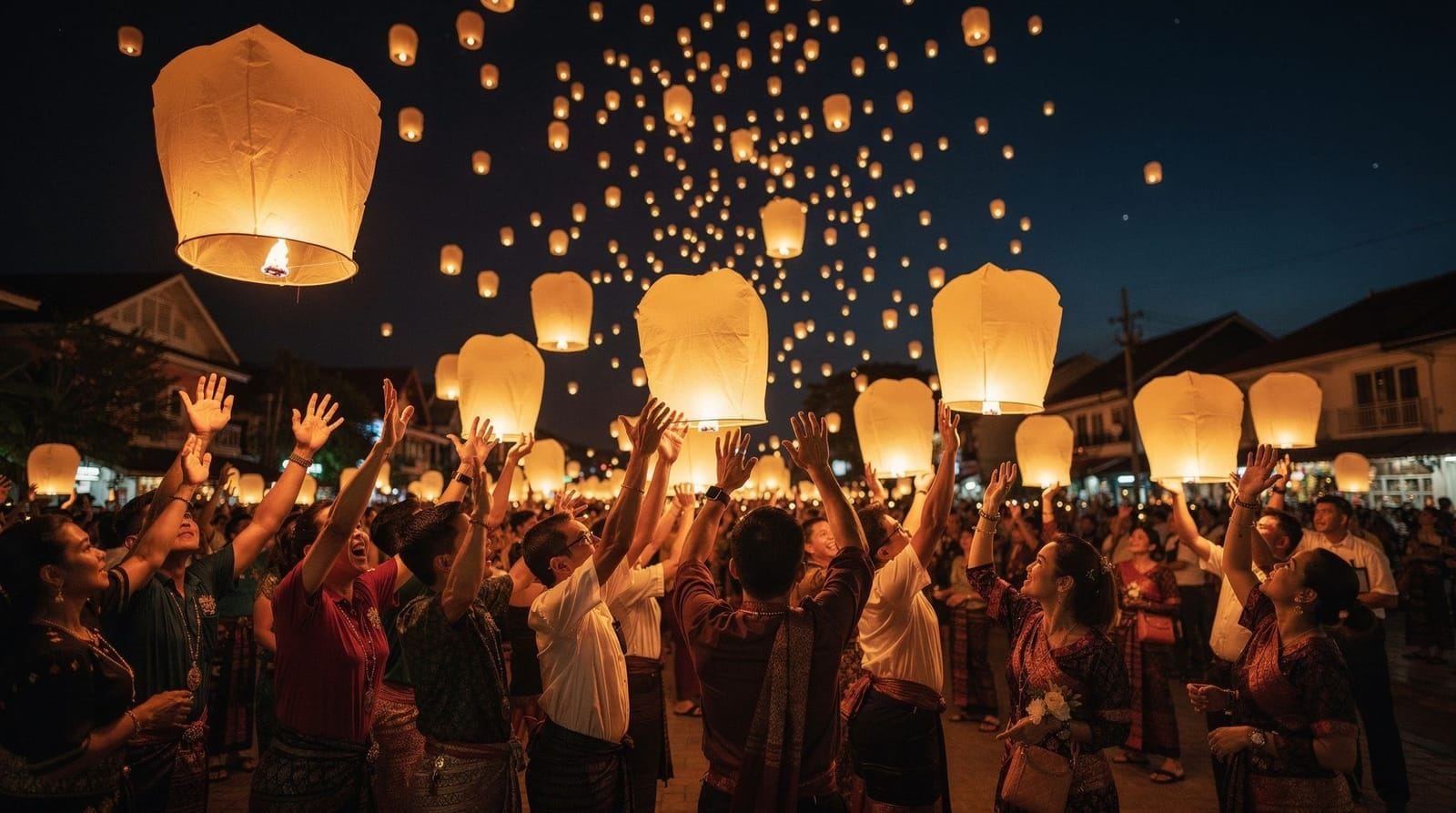
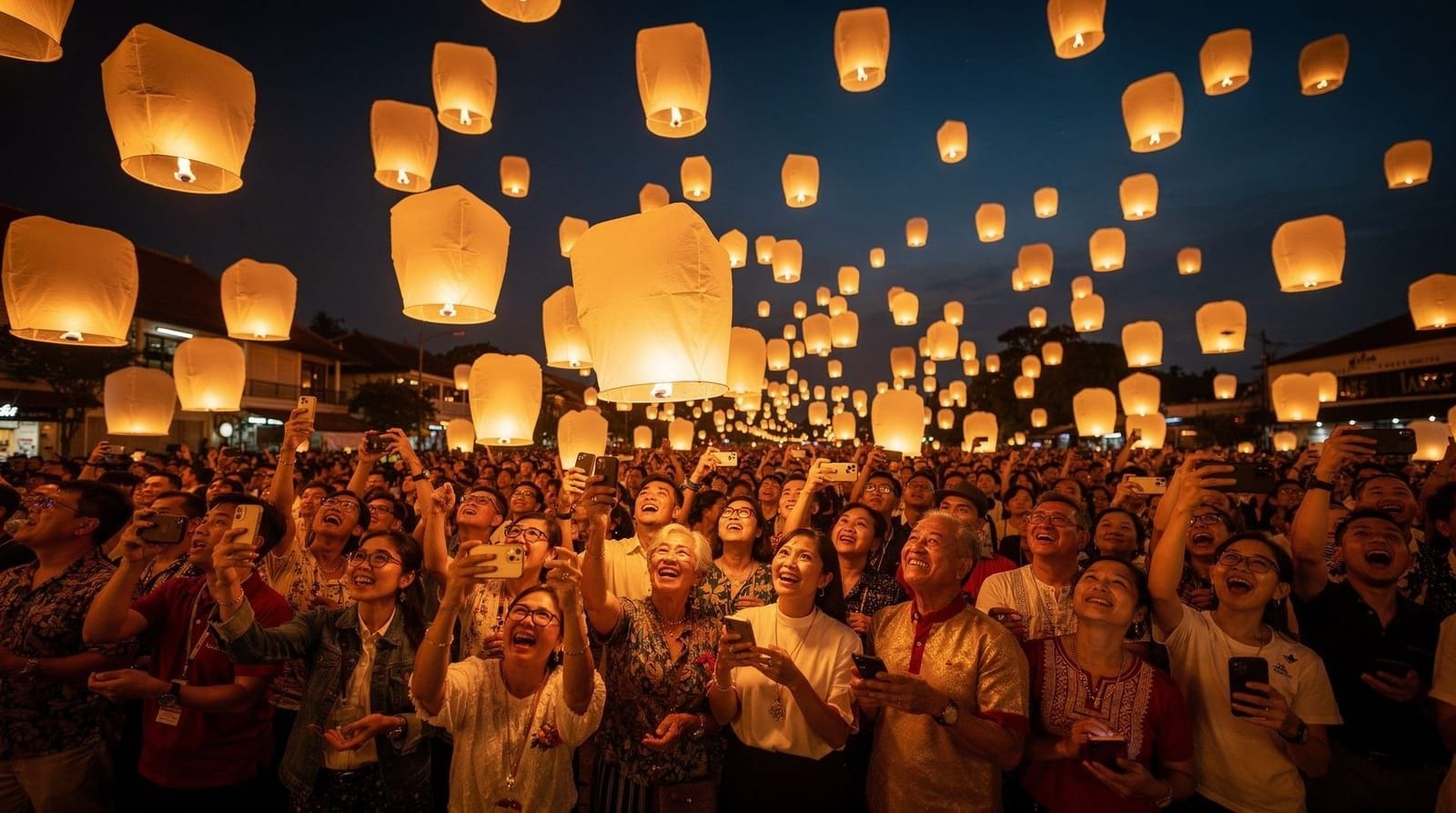
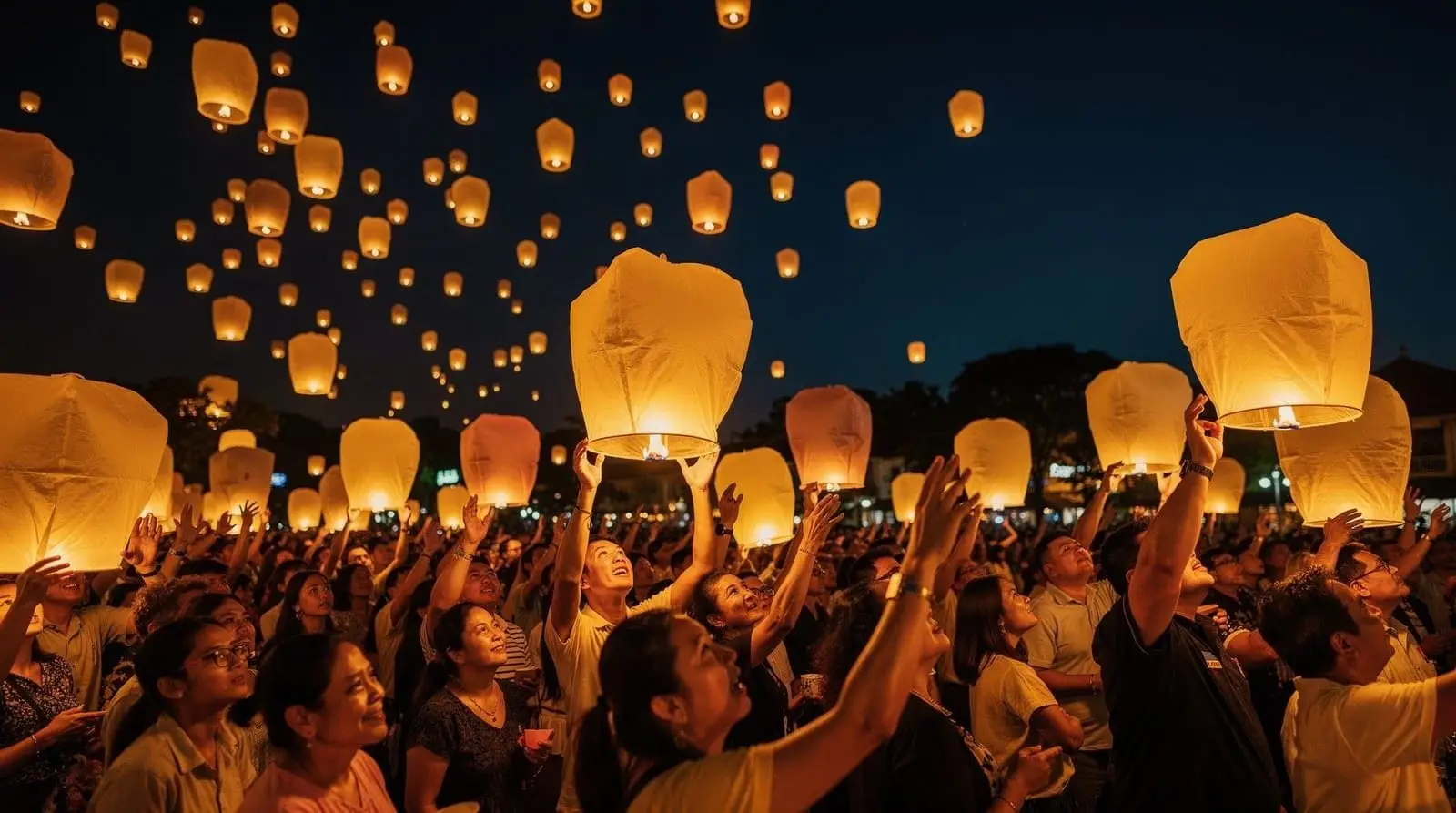
There’s a specific moment, maybe four minutes into the mass release, when the sky stops being dark and starts being full — hundreds of paper lanterns rising together, close enough that you can hear the paper crackle and feel the warm air off the flames as they pass overhead. Photos of Yi Peng flatten that moment into something too clean and too symmetrical. In person it’s messier, warmer, louder, and somehow both more chaotic and more moving than any of the pictures prepared me for.
Getting the timing right
Yi Peng follows the lunar calendar, which means the dates shift every year and catch a surprising number of visitors off guard — we nearly booked our flights around Loy Krathong instead, not realizing the two festivals, while overlapping in timing, aren’t quite the same event. If that distinction is fuzzy to you too, it’s worth reading our breakdown of Loy Krathong versus Yi Peng before you lock in dates, and checking the specific 2026 dates and ticket details rather than assuming last year’s calendar repeats.
Timing this trip around Yi Peng also happens to land squarely at the start of the cool season, which is a pleasant coincidence rather than a coordinated plan on the festival organizers’ part — the clearer skies and milder evening temperatures of November make the whole week around the festival a genuinely comfortable stretch to be outdoors after dark, unlike the sweltering evenings you’d face booking the same trip in April.
We’d booked the official mass lantern release months ahead, which turned out to be non-negotiable — this isn’t an event you can decide to attend on a whim two weeks out. The big ticketed release happens on university grounds outside the city, moved there some years ago specifically to control both the crowd and the safety risk of thousands of open flames rising over a dense urban area. Tickets for the main ceremonies run from around 2,000 to 6,000 THB (roughly $55–165) depending on seating tier and package inclusions, which sounds steep until you’re sitting in a field with several thousand other people and a genuinely well-run event unfolding around you.
The ceremony itself
What surprised me most was the structure of it — this isn’t just “show up and release a lantern whenever.” There’s a monk-led chanting section beforehand, a countdown, and then a synchronized release where the entire field lets go within roughly the same few minutes. The staggered nature of it, several waves rather than one single moment, means the sky keeps refilling for a good twenty to thirty minutes rather than one brief burst. Our full Yi Peng lantern festival guide covers the practical mechanics of the ticketed events in more depth than I can from memory alone, but I’ll say this: the seating logistics, the shuttle bus in and out, the sheer scale of coordinating that many flames safely — it’s clearly a well-oiled operation by now, not the free-for-all some of the older photos online might suggest.
Getting decent photos of the release taught me something too: a tripod and a slower shutter speed beat any phone camera trying to freeze fast-rising light in low ambient light. If you’re planning to actually capture the moment rather than just experience it, our photography tips for Yi Peng would have saved me a dozen blurry frames.
Official CAD Yi Peng Sky Lantern Festival ticketGetting there and the shuttle bus reality
The logistics of actually reaching the university grounds deserve more attention than most accounts give them. Our ticket included return shuttle transport from a designated pickup point in the city, and while that sounds simple enough on paper, the reality involved a genuinely long queue for the bus beforehand — closer to forty minutes of standing in a line that snaked around a parking area, alongside several thousand other ticket holders all funneling toward the same limited number of coaches. Anyone expecting a quick, efficient transfer should recalibrate that expectation now: budget real time on both ends, arrival and departure, and treat the shuttle wait as part of the event rather than an inconvenient prelude to it.
Once we actually reached the grounds, the scale became apparent in a way that photos taken from directly beneath the release genuinely can’t convey. Rows of seating stretched across what felt like several football fields’ worth of open ground, each section assigned a specific release time within the broader ceremony, staggered so that the sky was never fully still for more than a minute or two at a stretch across the full evening. Vendors sold food, drinks, and the lanterns themselves throughout the grounds, and despite the crowd size, the atmosphere stayed remarkably calm and orderly — helped, I suspect, by the shared, almost meditative purpose everyone there had come for.
The wait between arrival and release
What nobody quite prepares you for is the gap between arriving at your seating area and the actual release happening — in our case, close to two hours of waiting through opening remarks, cultural performances, and a lengthy chanting section led by monks before our specific section’s release time arrived. Some in our group found that wait tedious; I found it oddly effective at building anticipation, watching the light fade fully to dark while performers on a distant stage kept the crowd engaged, until finally our section’s countdown began and the lanterns we’d been holding, unlit, for the better part of an hour were finally set alight one by one down each row.
What we skipped, and don’t regret
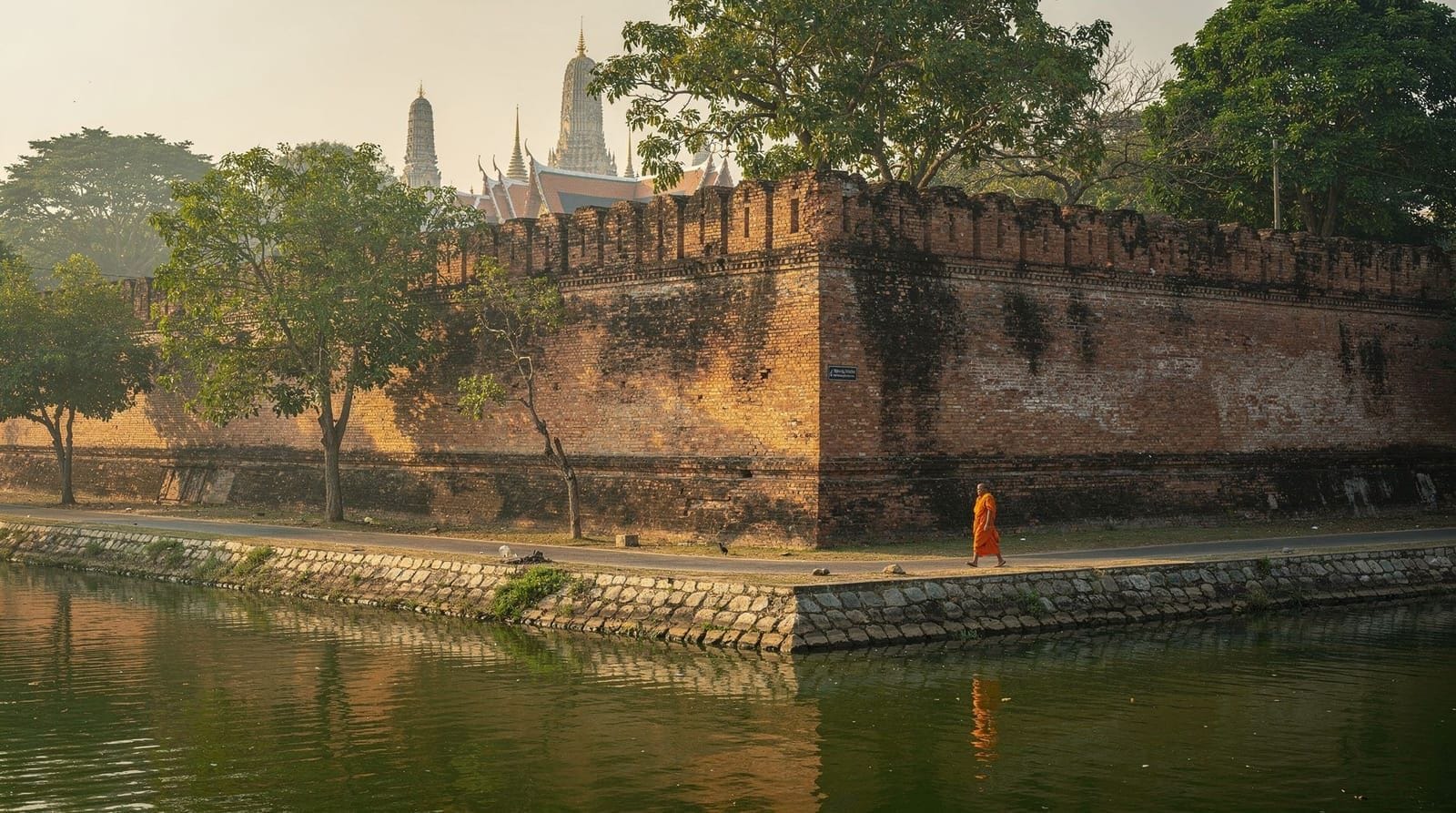
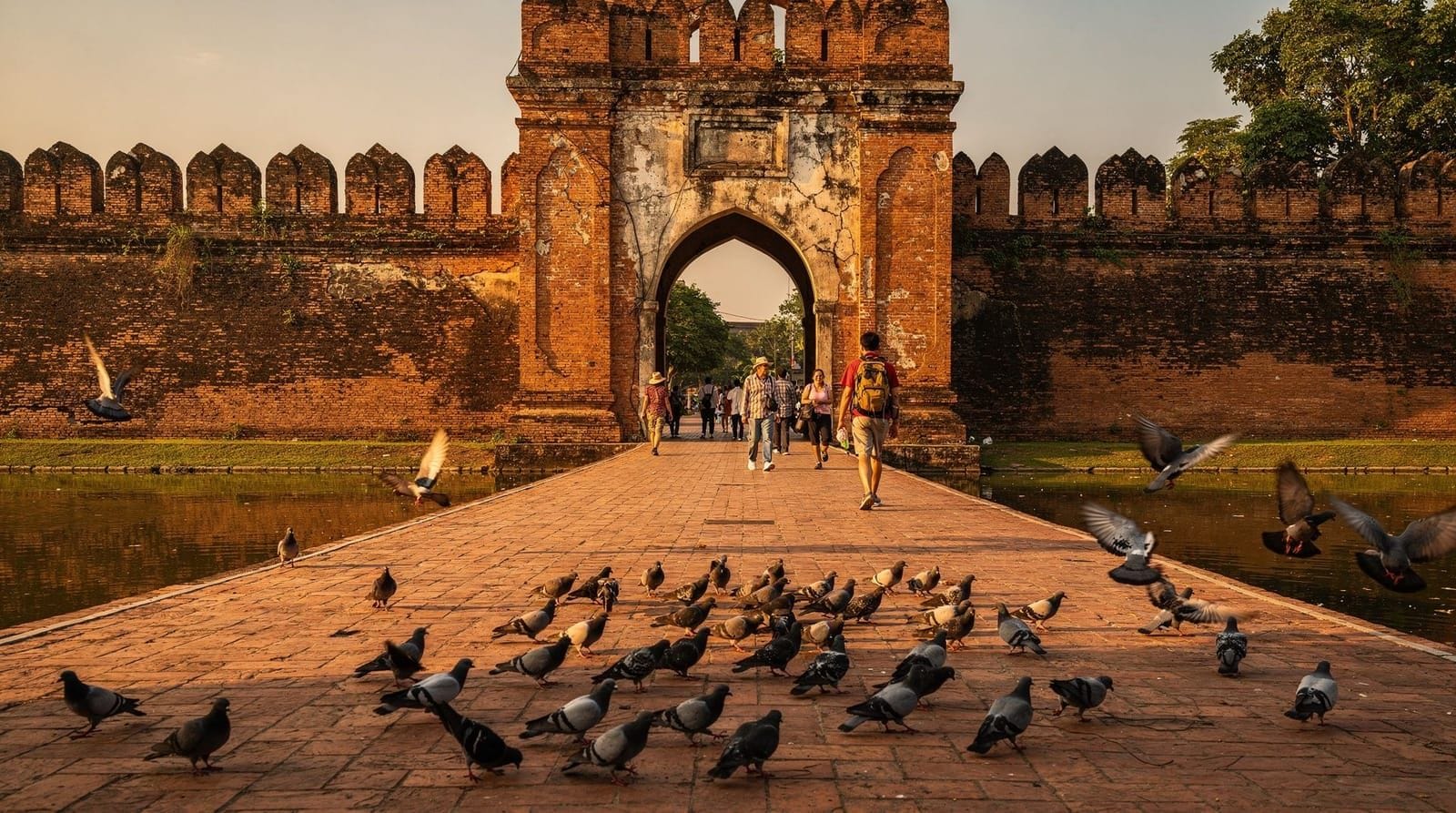
We didn’t attend one of the smaller, informal releases that happen around temples in the Old City in the days surrounding the main event — smaller groups, no ticket, lanterns bought from street vendors near Tha Phae Gate for a few hundred baht each. Some travelers we met at the guesthouse had done exactly that the night before, releasing their own lantern from a quiet spot near the moat, and described it as more personal, less produced, and honestly a little more moving in its intimacy. I don’t regret going to the ticketed ceremony — the scale of hundreds of lanterns rising in synchronized waves is something a single lantern from a temple courtyard can’t replicate — but if budget is tight or you’d rather have a quieter, more private moment, that informal option is real and worth knowing about.
The part nobody wants to bring up
It has to be said honestly, because pretending otherwise would be dishonest: thousands of paper-and-wire lanterns released into the air do come down somewhere, and the environmental and safety conversation around this festival is a real one, not a footnote. Local officials have tightened rules over recent years — banning releases near the airport flight path for safety reasons, restricting the scale of freelance releases in dense areas, and pushing organized events toward biodegradable materials. We read up on this beforehand in our piece on sky lantern safety and environmental impact, and it changed how we thought about the free-for-all option versus the managed ceremony — the ticketed event, whatever else you think of the price, is at least accountable for where and how those lanterns come down.
Booking far enough ahead, and what happens if you don’t
We booked our tickets roughly four months out, and by the time we finalized the purchase, the seating tier we’d originally wanted had already sold through, pushing us to a slightly further-back section than planned. Talking with other attendees afterward, this seemed to be a common story rather than an unlucky exception — the most popular ceremonies, particularly the ones with the best-known operators, sell out their premium sections months in advance, and last-minute buyers are routinely stuck choosing between distant seating or missing the main events entirely. If Yi Peng is a fixed point around which the rest of a Thailand trip gets planned, treating the ticket purchase as the very first booking made, before flights are even locked in, is the only way to guarantee a decent spot rather than settling for whatever remains close to the date.
We also met a couple who’d arrived without any ticket at all, assuming they could buy one upon arrival in the city, and spent a frustrating day discovering that the main ceremonies were entirely sold out for their travel dates. They ended up watching the informal, unticketed releases near the moat instead, which by their own account turned into a genuinely lovely, unplanned evening — but it wasn’t the experience they’d actually traveled to Chiang Mai for, and the disappointment was real. Plan ahead here more than almost anywhere else in Thailand; this is one event where spontaneity is a real risk rather than a charming travel virtue.
Was it everything the photos promise
Mostly, yes, with the caveat that no photo captures the sound — thousands of people, a low continuous murmur of chanting and conversation, and then a wave of quiet as each release group counts down together. What the photos also can’t convey is the heat: standing near a lantern about to be released, the air rippling above the flame, is a genuinely physical sensation before it ever becomes a visual one. We left with soot on our hands from helping hold the paper frame steady before letting go, and that small, unglamorous detail is the thing I’d tell a first-timer to expect. It’s not a clean, distant spectacle. You’re part of it, hands-on, before it ever becomes the photograph everyone else sees later.