Yi Peng lantern festival: the complete Chiang Mai guide
Chiang Mai 2026 CAD Yi Peng Sky Lantern Festival (Official)
When is Yi Peng in Chiang Mai and how do I actually see it?
Yi Peng falls on the full moon of the 12th lunar month, which lands on November 24-25, 2026 in Chiang Mai. The famous synchronized mass release of hundreds of sky lanterns is a paid, ticketed event (roughly 4,900-8,900 THB, about 136-247 USD at 36 THB/USD, for standard to premium packages), while free public krathong-floating and small-scale lantern releases happen at spots like Nawarat Bridge and Tha Phae Gate with no ticket required.
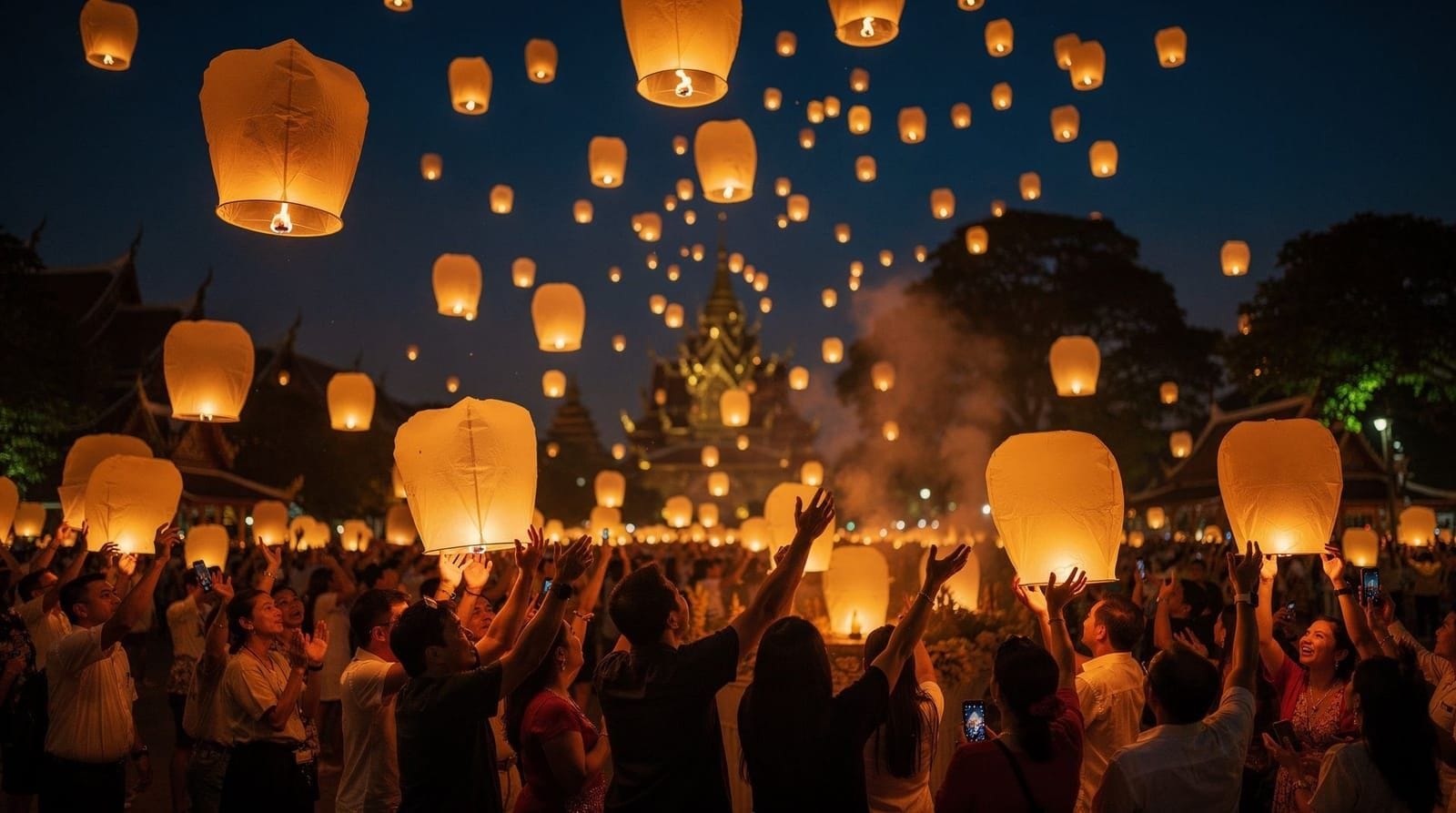
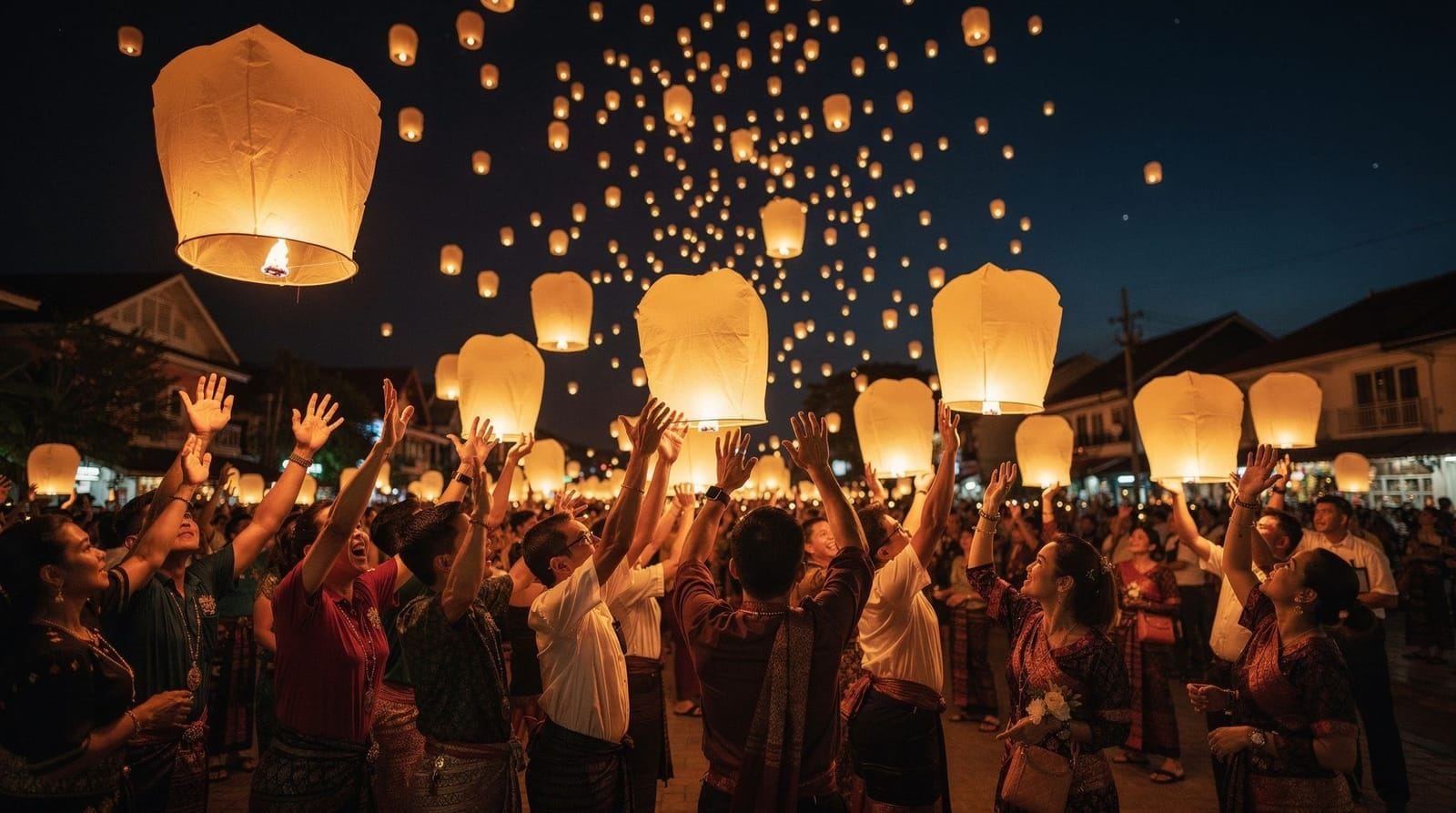
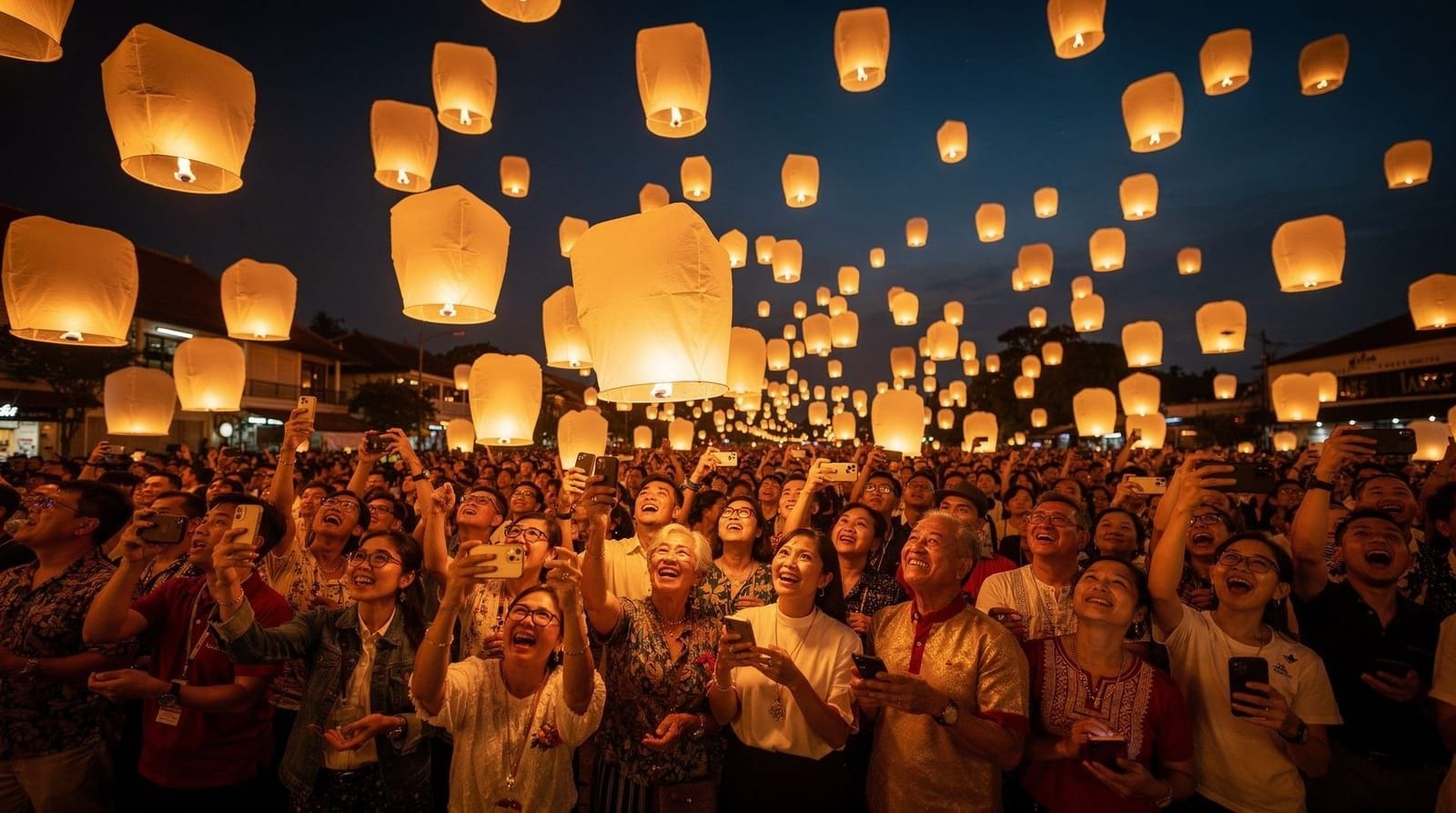
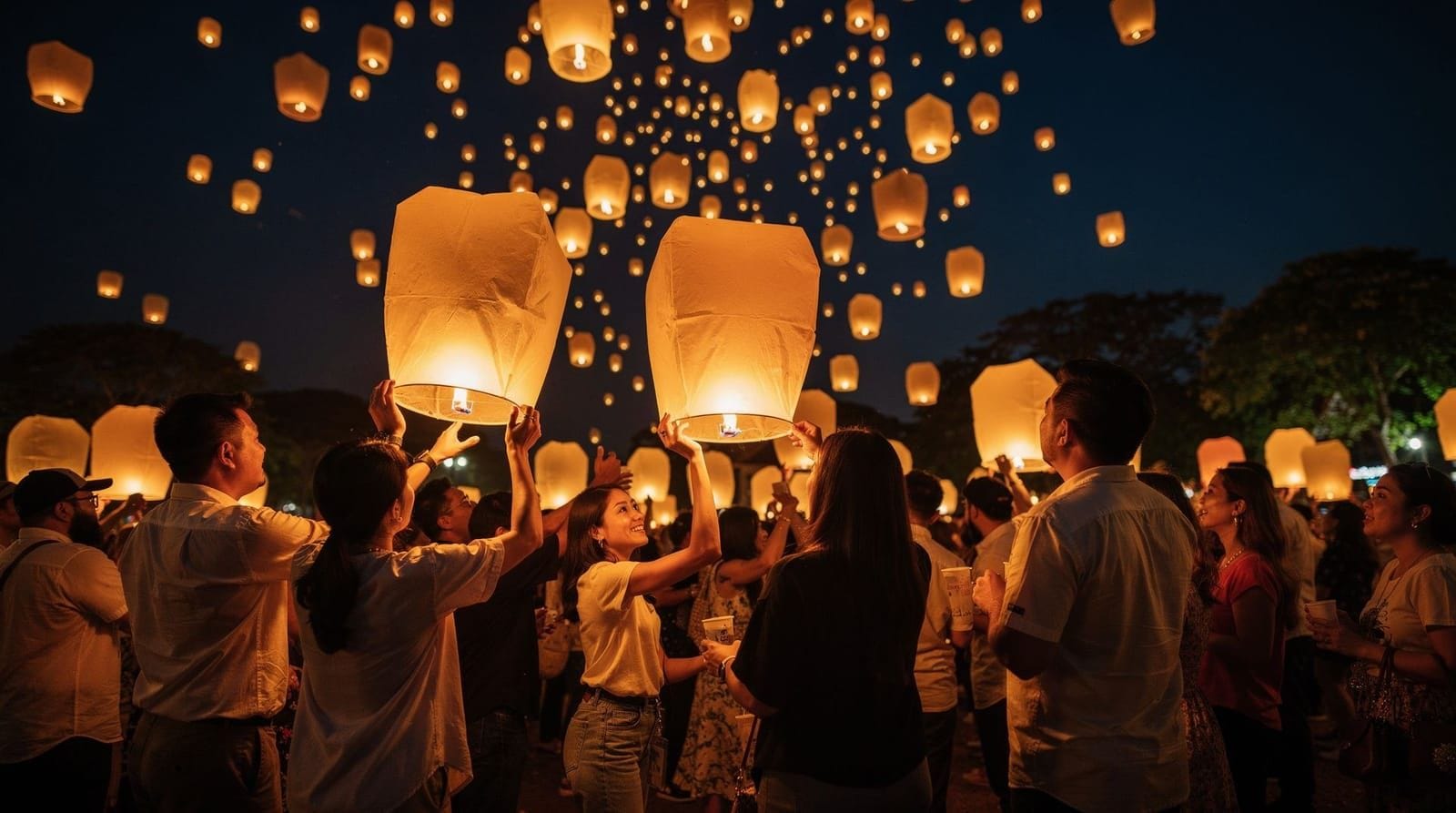
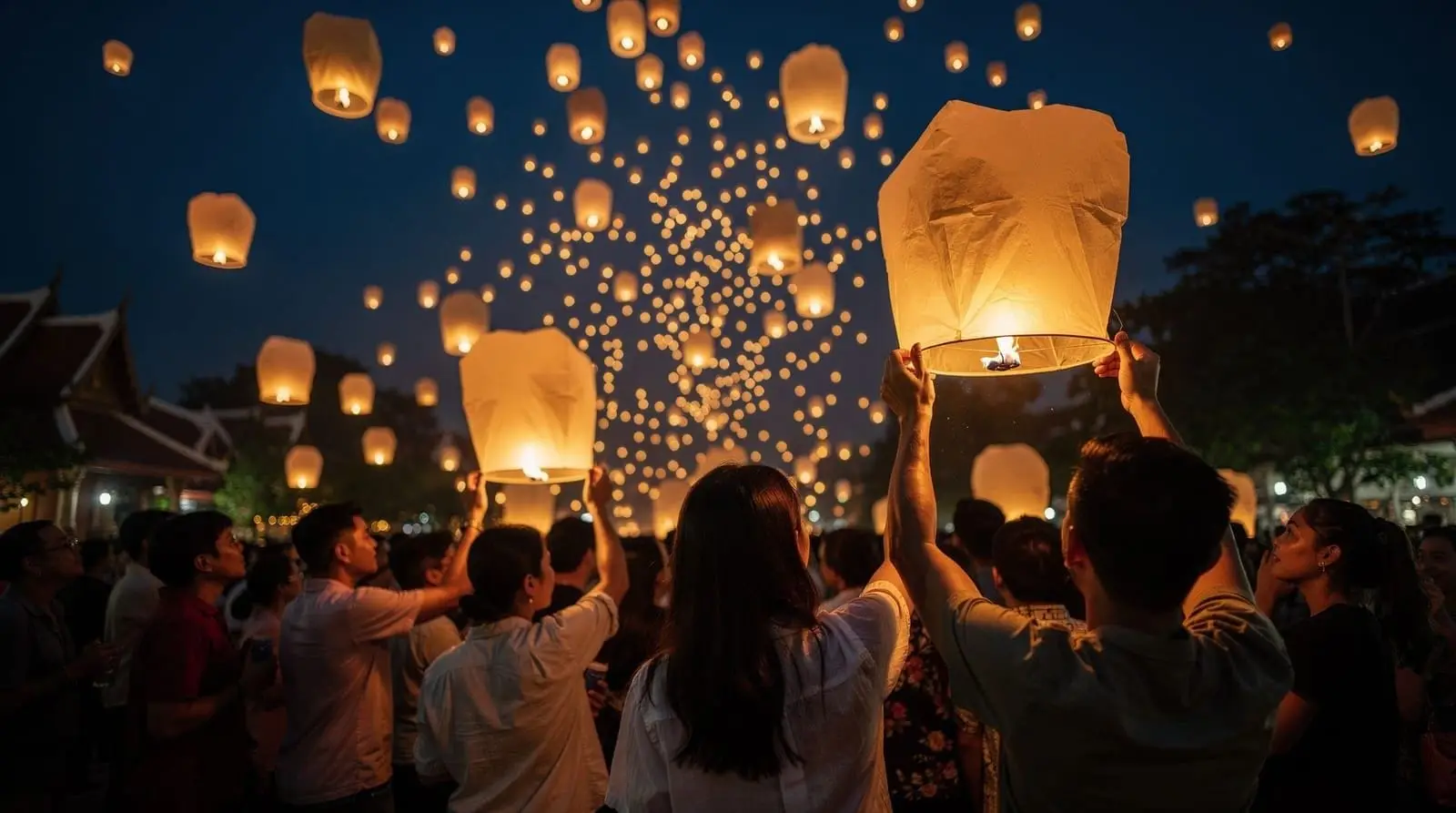
Chiang Mai’s Yi Peng lantern festival is the single image most people have in their head before they’ve booked a flight: hundreds of glowing paper lanterns rising together into a dark sky. That image is real, but it’s also more specific and more commercial than most first-time visitors expect, and understanding the gap between the marketing photo and the actual event will save you both money and disappointment.
What you’ll find on the ground is really two overlapping things happening on the same full-moon night: a nationwide Thai festival called Loy Krathong, where people float small decorated offerings on water, and a Northern Thai tradition called Yi Peng, where sky lanterns are released to let go of misfortune. In Chiang Mai they’re celebrated together, and the synchronized mass lantern release you’ve seen in photos is a specific, ticketed, privately organized event layered on top of both traditions, not something that just happens spontaneously across the whole city.
What actually happens on the ground during festival week
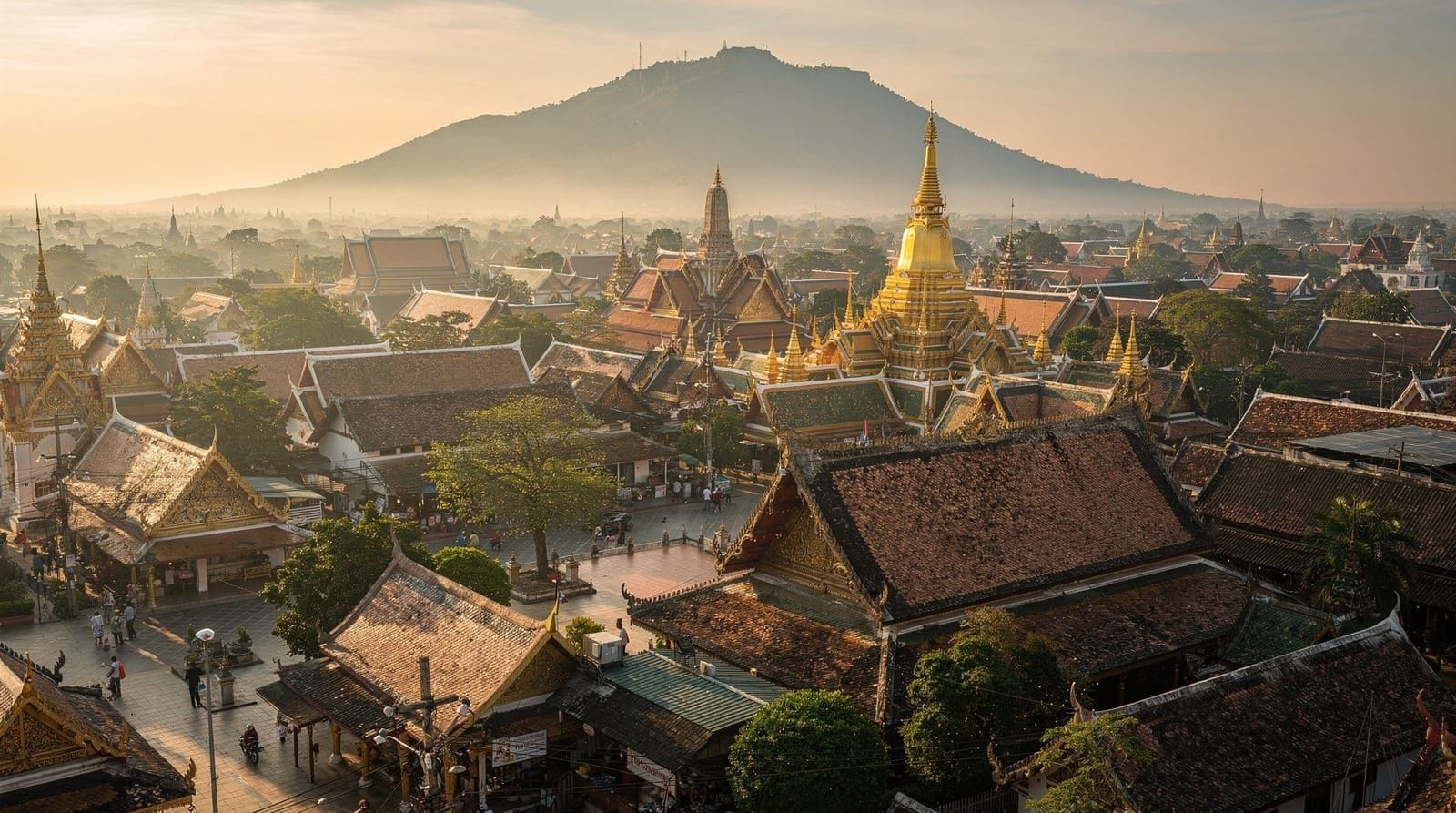
For the several days surrounding the full moon, Chiang Mai’s Old City moat, the Ping River, and temple grounds fill with floating krathongs, small private lantern releases, food stalls, and processions. Locals visit temples, float offerings shaped from banana leaves and flowers, and release individual lanterns from their own gardens or riverside spots throughout the week, not just on the single peak night. This ambient, citywide layer of the festival is free, low-key, and available to anyone who happens to be in town.
Separately, at least one well-known open field outside the city (the main official event has run at Maejo University and similar large open sites in different years) hosts the ticketed mass-release event, where a large number of paying guests release lanterns simultaneously at a scheduled moment after a dinner and cultural program. That coordinated, same-instant release is what produces the specific photo you’ve seen; it doesn’t happen anywhere else in the city on the same scale.
Check availability for the official CAD Yi Peng sky lantern festival if the mass-release moment is the main reason you’re planning your trip around this date.
The meaning behind the lanterns
The tradition isn’t just a photo opportunity dressed up for tourism, even though the marketing sometimes makes it feel that way. In Lanna Buddhist belief, releasing a khom loi (the paper sky lantern) is a way of letting go of misfortune, bad luck, and difficulties from the past year, sending them upward and away as the lantern rises out of sight. Loy Krathong’s floating offerings carry a related but distinct meaning: the krathong, usually built from a banana-leaf base decorated with flowers, incense, and a candle, is set on the water as an act of respect toward the water goddess and, for many Thais, a way of symbolically releasing negative thoughts and asking forgiveness for polluting the water over the year. Knowing this context changes how the evening reads. It’s less a spectacle staged for visitors and more a centuries-old regional practice that tourism has scaled up and, in the ticketed version, professionalized into a bookable product. Both layers are genuinely present at the same time, and it’s worth appreciating the older meaning even if you’re there mainly for the visual.
Who this festival actually suits
The ticketed mass-release event suits travelers who specifically want the coordinated, hundreds-at-once release moment and are comfortable planning around a fixed schedule, a shuttle pickup time, and a set dinner program, essentially a structured evening event rather than a loose, self-directed one. It’s a reasonable fit for couples, small groups, and photographers chasing the specific shot. It’s a less natural fit for travelers on a tight budget, since even the standard tier runs well above what a typical evening out in Chiang Mai costs, or for anyone who dislikes structured group events with assigned seating and a fixed schedule.
The free public version suits almost everyone else: budget travelers, families with young children who won’t sit through a multi-hour dinner program, and anyone who prefers wandering the Old City and riverside at their own pace to a scheduled itinerary. It also suits last-minute travelers, since it requires no advance ticket purchase at all, only being in the right part of the city on the right evening.
When Yi Peng falls in 2026, and why the date moves every year
The main event runs across the two nights of November 24-25, 2026, centered on the full moon of the 12th month of the traditional Thai lunar calendar. Unlike Songkran, which is fixed to the Gregorian calendar every April, Yi Peng and Loy Krathong are lunar-calendar festivals, so their Gregorian date shifts from year to year, sometimes by a couple of weeks, occasionally by closer to a month when the Thai lunar calendar inserts a leap month to stay roughly aligned with the seasons. For a detailed breakdown of exactly why this happens and how to check future years, see our dedicated 2026 dates and tickets guide.
Because the date isn’t fixed, it’s worth double-checking the current year’s confirmed dates before you book flights, since guidebooks and older blog posts often carry a previous year’s date that no longer applies.
Official ticket tiers: what you actually get
Official 2026 CAD Yi Peng packages run in tiers, roughly:
- Standard, around 4,900 THB (about 136 USD) — round-trip shuttle from central Chiang Mai, a Lanna-style dinner buffet, two sky lanterns, one krathong, and general seating for the cultural performances and mass release.
- VIP, around 6,900 THB (about 192 USD) — closer seating to the release area and stage, with the same core inclusions.
- Premium, around 8,900 THB (about 247 USD) — front-section seating and additional amenities.
- Elite and Platinum tiers run higher still, up to roughly 15,500 THB (about 430 USD), aimed at guests who want the closest possible vantage point and the most comfortable seating for the evening.
See the Yeepeng Lanna lantern festival official package for one of the alternate officially licensed events if the main CAD dates are sold out.
The honest read: the standard tier delivers the same lantern release moment as every higher tier, just from a seat further back. Unless proximity to the stage genuinely matters to you, or you’re traveling with a larger group that wants guaranteed adjacent seating, the jump from standard to VIP mostly buys marginally better sightlines rather than a materially different experience of the release itself.
Free ways to see lanterns and krathongs without a ticket
You don’t need a ticket to experience Yi Peng and Loy Krathong at all. Free options include:
- Floating a krathong along the Ping River or the Old City moat, where vendors sell simple banana-leaf-and-flower krathongs for a small fee (often under 50 THB), and the riverside promenade fills with families doing exactly this on the peak nights.
- Watching (and occasionally joining) small private lantern releases around Tha Phae Gate, Nawarat Bridge, and along the river, where individuals and small groups release single lanterns throughout the evening rather than in one synchronized moment.
- Walking the Old City temple circuit during festival week, when temples like Wat Phra Singh and Wat Chedi Luang are lit with candles and decorated for the occasion, with a noticeably different, more contemplative atmosphere than on an ordinary day.
- Food stalls and processions that pop up citywide, independent of any ticketed venue.
The honest tradeoff is scale and coordination: free viewing gives you genuine festival atmosphere and individual lantern releases you can join yourself, but not the specific hundreds-at-once synchronized moment that only happens at the ticketed mass-release venue.
Booking without getting burned
Official tickets for the best-known events sell out months in advance, which creates real incentive for resale markups and, occasionally, fake ticket listings on unofficial sites or through unofficial resellers approaching travelers near the Old City. A few practical habits protect you:
- Book directly through the official ticketing channel rather than a third-party marketplace with no verifiable connection to the event organizer.
- Confirm the exact venue and date printed on your ticket, since more than one officially licensed lantern event runs in the same general week, at different sites, and confusing the two is a common and avoidable mistake.
- Treat unusually cheap tickets close to the date as a red flag, not a deal, given how far ahead the legitimate inventory usually sells out.
Our Chiang Mai scams guide covers the broader pattern of ticket touts and unofficial resellers operating around the city’s biggest events, which is worth a read regardless of which festival ticket you’re buying.
Compare the CAD Khomloy sky lantern festival package if you want to check current official availability and pricing before committing to a date.
Getting around and flying during festival week
Festival week strains the city’s ordinary transport and accommodation supply in a few specific, predictable ways:
- Hotel rates spike and availability shrinks, often doubling or tripling versus a normal week, with the Old City and riverside filling first. Booking three to six months ahead is the realistic safety margin if you want a specific neighborhood at a normal rate.
- Traffic around the moat and the main event venues gets genuinely heavy on the peak nights, and shuttle transfers included in official tickets are worth using rather than trying to self-drive or Grab your way to an out-of-town venue at the last minute.
- Chiang Mai International Airport adjusts its schedule. In the 2025 festival, roughly 65 flights were cancelled and close to 100 rescheduled around the peak nights, with flight operations sometimes ending by 7pm to keep the airspace clear of sky lanterns. If you’re flying in or out of Chiang Mai during the festival window, check your specific flight’s status a few days ahead rather than assuming a normal schedule.
Where to base yourself
The Old City and the Ping riverside near Wat Ket put you within walking distance of the free public krathong-floating and lantern-release spots, plus the temple circuit lit up for the occasion. If your ticket is for an out-of-town venue like Maejo University, factor the shuttle pickup point into your choice of neighborhood, since included transfers usually collect guests from a handful of central meeting points rather than door to door everywhere in the city.
Staying near Tha Phae Gate puts you within a short walk of both the moat-side krathong spots and most central shuttle pickup points, which is a genuinely practical reason to prioritize that area over an otherwise-appealing but further-out guesthouse during festival week specifically. If you’re also planning to catch the Sunday walking street or explore Wat Chiang Man and the rest of the Old City temple circuit while you’re in town, basing here does double duty rather than requiring a second relocation partway through your trip.
A note on photography
If you’re bringing a camera specifically for the lantern shot, timing and position matter more than gear. At ticketed events, staff typically direct where guests stand for the release, and the best individual-lantern shots usually come in the few seconds right after release, once lanterns have spaced out a little rather than the instant of letting go, when frames tend to be crowded with hands and half-lit paper. At the free public spots, arriving 30-45 minutes before the peak release window secures a clear sightline along the moat or riverbank before the crowd thickens. A separate consideration worth knowing about even if you’re not shooting: drone use is restricted in Thai airspace generally and even more tightly enforced during festival week given the aviation concerns already covered above, so a handheld camera or phone is the realistic choice for most visitors rather than aerial footage.
The environmental and safety honesty section
It’s worth being direct about something the festival’s marketing rarely mentions: released sky lanterns come down somewhere, and that has real consequences, from farmland fires to litter to the aviation hazard already covered above. Officially organized events generally use biodegradable rice-paper lanterns and coordinate release timing with the airport, which meaningfully reduces (though doesn’t eliminate) the risk compared to uncontrolled releases. Our dedicated guide on sky lantern safety and environmental impact goes into this in more depth, including what officially organized events do differently from casual, unmanaged releases, and it’s genuinely worth reading before you decide whether releasing a lantern yourself is something you want to do.
Look at the local sky lantern festival with optional packages if you want a smaller-scale, lower-cost way to take part in a release without the full mass-event production.
Loy Krathong, Yi Peng, or both?
If you’re deciding how to spend a limited festival-week itinerary, our full comparison of Loy Krathong and Yi Peng breaks down which parts of the celebration are genuinely distinct traditions worth experiencing separately, and which are so blended in Chiang Mai’s version of the festival that trying to separate them on the ground isn’t really practical. Most visitors end up experiencing both in the same evening regardless of which name is on their itinerary.
Frequently asked questions about the Yi Peng lantern festival
What’s the actual difference between Yi Peng and Loy Krathong?
Loy Krathong is the nationwide Thai festival of floating decorated banana-leaf krathong on rivers and canals to honor the water goddess. Yi Peng is the Northern Thai (Lanna) sky-lantern tradition specific to Chiang Mai and the old Lanna region. Both fall on the same full-moon night, so in Chiang Mai they’re celebrated together and the names get used almost interchangeably in marketing, even though they’re two distinct traditions.
Do I need a ticket to see sky lanterns in Chiang Mai?
No. Free public lantern releases and krathong floating happen around the Old City moat, Nawarat Bridge and the Ping River on festival nights without any ticket. What requires a ticket is the official CAD-organized mass release, where hundreds of guests let go of lanterns in unison at a set time for the coordinated photo moment you see in promotional videos.
How much do official Yi Peng tickets cost?
Official 2026 packages range from around 4,900 THB (about 136 USD) for a standard ticket to 6,900-8,900 THB (192-247 USD) for VIP and premium tiers, with Elite and Platinum packages running higher, up to roughly 15,500 THB (430 USD). Prices include round-trip shuttle from central Chiang Mai, a Lanna-style dinner buffet, two sky lanterns per person, a krathong, and cultural performances before the release.
Do sky lanterns cause flight delays in Chiang Mai?
Yes, and it’s an official, publicly reported measure, not a rumor. Chiang Mai International Airport adjusts its schedule every Yi Peng, and in 2025 that meant roughly 65 flights cancelled and close to 100 rescheduled around the peak release nights, with operations sometimes ending by 7pm on the two main evenings. It’s worth checking your flight status directly if you’re flying in or out of Chiang Mai during the festival window.
Why does the Yi Peng date change every year?
Yi Peng and Loy Krathong are set by the traditional Thai lunar calendar rather than the Gregorian calendar, always falling on the full moon of the 12th lunar month. Because a lunar year doesn’t line up exactly with a solar year, and because the Thai calendar periodically inserts a leap month to keep the two roughly aligned, the corresponding Gregorian date can shift by several weeks from one year to the next rather than moving by a predictable fixed number of days.
Should I book official tickets or just watch for free?
It depends on what you want. If the specific image of hundreds of lanterns rising together in unison matters to you, that only happens at the ticketed mass-release event, and those sell out months ahead. If you’re happy with a more low-key evening of floating krathongs, riverside food stalls, and scattered private lantern releases, the free public spots deliver a genuinely festive atmosphere without the cost or the crowd logistics of a ticketed venue.
How far in advance should I book a hotel for Yi Peng?
Three to six months ahead if you want Old City or riverside options at a normal rate. Festival-week accommodation in Chiang Mai routinely doubles or triples in price and sells out entirely in the most walkable neighborhoods, since the festival draws both domestic and international visitors on top of the city’s usual traffic.
Top experiences
Bookable activities with verified prices and instant confirmation on GetYourGuide.