Wat Chiang Man
Chiang Mai's oldest temple, founded 1296: the elephant-base chedi, Crystal and Marble Buddhas, and why it's the quietest major wat.
Chiang Mai: 3 Hour Old City and Temples Guided Walking Tour
Duration: 3 hours
Quick facts
- Getting there
- 10-min walk from Tha Phae Gate, or songthaew ~30 THB ($0.85)
- Distance from Tha Phae Gate
- 700 m / 8-10 min on foot
- Key sight
- The elephant-base chedi (Chang Lom) and the Crystal and Marble Buddha images
- Time needed
- 30-45 minutes
- Entry cost
- Free (donations welcome)
Wat Chiang Man, tucked into the northeast corner of the Old City, is the oldest temple in Chiang Mai — founded in 1296 by King Mengrai on the site where he supposedly camped while overseeing construction of the new capital. It predates Wat Phra Singh by nearly fifty years and Wat Chedi Luang by roughly a century, and it holds two of the most sacred small Buddha images in the city: the Crystal Buddha and the Marble Buddha, both kept in a chapel near the main viharn.
Quick answer: Wat Chiang Man is Chiang Mai’s founding temple, built in 1296, known for its elephant-buttressed chedi (Chang Lom) and two revered small Buddha images — Crystal and Marble — normally viewable in a side chapel. It’s smaller and considerably quieter than Wat Phra Singh or Wat Chedi Luang, making it a good pick for travelers who’ve already hit “temple fatigue” from busier sites.
Why this temple matters historically
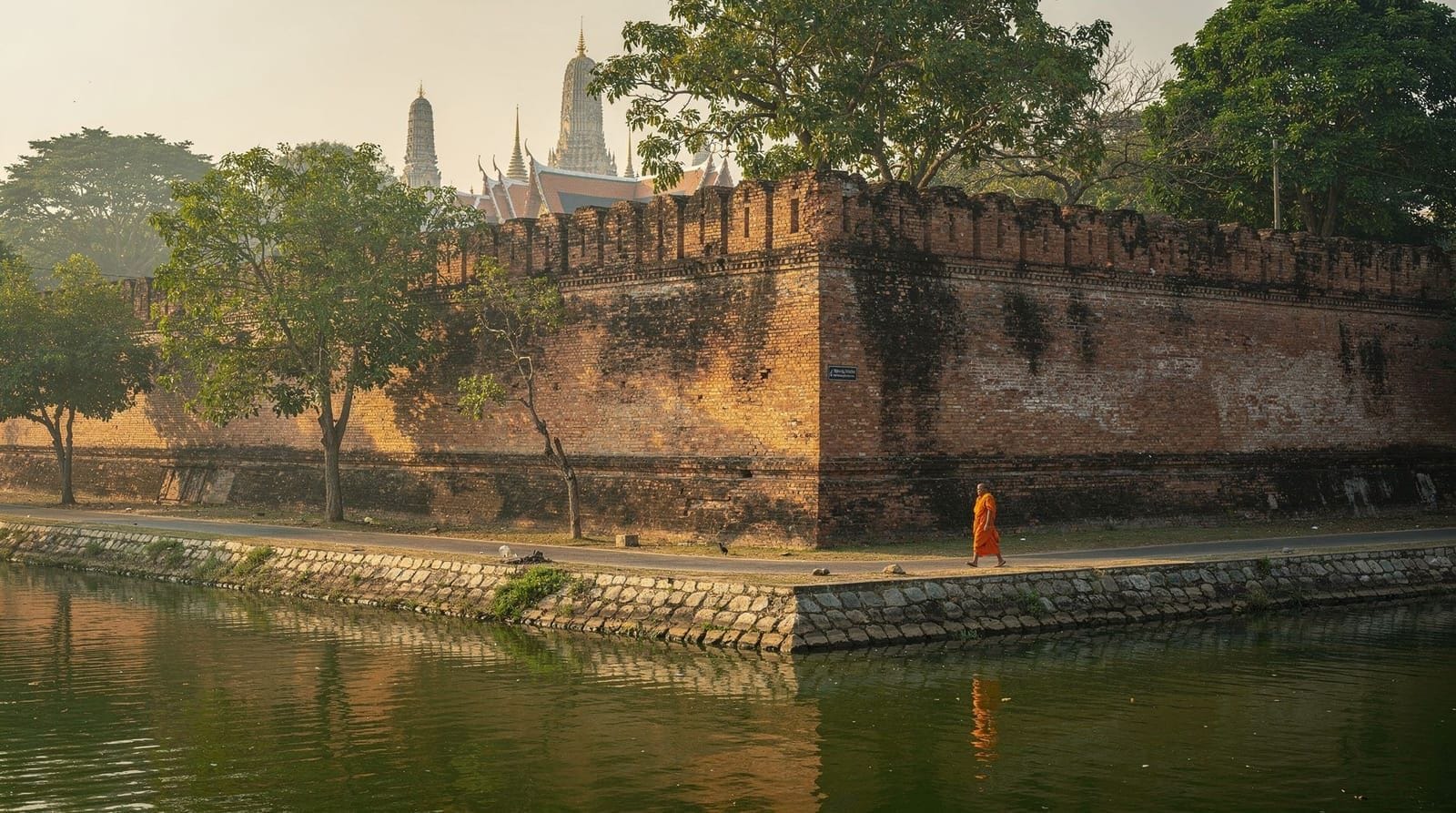
According to the founding chronicles of Chiang Mai, King Mengrai camped on this exact spot while his new capital was being laid out around 1296, and a temporary temple structure here became the city’s first permanent religious building once construction was complete. That makes Wat Chiang Man not just old in the abstract but literally tied to the founding moment of the city itself — everything else inside the moat came after this site was already established. The temple has been rebuilt and expanded multiple times across seven-plus centuries, so almost nothing standing today is the literal 1296 structure, but the site’s continuity as a place of worship is unbroken.
The founding legend, in more detail
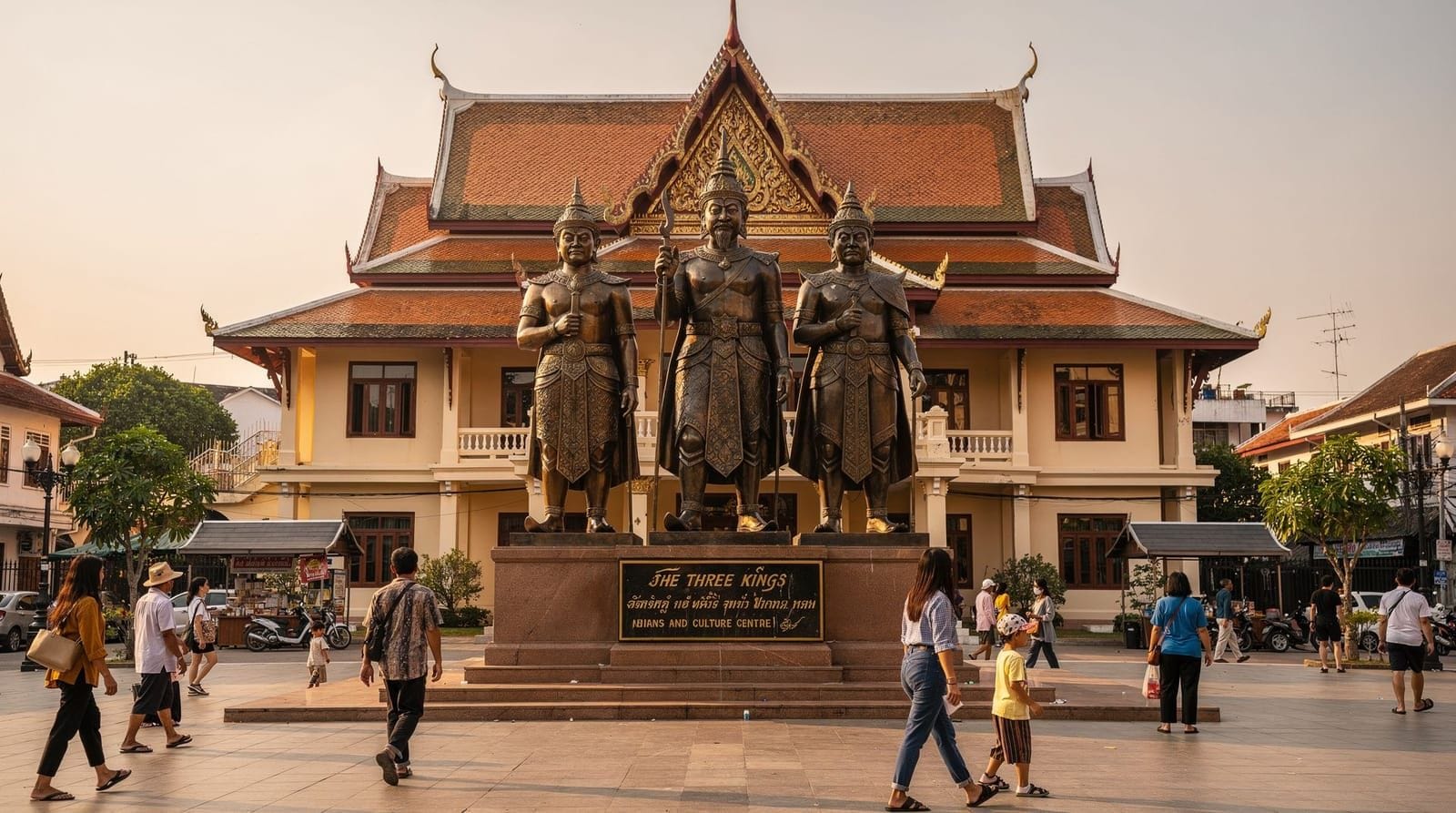
Chiang Mai’s foundation chronicles describe King Mengrai selecting this site after consulting with two allied rulers — the kings of Sukhothai and Phayao — about where to establish his new capital, a collaboration later commemorated by the Three Kings Monument in the city center. Mengrai reportedly stayed on this exact plot while the walled city was surveyed and built around it, and once construction finished, he had a temple raised here first, ahead of the palace and administrative buildings, reflecting the Lanna kingdom’s Buddhist foundations. Mengrai himself died in 1317, according to tradition struck by lightning near what’s now the Old City center, and while Wat Chiang Man isn’t the site of his death, its status as his original resting place during the city’s construction gives it a founding-story weight that no other temple in Chiang Mai can claim.
The Chang Lom chedi
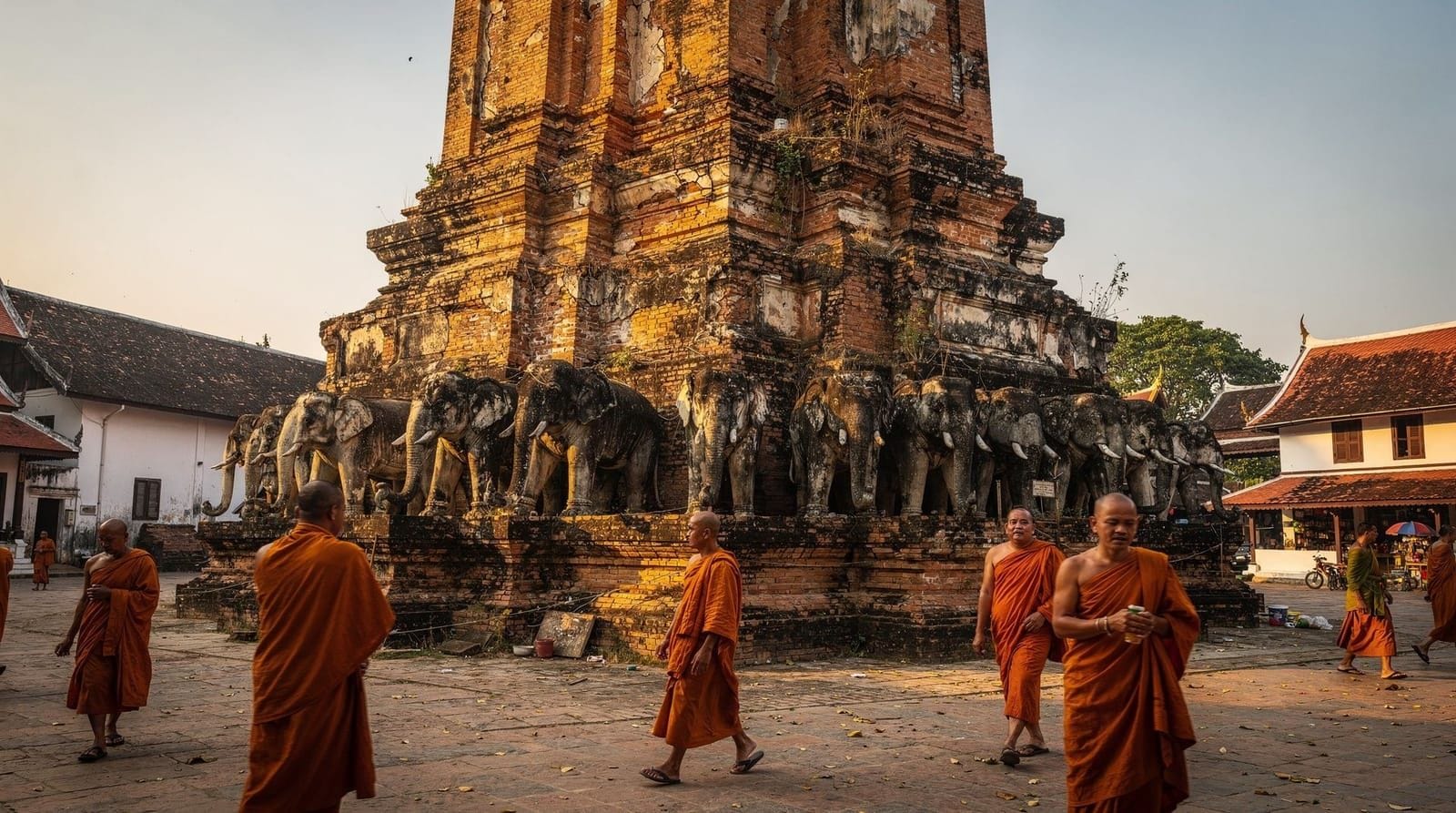
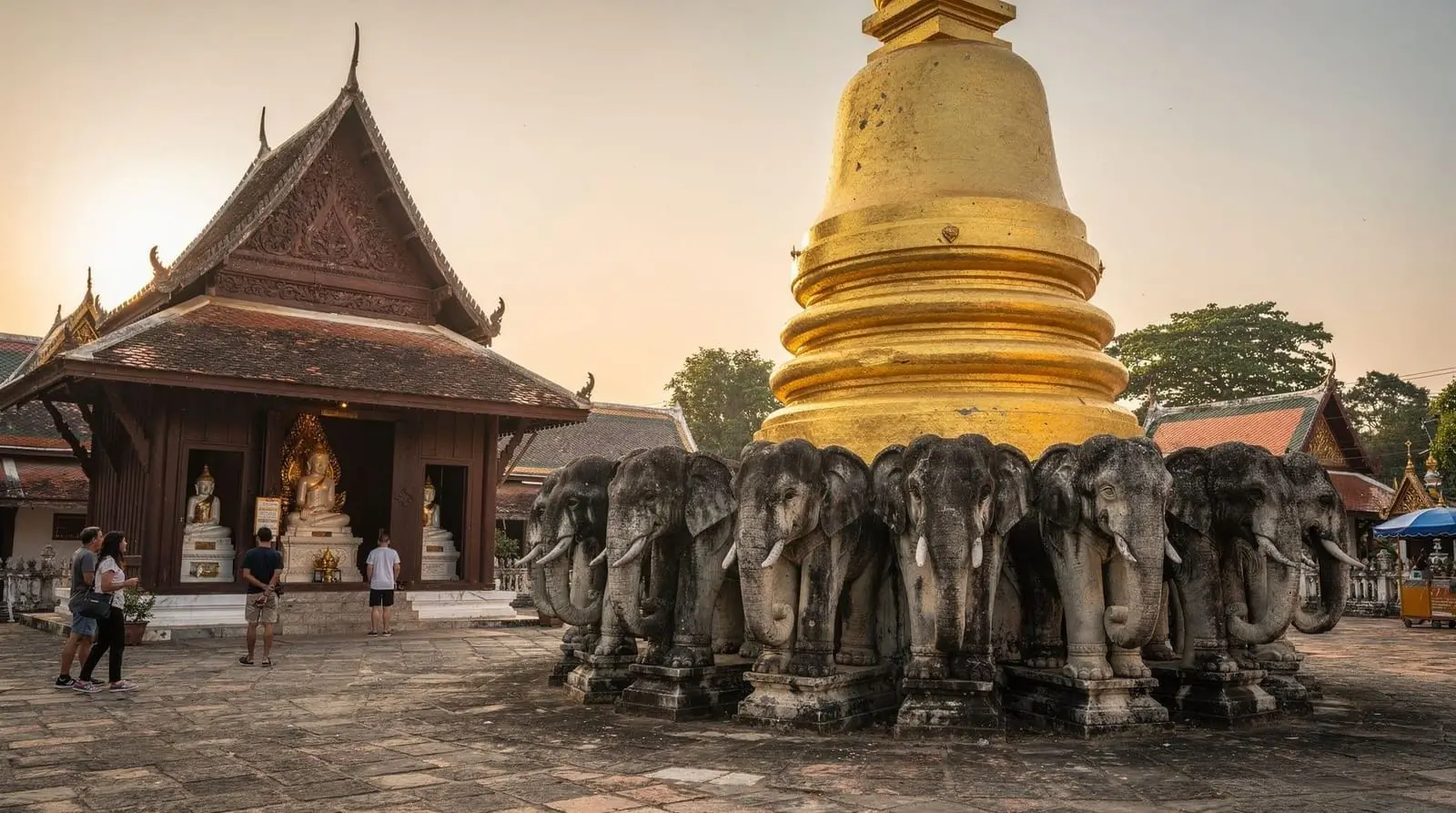
The most photogenic single element at Wat Chiang Man is the Chang Lom chedi, a square-based structure ringed at its base by fifteen life-sized elephant statues, their front halves emerging from the brickwork as if the chedi were resting on their backs. This elephant-buttress style appears at a handful of other Lanna and Sukhothai-era monuments in northern and central Thailand, but the Wat Chiang Man version is one of the best-preserved examples still standing in its original city context rather than as an isolated archaeological site. Some of the elephant figures show visible restoration work (replaced trunks and ears, in particular, since these project outward and erode or break first), but enough original stonework remains that the effect still reads as genuinely ancient rather than reconstructed from scratch.
Crystal and Marble Buddhas
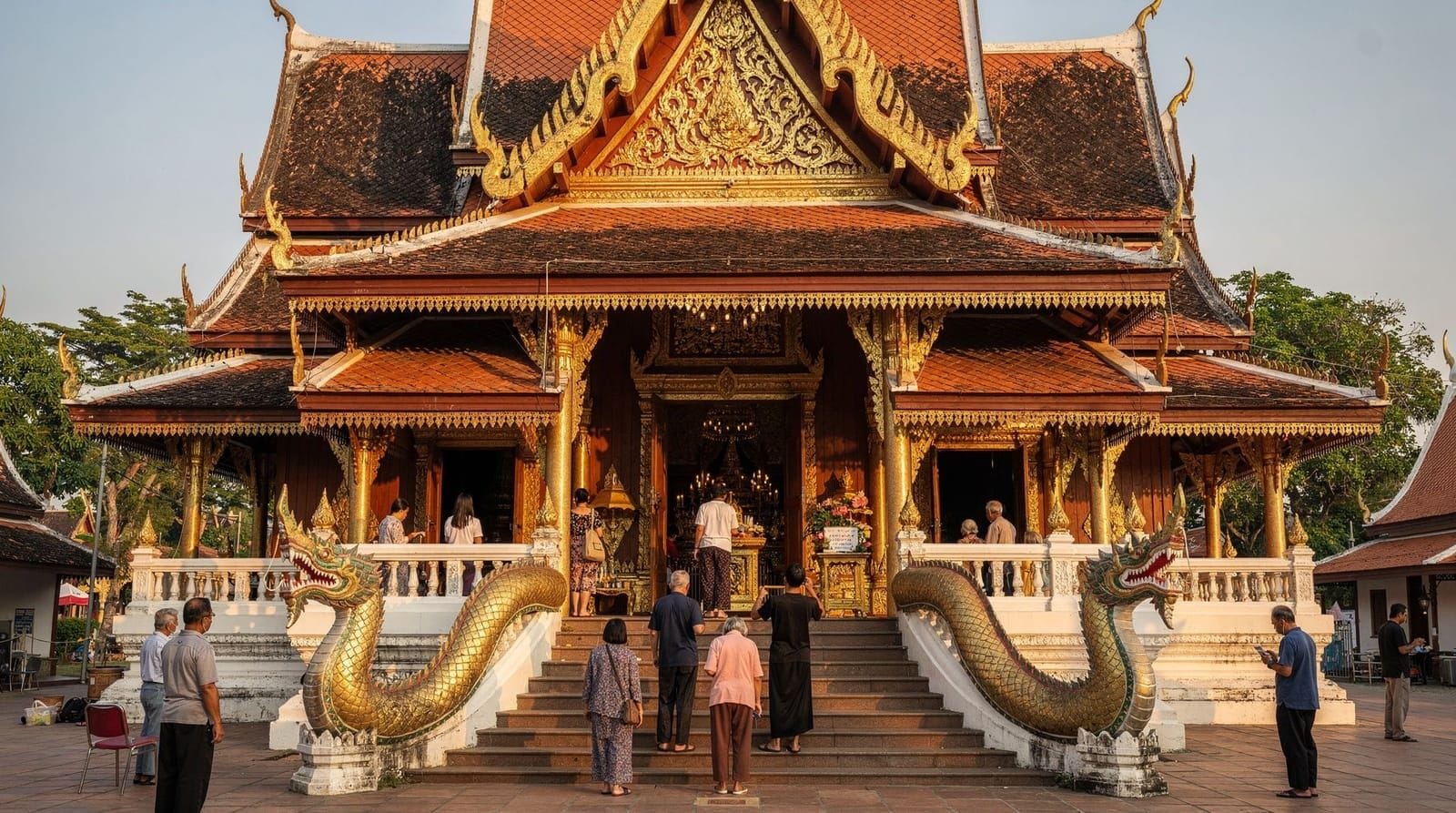
Inside a chapel near the main viharn, the temple keeps two small, highly venerated Buddha images: the Phra Sila (a marble relief image, standing, believed to have originated from Sri Lanka or India centuries ago) and the Phra Satang Man (a small crystal seated Buddha, associated with rain-making rituals historically). Both are considerably smaller than the grand images at Wat Phra Singh or Wat Chedi Luang — this is not a hall built around a large monumental statue, but a more intimate shrine setup — and viewing access is sometimes limited to a locked cabinet visible through glass rather than an open display, depending on the day and any ongoing ceremonies. If the cabinet is closed when you visit, a staff member or resident monk can sometimes open it briefly on request, though this isn’t guaranteed.
Historically, during periods of drought, the crystal Buddha was paraded through the city in a rain-making ceremony — a tradition rooted in older animist practices layered underneath the Buddhist framework, illustrating how much of Lanna religious practice blends multiple belief systems rather than representing a single pure tradition.
Comparing the three major Old City temples
Travelers planning a temple-focused morning often want a quick sense of how the three headline Old City temples differ before deciding how to allocate time. Wat Chedi Luang offers scale and ruin — the giant partially-collapsed chedi is the single most visually dramatic structure in the Old City. Wat Phra Singh offers craftsmanship — the Lai Kham chapel’s gilded woodwork and murals reward close, patient looking. Wat Chiang Man offers history and quiet — the oldest founding site in the city, with far fewer visitors competing for the same view. None of the three is a clear substitute for the others, and all three sit within a comfortable 15-minute walk of each other, which is why most half-day Old City itineraries include all three rather than picking just one.
What else is on the grounds
Beyond the chedi and the Buddha chapel, the compound includes a fairly plain but functional main viharn used for regular services, an inscribed stone stele (a copy of a 1581 inscription recording the temple’s history, with the original kept for preservation), and a scripture library. None of these individually justify a special trip, but together with the two headline features they round out a visit to roughly 30-45 minutes without feeling rushed.
The 1581 inscription and what it tells us
The stele kept at the temple (a copy; the fragile original is preserved separately) records details from 1581 about the temple’s history and royal patronage, and it’s one of the more valuable primary-source artifacts for historians reconstructing early Lanna history, since written records from this period are scarce compared to later centuries. Most visitors walk past it without a second glance because it’s just a carved stone slab with Northern Thai (Lanna) script rather than a visually dramatic monument, but for anyone interested in how historians actually know what they know about 14th-16th century Chiang Mai, it’s a small but genuine piece of that puzzle. Signage nearby gives a brief English translation of the key historical points if you want the content without reading the script itself.
Photography tips
Because the site is smaller and quieter than Wat Phra Singh or Wat Chedi Luang, there’s rarely a crowd to work around, which makes it one of the easier Old City temples to photograph well at almost any time of day. The elephant chedi photographs best from a slightly low angle that emphasizes the animals’ scale relative to the structure above them — worth crouching for rather than shooting straight-on from standing height. Morning light filtering through the compound’s trees adds texture that flat midday sun washes out, but unlike the more crowded temples, there’s no strong reason to rush here specifically to beat tour buses, since they largely don’t come.
Accessibility
The grounds are flat and paved, with reasonable shade from mature trees, making this one of the more comfortable Old City temples to visit at midday. The Buddha chapel and main viharn both have a small step-up threshold typical of Thai temple design, without ramps as of the last review, but the open chedi courtyard itself is fully accessible without navigating any stairs.
Combining with Tha Phae Gate and an evening plan
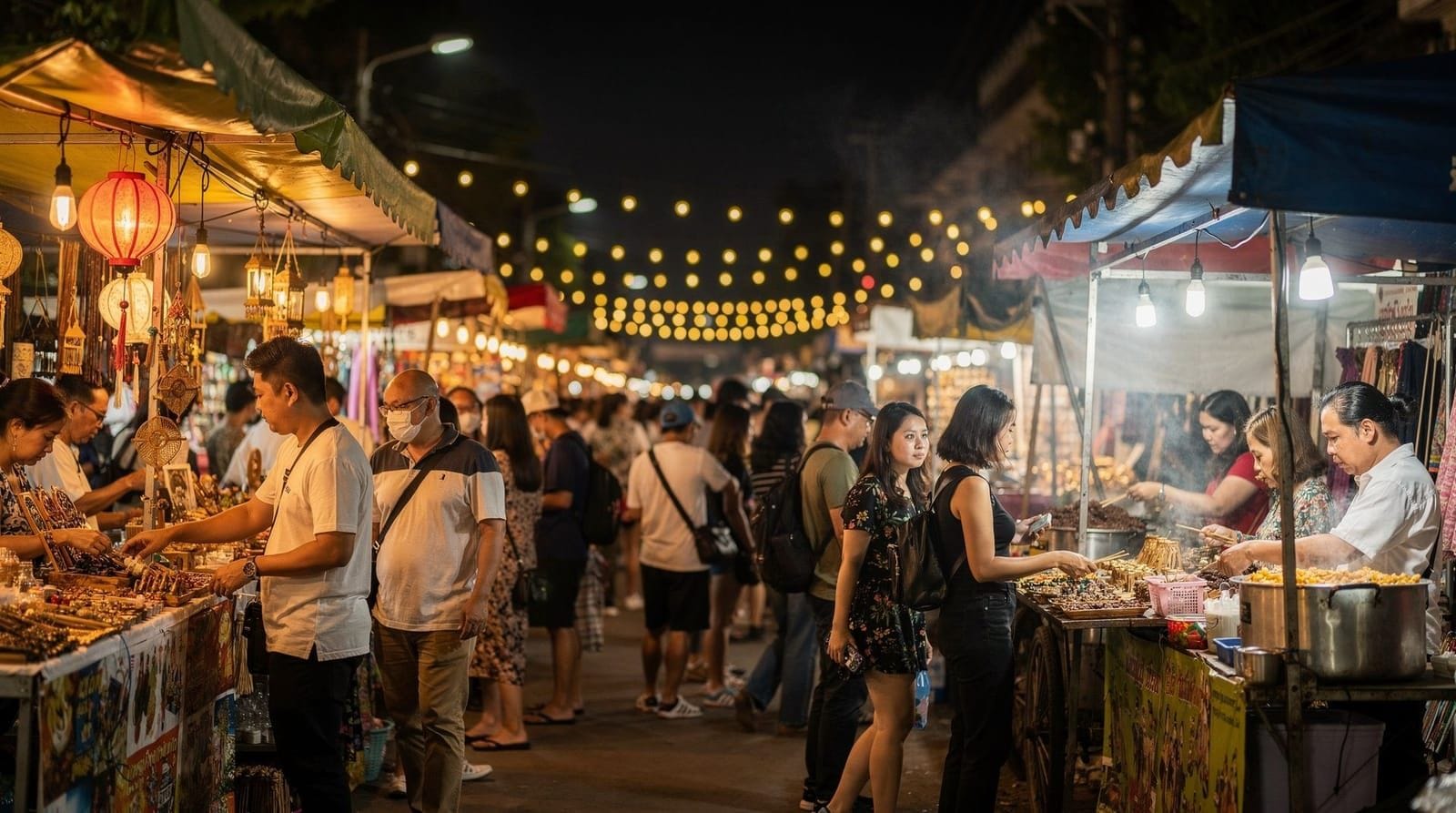
Wat Chiang Man’s location in the Old City’s northeast corner puts it within easy reach of Tha Phae Gate and the streets leading toward the Night Bazaar further east. A practical plan: visit Wat Chiang Man in the late afternoon when the light softens, walk the short distance to Tha Phae Gate as the sun sets, and continue on to the Night Bazaar for dinner once evening sets in — a natural progression from quiet history to bustling market without much backtracking.
Why it’s quieter than the other major Old City temples
Wat Chiang Man doesn’t appear on as many standard tour-bus circuits as Wat Phra Singh or Wat Chedi Luang, despite its historical significance, largely because its features are smaller in scale and less immediately photogenic from a distance — there’s no giant ruined chedi silhouette or gilded chapel interior to draw a crowd from across the courtyard. For visitors, this translates to a noticeably calmer experience: fewer group tours, more room to actually read the informational signage, and a better chance of having the elephant chedi mostly to yourself even at times of day when Wat Phra Singh is packed. If you’re visiting the Old City’s temples in sequence and starting to feel templed-out, this is the one to save for last — it rewards patience and close looking rather than sheer visual spectacle.
a guided 3-hour Old City temple walking tour typically includes Wat Chiang Man alongside the two more famous temples, with a guide able to point out the founding-chronicle context that’s easy to miss reading signage alone.
Dress code and etiquette
Standard Thai temple etiquette applies: shoulders and knees covered, shoes off before entering any roofed building with a Buddha image. Entry to the grounds is free, though a small donation box sits near the entrance and at the Buddha chapel specifically — contributing here goes directly toward the upkeep of a temple that receives far less tourist revenue than its larger neighbors.
What to skip if you’re short on time
If you’re doing the Old City in a single rushed morning rather than a leisurely half-day, the elephant chedi and the Buddha chapel are the two things worth prioritizing here — the scripture library and the ordination hall are functional buildings without much to see from the outside, and the inscribed stele, while historically valuable, is a low-visual-impact stop that mainly rewards readers of the accompanying English signage rather than casual photographers. Fifteen focused minutes at the chedi and chapel captures most of what makes this temple worth the detour.
Getting there
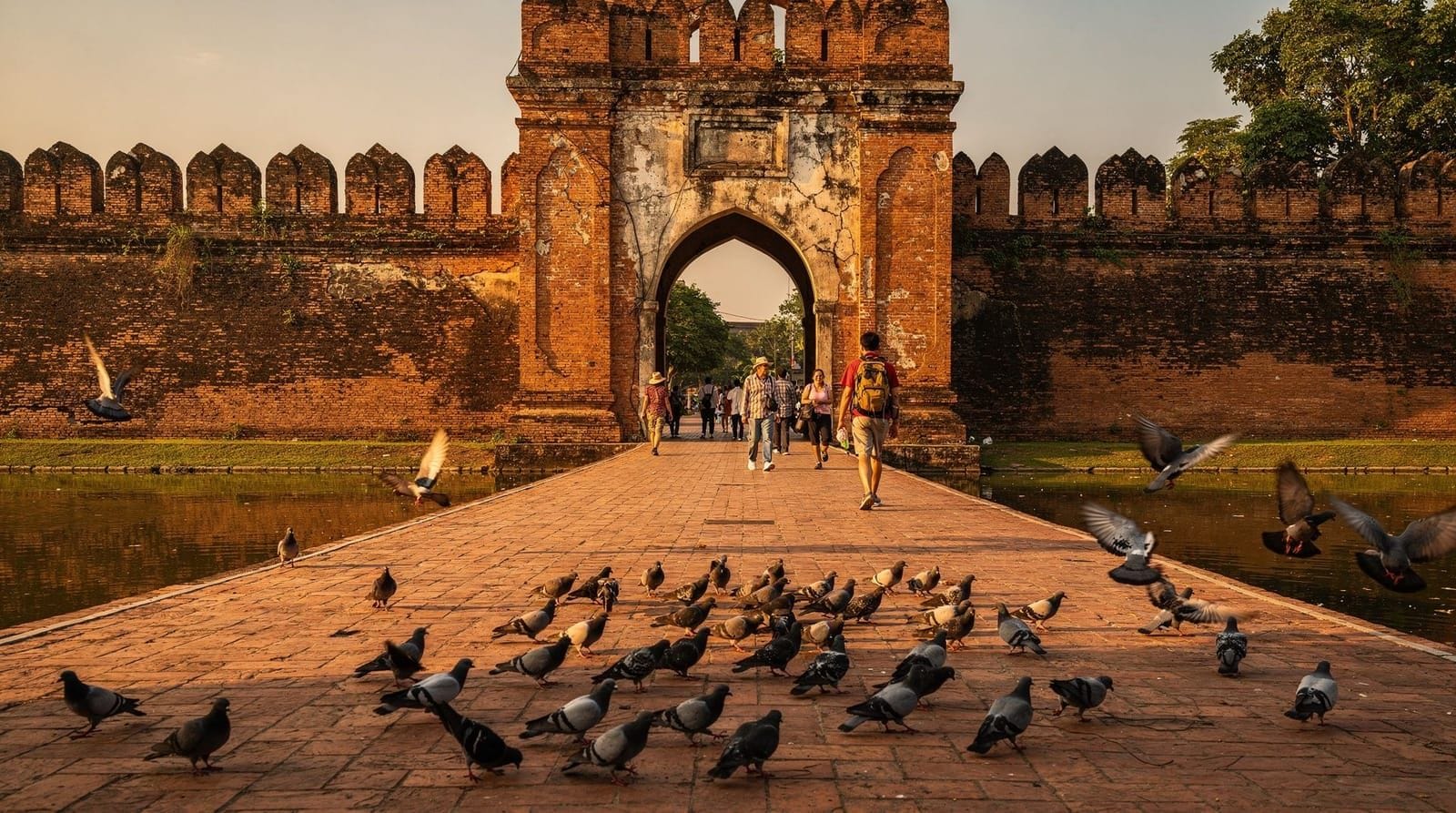
Wat Chiang Man sits in the Old City’s northeast corner, about 700 meters from Tha Phae Gate — an 8-10 minute walk that’s flat and mostly shaded by street trees along the way. It’s a natural stop when walking from Tha Phae Gate toward Wat Chedi Luang and Wat Phra Singh further west, or toward the Three Kings Monument just south, making a loop of the Old City’s key historical sites in a single morning entirely feasible on foot without needing transport between stops.
Local devotion versus tourist traffic
It’s worth noting that Wat Chiang Man’s lower tourist profile doesn’t mean it’s unimportant to local religious life — quite the opposite. Chiang Mai residents visit specifically for the Crystal and Marble Buddhas, and the temple hosts regular merit-making activities and ceremonies tied to its founding-temple status that have little to do with the tourist calendar. The relative quiet you experience as a visitor is really the temple functioning as it always has for the surrounding community, rather than a site that’s been “overlooked” in some deficient sense. If you visit and find monks or lay devotees engaged in a ceremony, it’s reasonable to observe respectfully from a distance rather than approaching mid-ritual for photos or questions.
Honest notes
Because Wat Chiang Man sees less tourist traffic, it also has fewer staff on hand — if the Buddha chapel appears closed or the cabinet holding the Crystal and Marble Buddhas is locked, that’s more often simply a quiet period than a permanent closure. There’s little in the way of touts or hawkers here compared to the busier Old City temples, which is itself part of the appeal for visitors seeking a lower-pressure experience.
A separate point worth flagging plainly: because this temple gets less attention in guidebooks and standard itineraries, some visitors skip it entirely in favor of the two more famous sites, and that’s a reasonable trade-off if time is genuinely tight. But for anyone with even a spare thirty minutes and an interest in how the city actually came to exist — rather than just its most photogenic religious architecture — this is the one temple in the Old City that connects directly to the 1296 founding moment, and it’s a short enough detour that skipping it usually comes down to not knowing it’s there rather than a considered choice.
Frequently asked questions about Wat Chiang Man
Why is Wat Chiang Man considered Chiang Mai’s oldest temple?
Founded in 1296 by King Mengrai on the site where he reportedly camped while the new capital was being built, making it the city’s first permanent religious site, predating both Wat Phra Singh and Wat Chedi Luang.
What are the Crystal and Marble Buddhas?
Two small, highly venerated images kept in a chapel near the main viharn — a marble relief standing Buddha (Phra Sila) and a small crystal seated Buddha (Phra Satang Man), historically associated with rain-making ceremonies during droughts.
Is there an entry fee for Wat Chiang Man?
No, entry is free, though donations are welcomed and appreciated given the temple relies less on tourist revenue than the Old City’s larger temples.
What is the Chang Lom chedi?
The temple’s main chedi, ringed at its base by fifteen life-sized elephant statues emerging from the brickwork — one of the best-preserved examples of this Lanna-Sukhothai architectural style still standing in its original setting.
Is Wat Chiang Man crowded?
No, it’s noticeably quieter than Wat Phra Singh or Wat Chedi Luang, since it appears on fewer standard tour circuits despite its historical significance.
How long does a visit take?
30-45 minutes covers the chedi, the Buddha chapel, and the rest of the grounds without rushing.
How far is Wat Chiang Man from Tha Phae Gate?
About 700 meters, an 8-10 minute flat, shaded walk.
Can I see the Crystal and Marble Buddhas up close?
They’re kept in a chapel, sometimes in a locked glass cabinet depending on the day. If it’s closed, a staff member or monk can occasionally open it on request, though this isn’t guaranteed.
Is Wat Chiang Man worth visiting if I only have time for one or two Old City temples?
If time is very tight, prioritize Wat Chedi Luang or Wat Phra Singh first — they’re more visually dramatic. But Wat Chiang Man is the only site directly tied to the 1296 founding of Chiang Mai, and its short distance from the other two makes it worth adding rather than skipping if you have even an extra thirty minutes.
Top experiences
Bookable activities with verified prices and instant confirmation on GetYourGuide.