Our favorite temples in Chiang Mai, ranked by what actually stayed with us
Chiang Mai has somewhere around forty temples within the Old City walls alone, and a good deal more scattered through the wider valley, which makes “which temples should I actually see” a genuinely difficult question to answer honestly. We visited more than a dozen over three separate trips, and this is the shortlist that actually stuck with us afterward — not the most famous list, though there’s overlap, but the one built from what we kept talking about weeks later.
5. Wat Chiang Man, for the quiet weight of being first
Wat Chiang Man doesn’t compete on scale or ornamentation with the bigger names on this list, and that’s precisely its appeal. Founded in 1296, it’s the oldest temple in the city, predating even the founding of Chiang Mai itself by legend, and it carries a stillness that felt different from anywhere else we visited — fewer visitors, less souvenir-stall pressure at the gate, and two genuinely remarkable Buddha images (crystal and marble) kept in a side chapel that most visitors seem to walk straight past. We nearly missed it ourselves on a first visit, tucked away as it is slightly off the main temple-hopping route, and it was the temple we most regretted almost skipping.
4. Wat Umong, for the tunnels and the talking trees
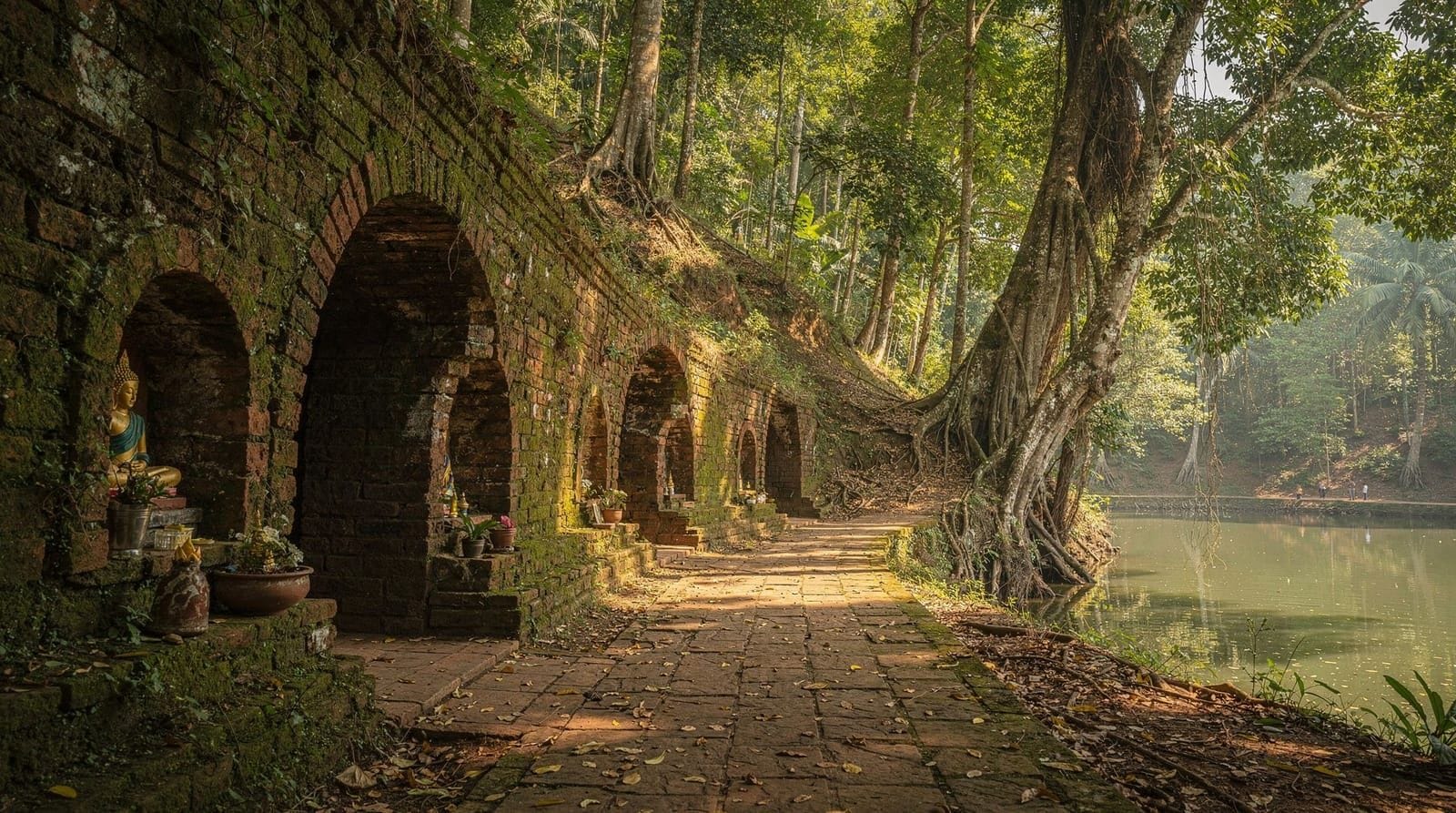
Wat Umong is unlike any other temple on this list structurally — a forest temple built around 700-year-old brick tunnels you can actually walk through, dimly lit and cool against the surrounding heat, opening into a hillside dotted with small shrines and a lake with resident catfish. What made it memorable wasn’t the architecture so much as the atmosphere: small signs with Buddhist teachings hung from tree branches throughout the grounds, meant to prompt quiet reflection during a walk rather than rushed sightseeing. It’s the temple we’d recommend to anyone who finds the more polished, crowded sites a little exhausting and wants somewhere to genuinely slow down.
3. Wat Chedi Luang, for the scale of the ruin itself
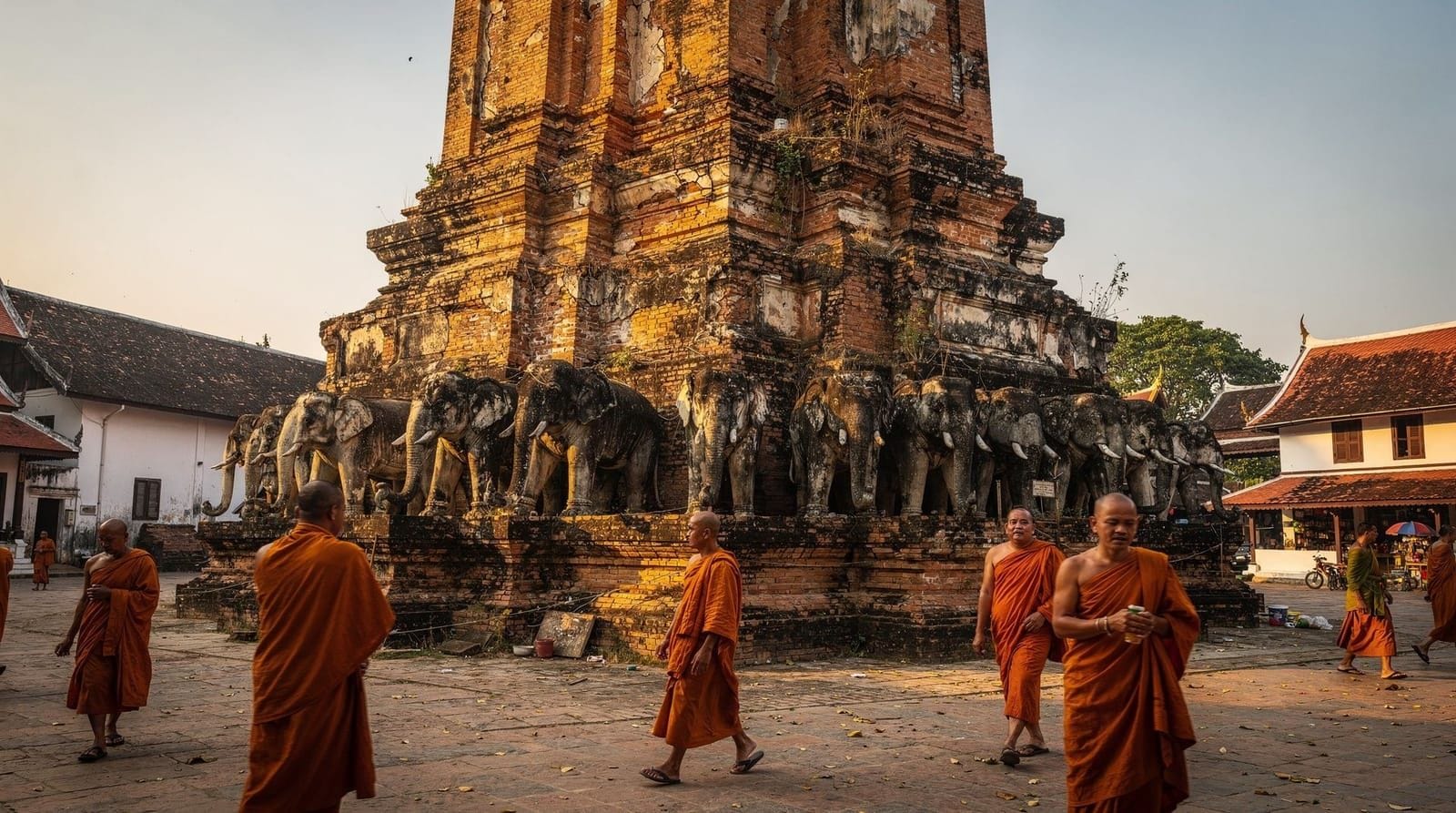
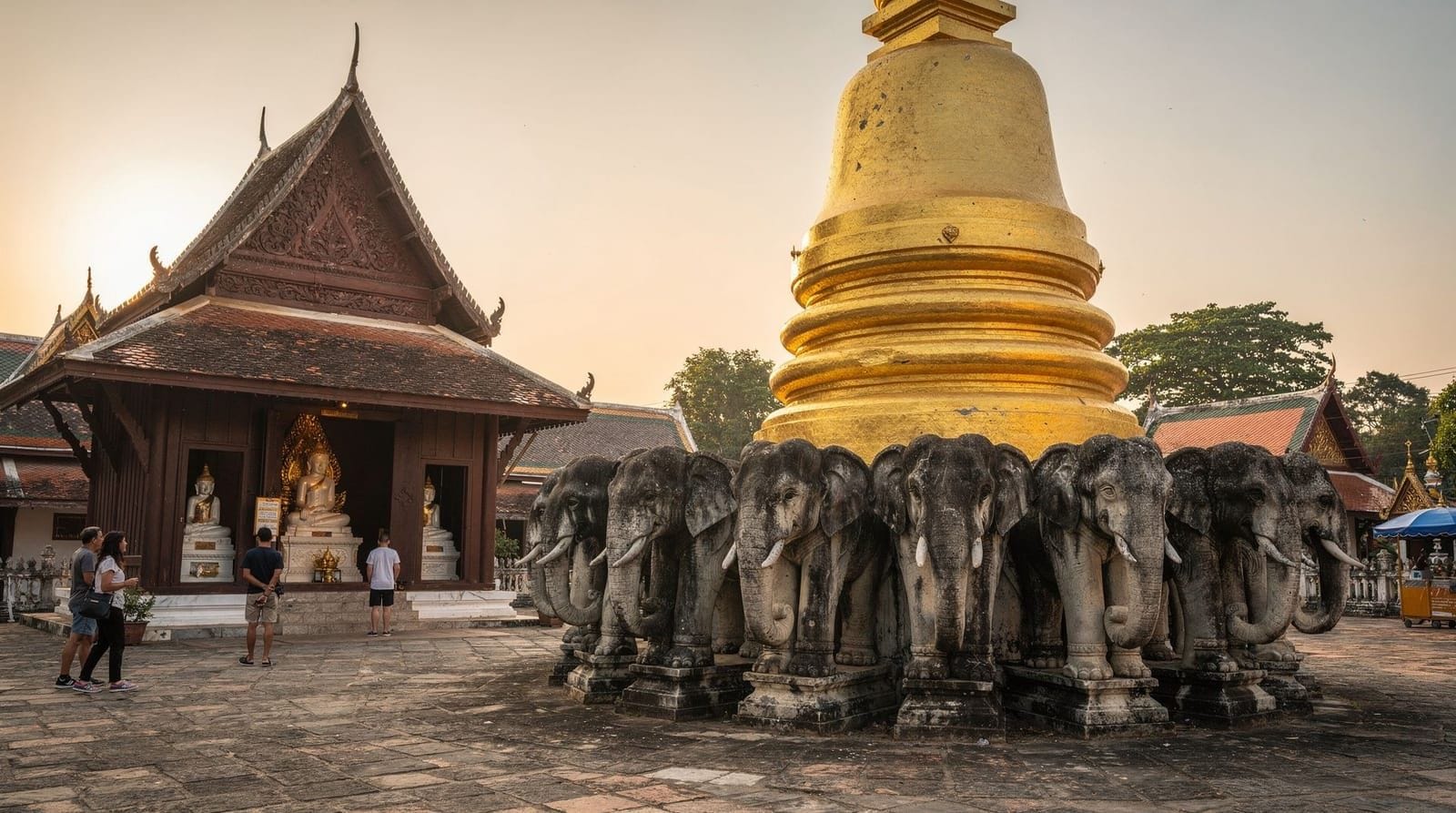
Wat Chedi Luang’s massive ruined chedi, partially collapsed by an earthquake centuries ago and left that way rather than fully rebuilt, has a gravity that photographs undersell. Standing at its base looking up at the eroded brickwork, elephant statues worn soft by time along its lower tier, gives a genuine sense of scale that the smaller, more intact temples on this list simply can’t replicate. We also happened to catch a monk chat session here — an informal program where monks converse with visitors to practice English and share perspective on monastic life — and that conversation, more than the ruin itself, is what pushed this temple up our ranking. If the program is running when you visit, take the time; it’s a rare, low-key window into a side of temple culture that a typical walk-through visit never touches.
2. Doi Suthep, for the view that finally justifies the climb
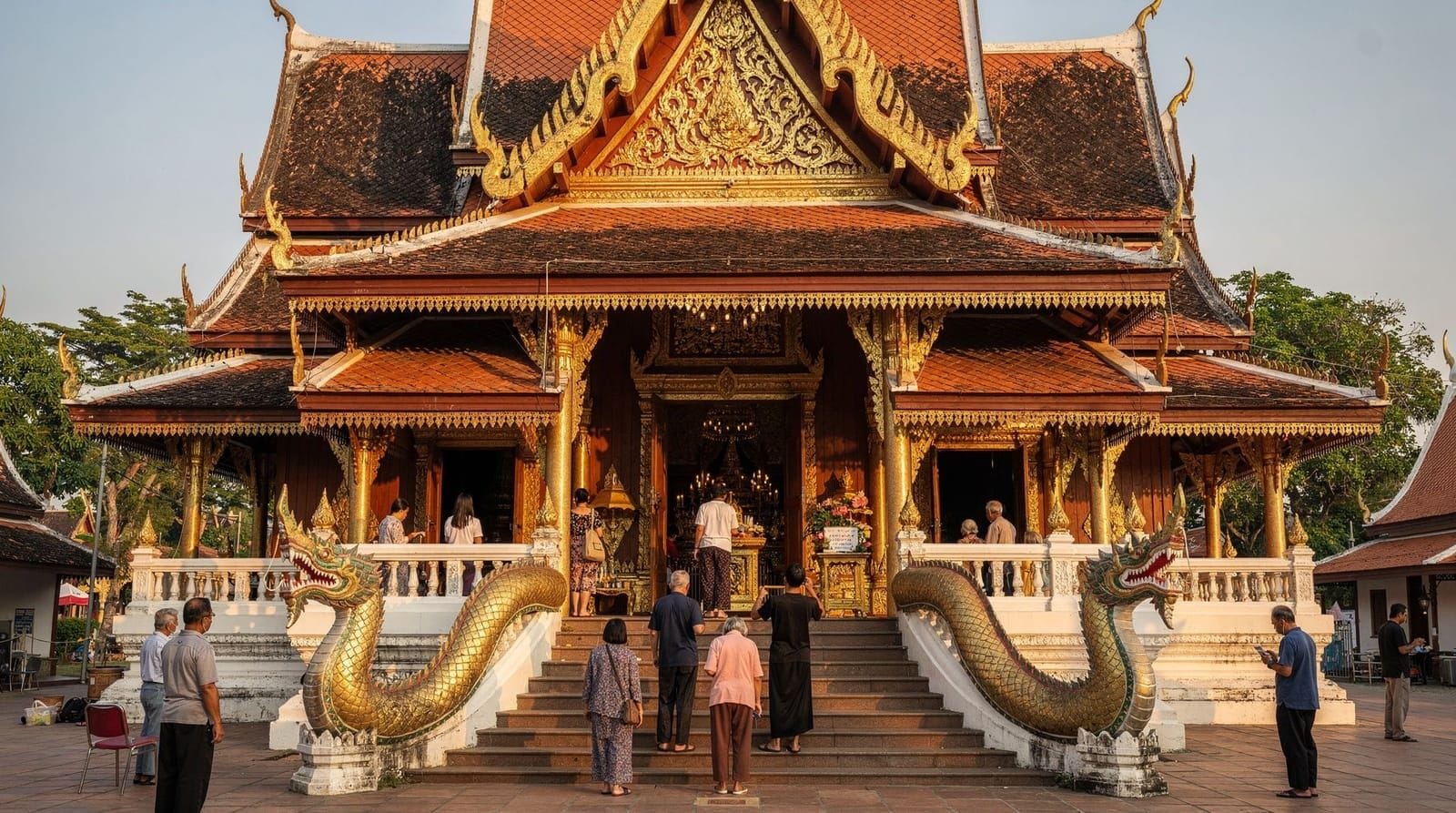
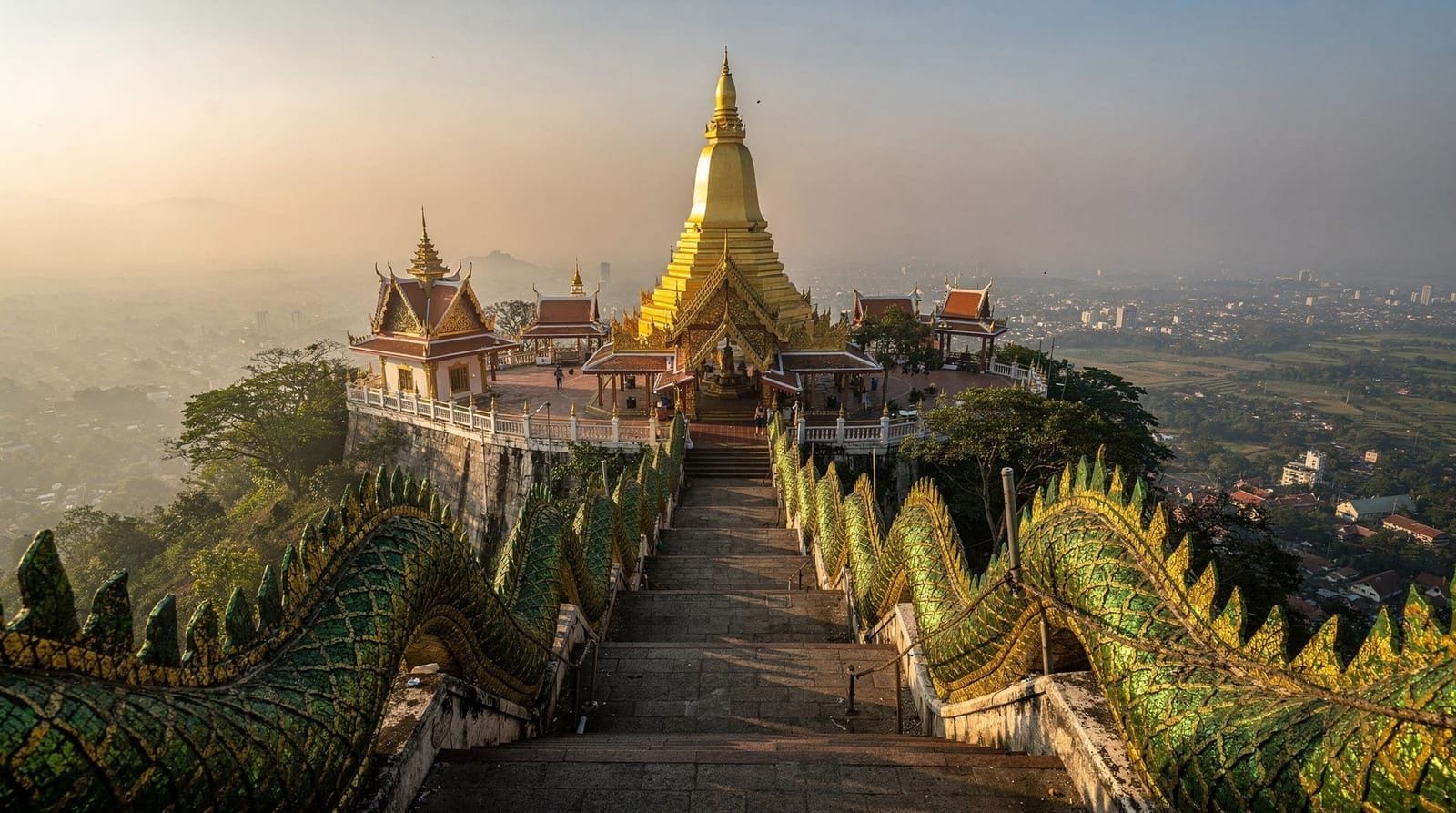
Doi Suthep is the temple every visitor to Chiang Mai has already heard about before arriving, and it earns that reputation almost entirely on its setting rather than the temple structures themselves, striking as they are. The naga-flanked staircase of over 300 steps up to the temple platform (or the funicular tram, if the legs aren’t up for it) delivers you to a golden chedi with a genuinely sweeping view back down over the city and valley below. We went twice — once at midday amid a thick tour-bus crowd that made quiet reflection nearly impossible, and once closer to opening time when the grounds were still calm. The difference between those two visits was so stark that timing alone determines whether this ranks near the top of a trip or becomes a crowded box-ticking exercise.
1. Wat Phra Singh, for getting everything right at once
Wat Phra Singh tops this list because it does what the others each do partially, but does it all together: genuine historical weight as the most revered temple in the city, architectural beauty in the Lai Kham chapel’s mural-covered interior depicting local folklore rather than only standard religious scenes, and an atmosphere that manages to feel both important and unhurried even with a steady flow of visitors. The Phra Singh Buddha image itself, housed in that same chapel, draws real devotional attention from Thai visitors alongside tourist interest, which gives the whole space a lived-in, functioning-place-of-worship feeling that some of the more purely photogenic temples elsewhere in the city lack. We spent close to ninety minutes there on our final visit, longer than any other temple on this list, simply sitting in the chapel’s cool interior watching mural detail catch the light differently as the afternoon wore on.
Honorable mentions that almost made the list
A ranking like this necessarily leaves out temples that other visitors might rank higher, and a few deserve a mention even though they didn’t crack our top five. Wat Phra Singh’s near neighbor within the Old City walls, a smaller unnamed-to-us shrine we stumbled into purely by accident while looking for shade during a hot afternoon, had almost no other visitors and a caretaker who, without any prompting, walked over to explain the history of a particular mural in halting but clearly well-practiced English. That kind of unplanned, unscripted encounter is impossible to rank or recommend by name, but it’s exactly the kind of moment that makes wandering the Old City’s side streets between the famous stops worthwhile rather than sticking rigidly to a checklist.
We also debated including a temple near Tha Phae Gate that hosts an evening lantern-lit market on its grounds during festival periods — visually stunning in photos, genuinely crowded and commercially oriented in person, which is precisely why it didn’t make our list despite being one of the most photographed temple scenes in the city. There’s a lesson in that contrast worth stating plainly: the most Instagrammed temple moment in Chiang Mai and the most personally meaningful one are not always, or even often, the same place.
How our ranking changed over three visits
It’s worth admitting that this list wasn’t static — our first visit to the city, years before the trip this piece is drawn from, would have ranked Doi Suthep at the very top without hesitation, simply because it was the first hill-top temple view either of us had experienced and the novelty carried enormous weight. By our third visit, familiarity had shifted our appreciation toward the quieter, less obviously spectacular temples — Wat Chiang Man and Wat Umong specifically — that reward patience and repeat visits rather than a single dramatic first impression. That evolution feels worth mentioning honestly, because a first-time visitor’s ranking of these same five temples might reasonably look quite different from ours, and that’s not a flaw in either ranking. It just reflects how differently a first visit and a fifth visit to the same city tend to land.
What we’d tell a first-time visitor with only one day
If someone reading this has a single day in the city and is trying to decide which two or three temples from this list to actually prioritize, here’s the honest, condensed advice we’d give a friend in that exact position. Pair Wat Phra Singh and Wat Chedi Luang together — they sit close enough within the Old City walls to walk between comfortably in under fifteen minutes, and the contrast between Phra Singh’s lived-in devotional atmosphere and Chedi Luang’s dramatic ruined scale makes for a genuinely complementary pairing rather than two similar experiences back to back. Save Doi Suthep for a separate half-day rather than squeezing it into the same morning; the drive up and the different pace of a hilltop temple visit deserve their own dedicated block of time rather than being rushed as a third stop after two Old City temples.
If a second day is available, that’s when Wat Umong and Wat Chiang Man earn their place — both reward unhurried time more than quick photo stops, and neither works well as a rushed add-on squeezed between other plans. We learned that lesson the hard way on an early visit, trying to cram Wat Umong into a tight afternoon between other errands, and left feeling like we’d missed the entire point of a temple built specifically around slow, quiet walking.
A note on how we visited
None of this ranking would mean much without mentioning etiquette, which matters more at working temples than the ranking above might suggest — shoulders and knees covered, shoes off before entering chapel interiors, and a general quietness expected even in the busier courtyards. Our temple etiquette guide covers the specifics in more depth than we can here, and getting it right isn’t just politeness; it noticeably changes how monks and other worshippers respond to your presence, often opening up small, unplanned interactions like the monk chat we stumbled into at Wat Chedi Luang.
If you’re building your own temple itinerary rather than trusting our particular ranking, our broader guide to Chiang Mai’s best temples covers a wider shortlist across the whole city, and the Old City temple-hopping route lays out a walkable loop connecting several of the wats on this list in a single unhurried morning — which, if we’re honest, is close to exactly how our own favorites list came together in the first place.