Golden hour temple photography in Chiang Mai: timing and light
Chiang Mai: Doi Suthep, Wat Umong, and Pha Lat Sunrise Tour
What's the best time to photograph Chiang Mai's temples?
Early morning, roughly 6-7:30am, gives the softest light, the fewest visitors, and the clearest air, particularly at Doi Suthep and the main Old City temples. Late afternoon into golden hour, roughly 5-6:30pm, is the second-strongest window, especially for west-facing exteriors. Both windows shift by only about 30 minutes across the year, since Chiang Mai sits close to the equator, but seasonal haze during the burning season (roughly February-April) can dull even good light.
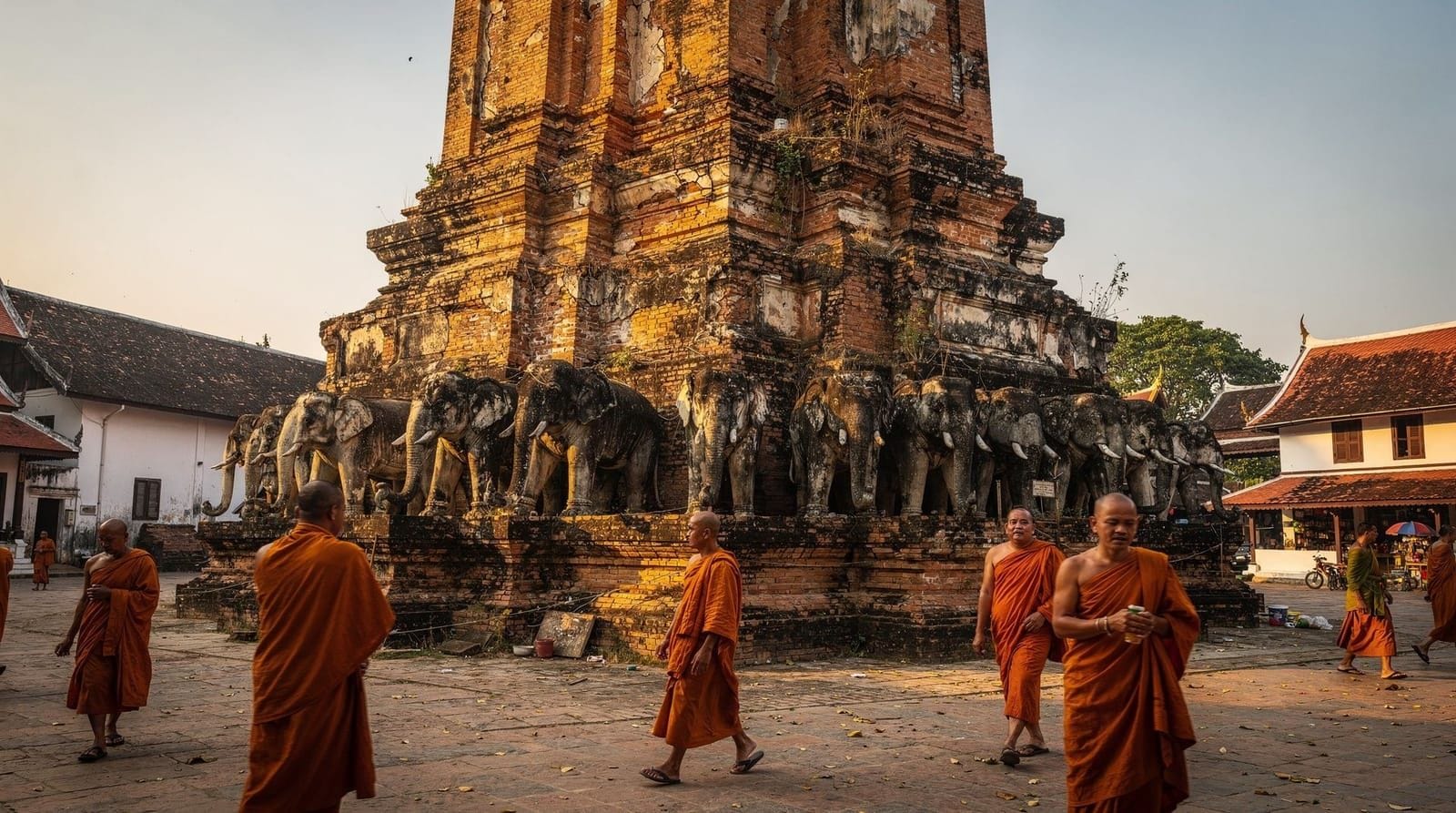
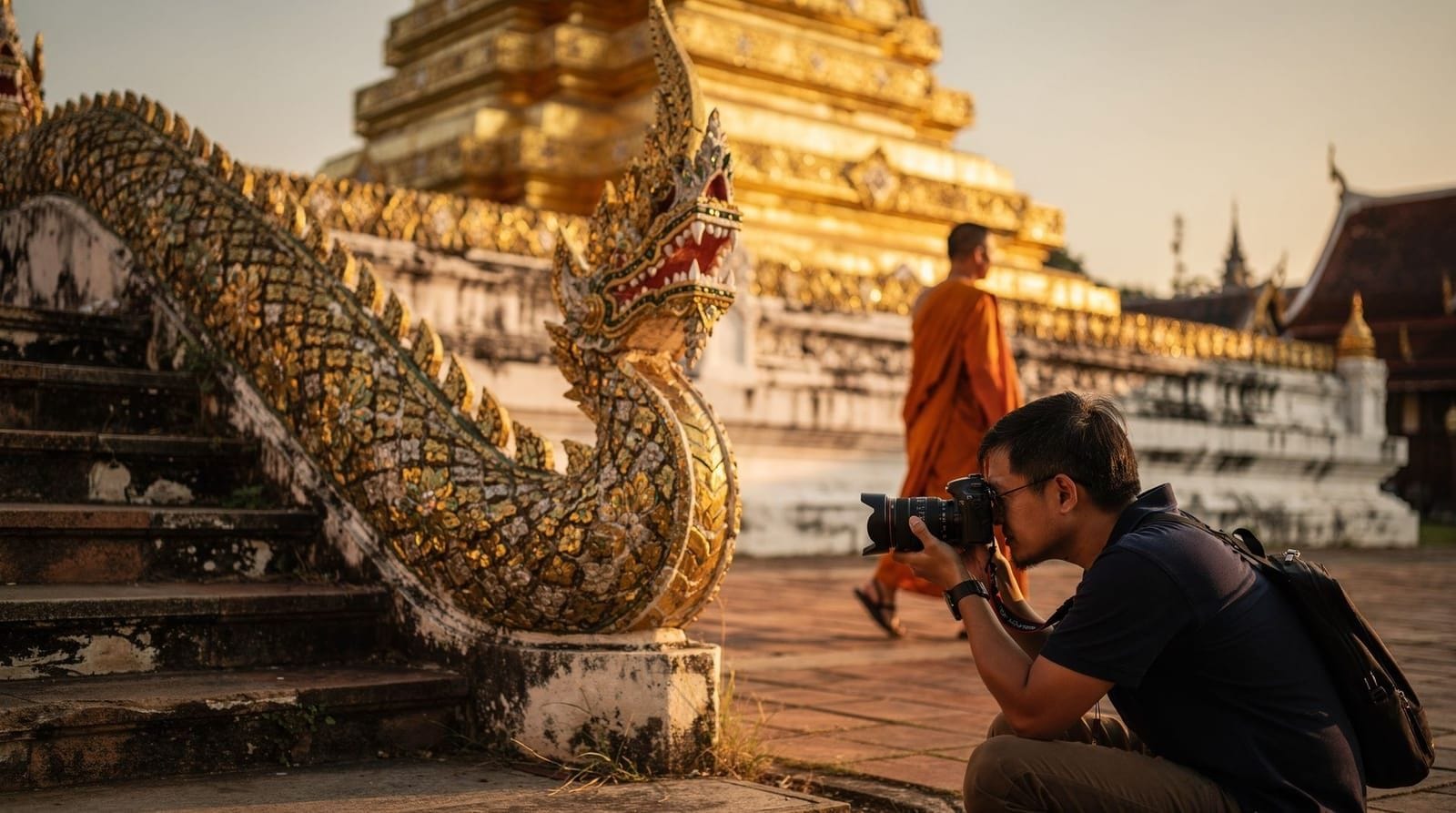
The difference between a flat, forgettable temple photo and a genuinely striking one in Chiang Mai usually comes down to timing more than equipment. The same golden chedi at Wat Chedi Luang looks like a fairly ordinary brick structure under the harsh, high-contrast light of midday, and looks completely different an hour after sunrise or an hour before sunset, when angled light brings out texture, and floodlighting after dark adds yet another distinct character to the same building. This guide covers when to be at which temple, and why the timing differences matter more here than at almost any other kind of subject in the city.
Quick answer: early morning (roughly 6-7:30am) gives the softest, most even light and the emptiest courtyards, especially at Doi Suthep and the main Old City wats. Late afternoon into golden hour (roughly 5-6:30pm) is the second-best window, particularly for west-facing exteriors and the Old City moat. Seasonal haze during the burning season (February-April) can dull distant valley views even during otherwise good light, so cool-season visits (November-February) generally deliver the clearest results.
Why Chiang Mai’s golden hour barely moves
Unlike destinations at higher latitudes, where sunrise and sunset times swing by hours between summer and winter, Chiang Mai’s position closer to the equator keeps golden hour fairly stable year-round — roughly 6-7:30am and 5-6:30pm, shifting by only about half an hour across the entire calendar. This makes planning simpler than in many other photography destinations: you don’t need to check exact sunrise tables obsessively for each month, since the practical window barely changes. What does shift meaningfully by season is atmospheric clarity, covered further down, which affects how much that good light actually delivers in terms of visible distance and contrast.
This stability is genuinely useful for trip planning, since it means you can commit to a rough daily schedule — an early temple visit before other activities, or an evening stop worked in after a day trip returns — without needing to recheck sunrise and sunset tables for each specific date of a multi-week trip. The main variable to actually track is cloud cover and haze forecasts rather than the sun’s position itself, which barely moves across a typical two-week visit.
Doi Suthep: the clearest case for sunrise
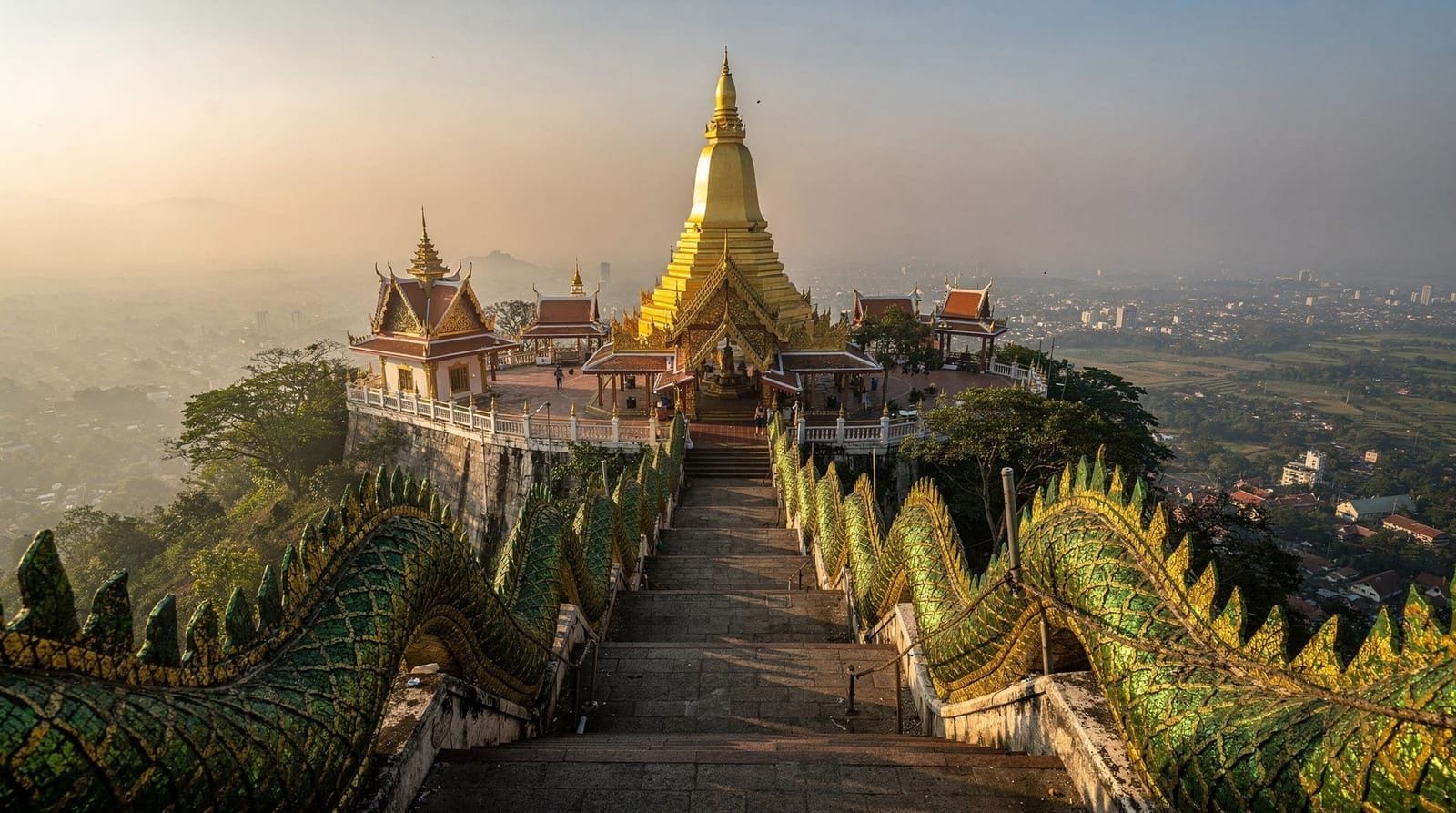
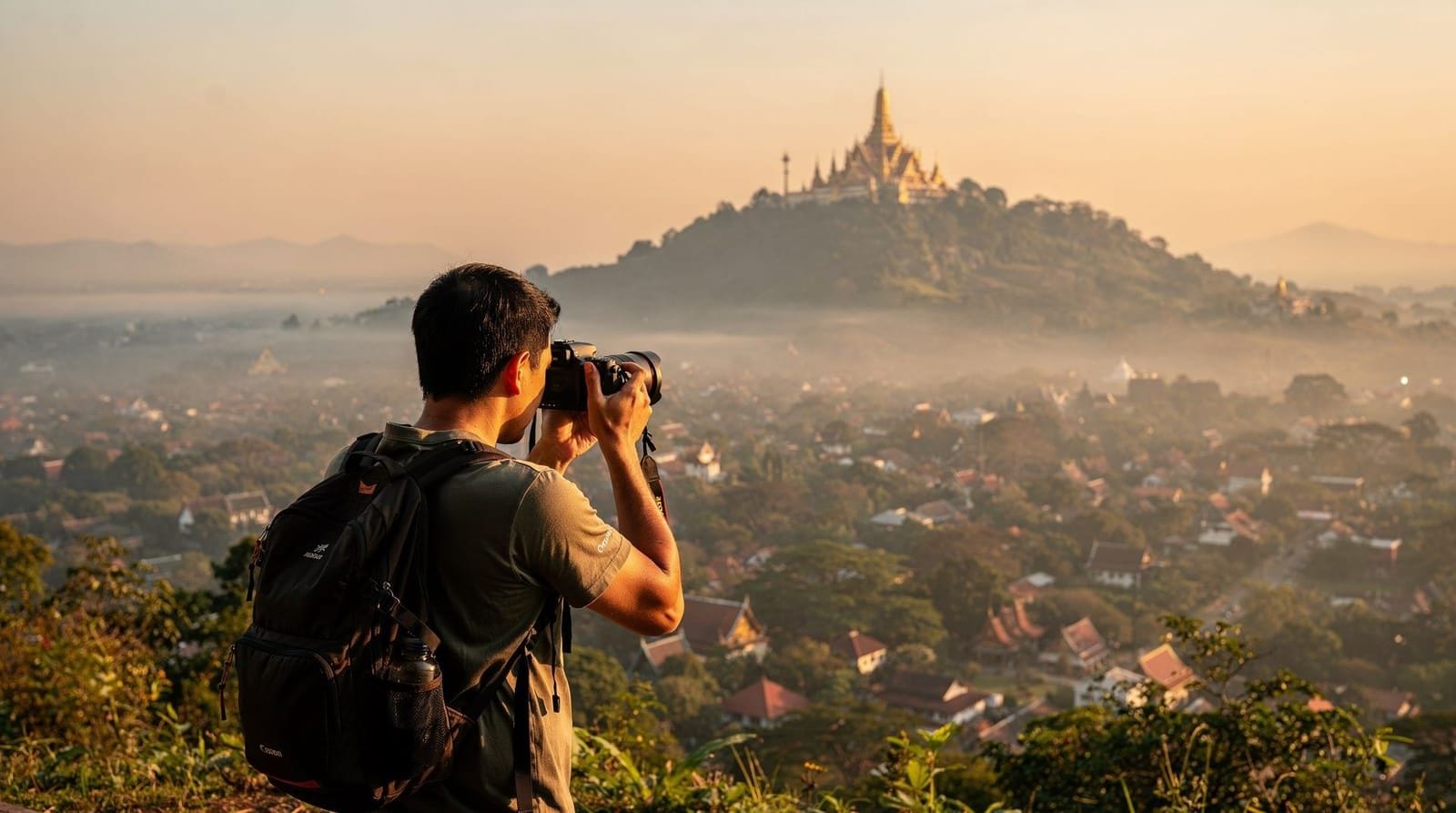
Doi Suthep’s elevated position with an open eastward view over the Chiang Mai valley makes it the single strongest sunrise subject in the region, and the difference between arriving at opening time and arriving mid-morning is dramatic — not just in crowd size, but in the quality of light hitting the golden chedi and the visibility across the valley below. A guided sunrise tour combining Doi Suthep, Wat Umong, and the Pha Lat monks’ trail is worth considering specifically because public transport options up the mountain don’t reliably run early enough to catch true first light, and driving yourself in the dark up an unfamiliar mountain road carries its own risks.
Arriving roughly 20-30 minutes before actual sunrise gives you time to find your position on the terrace, check your camera settings against the still-low light, and be ready rather than fumbling with gear as the light changes quickly through the first ten minutes after sunrise. That window — the first ten to fifteen minutes of direct light hitting the chedi — tends to produce the most dramatic color and shadow definition of the whole morning, after which the light flattens out fairly quickly as the sun climbs higher and the temperature difference between the mountain and the valley below evens out.
Old City temples: softer, more even light
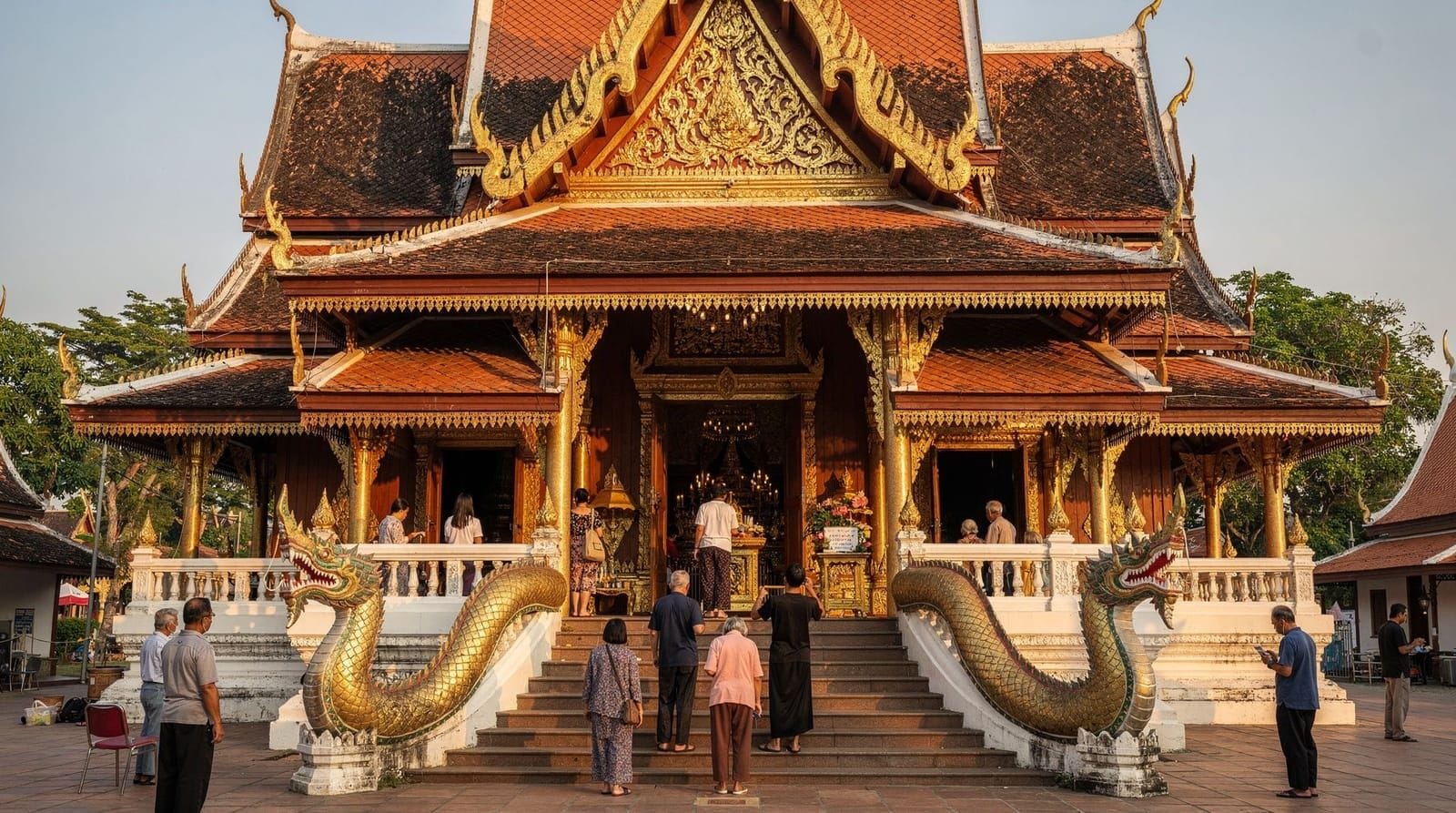
Wat Phra Singh, Wat Chedi Luang, and Wat Chiang Man sit at street level within a built-up urban grid, which means they don’t get the dramatic direct sunrise or sunset view that an elevated site like Doi Suthep does — surrounding buildings, trees, and walls block a clear horizon in most cases. What they get instead is a softer, more diffused version of that same early or late light, still noticeably better than harsh midday sun, arriving through gaps in the tree canopy and reflecting off surrounding structures rather than hitting subjects head-on. Arriving within the first hour or two after opening remains the single best adjustment for any Old City temple, regardless of the specific direction it faces.
Direction matters more here than at an open, elevated site, since a temple’s specific orientation determines whether morning or evening light reaches its main facade directly or leaves it in shadow while lighting a side wall instead. Wat Phra Singh’s principal wihan generally catches good direct light in the earlier part of the morning window, while Wat Chedi Luang’s more open courtyard tolerates a slightly wider range of timing since less of it sits in the shadow of adjacent structures. If a specific building’s facade is your priority shot, a short scouting visit at a non-ideal time first, just to note which direction it faces and what blocks the light, saves you from an unproductive early wake-up aimed at the wrong side of the building.
Wat Chedi Luang: a genuinely different subject after dark
Most temples on this list are best photographed within roughly two hours of sunrise or sunset, but Wat Chedi Luang’s floodlit ruined chedi is worth treating as a separate, after-dark subject entirely, once golden hour has fully faded into evening. The uplighting on the weathered brick produces a texture and mood distinct from anything achievable during daylight hours, and because the temple sits inside the walkable Old City, it’s an easy stop to add to an evening out rather than a dedicated early-morning trip. A tripod or stable brace matters more here than at any daylight stop on this list, since ambient light after dark is dim enough to introduce visible blur in a handheld shot.
Timing an after-dark visit close to closing time on a weekday, rather than a weekend evening, gives the emptiest courtyard for a clean composition without other visitors crossing your frame. The floodlighting itself typically switches on shortly after sunset and stays on through the evening, so there’s a reasonably wide window to work with rather than one narrow moment, unlike the tighter timing constraints that apply to sunrise shots elsewhere on this list.
Wat Umong: filtered light through the forest canopy
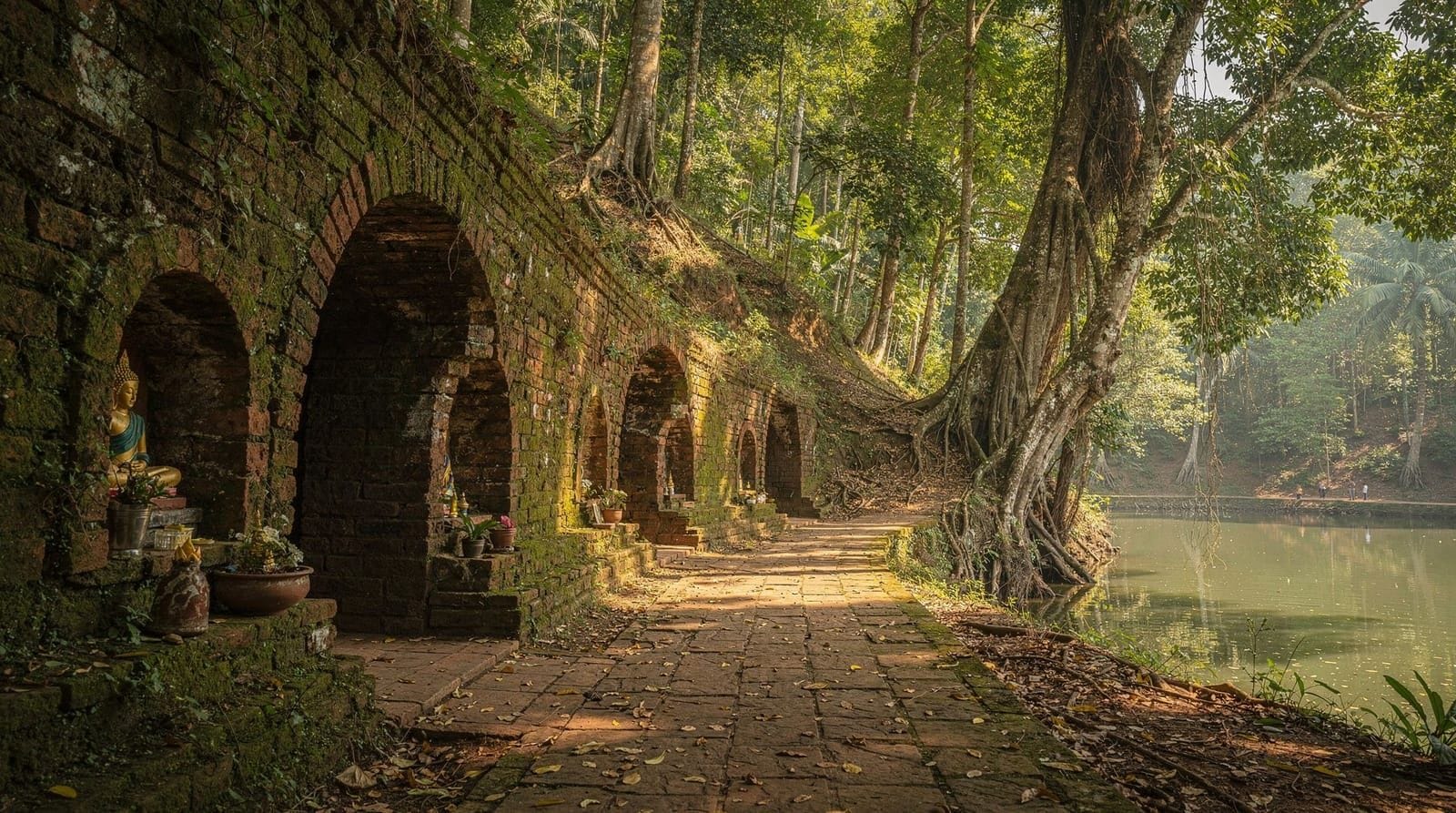
Wat Umong’s forest setting, with its ancient brick tunnels and lake, behaves differently from the more open Old City temples — direct golden-hour light gets filtered and dappled through tree cover rather than hitting surfaces directly, which suits the site’s quieter, more contemplative character better than harsh direct sun would. Midday visits here work reasonably well precisely because the canopy does some of the light-softening work that direct golden hour provides elsewhere, making Wat Umong a useful backup stop if your prime morning or evening slot is already booked for Doi Suthep or an Old City temple.
The site’s talking-tree tunnels and small lake add compositional variety beyond typical temple architecture, and the dappled light pattern through the canopy shifts meaningfully across even a single hour, rewarding a slower, more exploratory visit rather than a quick single-shot stop. Because it sits slightly outside the main Old City cluster, pairing it with a Doi Suthep morning or a broader west-side loop makes more sense logistically than treating it as a standalone destination.
How seasonal haze affects your results
Thailand’s burning season, roughly February through April, brings agricultural and forest-fire smoke haze across the region that can significantly reduce visibility, particularly for distant valley views from elevated points like Doi Suthep’s outer terrace. Even genuinely good golden-hour light can look muted and flat when shot through heavy haze, since the smoke scatters and softens contrast in a way that reads as dull rather than atmospheric in photographs. Close-up architectural shots — chedis, rooflines, carved details — are affected far less than wide panoramic views, so if your trip falls within burning season, it’s worth shifting photographic expectations toward detail shots and accepting that distant valley views may look hazier than in cool-season photos you’ve seen online.
The cool season advantage
The cool season, roughly November through February, offers the clearest air of the year, making it the strongest overall window for both close-up and wide temple photography, particularly at elevated sites like Doi Suthep where a clear valley view is part of the payoff. This period also overlaps with peak tourist season, so the trade-off is larger crowds at the most popular temples — arriving at true opening time or slightly before matters even more during these months than at quieter times of year.
Weekday mornings hold a meaningful edge over weekends throughout the cool season specifically, since domestic and regional weekend visitors add to the already-larger international crowd base during these peak months. If your schedule allows any flexibility, shifting a Doi Suthep or Wat Phra Singh visit to a weekday morning during December or January — the busiest stretch of the cool season — makes a bigger practical difference to your shooting conditions than almost any other single scheduling choice covered in this guide.
Equipment that helps most at golden hour
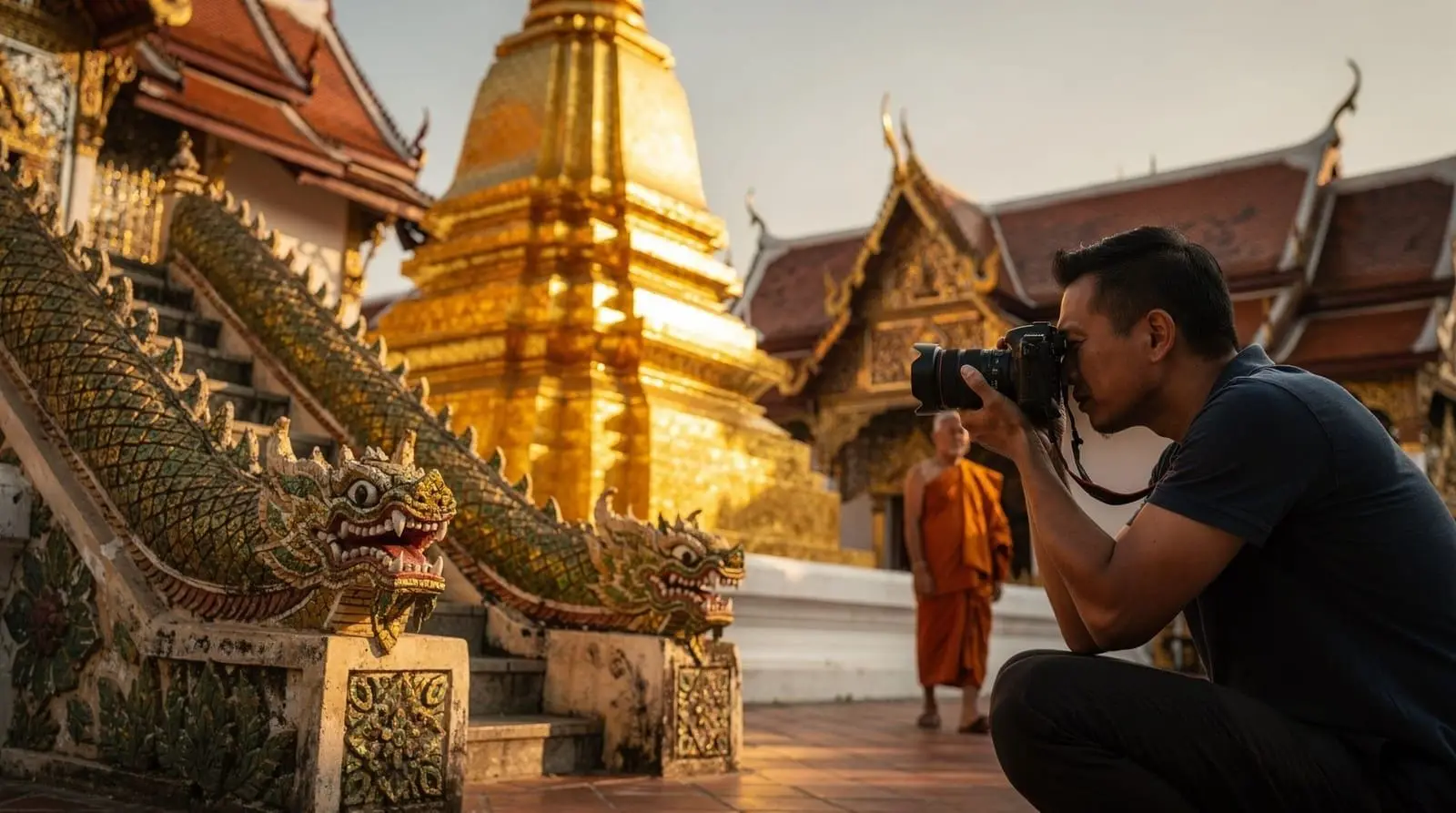
Golden hour’s directional, lower-angle light is more forgiving than harsh midday sun, so most of the equipment adjustments that matter are about controlling contrast rather than adding light. A lens hood or simply shading your phone’s camera with a hand cuts stray flare when shooting toward the sun’s direction, useful at west-facing subjects during sunset. A polarizing filter, for anyone shooting with a dedicated camera, deepens sky color and cuts glare off gilded roof tiles and any nearby water features, though it’s less useful indoors where several of Chiang Mai’s most significant Buddha images are kept. None of this is essential — good light does most of the work on its own — but small adjustments compound at a subject as reflective and detailed as a gilded temple exterior.
Rainy season light: an underrated option
The rainy season, roughly June through October, gets overlooked for photography, but overcast conditions during this period can actually produce useful diffused light for temple exteriors, avoiding the harsh contrast of a clear midday sun without requiring you to catch a precise golden-hour window. Sudden downpours are common and worth planning around with flexible timing and basic rain protection for gear, but the gaps between showers, when clouds thin and the air is freshly rain-washed, can deliver a clean, saturated look to temple gold leaf and greenery that’s genuinely distinct from cool-season shots.
Wet stone courtyards and reflective puddles after a shower also add a compositional element that doesn’t exist in the drier months — reflected chedis and rooflines in shallow standing water are a genuinely different image from the same subject shot dry, and worth watching for specifically in the twenty or thirty minutes after a rain shower passes, before the courtyard surface fully dries in the heat.
Temple etiquette overlaps with timing choices
Shooting during quieter early-morning or late-evening windows isn’t only about light — it also reduces the practical friction of shooting respectfully around active worship spaces, since fewer visitors means fewer people to work around and less pressure to rush a shot. Our temple photography rules guide covers the specific etiquette around interior halls, Buddha images, and monk photography in more depth, and it’s worth reading alongside this timing guide, since good light doesn’t override any of those underlying rules about what’s respectful to shoot and how.
Planning a realistic golden-hour circuit
Trying to hit multiple temples within a single golden-hour window generally doesn’t work, since the window itself only lasts 60-90 minutes and Chiang Mai’s temples are spread across the city and surrounding hills rather than clustered tightly together. A more realistic approach dedicates one full morning to Doi Suthep specifically, treats the Old City temples as a flexible cluster you can visit across one or two mornings on foot or by bike, and reserves one evening for Wat Chedi Luang after dark. A Chiang Mai sunset point, Wat Pha Lat, Doi Suthep, and Wat Umong tour is a practical way to cover several of these locations across a single well-timed evening outing without arranging transport between each stop yourself.
Combining temple light with the alms round
If your trip includes an interest in the early-morning alms-giving round covered in our best photo spots guide, it pairs naturally with a sunrise temple visit, since both depend on the same early start and similar light quality. A spiritual sunrise tour combining Doi Suthep, alms-giving, and meditation bundles both experiences into a single well-structured morning, useful for visitors who don’t want to coordinate two separate early starts on two different days.
Beyond the specific tour options mentioned in this guide, a private driver or guide arrangement offers the most flexibility for chasing exact timing across multiple sites in one morning, since public songthaew routes and fixed-departure group tours both work on schedules that may not align precisely with the ten or fifteen minutes of best light at a given temple. This flexibility comes at a cost premium over a shared group tour, worth weighing against how much a specific shot genuinely matters to your trip versus a good-enough result from a scheduled departure.
Bringing it together
None of this requires exotic timing knowledge once the basic pattern is clear: mornings suit elevated, east-facing subjects and general courtyard shooting across the city; evenings suit west-facing exteriors and set up naturally into after-dark floodlit shots at sites like Wat Chedi Luang; and cool-season months deliver the clearest air for anything involving a distant view. Building a trip itinerary around these windows, rather than treating temple visits as interchangeable stops fitted around other plans, is what separates photographs that merely document a temple from ones that actually show it at its best.
Visitors with only one or two days available for temple photography specifically should prioritize in this order: a Doi Suthep sunrise first, since it’s the least forgiving in terms of timing and the most rewarding when it comes together; an Old City temple cluster on foot or by bike during whichever morning remains, since these tolerate a slightly wider window than Doi Suthep does; and a Wat Chedi Luang evening visit last, since after-dark floodlighting is available on essentially any evening without the scheduling pressure that sunrise and daytime temple shots carry. For a full ranked list of specific locations beyond temples, see our best photo spots in Chiang Mai guide and the broader photography category.
Frequently asked questions about Golden hour temple photography in Chiang Mai: timing and light
Does golden hour change much by season in Chiang Mai?
Which temple has the best sunrise light?
Is sunset or sunrise better for temple photography?
How does the burning season affect temple photography?
What time do temples open, and does that limit sunrise shooting?
Top experiences
Bookable activities with verified prices and instant confirmation on GetYourGuide.