Best photo spots in Chiang Mai: a ranked shortlist
Chiang Mai: Instagrammable spots
Duration: Half day
What are the best photo spots in Chiang Mai?
The strongest results come from Doi Suthep at sunrise, Wat Chedi Luang's floodlit ruined chedi after dark, the golden exterior of Wat Phra Singh in early light, the twin royal pagodas at Doi Inthanon, Bua Thong Sticky Waterfalls, the sea-of-mist viewpoint at Mon Cham on a cool-season morning, and Yi Peng lantern releases in November. Nimman's café and street-art scene and the Old City's moat and gates round out a realistic shortlist for a multi-day visit.
Chiang Mai photographs well almost everywhere, which is both a gift and a problem: with 300-plus temples, a misty mountain ring, and a night market scene running most evenings of the week, it’s easy to spend a week shooting scattershot and come home with a memory card full of similar-looking shots rather than a genuinely varied set. This guide ranks the locations that reliably produce distinct, strong images, weighted toward places where timing and a little planning make a real difference over places that photograph fine at any hour.
Quick answer: the highest-value spots are Doi Suthep at sunrise, Wat Chedi Luang after dark, Wat Phra Singh in early light, the twin pagodas at Doi Inthanon, Bua Thong Sticky Waterfalls, the Mon Cham sea-of-mist viewpoint on a clear cool-season morning, and a Yi Peng lantern release if your dates line up with November. Nimman’s café and street-art corners and the Old City moat and gates fill out a realistic shortlist without requiring a car.
Doi Suthep at sunrise
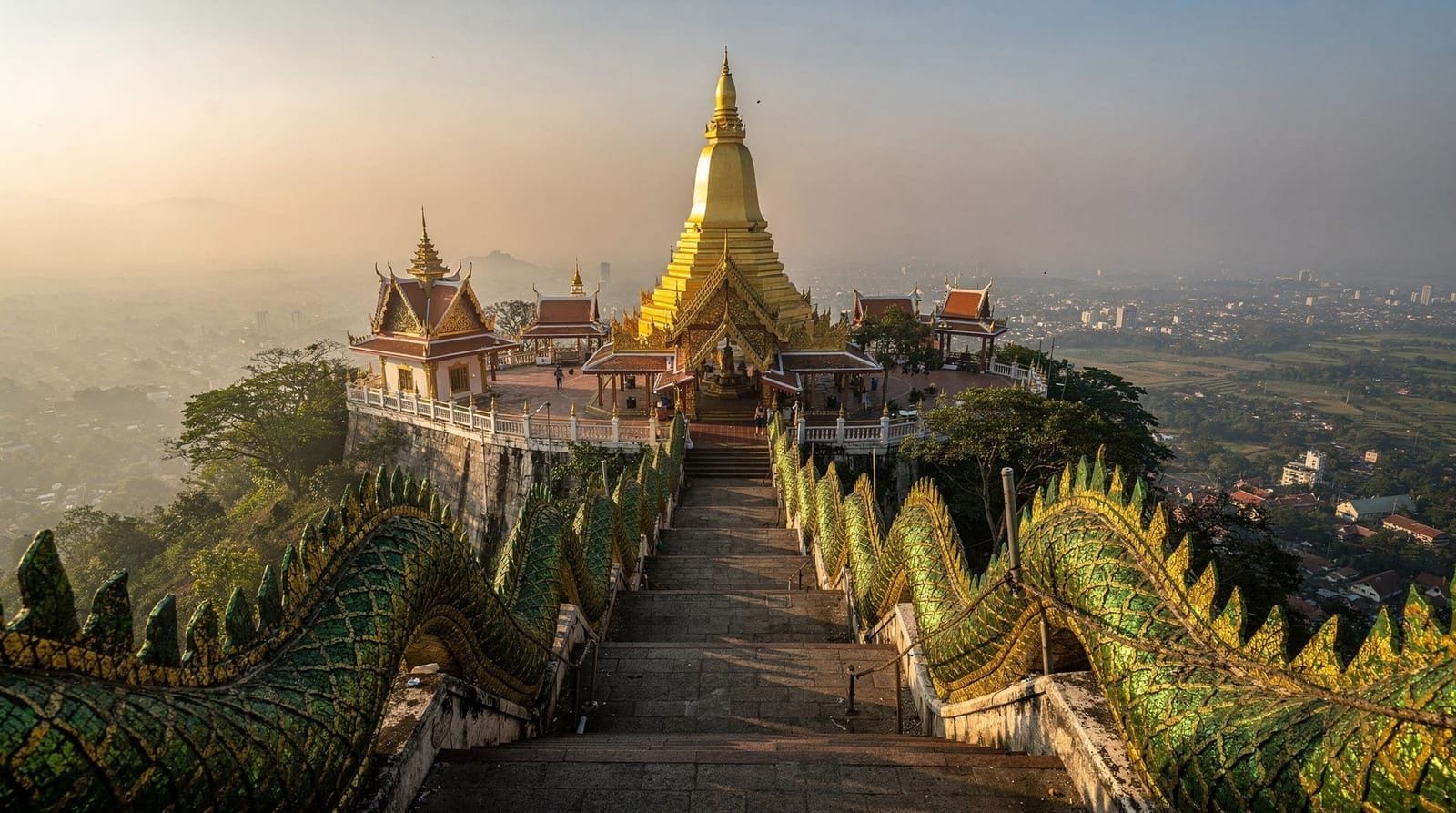
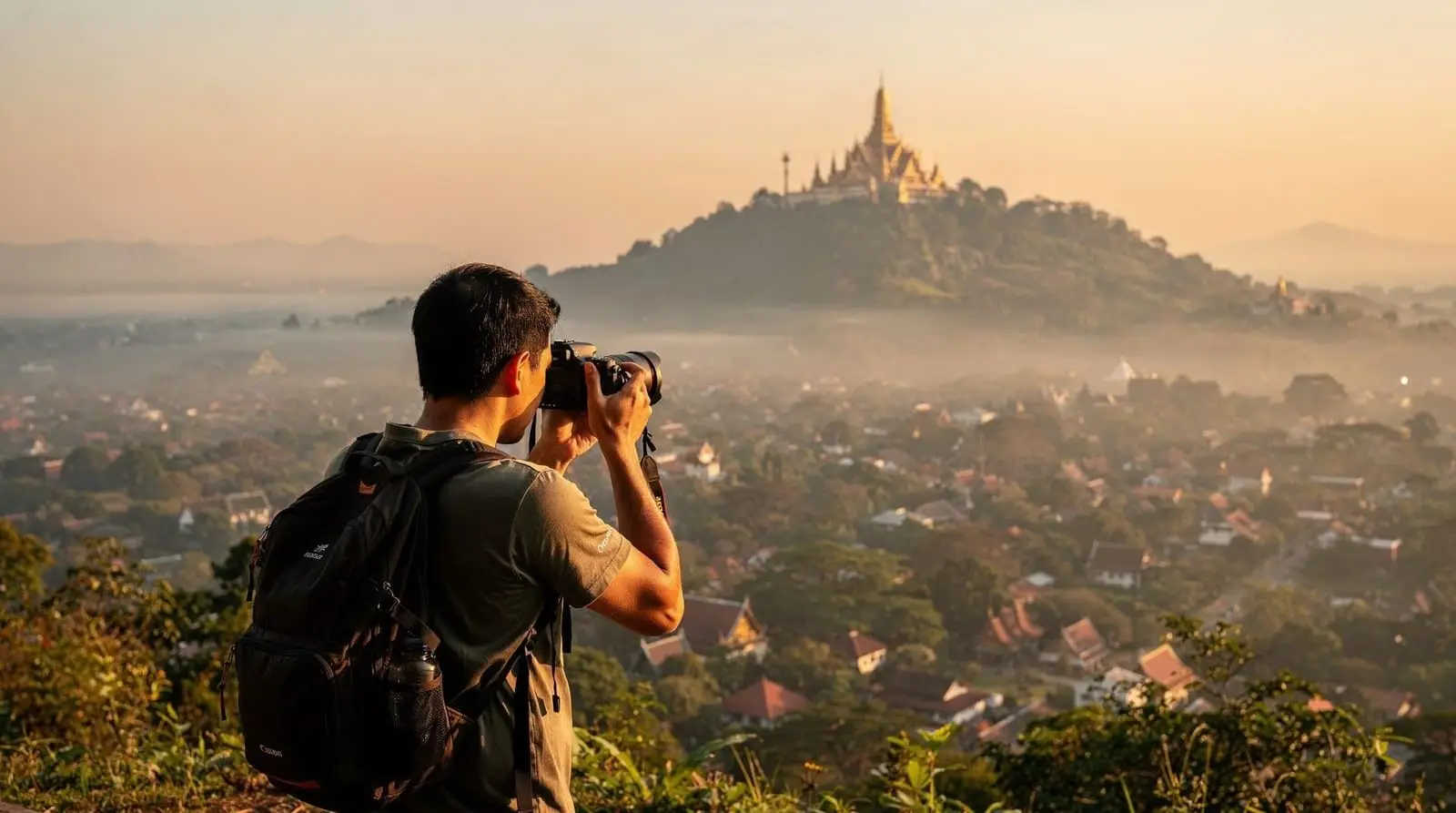
The golden chedi at Wat Phra That Doi Suthep, roughly 15km and a steep mountain road from the city center, is Chiang Mai’s most photographed single subject, and sunrise is when it earns that reputation. Arriving before the tour buses — realistically before 7am — gets you the naga staircase, the chedi, and the valley view below with soft light and a fraction of the midday crowd. The view down over the Chiang Mai valley from the temple’s outer terrace is the payoff shot most visitors come for, and it’s genuinely better in the low, angled light of early morning than the flatter haze that builds by late morning most of the year.
Two angles are worth planning for specifically: the tight shot of the golden chedi itself, best from the inner circumambulation path (walked quietly and without blocking pilgrims), and the wide valley view from the terrace near the entrance, best with a slightly longer lens to compress the layered hills below into the frame. The naga staircase leading up from the lower car park photographs well from ground level looking up, exaggerating its length, though this shot works better later in the morning once light reaches down into the stairwell rather than at first light when it’s still shadowed. A guided sunrise tour combining Doi Suthep, Wat Umong, and the Pha Lat monks’ trail handles the transport logistics, which matters at this hour since public songthaews to the mountain don’t reliably run before sunrise.
Wat Chedi Luang after dark
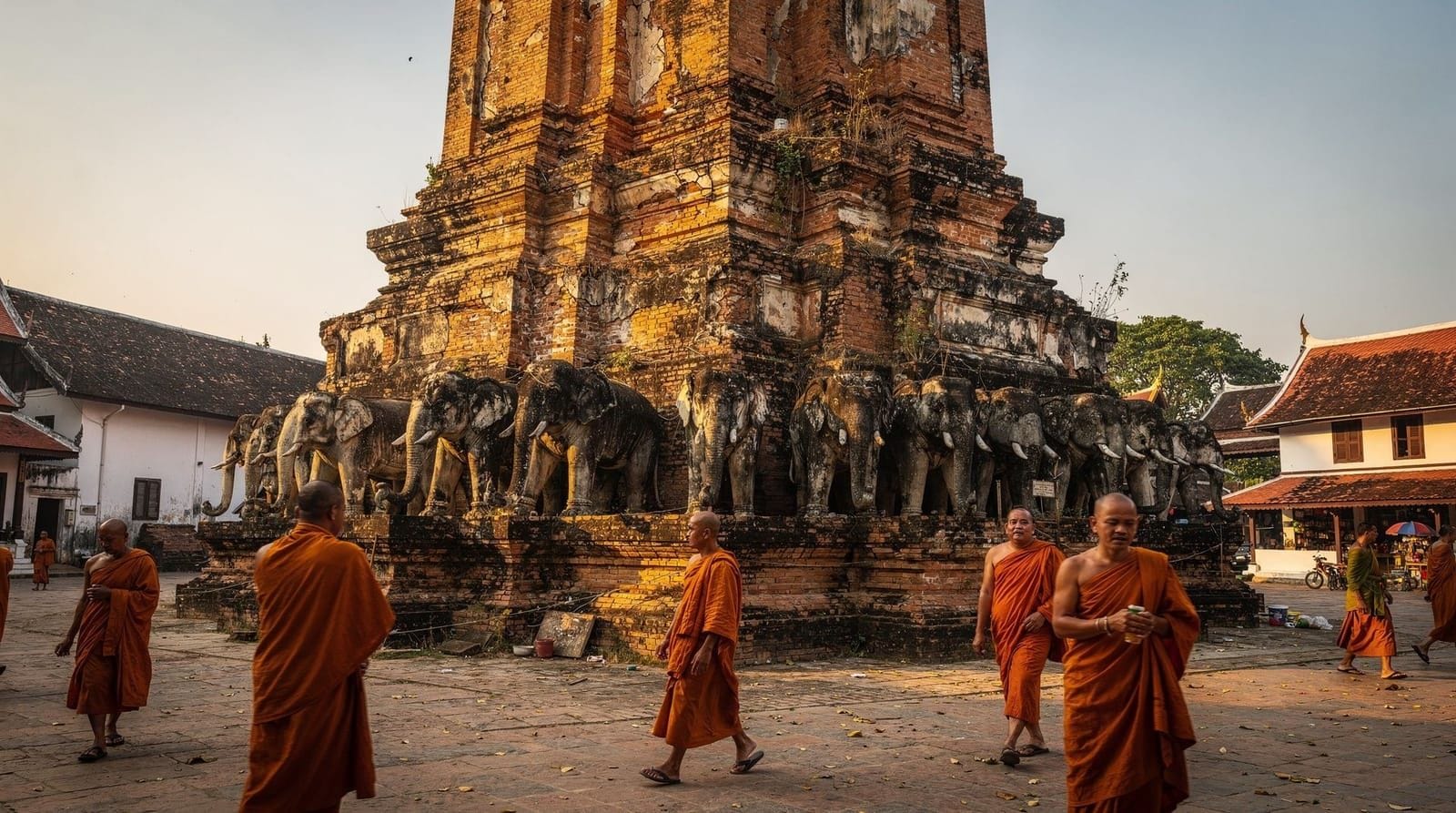
Wat Chedi Luang’s partially ruined 14th-century chedi is floodlit most evenings, and the combination of weathered brick, uplighting, and the temple’s after-dark quiet produces a genuinely different image than the same structure at midday. The lighting brings out the texture of the centuries-old brickwork in a way flat daylight doesn’t, and because the temple sits inside the Old City, it’s an easy add-on to an evening walk rather than a dedicated trip. Arrive close to closing time on a weekday for the emptiest courtyard.
A tripod or a steady surface helps here more than at any other stop on this list, since the ambient light after dark is dim enough that a handheld phone shot will often show visible motion blur or grain. Bracing a phone against a railing or low wall and using a 2-3 second timer avoids the shake of pressing the shutter button directly. The chedi’s east-facing side catches the floodlighting most evenly; the more heavily eroded west face, while atmospheric, sits in deeper shadow once the sun is fully down. A short walk away, the smaller viharn housing the city pillar shrine is also lit in the evening and makes a reasonable secondary stop if you’re already in the courtyard.
Wat Phra Singh in early light
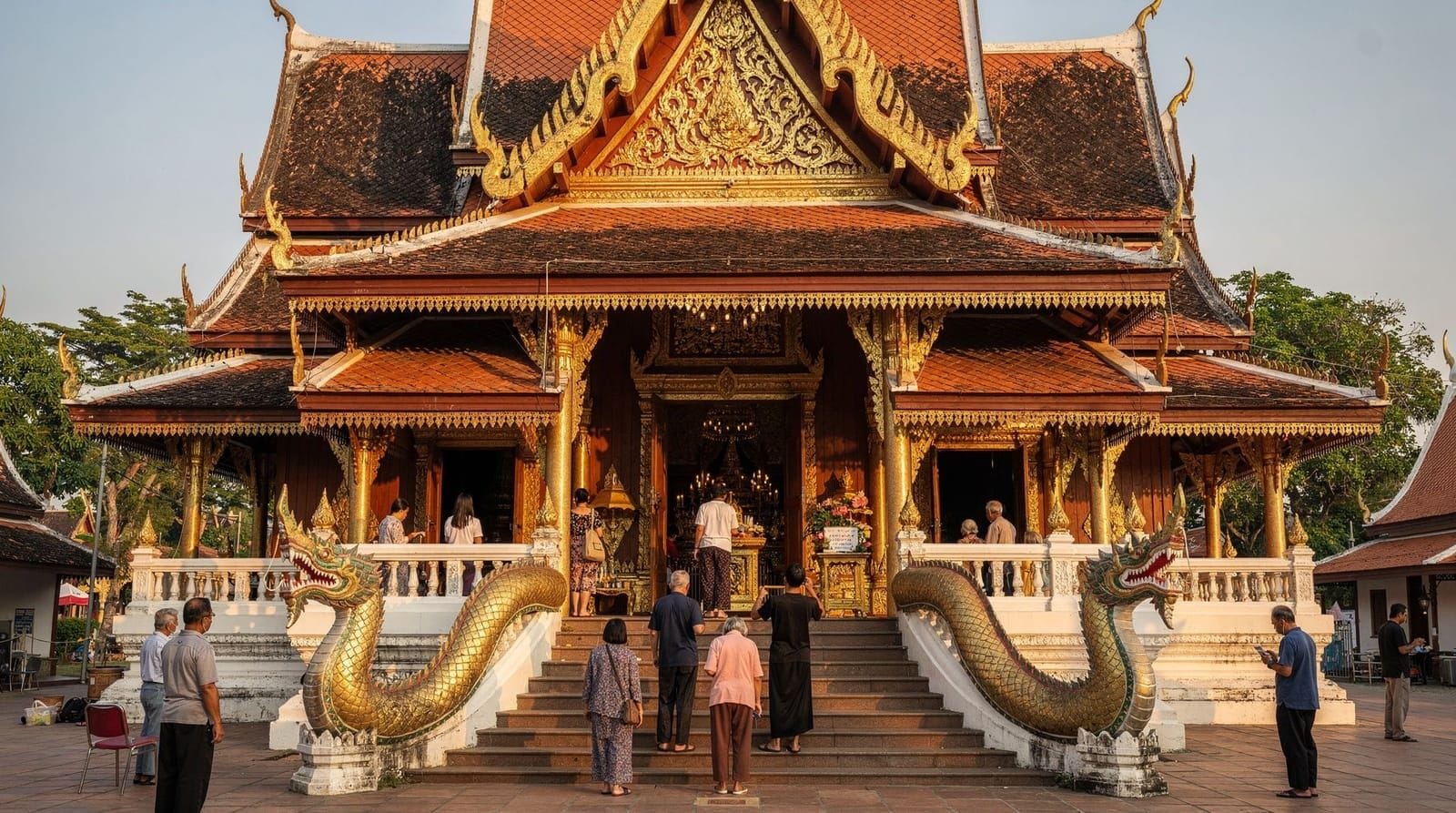
Wat Phra Singh, the city’s most revered temple, photographs best in the first hour or two after opening, when the golden exterior of the main wihan catches low morning light and the courtyard hasn’t yet filled with tour groups. The elaborately gilded roofline and naga details reward a longer lens or a tighter crop as much as the wide establishing shot, and the smaller Lai Kham chapel’s carved gable is a strong secondary subject, though photography inside that specific hall is restricted — see our temple photography rules guide before shooting indoors anywhere in the city.
Doi Inthanon’s twin royal pagodas
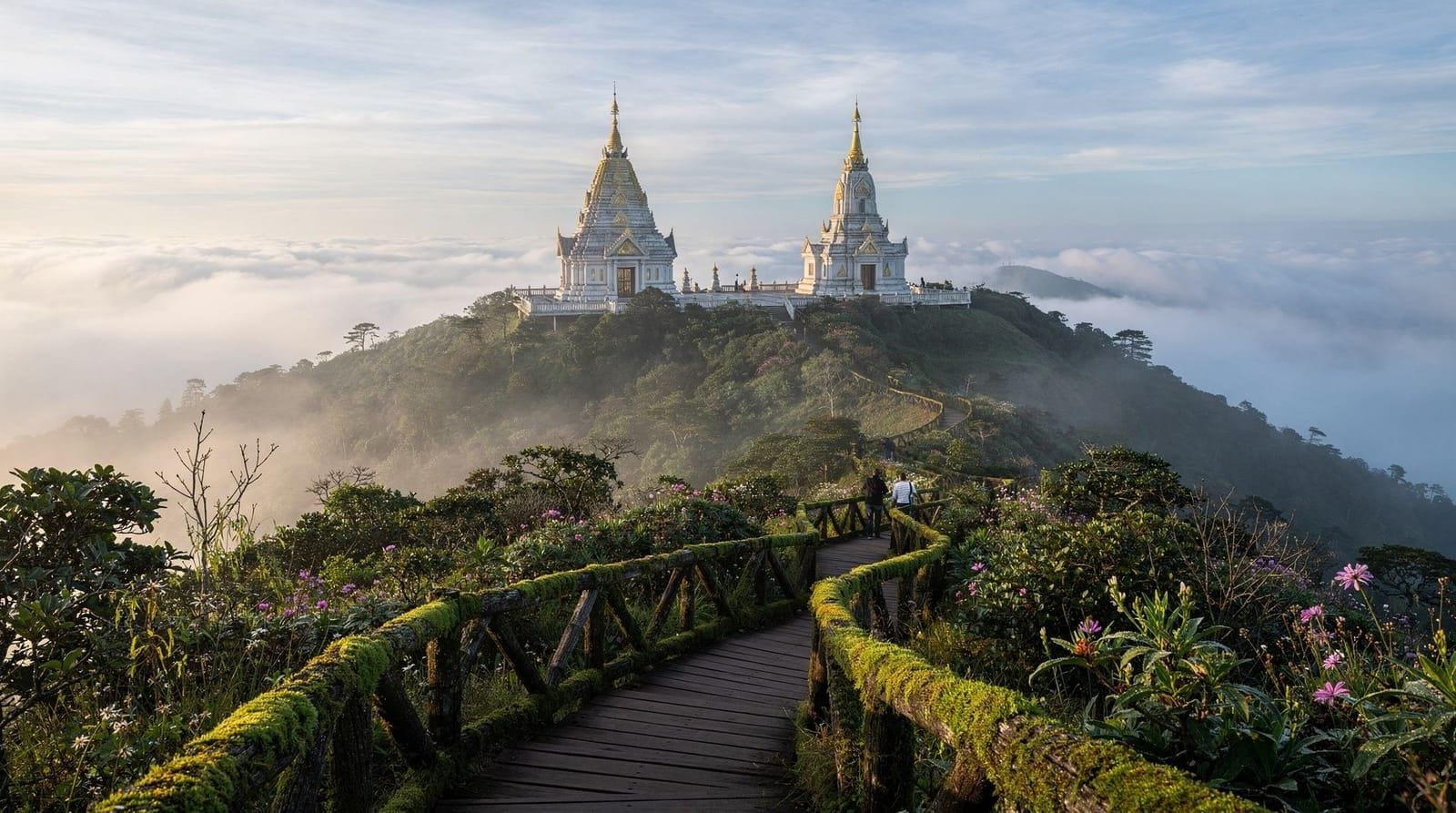
Roughly two hours from the city, the two Royal Twin Pagodas at Doi Inthanon, Thailand’s highest point, sit on a ridge often wrapped in cloud, with landscaped gardens leading up to each structure and, on a clear day, sweeping views over the surrounding national park. The pagodas themselves are a striking, symmetrical subject any time of day, but the cloud cover that rolls through — sometimes obscuring the view entirely, sometimes parting for dramatic gaps — is part of what makes this spot photograph differently on every visit. Because a day trip out here typically bundles the pagodas with a waterfall and viewpoint stop, most visitors get one shot at the light on the day they go, so an early morning departure from the city improves the odds of catching the ridge before afternoon cloud thickens.
The elevated Kew Mae Pan viewpoint trail nearby, walkable only with a mandatory local guide, adds a genuinely different subject: a ridgeline boardwalk cutting through cloud forest and low scrub, with drop-away views on both sides when the weather cooperates — see our Doi Inthanon hiking trails guide for how the permit and guide requirement work. Pack a light layer regardless of season — the summit area sits noticeably colder than the city, often 10-15°C cooler, and a shivering foreground subject rarely photographs as intended.
Bua Thong Sticky Waterfalls
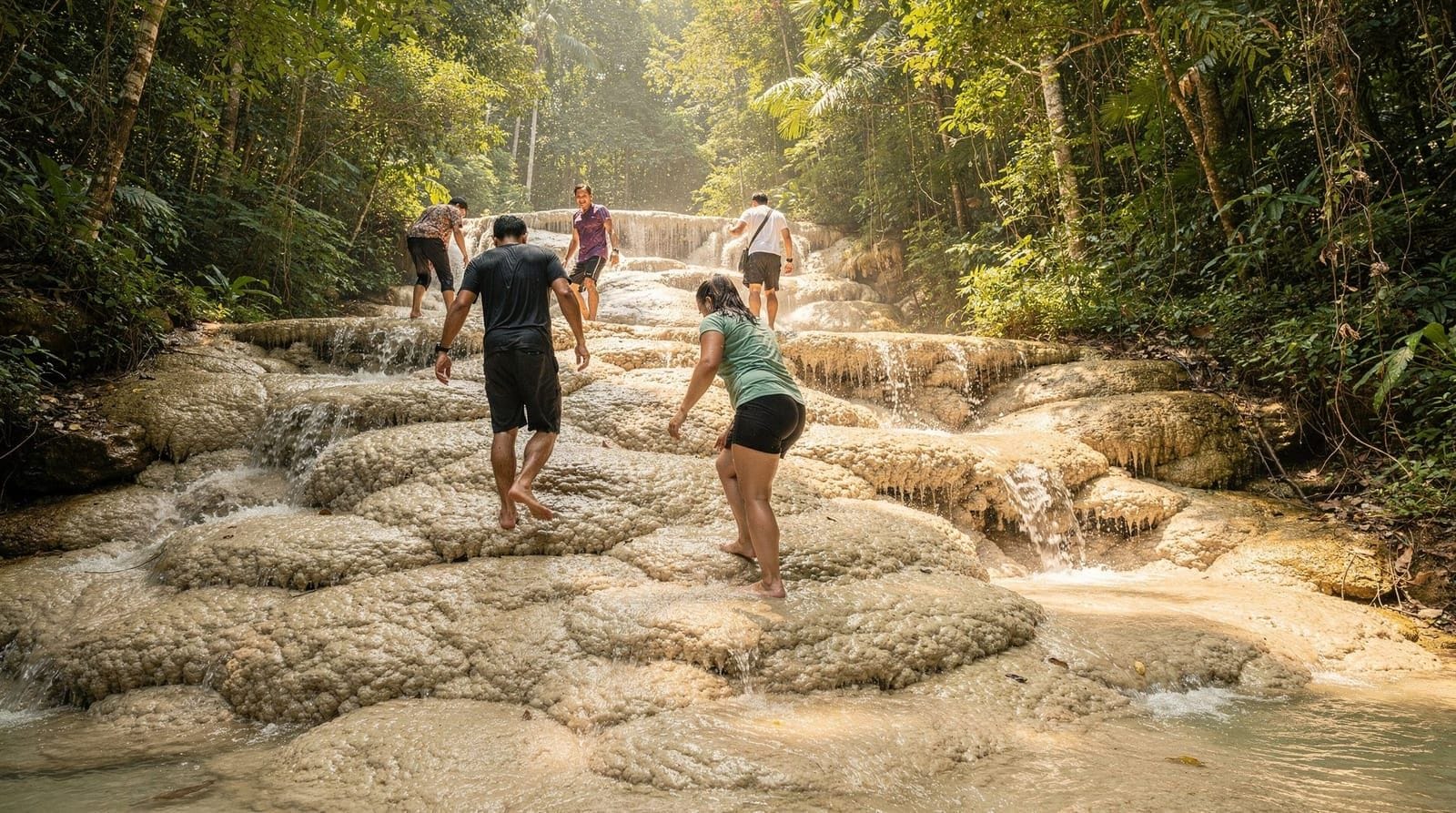
The limestone-crusted cascades at Bua Thong, roughly an hour north of the city, give an unusual, high-traction rock surface that visitors climb barefoot, and the resulting photos — people mid-scramble up a tiered white waterfall in bright jungle green — are genuinely distinctive rather than another generic waterfall shot. Midday sun through the forest canopy actually helps here more than the soft light preferred elsewhere on this list, since it lights the water’s texture and throws visible spray. Weekday mornings before the tour-van rush (roughly 10am-1pm) give you a realistic shot at fewer people in frame.
Waterproofing matters more here than at any other stop on this list: phones go in and out of pockets around flowing water and wet limestone, and a dropped device on the lower tiers isn’t a rare occurrence. A cheap waterproof pouch or a phone left on a dry rock while someone climbs is the simplest precaution. The upper tiers, reached after a 15-20 minute scramble, are noticeably less crowded than the lower pools closest to the car park and give a cleaner, less cluttered frame if you’re willing to climb a bit further.
Mon Cham’s sea of mist
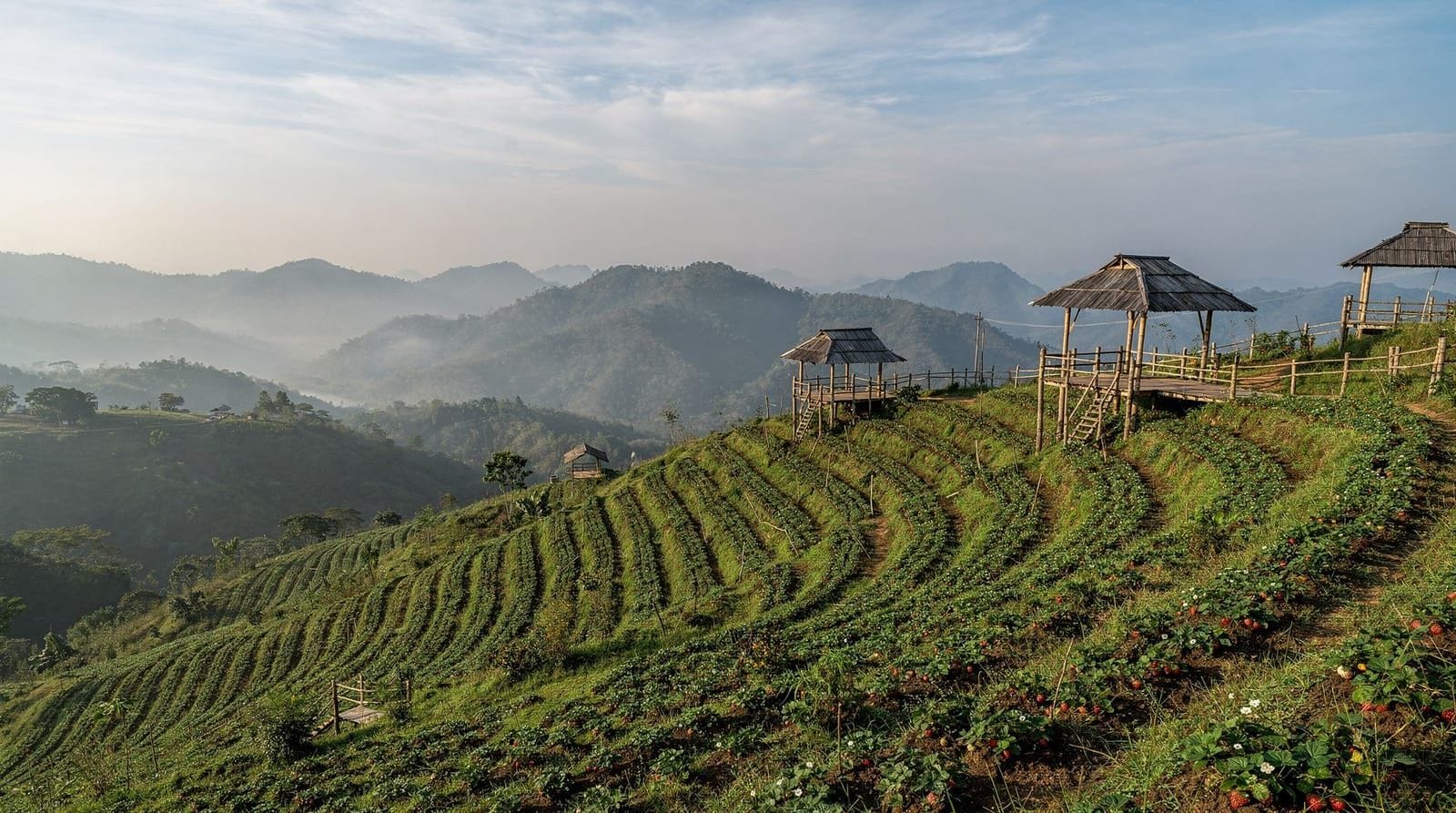
On a clear cool-season morning, Mon Cham’s hilltop viewpoint delivers Chiang Mai’s closest equivalent to Thailand’s famous mist-covered mountain shots — layers of forested ridgeline emerging from cloud below, best seen around sunrise before the mist burns off, usually by mid-morning. This isn’t guaranteed on any given day; it depends on a cool, clear overnight followed by rising humidity, and locals staying near Mon Cham are a better source for a next-morning read than anything bookable in advance from the city. Strawberry farm terraces near the viewpoint add a secondary, more reliable subject if the mist doesn’t show.
Because the mist typically clears within an hour or two of sunrise, staying the previous night in the Mae Rim direction — rather than driving up from central Chiang Mai in the dark — meaningfully improves your odds of being in position at first light. Several small guesthouses and viewpoint cafés around Mon Cham cater specifically to this early-morning crowd, with hot coffee available well before the main breakfast rush elsewhere in the valley.
Yi Peng lantern releases
A mass release of paper sky lanterns is one of the most recognizable images associated with Chiang Mai, and it happens for real, but only around specific dates tied to the Yi Peng festival, typically in November. The large, coordinated releases with hundreds of lanterns drifting together — the scene most photographers are actually chasing — come from ticketed events, most held outside the city near Mae Jo, rather than spontaneous activity downtown. A tripod and a slower shutter speed handle the low light and moving lanterns better than a handheld phone shot; see our dedicated Yi Peng lantern photography guide for camera settings and event logistics, and book an event like the official CAD Yi Peng Sky Lantern Festival well ahead, since these sell out.
Nimman’s cafés and street art
Nimmanhaemin offers a completely different photographic register from the temple-and-mountain circuit: minimalist café interiors, murals tucked down side sois, and a design-district aesthetic that reads more like a lifestyle shoot than a travel one. This is the spot on the list that works well on an overcast or rainy day when temple and mountain light is flat anyway, making it a useful rain-day backup. A private Instagrammable spots tour with Thai lunch strings several of Nimman’s and the wider city’s photogenic corners into one guided half-day if you’d rather not scout locations yourself.
The Old City moat and gates
The rectangular moat and its restored brick gates and corner bastions — Tha Phae Gate being the best-known — give Chiang Mai a genuinely distinctive urban silhouette that most Thai cities don’t have. Late afternoon golden hour lights the brickwork from a low angle and reflects nicely off the moat water when it’s calm, and the gates fill with pigeons and evening foot traffic that add life to an otherwise architectural shot. Weekend evenings, especially before the Sunday market sets up along Ratchadamnoen Road, are busiest; a weekday sunset gives a calmer frame.
The southeast corner near Tha Phae Gate is the most photographed single section of moat, but the northeast and southwest corner bastions see far fewer visitors and offer a quieter, more architectural take on the same brickwork-and-water combination. A slow walk around even one full side of the rectangle, rather than a single stop at the main gate, usually turns up a better composition than the obvious postcard angle everyone already has.
Monk processions and alms rounds
Early morning alms-giving, where monks walk a fixed route collecting food from waiting residents, happens daily around temples and residential sois across the city, most visibly in and near the Old City starting around 6am. This is a genuinely candid, unstaged scene rather than a tourist re-enactment, which is exactly why it calls for restraint: photograph from a respectful distance without stepping into the procession’s path, using a longer lens rather than crowding in close, and skip flash entirely. A guided sunrise outing that pairs the alms round with a temple visit gives context and guidance around the etiquette if you’d rather not navigate it independently, and our monk chat guide covers a related, more conversational way to engage respectfully with monastic life.
Rice terraces and the wider valley
Chiang Mai city itself sits in a flat river valley of rice paddies rather than the dramatically terraced hillside fields more associated with northern Thailand’s postcard imagery — those come from steeper terrain further out, particularly the Mae Chaem valley on Doi Inthanon’s western slopes and areas toward Mae Hong Son and Pai. Within an easy day trip, though, the paddy fields ringing the city still turn a vivid green in the growing season (roughly June-November) and a golden stubble after harvest, and they make a strong foreground for wider landscape shots taken from any of the hillside viewpoints on this list, Mon Cham included.
What to actually pack
A phone with a recent camera covers the majority of this list adequately, including the moat, Nimman, the markets, and daylight temple shots. Three additions genuinely change your results at specific stops: a small travel tripod or a phone clamp for Wat Chedi Luang after dark and any lantern photography, a lightweight rain cover during the wet season (roughly June-October) when sudden downpours are common even on an otherwise clear-looking day, and a dedicated wide-angle or ultrawide lens attachment if you’re shooting the Doi Inthanon pagodas or the Mon Cham viewpoint, where a standard phone field of view can feel cramped against a genuinely wide landscape. A polarizing filter, if you shoot with a mirrorless or DSLR body, earns its keep at the waterfalls and rice paddies by cutting glare off wet rock and standing water.
Golden hour timing across the year
Because Chiang Mai sits close enough to the equator that day length doesn’t swing dramatically by season, golden hour stays fairly predictable: roughly 6-7:30am and 5-6:30pm year-round, shifting by only about half an hour between the longest and shortest days. What changes more by season is atmospheric haze — the cool season (November-February) gives the clearest air and sharpest distant views, while the burning season (roughly February-April) can mute even good golden-hour light with smoke haze, worth knowing if photography is a trip priority and your dates are flexible.
A note on drones and temple etiquette
Several of the spots above — Doi Suthep, Wat Chedi Luang, Wat Phra Singh — are active religious sites first and photo subjects second, and both drone use and interior photography carry real restrictions worth understanding before you go. Our drone photography rules guide and temple photography rules guide cover the specifics; the short version is that drones are essentially off-limits at any temple, and interior halls vary room to room rather than following one blanket rule.
Guided photo tours versus scouting it yourself
A guided option like the half-day Instagrammable spots tour makes sense if your time is limited and you’d rather have someone else handle transport, timing, and location knowledge across several of these spots in one outing. Scouting independently costs more time but gives you full control over how long you linger at any one location — useful at a mist-dependent spot like Mon Cham, less useful at a fixed-schedule subject like a ticketed lantern release. Most visitors combine both: a guided outing for the harder-to-reach or timing-sensitive spots, and independent wandering for the Old City, Nimman, and markets.
Building a realistic multi-day shot list
Trying to hit every location on this list in one or two days generally backfires, since several depend on specific timing (sunrise at Doi Suthep, mist at Mon Cham, dark for Wat Chedi Luang) that can’t be stacked into a single morning. A more realistic plan spreads them across a stay of four days or more: one sunrise dedicated to Doi Suthep or the alms round, one full day trip covering Doi Inthanon or Sticky Waterfalls, one evening for Wat Chedi Luang and the Old City gates, and flexible time for Nimman and the markets whenever the weather or your schedule doesn’t cooperate elsewhere. For a broader sense of how these fit alongside the rest of a first visit, see our things to do in Chiang Mai overview and the full photography category for more spot-specific guides.
Frequently asked questions about Best photo spots in Chiang Mai: a ranked shortlist
Do I need a professional camera to get good photos in Chiang Mai?
What time of day gives the best light in Chiang Mai?
Is Mon Cham's sea of mist guaranteed?
Do I need permission to photograph monks or hill tribe villagers?
Can I fly a drone at these spots?
Are Yi Peng lantern photos possible without attending an official ticketed event?
Top experiences
Bookable activities with verified prices and instant confirmation on GetYourGuide.