Doi Inthanon
Thailand's highest point, twin royal pagodas, the Kew Mae Pan trail and three waterfalls — what's actually worth a full day from Chiang Mai.
Chiang Mai: Doi Inthanon National Park Eco-Friendly Tour
Quick facts
- Getting there
- ~1.5-2hr drive SW of Chiang Mai (~80km) via Chom Thong; almost everyone visits by tour or private car
- Key sight
- Thailand's highest point (2,565m) plus the twin royal pagodas Naphamethinidon & Naphaphonphumisiri
- Time needed
- A full day — most tours run 8-10 hours round trip
- Best time
- November-February for cool, clear weather; bring a jacket, the summit can approach 0degC in winter
- Cost / entry
- Park entry ~300 THB foreigner (~$8.50), plus a separate small fee at the pagodas
Doi Inthanon is the highest point in Thailand, and the national park built around it packs a genuinely varied day into a single trip from Chiang Mai: a cold, cloud-forest summit, two enormous royal pagodas, a boardwalk nature trail through moss-draped forest, and three separate waterfalls, all within the same park boundary.
Quick answer: Doi Inthanon (2,565m) sits inside Doi Inthanon National Park, about 1.5-2 hours southwest of Chiang Mai near the town of Chom Thong. The main stops are the summit itself (cold, misty, with a short mossy boardwalk called Ang Ka), the twin royal pagodas Naphamethinidon and Naphaphonphumisiri partway up the mountain, the Kew Mae Pan nature trail (guide required, closed during the rainy season), and three waterfalls — Wachirathan, Sirithan, and Mae Ya. Park entry runs about 300 THB (~$8.50) for foreign visitors, and almost everyone covers the park as a full-day guided tour rather than self-driving, since the sights are spread across a large area with a single winding access road.
Thailand’s highest point: what’s actually at the summit
The summit itself, at 2,565m, is a modest, slightly anticlimactic stop by design — a small marked point, a shrine to a former Chiang Mai prince the mountain is named after, and cool, often foggy air that can feel more like a temperate country than tropical Thailand. What makes the summit area worth the stop isn’t a view (fog and cloud forest cover mean there often isn’t one) but the short Ang Ka nature trail, a raised wooden boardwalk winding through dense, moss-covered cloud forest unlike anything else easily reached from Chiang Mai. Gnarled trees draped in hanging moss, ferns, and rhododendrons create a genuinely different ecosystem from the lowland heat most visitors have just driven up from, and the boardwalk keeps the muddy, fragile ground underneath undisturbed.
Layer up before arriving at the top. Temperatures at the summit run noticeably cooler than Chiang Mai city year-round, and during the cool season (November-February) can approach or even briefly dip below 0degC in the early morning — a fact that surprises visitors who packed only for tropical heat.
The twin royal pagodas
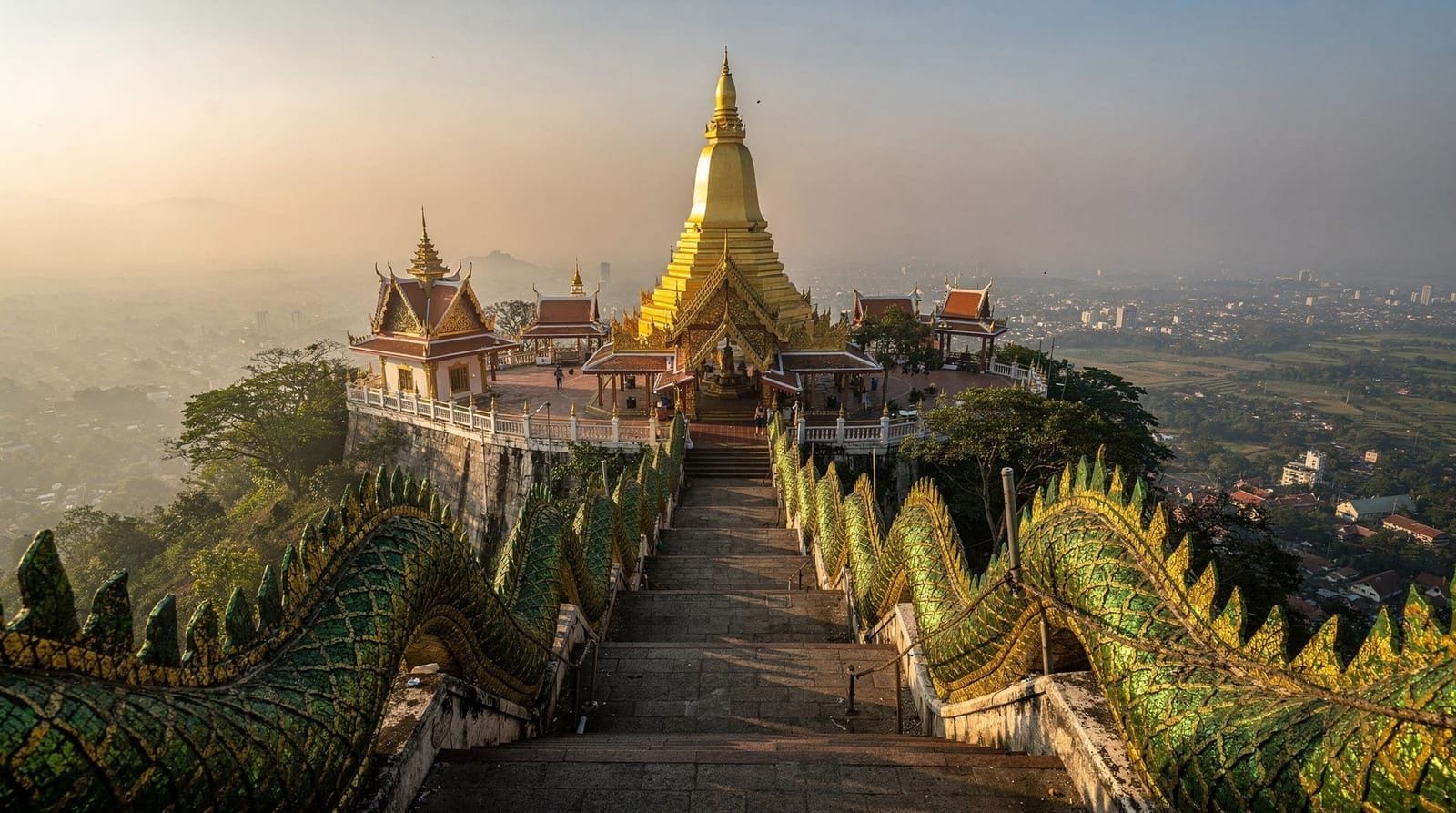
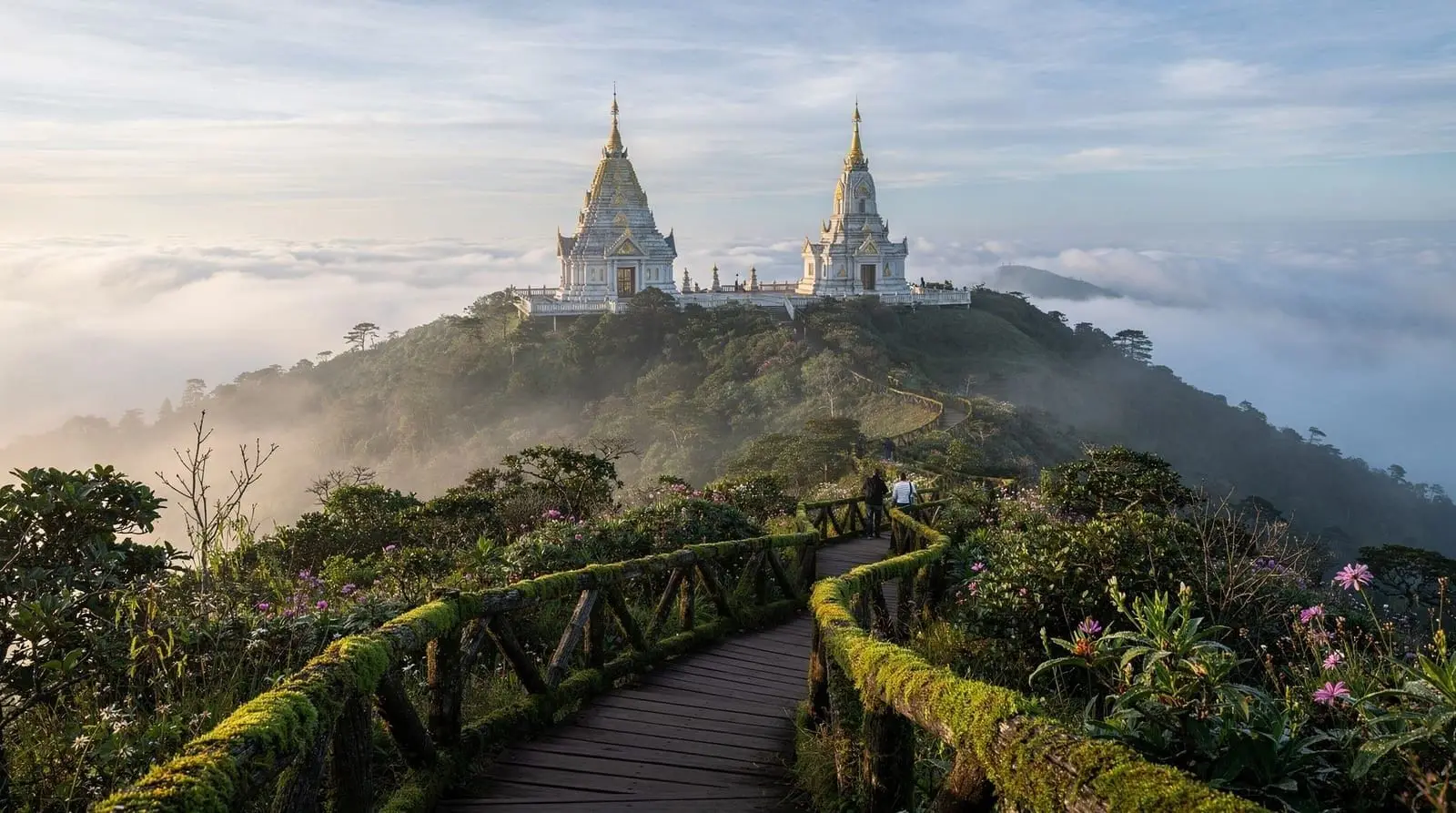
The most photographed stop on the mountain is a pair of large, modern pagodas — Phra Mahathat Naphamethinidon and Phra Mahathat Naphaphonphumisiri — built to commemorate the 60th birthdays of the King and Queen respectively. Set on a ridge with landscaped gardens and, on clear days, sweeping views over layered mountains, the two structures are connected by a walkway and surrounded by manicured flower beds that add a splash of color against the cloud forest backdrop.
Each pagoda has its own small entry fee separate from the main park fee, and each interior houses a Buddha image and murals depicting the King’s and Queen’s respective life’s work. Because this stop sits at a lower, more accessible elevation than the true summit and has proper parking and paved paths, it’s usually the most crowded single point in the park, particularly around midday when day-tour buses coincide. An earlier arrival — following roughly the same logic as Doi Suthep closer to the city — noticeably improves the experience here.
Kew Mae Pan nature trail
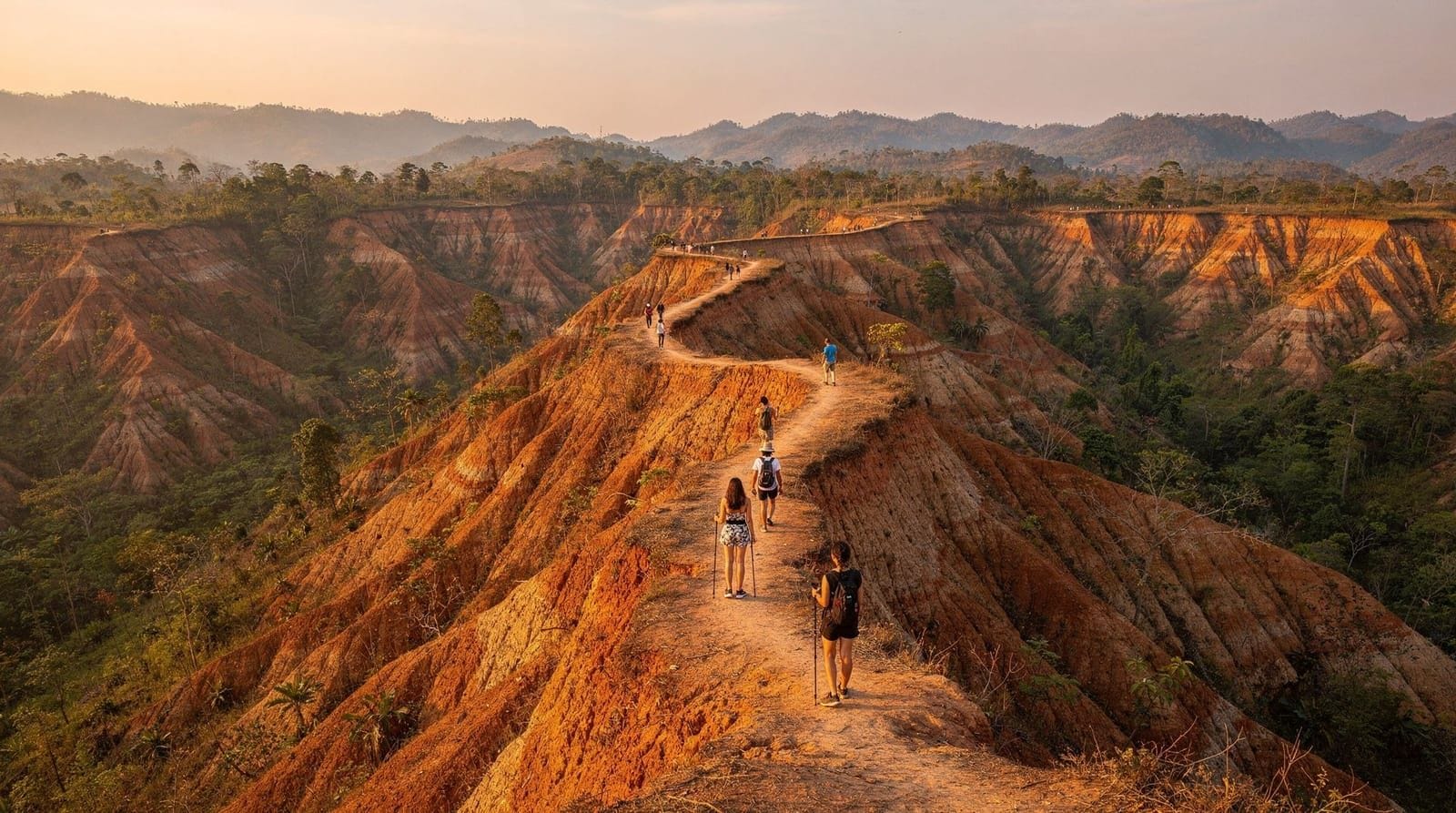
For a more active alternative to the boardwalk at the summit, the Kew Mae Pan nature trail is a roughly 3km loop across an open ridge with panoramic views, cutting through grassland, pine forest, and rhododendron thickets rather than the enclosed cloud forest at Ang Ka. It’s one of the more scenic short hikes in northern Thailand precisely because it opens up — a contrast to how enclosed most of the park’s other stops feel.
Two details matter for planning: a local Karen guide is required to walk the trail (arranged at the trailhead, included on most guided tours), and the trail is typically closed during the rainy season, roughly June through October, when the ground becomes unstable and unsafe to walk. If you’re visiting in the wet months, build your day around the pagodas and waterfalls instead and treat Kew Mae Pan as a dry-season bonus rather than a guaranteed stop. A dedicated Kew Mae Pan nature trail day trip bundles the guide requirement and trailhead logistics into the price, which is the simplest way to do the hike without arranging a guide yourself on arrival.
Waterfalls: Wachirathan, Sirithan, and Mae Ya
Three waterfalls sit within the park boundary, each with a different character and a different amount of effort required to reach it.
Wachirathan is the most dramatic and the easiest to reach — a powerful, wide curtain of water visible from a short paved path near the main road, with enough spray on a strong-flow day to feel like light rain from the viewing platform. It’s the waterfall stop on almost every guided itinerary because of how little walking it requires relative to its scale.
Sirithan is smaller and quieter, set slightly off the main road down a short trail, and tends to draw fewer visitors — a reasonable stop if you’d rather see a waterfall without a crowd of tour groups around it.
Mae Ya, the largest and most impressive of the three by volume, sits further off the park’s main road on a separate access route and is consequently skipped by many time-pressed tours in favor of Wachirathan. If a full-day itinerary includes Mae Ya specifically, it’s worth confirming, since not every “Doi Inthanon waterfall tour” covers all three. A tour built specifically around the falls, such as a Doi Inthanon National Park and waterfall day tour, is the more reliable way to see more than just the roadside Wachirathan stop.
Karen and Hmong villages, Mae Klang Luang
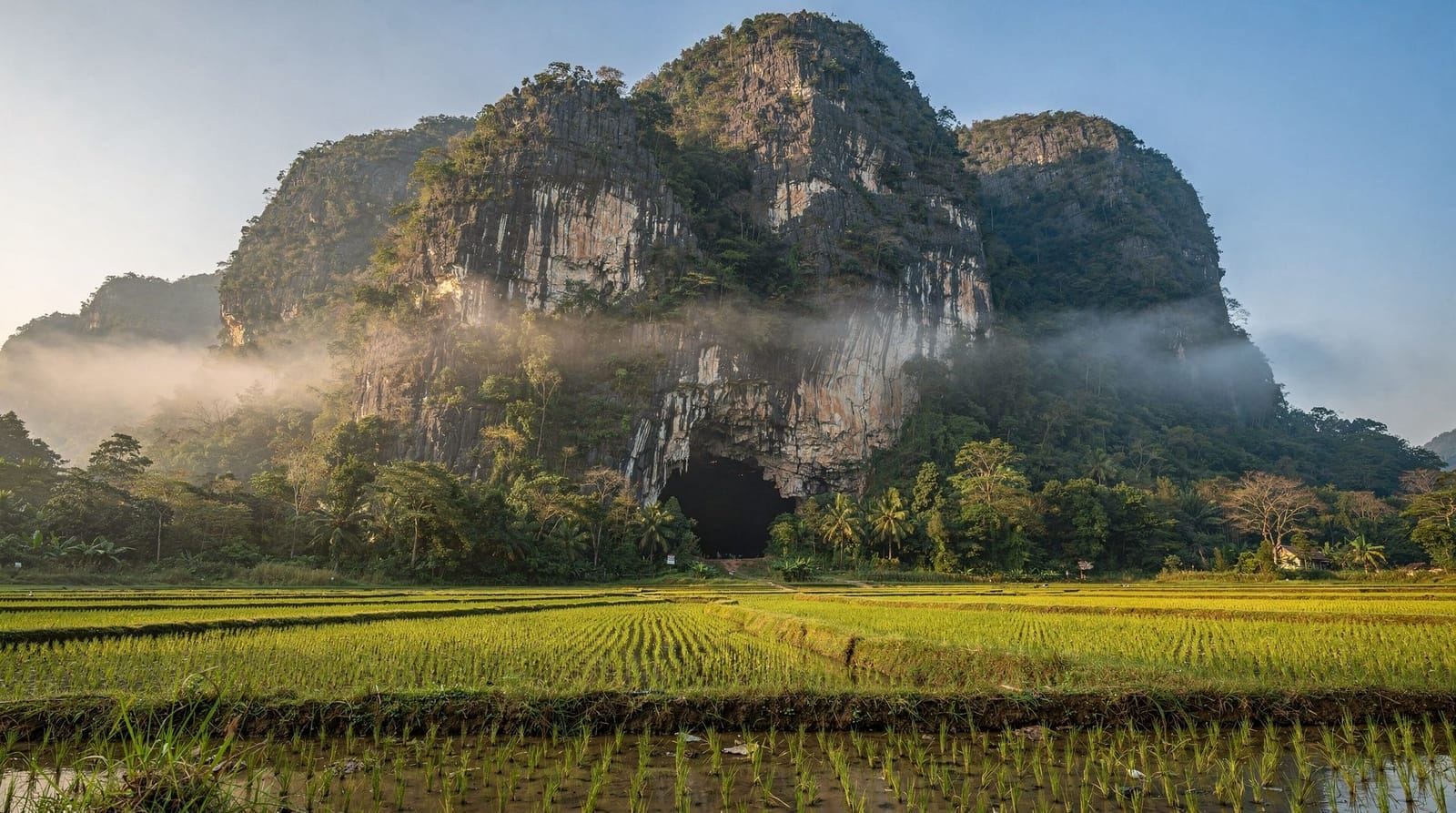
Doi Inthanon’s lower slopes are home to Karen and Hmong communities who have farmed the mountain for generations, and several tours build in a stop at one of these villages — most commonly Mae Klang Luang, a Karen village known for its terraced rice paddies (particularly striking just before harvest) and small-scale coffee production, now sold in a few simple village cafés overlooking the terraces. It’s a genuinely different stop from the park’s natural and religious sights: a working agricultural community rather than a managed attraction, and one where a responsible operator will brief you on basic etiquette before arrival.
This is also where the park’s ethical framing matters. Unlike some hill-tribe stops elsewhere in northern Thailand that verge on human-zoo displays, a Mae Klang Luang visit built around rice terraces, coffee, and everyday village life — rather than posed photo opportunities — is a more respectful way to include this side of the mountain in your day. If a broader look at ethical wildlife tourism interests you as well, the same honest-planner approach applies to the ethical elephant sanctuary guide, which covers how to tell a genuine sanctuary from a riding camp elsewhere in the region.
Getting there and park fees
Doi Inthanon National Park sits about 80km southwest of Chiang Mai, roughly 1.5-2 hours by road via the town of Chom Thong, on a route that climbs steadily once inside the park boundary. There’s no meaningful public transport option that covers the park’s spread-out sights in a single day — most independent travelers rent a car or motorbike for the drive, while the large majority of visitors join a guided tour that handles the driving, park fee logistics, and sequencing of stops.
Foreigner park entry runs around 300 THB (roughly $8.50), collected at the park gate, with the pagodas charging their own separate small fee on top. If you’re self-driving, budget time for the fee queue at the gate, which can back up on weekends and during the cool-season peak.
Weather and what to pack
The single most common mistake visitors make is packing for Chiang Mai’s climate rather than the mountain’s. Even in the hot season, the summit and pagoda area sit cool enough to warrant a light jacket; in the cool season (November-February), mornings at the summit can be genuinely cold, occasionally near freezing before sunrise. A packable layer — even just a windbreaker — makes a real difference, since most tours don’t linger long enough at any one stop for discomfort to pass quickly.
Rain is a year-round possibility given the elevation and cloud forest ecosystem, so a compact rain jacket is worth adding to cool-season packing as well as during the wetter months, when the Kew Mae Pan trail closure already limits your itinerary options anyway.
Choosing a tour vs self-drive
Because Doi Inthanon’s sights are spread across a large national park connected by a single winding road, a guided full-day tour is the most efficient way to see the summit, pagodas, a waterfall or two, and a village stop without spending your day navigating and queuing at fee gates yourself. An eco-friendly Doi Inthanon National Park tour typically covers this exact combination in a single day, with a driver-guide handling the logistics.
Travelers who’d rather combine Doi Inthanon with Doi Suthep closer to the city, rather than treating them as two separate trips, can look at a joint Doi Suthep and Inthanon National Park day tour, though be aware this is a genuinely long day given the distance between the two. For those who’d rather slow the pace down and stay overnight near the park, a two-day, one-night Doi Inthanon exploration spreads the same sights across a more relaxed schedule and allows an early-morning start at the summit before the day-trip crowds arrive.
If you’re interested in a village-based approach to wildlife tourism during the same trip, a combined ethical elephant sanctuary, Doi Inthanon and hiking day pairs a no-riding sanctuary visit with a shorter version of the park’s nature trails.
Combining Doi Inthanon with other day trips
Doi Inthanon is one of several genuinely different day trips clustered within a few hours of Chiang Mai, and travelers with more than a few days often plan around two or three rather than trying to fit everything into one visit. Chiang Rai, with its temples and Golden Triangle access, sits in the opposite direction (northeast) and is a separate full day. Pai and Mae Hong Son form a loop to the west that’s better suited to an overnight or multi-day trip given the mountain roads involved, while Chiang Dao offers a shorter, cave-focused alternative closer to the city if a second full-day mountain trip feels like too much.
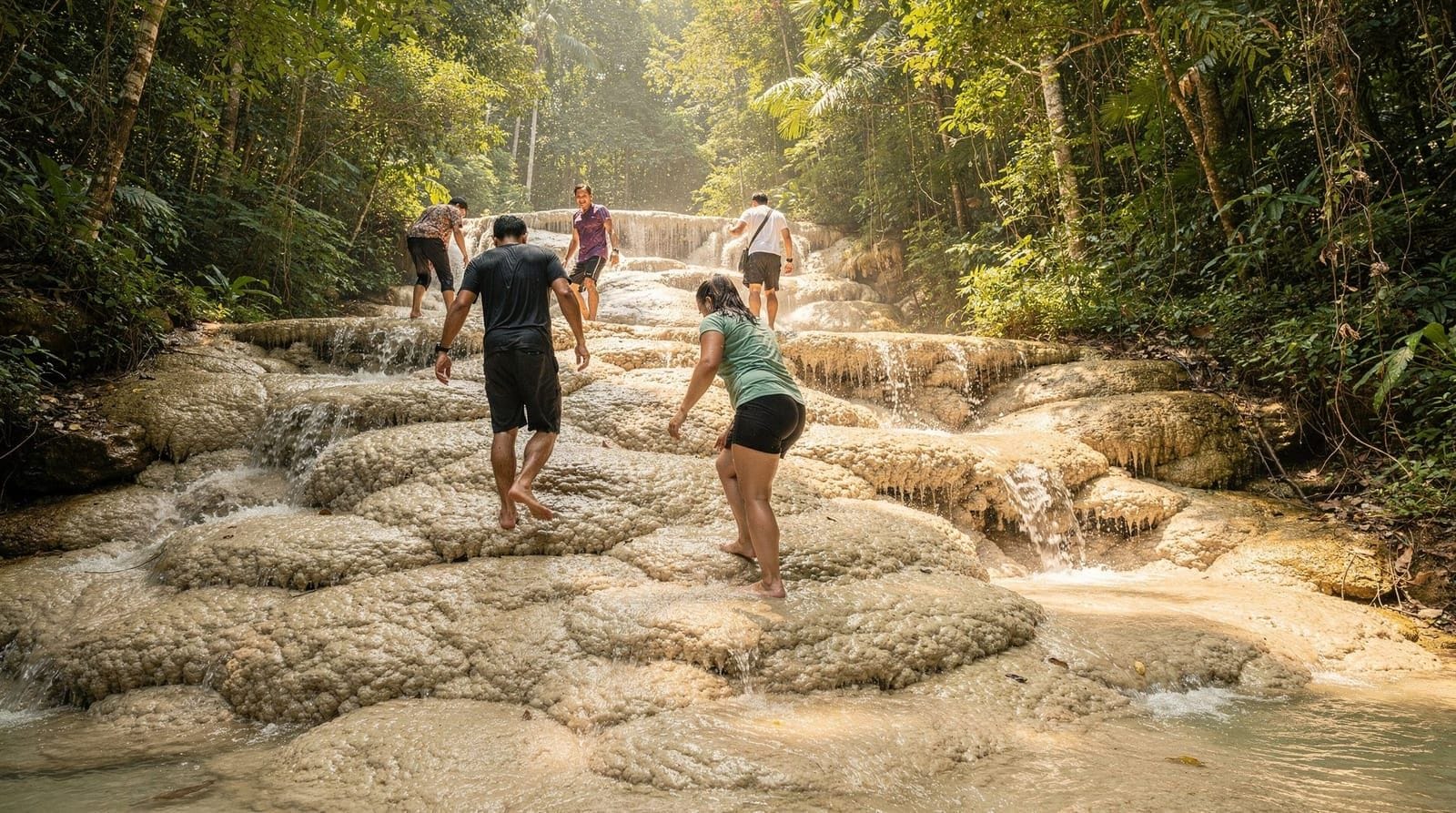
Closer to home, if the coffee-and-village theme of Mae Klang Luang appealed to you, Mae Kampong village offers a similar mountain coffee-village experience on the opposite side of Chiang Mai, while Sticky Waterfalls at Bua Thong gives a very different, climbable waterfall experience if Doi Inthanon’s falls left you wanting more.
A short history of the mountain’s name
Doi Inthanon takes its name from King Inthawichayanon, a 19th-century ruler of Chiang Mai who took a particular interest in protecting the forests of this mountain, reportedly requesting that his ashes be interred here after his death — a request honored by his successors, and one reason the mountain carries a royal name rather than a purely descriptive one. Before being renamed in his honor, the peak was known locally as Doi Luang (“great mountain”) or Doi Ang Ka, the latter name surviving today in the Ang Ka boardwalk trail near the summit. The area was declared a national park in 1972, formalizing protections that had informal royal backing decades earlier, and the park today spans a much larger area than the summit alone, including lower-elevation forest, farmland, and the Karen and Hmong communities who call the mountain home.
Accessibility notes
The pagodas and the roadside Wachirathan waterfall viewpoint are the most accessible stops in the park, with paved paths and minimal walking required from designated parking areas. The Ang Ka boardwalk at the summit is also relatively level, though the boardwalk surface can be slippery when wet, and cool-season fog occasionally reduces visibility along the trail. The Kew Mae Pan trail, by contrast, involves uneven ground across open terrain and is not realistically suitable for visitors with significant mobility limitations, regardless of the guide requirement. If accessibility is a significant concern for your group, prioritizing the pagodas and Wachirathan over the summit boardwalk and Kew Mae Pan trail is the more realistic plan, and it’s worth mentioning this directly to a tour operator when booking so the day can be structured accordingly.
Photography notes
Morning light at the summit, filtered through cloud forest canopy and often mixed with genuine mist, produces a soft, diffused quality that suits close-up photography of the moss and rhododendron along the Ang Ka boardwalk better than wide landscape shots, since a clear long-distance view is rarely available from the summit itself. The pagodas, by contrast, reward slightly later morning light once any overnight mist has burned off, when the landscaped gardens and mountain backdrop are more likely to be visible behind the two structures. The Kew Mae Pan trail, when open, offers the park’s best genuine landscape photography opportunity, with open ridgeline views across layered mountains that neither the summit nor the pagodas can match — one more reason to prioritize the trail during the dry season if photography matters to your visit.
Practical timing for a single day
Most full-day tours depart Chiang Mai between 6:30 and 7:30am, reaching the summit boardwalk by mid-morning before continuing to the pagodas, a waterfall stop, and often a village or lunch stop, returning to the city by early evening. Given the distances involved between the park’s various sights, an early departure isn’t just a preference but a practical necessity if you want to fit in more than two or three of the park’s main stops without rushing.
If your schedule allows only a half day, prioritizing the pagodas and Wachirathan waterfall — the two most accessible sights closest to the main road — over the summit boardwalk or Kew Mae Pan trail is the more realistic plan, since the summit and trail both sit further along the access road and add meaningfully to the round-trip time.
Frequently asked questions about Doi Inthanon
How far is Doi Inthanon from Chiang Mai?
About 80km, roughly 1.5-2 hours by road southwest of the city via Chom Thong.
Do I need a guide for the Kew Mae Pan trail?
Yes — a local Karen guide is required to walk the trail, arranged at the trailhead. Most guided day tours include this in the price.
Is Kew Mae Pan open year-round?
No. It’s typically closed during the rainy season, roughly June through October, when the trail becomes unsafe to walk. Confirm current status before planning around it.
What’s the entry fee for Doi Inthanon National Park?
Around 300 THB (roughly $8.50) for foreign visitors at the park gate, with the twin pagodas charging a small separate fee.
Is it cold at the top of Doi Inthanon?
Yes, noticeably cooler than Chiang Mai city year-round, and during the cool season (November-February) mornings can approach or briefly dip near 0degC. Bring a jacket regardless of season.
Which Doi Inthanon waterfall should I prioritize if I only have time for one?
Wachirathan — it’s the most powerful and easiest to reach from the main road. Mae Ya is more impressive but requires more time and a separate access route.
Can I visit Doi Inthanon without a tour?
Yes, by rental car or motorbike, though the sights are spread widely across the park on a single road, and a guided tour is generally more efficient for covering the pagodas, summit, waterfalls, and a village stop in one day.
Is Doi Inthanon suitable as a half-day trip?
It’s possible but tight — most visitors treat it as a full day given the distance from Chiang Mai and the spread of sights within the park. A half day realistically covers the pagodas and one waterfall.
Top experiences
Bookable activities with verified prices and instant confirmation on GetYourGuide.

Chiang Mai: Doi Inthanon National Park Eco-Friendly Tour
Kew Mae Pan Nature Trail & Doi Inthanon Day Trip
Chiang Mai: Doi Inthanon National Park & Waterfall Day Tour

Chiang Mai: Doi Suthep & Inthanon National Park Day Tour

Chiang Mai: Inthanon, Ethical Elephant Sanctuary & Waterfall