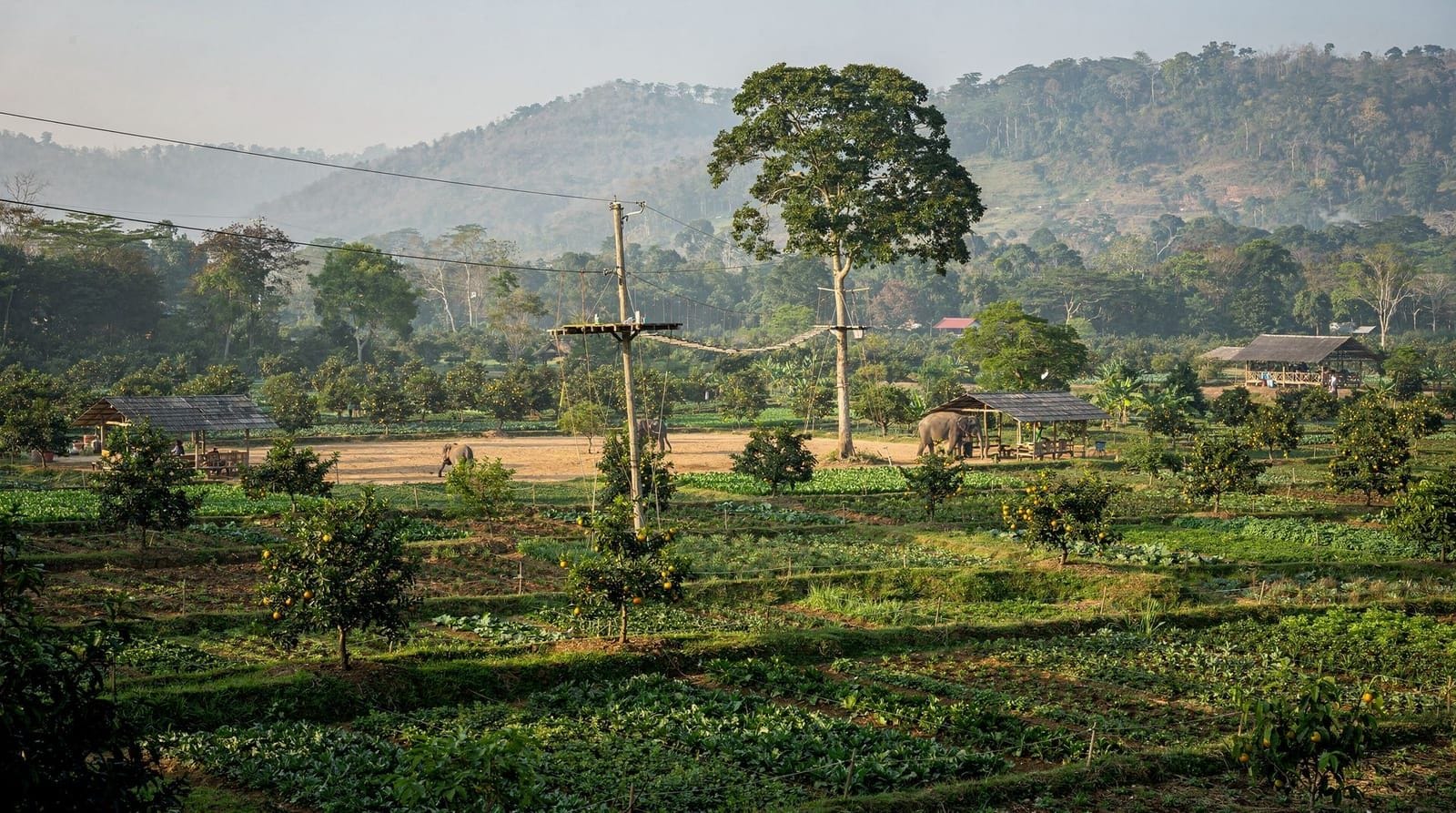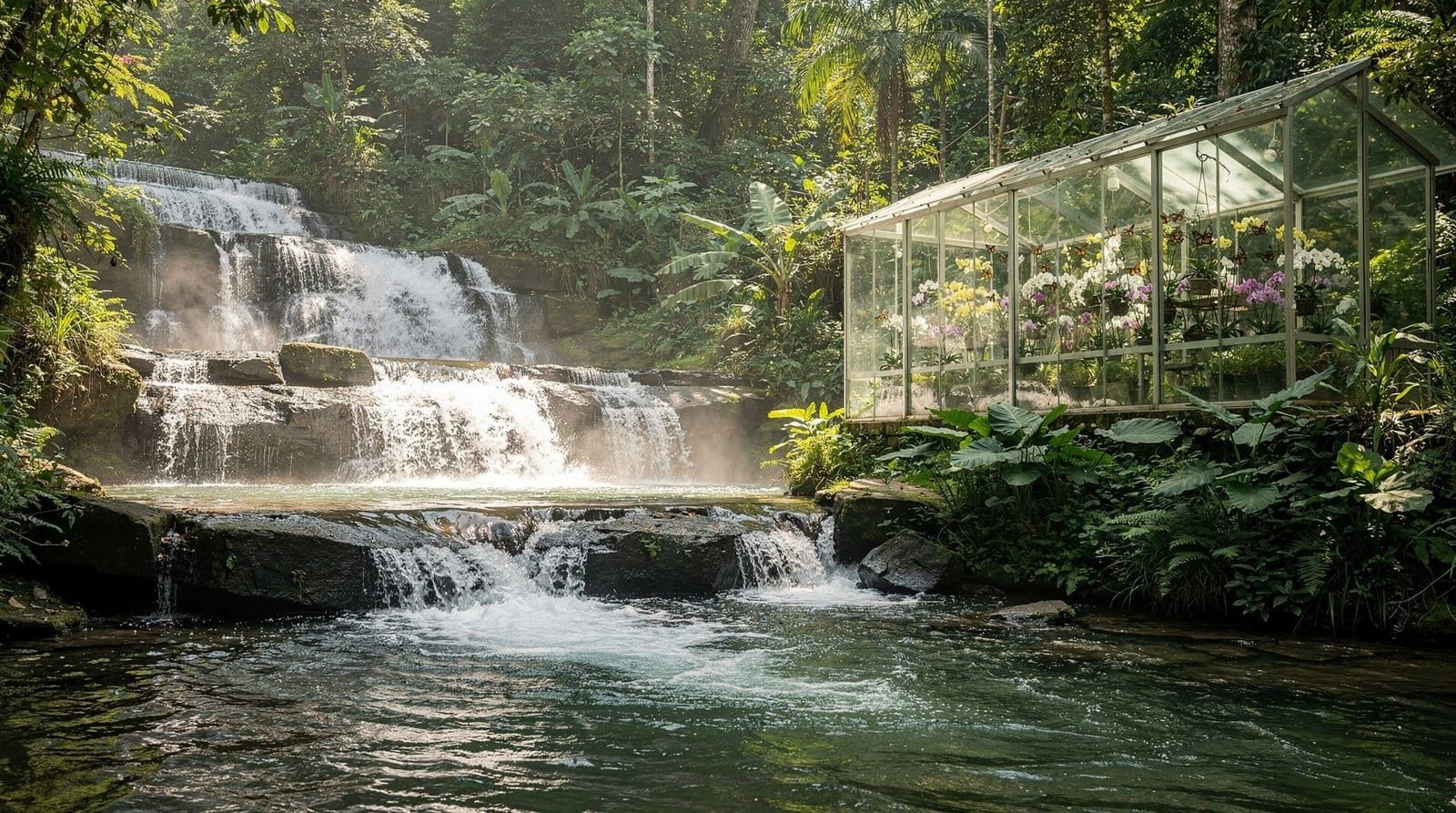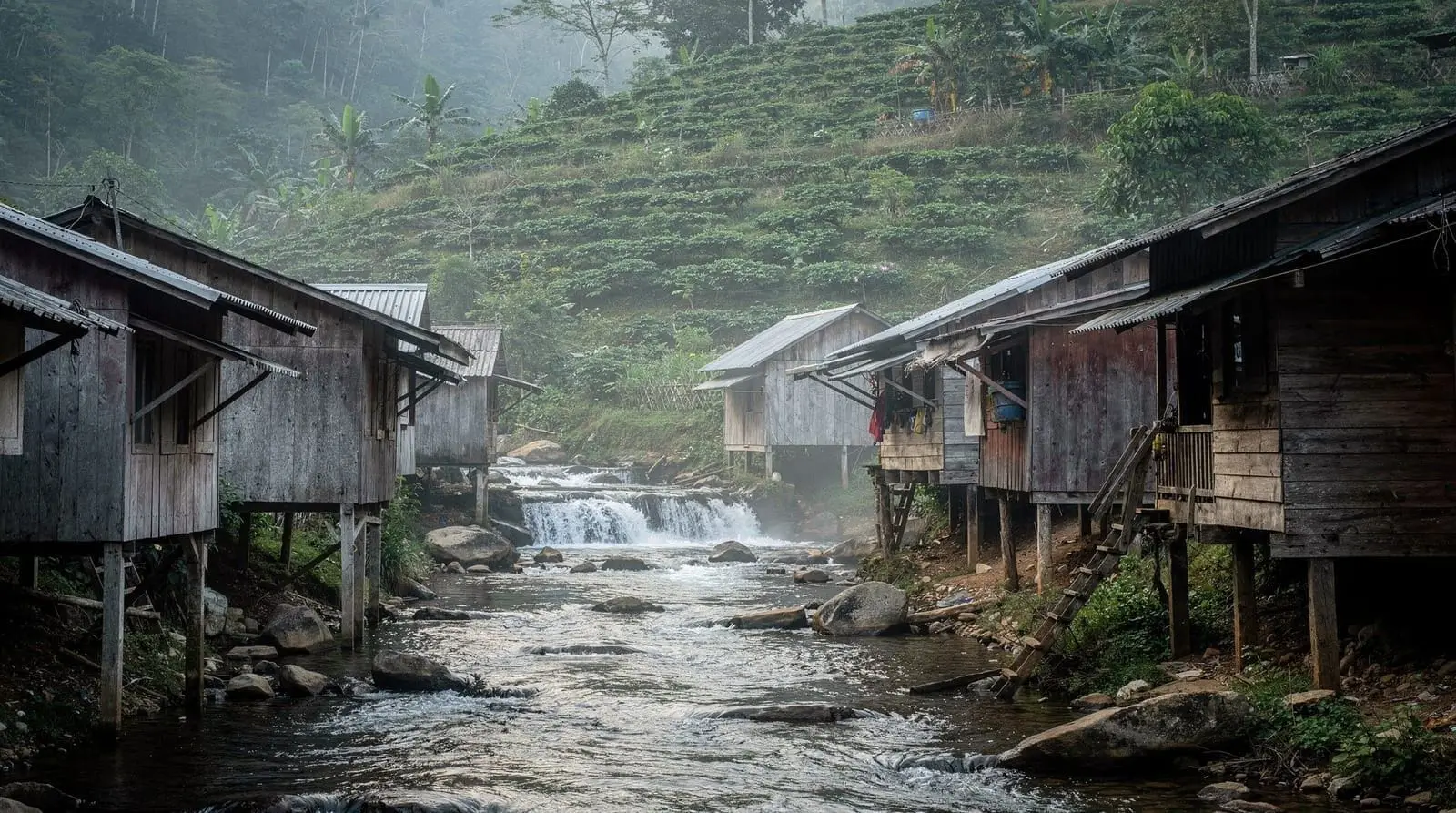
Mae Kampong village
Mae Kampong is a 1,300m forest village east of Chiang Mai known for fermented-tea and coffee traditions, homestays, a village waterfall and misty air.
Chiang Mai: Mae Kampong Village, Hot Springs & Bor Sang Tour
Quick facts
- Getting there
- Grab, private driver or a tour with transfer, about 1-1.5 hours east via Mae On district, roughly 900-1,200 THB (~$26-34) round trip by Grab
- Key sight
- A misty 1,300m forest village with a stream and small waterfall running through it, homestays, and The Giant treehouse café
- Time needed
- Half a day for a visit, overnight for the full homestay experience
- Best time
- Cool season (November-February) for the mistiest, coolest atmosphere; year-round for the village itself
- Typical cost
- Homestay with meals roughly 500-800 THB (~$14-23) per person per night; coffee and snacks at village cafés 40-100 THB (~$1-3)
Mae Kampong is a small forest village at around 1,300 meters elevation, tucked into the hills of Mae On district east of Chiang Mai, built along a mountain stream that runs directly through the settlement — houses, cafés and homestays on either bank, connected by small wooden footbridges. The village’s economy has shifted over generations from producing fermented tea leaves (miang), a traditional northern Thai chewing tea once central to local livelihoods, toward coffee cultivation and, more recently, community-based tourism built around homestays, café culture and the cool, misty mountain air that sets Mae Kampong apart from the lowland heat most visitors associate with Chiang Mai.
Quick answer: Mae Kampong is a mountain village about 1-1.5 hours east of Chiang Mai, known for its stream-side setting, fermented-tea and coffee history, homestay program and cool, often misty climate. Most visitors spend half a day walking the village and visiting its cafés, including the well-known The Giant treehouse café, though an overnight homestay is the more complete way to experience it. It combines naturally with a stop at the nearby Sticky Waterfalls on the same eastern route out of the city.
From fermented tea to coffee: a village that reinvented its economy
Mae Kampong’s traditional livelihood centered on miang, fermented tea leaves harvested from wild-growing tea trees in the surrounding forest, processed through fermentation, and traditionally chewed rather than brewed — a practice with deep roots across northern Thailand and neighboring parts of Southeast Asia. For generations, miang production was the village’s primary income source, alongside small-scale farming suited to the cool, misty highland climate.
As demand for fermented tea declined over recent decades, Mae Kampong’s farmers increasingly turned to growing coffee in the same forested hillside plots, taking advantage of the elevation and climate that had long suited tea. Today, small-scale coffee cultivation and roasting is a genuine part of the village’s identity and economy, visible in the cafés along the main stream-side path that serve locally grown beans alongside homemade snacks — a more sustainable, tourism-compatible pivot than many rural Thai villages have managed as traditional livelihoods have shifted.
Walking the village
Mae Kampong itself is compact and entirely walkable, built along the banks of the mountain stream that runs through its center, with narrow paths and small wooden bridges connecting houses, homestays and cafés on either side. The stream itself feeds a small waterfall within the village boundaries — modest compared to a destination waterfall like Mae Sa or the Sticky Waterfalls, but a genuinely pleasant, cooling feature that runs right through the settlement rather than requiring a separate trip to see.
A slow walk through the village, stopping at cafés and taking in the traditional wooden house architecture and forested backdrop, is the main activity for a half-day visit. The pace here is deliberately unhurried — Mae Kampong isn’t built around a single headline attraction the way some Chiang Mai day trips are, but around the cumulative effect of the setting itself: cool air, running water, forest, and a genuine working village rather than a purpose-built tourist facility.
The Giant treehouse café
Among Mae Kampong’s cafés, The Giant has become the village’s best-known single stop — a café built up into the forest canopy on stilts and platforms, giving guests an elevated, tree-level vantage point over the stream and surrounding forest while they have coffee or a meal. It’s a genuinely striking piece of construction in its own right, and reservations or at least an early arrival are worth planning for, since its popularity means seating at the best platforms can fill up, particularly on weekends and during the cool season when the misty forest views are at their best.
Book the Mae Kampong village, hot springs and Bo Sang combination tour if you’d rather have the village visit arranged alongside the district’s other San Kamphaeng-area stops in a single guided day.
What to eat and drink in Mae Kampong
Food in Mae Kampong revolves around simple, home-style northern Thai cooking, whether at a village café or as part of a homestay’s included meals — dishes like nam prik (chili relish) with steamed vegetables, simple stir-fries, and rice-based staples rather than the more elaborate restaurant menus found in central Chiang Mai. Coffee is the village’s other culinary calling card: locally grown and often locally roasted beans, served at cafés along the stream-side path, are a genuine point of pride given the village’s shift from tea toward coffee cultivation over recent decades.
Snacks connected to the village’s older miang tradition sometimes still appear at cafés and homestays, offered more as a cultural taste than an everyday food today, worth trying if you want a direct link to the fermented-tea history that shaped the village for generations before coffee took over.
Homestays: the fuller way to experience Mae Kampong
Mae Kampong runs one of the more established community-based homestay programs in the Chiang Mai area, with village families hosting overnight guests in simple rooms within or adjoining their own homes, typically including breakfast and sometimes dinner featuring local, home-cooked northern Thai dishes. Staying overnight is a genuinely different experience from a day visit: the village empties of day-trippers by late afternoon, and the cool mountain evening — often accompanied by mist settling into the valley — has a quiet, unhurried atmosphere that a few daytime hours simply can’t replicate.
Homestay bookings are generally arranged through the village’s community tourism program or through local tour operators familiar with it, rather than through conventional hotel booking platforms, so allowing a little extra planning time or booking through a tour operator experienced with Mae Kampong specifically is worth doing if an overnight stay is the goal.
Weather and why it’s so much cooler here
Mae Kampong’s 1,300-meter elevation is the main reason for its noticeably cooler, mistier climate compared to central Chiang Mai, which sits at roughly 300 meters. Cool-season mornings and evenings (roughly November to February) can be genuinely cold by Thai lowland standards — light jacket or fleece weather, particularly after dark — while the higher elevation and forest cover also mean mist and low cloud settle into the village more readily than in the valley below, especially in the early morning and evening.
Outside the cool season, Mae Kampong remains noticeably cooler than the city even in the hot season (roughly March-May), which is part of its appeal as a mountain escape regardless of when you visit, while the rainy season (roughly June-October) brings the greenest forest scenery and fullest stream flow, at the cost of a higher chance of rain disrupting an outdoor walk.
A community-run model, not a corporate resort
Part of what makes Mae Kampong distinctive among Chiang Mai-area day trips is that its tourism infrastructure is genuinely community-run rather than operated by an outside hotel chain or tour company. Homestay income, café revenue and guide fees largely stay within the village itself, distributed among the families and cooperative structures that manage the program, which is a meaningfully different economic model from many Chiang Mai attractions where profits flow mostly to external operators. This community-based approach is part of why the village has maintained its working character — real coffee farms, real homes, real families — rather than evolving into a purpose-built attraction disconnected from the community it’s named after.
For visitors specifically interested in supporting community-based tourism rather than large commercial operators, Mae Kampong is one of the more genuine examples in the wider Chiang Mai area, alongside a small number of other village-run homestay programs in the northern Thai hills.
Practical tips for a homestay night
If an overnight homestay is the goal, a few things make the experience smoother. Bring warmer clothing than you’d otherwise pack for a Chiang Mai trip, since evenings at 1,300 meters genuinely require a jacket or fleece even outside the coldest cool-season months. Cash is the practical way to pay for meals, coffee and any small purchases directly from village families, since card payment infrastructure is limited this far from the city. It’s also worth arriving with modest expectations about room standards — homestay accommodation here is simple and family-run rather than resort-style, which is precisely the point for visitors seeking an authentic overnight in a working mountain village rather than a polished guesthouse experience.
Confirming transport for both directions before you arrive matters more for an overnight stay than a day visit, since you’ll want a reliable pickup arranged for the following day rather than relying on hailing a ride from the village itself.
Short walks and nature around the village
Beyond the village’s own stream-side paths, the surrounding forest offers a few short walking options for visitors with a little extra time and interest in the natural setting rather than just the café and homestay scene. Trails leading up into the hills above the village pass through the same forested terrain where the coffee and, historically, the wild tea trees grow, giving a sense of the working agricultural land behind the village’s tourism-facing side. These aren’t marked, signed hiking trails in the way a national park trail would be, so a local guide or a homestay host’s recommendation is the practical way to find a suitable short walk rather than setting off independently without local knowledge of the terrain.
The village’s elevation and forest cover also make for noticeably good birdwatching and general nature-watching compared to lowland Chiang Mai, particularly in the early morning when mist and birdsong are both at their most present — a genuine bonus for visitors who stay overnight and are up before the day-trip crowd arrives.
Getting to Mae Kampong
The village sits roughly 45-50 km east of central Chiang Mai in Mae On district, about 1-1.5 hours by road, with the final stretch climbing into forested hills on a narrower, winding road than the flatter approach to nearer San Kamphaeng stops. Options:
- Grab or a private driver: workable for the outbound trip, though arranging a fixed return time or a driver who’ll wait is sensible, since Grab availability in the village itself is limited compared to the city.
- A guided tour with transfer: the most common way visitors reach Mae Kampong, particularly when combined with other San Kamphaeng-area stops, since transport logistics are handled for you.
- Rental scooter or car: feasible for confident drivers, though the climbing, winding final approach is a step up in difficulty from the flatter roads around Bo Sang or the crafts road.
Flight of the Gibbon’s original zipline course operates in forest near Mae Kampong, distinct from the newer zipline operators in the Mae Sa valley on the opposite side of Chiang Mai — worth knowing if a tour listing simply says “Chiang Mai zipline” without specifying which side of the city it operates on.
Check the Flight of the Gibbon full-day zipline adventure if you want to pair a canopy zipline course with a Mae Kampong village visit on the same eastern-hills day trip.
Combining Mae Kampong with the Sticky Waterfalls and San Kamphaeng
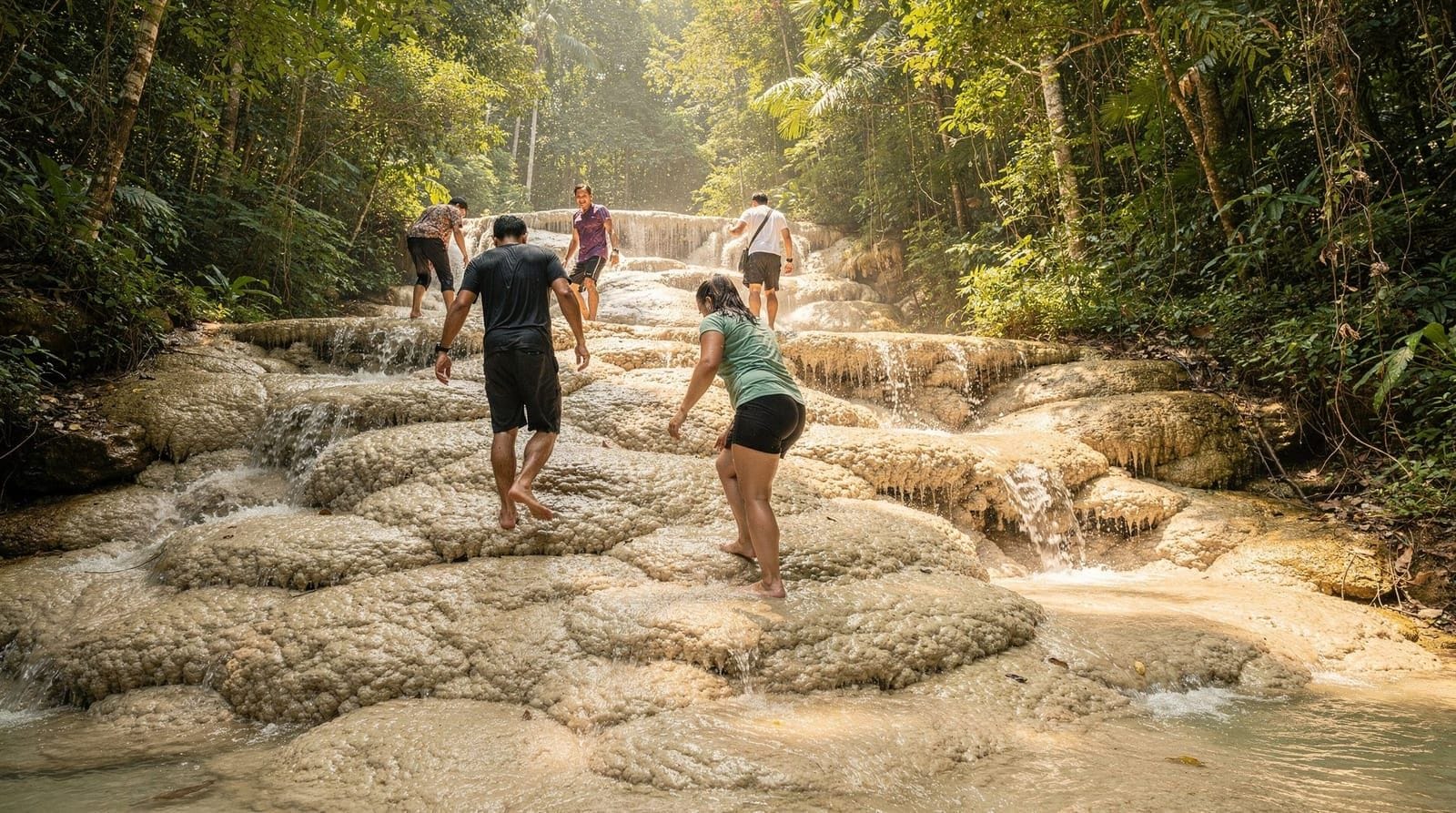
Because Mae Kampong sits in the same broad eastern-hills area as the Sticky Waterfalls at Bua Thong and the San Kamphaeng craft district, it combines naturally into a fuller day trip rather than standing entirely alone. A common pattern: a morning climbing the Sticky Waterfalls, followed by lunch and an afternoon walk through Mae Kampong village, or the reverse order if an early, quiet village walk appeals more than an early waterfall climb. Visitors focused specifically on craft villages instead often pair a Mae Kampong afternoon with a morning at Bo Sang or the hot springs, trading the waterfall for a more relaxed craft-and-café day.
Frequently asked questions about Mae Kampong village
How far is Mae Kampong from Chiang Mai?
Roughly 45-50 km east of the city, about 1-1.5 hours by road through Mae On district.
What is Mae Kampong known for?
A cool, misty mountain setting at around 1,300 meters elevation, a history of fermented-tea (miang) production that has shifted toward coffee cultivation, a village stream and small waterfall, homestays, and The Giant treehouse café.
Can I stay overnight in Mae Kampong?
Yes, through the village’s community-based homestay program, typically arranged via local tour operators or the village tourism office rather than conventional hotel booking sites.
What is The Giant café?
A well-known café built into the forest canopy on stilts and platforms within Mae Kampong village, offering an elevated view over the stream and surrounding forest.
Is Mae Kampong the same as the Mae Kampong mentioned in Flight of the Gibbon tours?
Yes — Flight of the Gibbon’s original zipline course operates in forest near Mae Kampong village, distinct from newer zipline operators on the opposite side of Chiang Mai in the Mae Sa valley.
Can I combine Mae Kampong with the Sticky Waterfalls in one day?
Yes, both sit in the same general eastern-hills area, and many day trips combine a morning at the Sticky Waterfalls with an afternoon walk through Mae Kampong.
Is Mae Kampong good for a day trip without staying overnight?
Yes, a half-day visit is enough to walk the village, see the stream and small waterfall, and stop at a café, though staying overnight gives a noticeably different, quieter experience.
What should I pack for Mae Kampong?
A light jacket or fleece, especially for a cool-season overnight stay, since evenings at this elevation get genuinely cold by Thai standards, plus comfortable walking shoes for the village’s stream-side paths.
Is Mae Kampong crowded?
Less so than the Sticky Waterfalls or Bo Sang, though weekends and the cool season bring more day-trippers, particularly to The Giant café.
Do I need a guide to visit Mae Kampong?
No, the village is walkable independently, though a guide or tour is useful if you’re combining it with other San Kamphaeng-area stops or arranging a homestay for the first time.
What food is Mae Kampong known for?
Simple, home-style northern Thai dishes served at homestays and village cafés, plus locally grown and roasted coffee, reflecting the village’s shift from fermented tea (miang) production toward coffee cultivation over recent decades.
Is there an entrance fee for Mae Kampong village?
No general entrance fee for walking the village itself; you pay directly for cafés, homestays and any activities like the zipline course nearby.
Top experiences
Bookable activities with verified prices and instant confirmation on GetYourGuide.