Mae Rim
Mae Rim district north of Chiang Mai covers ethical elephant sanctuaries, Mae Sa waterfall, botanic gardens, ziplines and valley cafés.
Chiang Mai: Ethical Half Day Elephant Sanctuary & Waterfall
Duration: Half day
Quick facts
- Getting there
- Grab or private driver from the old city, 30-45 min, roughly 500-700 THB one-way
- Key sight
- Ethical elephant sanctuaries, Mae Sa waterfall, Queen Sirikit Botanic Garden
- Time needed
- A full day for two stops; 2-3 days to cover the valley properly
- Best time
- November to February, cooler and clearer than the hot or haze months
- Typical cost
- Half-day elephant visit roughly 1,200-2,500 THB pp; botanic garden around 100 THB
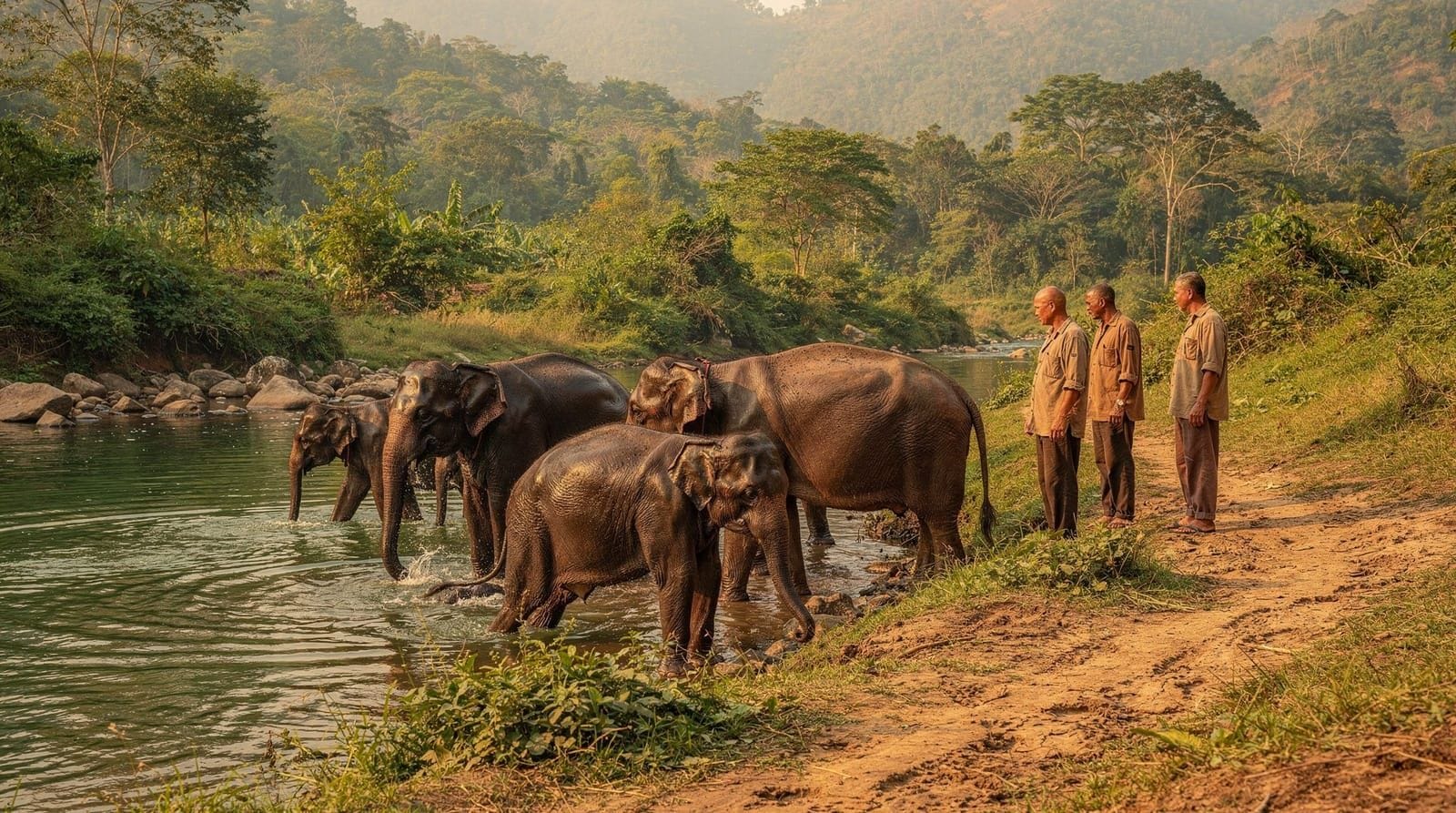
Mae Rim is the district immediately north-northwest of Chiang Mai, and it’s where most visitors end up spending at least half a day, usually without quite realizing they’ve crossed from one district into another. The Mae Sa valley that runs through it packs in an unusual concentration of Chiang Mai’s most-booked activities: ethical elephant encounters, a ten-tier waterfall, a large public botanic garden with a rainforest canopy walkway, ziplines and adventure parks, strawberry farms and a hilltop viewpoint at Mon Cham, and a scattering of resorts and cafés built for the weekend crowd out of the city. It’s also, unfortunately, home to some genuinely unethical animal attractions — tiger photo ops and snake or monkey shows — sitting a few hundred meters from operations doing serious rescue and welfare work. Knowing the difference matters more here than almost anywhere else in the Chiang Mai area.
Quick answer: Mae Rim is a 30-45 minute drive north of the old city, centered on the Mae Sa valley. Most visitors book a half-day or full-day combination — typically an ethical elephant sanctuary visit paired with either Mae Sa waterfall, the Queen Sirikit Botanic Garden, or a zipline course — rather than trying to see the whole valley in one go. Nearly every tour and sanctuary includes round-trip hotel transfer, so you rarely need to arrange transport separately.
What’s actually in the Mae Rim / Mae Sa valley
The valley is long and the sights are spread along and off a single main road (route 1096), so it helps to think of it as a handful of clusters rather than one attraction:
- Ethical elephant sanctuaries — the district’s single biggest draw, and the reason most people come to Mae Rim at all. See our full ethical elephant sanctuary guide for how to tell a genuine rescue operation from a riding camp with a green-washed name.
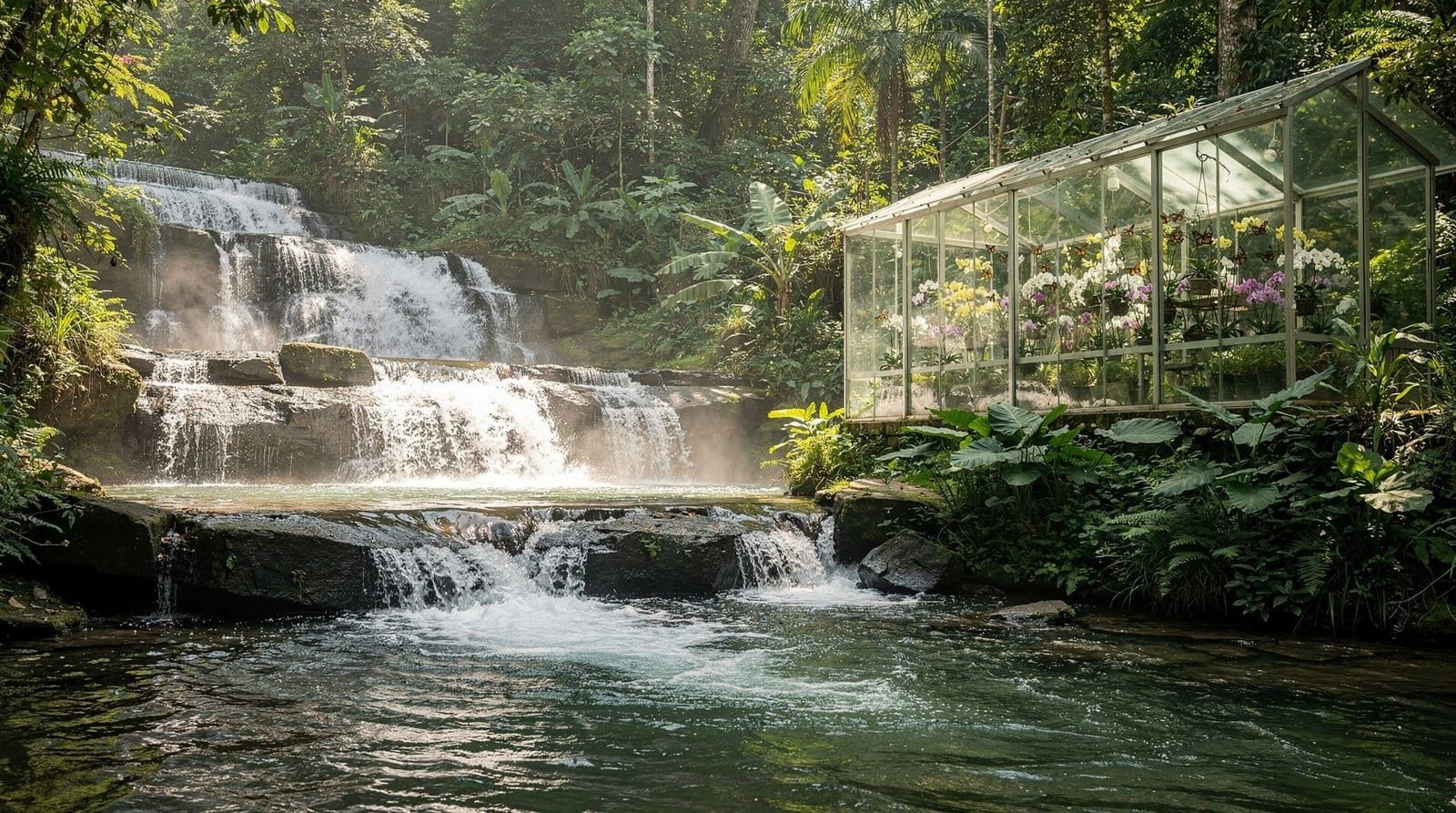
- Mae Sa waterfall — a ten-tier cascade you can walk up tier by tier, inside a national park area. Covered in depth on the Mae Sa valley page.
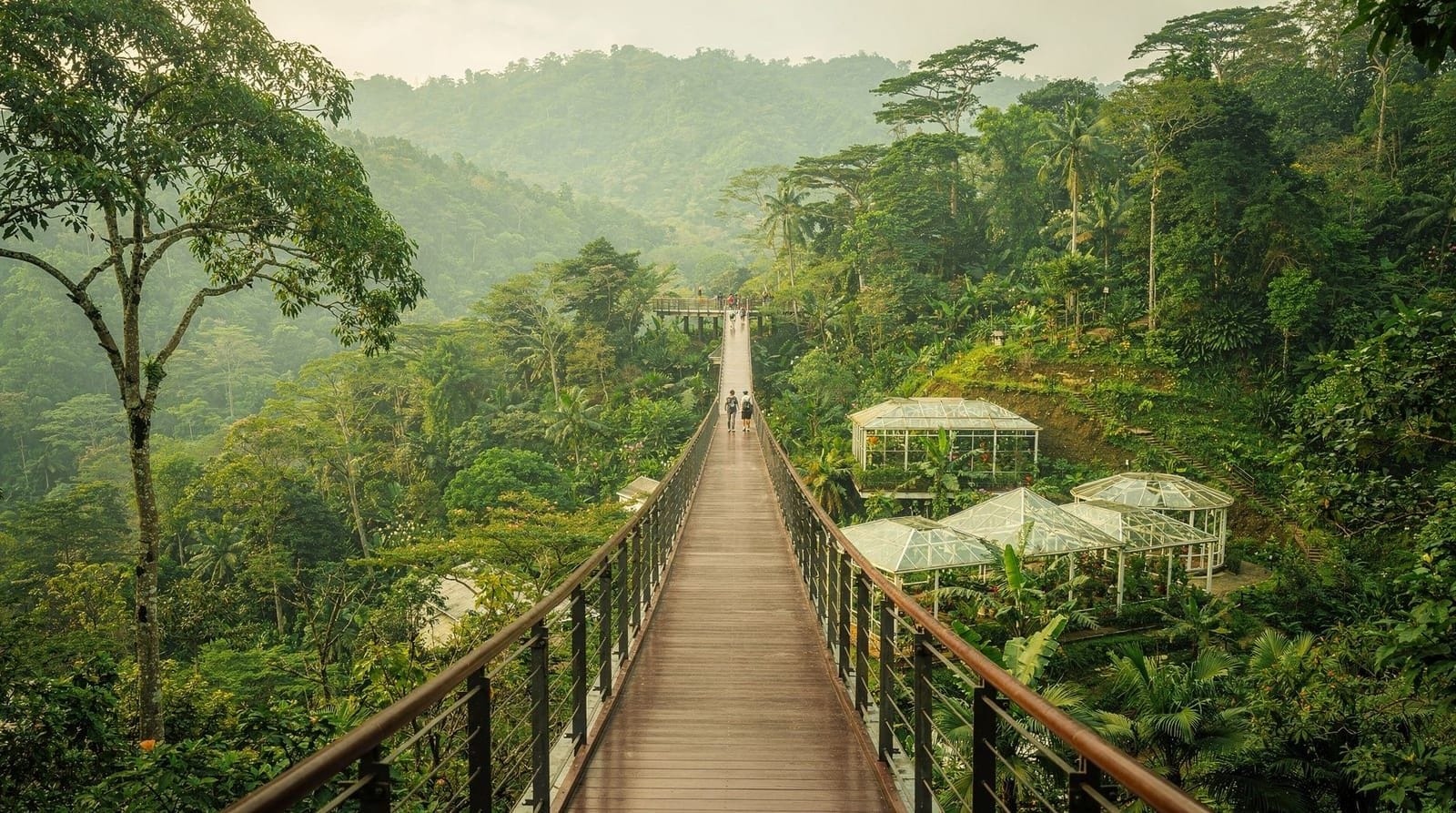
- Queen Sirikit Botanic Garden — a large public botanic garden with glasshouses and a rainforest canopy skywalk, a very different pace from the animal encounters. Full details on the botanic garden page.
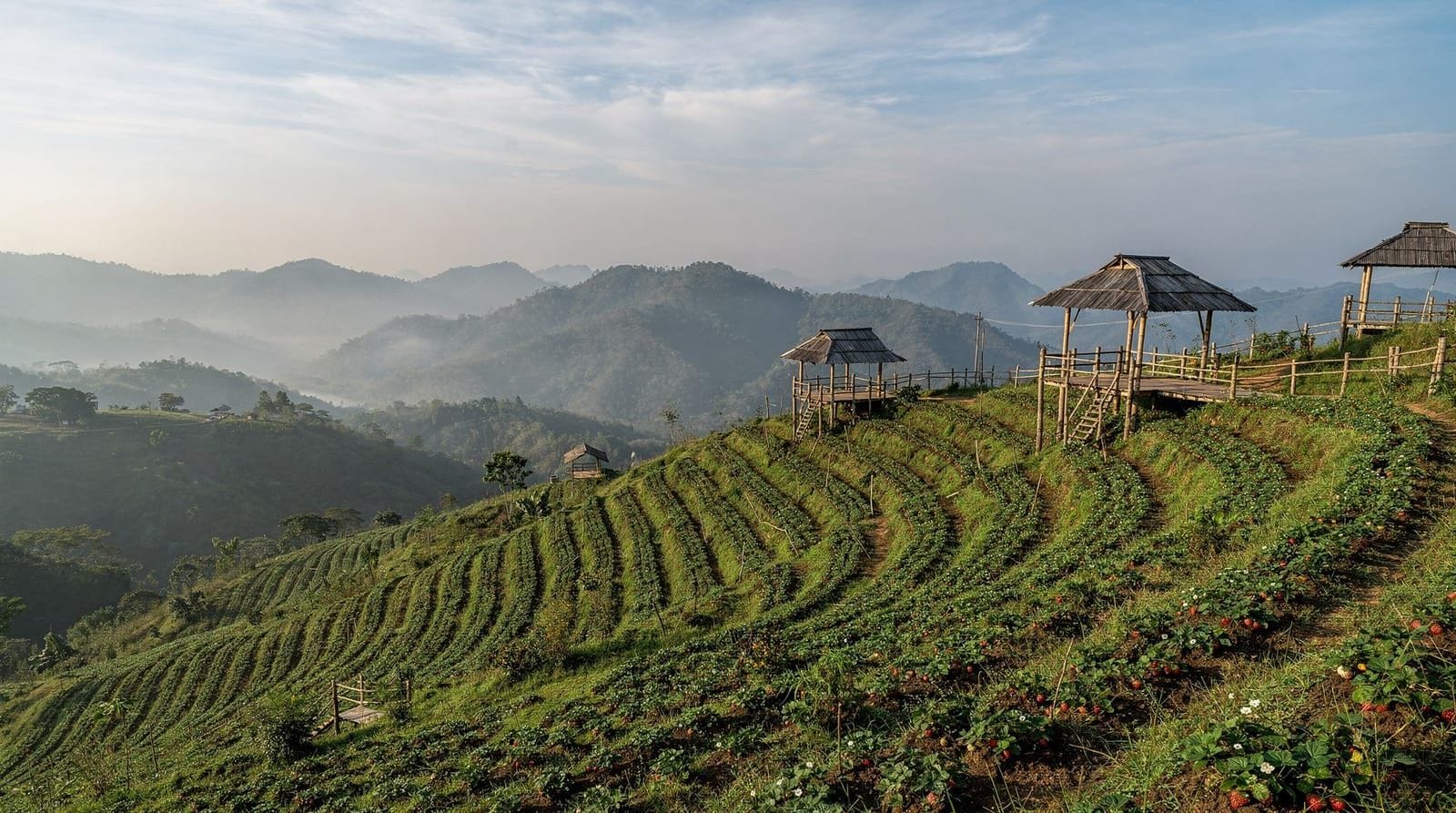
- Mon Cham — a hilltop viewpoint with strawberry farms (in season), pine-covered ridgelines, and photogenic overlooks, popular at sunrise and sunset. See the Mon Cham guide.
- Ziplines and adventure parks — several zipline and canopy courses operate in and around the valley, plus ATV circuits through nearby jungle.
- Snake and monkey shows, tiger photo attractions — present in the valley and worth actively avoiding; more on that below.
- Resorts and cafés — the valley’s popularity has built up a strip of boutique resorts, farm-stay cafés, and Instagram-oriented gardens (like flower farms) that make a pleasant lunch stop between activities.
None of these clusters sit right next to each other — expect a 10-20 minute drive between most of them along route 1096 — so realistic planning means picking a small number of stops rather than assuming you can casually walk from one to the next the way you might between temples in the old city.
A brief history of the valley
Mae Rim’s transformation into a tourism hub is a relatively recent development. Through much of the twentieth century, the valley was primarily agricultural — orchards, vegetable farms, and the kind of small-scale flower and crop cultivation that royal agricultural projects (the same kind associated with Bhubing Palace near Doi Suthep and Doi Inthanon’s highland stations) promoted across northern Thailand as an alternative to opium cultivation in the surrounding hills. That agricultural base is still visible today in the valley’s orchid and butterfly farms, strawberry fields near Mon Cham, and roadside produce stalls, even as tourism has become the dominant economic driver over the past two to three decades.
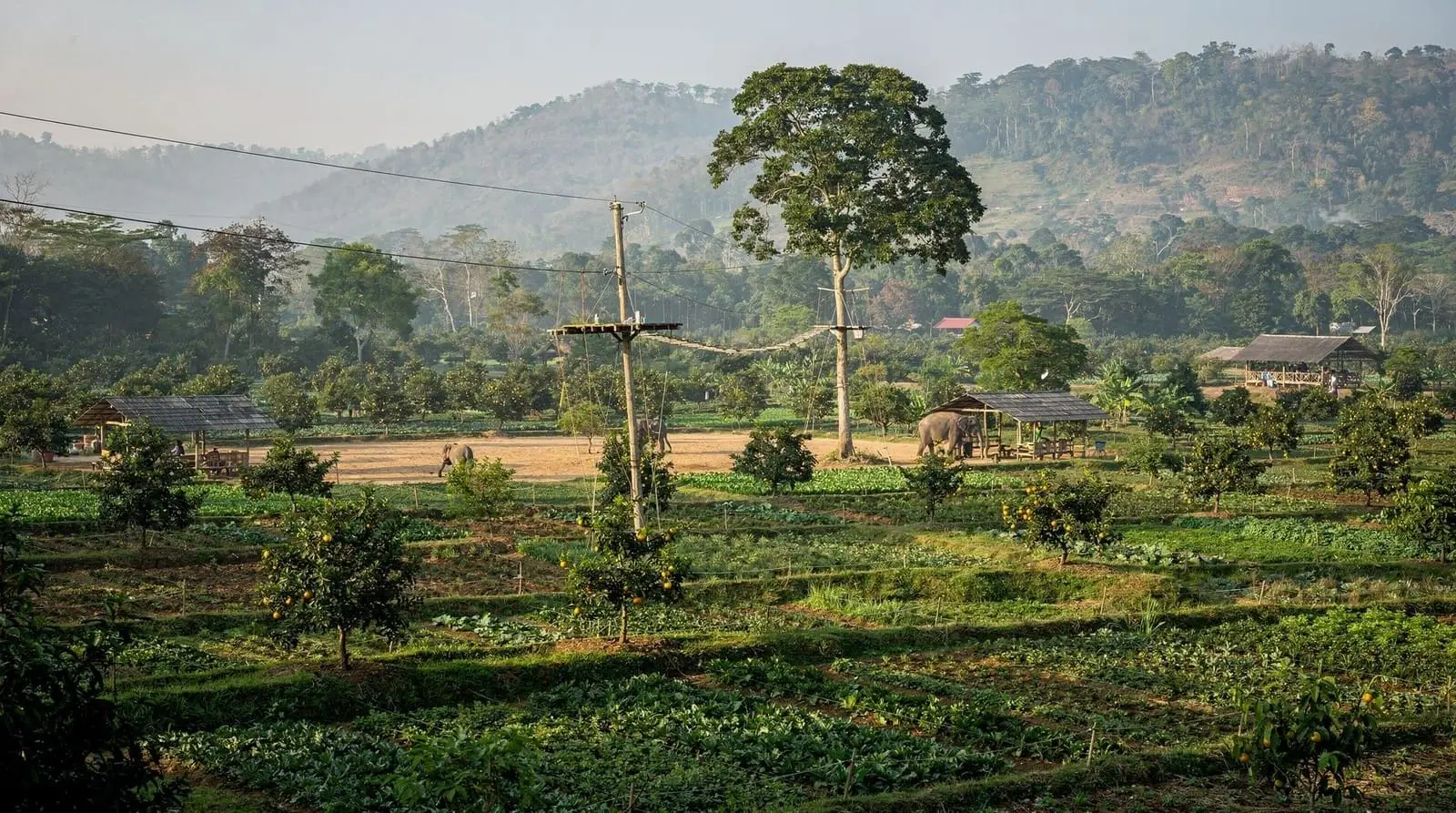
The elephant sanctuary model specifically took off in Mae Rim from the 1990s and 2000s onward, as former logging elephants and their mahouts — displaced by Thailand’s 1989 logging ban — needed new livelihoods, and as international awareness of elephant welfare issues grew alongside a market of travelers actively seeking a no-riding alternative to traditional trekking camps. The valley’s proximity to Chiang Mai, its existing agricultural land suitable for elephant grazing and shelter, and the availability of former logging elephants and mahouts all combined to make Mae Rim one of the country’s most concentrated hubs for this kind of tourism, for better (genuine sanctuaries) and for worse (operations that adopted the marketing without the substance).
Getting to Mae Rim
Mae Rim town itself is about 15 km from central Chiang Mai, but “Mae Rim” as most visitors mean it stretches further up the valley toward Mae Sa, another 10-15 km beyond the town. Options:
- Grab or private driver: The simplest choice if you’re combining two or more stops in a single day, since the sights aren’t within easy walking distance of each other. A private driver for a half or full day is the most flexible way to string together, say, an elephant visit and the botanic garden.
- Sanctuary or tour transfer: Nearly every elephant sanctuary, waterfall tour, and zipline operator includes round-trip pickup from Chiang Mai hotels in the booking price, which is usually the easiest option if you’re focused on one main activity.
- Rental scooter: Feasible for confident riders — route 1096 is well-paved with reasonably light traffic compared to inner Chiang Mai — but the valley is spread out enough that a full loop makes for a long day on two wheels.
Book a half-day ethical elephant sanctuary and waterfall tour if you want the two headline Mae Rim experiences combined with transfer handled for you.
Planning your Mae Rim day
Most visitors have realistically half a day to a full day for the valley, so it’s worth picking a combination rather than trying to cram everything in:
Half day, animal-focused: An ethical elephant sanctuary morning or afternoon visit (typically 4-5 hours including transfer), which is usually enough on its own given how much walking, feeding, and observation time a good sanctuary program includes.
Full day, nature-and-adventure: Elephant sanctuary in the morning, Mae Sa waterfall or the botanic garden in the early afternoon, finishing at a valley café before heading back to the city.
Full day, adventure-focused: Skip the wildlife entirely and combine a zipline or canopy course with Mon Cham’s viewpoint and a scooter or motorbike tour of the valley’s back roads.
Check the Mae Sa and Mon Cham full-day motor scooter tour for a self-drive-adjacent way to see both the valley floor and the hilltop viewpoint in one booking, with a guide leading the route.
If ziplining is the priority, there are several canopy operations directly in the Mae Sa valley (distinct from Flight of the Gibbon, which operates on the opposite side of Chiang Mai near Mae Kampong village — a common source of confusion when booking, so double-check which zipline company and location a tour actually uses before you commit).
Look at the Segway and eco canopy zipline adventure in Mae Rim for a valley-based option.
Where to stay: valley resorts vs. staying in the city
Mae Rim’s popularity has built up a genuine cluster of boutique resorts along the valley, ranging from mid-range garden lodges to high-end retreats with mountain views, many aimed at the domestic Thai weekend market as much as international travelers. Staying in the valley itself makes sense if you’re planning several days focused specifically on Mae Rim’s activities, want an early start at an elephant sanctuary without a 30-45 minute transfer first, or simply want a quieter, greener base than the old city offers.
For most visitors, though, staying in central Chiang Mai — near the old city or Nimmanhaemin — and treating Mae Rim as a day trip is the more practical choice, since it keeps you within easy reach of the city’s temples, markets, and restaurants for the rest of your stay, while Mae Rim’s activities are almost universally set up for day-trip transfer anyway. The transfer time is roughly the same whether you’re picking up from the old city or Nimman, so the choice mainly comes down to whether you want the valley’s quieter, resort-style pace for a night or two versus the convenience of a single base for your whole trip.
Weather and seasonal planning specific to Mae Rim
Because the valley sits at slightly higher elevation and is more forested than central Chiang Mai, its microclimate has a few quirks worth planning around. Mornings in the cool season (November to February) can be noticeably cooler here than in the city itself — genuinely light-jacket weather before 8am in December and January — which matters if you’re booking an early-start elephant sanctuary visit. The rainy season (roughly June to October) brings the most reliably green scenery and the fullest waterfall, but afternoon downpours are common and can disrupt outdoor plans with little warning, so scheduling activities for the morning is generally safer than an afternoon booking during these months.
The February-to-April haze season, driven by regional agricultural burning across northern Thailand and neighboring countries, affects Mae Rim’s mountain and valley views the same way it affects the rest of the Chiang Mai area — visibility from viewpoints like Mon Cham can drop substantially, though the valley-floor activities (elephant sanctuaries, waterfall, botanic garden) are largely unaffected since they don’t depend on long sightlines the way a hilltop view does.
The ethics problem: what to avoid in Mae Rim
The Mae Sa valley’s tourism boom has, unfortunately, also produced attractions that trade on animal exploitation under tourist-friendly branding. Snake and monkey shows, where animals perform tricks for paying audiences, and tiger photo-op parks, where visitors pay to pose with sedated or declawed big cats, both operate in this district. Neither reflects genuine conservation or welfare practice, and neither should be confused with the area’s legitimate elephant rescue operations, even when marketing photos look superficially similar.
If a listing promises riding, bathing with large tour groups, circus-style tricks, or direct physical contact with a tiger, treat it as a red flag rather than a bonus. The ethical elephant sanctuary guide covers the specific selection criteria — no riding, no bullhook, observation and feeding-focused programs, small group sizes, and a clear rescue or retirement story for each animal — that separate a genuinely ethical operation from a relabeled riding camp.
First-timer’s suggested itinerary
If this is your first Mae Rim visit and you’re not sure where to start, a reasonable default plan looks like this: book a half-day ethical elephant sanctuary program with an early pickup (around 7:30-8am), which typically wraps by early-to-mid afternoon. From there, either head to Mae Sa waterfall for an active hour among the tiers, or the botanic garden for a calmer wander through the glasshouses and canopy walkway, depending on your energy level after the morning. Finish with a stop at one of the valley’s cafés before the drive back to the city. This single-day plan hits the district’s two most distinctive experiences without over-scheduling, and it’s the pattern most first-time visitors end up following whether they planned it that way or pieced it together on the fly.
Frequently asked questions about Mae Rim
What is the difference between Mae Rim and Mae Sa valley?
Mae Rim is the wider district; Mae Sa valley is the specific stretch within it, further up route 1096, where the waterfall, botanic garden, and most elephant sanctuaries are concentrated. In practice, most visitors use “Mae Rim” to mean the whole area.
How far is Mae Rim from Chiang Mai city?
Mae Rim town is about 15 km from the old city, roughly 30 minutes by car; the further Mae Sa valley sights add another 10-15 km and 15-20 minutes.
Can I visit Mae Rim without a car or driver?
It’s difficult without one. Most sanctuaries and tours include transfer, which is the practical way most visitors get there, since the sights are spread out along a single valley road with limited public transport.
Is one day enough for Mae Rim?
For two stops (for example, an elephant sanctuary plus the waterfall or garden), yes. To also add Mon Cham, a zipline course, and unhurried café time, plan closer to two days.
Are all the elephant attractions in Mae Rim ethical?
No. The valley includes both genuine rescue-focused sanctuaries and camps that still allow riding or shows under softer marketing. Read the ethical elephant sanctuary guide before booking and check specifically whether riding, bathing with large groups, or performance tricks are part of the program.
What should I avoid in the Mae Sa valley?
Snake and monkey performance shows and any tiger photo-op attraction. Both are widely available in the valley and both are ethically problematic regardless of how they’re marketed.
Is Mae Rim good for families?
Yes — the botanic garden, waterfall, and reputable elephant sanctuaries are all manageable for children, and several resorts in the valley cater specifically to families with pools and gardens.
What’s the best season to visit Mae Rim?
November to February for comfortable daytime temperatures and generally clear air; the rainy season (roughly June-October) brings the waterfall to its fullest but with more chance of rain disrupting outdoor plans; February-April can bring seasonal haze that affects mountain views.
Should I stay overnight in Mae Rim or just visit as a day trip?
Most visitors treat it as a day trip from central Chiang Mai, which works well since almost every activity includes transfer. Staying in one of the valley’s resorts makes sense mainly if you’re spending several days focused specifically on Mae Rim or want an early start without a morning transfer.
Does the February-April haze affect elephant sanctuary visits?
Not significantly — the haze mainly affects long-distance mountain views like those from Mon Cham, while valley-floor activities such as elephant sanctuaries, the waterfall, and the botanic garden aren’t dependent on visibility in the same way.
Can I combine Mae Rim with Doi Suthep in one day?
It’s possible but tight — both areas involve significant drive time in different directions from the city, so most visitors treat Mae Rim and Doi Suthep as separate day trips rather than combining them into a single rushed day.
What’s the closest neighborhood in Chiang Mai to base yourself for Mae Rim day trips?
Any central Chiang Mai base works, since transfer times to Mae Rim are broadly similar from the old city or Nimmanhaemin — pick your base on other criteria and treat the Mae Rim transfer as a fixed 30-45 minutes regardless.
Top experiences
Bookable activities with verified prices and instant confirmation on GetYourGuide.