Mon Cham
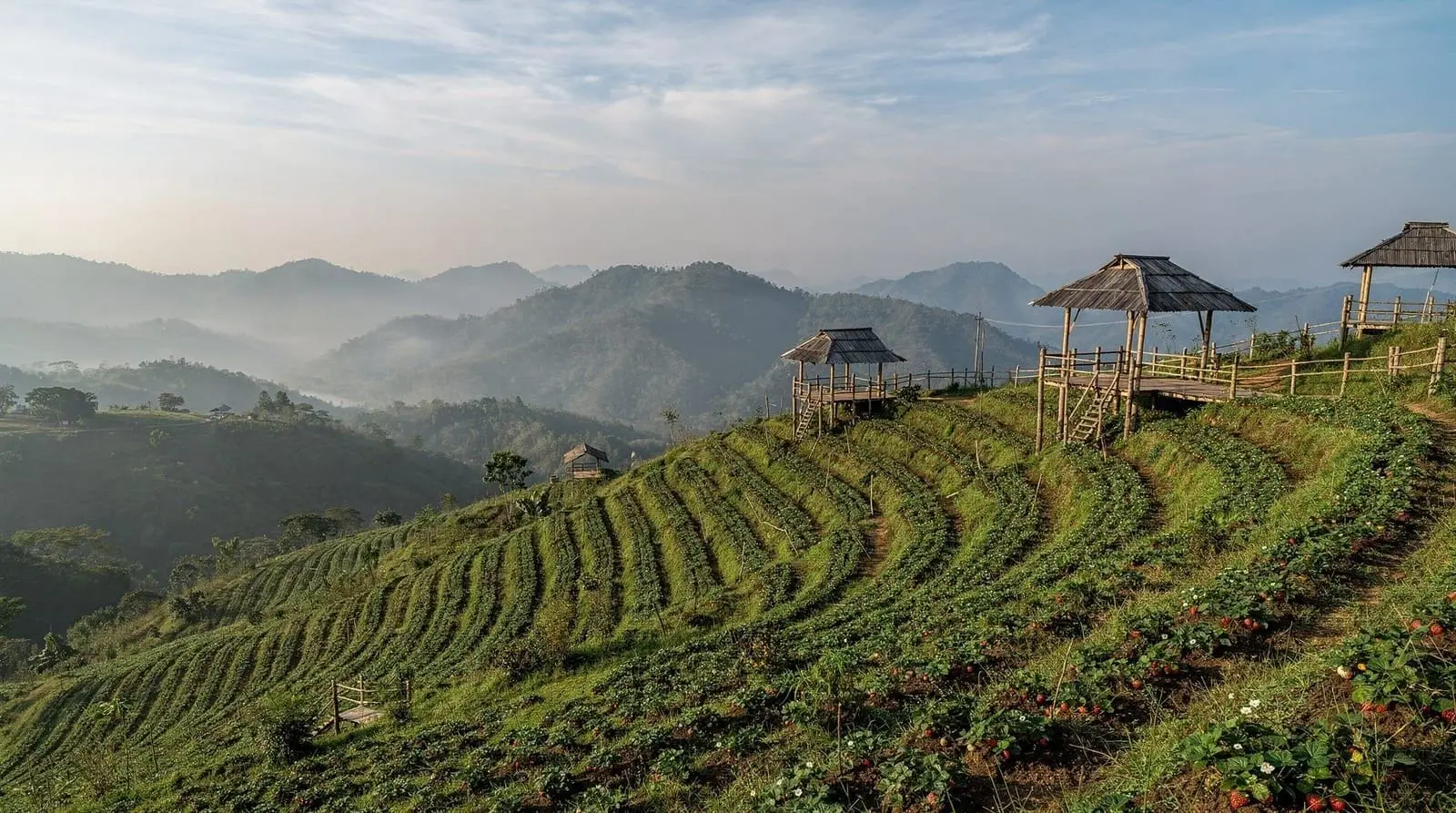
Mon Cham is a hilltop viewpoint in Mae Rim's Nong Hoi Royal Project, known for sunrise sea-of-mist views, strawberry terraces and hillside cafés.
Mae Sa & Mon Cham Full-Day Motor Scooter Tour - Chiang Mai
Duration: Full day
Quick facts
- Getting there
- Grab, rented scooter or private driver from the old city, 60-75 min, roughly 800-1,000 THB (~$23-28) one-way by car
- Key sight
- Sea-of-mist sunrise over Nong Hoi Royal Project's strawberry and flower terraces
- Time needed
- 2-3 hours for a viewpoint stop; an overnight nearby if you want the sunrise
- Best time
- November to February for cool air, strawberry season and the best odds of a full sea of mist
- Typical cost
- Parking and viewpoint access around 20-50 THB (~$0.60-1.40); tent or café seating usually needs a minimum spend of 100-300 THB (~$3-8.50)
Mon Cham — also written Mon Jam, since it’s a phonetic transliteration of a Thai name rather than a fixed spelling — is a ridge-top viewpoint inside the Nong Hoi Royal Project, up in the hills above Mae Rim district northwest of Chiang Mai. It sits noticeably higher than the rest of the Mae Sa valley, which is exactly why people make the extra drive: on a clear cool-season morning, the ridge looks out over rolling hills that can be completely submerged in fog, with only the tops of forested peaks breaking the surface. Add strawberry and flower terraces on the slopes below the viewpoint, a scattering of tents and cafés built into the hillside for exactly this view, and you have one of the most photographed spots in the wider Chiang Mai area during the cool season.
Quick answer: Mon Cham is a hilltop viewpoint about 60-75 minutes from central Chiang Mai, reached via the same road that runs through Mae Rim and Mae Sa valley before climbing into the hills. The main draw is the sea-of-mist sunrise, best from November to February, paired with strawberry and flower terraces and hillside café seating. Most day-trippers arrive mid-morning for the view and the fields rather than the sunrise itself, since that requires either an early departure from the city or staying overnight nearby.
What Mon Cham actually is
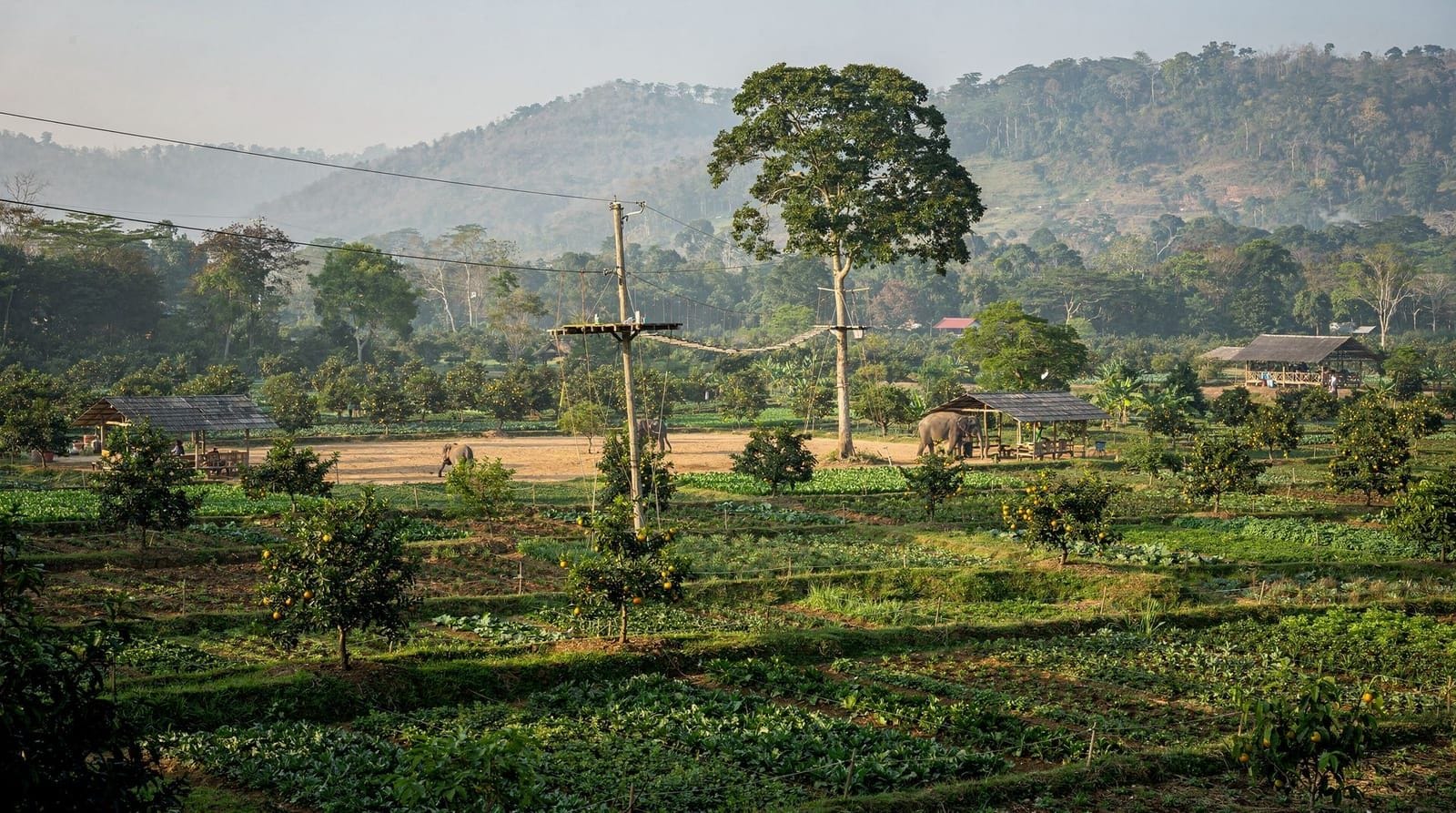
Mon Cham sits inside the Nong Hoi Royal Project, one of the network of royal agricultural development projects established across northern Thailand’s highlands from the 1970s onward to give hill communities an alternative to opium poppy cultivation — the same broader initiative behind projects near Bhubing Palace and the highland stations on Doi Inthanon. At Nong Hoi specifically, that agricultural mission translates today into terraced strawberry fields, flower plots and vegetable gardens climbing the hillside below the ridge, worked partly for commercial sale and partly, quite deliberately, for the tourism income that comes from visitors walking through them and paying for a view.
The ridge itself is a relatively narrow strip of high ground, and the tourism infrastructure built along it is simple by design: open-sided tents and small wooden platforms rented out by the hour or by a minimum food-and-drink spend, a handful of proper café buildings serving coffee and northern Thai food, and paths leading down into the strawberry and flower terraces. None of it is architecturally elaborate — the point is the view and the cool air, not the buildings.
The sea-of-mist sunrise
The single reason Mon Cham has a reputation beyond being “another Chiang Mai hill viewpoint” is the sea-of-mist effect that can form on cool-season mornings, typically November through February. When overnight temperatures drop enough and humidity is right, valley fog settles into the lower terrain surrounding the ridge, and from Mon Cham’s elevation you look out over what genuinely looks like an unbroken white sea, with forested hilltops poking through like islands. It’s a phenomenon rather than a guarantee — some cool-season mornings deliver it in full, others produce only a thin haze or nothing at all, and the effect essentially never appears outside the cool months.
Chasing the sea of mist properly means being on the ridge before or right around sunrise, which is a genuinely early start from central Chiang Mai: a 60-75 minute drive means leaving the old city around 4:30-5am for a sunrise viewing in December or January. That’s a real ask for a day-tripper, which is why the two realistic approaches are either an overnight stay at one of the small guesthouses or homestays near Mon Cham itself, or accepting that you’ll visit mid-morning instead and get the terraced fields and general hill views without the fog effect.
Check the Mae Sa and Mon Cham full-day motor scooter tour if you’d rather have a guide lead the route up from the valley than arrange an early self-drive.
Strawberry and flower terraces
Below the main viewpoint ridge, the Nong Hoi Royal Project’s terraced fields grow strawberries, flowers (marigolds, celosia and seasonal blooms depending on the month) and some vegetables, stepped down the slope in a pattern that photographs well from above and is genuinely pleasant to walk through at ground level. Strawberry season runs through the cool months, roughly December into February, when pick-your-own or pay-by-weight strawberry stands operate directly in the fields — a straightforward, inexpensive activity that pairs naturally with the viewpoint stop, since the fields sit just below the ridge rather than requiring a separate trip.
Outside the cool season, the terraces are still there but without fruiting strawberry plants, so the appeal shifts more toward the flower plantings and the general hillside scenery than a specific harvest activity. If strawberry picking specifically is the goal, timing the visit to December or January matters more than for almost any other part of a Mon Cham trip.
Tents, cafés and the “seat rental” model
Mon Cham’s hillside seating is mostly run on a model that’s worth understanding before you arrive: rather than a straightforward entrance fee, many of the platforms and open tents along the ridge charge either a flat rental for the seating itself or require a minimum spend on food and drinks from the operator running that particular spot. Prices and exact terms vary tent to tent and change with the season and crowd levels, so it’s worth confirming the arrangement — rental fee versus minimum spend, and roughly how long you get the seat — before settling in, rather than assuming it works the same way at every stall.
A handful of proper sit-down cafés along the ridge serve coffee, northern Thai dishes and simple breakfast plates at more conventional restaurant pricing, which is the easier option if you’d rather not negotiate a tent rental. Either way, arriving with cash in small denominations makes transactions faster, since this is a small-scale, largely informal hillside operation rather than a ticketed attraction with a single gate.
Getting to Mon Cham
Mon Cham is reached by continuing past Mae Rim and up through the Mae Sa valley before the road climbs sharply into the hills toward the Nong Hoi Royal Project — roughly 60-75 minutes from central Chiang Mai depending on traffic on the lower valley road and how the final climb goes. Options for getting there:
- Grab or a private driver: the simplest choice, especially for an early sunrise run where negotiating a scooter climb in the dark isn’t appealing. Grab availability thins out the higher you go, so arranging a return trip or a driver who’ll wait is worth planning ahead of time rather than counting on hailing a car back down from the ridge.
- Rental scooter: feasible for confident, experienced riders, but the final approach road climbs steeply with tight switchbacks, and doing that climb before dawn in cool-season fog conditions is a meaningfully different proposition from an afternoon ride through the flatter Mae Sa valley floor.
- A guided day tour: the straightforward option if you’d rather not manage transport logistics, particularly for a dawn departure.
Look at the segway and eco canopy zipline adventure in Mae Rim if you want to pair an adventure activity lower in the valley with a later-morning Mon Cham stop on the same day.
Combining Mon Cham with the rest of Mae Rim
Because Mon Cham sits at the top of the same road that runs through Mae Rim and Mae Sa valley, it combines naturally with the valley’s other stops rather than requiring a separate dedicated trip, provided you’re realistic about how much driving and daylight a full loop takes.
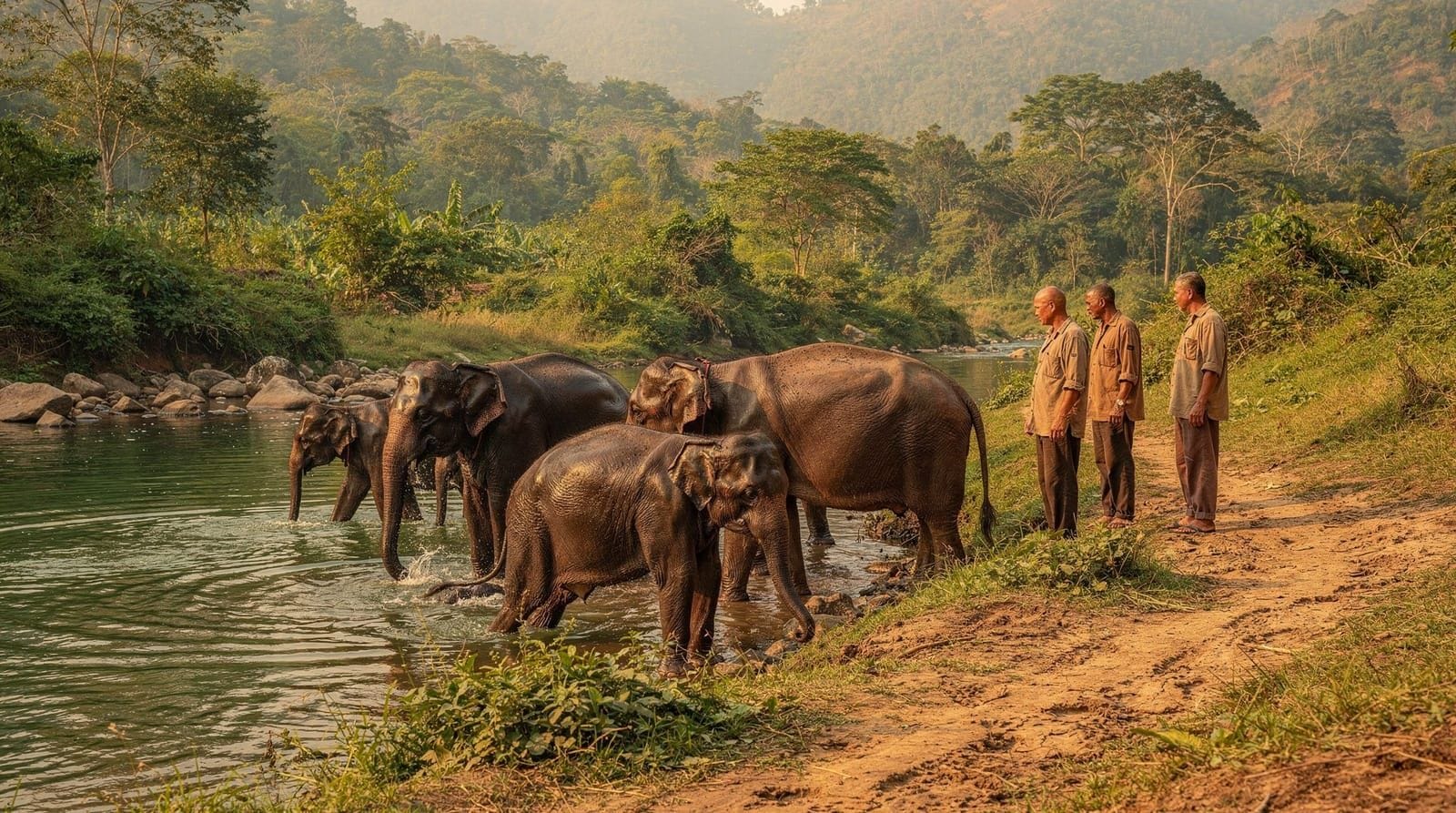
A common full-day pattern: a morning ethical elephant sanctuary visit lower in the valley, followed by the Queen Sirikit Botanic Garden or Mae Sa waterfall in the early afternoon, then continuing up to Mon Cham for late-afternoon light and an early dinner at one of the ridge cafés before heading back down to the city. That sequence trades the sunrise sea of mist for a more manageable single-day schedule, which is the trip most visitors end up taking.
Book a half-day ethical elephant sanctuary and waterfall tour if you want the valley’s wildlife stop paired with a straightforward morning before continuing up to Mon Cham independently in the afternoon.
If the sunrise sea of mist genuinely matters to you, an overnight at one of the small guesthouses near the ridge — simple, mountain-lodge-style rooms rather than resort-standard — is the only reliable way to be in position at first light without a pre-dawn drive from the city.
Weather, temperature and what to pack
Mon Cham’s elevation makes it noticeably cooler than central Chiang Mai year-round, and genuinely cold by Thai standards on cool-season mornings — light jacket weather before 8am in December and January is normal, and a proper layer matters if you’re chasing sunrise specifically. By mid-morning, once the sun is up, temperatures moderate quickly, so a jacket you can shed rather than carry all day is the practical choice.
Outside the cool season, Mon Cham is still noticeably cooler and breezier than the valley floor, which is part of its appeal as a lunch or afternoon stop even without the sea-of-mist phenomenon. The rainy season (roughly June to October) brings the greenest hillsides and lush terraces but the least reliable views, since cloud and rain can obscure the ridge outlook entirely with little warning — worth knowing if photography is the main goal for your visit.
Photography at Mon Cham
Mon Cham’s reputation online rests heavily on a specific kind of photograph — a lone figure standing at a wooden railing above an unbroken sea of white fog, forested peaks breaking through in the distance, soft early light behind them. Getting that exact shot takes the same early arrival the sea-of-mist phenomenon itself requires, plus a bit of positioning: the best viewpoints along the ridge fill up quickly on a promising cool-season morning, and the most photogenic railings and platforms are often the first claimed. Arriving even 20-30 minutes before official sunrise, rather than right at it, gives you a real chance at a clear spot before the crowd builds.
Later in the morning, once direct sun is up and any mist has burned off, the light flattens and the strawberry and flower terraces become the more rewarding subject instead of the wider valley view — still worth photographing, just a different kind of shot than the dawn sea-of-mist images that made the spot famous. If you’re specifically chasing the classic viral photo, treat the dawn window as a narrow one and plan your arrival time accordingly rather than assuming any morning visit will deliver it.
How Mon Cham compares to other Chiang Mai viewpoints
Mon Cham isn’t the only elevated viewpoint in the wider Chiang Mai area, and it’s worth knowing roughly how it differs from the alternatives. Doi Suthep, the city’s most famous mountain temple, offers city-facing views down toward Chiang Mai itself rather than the rural sea-of-mist effect Mon Cham is known for, and centers on a major temple rather than agricultural terraces. Doi Pui Hmong village, further up the same mountain as Doi Suthep, adds hill-tribe cultural context and gardens to a similar elevated setting, but again without the specific fog phenomenon Mon Cham’s geography produces. Further afield, viewpoints around Chiang Dao and on the road to Pai offer their own mountain scenery, but involve a considerably longer drive than Mon Cham’s roughly hour-long trip from the city, making Mon Cham the more practical choice if a sunrise viewpoint has to fit inside a single Chiang Mai-based day.
The honest picture: crowds, weekends and managing expectations
Mon Cham’s popularity, especially on cool-season weekends, means the ridge can get genuinely crowded — parking fills up, the better-positioned tents and platforms get claimed early, and the quiet, contemplative sea-of-mist experience you’ve likely seen in photos can turn into a shoulder-to-shoulder scramble for a viewpoint spot. A weekday visit, or a weekend arrival well before sunrise, makes a real difference here.
It’s also worth setting realistic expectations about the sea of mist itself: it’s a genuine weather phenomenon, not a manufactured attraction, and it simply doesn’t happen every cool-season morning. Visitors who build an entire trip around guaranteeing that specific view sometimes leave disappointed by ordinary hill fog or clear skies with no mist at all. Treat it as a wonderful possibility on a cool-season morning rather than a booked-and-paid-for certainty, and the terraced fields, cooler air and hillside cafés remain a satisfying stop even on a mist-free day.
Frequently asked questions about Mon Cham
What is the difference between Mon Cham and Mon Jam?
Nothing — they’re the same place. “Mon Cham” and “Mon Jam” are both English transliterations of the same Thai name, and you’ll see both spellings used interchangeably on signage, maps and tour listings.
How far is Mon Cham from Chiang Mai?
Roughly 60-75 minutes by car from the old city, continuing past Mae Rim and the Mae Sa valley before the final climb into the hills.
What is the best time to see the sea of mist at Mon Cham?
November to February, around sunrise, when cool overnight temperatures produce fog in the valleys below the ridge. It’s a weather-dependent phenomenon rather than a daily guarantee.
Do I need to arrive before sunrise to enjoy Mon Cham?
Only if the sea-of-mist effect specifically is your goal. A mid-morning arrival still gets you the strawberry and flower terraces, hill views and cooler air, just without the fog phenomenon.
Is there an entrance fee for Mon Cham?
There’s no single ticketed entry gate. Instead, individual tents and platforms along the ridge charge either a seating rental or a minimum food-and-drink spend, which varies by operator, so it’s worth confirming before you sit down.
Can I pick strawberries at Mon Cham?
Yes, during the cool-season harvest, roughly December to February, at stands directly in the Nong Hoi Royal Project’s terraced fields below the main viewpoint.
Can I get to Mon Cham without a car?
Not easily. There’s no regular public transport up the final climb, so a Grab, private driver, rental scooter or guided tour is the practical way to get there, especially for an early sunrise visit.
Can I combine Mon Cham with an elephant sanctuary visit in one day?
Yes, that’s a common full-day pattern — an ethical elephant sanctuary visit in the morning lower in the valley, followed by the waterfall or botanic garden, then continuing up to Mon Cham in the afternoon.
Is Mon Cham crowded?
It can be, especially on cool-season weekends when the sea-of-mist chance is highest. A weekday visit, or arriving well before sunrise on a weekend, avoids the worst of the crowds and parking congestion.
How cold does it get at Mon Cham?
Noticeably colder than central Chiang Mai. Cool-season mornings before 8am can be genuinely light-jacket weather, though temperatures moderate quickly once the sun is up.
Is Mon Cham the same as Doi Suthep?
No. Both are elevated viewpoints in the wider Chiang Mai hills, but Doi Suthep is a mountain temple with city-facing views, while Mon Cham is an agricultural viewpoint inside the Nong Hoi Royal Project, known specifically for its sea-of-mist effect and strawberry terraces rather than a temple.
What is the best photography window at Mon Cham?
Roughly 20-30 minutes before sunrise through shortly after, during the cool season, for the sea-of-mist effect and soft early light. Later morning shots favor the strawberry and flower terraces once the mist has typically burned off.
Top experiences
Bookable activities with verified prices and instant confirmation on GetYourGuide.