Chiang Dao
A limestone cave beneath Thailand's third-highest peak, 1.5 hours from Chiang Mai — lit chambers, lamp-guided passages, hot springs, quiet nature.
From Chiang Mai: Chiang Dao Cave Trekking Full-Day Tour
Duration: Full day
Quick facts
- Distance / time
- ~70km / ~1.5 hours north of Chiang Mai by car, minivan, or tour
- Key sight
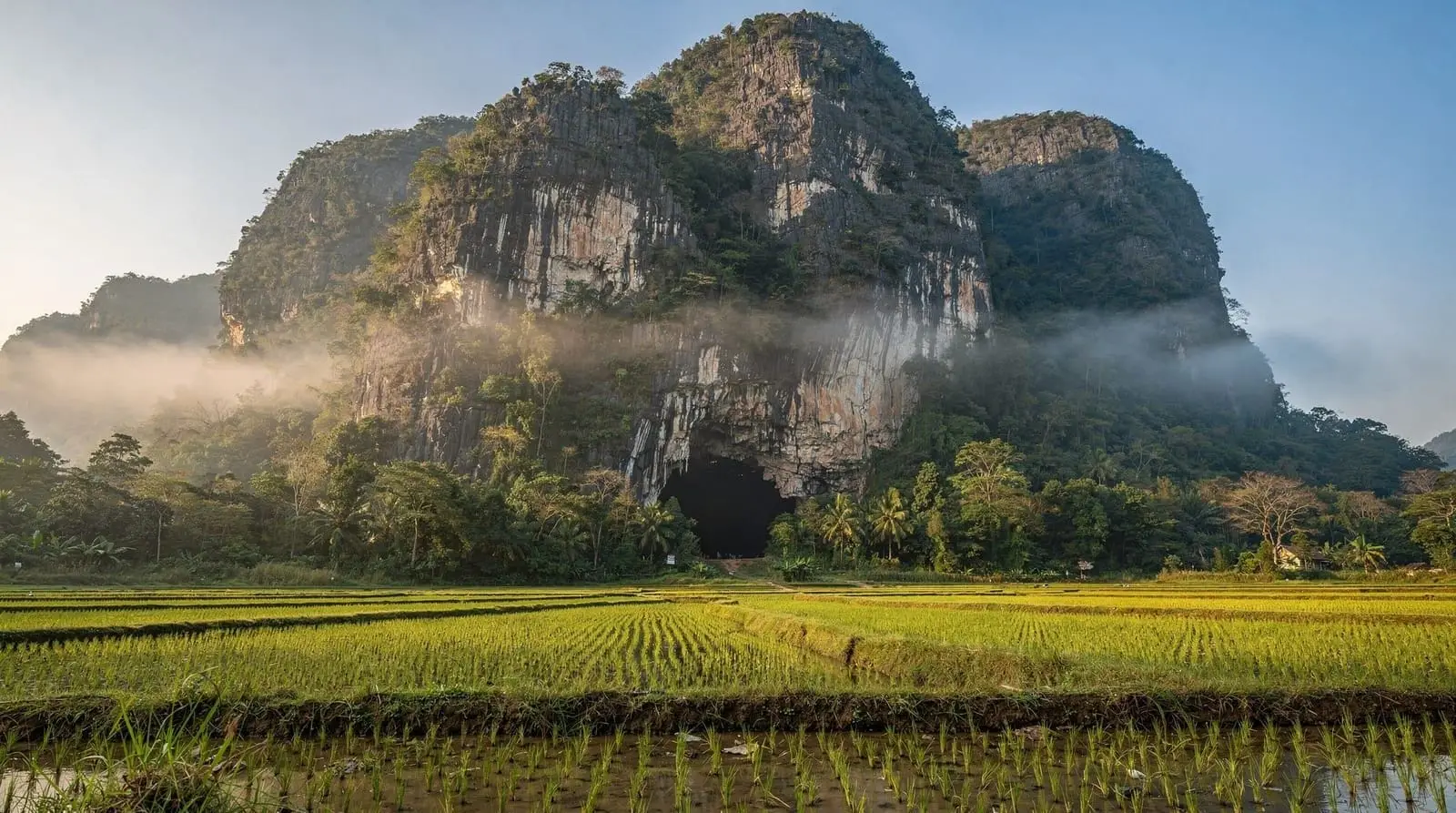
- Tham Chiang Dao (Chiang Dao Cave) beneath Doi Luang Chiang Dao, Thailand's 3rd-highest peak (~2,225m)
- Cave sections
- A short lit section is self-guided; deeper dark passages require a local lamp-guide, hired on-site
- Time needed
- Half a day for the cave and Wat Tham Pha Plong; a full day with hot springs and birdwatching added
- Best time
- Year-round for the cave itself; November-February for cooler hiking and clearer mountain views
Chiang Dao sits about 70km, roughly an hour and a half, north of Chiang Mai, at the base of Doi Luang Chiang Dao — Thailand’s third-highest mountain at around 2,225m — and it’s built its reputation on two things that don’t always go together: a genuinely extensive cave system beneath the mountain, and a quiet, largely undeveloped nature-tourism scene around it. Unlike Pai or the full Mae Hong Son loop, Chiang Dao is close enough for a comfortable half or full day trip without an overnight, which makes it one of the more accessible mountain-nature outings from Chiang Mai.
Quick answer: Chiang Dao’s main draw is Tham Chiang Dao, a limestone cave system beneath Doi Luang Chiang Dao mountain, with a short lit and self-guided section near the entrance and much longer dark passages accessible only with a local lamp-guide hired on-site. Beyond the cave, the area offers Wat Tham Pha Plong (a forest-temple stairway hike), hot springs, and some of northern Thailand’s best birdwatching, all reachable in about 1.5 hours from Chiang Mai — a realistic half or full day trip rather than a multi-day commitment.
Tham Chiang Dao: the cave
The cave system beneath the mountain is extensive — locally cited figures put the mapped passages at well over 10km, though only a small fraction is open to visitors. Near the entrance, a lit, paved section runs a few hundred meters through chambers with stalactites, stalagmites, and small shrine areas, walkable independently without a guide and manageable for most visitors, including families with older children.
Beyond the lit section, the cave continues into unlit passages that are genuinely dark and require a local guide carrying a pressure lamp — these guides work informally at the cave entrance, charging a modest per-lamp or per-group fee that covers a deeper route through chambers with names tied to local legend (some referencing hidden treasures, sleeping deities, or mythical creatures said to inhabit the deeper sections). The lamp-guided sections are a genuinely different experience from the lit walkway: quieter, cooler, and considerably more atmospheric, with rock formations that only make sense by lamplight rather than under electric bulbs.
Doi Luang Chiang Dao
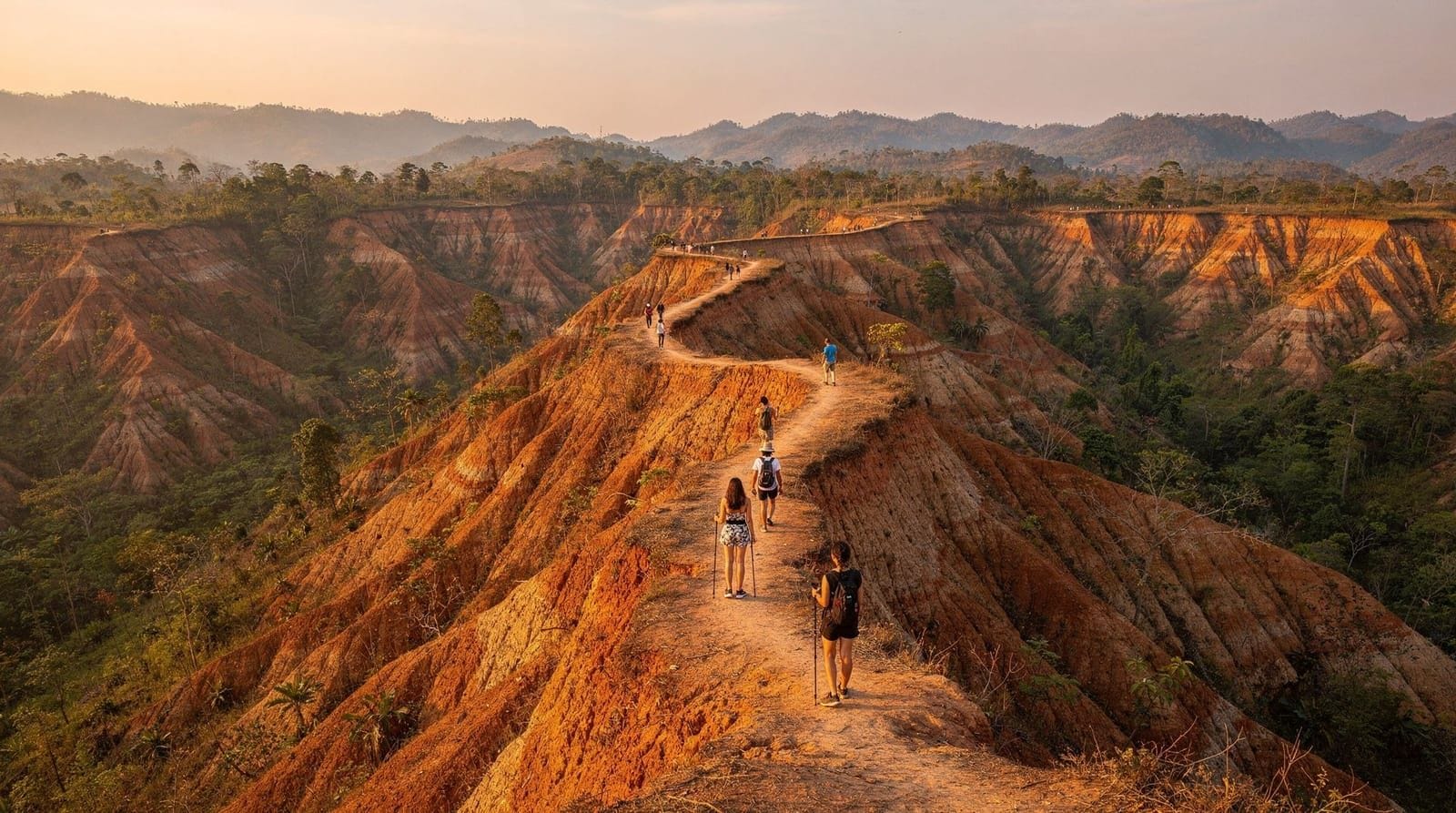
The mountain towering over the cave, Doi Luang Chiang Dao, is Thailand’s third-highest peak after Doi Inthanon and Doi Pha Hom Pok, and a well-known destination for serious trekkers and birdwatchers, though summit access is tightly regulated by the national park authority and typically limited to specific seasons (roughly November to February) with mandatory local guides and advance permits. This isn’t a casual add-on hike — reaching the upper slopes and summit area is a multi-day trekking undertaking requiring permits arranged well ahead of a visit, and most day-trip visitors to Chiang Dao experience the mountain from its base and lower slopes rather than attempting any part of the summit route.
The lower slopes and surrounding forest, by contrast, are freely accessible and make for good short walks and birdwatching without any permit requirement, which is the realistic scope for most day-trip itineraries covered in this guide.
Wat Tham Pha Plong
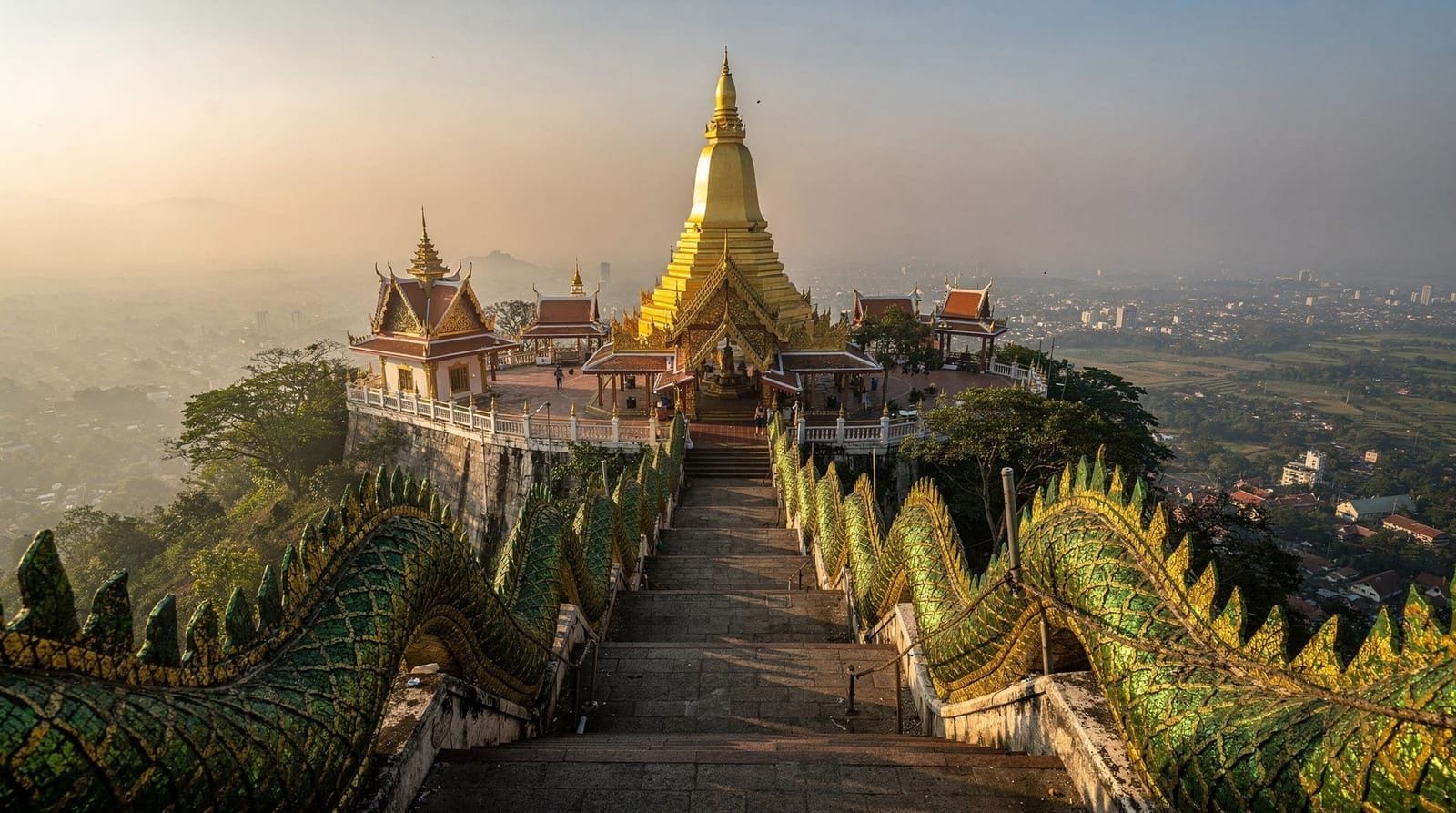
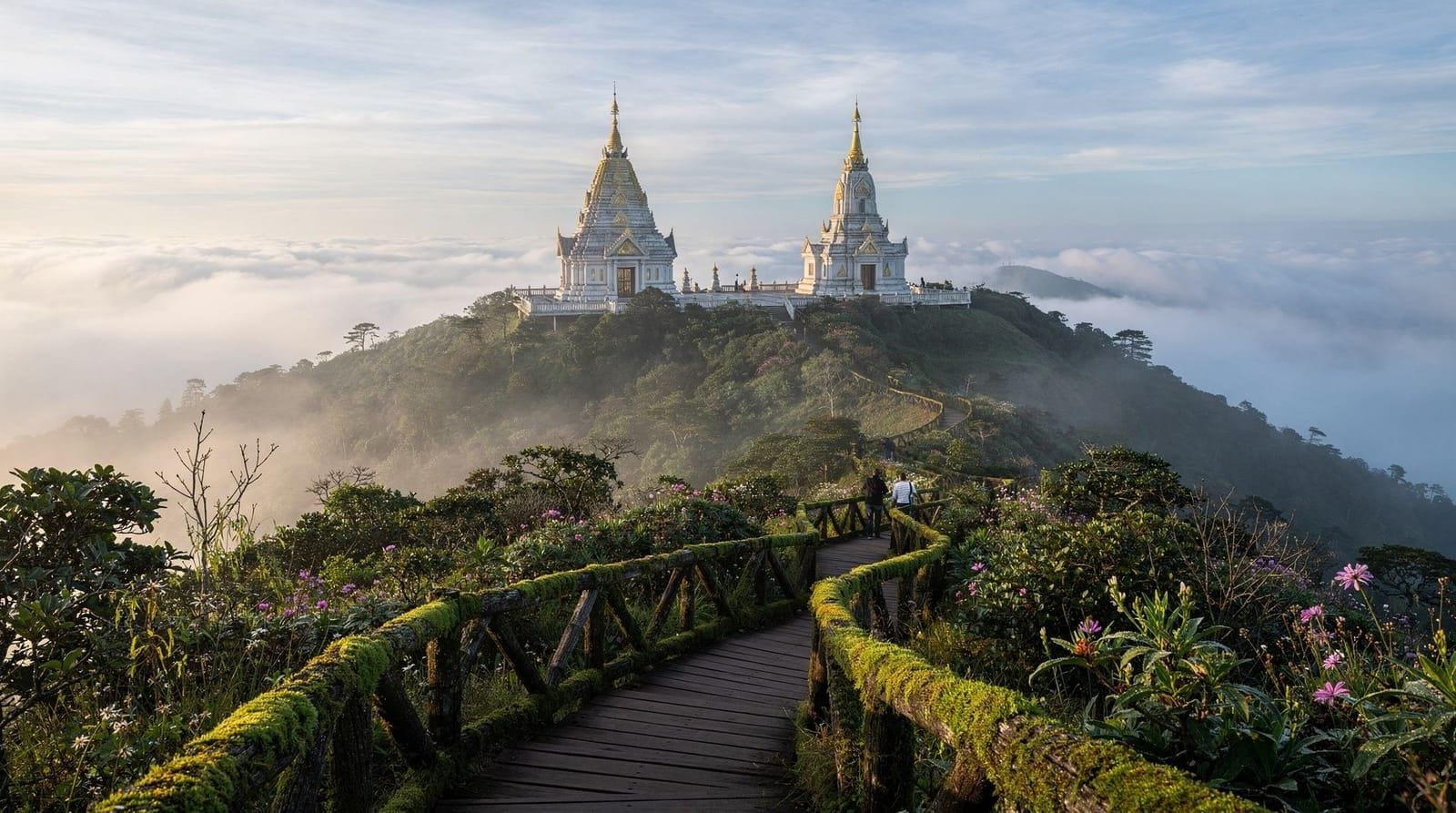
A short drive from the main cave, Wat Tham Pha Plong is a forest-temple built around a smaller cave and a long stepped stairway (over 500 steps by most counts) climbing through forest to a hilltop chedi and meditation area. It’s a genuinely peaceful stop, used actively by monks for meditation retreats, and the climb itself — shaded for much of its length — is a worthwhile counterpart to the flatter walk through the main cave’s lit section. Quiet is expected here more strictly than at the main cave, given its active use as a meditation site.
Hot springs and birdwatching
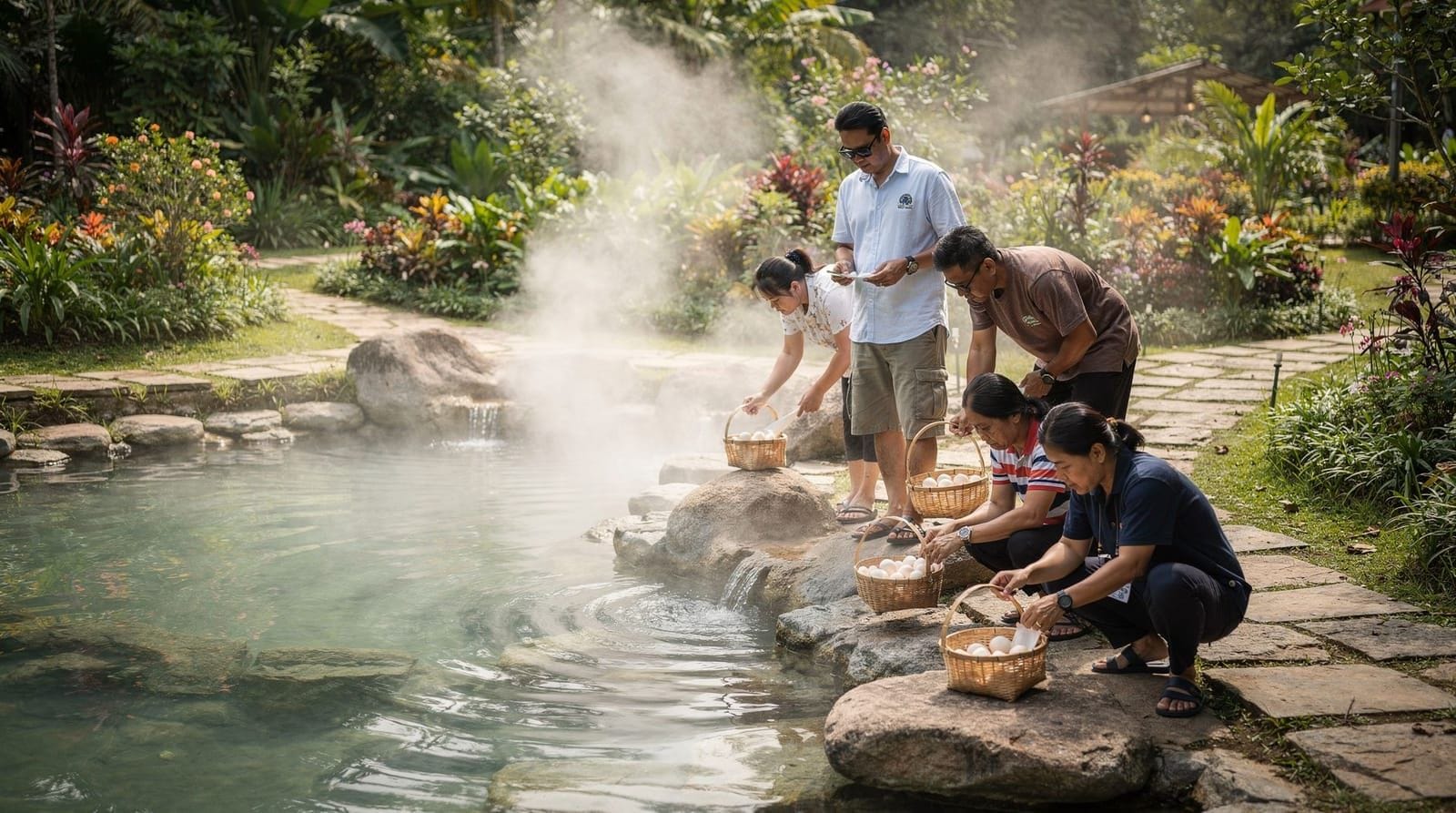
A cluster of hot springs sits within a short drive of the cave area, less developed and considerably less crowded than the San Kamphaeng springs closer to Chiang Mai — a good stop for travelers who want a soak without the tour-bus atmosphere of the more famous site. The broader Chiang Dao area, encompassing the mountain’s forested slopes and adjacent wetlands, is recognized among birdwatchers as one of Thailand’s more productive sites, with a genuinely wide range of species recorded across elevation zones from lowland forest to the mountain’s upper reaches — specialist birding guides and small lodges in the area cater specifically to this niche, and serious birders often base themselves here for several days rather than treating it as a single-day stop.
Getting there
Chiang Dao is reachable by minivan, shared songthaew, private car, or self-drive along Route 107 north from Chiang Mai, with the drive taking about 1.5 hours in normal traffic. Self-driving is considerably more straightforward here than on the roads to Pai or Mae Hong Son — Route 107 is a wider, more standard highway for most of the distance, making this a reasonable choice for travelers who’d rather not negotiate a full mountain-pass drive. A guided Chiang Dao cave trekking full-day tour covers transport, entrance logistics, and a knowledgeable guide for both the lit and lamp-guided cave sections without you needing to arrange the informal lamp-guide negotiation yourself.
Combining Chiang Dao with other stops
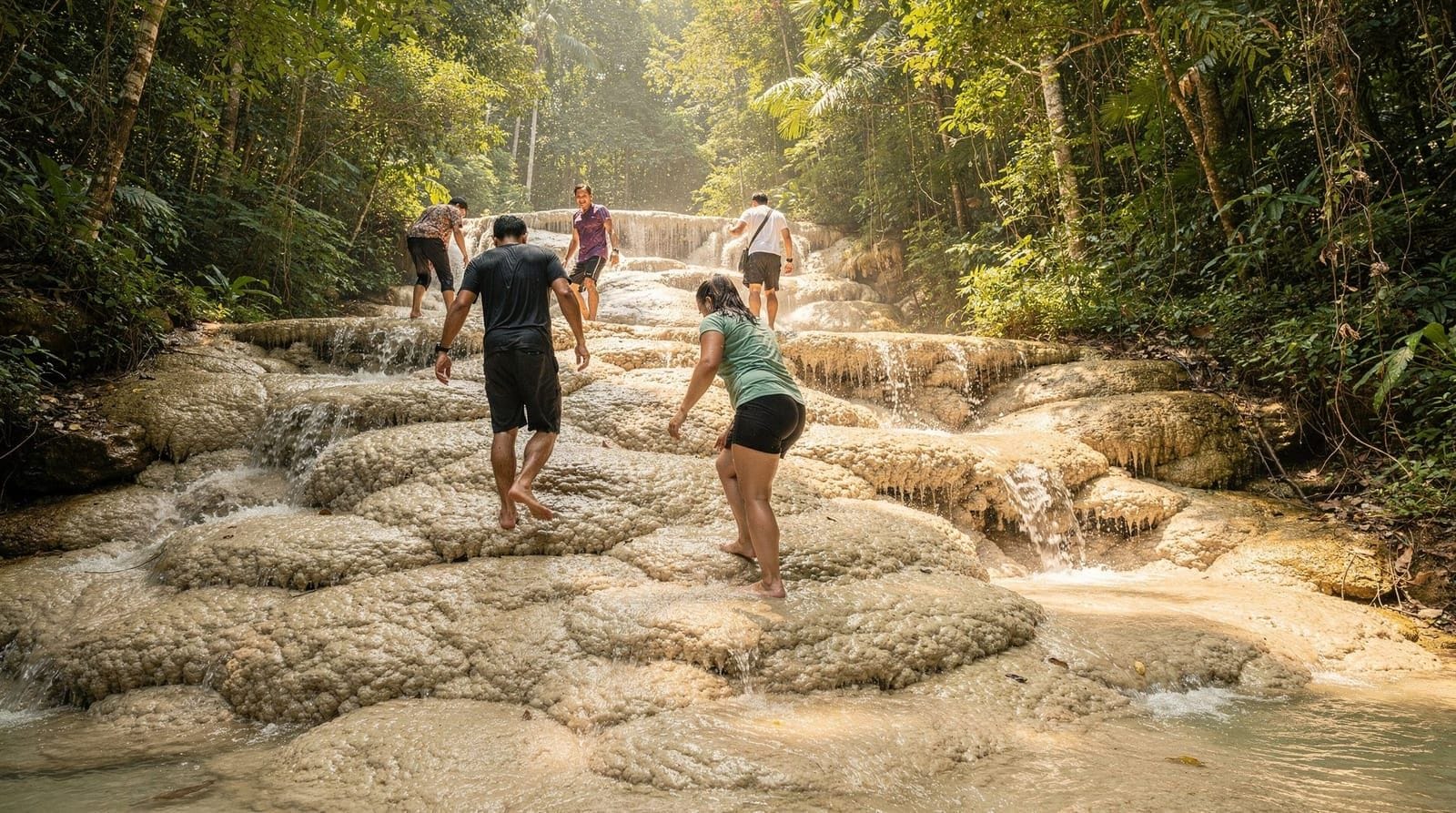
Several tour operators combine the cave with nearby waterfalls or hill-tribe villages to build a fuller day. A Chiang Dao cave, Den Sali temple, and waterfall tour pairs the cave with a nearby temple and waterfall stop, while Chiang Dao cave, sticky waterfall, and Baan Den temple routes through the Sticky Waterfalls area on the way — see the Sticky Waterfalls guide for more on that stop specifically, since it sits roughly between Chiang Mai and Chiang Dao and is easy to combine with either.
For travelers interested in the area’s ethnic diversity, a Chiang Dao cave and five hill-tribe villages tour extends the day considerably further, visiting several nearby villages alongside the cave — worth approaching with the same thoughtfulness discussed regarding hill-tribe visits generally (see the Mae Hong Son guide for a fuller discussion of that topic), since not all village-visit tours are structured with equal respect for the communities involved. More adventure-oriented travelers might instead look at combined caving-and-kayaking itineraries pairing the cave with a river segment rather than a village visit, or a Mae Taeng day trip that adds rafting alongside the cave visit, both offered by several of the same local operators.
When to go
The cave is a viable visit year-round since it’s largely sheltered from weather, though the approach roads and any combined outdoor stops (hot springs, waterfalls, birdwatching walks) are more pleasant in the cool season, November through February, when temperatures are lower and air quality better than during the February-April haze period. Doi Luang Chiang Dao’s regulated summit trekking season aligns with this same cool-season window, when trail conditions and visibility are at their best for the multi-day trekking permit holders who do attempt it.
How Chiang Dao compares to Pai and Mae Hong Son
Of the four northern day-trip destinations covered in this section, Chiang Dao is the closest and easiest, making it the natural choice for travelers who want a genuine mountain-nature experience without committing to an overnight stay or a demanding drive. Pai and Mae Hong Son both require multi-hour drives on winding roads and reward travelers willing to invest a night or several days; Chiang Dao delivers cave exploration, a mountain backdrop, and a quieter pace within a manageable half or full day, making it the better choice if your itinerary genuinely only has one day free for a northern nature excursion.
The legend behind the cave
Local legend holds that the cave was once the dwelling of a powerful hermit or deity, and several of the deeper chambers carry names tied to this folklore — one is said to contain a mythical lake guarded by a naga, another a chamber of treasures left behind by celestial beings who used the cave as a resting place. Shrines near the entrance and inside the lit section reflect this layered spiritual significance: the cave functions as an active site of local worship and merit-making, not solely a natural attraction, and small offerings, incense, and gold-leaf application on Buddha images inside are common sights rather than staged tourist elements. Understanding this background adds context to the guides’ storytelling on the lamp-lit route, since much of what they point out draws directly on these local legends rather than purely geological description.
A short history of the area
Chiang Dao town itself developed as a modest market and trading stop along the historical route north from Chiang Mai toward the Shan states and beyond, well before its cave and mountain became a tourism draw in their own right. The cave has been a site of Buddhist pilgrimage and local worship for generations, predating organized tourism by a considerable margin, and the shrines inside reflect decades, in some cases longer, of continuous use rather than recent additions for visitors. Tourism development around the cave and the base of Doi Luang Chiang Dao has remained comparatively modest relative to more heavily developed destinations like Doi Suthep or Pai, partly a function of distance from the main city and partly because the area’s core appeal — cave exploration, serious trekking, and specialist birdwatching — draws a narrower, more dedicated visitor base than a broader sightseeing crowd.
Suggested day-trip itinerary
A reasonable full-day plan: depart Chiang Mai early to reach the cave by mid-morning, allowing a comfortable two to three hours for the lit section plus a lamp-guided chamber; follow with lunch at one of the small local restaurants near the cave entrance, several of which serve straightforward northern Thai food to the steady stream of cave visitors; spend the early afternoon at Wat Tham Pha Plong, climbing the stepped forest path at a relaxed pace; and close the day with a stop at the area’s hot springs before the drive back to Chiang Mai, timed to avoid arriving back in heavier late-afternoon city traffic. Travelers with only a half day should prioritize the cave and lamp-guided section alone, since it’s the area’s signature experience and the one most visitors come specifically for.
Practical notes
Bring a light jacket or layer even in the warmer months — the cave interior stays cool year-round, and higher elevations around the mountain’s base are noticeably cooler than Chiang Mai city. Cash is the norm for lamp-guide fees and small entrance charges; card payment isn’t reliably available at the cave entrance itself. Sturdy, closed footwear is worth it for the cave’s uneven floor and Wat Tham Pha Plong’s stepped climb, more so than the sandals that are fine for most other day-trip stops in this list.
Accessibility notes
The lit section of the main cave is largely level and paved, making it manageable for most visitors, though the ground is naturally uneven in places and can be slippery where moisture seeps through the limestone, so sturdy footwear matters more here than at a typical temple visit. The lamp-guided dark sections involve stooping in places, uneven natural rock floors, and occasional narrow passages, which makes them unsuitable for visitors with significant mobility limitations or discomfort in confined spaces — the lit entrance section is the more realistic option in that case, and still gives a genuine sense of the cave’s scale. Wat Tham Pha Plong’s stepped climb is a sustained set of stairs without a barrier-free alternative, so travelers who can’t manage stairs should treat the main cave, rather than the temple, as the day’s centerpiece.
Food near the cave
The small cluster of restaurants and food stalls near the cave entrance mostly serves straightforward northern Thai dishes aimed at day visitors — noodle soups, simple rice plates, and grilled meats — rather than anything elaborate, and prices run noticeably lower than comparable food in central Chiang Mai. It’s a practical rather than destination-worthy food stop, useful for refueling between the cave and Wat Tham Pha Plong without needing to carry your own supplies or backtrack toward town for lunch.
Frequently asked questions about Chiang Dao
How far is Chiang Dao from Chiang Mai?
About 70km, roughly 1.5 hours by car, minivan, or tour along Route 107 north.
Do I need a guide to visit Chiang Dao Cave?
Not for the short, lit entrance section, which is self-guided. The deeper, unlit passages require hiring a local lamp-guide on-site, which is the recommended way to see the cave’s most distinctive sections.
Can I climb Doi Luang Chiang Dao mountain?
Summit access is regulated by the national park authority, limited to roughly November-February, and requires a permit and mandatory local guide as part of a multi-day trek — it’s not a casual day-trip extension of the cave visit.
Is Chiang Dao good for birdwatching?
Yes — the area, spanning lowland forest to the mountain’s upper elevations, is considered one of Thailand’s better birding sites, and dedicated birding lodges operate in the area for visitors who want to base themselves there for a few days.
How long should I spend at Chiang Dao?
Half a day covers the cave and Wat Tham Pha Plong comfortably; a full day allows the hot springs and a more relaxed pace, or a combined tour that adds a waterfall or village stop.
Is Chiang Dao a good alternative to Pai if I only have one day?
Yes — it’s considerably closer, involves an easier drive, and delivers a genuine mountain-nature outing without an overnight, which Pai realistically needs to be worthwhile.
What should I wear or bring to the cave?
A light layer for the cool cave interior, sturdy closed-toe shoes for the uneven cave floor and temple stairs, and cash for the lamp-guide fee and any small entrance charges.
Are there hot springs near Chiang Dao?
Yes, a smaller and less crowded cluster than the well-known San Kamphaeng hot springs closer to Chiang Mai, reachable within a short drive of the cave area.
Top experiences
Bookable activities with verified prices and instant confirmation on GetYourGuide.

From Chiang Mai: Chiang Dao Cave Trekking Full-Day Tour
Chiang Dao Cave, Den Sali Temple & Waterfall
Chiang Dao Cave, Sticky Waterfall & Baan Den Temple Private
From Chiang Mai: Chiang Dao Cave & 5 Hill Tribe Villages
Chiang Mai: Full-Day Chiang Dao Caving & Jungle Kayaking