San Kamphaeng hot springs
San Kamphaeng hot springs offer geothermal pools, an egg-boiling stream and mineral baths 35 km east of Chiang Mai, easily paired with Bo Sang village.
Chiang Mai: Mae Kampong Village, Hot Springs & Bor Sang Tour
Quick facts
- Getting there
- Grab or private driver from the old city, 45-60 min, roughly 600-900 THB (~$17-26) one-way
- Key sight
- Steaming geothermal pools, an egg-boiling stream and private mineral bath houses
- Time needed
- 1-2 hours, more if you book a private bath or spa treatment
- Best time
- Cool season mornings (November-February) for the steam-versus-cool-air contrast; open year-round
- Typical cost
- General entry around 100 THB (~$3); a raw egg for boiling around 20-30 THB (~$0.60-0.85); private jacuzzi rooms roughly 150-300 THB (~$4-8.50) extra
The San Kamphaeng hot springs sit about 35 km east of Chiang Mai, close enough to the San Kamphaeng crafts road and Bo Sang umbrella village that most visitors treat all three as a single half-day loop rather than separate trips. The springs themselves are a straightforward geothermal attraction — steaming natural pools too hot to enter directly, a shallow stream cool enough for egg-boiling, and a handful of private mineral bath houses and spa buildings built up around the source over the years. It’s not a dramatic natural site the way a waterfall or cave is, and it’s fair to say some of the surrounding development leans commercial, but as a low-effort half-day stop paired with the district’s craft villages, it earns its place on an eastern Chiang Mai day trip.
Quick answer: San Kamphaeng hot springs are about 45-60 minutes east of central Chiang Mai, in the same district as Bo Sang’s umbrella workshops and the San Kamphaeng crafts road. The main activities are viewing the geothermal pools, boiling an egg in the hot stream as a novelty snack, and optionally booking a private mineral bath or foot soak. Most visitors spend 1-2 hours here as part of a longer loop through the district rather than as a standalone destination.
What’s actually at the hot springs
The San Kamphaeng site is built around a natural geothermal source, and the layout is fairly simple once you’re inside:
- The main geothermal pools — several pools of naturally heated mineral water, visibly steaming, roped off from direct entry since the source water runs too hot for bathing. These are the site’s main visual draw and the reason for the name.
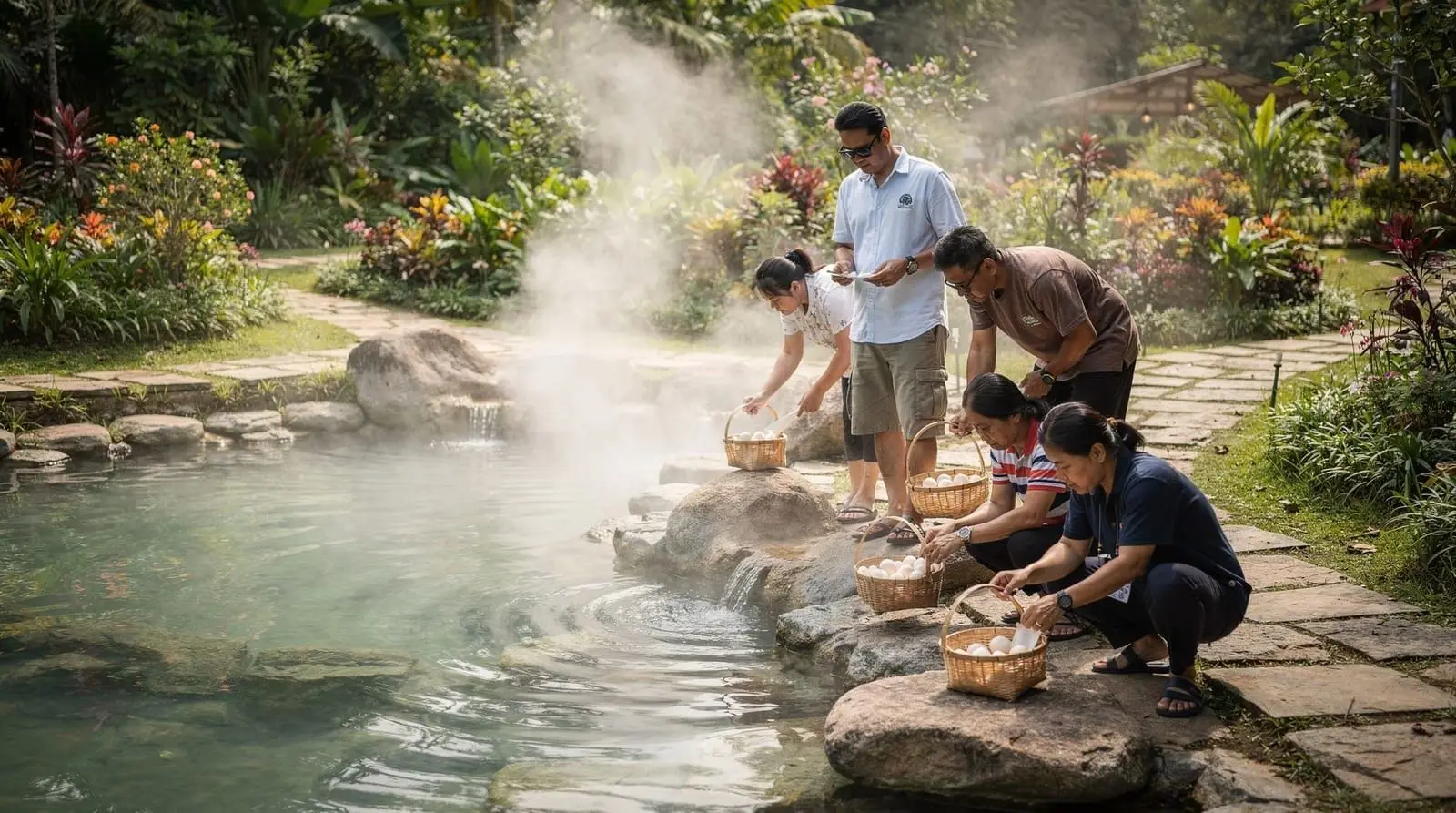
- The egg-boiling stream — a shallow channel of hot (but touchable) water where vendors sell baskets of raw eggs that you lower into the stream in a net or basket and retrieve a few minutes later, soft- or hard-boiled depending on how long you leave them. It’s a simple, slightly novelty activity, but a genuinely popular one and worth doing once for the experience.
- Private mineral bath houses — separate buildings offering private jacuzzi-style tubs filled with the mineral water, rented by the room for a set time, along with foot-soaking pools open to general visitors at a lower cost than the private rooms.
- Spa and massage facilities — several operators on-site offer traditional Thai massage and mineral-water treatments, aimed at visitors looking to extend their stop into a longer, more spa-focused half day.
- Gardens and picnic areas — landscaped grounds around the pools with shaded seating, useful for a rest stop between the springs and the district’s other craft-village attractions.
San Kamphaeng springs versus Roong Aroon springs
The San Kamphaeng area is actually home to more than one geothermal site, and it’s worth knowing the difference before you book anything. The main San Kamphaeng hot springs, the site most tour listings and this guide refer to, is the longer-established and better-known of the two, with the fuller range of pools, egg-boiling stream and private bath facilities described above. A second site, Roong Aroon hot springs, sits nearby in the same general geothermal area and offers a broadly similar experience — geothermal pools, mineral bathing facilities — on a smaller scale, sometimes with a quieter, less crowded atmosphere as a trade-off for fewer facilities.
For most first-time visitors, the main San Kamphaeng springs is the more practical choice simply because it’s the site most transport, tours and directions default to, but if you’re specifically looking for a quieter alternative and have already visited the main springs on a previous Chiang Mai trip, asking a local driver about Roong Aroon is a reasonable way to see a different, less-touristed corner of the same geothermal area.
The geothermal science, briefly
The springs are fed by naturally heated groundwater that rises through fault lines in the underlying rock, a phenomenon found at several points across northern Thailand where geological activity brings mineral-rich water close enough to the surface to emerge hot. The water carries a range of dissolved minerals — sulphur is often the most noticeable, contributing a faint smell around the main pools — which is the basis for the site’s spa and bathing claims about skin and circulation benefits. As with most geothermal spa attractions, treat those specific health claims as marketing rather than medically verified fact, while the simple experience of a hot mineral soak on a cool morning is genuinely pleasant regardless of any additional wellness benefit.
Boiling an egg: how it actually works
The egg-boiling stream is the site’s signature novelty activity and worth explaining, since first-time visitors sometimes aren’t sure what to do. Vendors near the stream sell small baskets or nets of raw eggs; you lower the basket into the hot stream at a marked spot, wait roughly 10-15 minutes depending on how firm you want the yolk, then retrieve it yourself. The eggs come out with a faintly sulphurous smell from the mineral water — some visitors love the novelty, others find the smell off-putting enough to skip eating more than one. Either way, it’s inexpensive, quick, and the kind of small, hands-on activity that makes for a good photo and a five-minute break in a longer day.
Book the Mae Kampong village, hot springs and Bo Sang combination tour if you’d rather have the springs, the mountain village and the umbrella workshops covered in a single guided day rather than arranging each stop separately.
Private baths and the spa side of the site
Beyond the free-to-view main pools and the egg stream, the site’s private bath houses are the part visitors actually pay to use directly. Rooms are typically rented for a fixed block of time — enough for a couple or small group to soak in mineral water piped into a private tub — at a price noticeably above the general entry fee. Foot-soaking pools, open to anyone who’s paid general admission, are the lower-cost alternative if a full private bath isn’t worth it to you, and they’re a genuinely pleasant way to rest for 20-30 minutes after walking the grounds.
Massage services on-site range from a simple foot massage to a full traditional Thai massage package, generally priced in line with mid-range spa rates elsewhere in the Chiang Mai area rather than at a discount, since the location itself is part of what you’re paying for.
What to bring for a visit
A visit to San Kamphaeng hot springs is low-effort compared to most other stops in the district, but a few practical items make it noticeably more comfortable. A swimsuit is essential if you’re planning a private bath, since the rental rooms are set up for bathing rather than street clothes, along with a change of clothes and a towel — not all bath houses provide one, so it’s worth checking or bringing your own. Sandals or flip-flops that can get wet are more practical than closed shoes around the pools and egg-boiling stream, and cash in small denominations speeds up paying for eggs, entry and any spa add-ons, since not every vendor on-site takes cards.
If you’re visiting on a cool-season morning specifically for the steam-and-cold-air contrast, a light layer for the drive there and back is worth having, even though the springs area itself, being outdoors and near hot water, rarely feels cold once you’re on-site.
Comparing San Kamphaeng to other Chiang Mai-area hot springs
San Kamphaeng isn’t the only geothermal stop accessible from Chiang Mai — the Pai area, several hours northwest, has its own hot springs as part of a broader day-trip or overnight itinerary built around the town’s canyon, waterfalls and mountain road. The practical difference is distance and context: San Kamphaeng’s springs are a short, self-contained half-day stop combinable with the district’s craft villages on the same eastern side of Chiang Mai, while Pai’s hot springs sit at the end of a much longer drive and are one stop among several on what’s usually a multi-day Pai trip rather than a Chiang Mai day trip. If a hot spring stop specifically has to fit into a single day without an overnight, San Kamphaeng is by far the more time-efficient choice.
Visiting with families
San Kamphaeng hot springs is a genuinely easy stop for families with children, since the main activities — walking around the pools, boiling eggs in the stream, and a foot soak or picnic in the garden areas — require little physical exertion and no special preparation. The egg-boiling activity in particular tends to be a hit with kids, since it’s hands-on, quick, and produces an immediate, edible result, unlike many “watch and learn” cultural stops. Private bath rooms can also work for families wanting to soak together, though children should be supervised around the hotter, roped-off main pools, which are genuinely too hot for anyone to enter directly.
Because the site requires relatively little walking compared to, say, a temple complex or hiking trail, it’s also a reasonably comfortable stop for grandparents or travelers with mobility considerations, provided the ground around the pools — which can be uneven and occasionally slippery near the wetter sections — is navigated carefully.
Honest note: managing expectations
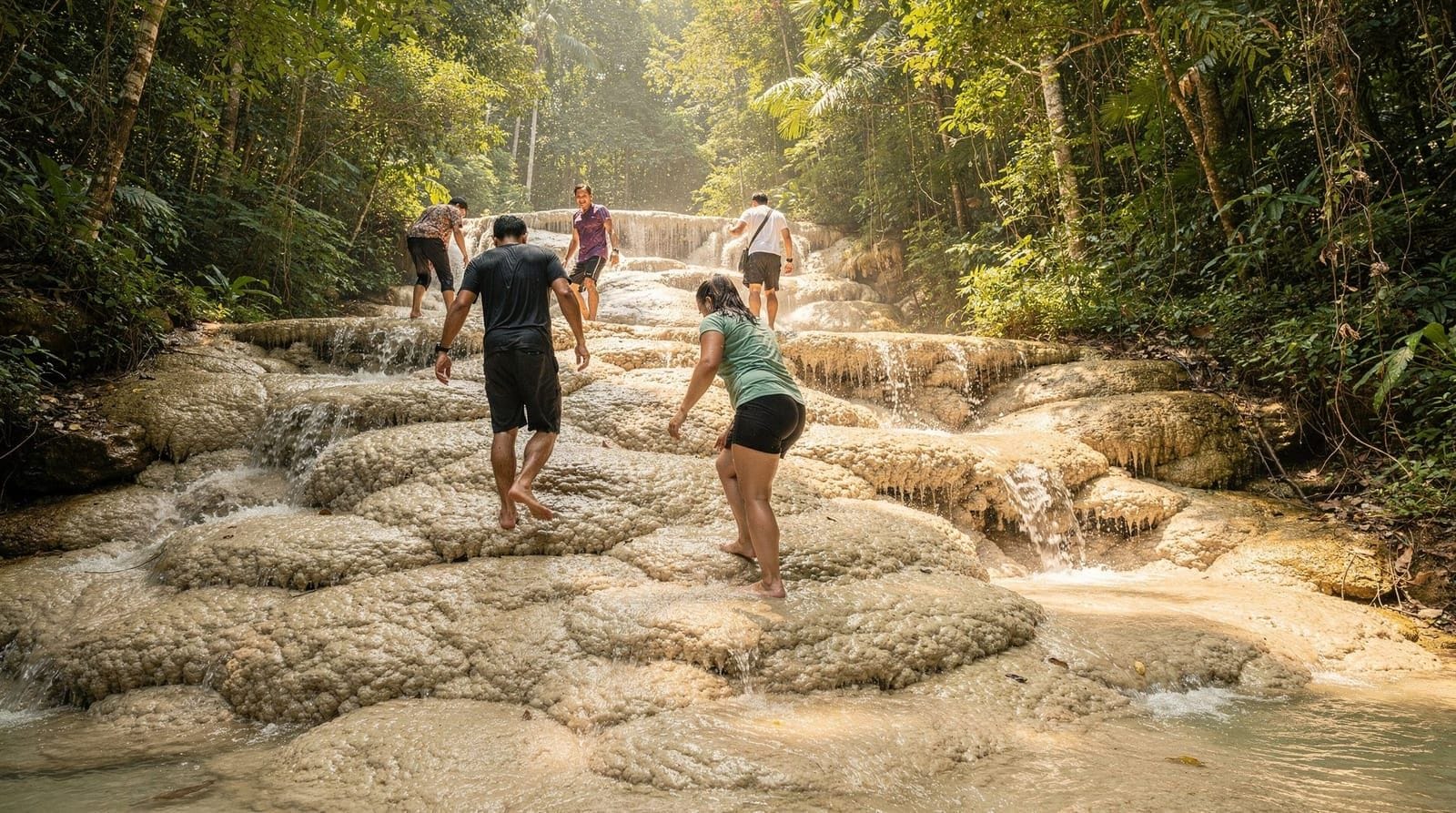
It’s worth being direct about what San Kamphaeng hot springs is and isn’t. It isn’t a dramatic natural wonder on the scale of the Sticky Waterfalls at Bua Thong or Doi Inthanon, and parts of the site — particularly the more commercial spa buildings and gift-shop stretches near the entrance — can feel more developed and touristy than the natural setting itself would suggest. Some travelers who arrive expecting a wild, untouched geothermal landscape come away slightly underwhelmed by how built-up the immediate surroundings are.
Treated instead as what it actually is — a simple, low-effort half-day stop with a novelty egg-boiling activity and an optional relaxing soak, easily combined with the umbrella village and crafts road nearby — it’s a reasonable addition to an eastern Chiang Mai day trip rather than a headline destination in its own right. If your time in Chiang Mai is limited and you have to choose between the hot springs and one of the district’s other stops, the Bo Sang umbrella village or Mae Kampong village generally offer more distinctive, harder-to-find-elsewhere experiences.
Getting to San Kamphaeng hot springs
The springs sit roughly 35 km east of central Chiang Mai, a 45-60 minute drive depending on traffic through the city’s eastern outskirts. Options:
- Grab or a private driver: the most straightforward choice, especially if you’re combining the springs with Bo Sang and the crafts road in a single loop, since a driver can wait or continue between stops without you needing to arrange fresh transport each time.
- A guided day tour: several operators combine the springs with Bo Sang’s umbrella village and Mae Kampong’s mountain scenery in a single half- or full-day itinerary, useful if you’d rather not plan the loop yourself.
- Rental scooter or car: feasible on the well-paved San Kamphaeng road, though the eastern district’s attractions are spread over a wider area than, say, the compact old city, so budget more driving time than the straight-line distance might suggest.
Combining the hot springs with the rest of San Kamphaeng district
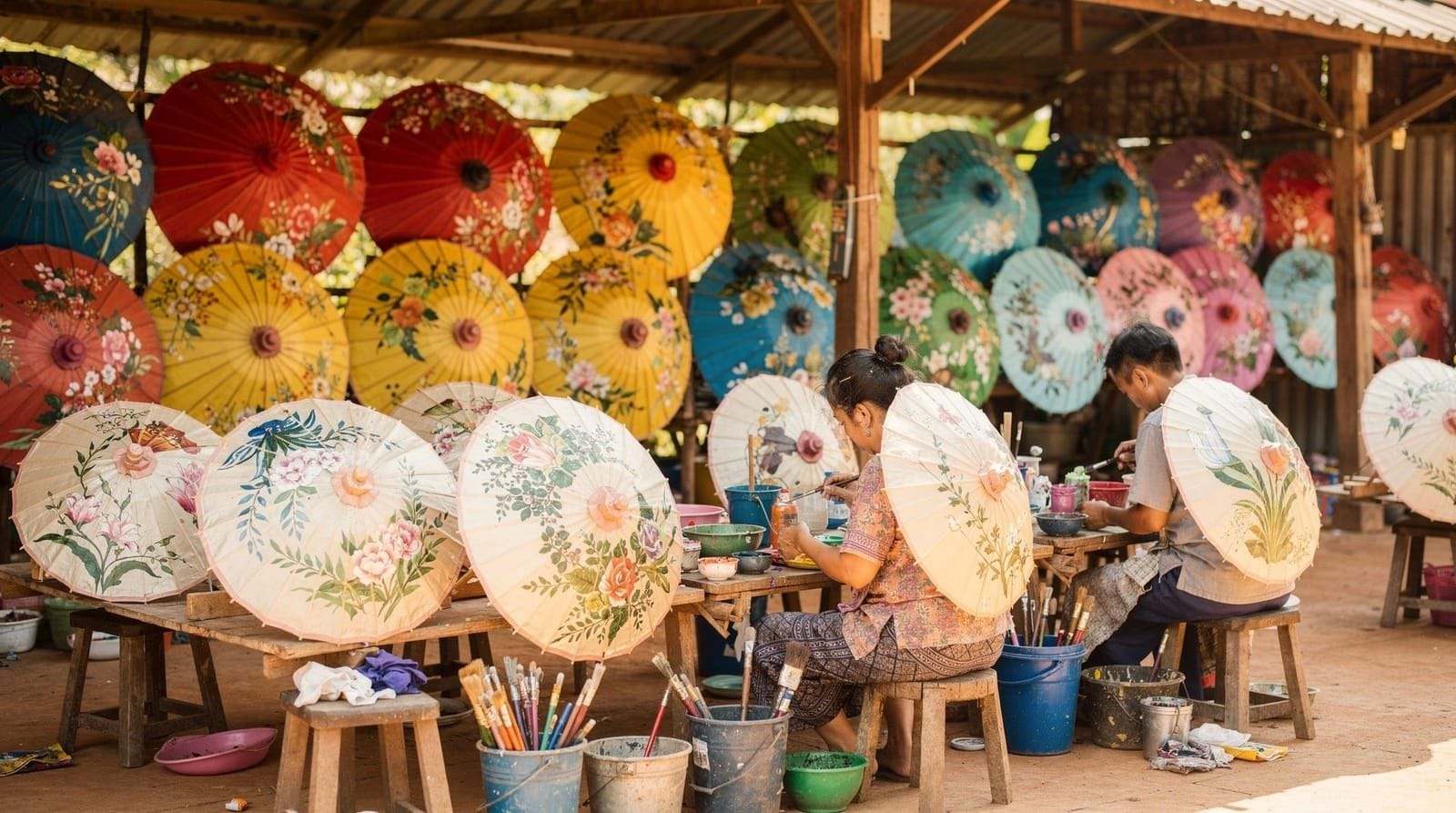
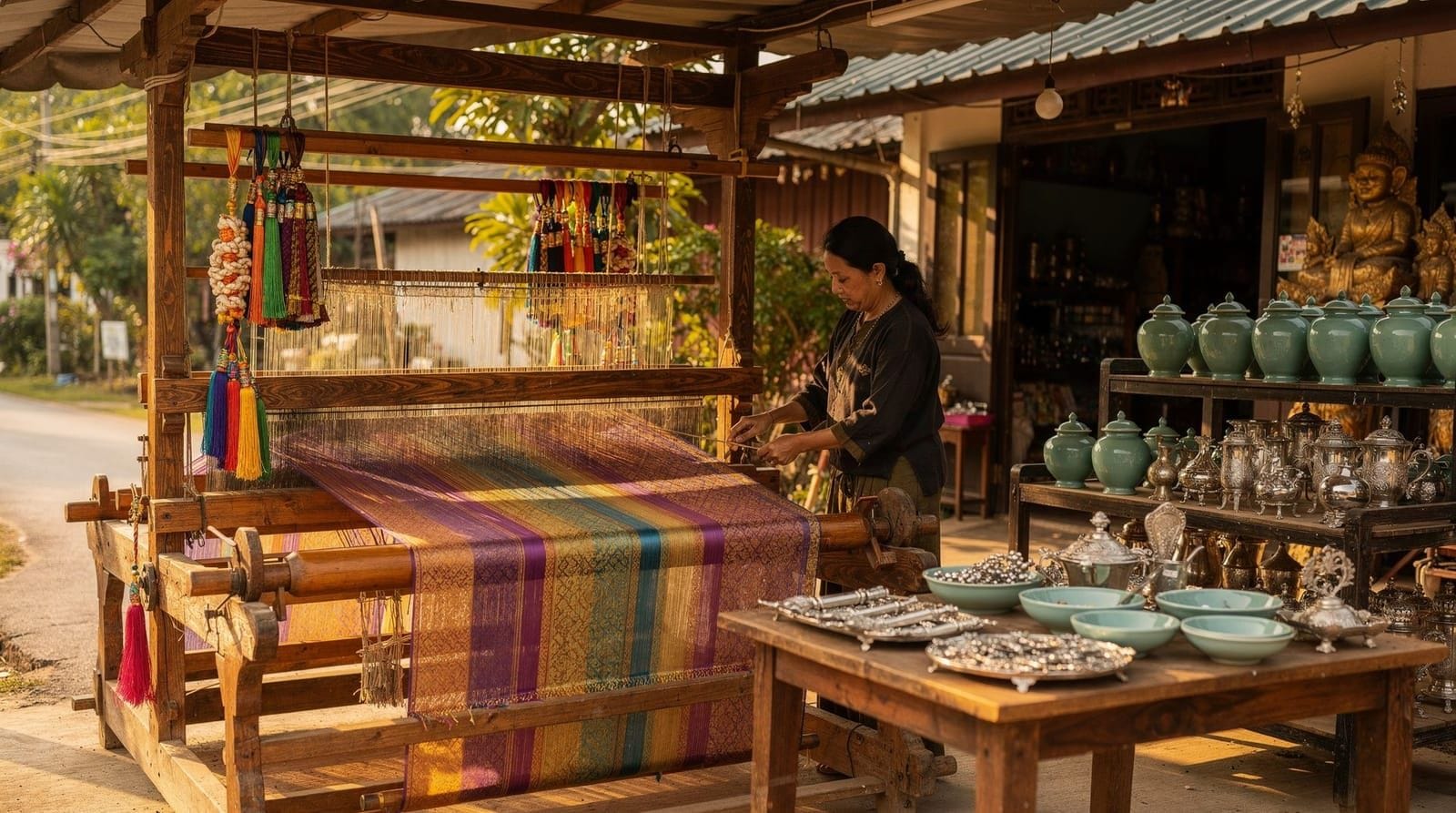
Because the hot springs, Bo Sang umbrella village and the San Kamphaeng crafts road all sit along broadly the same stretch of road east of the city, most visitors treat them as a single loop rather than three separate trips. A typical full-day sequence: crafts road workshops and showrooms in the morning, Bo Sang’s umbrella-painting demonstration around midday, and the hot springs in the early afternoon for a relaxing finish before the drive back — or the reverse order if an early soak appeals more than an early shopping stop.
Look at the combined Mae Kampong, hot springs and Bo Sang tour for a version of this loop with transport and a guide already arranged.
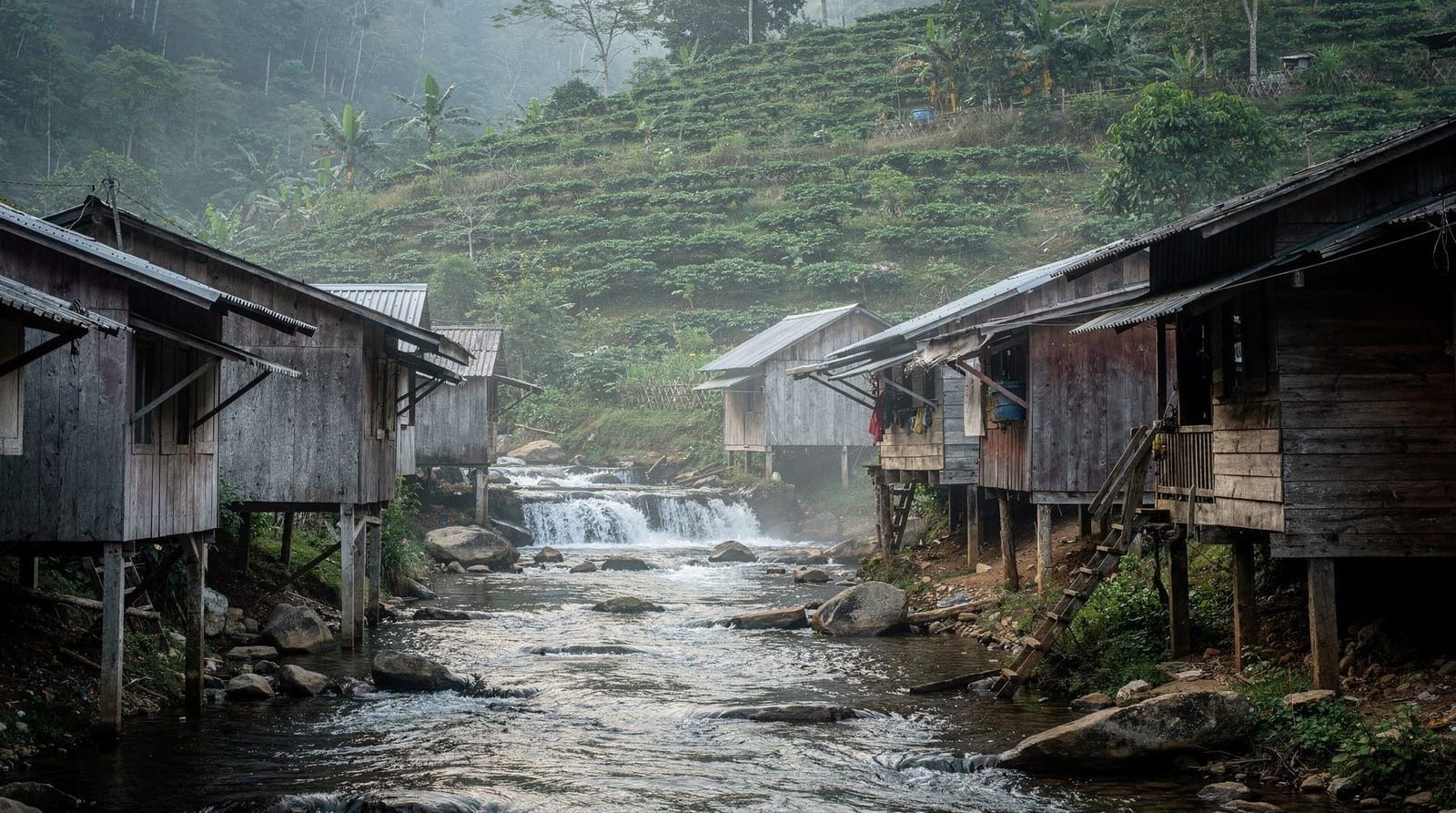
If you have a full day rather than a half day, Mae Kampong village — the misty mountain village further into the hills — pairs naturally with the springs as well, since the same general eastern route serves both, even though Mae Kampong itself sits at a noticeably higher, cooler elevation.
Frequently asked questions about San Kamphaeng hot springs
How far are the San Kamphaeng hot springs from Chiang Mai?
About 35 km east of the old city, roughly a 45-60 minute drive depending on traffic.
Can I actually swim in the hot springs?
Not in the main geothermal pools, which run too hot for direct bathing and are roped off for viewing. Private bath houses on-site pipe the mineral water into safe, temperature-controlled tubs for soaking, and there are cooler foot-soaking pools open to general visitors.
What is the egg-boiling activity at the hot springs?
A shallow stream of hot mineral water where you lower a basket of raw eggs, sold by on-site vendors, and retrieve them cooked after roughly 10-15 minutes. It’s an inexpensive, popular novelty rather than a full meal.
Is San Kamphaeng hot springs worth visiting on its own?
It’s better as part of a loop with Bo Sang umbrella village and the San Kamphaeng crafts road than as a single standalone trip, since the site itself is a fairly simple stop.
How much does entry to the hot springs cost?
General entry is around 100 THB, with private mineral bath rooms costing extra on top of that, typically in the range of 150-300 THB depending on room and duration.
Are the hot springs busy?
They can get moderately busy with domestic day-trippers and tour groups, particularly around midday. Morning visits tend to be calmer.
Can I combine the hot springs with Mae Kampong village?
Yes, they’re on the same general eastern route out of Chiang Mai, though Mae Kampong sits higher in the hills and has a distinctly different, cooler mountain-village character compared to the springs.
Is there anything to eat near the hot springs?
Yes, simple food stalls and a few sit-down restaurants operate around the entrance area, in addition to the egg-boiling novelty in the stream itself.
Do I need to book a tour, or can I just show up?
You can simply show up and pay general entry at the gate. A tour is only worth booking if you want the springs bundled with Bo Sang and Mae Kampong with transport handled for you.
Should I bring a swimsuit?
Yes, if you plan to use a private bath house or the general foot-soaking pools. A swimsuit, towel and a change of clothes make the visit noticeably more comfortable.
Are San Kamphaeng hot springs better than the ones near Pai?
They serve different purposes. San Kamphaeng is a quick, self-contained half-day stop near the city, easily paired with Bo Sang and the crafts road, while Pai’s hot springs are one stop within a longer, multi-day trip further from Chiang Mai. For a single-day visit, San Kamphaeng is the more practical option.
Top experiences
Bookable activities with verified prices and instant confirmation on GetYourGuide.