Night bazaar
Chang Khlan's nightly market unpacked — what's genuinely worth browsing, what's overpriced tourist filler, and where to eat instead of shop.
Chiang Mai: Kalare Night Bazaar Boxing Stadium Muay Thai
Quick facts
- Getting there
- Songthaew from Old City ~30-50 THB, Grab ~50-80 THB, or 15-20 min walk from Tha Phae Gate
- Key sight
- Chang Khlan Road stalls, Kalare Night Bazaar and Anusarn food courts
- Time needed
- 1.5-2.5 hours
- Best time
- 7-10pm nightly, every day of the week
- Cost / entry
- Free to enter; food plates 40-120 THB, souvenirs negotiable
Chang Khlan Road turns into a market strip every single night of the year, which is exactly why most visitors end up here on their first evening in Chiang Mai — no need to check a calendar, no need to wait for a weekend. Whether it deserves a second visit is a different question.
Quick answer: the Night Bazaar is Chiang Mai’s nightly market on Chang Khlan Road, running roughly 6pm to 11pm every day, mixing souvenir stalls, knock-off clothing, and two dedicated food courts (Kalare and Anusarn). It’s convenient and always open, but it’s also the most tourist-priced, least distinctly northern-Thai market in the city — the Sunday Walking Street and Warorot Market both offer better value and better food for the same walk.
What’s actually here
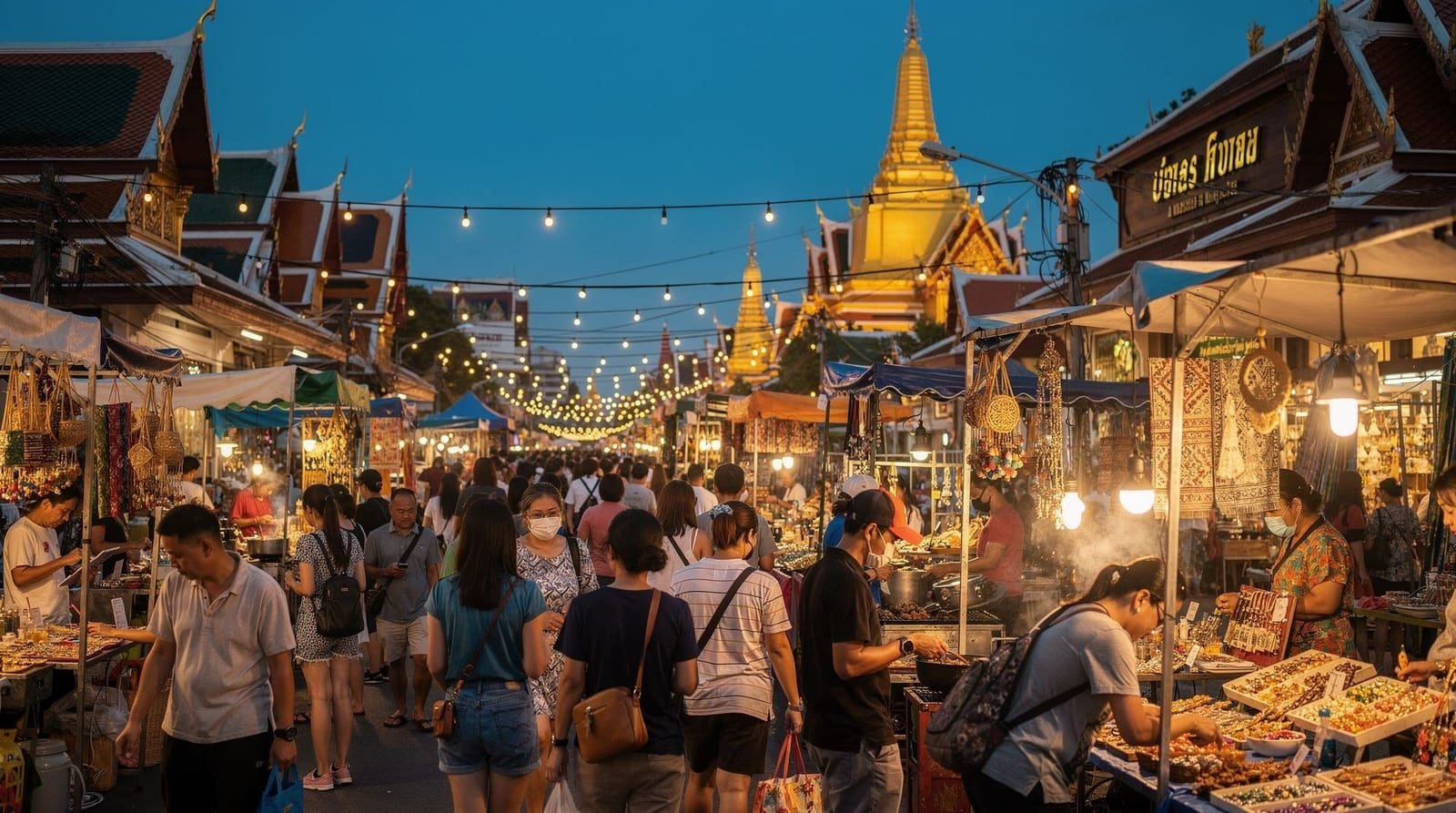
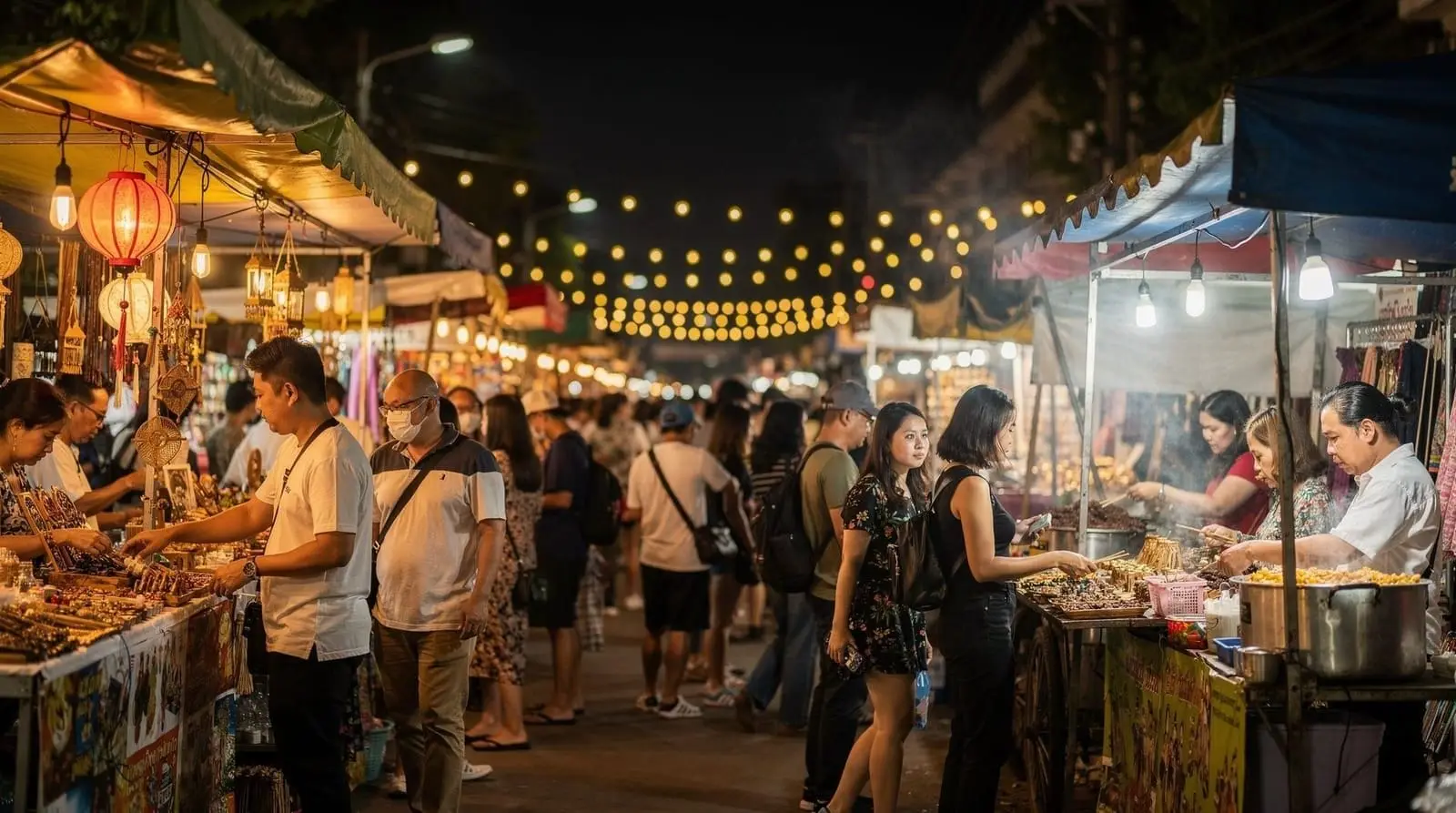
The bazaar isn’t one market but a corridor of them, stretching along Chang Khlan Road between Tha Phae Road and the river. Street stalls occupy the pavements on both sides, selling elephant-print trousers, wooden carvings, fake football shirts, silver jewellery, and phone cases — the same inventory you’ll see in similar markets from Bangkok to Phuket. Interspersed are two indoor complexes: Kalare Night Bazaar, which combines stalls with a stage for cabaret and live music, and the Anusarn Market complex a block over, which leans harder into seafood restaurants and massage shops (covered separately in our Anusarn Market guide).
Prices are marked but rarely fixed. Haggling is expected and, on the stall goods at least, usually gets you 20-40% off the first quoted number. Food stalls and sit-down restaurants are a different story — those prices are generally firm.
Getting there and getting around
Chang Khlan Road runs parallel to the Ping River, about 800m southeast of Tha Phae Gate. From the Old City it’s a flat 15-20 minute walk, or a 30-50 THB (roughly $1) songthaew ride if you’d rather not do it on foot after a full day of temples. A Grab from Nimmanhaemin runs 50-80 THB depending on traffic, which can be heavy on Chang Khlan itself once the market sets up and the road narrows to one lane of crawling tuk-tuks.
Once you’re there, the market is entirely walkable — everything sits within a five to seven block stretch. Layout is loose: stalls colonize whatever pavement space is available, so cross-streets and side alleys off Chang Khlan are worth a peek if the main strip feels too dense.
What’s worth buying (and what isn’t)
Silver jewellery and hill-tribe textiles sold here are frequently mixed quality — some genuine, much of it mass-produced and shipped in rather than locally made. If handicraft authenticity matters to you, the San Kamphaeng Crafts Road and Bo Sang Umbrella Village sell direct from workshops at prices that, once you account for the bazaar’s markup and haggling buffer, end up similar or better — with the advantage of watching the item actually being made.
What genuinely works well here: cheap cotton clothing, keychains and magnets for gifts, and phone accessories if yours breaks mid-trip. Wood carvings are hit or miss on quality — check joints and finish before paying, since the same stalls sell both solid pieces and rushed, glue-heavy ones side by side.
Food at the bazaar: Kalare and Anusarn
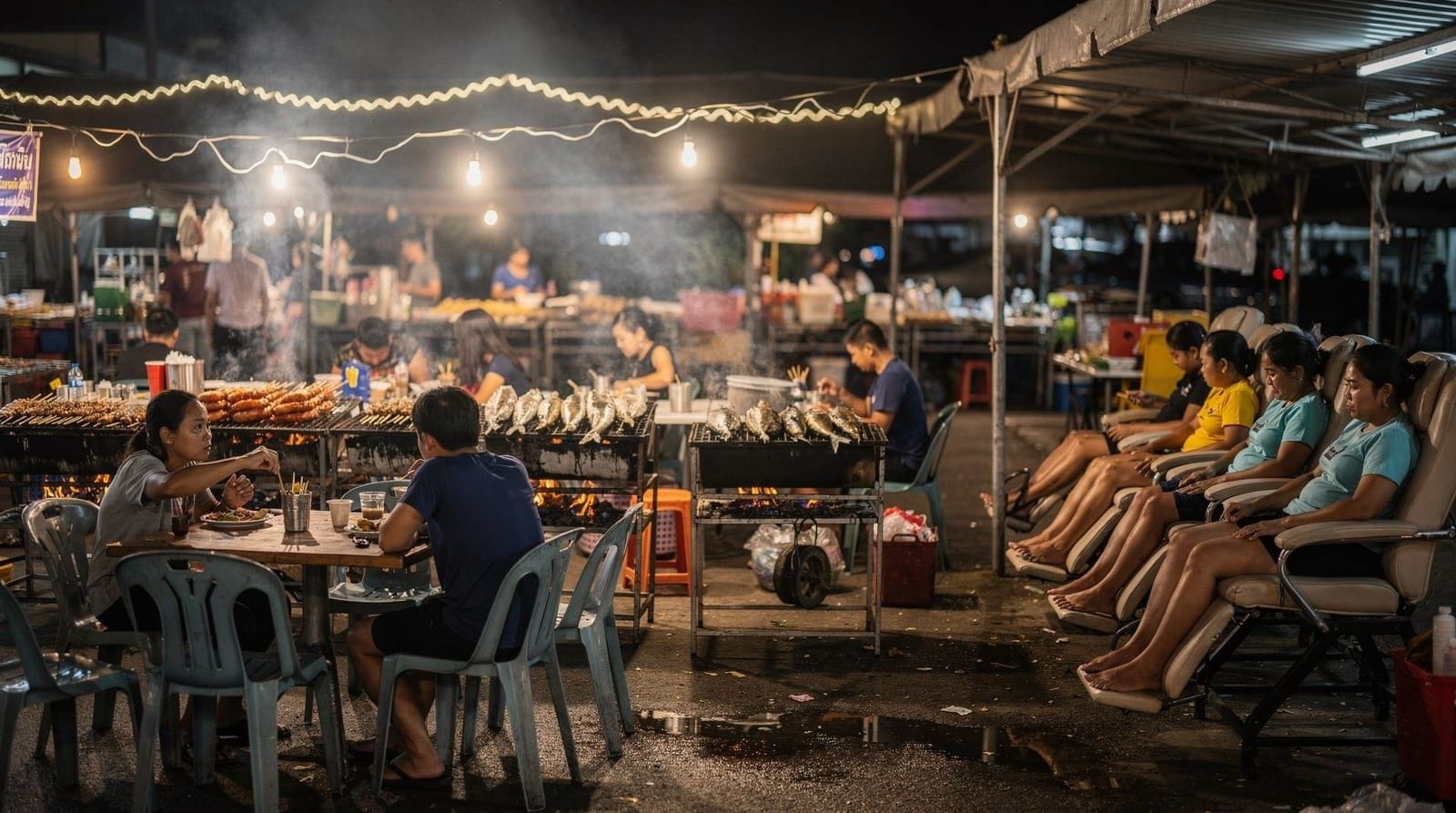
Both food courts serve a similar menu — pad thai, khao soi, grilled skewers, mango sticky rice, fresh fruit shakes — at prices roughly 20-30% higher than you’d pay at a stand-alone street stall elsewhere in the city, which is the trade-off for air conditioning, seating, and English menus. A plate typically runs 60-120 THB (about $1.70-3.30).
Kalare doubles as an entertainment venue: a stage hosts cabaret (kathoey) shows and live cover bands most evenings, visible free from the food court seating even if you don’t buy a ticketed show. Anusarn, one block southeast, is quieter on performance but stronger on seafood — see the Anusarn Market guide for specifics on what to order there.
If you’d rather eat with a guide who knows which stalls are worth the queue, an evening street food and market tour or a walking food tour covers this part of town along with better-regarded stalls elsewhere, which solves the “which stall?” problem for a first-timer.
Muay Thai at Kalare Boxing Stadium
Tucked inside the Kalare complex is a working boxing stadium that runs live Muay Thai fight cards most nights — a genuinely different experience from the market stalls around it, and one that doesn’t require you to have any prior interest in the sport to enjoy as a spectacle. A ticket to Kalare Night Bazaar Boxing Stadium gets you ringside for several bouts, typically running two to three hours. It’s louder and more commercial than the stadiums favoured by serious fight fans, but the convenience of it being inside the market you’re already walking through is hard to beat for a spontaneous evening.
Nightlife layered on top
Chang Khlan and the sois running off it (notably Soi 2, sometimes nicknamed the Bar Beer zone) host Chiang Mai’s most concentrated strip of open-air bars, aimed squarely at visitors. It’s not subtle, and it’s not where locals drink, but if that’s what you’re after on a given night, it delivers reliably. A guided bar-hopping tour is a reasonable option if you’re travelling solo and want company rather than navigating the strip alone, and an after-dark Vespa tour is a better fit if you’d rather see the city’s night scene from the outside than sit in one bar all evening.
Combining with the riverside
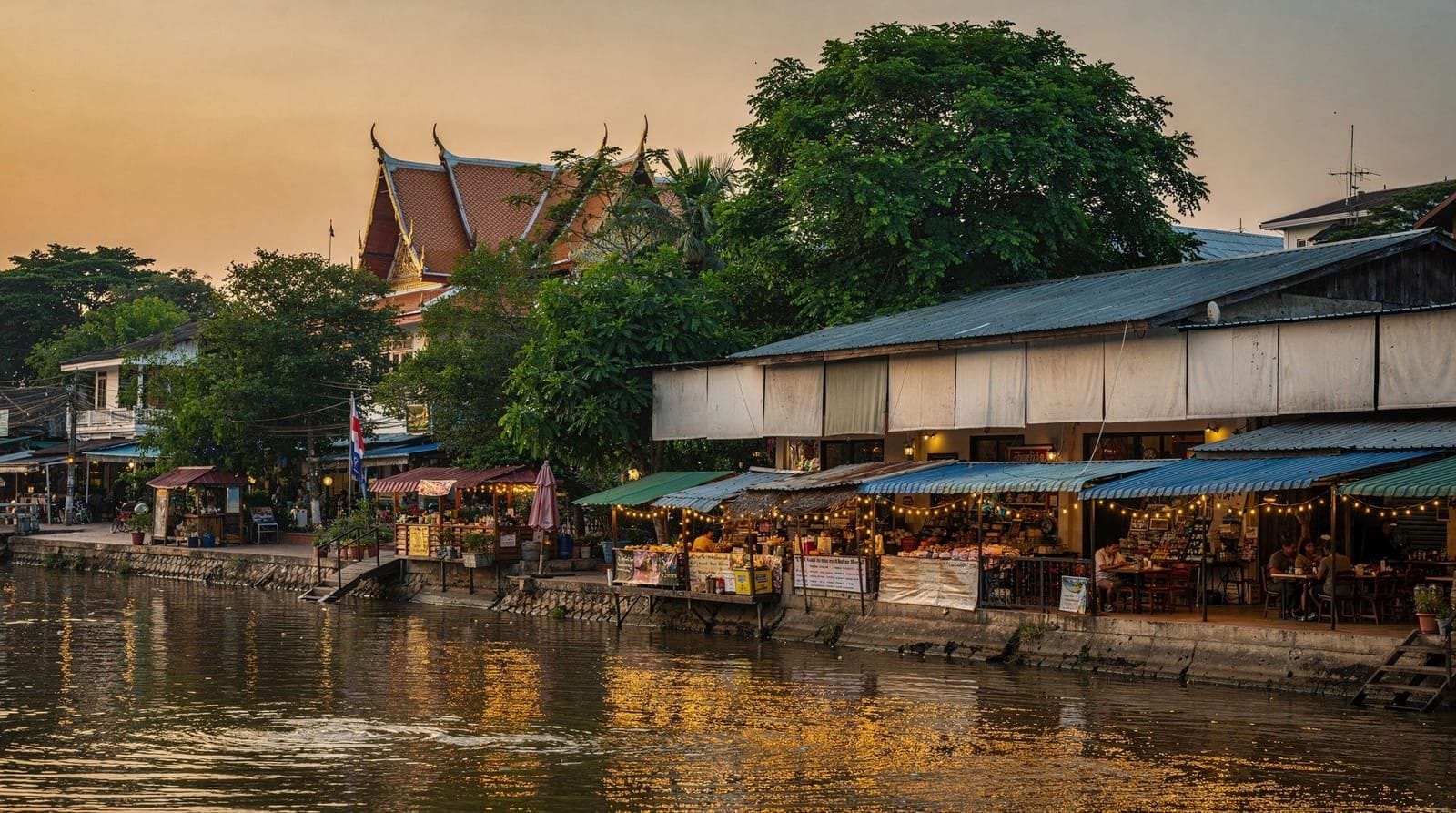
The bazaar sits close enough to the Ping River that a walk east brings you to Ping Riverside and Wat Ket in about ten minutes — a useful contrast if the market crowds get overwhelming and you want quieter riverside restaurants instead. Many visitors do the bazaar first, then cross toward the river for a sit-down dinner once they’ve bought what they came for.
Weather and seasonal notes
The Night Bazaar operates year-round without seasonal closure, but the experience shifts noticeably with Chiang Mai’s seasons. During the cool season (November-February), evenings are comfortable enough to linger outdoors well past 10pm, and this is when the market draws its largest crowds since it coincides with peak tourist season generally. The hot season (March-May) makes the covered Kalare and Anusarn sections more appealing than the open Chang Khlan stalls, since evening temperatures can still feel warm even after dark. Rainy season (June-October) brings the risk of sudden downpours, usually brief, with tarpaulins going up over the open stalls quickly — vendors are practiced at this and stalls rarely close outright, though the atmosphere thins noticeably during a downpour, making it a reasonable time to duck into a food court for 20 minutes and continue once it passes.
Practical tips
Bring small notes — 20 and 100 THB bills move haggling along faster than breaking a 1,000 THB note at a small stall. Cash is still the default here; card acceptance is patchy outside the food court cashiers. The market runs regardless of weather, with tarpaulins going up over stalls during Chiang Mai’s rainy season (roughly June to October), so a sudden downpour won’t shut it down, just thin the crowds briefly.
Toilets are available inside both Kalare and Anusarn (small fee, usually 5-10 THB) — there’s little public provision on the open street stretch.
A night market for a first night, not every night
If you’re staying in Chiang Mai for several days, the honest advice is to treat the Night Bazaar as a once-over rather than a nightly habit. It’s genuinely convenient — no schedule to remember, close to most Old City and riverside hotels, and open in any weather — but for both cost and cultural specificity, Warorot Market by day and the weekend walking streets by night will give you a more distinctly Chiang Mai experience for the same amount of walking.
A short history of the site
Chang Khlan Road’s market grew up around the river trade rather than around tourism — this stretch was historically where caravans and river barges carrying goods from Burma, Yunnan, and the surrounding hills converged with Chiang Mai’s merchant class, well before the area became known internationally as “the Night Bazaar.” The formal, tourist-oriented market in its current form dates mostly to the 1990s and 2000s, as Chiang Mai’s tourism economy grew and permanent stall infrastructure, then the covered Kalare and Anusarn complexes, were built to formalize what had been a looser, changing arrangement of vendors. That history explains why the market feels purpose-built for visitors today — it largely is, even though the road itself has a much older commercial pedigree tied to the river.
A realistic evening itinerary
If you’re planning a single evening around the bazaar, a workable sequence looks like this: arrive around 6:30-7pm as stalls are fully set up but before peak crowds, spend 30-45 minutes browsing the Chang Khlan stalls for souvenirs while the light is still good for photos, then head into Kalare or continue to Anusarn for dinner around 7:30-8pm. If you’ve booked a Muay Thai ticket, fights at Kalare typically run from around 8:30 or 9pm over two to three hours, so plan dinner accordingly — eating beforehand means you’re not trying to balance a food tray during the bouts. For those skipping the fights, an after-dinner stroll toward Ping Riverside and Wat Ket makes a natural, quieter way to close out the night once the market’s energy has served its purpose.
Where to stay if the Night Bazaar is your base
Because the bazaar operates nightly and sits roughly midway between the Old City and the Ping River, hotels and guesthouses in this immediate area appeal to visitors who want walkable access to the market itself alongside easy reach of both the Old City temples and the riverside. It’s a noisier, more commercial base than staying inside the Old City walls or in Nimmanhaemin, a trade-off worth weighing if you’re a light sleeper — traffic and market activity on Chang Khlan Road continue well past 10pm most nights.
Accessibility and family notes
The main Chang Khlan strip is flat, paved, and reasonably wide, making it manageable for strollers and wheelchairs on the open-air sections, though the pavement gets uneven near stall clusters and can be genuinely congested during peak hours (8-9:30pm), when navigating a wheelchair or stroller through the densest crowds takes patience. Inside Kalare and Anusarn, floors are level and covered, which makes them a more comfortable stop for anyone finding the outdoor crowds tiring. For families, the market’s food-court model works well for picky eaters, since Kalare and Anusarn both offer enough variety that everyone in a group can find something familiar alongside more adventurous options, and the cabaret shows at Kalare are generally family-appropriate as a free spectacle from the food court seating, though content leans toward adult humor at times, worth knowing if travelling with young children.
Shopping etiquette that actually helps
Beyond haggling mechanics, a few habits make the shopping experience smoother for both you and the vendor. Handling merchandise gently and asking before trying on clothing over your own is appreciated, as is a light touch with initial counter-offers — starting extremely low (under half the asking price) is common practice elsewhere in Southeast Asia but can come across as insulting rather than playful in Chiang Mai’s more understated bargaining culture; a 20-30% opening counter tends to land better and still leaves room to meet in the middle. If you’re not going to buy, a polite “just looking, thank you” (or its Thai equivalent, “duu kôn”) closes the conversation without friction, since vendors rely on high foot traffic and don’t expect every browser to buy.
Frequently asked questions about the Night Bazaar
Is the Chiang Mai Night Bazaar open every night?
Yes. Unlike the Sunday Walking Street or Saturday Walking Street Wualai, the Night Bazaar on Chang Khlan Road operates every night of the week, typically from around 6pm to 11pm.
Is the Night Bazaar worth it if I’ve already been to the Sunday Walking Street?
Not especially for shopping — the Sunday market has a stronger mix of local crafts and food vendors. The Night Bazaar’s main advantages are being open on any day and having the Kalare Muay Thai stadium and Anusarn’s food courts alongside it.
How much should I expect to haggle down prices?
Most stallholders build in room for negotiation; 20-40% off the first quoted price for souvenirs and clothing is a realistic target. Food and drink prices are generally fixed.
Is the area safe at night?
Yes, it’s one of the most heavily trafficked and lit areas of the city at night, popular with both tourists and vendors who rely on repeat foot traffic. Standard city-centre caution (watch bags in dense crowds) applies, nothing more.
Can I watch Muay Thai without buying a full ticket?
The Kalare stage shows (cabaret, music) are visible free from the food court. The Muay Thai stadium fights require a paid ticket; see the Kalare Boxing Stadium ticket for current pricing.
What’s the difference between the Night Bazaar and Anusarn Market?
They’re adjacent but separate complexes. The Night Bazaar (Kalare included) leans toward souvenirs, clothing stalls, and general street food. Anusarn, one block over, is stronger on seafood restaurants and has a concentrated massage and spa cluster — see the Anusarn Market guide for details.
Where should I eat if I don’t want food-court prices?
Cross toward the river to Ping Riverside and Wat Ket, about a 10-minute walk, where sit-down riverside restaurants offer a calmer, better-value dinner than the bazaar’s food courts.
Is it better to stay near the Night Bazaar or in the Old City?
Staying near the bazaar gives you walkable access to it and to the riverside, but it’s noisier and more commercial than basing yourself inside the Old City walls or in Nimmanhaemin, both of which are a short songthaew ride away in the evening.
How aggressive should my opening haggling offer be?
A 20-30% counter-offer below the first quoted price tends to work better in Chiang Mai’s understated bargaining culture than the much lower opening offers common elsewhere in Southeast Asia, which can come across as dismissive rather than playful here.
Top experiences
Bookable activities with verified prices and instant confirmation on GetYourGuide.