Tha Phae Gate
Chiang Mai's iconic east gate: history, pigeons, festivals, and the starting point of the Sunday Walking Street market.
Chiang Mai: Nighttime City Highlights by EV Tram
Quick facts
- Getting there
- Central Old City landmark; songthaew or Grab from anywhere ~30-50 THB ($0.85-1.40)
- Distance from airport
- 3.5 km / 12-15 min by Grab
- Key sight
- The rebuilt brick gate, moat crossing, and pigeon-filled plaza
- Time needed
- 15-30 minutes as a standalone stop; longer on Sunday evenings
- Best time
- Sunset for photos, Sunday afternoon for the walking street market start
Tha Phae Gate is the main eastern entrance to the Old City, and functionally it’s the closest thing Chiang Mai has to a single central landmark — the point most visitors use to orient themselves, the gathering spot before festivals, and the literal starting line for the Sunday Walking Street market each week. The brick structure standing today is a 1980s reconstruction built on the site of the original 13th-century gate, itself rebuilt several times across the centuries as the city’s fortifications were damaged by conflict and simply by age.
Quick answer: Tha Phae Gate is Chiang Mai’s main east gate, a rebuilt brick archway flanked by a section of the old city wall, crossing the moat at its busiest point. It’s a 15-30 minute standalone stop for photos, but becomes the starting point for the Sunday Walking Street market each week and a gathering point during major festivals like Songkran and Loy Krathong.
First impressions versus what it means locally
For a first-time visitor, Tha Phae Gate can initially feel like a slightly underwhelming photo stop — a single reconstructed archway, not a sprawling monument. What changes that impression is spending a little time simply sitting in the plaza and watching how the space is actually used: as a meeting point, a stage for informal performances, a festival gathering ground, and a genuine piece of civic identity for the city. It rewards a slower look more than a quick drive-by photo.
What’s actually there
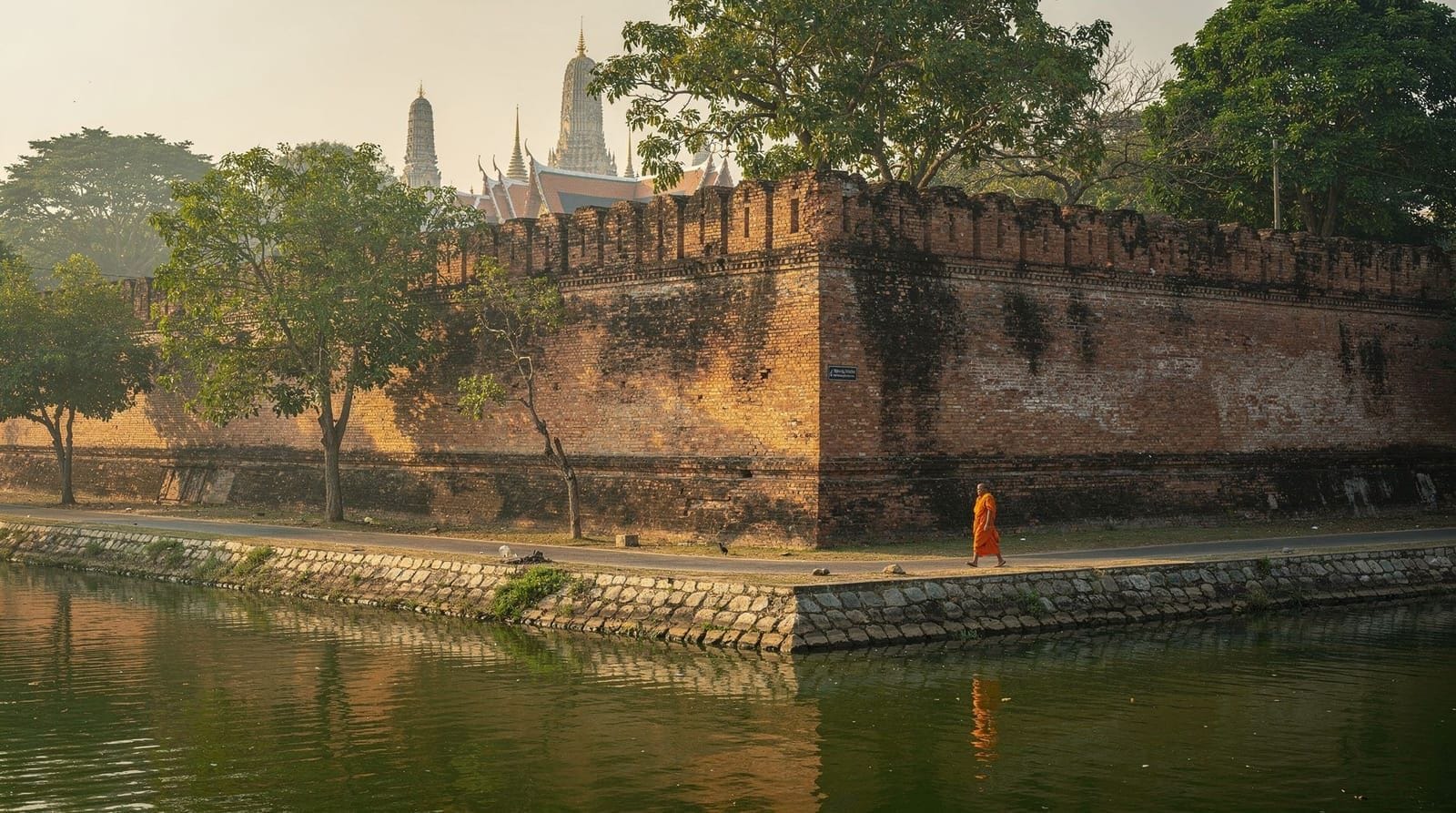
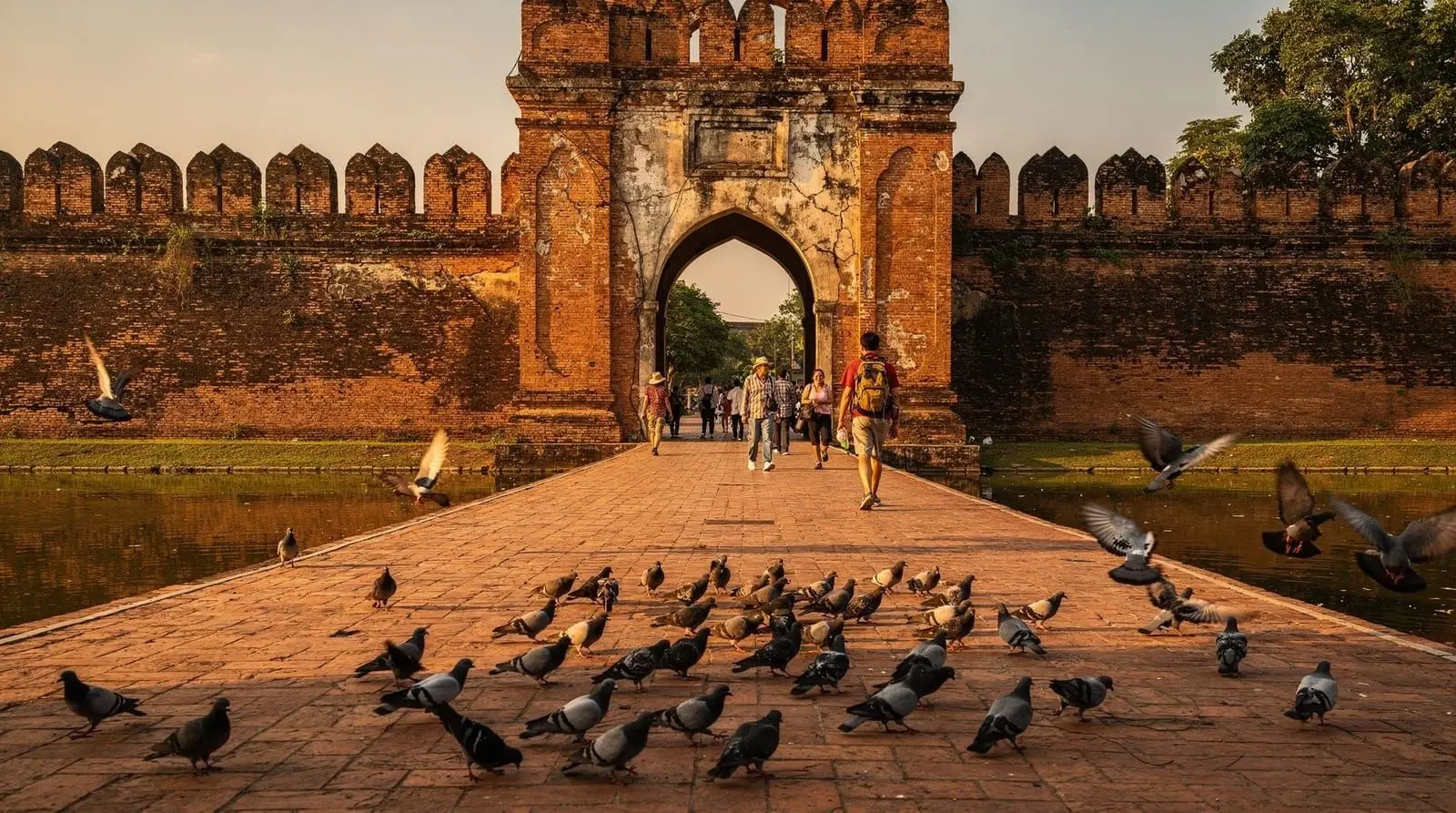
The gate itself is a fairly simple brick structure — an opening in a short remaining stretch of wall, flanked by two crenellated sections and fronted by a wide plaza that’s become the unofficial town square of the Old City. A bridge crosses the moat directly in front of it, and the plaza on the inner side is where flocks of pigeons cluster (sold birdseed by informal vendors, if you want to feed them), where street performers occasionally set up in the evening, and where informal photography sessions — locals and visitors alike posing with the gate as backdrop — happen constantly throughout the day.
It’s worth being clear-eyed about what this is and isn’t: Tha Phae Gate is not an ancient monument in the way Wat Chedi Luang’s chedi is. What stands today is a late-20th-century reconstruction, built to evoke the historical gate rather than preserve original 13th-century brickwork. That doesn’t make it less worth seeing — it’s genuinely the social and symbolic heart of the Old City — but it’s a different kind of significance than the temples nearby, more about ongoing civic life than archaeological authenticity.
A gate rebuilt many times over
Chiang Mai’s city walls and gates have been damaged and reconstructed repeatedly across seven centuries — by Burmese sieges during the centuries when Lanna fell under Burmese control, by simple decay once the walls stopped serving an active defensive purpose in the modern era, and by deliberate demolition in parts during the early 20th century when sections of the wall were seen as obstacles to modernizing traffic through the city. What remains today at Tha Phae Gate and the handful of other surviving gate sites represents careful mid-to-late-20th-century restoration efforts aimed at preserving the city’s historical silhouette rather than continuous original structures. Understanding this timeline matters for setting expectations: visitors sometimes arrive expecting a weathered medieval ruin and are mildly surprised to find clean, relatively recent brickwork — which is accurate to the gate’s actual restoration history, not a letdown so much as a different kind of significance than an untouched ancient structure would carry.
The widest moat crossing in the Old City
The stretch of moat directly in front of Tha Phae Gate is wider than most other crossing points around the Old City’s perimeter, a design feature tied to this gate’s historical role as the primary entrance facing the Ping River and the trade routes running east toward it. That width is part of why the plaza and bridge area photograph so well — there’s more open water and sky in frame than at the narrower crossings near the other three gates — and it’s also why this spot handles festival crowds better than some of the tighter gate areas elsewhere in the wall, since there’s simply more physical space for people to gather.
The Sunday Walking Street starting point
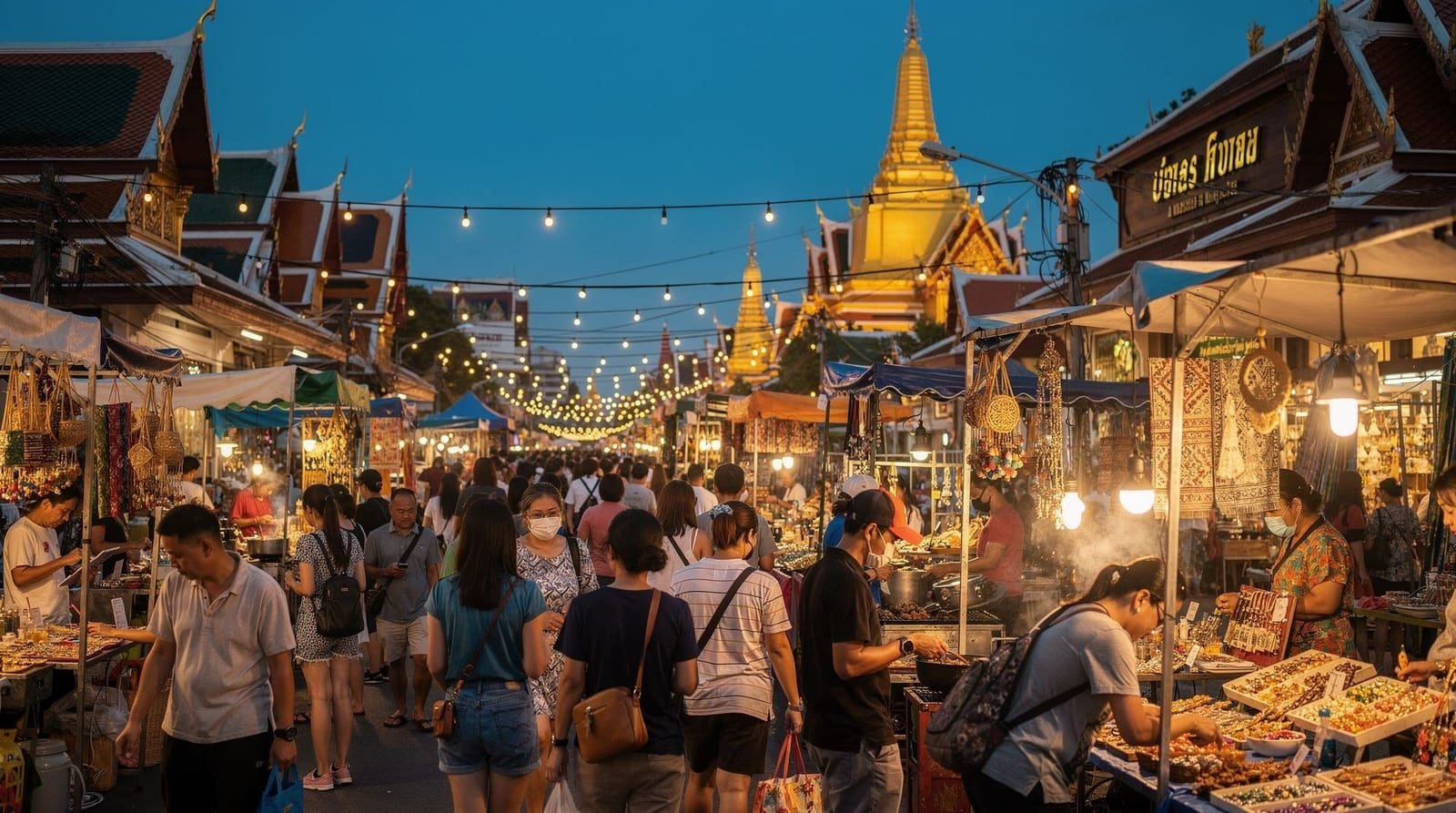
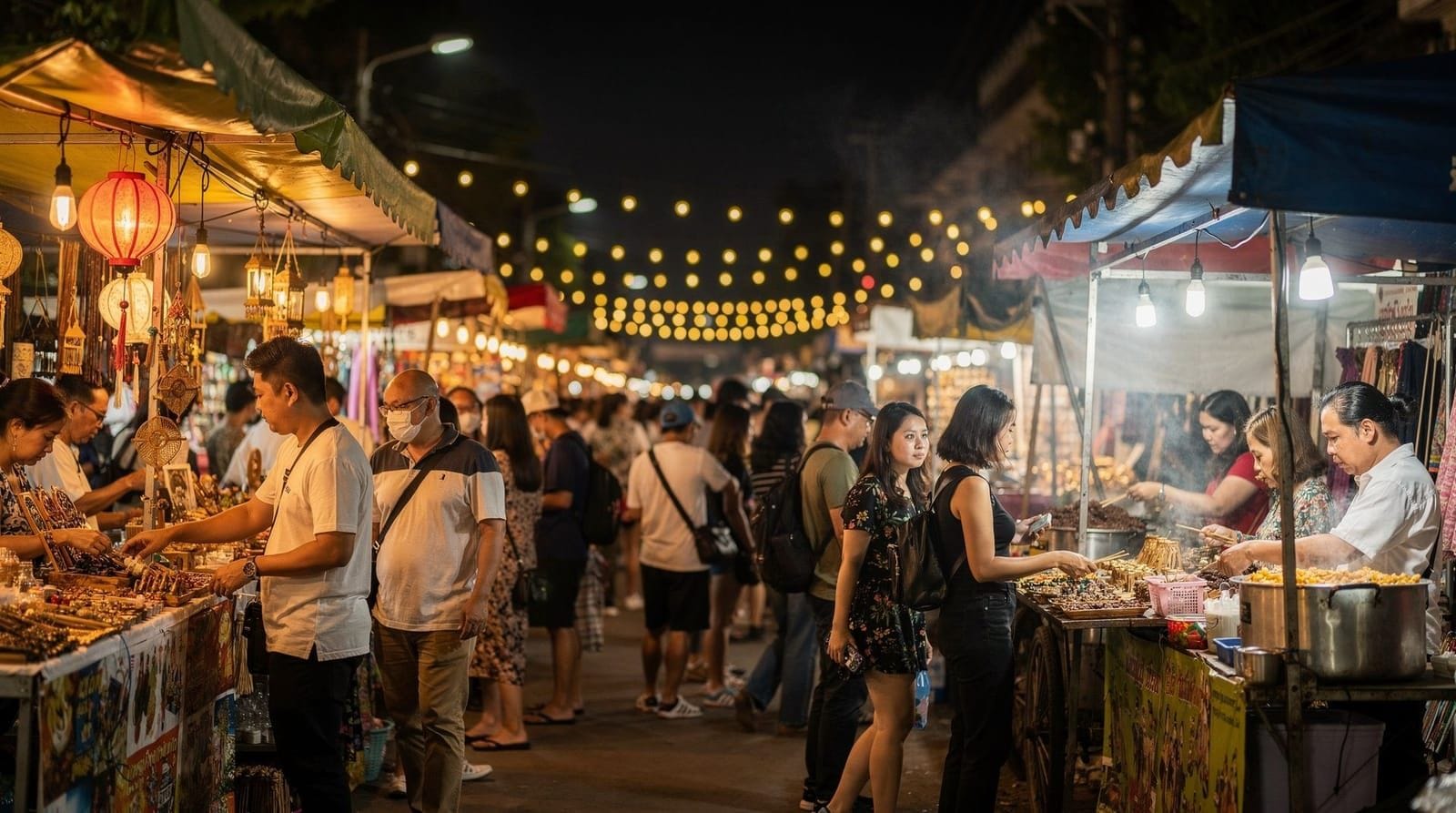
Every Sunday afternoon, Ratchadamnoen Road just inside the gate closes to traffic and the Sunday Walking Street market sets up, stretching from Tha Phae Gate all the way to Wat Phra Singh at the road’s far end. The gate itself is where the market effectively begins, and it’s also where crowds are thickest, since this is the point closest to most Old City accommodation and the most recognizable meeting spot to arrange with anyone you’re meeting up with. A smaller, calmer counterpart runs the previous evening on Wualai Road south of Chiang Mai Gate, worth knowing about if the Sunday crowds feel like too much. If you’re heading to the market, arriving at the gate around 4-5pm beats the crush that builds by early evening.
Daily life around the gate
Beyond festival dates and Sunday evenings, Tha Phae Gate plaza has its own quieter daily rhythm worth knowing about if you’re staying nearby. Early morning brings joggers and walkers using the moat-side path for exercise before the heat sets in — a genuinely local scene rather than a tourist one. Through the day, the plaza sees a steady rotation of street food carts along its edges, selling grilled skewers, fresh fruit, and drinks to a mix of residents and visitors. Evenings, particularly on weekends outside of Sunday market hours, occasionally bring informal live music or dance performances set up by local buskers, usually drawing a modest crowd that gathers and disperses over the course of an hour or two. None of this is scheduled or guaranteed on any given night, but it’s part of what makes the plaza feel like a functioning civic space rather than a static monument.
Festivals centered here
Tha Phae Gate is the default gathering point for Chiang Mai’s two biggest annual festivals. During Songkran in mid-April, the plaza and moat directly in front of the gate become one of the most intense water-fight zones in the city — pickup trucks circle continuously, and the crowd density here rivals anywhere else in the Old City during the festival’s peak days. During Yi Peng and Loy Krathong in November, the gate area fills with informal lantern releases and krathong-floating along the moat, alongside a more organized evening market atmosphere, though the largest ticketed mass lantern release events happen outside the city center.
an evening city highlights tour by tram typically passes through or near Tha Phae Gate as part of a broader Old City circuit, useful if you want the landmark included alongside other night sights without planning the route yourself.
Best time for photos
Late afternoon into sunset is the strongest window for photographing the gate itself — the warm, low-angle light works well against the brick, and the moat in front reflects the sky’s color shift as the sun goes down. Midday sun is harsher and the plaza is at its most crowded with both tourists and the resident pigeon flock, making a clean shot harder to compose. Early morning, before 8am, is the quietest time if you want the gate without crowds at all, though the light is flatter than at sunset.
Tha Phae Road: the corridor toward the Night Bazaar
The road running east from the gate, Tha Phae Road, is one of the busier commercial corridors linking the Old City to the Night Bazaar and riverside area roughly a kilometer away. It’s lined with a mix of convenience stores, travel agencies, tailor shops, and mid-range hotels, and it functions as a natural walking route if you’re staying inside the Old City and heading out to the Night Bazaar for dinner or shopping in the evening. The walk takes about 12-15 minutes at a relaxed pace and is well-lit and busy enough after dark to feel comfortable, though as with any commercial tourist corridor, it’s also where you’ll encounter the highest concentration of tailor-shop touts and tour-package hawkers in the Old City — a firm, polite decline works fine and nobody pushes past a second no.
Using the gate as a wayfinding anchor
Because street names inside the Old City grid take time to learn, many visitors — and even some tuk-tuk drivers giving directions — default to describing locations by their distance and direction from Tha Phae Gate rather than by street name. “Two minutes past Tha Phae Gate toward Wat Chedi Luang” is a more common way to get directions in casual conversation than a street address, and it’s a genuinely useful habit to adopt yourself in the first day or two before the grid clicks. If you get turned around anywhere inside the Old City, asking for directions back to Tha Phae Gate specifically tends to get a faster, more confident answer than asking for a specific street.
Getting there and using it as an orientation point
Tha Phae Gate sits on the Old City’s east wall, roughly equidistant from most Old City accommodation, which is why it functions so naturally as a meeting point. From the airport, it’s about 3.5 km, a 12-15 minute Grab ride costing roughly 100-140 THB ($2.75-3.85), and it’s also a common pickup point for day-trip tours heading to Doi Suthep or further afield. From within the Old City, it’s walkable from almost anywhere in under 20 minutes, or a short songthaew ride (~30 THB, $0.85) if the heat makes walking unappealing. Wat Chedi Luang sits about 900 meters west along Ratchadamnoen Road, making the gate a natural starting point for a temple-hopping walk deeper into the Old City.
a private tuk-tuk exploration of the Old City commonly starts or ends at Tha Phae Gate given its central, easy-to-find location, and it’s a practical option if you’d rather not navigate songthaew routes yourself on a first visit.
Accessibility
The plaza in front of the gate is flat, open paved ground, among the more accessible spots in the Old City for visitors with mobility concerns or those pushing strollers. The bridge crossing the moat has a gentle, gradual slope rather than steps, and the whole area is well-lit at night with no uneven terrain to navigate. This makes it one of the more comfortable Old City landmarks to visit regardless of mobility, and a reasonable default meeting point for groups with mixed accessibility needs.
Combining with an Old City walking loop
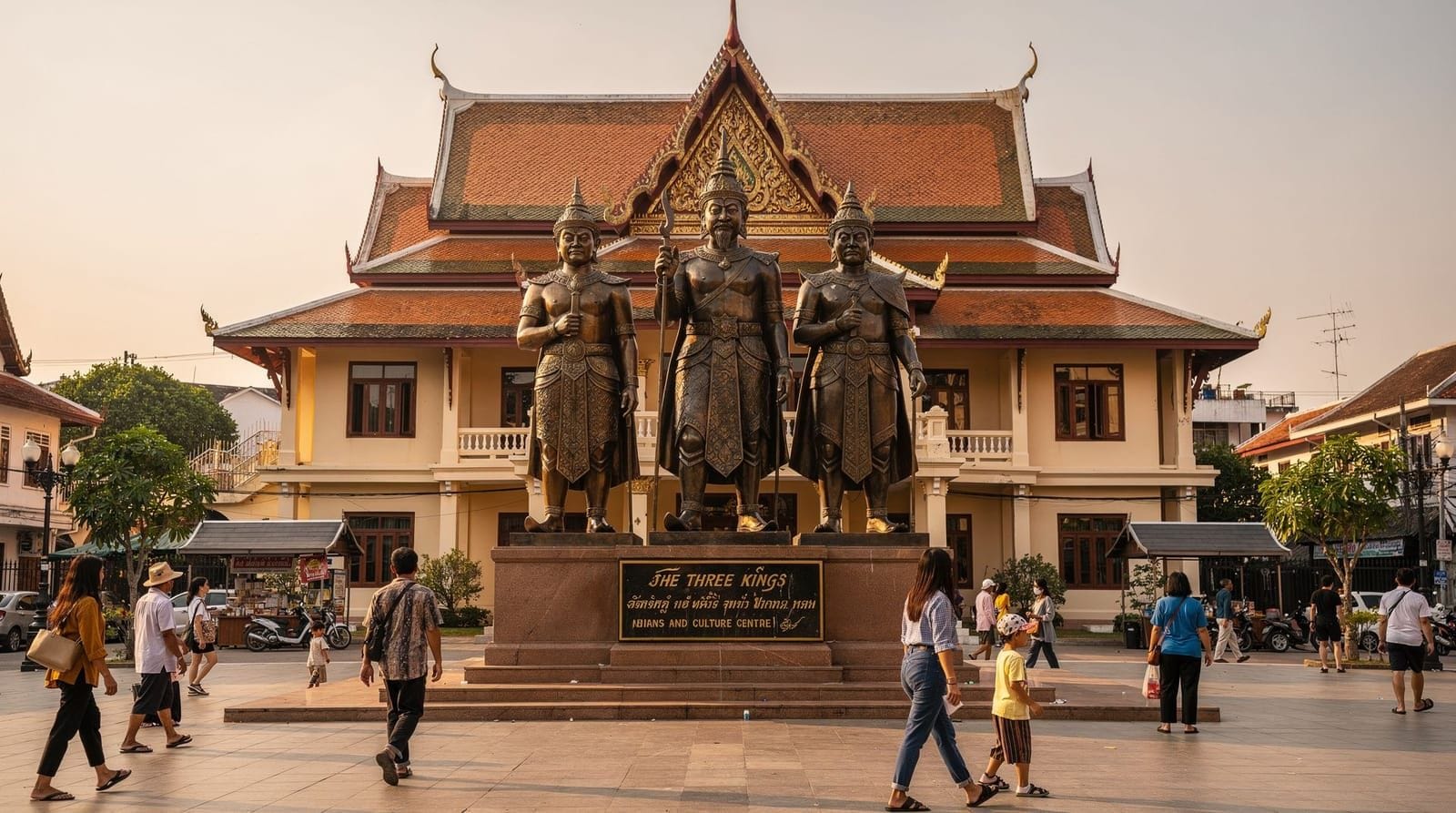
Tha Phae Gate works naturally as either the start or end point of a broader Old City walking loop. A common pattern: begin at the gate in the morning, walk west along Ratchadamnoen Road through Wat Chedi Luang and on to Wat Phra Singh, detour briefly north to Wat Chiang Man for the city’s oldest temple, then either loop back along a parallel street or continue to the Three Kings Monument before returning to the gate area for dinner. Because it sits at one clear edge of the Old City rather than buried in the interior grid, it makes a cleaner start or finish line than most alternative starting points, and it means you’re never far from familiar ground if you get turned around mid-walk.
Honest notes
Tha Phae Gate’s high foot traffic makes it a magnet for the same tuk-tuk and gem-shop touts found elsewhere in the Old City — anyone approaching with an unsolicited “special deal” or claim that a nearby temple is closed is working an angle, not offering a genuine favor. The pigeon feed vendors are legitimate and harmless, typically charging a small fixed amount for a handful of seed, but confirm the price before accepting a bag if it isn’t clearly displayed, since a few vendors have been known to ask for more than expected afterward. Beyond that, it’s a safe, well-lit, heavily trafficked public plaza with none of the more serious concerns some other transport hubs in the region carry.
One more practical note: during Songkran and the Sunday Walking Street market, vehicle access right at the gate is restricted or heavily congested, so a taxi or Grab booked to drop you “at Tha Phae Gate” during those windows may actually stop some distance away and require a short walk in. Building in a few extra minutes on those specific dates avoids frustration if you’re on a tight schedule.
Frequently asked questions about Tha Phae Gate
Is Tha Phae Gate the original 13th-century structure?
No. The gate visible today is a reconstruction built in the 1980s on the site of the original, which was rebuilt multiple times over the centuries as the city’s fortifications aged and were damaged.
Why is Tha Phae Gate such a popular meeting point?
It’s the Old City’s most recognizable single landmark, roughly central to most accommodation, and the starting point of the Sunday Walking Street market — making it a natural default for “let’s meet at the gate” plans.
When does the Sunday Walking Street market start at the gate?
The road closes to traffic in the mid-afternoon, with the market building through the evening until around 10-11pm. Arriving by 4-5pm beats the heaviest crowds.
Is Tha Phae Gate involved in Songkran?
Yes — the plaza and moat in front of the gate are one of the most intense water-fight zones in the city during Songkran in mid-April.
What’s the best time to photograph Tha Phae Gate?
Late afternoon into sunset, when the light is warm and low-angled against the brick and the moat reflects the changing sky color.
Are the pigeons at Tha Phae Gate safe to feed?
Yes, vendors sell birdseed for a small fixed fee. Confirm the price before accepting a bag, since a handful of vendors have asked for more than expected afterward.
How do I get to Tha Phae Gate from the airport?
About 3.5 km, a 12-15 minute Grab ride costing roughly 100-140 THB ($2.75-3.85).
Is Tha Phae Gate worth visiting on its own, outside of festivals or the Sunday market?
It’s a quick 15-30 minute stop rather than a destination in itself — worth seeing while passing through the Old City, but not worth a special trip on an ordinary weekday unless paired with nearby temples or the moat walking path.
Can I walk from Tha Phae Gate to the Night Bazaar?
Yes, along Tha Phae Road, about 12-15 minutes on foot. It’s well-lit and busy after dark, though also the corridor with the highest concentration of tailor-shop and tour-package touts in the Old City area.
Is the plaza in front of Tha Phae Gate accessible for strollers or wheelchairs?
Yes — it’s flat, paved, open ground with a gradual moat-bridge slope rather than steps, making it one of the more accessible landmarks in the Old City.
Top experiences
Bookable activities with verified prices and instant confirmation on GetYourGuide.