Wat Chedi Luang
Chiang Mai's giant ruined chedi, the city pillar shrine, and how to join the temple's monk chat program.
Chiang Mai Old City Phra Singh & Big Pagoda Night Tour
Quick facts
- Getting there
- 12-min walk from Tha Phae Gate, or songthaew ~30 THB ($0.85)
- Distance from Tha Phae Gate
- 900 m / 10-12 min on foot
- Key sight
- The partially ruined chedi and the Sao Inthakhin city pillar shrine
- Time needed
- 45-60 minutes
- Entry cost
- ~40 THB ($1.10) for foreign visitors
Wat Chedi Luang sits near the geographic center of the Old City, built around a brick chedi so large that even in its damaged, partially collapsed state it remains the single most imposing structure inside the moat. Construction began in the late 14th century under King Saen Muang Ma and continued across several reigns; at its completed height it may have stood around 80 meters, tall enough that a 16th-century earthquake, an errant cannonball, or both — accounts differ — knocked the top third off permanently rather than merely cracking it.
Quick answer: Wat Chedi Luang is built around a massive, deliberately unrepaired ruined chedi and the Sao Inthakhin city pillar shrine that predates the temple itself. It’s one of the three essential Old City temples, takes under an hour to see properly, and runs a free monk chat program on weekday afternoons that’s one of the more genuine cultural exchanges available in the city.
The ruined chedi
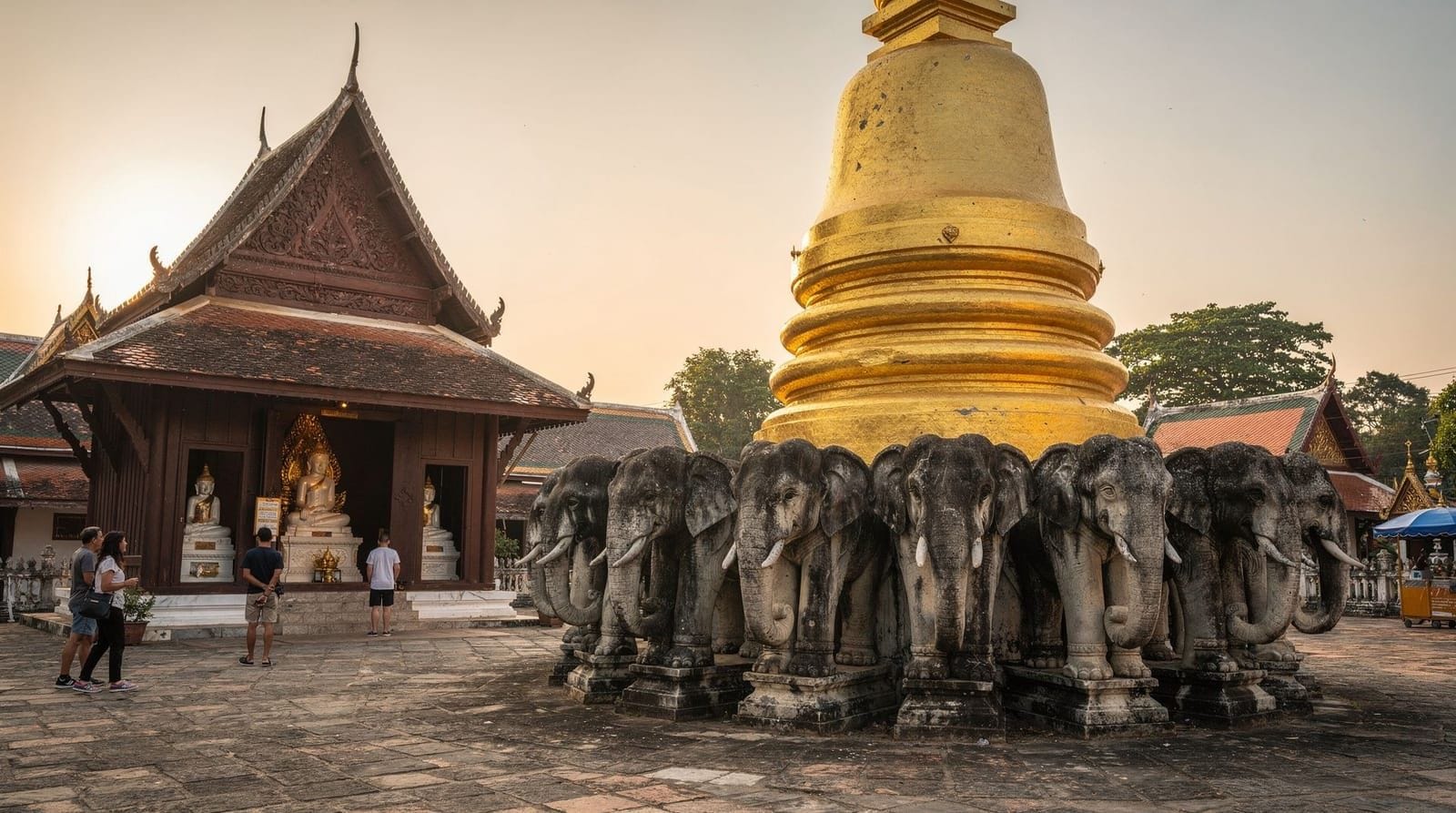
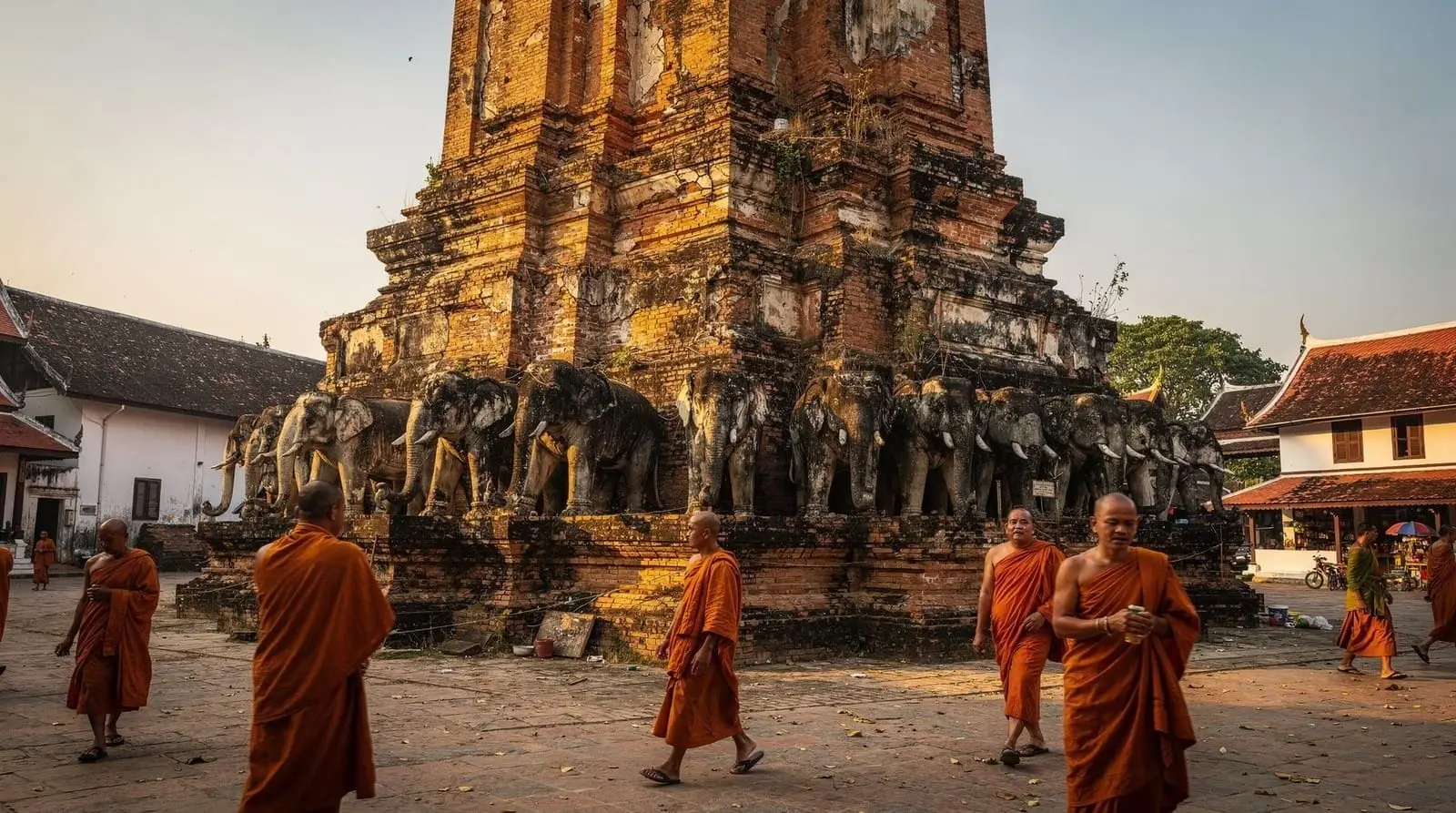
What makes Wat Chedi Luang visually distinct from every other temple in Chiang Mai is the decision, made after the original earthquake damage, not to fully rebuild the structure to its original height. A partial restoration in the 1990s stabilized the brickwork and added some naga staircases and elephant statues around the base, largely funded by UNESCO and Japanese conservation support, but the upper section remains visibly truncated — a deliberate choice to preserve the monument’s history rather than erase the damage with a full rebuild. The result is a chedi that reads as genuinely ancient in a way that fully restored temples elsewhere in Southeast Asia sometimes don’t; you’re looking at six centuries of weathering, not a recent reconstruction dressed up to look old.
The 1990s restoration effort, backed partly by UNESCO and Japanese cultural preservation funding tied to Chiang Mai’s 700th anniversary celebrations in 1996, focused on structural stabilization rather than cosmetic reconstruction — reinforcing the brick core against further collapse, adding drainage to reduce water damage during the rainy season, and restoring the naga staircases and elephant buttresses at the base using techniques matched to the original 14th-century construction where records allowed. Conservators deliberately stopped short of rebuilding the missing upper section, a decision that occasionally surprises visitors expecting a “restored” temple to look complete — the point was authenticity of what remains, not recreation of what’s lost.
Walking the full base of the chedi takes about ten minutes and is worth doing slowly — the brickwork exposed where plaster has fallen away, the scale of the elephant buttresses at the corners, and the naga (serpent) balustrades on the staircases all reward a close look rather than a single photo from the entrance.
A temple that once held the Emerald Buddha
For roughly eighty years in the 15th and 16th centuries, the Emerald Buddha — now Thailand’s most sacred single object, enshrined at Wat Phra Kaew in Bangkok’s Grand Palace — was kept at Wat Chedi Luang, installed in a niche in the chedi itself. It arrived in Chiang Mai in 1468 under King Tilokarat and remained until 1552, when political upheaval saw it moved to Luang Prabang and later Vientiane in present-day Laos, before eventually making its way to Bangkok in 1784 after Siamese forces retook it. A replica jade Buddha image now sits in the eastern niche of the chedi approximating where the original stood, a quiet reminder that this ruined structure was, for a meaningful stretch of Southeast Asian history, the single most important religious site in the region — a fact easy to miss walking past the current information signage, which mentions it only briefly.
Sao Inthakhin: the city pillar
Within the same temple grounds, in a smaller shrine building, stands the Sao Inthakhin, Chiang Mai’s city pillar — a sacred post that predates Wat Chedi Luang and, by tradition, predates the city’s founding in 1296. City pillar shrines are common across Thai cities as a Brahmanic-Buddhist syncretic tradition marking the spiritual anchor point of a settlement, but Chiang Mai’s is unusual in being men-only inside the inner shrine building during the annual Inthakhin festival each May, when the pillar is honored with a multi-day ceremony that draws large local crowds. Outside festival dates, the shrine building is open to all visitors, though photography inside is typically restricted — check posted signage at the entrance, which is enforced more strictly here than almost anywhere else in the Old City given the pillar’s sacred status.
The rest of the compound
Beyond the chedi and pillar shrine, the grounds hold a large working viharn used for regular services, a separate ordination hall, and a scripture library. Two enormous Yang Na trees (a native dipterocarp species that can live for centuries) stand near the main viharn, tall enough to shade a substantial part of the courtyard and old enough that some local guides claim they predate the temple’s founding — unverifiable as fact, but the trees are genuinely striking in scale and worth noticing rather than walking past on the way to the chedi. A small museum building near the entrance displays photographs of the chedi at various points in its restoration history, useful context if you want to understand how much of what you’re looking at is original 14th-century brick versus later reinforcement.
Comparing Wat Chedi Luang to Wat Phra Singh
Visitors with time for only one Old City temple often ask which to pick. Wat Chedi Luang wins on scale, atmosphere, and sheer visual impact — the ruined chedi is unlike anything else in the city, and the monk chat program adds a cultural dimension that Wat Phra Singh doesn’t offer in the same accessible, drop-in format. Wat Phra Singh wins on craftsmanship, with the Lai Kham chapel’s murals and gilded woodwork rewarding closer, slower looking. Neither is objectively better; they showcase different strengths of Lanna religious architecture, and the 900-meter walk between them along Ratchadamnoen Road makes seeing both in one outing genuinely easy rather than a hard trade-off. A third option, Wat Chiang Man in the northeast corner of the Old City, adds the founding-history angle and a noticeably quieter atmosphere if you have time to extend the loop to all three.
Monk chat program
Wat Chedi Luang runs one of Chiang Mai’s most established monk chat programs, where young monks studying English at the attached monastic school sit informally with visitors most weekday afternoons, typically from around 1pm to 6pm depending on the monks’ schedules that day. It’s free, unstructured, and refreshingly two-directional — monks are usually as curious about your country and life as you are about monastic training, and conversations range from Buddhist philosophy to football. There’s no obligation to donate, though small contributions to the temple are appreciated if the conversation was worthwhile. Weekday afternoons work best; weekend availability is less consistent since fewer monks are free from their studies.
This is a genuinely low-key, unscripted experience rather than a tourist performance, and it’s one of the more memorable things travelers do in the Old City precisely because it isn’t polished or transactional.
a guided temple tour that includes a monk meeting is a reasonable option if you’d rather have a facilitator smooth the introduction, though showing up independently on a weekday afternoon works just as well and costs nothing beyond the entry fee.
Why the scale surprises first-time visitors
Photographs of Wat Chedi Luang, cropped to fit a phone screen, rarely convey how large the base of the chedi actually is in person — walking around it takes longer than most visitors expect, and standing at the foot of one of the elephant buttresses gives a sense of scale that’s easy to underestimate from pictures alone. It’s worth budgeting slightly more time than a quick in-and-out visit; the structure rewards a slow circuit rather than a single vantage point.
Dress code and entry
Entry costs around 40 THB ($1.10) for foreign visitors and covers the full grounds, including the chedi and pillar shrine building. Shoulders and knees must be covered throughout, and shoes come off before entering any roofed building with a Buddha image — the open-air chedi itself doesn’t require removing shoes since it isn’t an enclosed structure, but the surrounding viharns do. Sarong rental is available near the entrance for visitors who arrive underdressed.
Best time to visit
Morning light (before 9am) works best for photographing the chedi’s texture and the naga staircases, since the brick surface shows more detail in low-angle sun than under the flat overhead light of midday. If monk chat is the priority, plan for a weekday afternoon instead and accept that photography conditions will be less ideal — the two goals pull toward opposite times of day, so decide which matters more for a given visit rather than trying to force both into one trip.
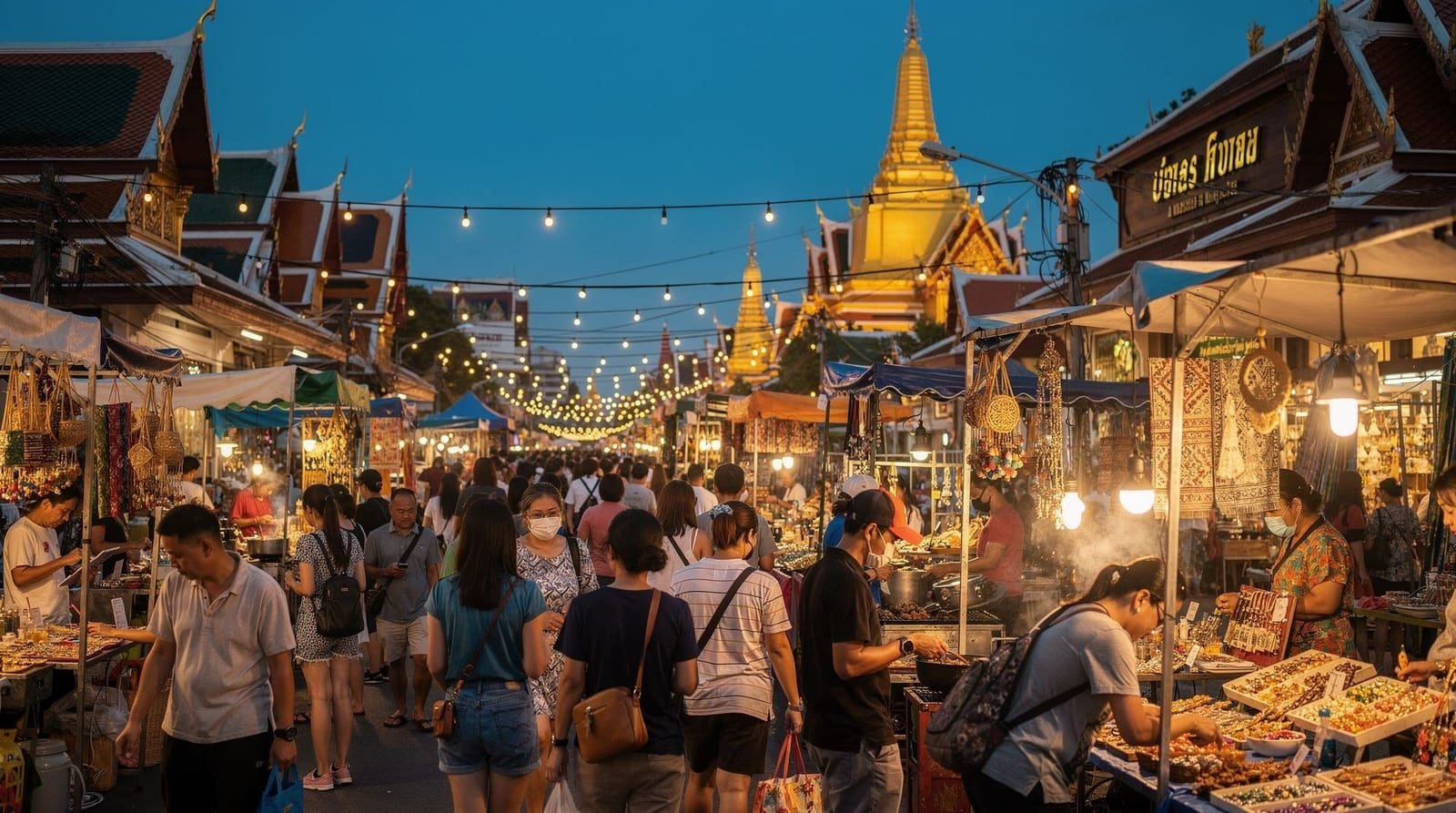
an evening tour pairing Wat Chedi Luang with Wat Phra Singh shows the illuminated chedi after dark, which is a genuinely different, quieter experience than the daytime crowds — worth it specifically for the lighting rather than as a replacement for a daytime visit focused on the brickwork detail.
Accessibility
The main courtyard is flat, paved ground with reasonable shade from the Yang Na trees, making it more comfortable at midday than more exposed Old City temples. Climbing the chedi’s base itself involves some uneven brick and worn steps, and visitors with mobility concerns can still appreciate the structure fully from ground level without climbing — the scale is apparent from any angle. The pillar shrine and main viharn are both step-up entries typical of Thai temple design, without ramps as of the last review.
What’s nearby
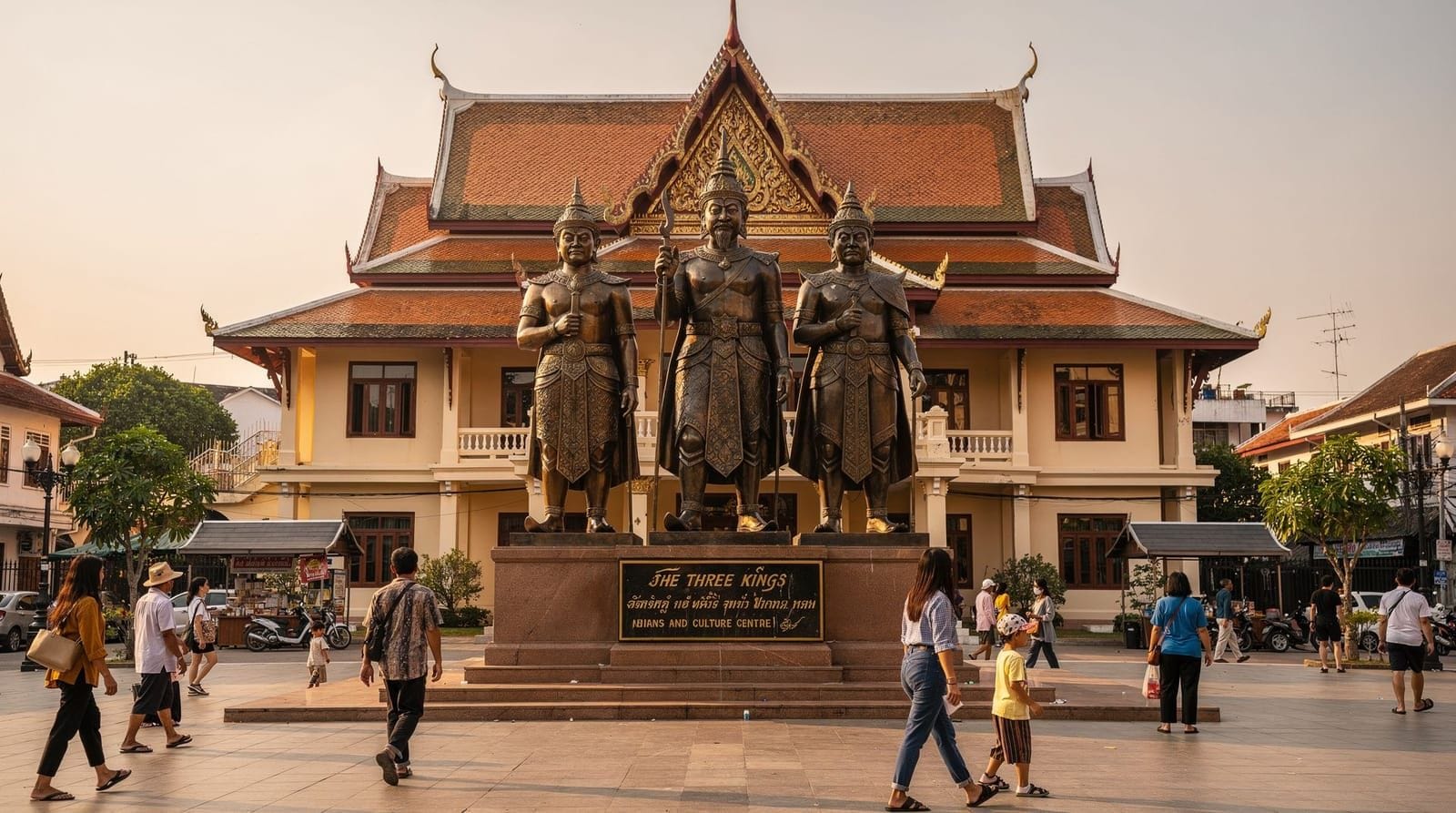
The streets around Wat Chedi Luang blend into the Old City’s general Ratchadamnoen Road corridor, with small cafés, tailor shops, and a scattering of massage parlors within a five-minute walk in any direction — useful for a break before or after the visit. The Three Kings Monument square, with the Lanna Folklife Museum, sits close enough (about five minutes north) to combine into the same outing, and it’s a good midday shade break given its more open, less temple-dense layout.
Getting there and pairing with other temples
Wat Chedi Luang sits about 900 meters from Tha Phae Gate, a 10-12 minute walk down Ratchadamnoen Road — the same road that becomes the Sunday Walking Street market each Sunday evening. Wat Phra Singh sits roughly 900 meters further west along the same road, making the two temples a natural pairing on foot, and the Three Kings Monument is a five-minute walk to the north. Most visitors combine all three into a single half-day loop rather than making separate trips.
Coming from further afield — Nimmanhaemin or the riverside area near the Night Bazaar — a Grab ride typically runs 60-90 THB ($1.65-2.50) and 10-15 minutes depending on traffic, which builds up noticeably around the Old City’s narrow entry points during rush hour (roughly 7:30-9am and 5-7pm). Songthaews cover the same routes for less but with less predictable timing, since they wait to fill with multiple passengers headed in a similar direction before departing.
The Inthakhin festival in more detail
The Inthakhin festival, usually held over several days in late May, centers entirely on the city pillar shrine and draws devotees from across northern Thailand, not just Chiang Mai residents. Traditionally the ceremony was restricted to men entering the inner shrine building, tied to Brahmanic ritual customs around the pillar’s spiritual protection role, though practices have loosened somewhat in recent years for the broader festival grounds outside the shrine itself. Flower offerings — particularly a specific type of jasmine-like blossom associated with the ritual — pile up around the shrine during the festival, and the temple grounds overall get considerably busier and more decorated than on an ordinary day. If your visit coincides with these dates, expect a genuinely different, more crowded atmosphere than the rest of the year, and expect some areas of the pillar shrine to be temporarily inaccessible to general visitors during active ceremony hours.
Honest notes
The temple sees heavy tour-bus traffic between roughly 10am and 1pm, coinciding with citywide temple-circuit itineraries. Photography inside the Sao Inthakhin shrine building is restricted — respect posted signs rather than sneaking a photo, since this is one of the more sensitive sacred sites in the city for local residents. As at other Old City temples, ignore anyone outside the entrance offering “special access” tickets at a markup; buy directly at the visible ticket booth.
A separate, recurring point of confusion: some tour itineraries and taxi drivers refer to this temple simply as “the big chedi” or “the broken pagoda,” which can make it hard to confirm you’re being taken to the right site versus a different ruined structure at Wiang Kum Kam outside the city, an entirely separate ancient site with its own set of ruins. If a driver or guide’s description doesn’t match Wat Chedi Luang’s Old City location specifically, clarify before agreeing to the stop.
Frequently asked questions about Wat Chedi Luang
Why is the chedi at Wat Chedi Luang ruined instead of rebuilt?
A 16th-century earthquake (and possibly cannon damage) destroyed the upper third of the original structure. A 1990s stabilization project reinforced the remaining brickwork but deliberately preserved the truncated shape rather than fully rebuilding it, to keep the monument’s history visible.
What is the Sao Inthakhin?
Chiang Mai’s city pillar, housed in a shrine within the Wat Chedi Luang grounds, considered the spiritual anchor point of the city and predating the temple itself. It’s honored with a major festival each May.
How does monk chat work at Wat Chedi Luang?
Young monks studying English sit informally with visitors, usually weekday afternoons from around 1pm to 6pm. It’s free and unstructured — just approach a monk seated in the designated conversation area and introduce yourself.
How much does it cost to enter Wat Chedi Luang?
Around 40 THB ($1.10) for foreign visitors, covering the full grounds including the chedi and pillar shrine.
Is photography allowed at Wat Chedi Luang?
Yes at the chedi and general grounds; photography inside the Sao Inthakhin shrine building is typically restricted. Check posted signage, which is enforced strictly given the shrine’s sacred status.
How far is Wat Chedi Luang from Tha Phae Gate?
About 900 meters, a 10-12 minute walk down Ratchadamnoen Road.
Should I visit in the morning or afternoon?
Morning (before 9am) for photography of the chedi’s brickwork detail; weekday afternoon if joining monk chat is the priority. The two goals favor different times of day.
Can I combine Wat Chedi Luang with other Old City temples in one visit?
Yes — it pairs naturally with Wat Phra Singh (900 m west) and the Three Kings Monument (five minutes north), forming a comfortable half-day loop covering the Old City’s most significant public sites.
Did Wat Chedi Luang really once hold the Emerald Buddha?
Yes. Thailand’s Emerald Buddha, now enshrined in Bangkok, was kept at Wat Chedi Luang from 1468 to 1552 before being moved north to present-day Laos and eventually to Bangkok in 1784. A replica jade image now sits in the niche where the original stood.
Top experiences
Bookable activities with verified prices and instant confirmation on GetYourGuide.