Wiang Kum Kam
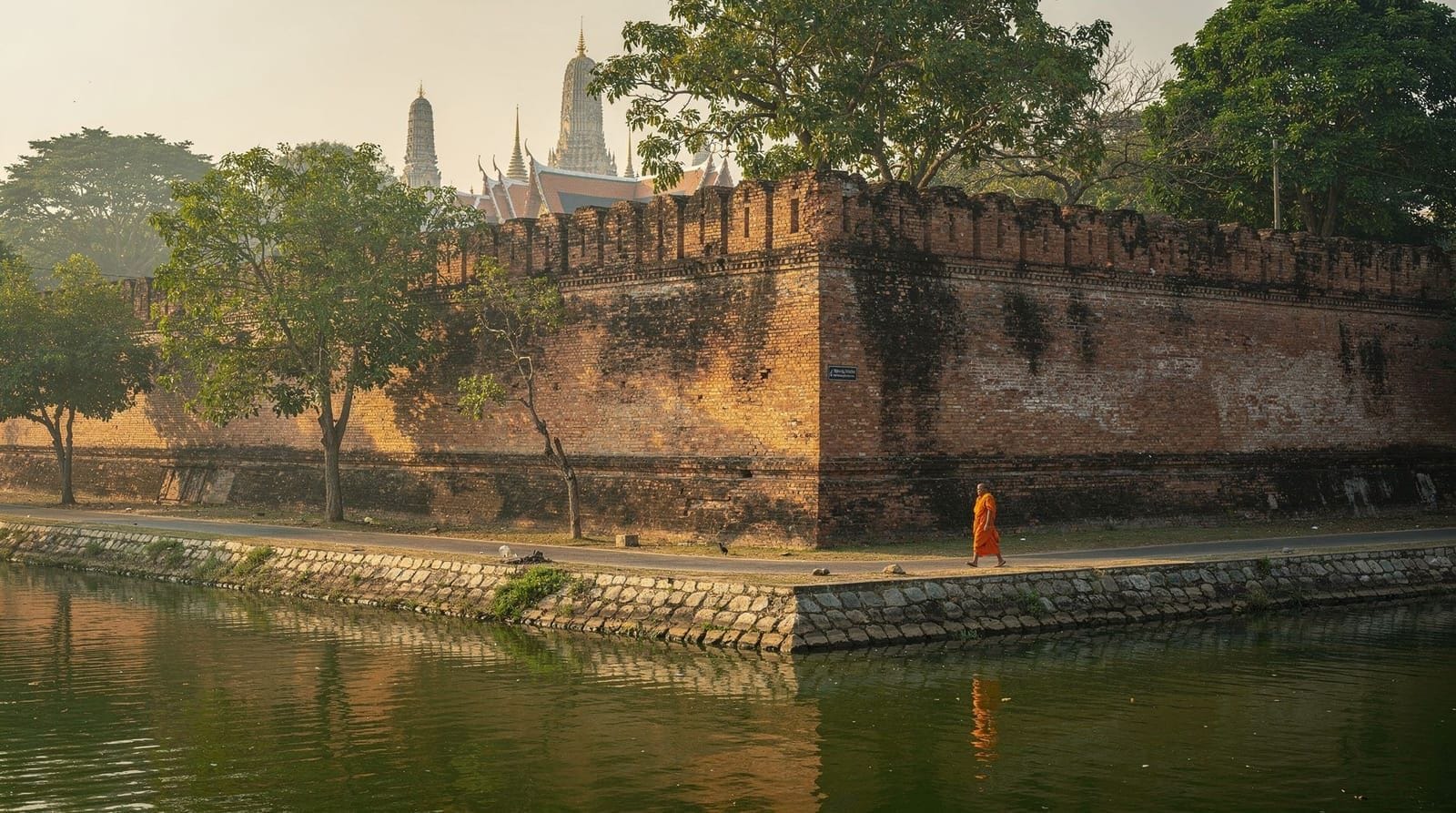
The excavated ruins of King Mangrai's original 13th-century capital, abandoned after Ping River flooding, toured today by horse cart or e-tram.
Quick facts
- Getting there
- Southeast of Chiang Mai near the Ping River, ~15-20 min by Grab or car from the Old City
- Key sight
- Wat Chedi Liam and Wat Chang Kham ruins, horse-drawn carriage or e-tram tour of the excavated site
- Time needed
- 1.5-2.5 hours
- Best time
- November-February; early morning any season to avoid the heat during the carriage/tram loop
- Typical cost
- Site access is largely free to walk; horse-cart or e-tram tours typically run a few hundred THB (~$8-15) per group
Most visitors assume Chiang Mai’s Old City has always been the region’s capital, and most visitors are wrong — before the walled city inside the moat was founded, King Mangrai ruled from Wiang Kum Kam, a settlement southeast of today’s center that was abandoned centuries ago after repeated flooding from the Ping River, then quietly rediscovered and excavated only in the late 20th century. What’s left is a scattered set of brick chedis and temple foundations sitting almost incongruously among an ordinary modern village, one of the quieter and more genuinely historical stops in the whole Chiang Mai area.
Quick answer: Wiang Kum Kam is an excavated 8th-13th century settlement southeast of Chiang Mai near the Ping River, about 15-20 minutes by Grab or car from the Old City. It served briefly as King Mangrai’s capital before he founded Chiang Mai proper, and was abandoned after the river repeatedly flooded the site, burying it until 20th-century excavation uncovered the ruins. The two most substantial remaining structures are Wat Chedi Liam and Wat Chang Kham, and the customary way to tour the scattered site is by horse-drawn carriage or electric tram from the local information centre, since the ruins are spread across a working village rather than concentrated in a single fenced park.
The history behind the ruins
Wiang Kum Kam’s story is a genuinely unusual one among Southeast Asian historical sites: it isn’t a city that simply declined or was conquered, but one that was physically abandoned because of its location. King Mangrai, founder of the Lanna kingdom, established Wiang Kum Kam sometime in the late 13th century as his capital before deciding — after repeated and increasingly severe flooding from the nearby Ping River — to found a new capital a short distance northwest, which became Chiang Mai. Wiang Kum Kam continued to exist afterward in some diminished form, but the flooding problem never really went away, and over subsequent centuries the river’s shifting course and repeated inundation gradually buried much of the original settlement under layers of silt.
The site was effectively lost to casual visitors for centuries, known mostly through old chronicles rather than as a place you could actually go and see, until archaeological excavation beginning in the 1980s and continuing through the following decades uncovered temple foundations, chedis, and other structural remains scattered across what had become, by then, an ordinary modern village. That’s the detail that surprises most first-time visitors: Wiang Kum Kam isn’t a fenced archaeological park in the way many ruins sites are, but a scattering of excavated temple ruins standing among houses, roads, and everyday village life, giving it a genuinely different texture from a typical curated historical attraction.
What to see: the two main temple ruins
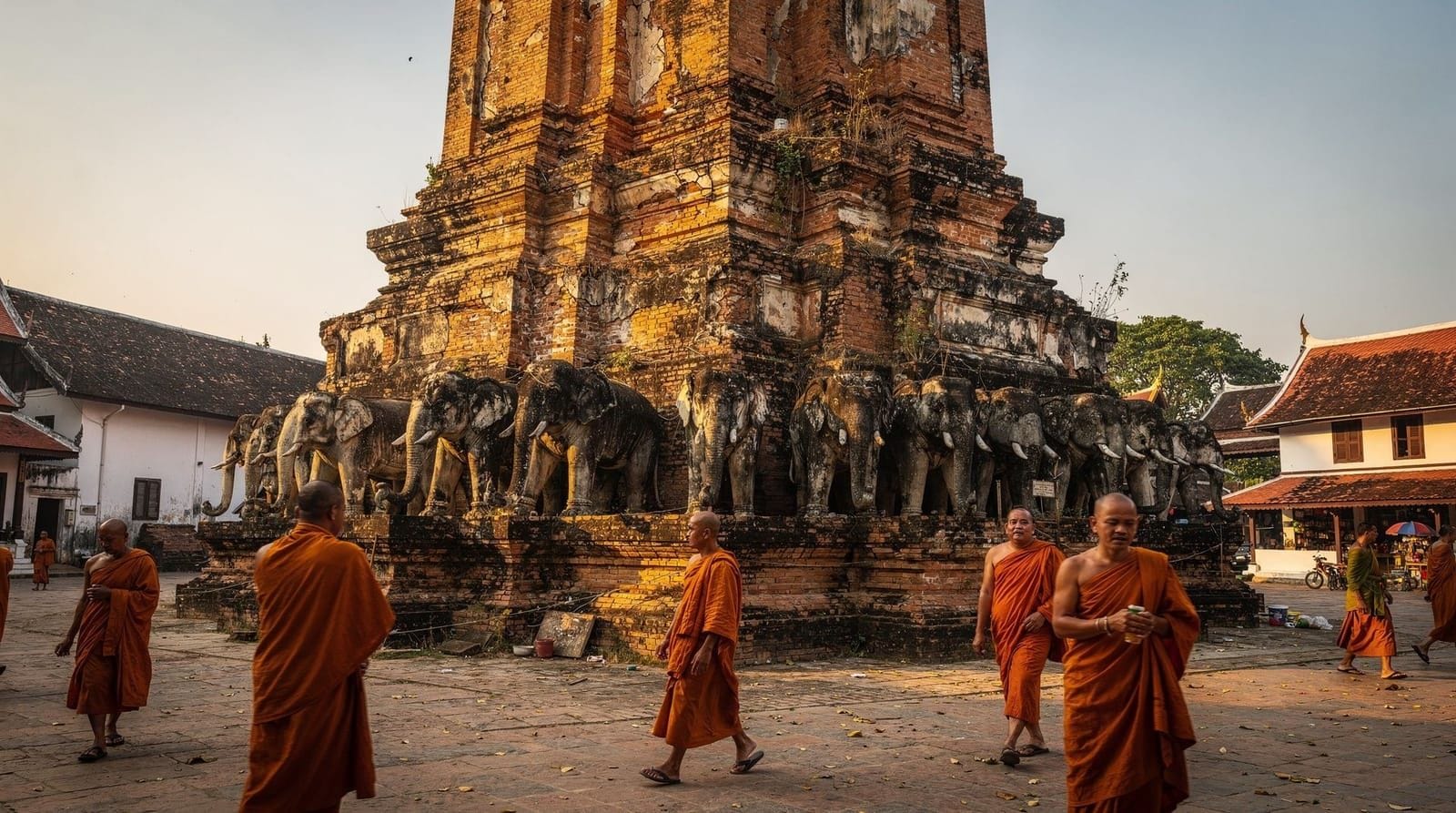
- Wat Chedi Liam (also called Wat Ku Kham) is generally considered the site’s best-preserved and most visually striking structure — a stepped, pyramid-like chedi with rows of Buddha niches on each tier, distinct from the bell-shaped chedis more common elsewhere in Chiang Mai. Unlike many of the site’s other ruins, this one has remained an active, still-used temple rather than purely an excavated relic, which means it’s better maintained and easier to appreciate at a glance than some of the more fragmentary sites nearby.
- Wat Chang Kham is the other major structure most visits include, a partially restored temple complex with brick foundations and remaining chedi structures that give a clearer sense of the original settlement’s scale, even though considerably less of it survives intact compared to Wat Chedi Liam.
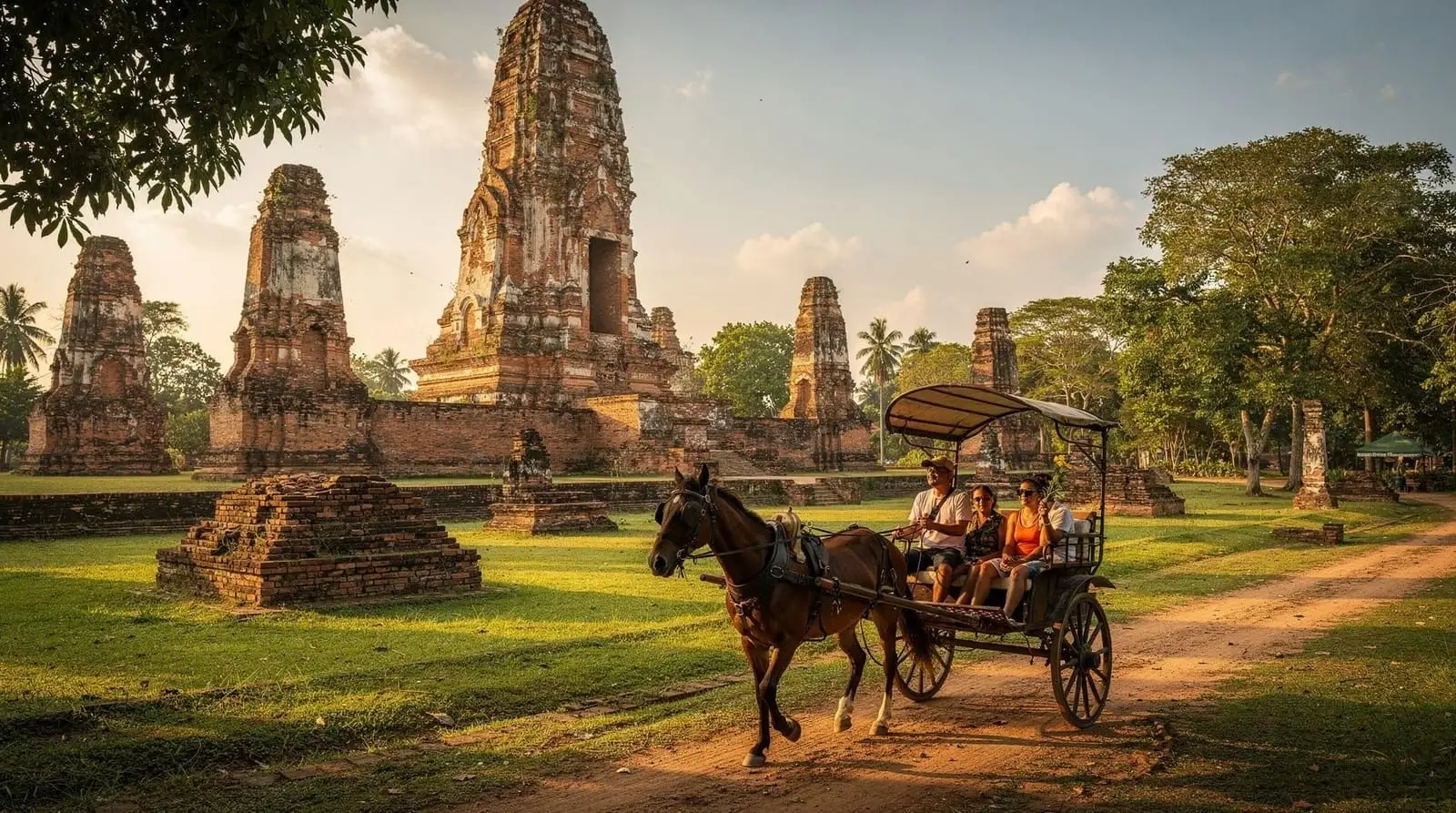
- Scattered smaller ruins — foundations, partial walls, and isolated chedis — are distributed across the wider village, some accessible on the standard carriage or tram loop and others requiring more effort or local knowledge to find, since ongoing excavation and limited signage mean not every fragment is presented as a formal stop.
Touring the site: horse cart or e-tram
Because Wiang Kum Kam’s ruins are spread across an inhabited village rather than concentrated in one walkable park, the standard way to see more than one or two structures without an exhausting amount of walking is to take a guided loop from the local information centre near the entrance.
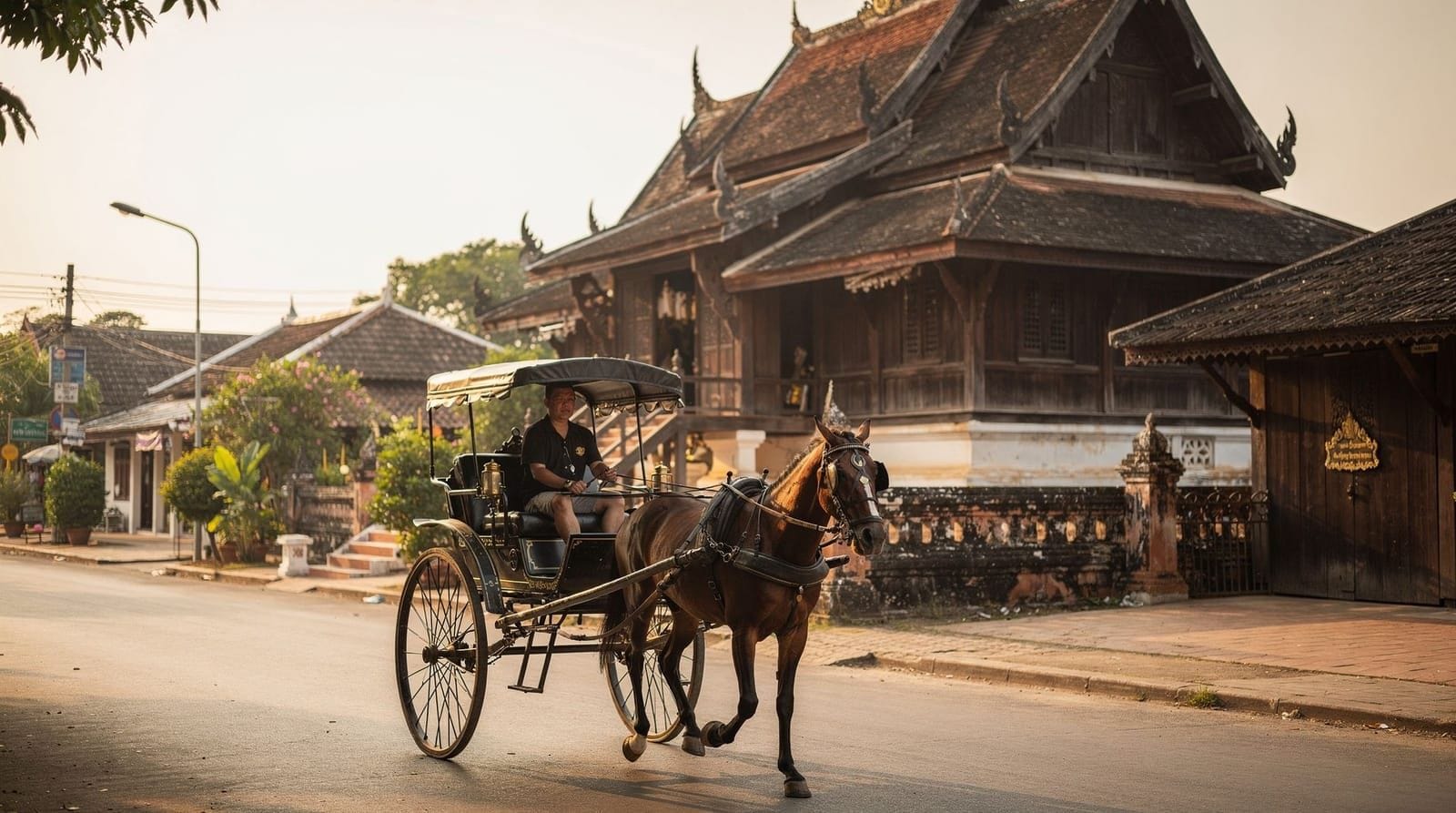
- Horse-drawn carriage tours are the traditional and still most popular option — a slow, open-air loop past the main temple ruins with a driver who typically points out each stop along the way, though narration depth varies and isn’t always in detailed English.
- Electric tram tours operate as a quieter, slightly faster alternative covering a similar route, useful if you’re visiting in the heat of the day or simply prefer not to sit behind a horse.
- Walking independently is possible for the closer ruins near the information centre, but the wider site’s structures are spread out enough, and roads between them busy enough with ordinary village traffic, that most visitors find the carriage or tram loop the more practical choice.
Both carriage and tram tours are typically booked on the spot at the information centre rather than in advance, and cost a few hundred THB (~$8-15) per group rather than per person in most cases — worth confirming the pricing structure and route length before setting off, since some loops cover more ground than others.
Getting to Wiang Kum Kam
The site sits southeast of central Chiang Mai, on the near side of the Ping River from the Old City.
- Grab or taxi: The simplest option, roughly 15-20 minutes from the Old City, making Wiang Kum Kam one of the closer Hang Dong-area attractions to central Chiang Mai.
- Rental scooter: Practical for confident riders, particularly if you’re combining the visit with Royal Park Rajapruek or Baan Tawai the same day, or looping back through Warorot Market for lunch on the way into the city.
- Organized tour: Less commonly offered as a dedicated Wiang Kum Kam tour on its own compared to some of Chiang Mai’s larger attractions, though it occasionally appears as a stop within broader cultural or history-themed itineraries.
Comparing Wiang Kum Kam to Old City temples
It’s worth being honest about what makes Wiang Kum Kam different from the more famous temples inside the Old City moat, since visitors sometimes expect a similar experience and come away disappointed by the comparison rather than appreciating the site on its own terms.
Old City temples like Wat Chedi Luang and Wat Phra Singh are active, richly decorated, still-functioning centers of worship with elaborate architecture, revered Buddha images, and — especially at Wat Chedi Luang — the opportunity to chat with monks. Wiang Kum Kam, by contrast, is fundamentally an archaeological site: quieter, more weathered, with far fewer visitors and a genuinely different atmosphere built around history rather than active devotion, aside from Wat Chedi Liam’s continued use as a working temple. If you’re looking for grandeur and ornamentation, the Old City temples deliver more per stop. If you’re looking for a quiet historical site with real archaeological weight and virtually no tour-bus crowds, Wiang Kum Kam is the better pick.
Combining with the rest of Hang Dong
Wiang Kum Kam pairs naturally with the district’s other attractions for visitors with a car or scooter for the day:
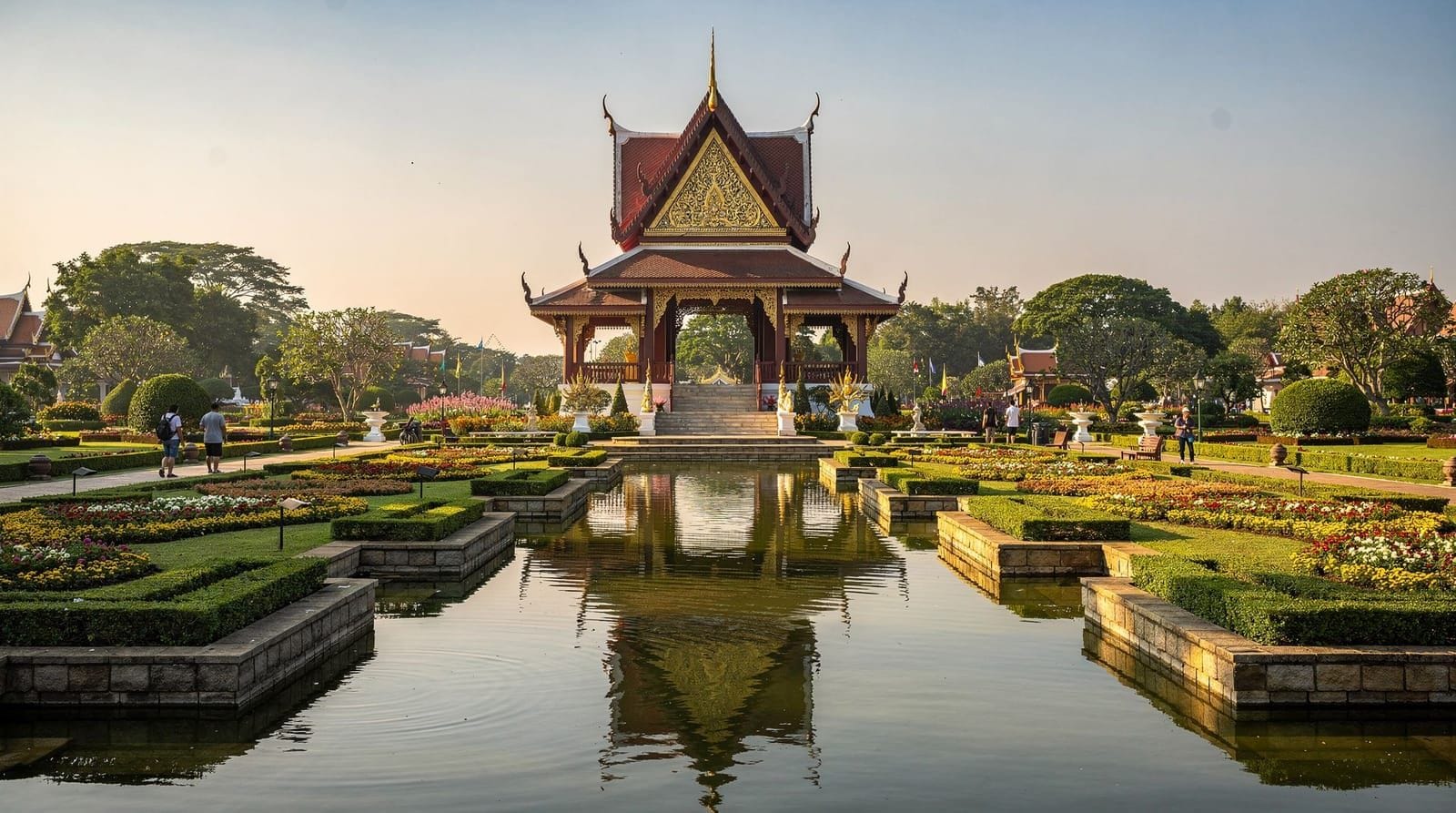
- Royal Park Rajapruek — the royal botanical garden, a calm, manicured contrast to the ruins’ weathered brick.
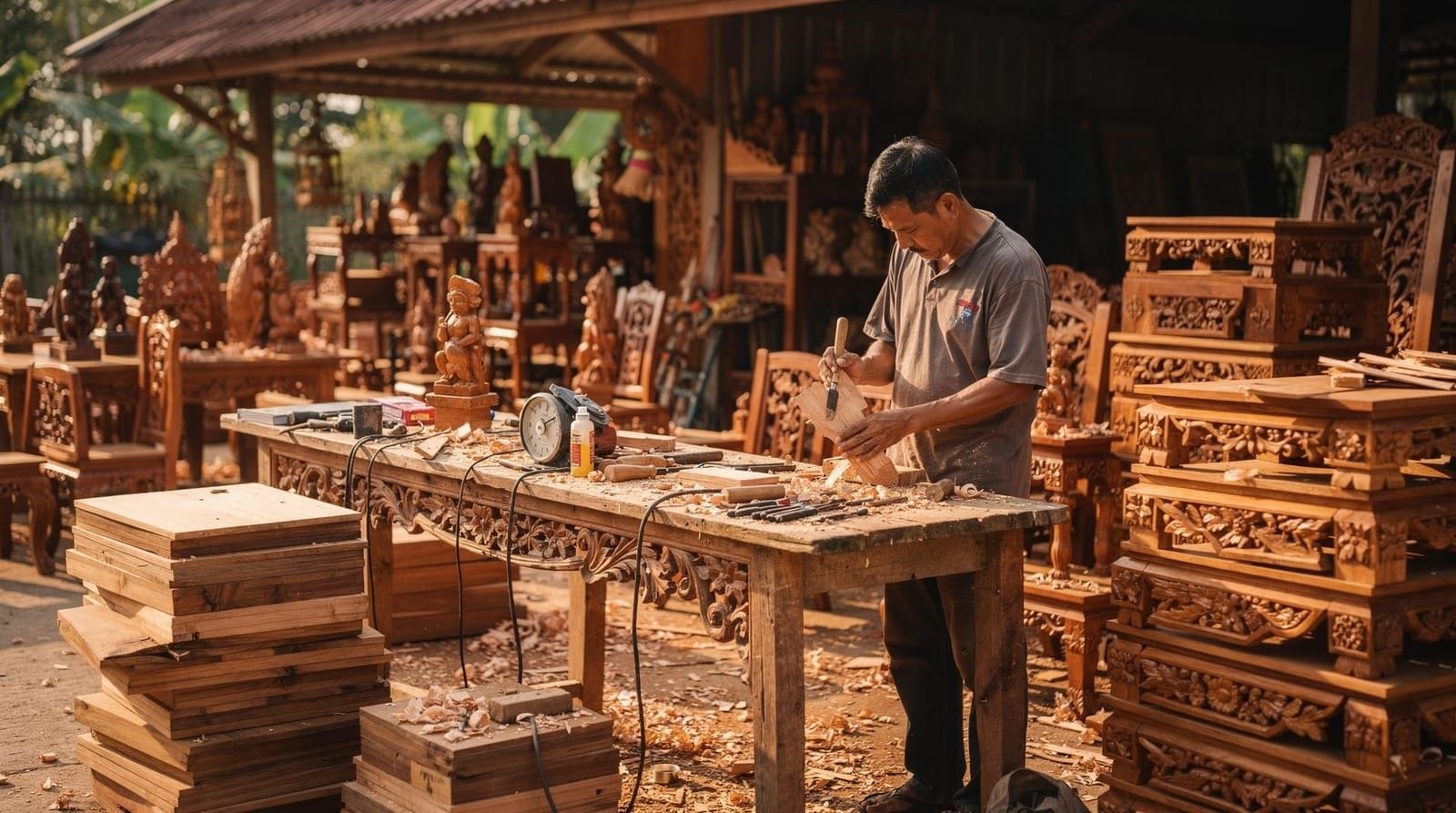
- Baan Tawai woodcarving village — teak carving and handicrafts, worth combining if shopping or craftsmanship interests you.
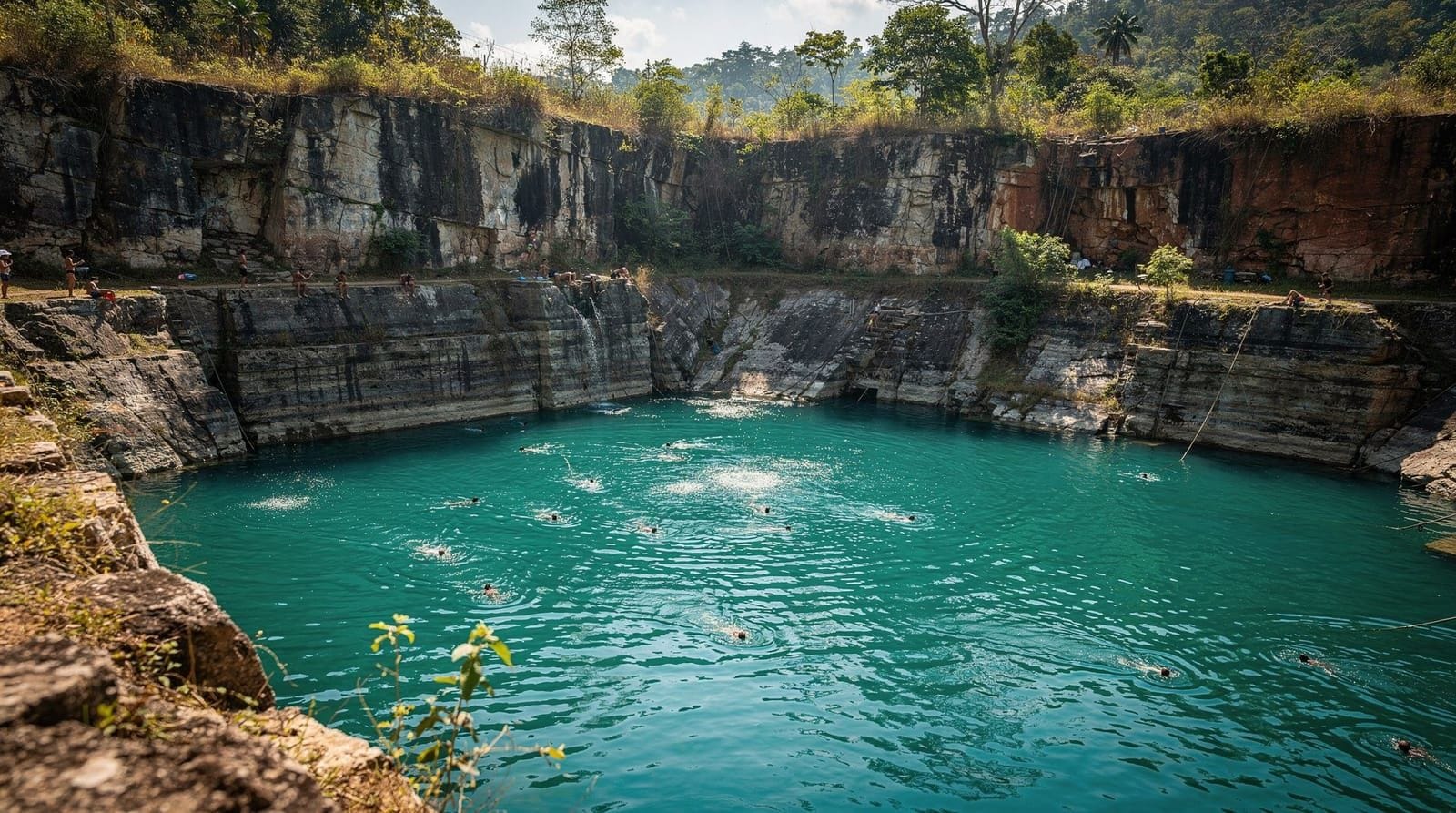
- Grand Canyon Hang Dong — the flooded quarry water park, a complete change of pace if you want an activity-heavy stop the same day.
A sensible half-day combination is Wiang Kum Kam in the morning, when the carriage or tram loop is more comfortable before the heat builds, followed by lunch and one of the district’s other stops in the afternoon.
History-minded visitors sometimes extend the theme further with a trip to Lampang, a couple of hours east, whose horse-carriage town center and Wat Phra That Lampang Luang offer a comparable sense of old Lanna heritage without Chiang Mai’s crowds — worth considering as a longer day trip if Wiang Kum Kam’s quiet, historical atmosphere appealed to you. Closer to home, the Three Kings Monument in the Old City, honoring King Mangrai alongside his two allied rulers, makes a natural bookend to a Wiang Kum Kam visit, since it’s the civic memorial to the very king whose original capital you’ve just walked through.
Why the site was abandoned: the flooding problem in detail
It’s worth dwelling a moment longer on why a capital city would simply be left to a river, since it’s the single most interesting fact about the site and easy to skim past. The Ping River, which still runs along Chiang Mai’s eastern edge today, historically shifted course more than modern flood-control infrastructure would allow, and Wiang Kum Kam sat close enough to the river’s changing path that repeated flooding became a chronic problem rather than an occasional disaster. Rather than continuing to rebuild in a location the river kept reclaiming, King Mangrai made the decision to relocate his capital to higher, more defensible ground northwest of the river — the site that became Chiang Mai, protected by its now-famous moat and city walls partly as a defensive measure and partly, some historians suggest, as continued flood mitigation learned from the Wiang Kum Kam experience. The abandoned former capital was gradually buried under river silt over the following centuries, which paradoxically helped preserve what excavators eventually found, since burial protected the brick structures from the kind of above-ground weathering and reuse that erodes many ancient sites left exposed.
What excavation revealed
Archaeological work at Wiang Kum Kam, ongoing since the 1980s, has uncovered considerably more than the two main temple ruins most casual visitors see. Excavated foundations suggest a settlement of meaningful scale for its era, with multiple temple complexes, residential areas, and infrastructure consistent with a functioning capital rather than a minor outpost — supporting the historical chronicles that describe it as Mangrai’s genuine seat of power before Chiang Mai’s founding. Inscriptions and artifacts recovered during excavation have also helped historians refine the dating and sequence of early Lanna history more broadly, making Wiang Kum Kam useful to scholars well beyond its value as a visitor attraction. Excavation is not fully complete, and it’s plausible that further structures remain to be uncovered in parts of the modern village built above the historical site — a detail that adds a certain frisson to walking through what looks, at first glance, like an entirely ordinary residential area.
Practical tips
- Go early. Both the temperature and the crowds (modest as they are) are more manageable before mid-morning.
- Bring cash for the carriage or tram fare and any small entrance donations at individual temple ruins.
- Wear sun protection. The carriage and tram loops are open-air with limited shade along parts of the route.
- Allow flexibility in your route. Not every scattered ruin is covered by the standard loop; ask your carriage or tram guide if there’s a particular structure you’re hoping to see.
- Combine it with a nearby stop rather than a standalone half-day trip, since the site itself, while worthwhile, doesn’t demand more than two to three hours even with a full carriage tour.
Visiting responsibly: a living village, not a museum
Because Wiang Kum Kam’s ruins sit embedded within an actual, functioning village rather than a fenced museum grounds, it’s worth keeping in mind while visiting that the streets, homes, and small local businesses you pass on a carriage or tram loop are someone’s everyday neighborhood, not a themed attraction built purely for tourists. That mostly just means the ordinary courtesies of visiting any residential area apply — not wandering off the marked route into private property, being mindful about photographing residents without asking, and treating the ruins scattered among houses and gardens with the same respect you’d give a temple still in active use. Most visitors find this aspect of Wiang Kum Kam adds to rather than detracts from the experience, since it makes the site feel like a genuine slice of Lanna history quietly persisting inside modern daily life, rather than a curated historical reconstruction built for visitor consumption.
Frequently asked questions about Wiang Kum Kam
What is Wiang Kum Kam?
The excavated ruins of an 8th-13th century settlement southeast of Chiang Mai that briefly served as King Mangrai’s capital before he founded Chiang Mai proper, abandoned after repeated Ping River flooding and rediscovered through 20th-century archaeological excavation.
How do I get to Wiang Kum Kam from Chiang Mai?
By Grab, taxi, or your own scooter or car, roughly 15-20 minutes southeast of the Old City — one of the closer Hang Dong-area attractions to the center.
How do you actually tour the ruins?
Most visitors take a horse-drawn carriage or electric tram loop from the local information centre, since the temple ruins are scattered across an inhabited village rather than concentrated in one walkable park.
What are the main things to see?
Wat Chedi Liam, a stepped pyramid-like chedi and the best-preserved structure at the site, and Wat Chang Kham, a partially restored temple complex — plus various smaller scattered ruins depending on your route.
How much does a carriage or tram tour cost?
Typically a few hundred THB (~$8-15) per group rather than per person, though it’s worth confirming current pricing and route length at the information centre before setting off.
How long should I spend at Wiang Kum Kam?
1.5 to 2.5 hours is enough to see the main ruins and complete a carriage or tram loop without rushing.
Is Wiang Kum Kam worth visiting if I’ve already seen Old City temples?
Yes, for a different reason — it’s a quieter, more purely historical site with real archaeological significance, rather than an active, richly decorated temple experience. The two complement rather than duplicate each other.
Can I combine Wiang Kum Kam with other Hang Dong sights?
Yes — Royal Park Rajapruek, Baan Tawai woodcarving village, and Grand Canyon Hang Dong are all within a similar southeastern-to-southwestern corridor, making a combined day practical with a car or scooter.