The Old City temple-hopping route: a half-day walking plan
Chiang Mai: 3 Hour Old City and Temples Guided Walking Tour
Duration: 3 hours
What is the best walking route for Old City temples in Chiang Mai?
Start at Wat Phra Singh in the Old City's west, walk roughly 15 minutes east to Wat Chedi Luang for its ruined chedi and monk chat, continue a short distance to Wat Inthakhin (Wat Chiang Man's chedi holds the true city pillar shrine, distinct from Wat Chedi Luang's replica), then finish at Wat Chiang Man, the oldest temple in the city. The full loop covers roughly 2-2.5km and takes a half day at an unhurried pace.
Chiang Mai’s Old City packs three of the region’s most significant temples inside a single square kilometer of moated, walled streets, close enough together that a half-day on foot covers all of them without needing a single songthaew ride. This guide lays out the most efficient walking loop, what to expect at each stop, and honest timing so the route doesn’t turn into a rushed checklist by the third temple.
Quick answer: start at Wat Phra Singh in the west, walk roughly 15 minutes east to Wat Chedi Luang, continue a short distance to the Wat Chiang Man / city pillar area, and finish at Wat Chiang Man itself, the city’s oldest temple. The full loop is about 2-2.5km and takes a half day including time inside each site.
Why the Old City is the right place for a walking route
Unlike Doi Suthep, which sits on a mountain outside the city and demands its own transport, the Old City’s temples are genuinely walkable — a rarity for temple-hopping in most cities, where distances usually force at least some driving between sites. The Old City itself is a roughly 1.5km square bounded by remnants of the old city wall and a moat, small enough that nothing inside it is more than a 20-minute walk from anything else. This makes it one of the few places in the region where you can build a full temple-focused half-day entirely on foot, with the option to duck into a café or street-food stall between stops rather than being tied to a vehicle’s schedule.
Stop 1: Wat Phra Singh
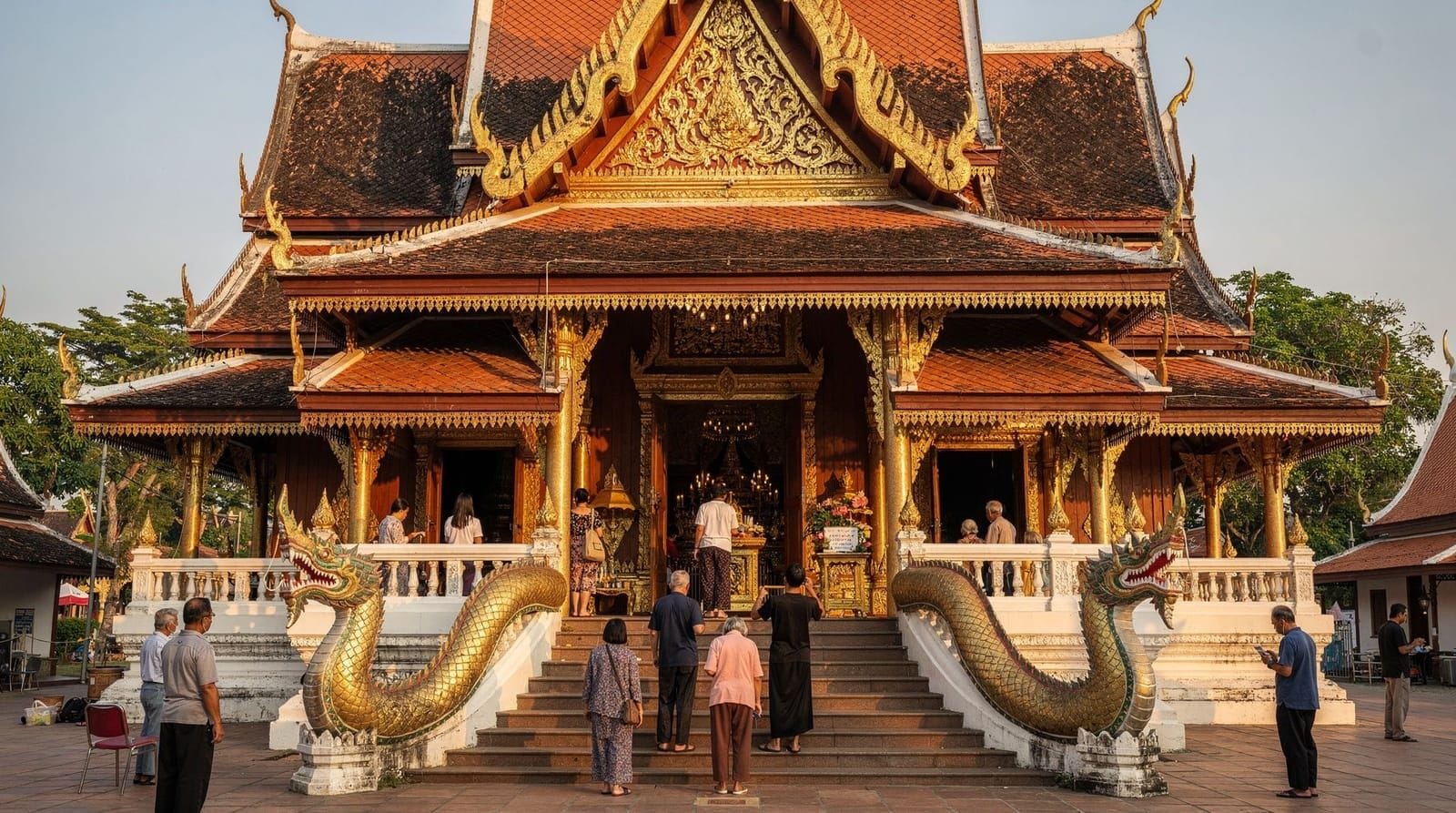
Start at Wat Phra Singh, toward the western side of the Old City, home to the revered Phra Singh Buddha and the Lai Kham viharn, a smaller chapel distinguished by gilded woodwork and murals depicting both religious scenes and Lanna-era daily life. Entry runs about 40 THB ($1.10), and the murals inside the Lai Kham viharn reward slowing down rather than a quick pass-through — budget 45-60 minutes here rather than treating it as a five-minute photo stop.
Early morning is genuinely the best time to arrive, both for softer light on the gilded details and because this temple, like Wat Chedi Luang further along the route, sees a meaningful tour-bus crowd by mid-morning.
Stop 2: Wat Chedi Luang
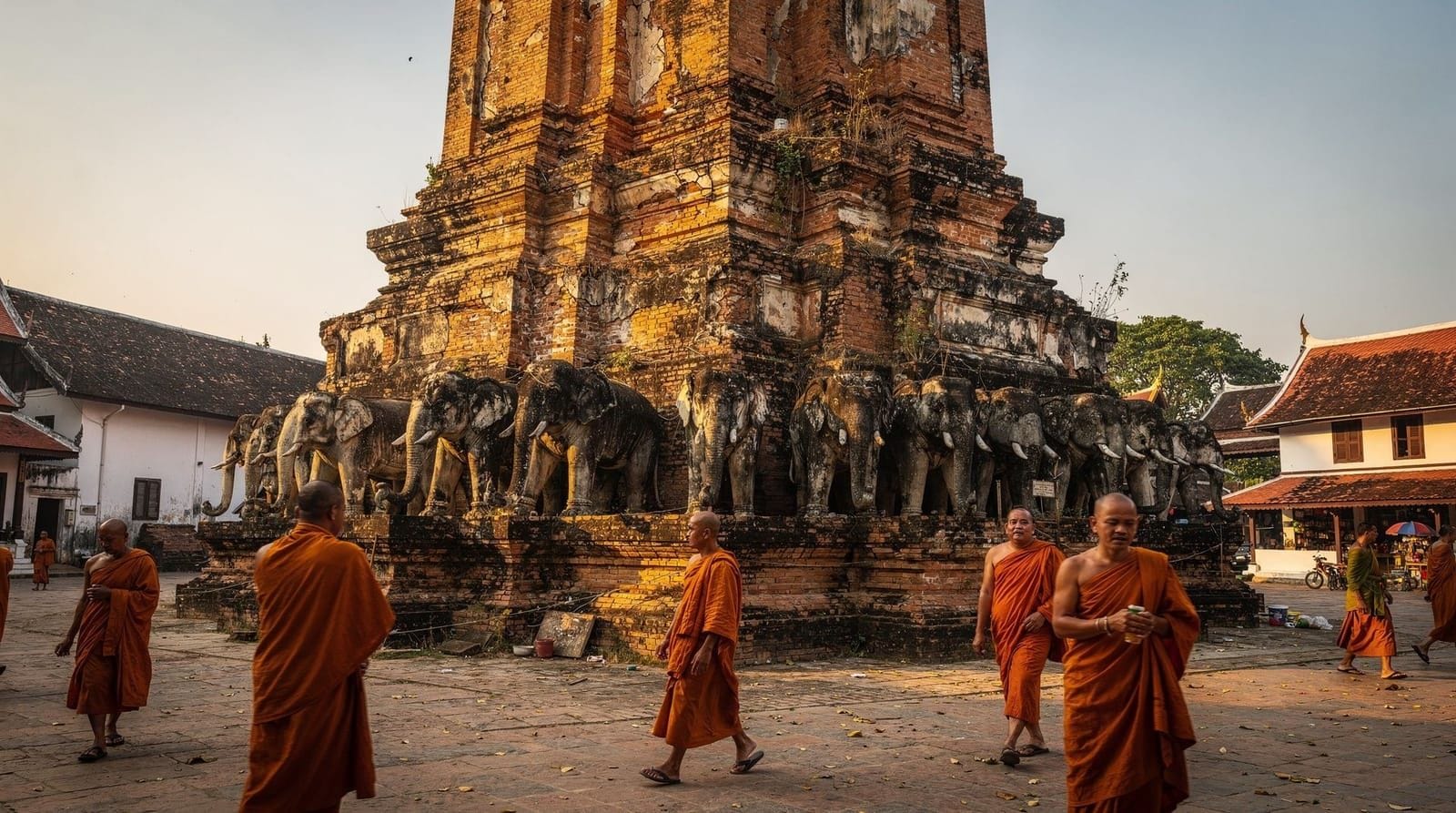
From Wat Phra Singh, walk roughly 15 minutes east along Ratchadamnoen Road toward Wat Chedi Luang, centered on a massive chedi partially destroyed by a 16th-century earthquake and deliberately left unrestored to its full original height — the exposed brick core gives the ruin a weight that a fully rebuilt structure wouldn’t have. The temple grounds also house Sao Inthakhin, the city pillar shrine considered the spiritual anchor of Chiang Mai itself.
Entry is around 40 THB ($1.10). This is also the Old City’s most accessible monk chat location, where young monks practicing their English sit down with visitors for open conversation, typically on weekday afternoons though schedules shift — our monk chat guide covers how to find and join a session. Budget 45-60 minutes, longer if you join monk chat.
If you’d rather not navigate the walk yourself, a 3-hour Old City and temples guided walking tour covers this exact stretch with a guide providing historical context at each stop.
Stop 3: Wat Inthakhin and the city pillar
A short walk from Wat Chedi Luang brings you past the broader Wat Inthakhin area, where the true city pillar (Sao Inthakhin) tradition is rooted — the pillar itself sits within the Wat Chedi Luang compound, but the surrounding streets carry the name and historical association with the city’s founding rituals. This isn’t a separate ticketed stop so much as a short, worthwhile detour to appreciate the civic and spiritual significance layered into this small stretch of the Old City before continuing to the final temple.
Stop 4: Wat Chiang Man
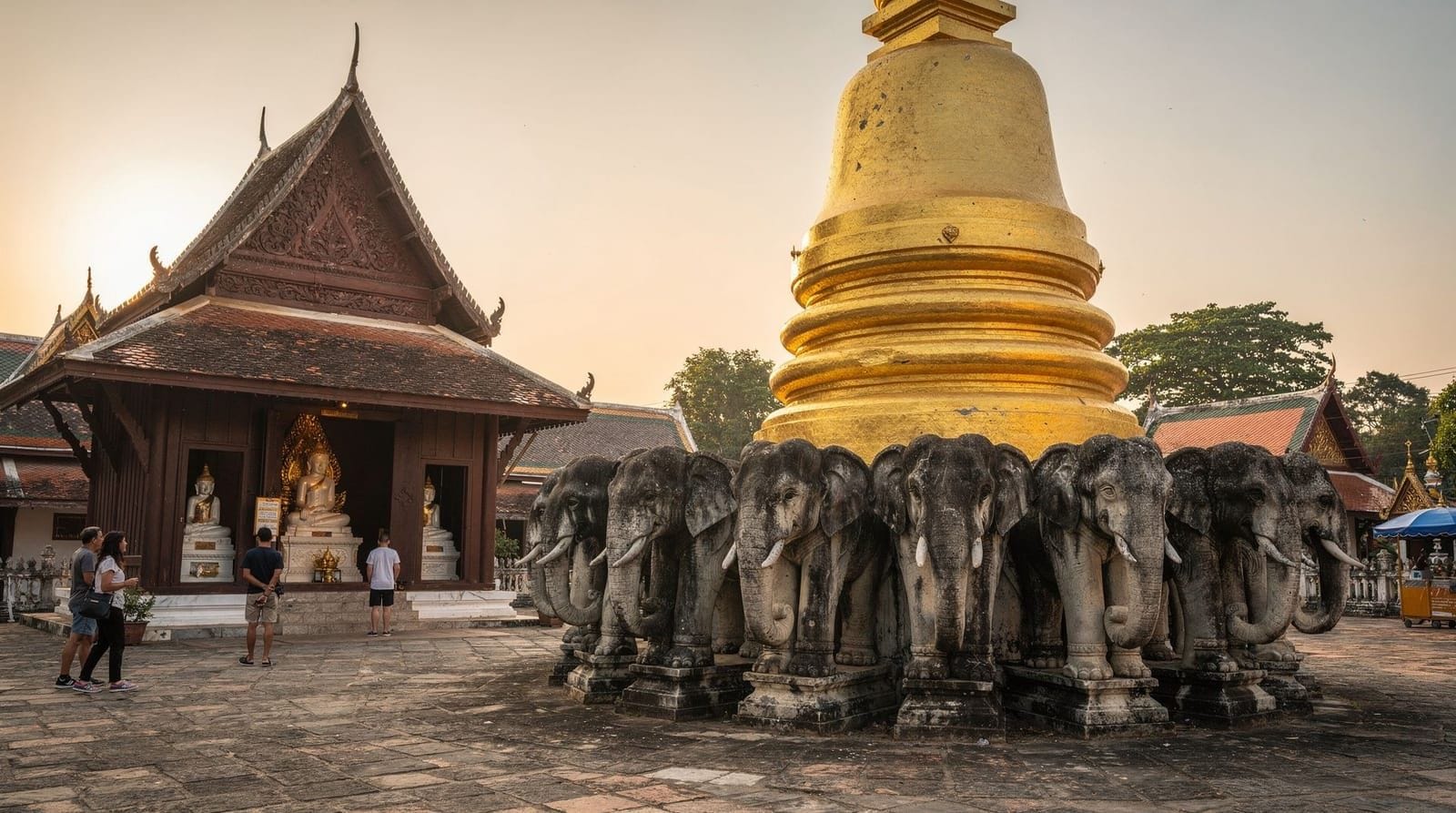
Finish at Wat Chiang Man, founded in 1296 and the oldest temple in Chiang Mai, predating the city walls that were later built around it. Its most distinctive feature is the elephant-base chedi (Chang Lom), ringed with stone elephant sculptures appearing to support the structure, alongside two small but historically significant images, the Crystal Buddha and the Marble Buddha, housed in a side chapel.
Entry is free, donations welcome, and this temple consistently sees fewer visitors than the two paid stops earlier in the route, despite comparable historical weight — a good note to end the walk on if the crowds at Wat Phra Singh or Wat Chedi Luang wore on you. Budget 30-45 minutes.
Total distance, time, and cost
The full loop — Wat Phra Singh to Wat Chedi Luang to the Wat Inthakhin area to Wat Chiang Man — covers roughly 2-2.5km of walking, comfortably done in under an hour of pure walking time. Add 45-60 minutes at each of the two larger temples and 30-45 minutes at Wat Chiang Man, and the full experience runs 3-4 hours at an unhurried pace, making it a genuine half-day rather than a rushed morning. Total paid entry across the route is under 100 THB ($2.80), among the best-value half-days available anywhere in the city.
Alternative ways to cover the same ground
Walking is the most immersive way to do this route, letting you notice small shrines, street food stalls, and craft shops between the named temples that a vehicle would carry you straight past. That said, a bicycle rented for the day covers the same loop faster and with less heat exposure, useful outside the cool season. A private tuk-tuk exploration of the Old City or a half-day Old City tour by samlor (three-wheeler) both cover the same ground with a driver, appealing if the heat or the walking distance itself is the main deterrent rather than the route itself.
Best time of day and year to walk this route
Early morning, ideally starting by 8am, is the clear best window — cooler temperatures for walking, softer light for photography, and arrival at Wat Phra Singh and Wat Chedi Luang before their respective tour-bus crowds build toward late morning. November through February is the most comfortable season for walking outdoors for several hours; March through May’s heat and haze make an early start considerably more important, and the rainy season (roughly June-October) is workable with an umbrella and a tolerance for sudden downpours, though afternoon walking is riskier than a morning start.
Combining the walk with food and shopping stops
The route naturally passes near several worthwhile detours if you want to extend the half-day rather than heading straight back after Wat Chiang Man. Small noodle stalls and cafés cluster along Ratchadamnoen Road between Wat Phra Singh and Wat Chedi Luang, useful for a mid-route break rather than pushing through all four stops without pausing. If your walk falls on a Sunday, the Sunday Walking Street market takes over Ratchadamnoen Road in the evening, directly overlapping with this same stretch — worth timing a return visit for if your temple walk happens earlier the same day.
Adding Tha Phae Gate and the Three Kings Monument
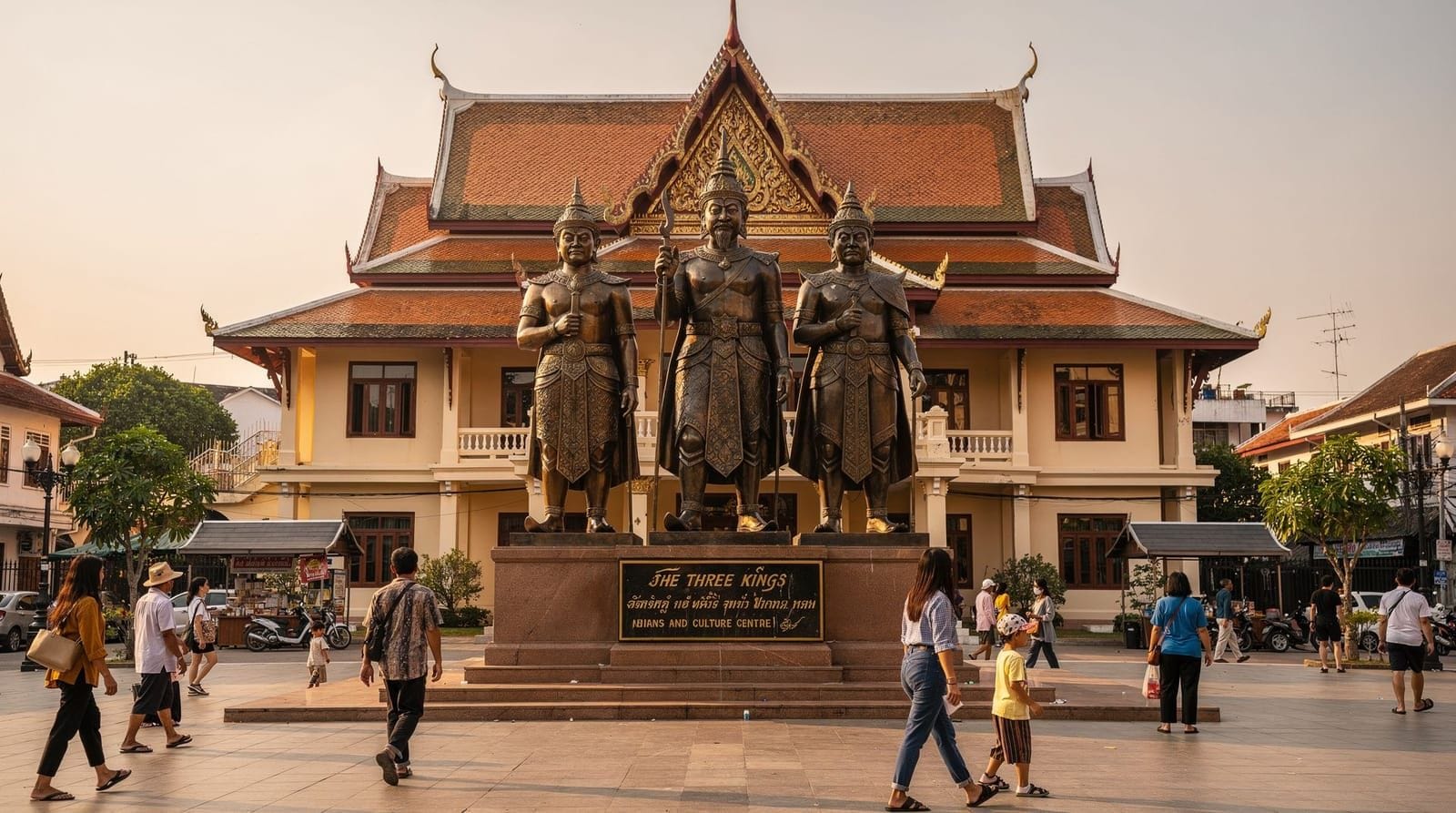
If you have extra time, Tha Phae Gate, the Old City’s most recognizable eastern entrance, and the Three Kings Monument, a civic square with the Lanna Folklife Museum and arts center nearby, both sit within easy reach of this same walking loop and round out a fuller half-day that mixes temple visits with the Old City’s civic and cultural landmarks. Neither adds significant walking distance to the core temple route, since both sit inside the same compact Old City footprint.
Dress code reminder for the whole route
All four stops on this route expect shoulders and knees covered and shoes removed before entering viharns or stepping onto certain temple platforms. Since you’re covering multiple temples in one outing, dressing appropriately from the start of the walk saves you from managing a sarong rental at each individual stop — our temple etiquette guide covers the specifics in full.
Getting to the starting point
If you’re staying inside or near the Old City, Wat Phra Singh is likely within easy walking distance of your accommodation already. From Nimman or the Riverside area, a songthaew or Grab to Wat Phra Singh runs roughly 30-50 THB ($0.85-$1.40) and takes 10-20 minutes depending on traffic. Starting the route at Wat Phra Singh rather than Wat Chiang Man makes sense logistically for most visitors, since Wat Phra Singh sits slightly further from the Old City’s main eastern entrance at Tha Phae Gate, meaning you naturally walk toward the gate as the route progresses rather than away from it — useful if you’re planning to continue toward the Riverside or Night Bazaar areas afterward.
The Old City’s layout, briefly
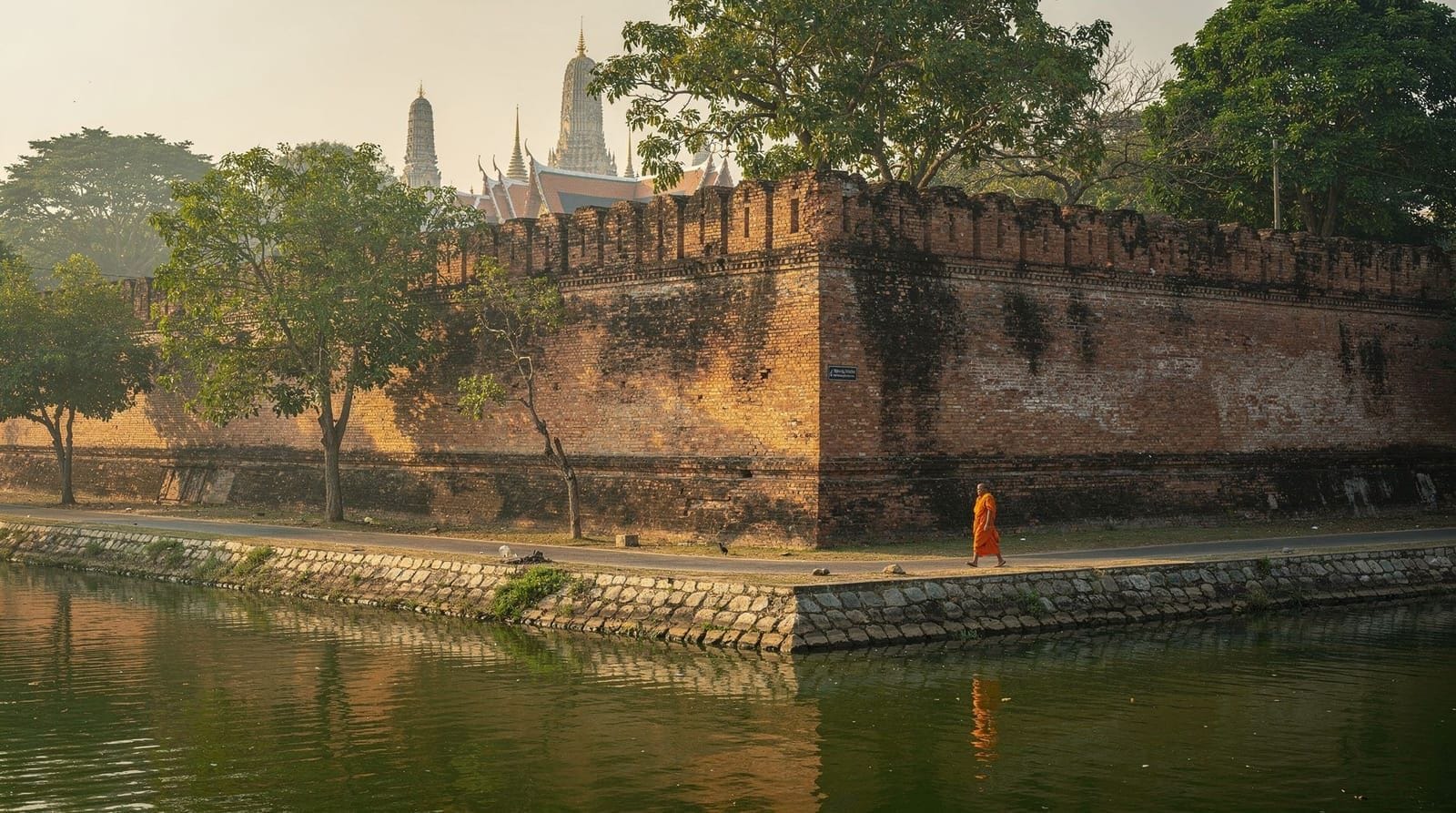
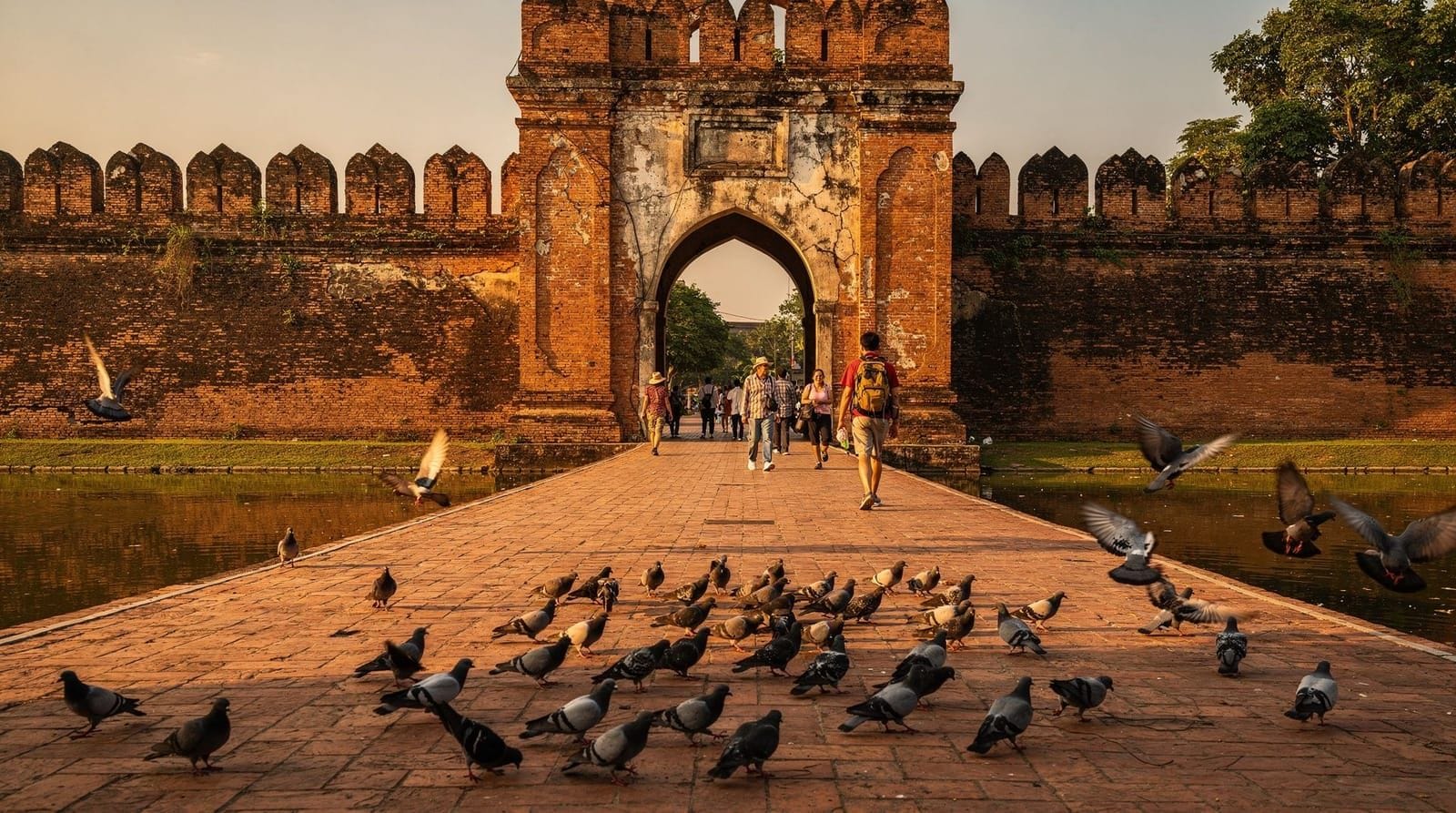
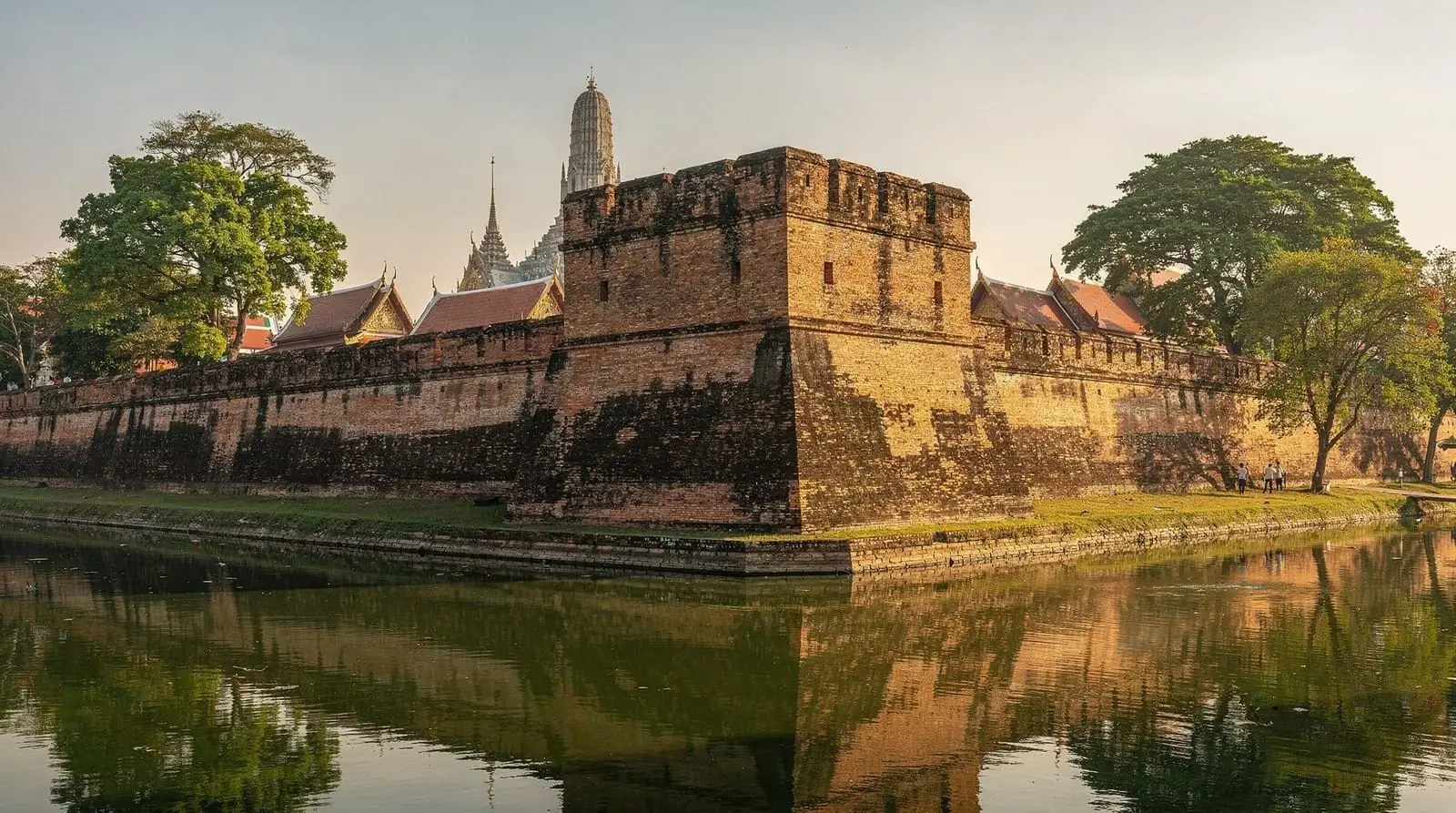
Understanding the Old City’s basic shape makes this route easier to visualize even before you set foot on the ground. It’s a near-perfect square, bounded by remnants of a brick city wall dating to the 13th-14th century and a moat that still holds water today, with four main gates at roughly the middle of each side and rounded corner bastions at the four corners. Wat Phra Singh sits toward the western half of this square, Wat Chedi Luang and the Inthakhin area sit more centrally, and Wat Chiang Man sits toward the northeastern corner — which is part of why the west-to-northeast walking order in this guide minimizes backtracking rather than criss-crossing the square repeatedly.
Extending the route to Wat Suan Dok
Travelers with extra time or energy can extend this walk westward to Wat Suan Dok, just outside the Old City walls on Suthep Road, known for its cluster of whitewashed chedis said to contain relics and its own monk chat program, generally quieter than Wat Chedi Luang’s. It adds roughly 20-30 minutes of walking each way beyond the core Old City loop, or a short songthaew ride, and is a reasonable add-on for a fuller day rather than a core part of the half-day route described above.
Hydration and heat management on the walk
Even in the cool season, walking outdoors for 3-4 hours with breaks inside covered temple grounds adds up, and Chiang Mai’s Old City doesn’t have much continuous shade along its main roads between temples. Carrying water and taking advantage of the shaded, covered areas inside each temple compound to rest between walking segments makes a meaningful difference to how the day feels, particularly if you’re doing this route in the hotter months. Convenience stores are frequent enough throughout the Old City that restocking water isn’t a planning concern, just something to budget a few minutes for along the way.
Why this walk works better on foot than by vehicle for first-timers
It’s tempting to assume a tuk-tuk or private car saves time, and for pure transit it does, but part of what this walk offers is the incidental texture of the Old City — small neighborhood shrines tucked into side streets, the sound of chanting drifting from a temple you’re not stopping at, street vendors setting up for the day — that a vehicle moving between fixed stops tends to miss entirely. For a first visit to Chiang Mai specifically, doing at least this one route on foot is worth the extra time compared to defaulting straight to a tuk-tuk tour, which is better saved for a return visit or a day when heat or time genuinely rules out walking.
Why this route beats visiting temples individually on separate days
Spreading these four temples across separate days works, but doing them as a single connected walk has a real advantage: the geographic and historical context builds as you go, from Wat Phra Singh’s refined Buddhist art to Wat Chedi Luang’s monumental ruin to the quieter, older Wat Chiang Man, giving a genuine sense of the Old City’s layered history in a way that’s harder to appreciate from isolated, unconnected visits. It’s also simply more time-efficient, covering the entire ground in one focused half-day rather than four separate trips into the Old City on different days of a limited stay.
Photography along the route
Each of the four temples offers a genuinely different photographic subject: Wat Phra Singh’s gilded Lai Kham viharn woodwork rewards close, detailed shots; Wat Chedi Luang’s exposed brick ruin looks best in wider frames that capture its full scale; Wat Chiang Man’s elephant-base chedi is distinctive enough to photograph from ground level looking up. Early morning light, in addition to being cooler and quieter, is also simply better light for all three — flat midday sun tends to wash out the texture in both the brick ruins and the gilded details that make these temples visually distinct from each other. As at any active temple, be considerate of worshippers in your frame and avoid treating monks as photo subjects without a comfortable, clear invitation.
What a full day looks like if you add Doi Suthep
Some visitors ask whether this Old City route and a Doi Suthep visit can be combined into a single day rather than split across two. It’s physically possible — finish the Old City loop by early afternoon, then head to Doi Suthep for a late-afternoon visit timed after the tour-bus peak — but it makes for a genuinely long day of walking and travel, and most visitors find the Old City route alone is enough for one satisfying half-day. If your Chiang Mai stay allows for it, treating this walk and Doi Suthep as two separate half-days, rather than compressing both into one, generally produces a more relaxed and memorable version of both.
Frequently asked questions about the Old City temple route
How many temples are on this walking route?
Four core stops: Wat Phra Singh, Wat Chedi Luang, the Wat Inthakhin / city pillar area, and Wat Chiang Man, all within Chiang Mai’s Old City walls.
Is this route suitable for a first day in Chiang Mai?
Yes — it’s one of the most efficient ways to get oriented in the Old City while also covering its most significant temples, making it a strong choice for day one of a trip.
Can I do this walk in reverse order?
Yes — starting at Wat Chiang Man and finishing at Wat Phra Singh works just as well geographically; the order in this guide is a suggestion for efficiency, not a requirement.
What should I bring on this walk?
Water, sun protection, comfortable walking shoes, and clothing that already covers shoulders and knees to avoid sarong rentals at each stop.
Is the route stroller or wheelchair friendly?
Old City streets and temple grounds are mostly flat and paved, though individual viharn entrances often have a raised threshold or a few steps, so full accessibility varies by specific building within each temple compound.
How does this compare to joining a guided walking tour?
The route is straightforward enough to do independently with a map, but a guided option adds historical context at each stop and removes any need to navigate, which some travelers find worth the added cost, particularly on a first visit.
Top experiences
Bookable activities with verified prices and instant confirmation on GetYourGuide.