Temple photography rules in Chiang Mai: what's allowed, what isn't
Can I take photos inside Chiang Mai's temples?
Generally yes for exterior grounds, courtyards, and chedis, and often yes inside main halls too, but with important exceptions: some interior halls prohibit photography entirely (particularly where valuable murals or especially sacred images are kept), flash is discouraged near Buddha images throughout, and posing on or climbing near a Buddha image for a photo is never acceptable. When in doubt, look for signage or ask a monk or temple staff member before shooting inside any enclosed hall.
Chiang Mai’s temples are among the most photographed subjects in northern Thailand, and most of them welcome cameras without issue — but “welcome” doesn’t mean “no rules.” The confusion many visitors run into isn’t malicious; it’s simply that the rules vary by building within the same temple complex, they’re not always signposted clearly in English, and a habit that’s fine in one hall can be genuinely disrespectful in the next room over. Understanding the general logic behind these rules, rather than memorising a rigid list, makes it much easier to shoot respectfully anywhere in the city.
Quick answer: Exterior courtyards, chedis, and grounds are almost always fine to photograph at Chiang Mai’s temples. Interior halls are more variable — many welcome photography, but some prohibit it entirely, usually to protect fragile murals or particularly sacred images. Flash should be avoided throughout, and posing with, touching, or turning your back to a Buddha image for a photo is never acceptable, regardless of what a specific hall’s photography policy says.
Why the rules vary by room, not just by temple
The single most useful thing to understand is that photography restrictions in Thai temples are almost never a blanket “no cameras” policy for the whole complex — they’re targeted at specific spaces for specific reasons. Open-sided halls and outdoor courtyards, where a temple’s public, communal life mostly happens, are typically the most permissive. Enclosed inner sanctums, smaller rooms holding especially old or valuable murals, and spaces housing a temple’s most sacred image are where restrictions tighten, because the concern is usually about protecting fragile artwork from repeated flash exposure or preserving a degree of quiet reverence around the site’s most significant object, not about photography as a general concept.
This is why you’ll sometimes see a temple that photographs freely at Wat Phra Singh in its main courtyard, but restricts photography inside the Wihan Lai Kham, the smaller hall housing the revered Phra Buddha Sihing image and some of the temple’s oldest surviving murals. The logic is consistent even when the specific rule differs room to room: the more historically fragile or spiritually significant the space, the more likely photography is limited or banned outright.
Reading the signals when there’s no English sign
Not every restricted area has clear English-language signage, and even where a sign exists, it’s sometimes small or positioned somewhere easy to miss on the way in. A few reliable signals suggest photography might not be welcome in a given space: dim, deliberately low lighting suggesting a focus on quiet contemplation rather than display; visibly aged or fragile murals on the walls, which are more vulnerable to flash damage than sturdier gilded statuary; a noticeably more hushed atmosphere than the temple’s main courtyard, often with worshippers actively praying rather than just passing through; and staff or monks present who watch visitors more closely than in open, high-traffic areas.
When none of these signals are clearly present but you’re still unsure, the simplest approach is to ask. A temple staff member, monk, or even a fellow visitor who looks local will almost always answer a polite, simple question honestly, and it takes only a moment compared to the awkwardness of being asked to stop and delete a photo after the fact.
Flash, tripods, and equipment considerations
Flash photography is worth avoiding as a default throughout any temple interior, even in halls where photography itself is permitted. Repeated flash exposure contributes to the gradual fading of old paintwork and murals, an effect that compounds across the thousands of visitors passing through a popular temple each week, even if any single photographer’s flash seems inconsequential in isolation. Most modern phone cameras perform reasonably well in the ambient light typical of temple interiors without needing flash at all, making this an easy adjustment with no real cost to image quality.
Tripods and larger camera rigs are generally tolerated in outdoor courtyard areas but can become impractical or unwelcome in smaller, busier interior halls, simply due to space constraints and the flow of other visitors and worshippers moving through. If you’re planning a more serious photography session with a tripod, timing it for an early morning visit before crowds build, and sticking to open courtyard areas rather than setting up inside a compact inner hall, avoids most friction.
Buddha images: the line that matters most
Of everything covered here, the etiquette around photographing Buddha images directly deserves the most careful attention, because it’s the area where a seemingly harmless tourist habit most reliably causes offence. A Buddha image is a sacred object, not simply a striking photo backdrop, and several specific behaviours cross a clear line: sitting or standing at the same level as or above a Buddha image for a photo, turning your back to an image to take a selfie with it behind you, touching or climbing on any part of a statue or its base, and posing in a manner that could be read as mocking, flirtatious, or overly casual in front of an image.
A respectful alternative is straightforward: photograph the image from a modest distance, facing it rather than with your back turned, remaining at or below its physical level, and without touching any part of the statue or platform. This produces perfectly good photographs in the vast majority of cases and avoids the genuine offence that a more casual pose can cause, both to fellow visitors who are there to worship and to temple staff who have, in many well-known temples, had to intervene repeatedly with tourists over exactly this kind of photo.
Photographing monks respectfully
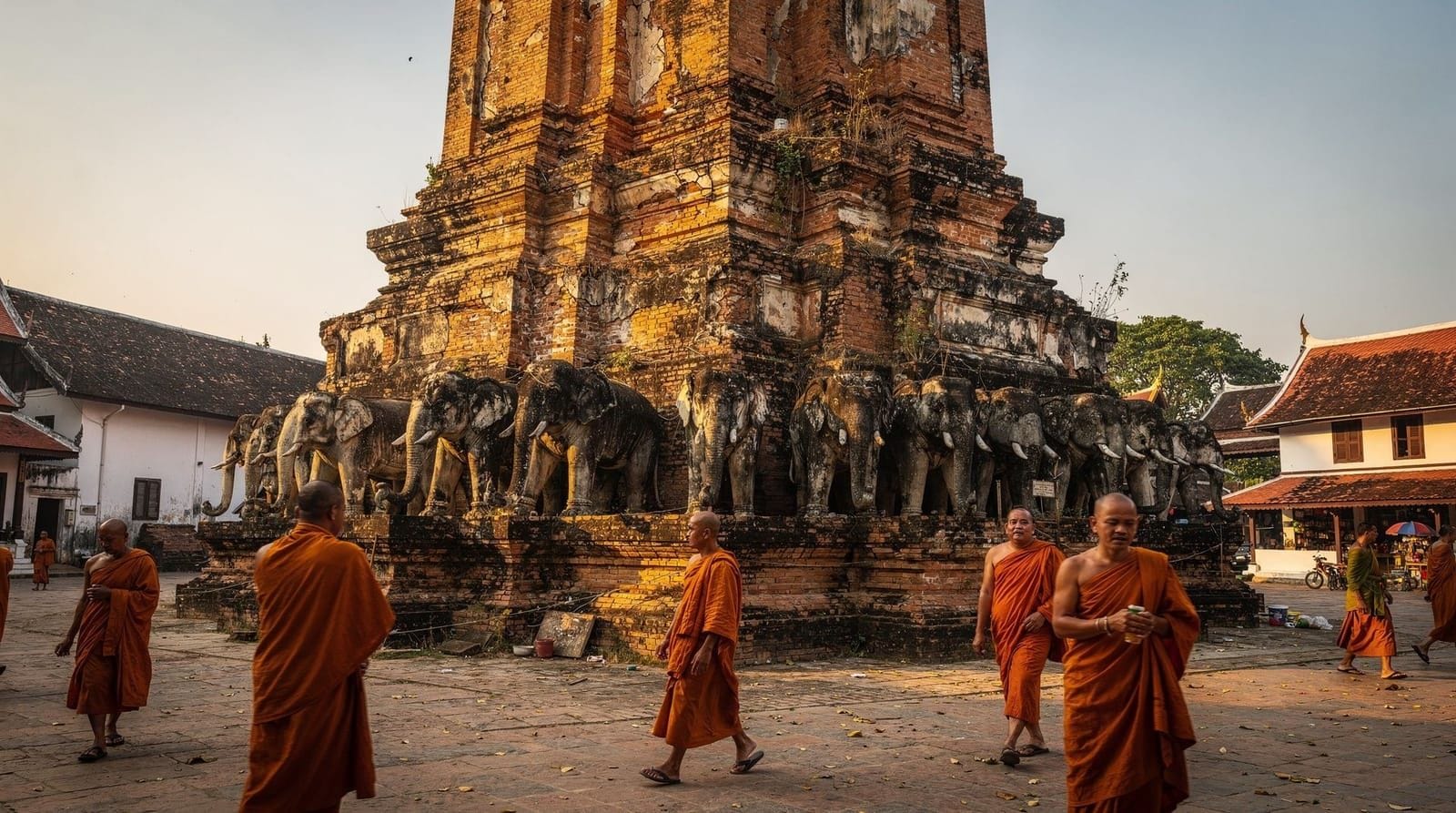
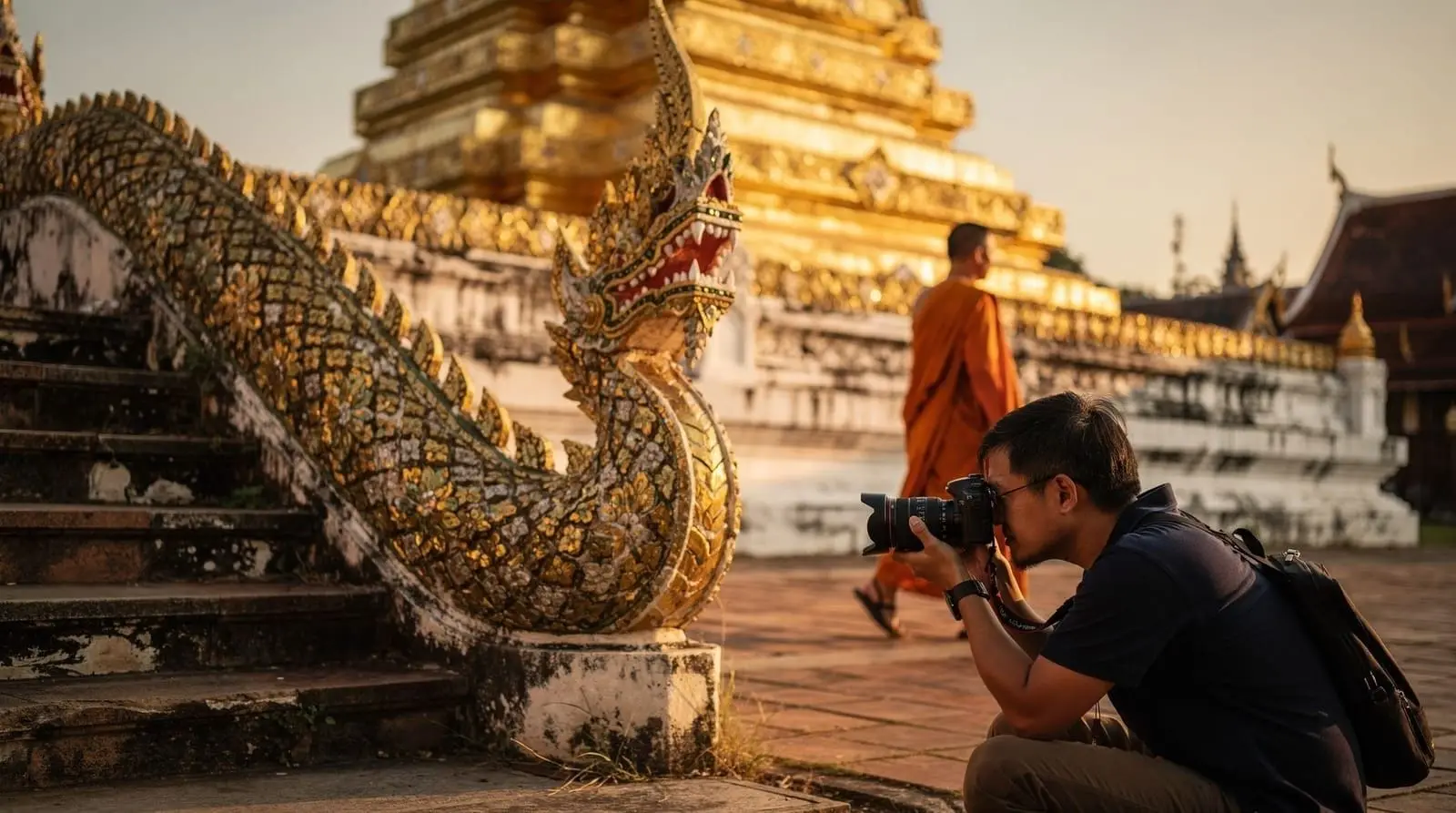
Monks going about ordinary temple activity — walking through a courtyard, sweeping, chanting — are a natural and generally acceptable subject for candid photography from a reasonable distance, in the same way you might photograph any public scene. Close-up or posed photography of an individual monk is a different matter and calls for asking first, both as a basic courtesy and because monastic rules around interactions with visitors, particularly women, can make an unplanned or overly familiar photo request awkward for the monk involved. If a monk declines a photo request, that should be accepted without pushing the point.
This distinction matters especially around programs like monk chat, where visitors sit down for genuine conversation with a monk — asking for a respectful photo at the natural end of a conversation is usually fine, but treating the interaction primarily as a photo opportunity rather than a real exchange misreads the purpose of the program and can come across as disrespectful.
Drone photography: assume no, unless told otherwise
Drone photography over or near temples raises a different set of concerns — noise disruption during active worship, privacy for both worshippers and nearby residential areas, and basic safety around crowded courtyards and tall structures like chedis. Most Chiang Mai temples do not permit drone flights on their grounds, and this is worth assuming as the default rather than testing it and hoping for the best. Thailand also has its own national drone regulations covering registration and no-fly zones that apply independently of any individual temple’s own policy, and both layers of rules should be checked before flying anywhere in the city, not just around temple grounds specifically.
Dress code affects your access to the best shots
Because Chiang Mai’s temples enforce a modest dress code — shoulders and knees covered, no swimwear or excessively casual clothing — arriving underdressed doesn’t just risk being turned away from entering a hall; it can also mean missing the interior shots entirely if you’re limited to exterior grounds while more appropriately dressed visitors move freely between all areas. A few of the busiest temples do offer loaner sarongs or wraps at the entrance for underdressed visitors, but availability isn’t guaranteed at every site, so dressing appropriately from the outset is the more reliable way to ensure full access for photography as well as general etiquette.
A practical shot list that respects the rules
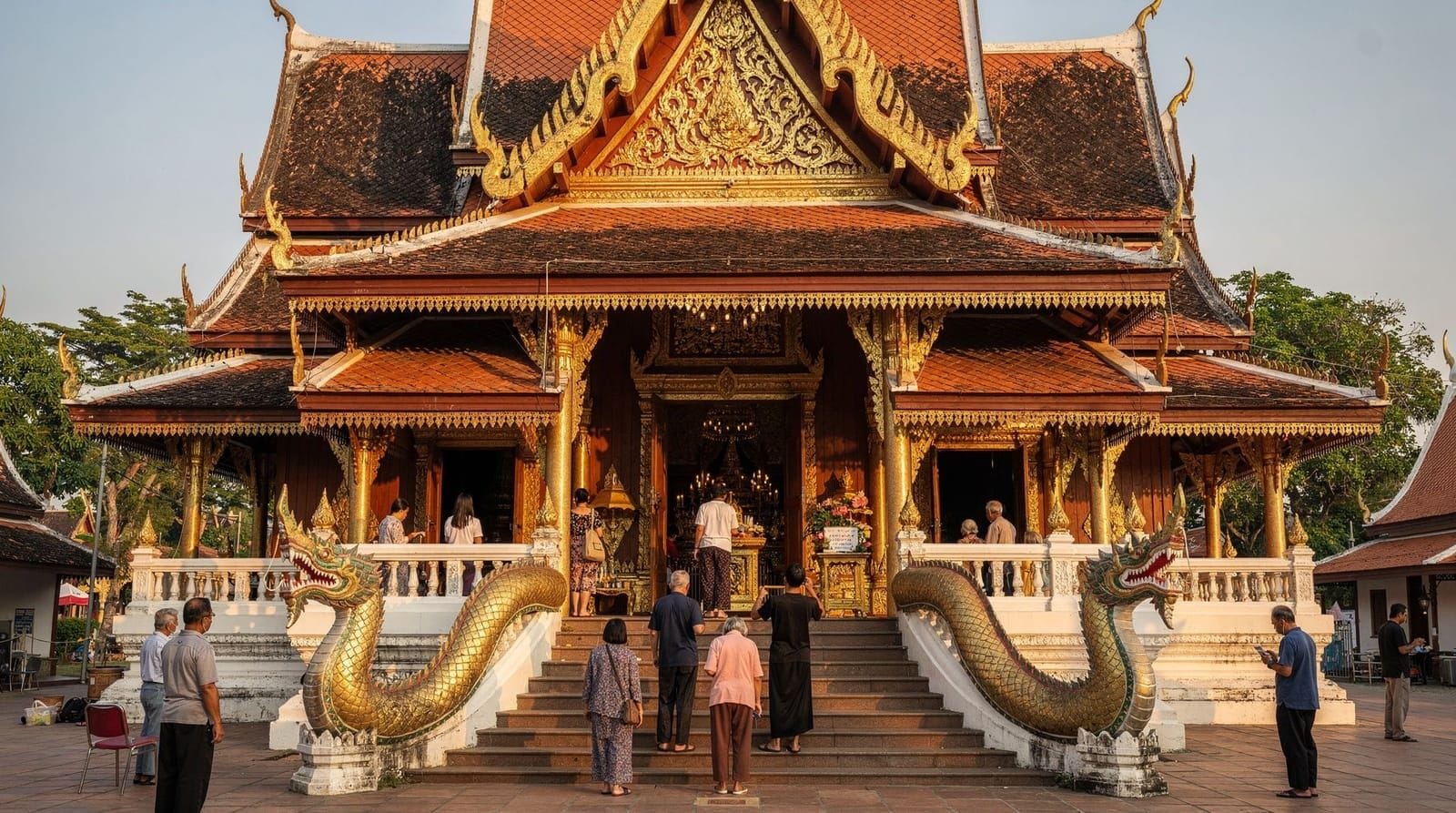
For visitors wanting strong photographs without pushing against any of the above, the most reliable subjects are: exterior chedis and stupas, which are almost universally fine to photograph from any angle and distance; open-sided wihan exteriors and their roofline details, a strong subject for architecture-focused shots; courtyard details such as naga staircases, guardian statues, and bells; and Buddha images photographed respectfully from a modest, forward-facing distance. These categories alone cover the vast majority of what makes Chiang Mai’s temples visually compelling, without requiring photography in any of the more restricted interior spaces. For a curated list of specific vantage points across the city, our best photo spots in Chiang Mai guide is a useful companion to this one, and our golden-hour temple photography guide goes deeper into light and timing specifically.
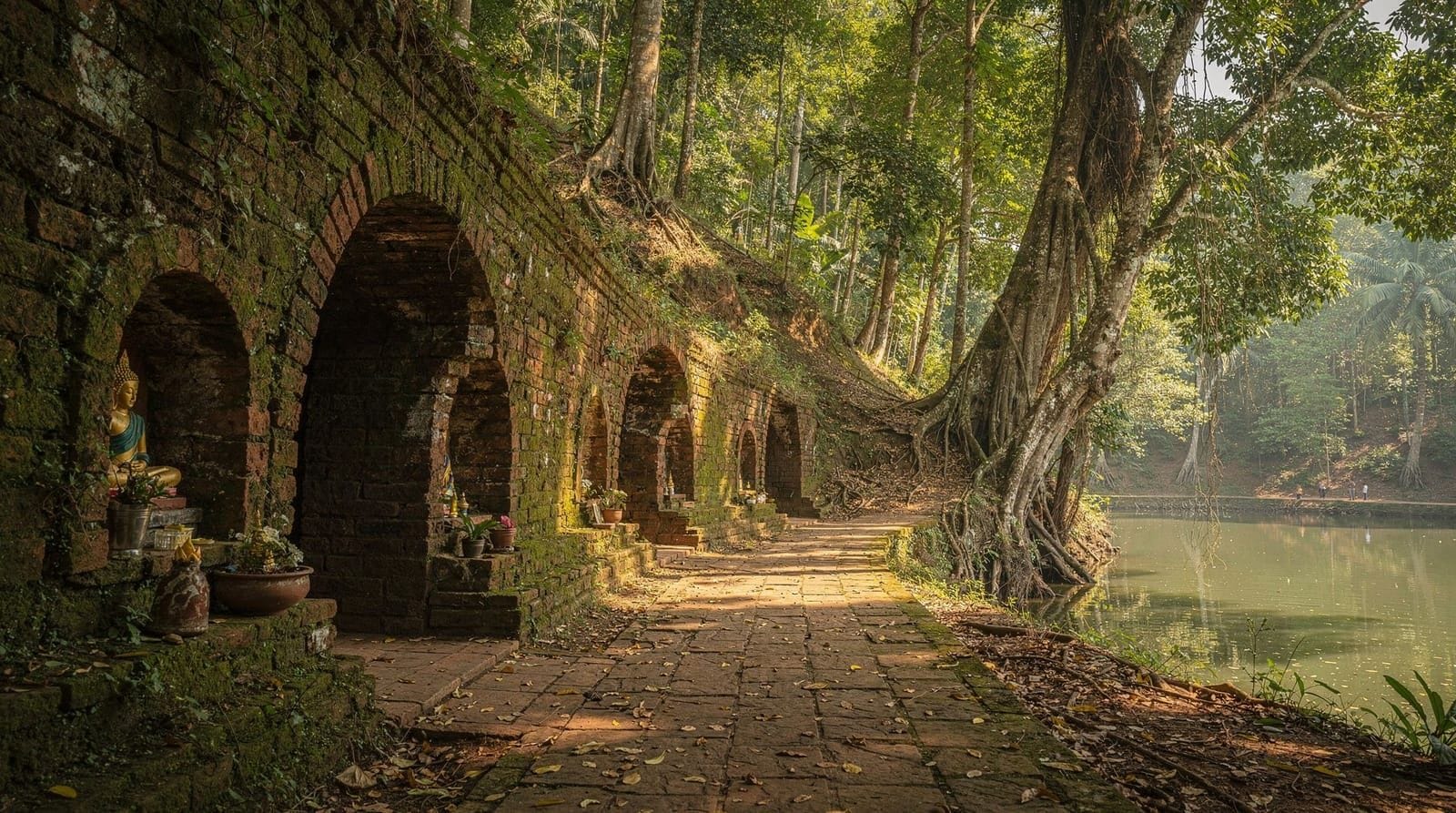
A short walk through the old city covers a strong concentration of these subjects within a compact area, and a stop at the forest grounds of Wat Umong adds a genuinely different, greener visual register to round out a full day of temple photography, alongside a broader look at Chiang Mai’s best temples overall.
Timing for both etiquette and light
Early morning, generally before 8am, offers a genuinely useful overlap between respectful photography and good conditions: fewer other visitors moving through your frame, softer directional light that suits both architecture and detail shots better than the flatter light of midday, and a calmer, less crowded atmosphere that makes it easier to move slowly and thoughtfully rather than rushing a shot amid a crowd. This timing advantage compounds with the practical crowd-avoidance benefits covered in our guide to Chiang Mai’s least crowded temples, making early arrival close to a universal recommendation for anyone serious about temple photography in the city.
What happens if you get it wrong
Most missteps around temple photography in Chiang Mai are handled gently — a staff member or monk will typically ask a visitor to stop, occasionally to delete a specific photo, rather than escalating further, and most visitors comply without incident once it’s explained. This isn’t a reason to be careless about the rules, but it is worth knowing that an honest mistake, corrected calmly and with a genuine apology, rarely turns into a serious problem. What does occasionally generate a stronger reaction from temple staff or other visitors is a photo that reads as deliberately disrespectful — climbing on a statue, posing provocatively, or ignoring a direct request to stop — rather than a simple, correctable misunderstanding about where photography is or isn’t allowed.
How the rules differ across a few well-known sites
It helps to see the general logic applied to specific, familiar places. At Wat Chedi Luang, the partially ruined central chedi and its surrounding courtyard are freely photographed from any angle, day or night, with no restrictions beyond the basic dress code — it’s an outdoor structure, not an enclosed sanctum, and the temple actively welcomes the attention its dramatic brickwork receives. The adjacent city pillar shrine and a few smaller interior spaces carry more caution, since these areas hold greater ongoing ritual significance for local worshippers, and a quieter, more observational approach to photography there is more appropriate than in the open chedi courtyard.
At Wat Phra Singh, the main courtyard and the golden exterior of the principal wihan photograph freely, while the smaller Wihan Lai Kham — the hall housing the highly revered Phra Buddha Sihing image and some of the temple’s oldest murals — restricts photography specifically to protect that artwork. This is the clearest example in the city of a single temple complex applying two different standards to two different buildings just metres apart, and it’s worth remembering as a general pattern rather than a one-off exception.
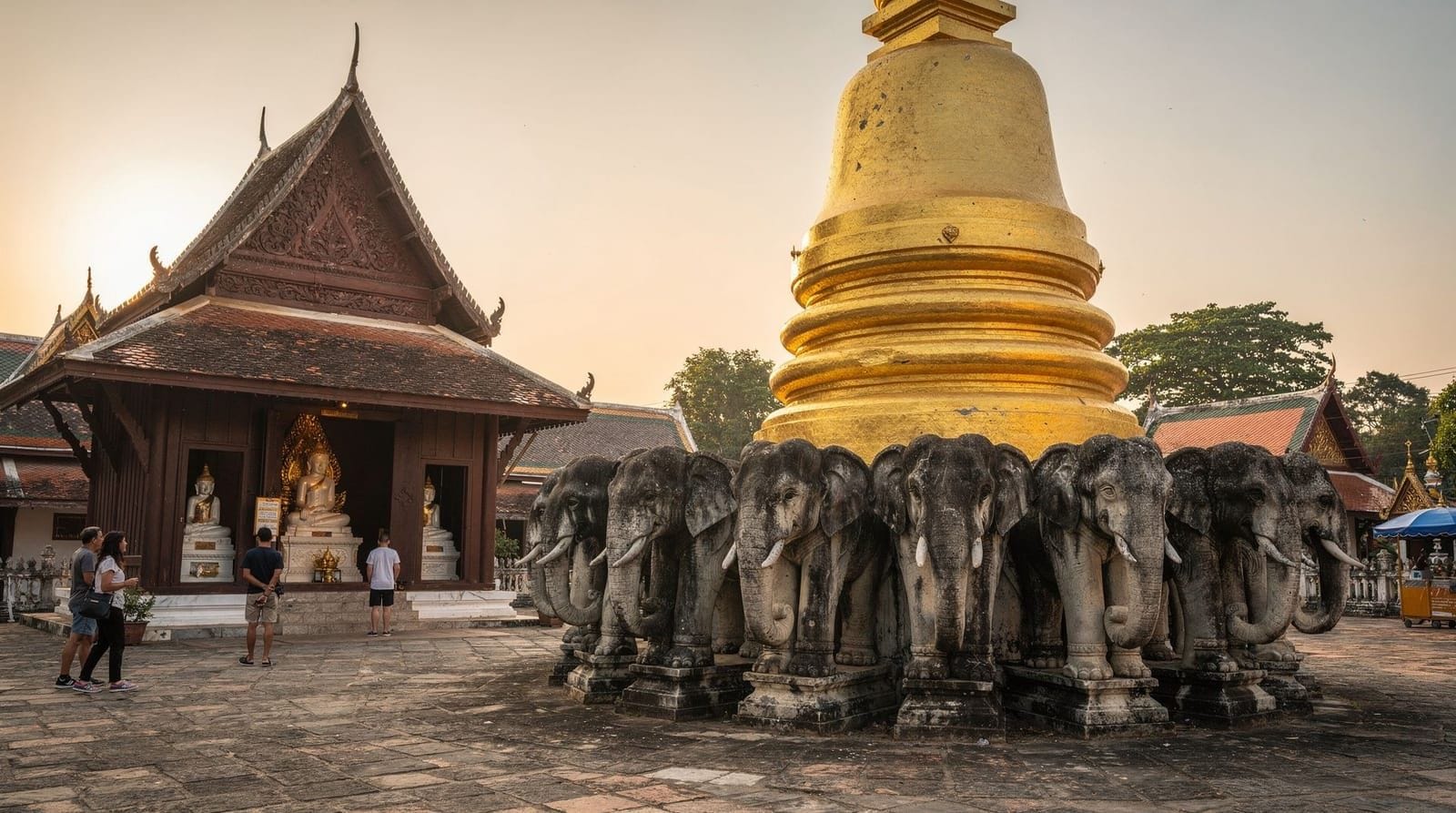
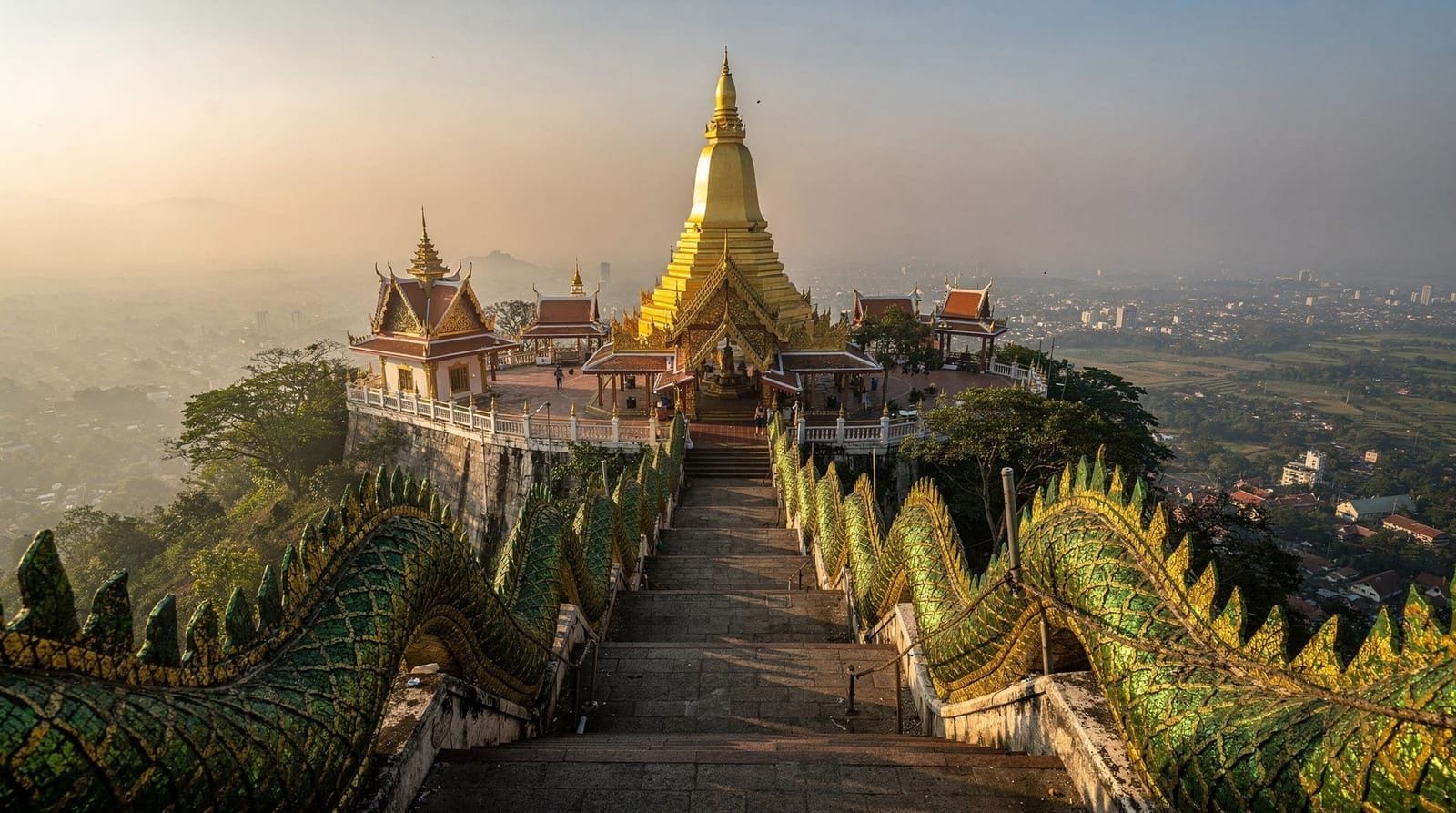
At Wat Chiang Man, the oldest temple in the city, the elephant-supported chedi and outer grounds are freely photographed, while the specific chamber housing the temple’s most sacred crystal Buddha image calls for the same respectful, non-intrusive approach applied at any temple’s most significant inner sanctum. And at Doi Suthep, the golden chedi at the summit and the sweeping valley views are among the most photographed subjects in the entire region, entirely unrestricted, while the inner circumambulation path directly around the chedi base calls for a quieter, more observational pace out of respect for pilgrims completing their rounds, rather than blocking the path to set up a shot.
Photographing with children or as a family
Families photographing temples together face largely the same rules as solo travellers, with one added practical consideration: children moving quickly or loudly through a quiet inner hall, or climbing onto a statue base for a photo without fully understanding why that’s inappropriate, is one of the more common sources of an accidental etiquette breach. A brief explanation before entering any temple — no climbing on statues, quiet voices in the darker inner halls, ask before pointing a camera at a praying stranger — tends to prevent most issues before they happen, and most temple staff are notably patient with children who make an innocent mistake, so long as it’s corrected promptly by an accompanying adult.
A note on drones and Thailand’s broader aviation rules
Beyond individual temple policy, Thailand requires drone registration for most consumer drones used by visitors, along with restrictions around flying near government buildings, airports, and crowded public spaces — all of which can overlap with temple visits given how central some temples sit within Chiang Mai’s urban layout. Even where a specific temple hasn’t posted an explicit no-drone sign, the combination of national aviation rules and the practical realities of flying near a crowded, active religious site makes it safest to leave a drone at the hotel for any temple-focused day in the city, rather than attempting to fly and hoping no one objects.
Common misconceptions worth clearing up
A few misunderstandings recur often enough to be worth addressing directly. Some visitors assume a temple that charges an entrance fee has therefore “paid for” unrestricted photography rights throughout the site — this isn’t the case; entrance fees typically fund general upkeep and don’t override specific interior photography restrictions. Others assume that because a rule isn’t written in English, it doesn’t apply to foreign visitors — in practice, staff apply the same standard to everyone regardless of nationality or language, and a lack of an English sign is a gap in translation, not an invitation to disregard the rule. And a few visitors assume that a quick, discreet phone photo in a restricted area is different from an obvious camera shot — from a temple’s perspective, the concern is usually about the image itself and the precedent it sets for other visitors watching, not the specific device used to capture it.
Bringing it together
None of this amounts to a particularly restrictive set of rules once you understand the underlying logic: protect fragile art from flash, keep a respectful distance and orientation around Buddha images, ask before photographing individuals closely, and assume drones aren’t welcome unless told otherwise. Within those boundaries, Chiang Mai’s temples remain some of the most rewarding and photogenic religious architecture anywhere in Southeast Asia, and the vast majority of a typical visit — courtyards, chedis, rooflines, and respectful shots of the main halls — falls comfortably within what’s both permitted and genuinely appropriate.
Most visitors who take a moment to understand these distinctions before their first temple stop find the rules become second nature within a day or two of temple-hopping around the city, rather than something requiring constant conscious checking at every doorway. For a broader grounding in temple etiquette beyond photography specifically, our full guide to temple etiquette in Thailand covers dress, behaviour, and other practical considerations worth knowing before your first temple visit of the trip.