Best viewpoints in Chiang Mai and the surrounding mountains
Mae Sa & Mon Cham Full-Day Motor Scooter Tour - Chiang Mai
Duration: Full day
What is the single best viewpoint near Chiang Mai?
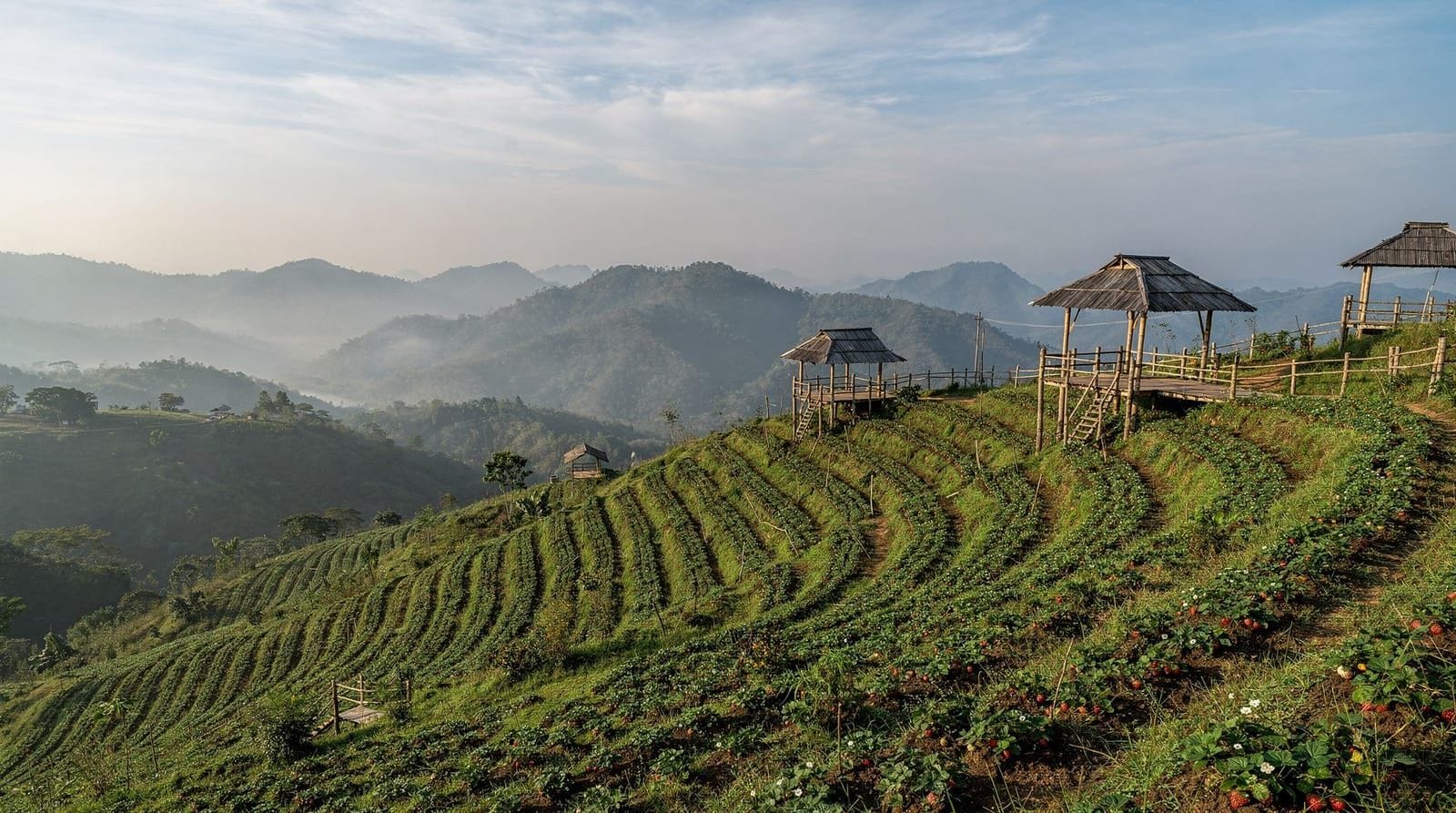
Mon Cham, a hilltop ridge in the Mae Sa Valley lined with strawberry farms and simple cafe platforms overlooking layered mountains, is the most popular and easiest to reach without a demanding hike. For a wilder, hike-only alternative with arguably better views, Kew Mae Pan inside Doi Inthanon National Park's ridge trail is the stronger pick, though it requires a mandatory guide and closes roughly June-October.
Chiang Mai sits in a valley ringed by mountains, and the surrounding highlands offer a genuinely varied set of scenic lookouts — from an easy-access hilltop ridge lined with strawberry farms to a demanding hike-only trail with the region’s most dramatic panorama. This guide ranks the main options by accessibility, what makes each view distinct, and when to actually catch it clear rather than shrouded in haze or cloud.
Mon Cham: the easiest great view
Mon Cham, a ridge in the Mae Sa Valley roughly 45-60 minutes from central Chiang Mai, is the most popular viewpoint in the region for good reason: minimal walking from the parking area gets you to a series of simple cafe platforms and viewing decks strung along the ridgeline, each looking out over layered mountains that stretch toward the Myanmar border on a clear day. During strawberry season, roughly December through February, the surrounding farms add pick-your-own strawberries and fresh strawberry-based desserts at the on-site cafes, though the view itself is the year-round draw rather than a seasonal bonus.
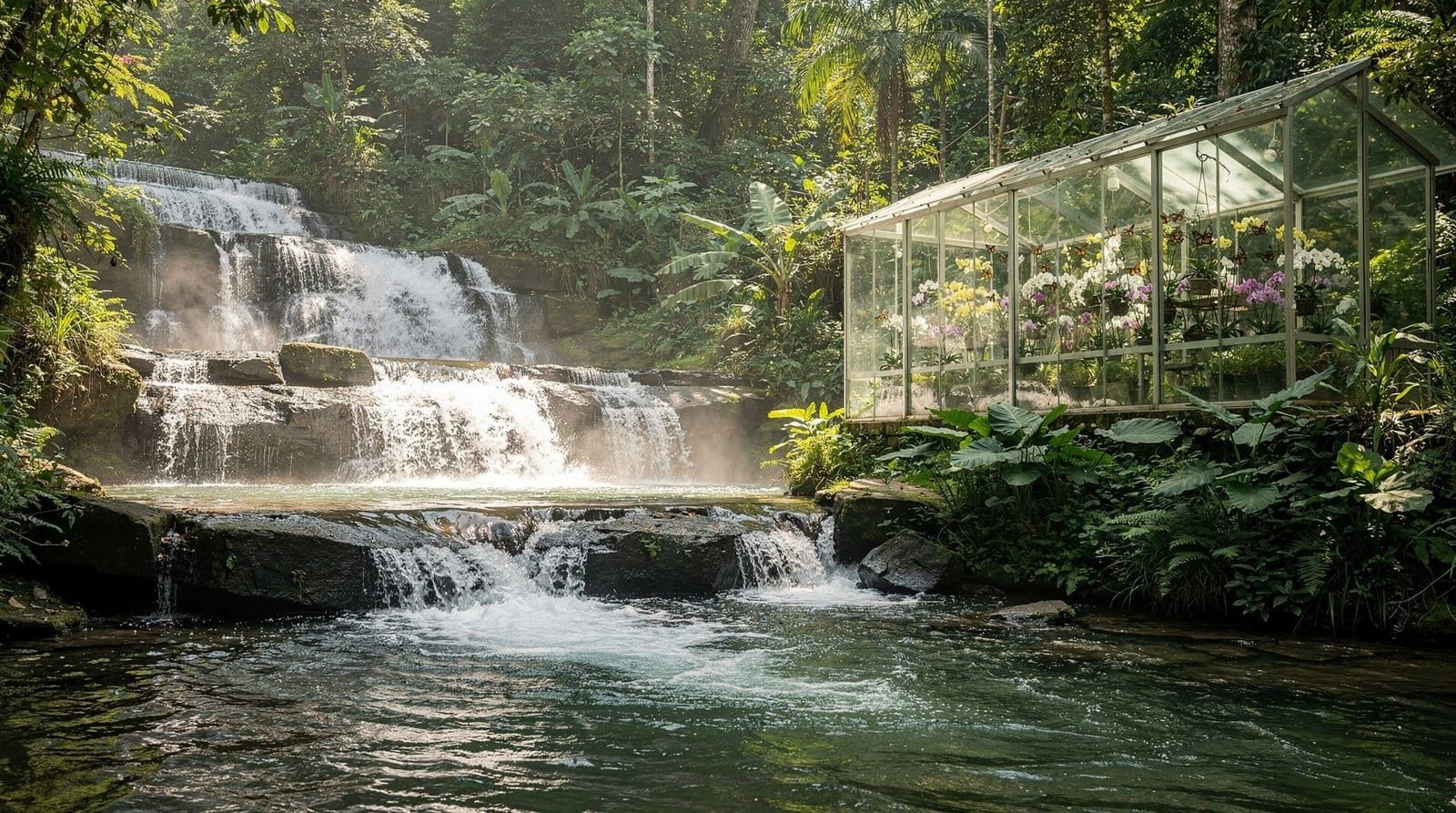
A full-day Mae Sa and Mon Cham scooter tour is a popular independent way to combine the viewpoint with the valley’s waterfalls and gardens on the way, letting you set your own pace at each stop rather than following a fixed group schedule. See our Mon Cham destination page for the fuller picture on the farms and cafes themselves.
Kew Mae Pan: the wilder, hike-only alternative
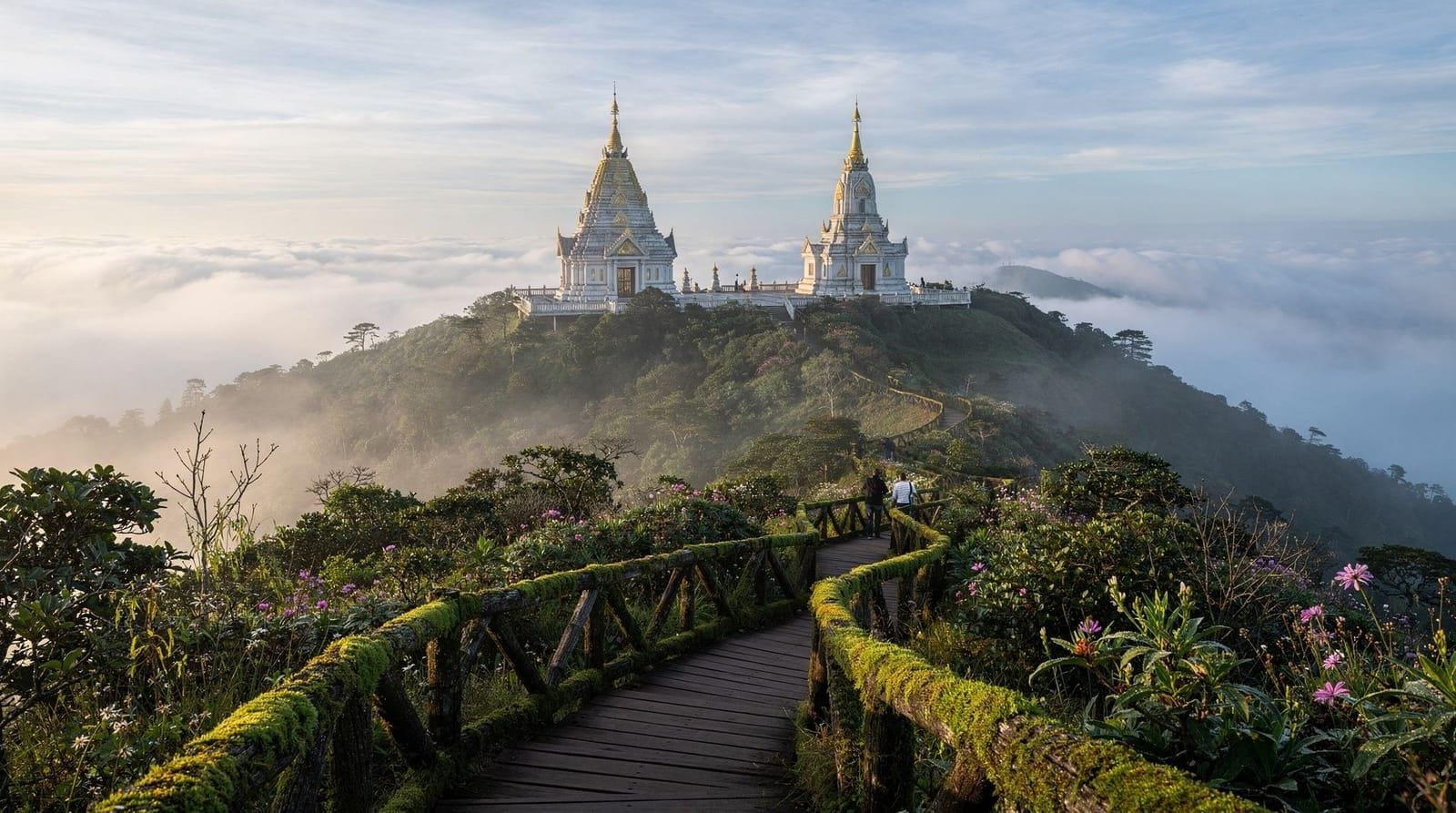
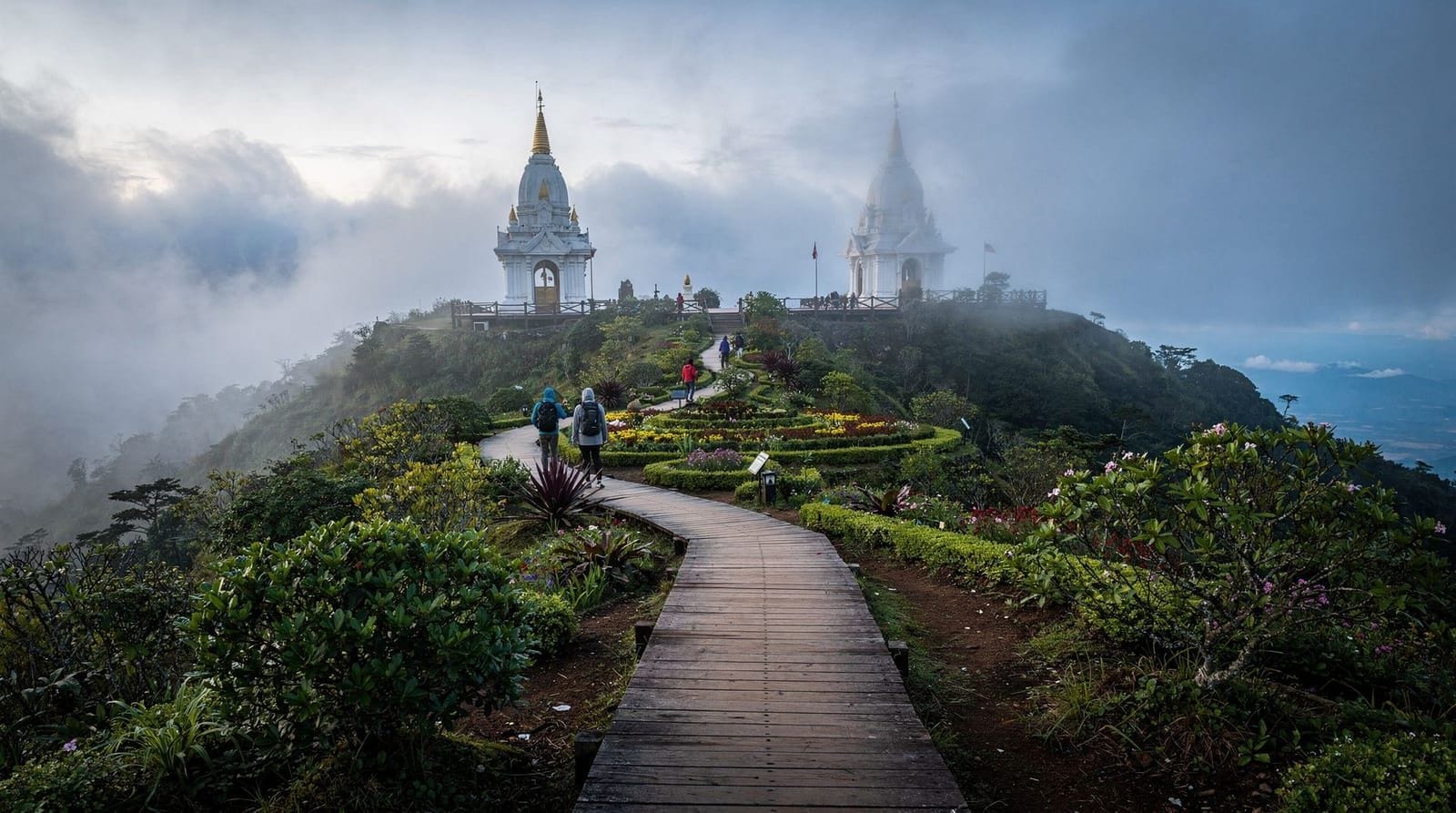
Inside Doi Inthanon National Park, the Kew Mae Pan ridge trail offers arguably the single most dramatic panorama easily reached from Chiang Mai — open grassland and pine forest across a roughly 3km loop, with views across genuinely remote-feeling layered mountains rather than the more developed valley scenery near Mon Cham. The trade-off is effort and access: a mandatory local Karen guide is required, and the trail is typically closed roughly June through October during the rainy season.
A Kew Mae Pan viewpoint trekking day tour covers the guide requirement and trailhead logistics directly. See our Doi Inthanon hiking trails guide for a full comparison against the park’s other, easier trail.
Doi Suthep temple terrace: the city view
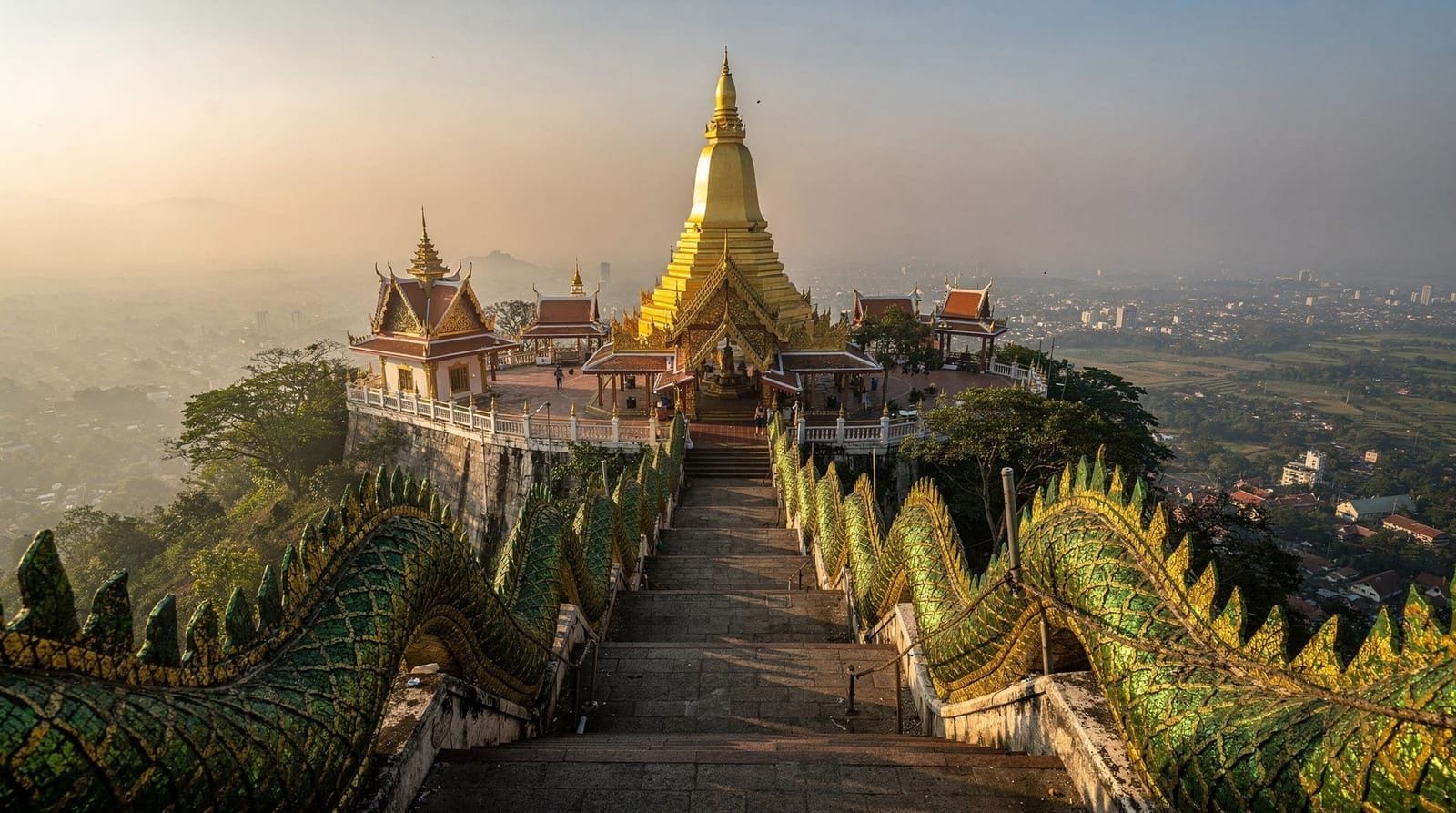
Wat Phra That Doi Suthep’s terrace, at the top of the naga staircase, looks directly back over Chiang Mai city and the valley floor below, making it the most convenient viewpoint if your priority is seeing the city itself from above rather than mountain scenery further afield. It’s also one of the busiest single spots in this list, given the temple’s popularity, so an early morning or later-afternoon visit noticeably improves the experience over a crowded midday stop. See our Doi Suthep destination page for the temple visit in full.
Sunset point near Wat Pha Lat
Along the same general route as the Monk’s Trail hike between Huay Kaew Waterfall and Doi Suthep, a designated sunset point catches good late-afternoon light over the city and valley, closer to the center than Mon Cham or Kew Mae Pan and requiring less driving time. A sunset point, Wat Pha Lat, Doi Suthep, and Wat Umong tour is built specifically around catching this window, adding two other stops into the same late-day itinerary. Our Huay Kaew Waterfall and Monk’s Trail guide covers the hiking route this viewpoint sits along.
Chiang Dao’s viewpoint stop
Further north near Chiang Dao’s cave system, a viewpoint stop is sometimes bundled into cave-and-village tours, looking out from the base of Doi Luang Chiang Dao, Thailand’s third-highest mountain, across the surrounding valley. A Chiang Dao cave, five hill tribes, and viewpoint tour combines this stop with the area’s cave and village visits in a single day. Our Chiang Dao cave and hiking guide covers the cave itself in more depth.
Bhubing Palace gardens
Slightly past Doi Suthep on the same access road, the gardens at Bhubing Palace offer their own more manicured lookout over the surrounding hills, a gentler and more landscaped alternative to Mon Cham’s working-farm setting or Kew Mae Pan’s wild ridge. It’s a reasonable add-on if you’re already heading up the Doi Suthep road rather than a standalone destination for the view alone.
When to catch these viewpoints at their clearest
The cool season, roughly November through February, offers the clearest air and best long-distance visibility across all of these viewpoints, making it the strongest window for photography and for actually seeing the layered mountain views these spots are known for. The February-to-April burning season brings agricultural and forest-fire haze across the wider region that can significantly reduce visibility at any of these viewpoints regardless of time of day — worth knowing honestly rather than discovering on arrival that a much-anticipated view is obscured by smoke. Our burning season guide covers this seasonal reality in more detail, and our best time to visit Chiang Mai guide gives the fuller month-by-month picture.
How to choose between them
If you want the easiest possible great view with minimal walking and a cafe to sit at, Mon Cham wins outright. If you’re prepared to hike and want the single most dramatic, remote-feeling panorama, Kew Mae Pan is the stronger choice when its season allows. If your priority is seeing Chiang Mai city itself from above rather than mountain scenery, Doi Suthep’s terrace is the only real option on this list that delivers that specific view.
The history behind Mon Cham’s strawberry farms
Mon Cham’s development as a viewpoint destination is tied directly to a royal agricultural initiative that introduced temperate crops like strawberries to Thailand’s northern highlands, where the cooler mountain climate suits crops that wouldn’t survive the lowland heat. What began primarily as an agricultural project gradually developed a tourism side as visitors started coming specifically for the ridge views and, later, for the strawberry-picking experience during the cool-season harvest. The simple cafe platforms that now line the ridge grew organically alongside this shift, built by local farming families rather than large commercial operators, which is part of why the site retains a working-farm character rather than feeling like a purpose-built tourist attraction.
Photography gear and technique for mountain viewpoints
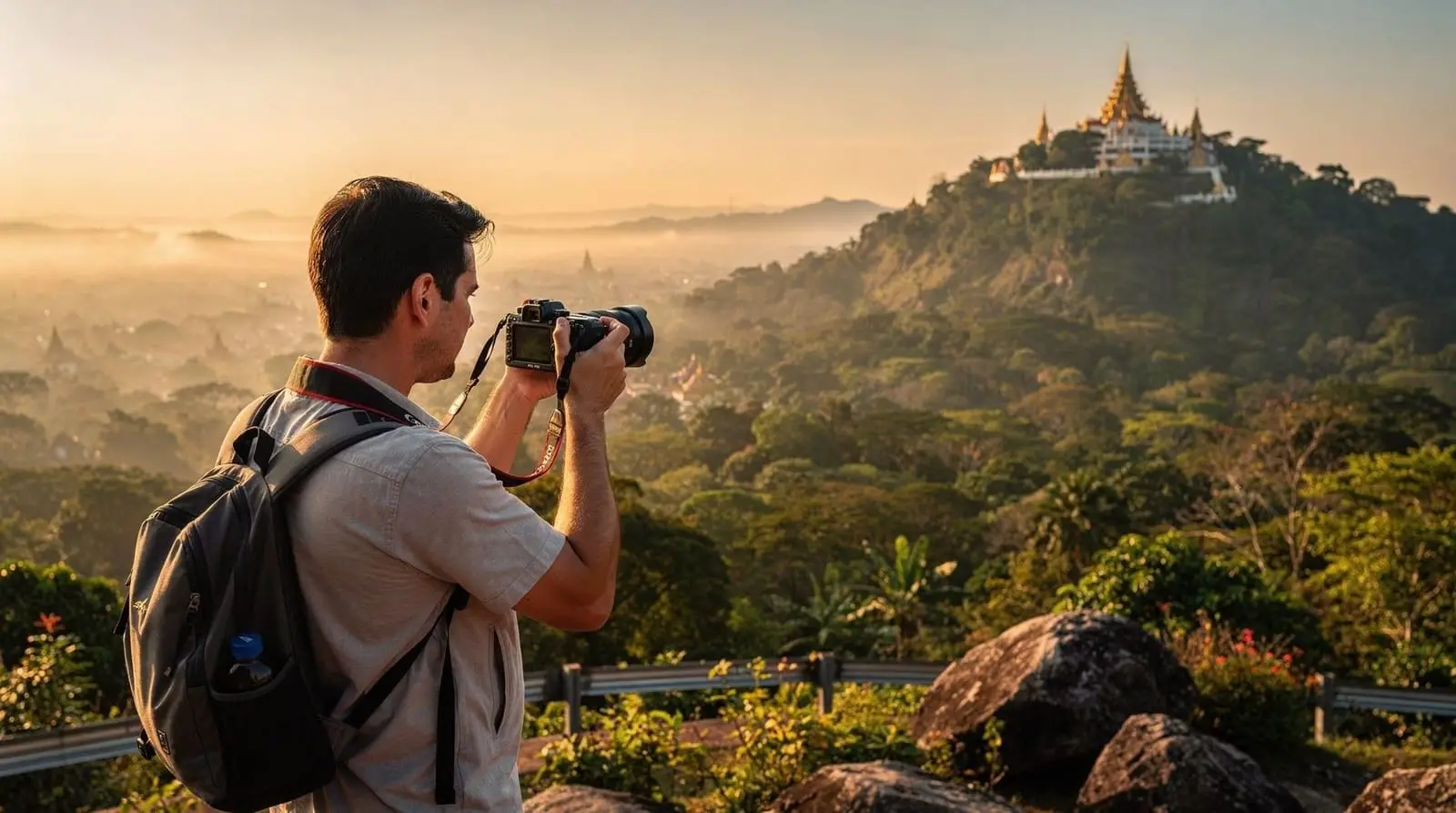
A wide-angle lens or a smartphone’s wide setting captures the layered-mountain effect at Mon Cham and Kew Mae Pan better than a zoomed-in shot, since the visual appeal of these views comes largely from the receding ridgelines fading into haze at the horizon. Polarizing filters, where available, cut through atmospheric haze more effectively than a standard lens, particularly useful during the hazier hot-season months when a plain shot risks looking flat and grey. At Doi Suthep’s terrace, framing the temple’s own gold spires in the foreground against the city view below tends to produce a more compelling image than a wide shot of the valley alone, since the temple architecture gives the photo a clear subject beyond the general cityscape.
How weather and haze actually affect each viewpoint
Higher-elevation viewpoints like Kew Mae Pan and Mon Cham are more exposed to fast-changing mountain weather than lower spots like Doi Suthep’s terrace, meaning a clear morning at one can turn cloudy within an hour, particularly during the rainy season’s typical afternoon storm pattern. Arriving earlier in the day generally improves your odds at any of these spots, both because morning air tends to be clearer before daytime heating builds haze and cloud, and because afternoon storms are a genuine, near-daily risk during the wetter months. During the February-April burning season specifically, no time of day reliably guarantees a clear view, since the haze source is agricultural and forest-fire smoke rather than typical weather-driven cloud.
Practical logistics for visiting multiple viewpoints
If you’re planning to see more than one of these viewpoints across a longer stay rather than picking a single favorite, sequencing matters: Mon Cham and the Mae Sa Valley loop pair naturally in one day given their shared route, while Kew Mae Pan realistically needs its own dedicated day given the distance to Doi Inthanon and the hike itself. Doi Suthep’s terrace, being closest to the city, works well as a standalone half-day trip or as a late-afternoon add-on after a morning spent elsewhere, given how comparatively little time and driving it requires relative to the valley or mountain options further out.
Lesser-known lookouts worth seeking out
Beyond the well-known names covered above, a handful of roadside pullouts along the winding routes through the Mae Sa Valley and toward Samoeng offer unmarked but genuinely scenic stops for travelers with their own transport and the flexibility to pull over when a view catches their eye. These spots lack any facilities or signage and aren’t destinations in their own right, but for travelers who’ve already visited Mon Cham and want to see more of the valley’s mountain scenery without a fixed itinerary, simply driving the loop road slowly with an eye for pullouts is a reasonable, low-cost approach.
Viewpoints and the changing seasons
Each of these viewpoints looks meaningfully different across the year beyond just clarity of air. Mon Cham’s surrounding farmland shifts from strawberry fields in the cool season to different crops later in the year, changing the immediate foreground even as the mountain backdrop stays constant. Kew Mae Pan’s grassland turns a deeper green during and just after the rainy season, when it’s unfortunately closed to visitors, meaning most who see the trail experience its drier-season, more golden-brown grassland appearance instead. Doi Suthep’s city view changes least dramatically by season, though visibility of Chiang Mai’s outer suburbs and surrounding hills varies with the same broader haze patterns affecting the rest of the region.
Are these viewpoints worth visiting more than once?
For travelers spending an extended time in Chiang Mai or returning on a future trip, several of these viewpoints reward a second visit at a different time of day or season more than most attractions do, precisely because the actual view changes so much with light and atmospheric conditions. Mon Cham at sunrise looks meaningfully different from Mon Cham at midday, and Doi Suthep’s terrace at sunset offers a completely different experience from the busier midday crowds most day-tour visitors encounter. If a particular viewpoint disappointed you on a hazy or overcast day, it’s genuinely worth reconsidering on a clearer day rather than writing it off entirely based on one visit.
What to bring for a viewpoint-focused day
A light jacket or windbreaker is worth carrying to any of these spots, even in warmer months, since elevation alone brings a noticeable temperature drop at Mon Cham and especially at Kew Mae Pan, where wind across the open ridge adds a further chill factor beyond what a thermometer alone would suggest. Sun protection matters at the more exposed spots, particularly Mon Cham’s open farmland setting and Kew Mae Pan’s ridge, while Doi Suthep’s terrace, being partly shaded by temple structures, is somewhat more forgiving in this respect. A fully charged phone or camera battery is worth double-checking before heading out, since cooler mountain temperatures can drain battery life faster than expected, an easy detail to overlook until you’re trying to capture a view with a dying phone.
Honest take: are these viewpoints worth the hype?
Mon Cham genuinely earns its popularity — the combination of easy access, a working farm setting, and consistently good views makes it one of the more reliable “wow” moments near Chiang Mai without requiring serious effort. Kew Mae Pan is, if anything, underrated relative to Mon Cham given how much more demanding it is to reach, but the views it offers when open are a genuine step up in scale and remoteness. Doi Suthep’s terrace, while a worthwhile stop, is more valuable for its convenience and the temple experience surrounding it than as a viewpoint destination in isolation — if city views specifically are what you’re after and you’re not otherwise planning to visit the temple, it’s a reasonable rather than essential addition to your itinerary.
Frequently asked questions about Chiang Mai viewpoints
Is Mon Cham crowded?
It gets busy on weekends and during strawberry season, but the ridge is long enough with multiple cafe platforms spread along it that it rarely feels as packed as a single concentrated viewpoint would.
Can I combine more than one viewpoint in a single day?
Mon Cham and the Mae Sa Valley’s other stops combine naturally in one day given their shared route. Kew Mae Pan, given the distance to Doi Inthanon and the hike itself, is realistically a separate day’s focus rather than an add-on to a Mon Cham visit.
Are these viewpoints accessible without a car?
Mon Cham and Kew Mae Pan both require a car, tour, or hired driver, given their distance from the city and lack of reliable public transport. Doi Suthep’s terrace is the most accessible without your own vehicle, reachable by shared songthaew from the city.
Is there an entrance fee for any of these viewpoints?
Mon Cham’s ridge itself is free, though some cafe platforms charge for table access. Kew Mae Pan’s fee covers the mandatory guide rather than the viewpoint itself. Doi Suthep charges a standard temple entrance fee that includes terrace access.
Which viewpoint is best for a rainy-season visit?
Doi Suthep’s terrace and Bhubing Palace’s gardens are the more reliable rainy-season options, since Kew Mae Pan is typically closed during these months and Mon Cham’s open ridge is more exposed to sudden downpours.
Top experiences
Bookable activities with verified prices and instant confirmation on GetYourGuide.