Doi Inthanon hiking trails: Kew Mae Pan vs. Pha Dok Siew
Kew Mae Pan Nature Trail & Doi Inthanon Day Trip
Duration: Full day
What's the difference between Kew Mae Pan and Pha Dok Siew?
Kew Mae Pan is a roughly 3km ridge-top loop near the summit with open, panoramic views, requires a mandatory local guide, and is typically closed June-October during the rainy season. Pha Dok Siew is a shorter, lower-elevation trail through forest and past a small waterfall, open year-round with more flexible access. Choose Kew Mae Pan for scenery if the season allows it; choose Pha Dok Siew if you're visiting in the rainy months or want an easier, shorter walk.
Doi Inthanon National Park has two named, marked hiking trails, and they offer genuinely different experiences rather than being interchangeable variations of the same walk. Kew Mae Pan is the park’s scenic showpiece — an open ridge with panoramic mountain views, requiring a mandatory guide and closed for roughly half the year. Pha Dok Siew is the quieter, more accessible alternative — a shorter forest walk past a small waterfall, open in conditions when Kew Mae Pan isn’t. Choosing between them, or skipping one entirely, comes down mostly to season and how much of your day you want to spend hiking versus visiting the park’s other sights.
Kew Mae Pan: the ridge-top showpiece
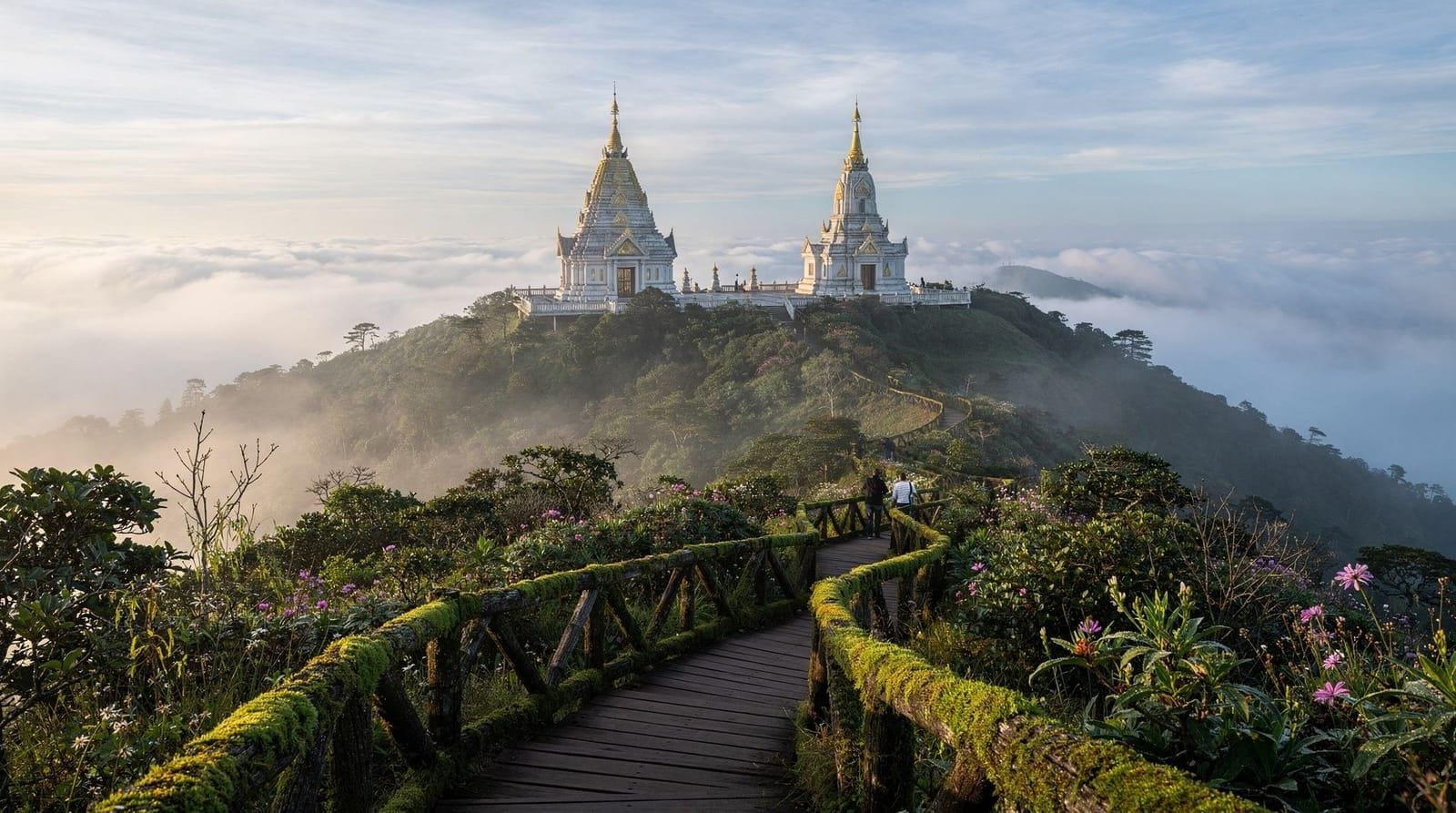
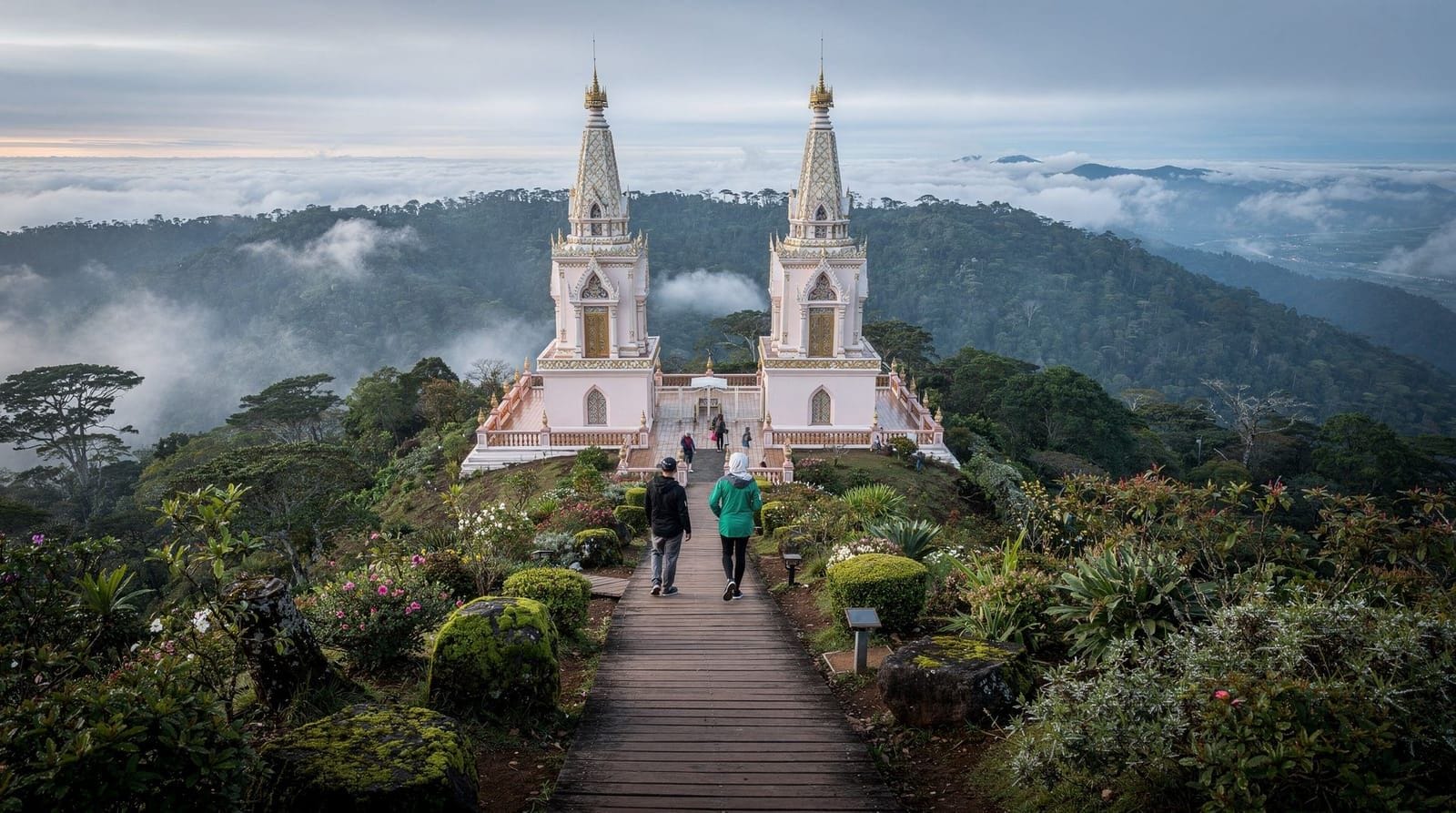
Kew Mae Pan is a roughly 3km loop trail across an open, grassy ridge near the summit turnoff, cutting through grassland, pine forest, and rhododendron thickets in a setting that opens up dramatically compared to the enclosed cloud forest elsewhere in the park. On a clear day, the views across layered mountain ridges are genuinely among the best easily reached from Chiang Mai — a real contrast to the fog-shrouded, view-limited summit boardwalk nearby.
Two requirements shape how you plan around this trail. First, a local Karen guide is mandatory, arranged at the trailhead for a modest fee that supports the community managing the trail — this isn’t a formality, and attempting the trail without one isn’t permitted. Second, the trail is typically closed roughly June through October during the rainy season, when the exposed ridge terrain becomes unstable and genuinely unsafe underfoot. If you’re visiting during those months, don’t build your day’s plan around this trail being open; treat it as a dry-season bonus rather than a guaranteed stop.
A dedicated Kew Mae Pan nature trail day trip bundles the guide requirement and trailhead logistics directly into the tour price, removing the need to arrange the local guide yourself on arrival. For a more focused hiking-only version rather than a broader sightseeing itinerary, a Kew Mae Pan trail-focused day tour puts more of the day’s time into the trail itself.
Pha Dok Siew: the accessible year-round option
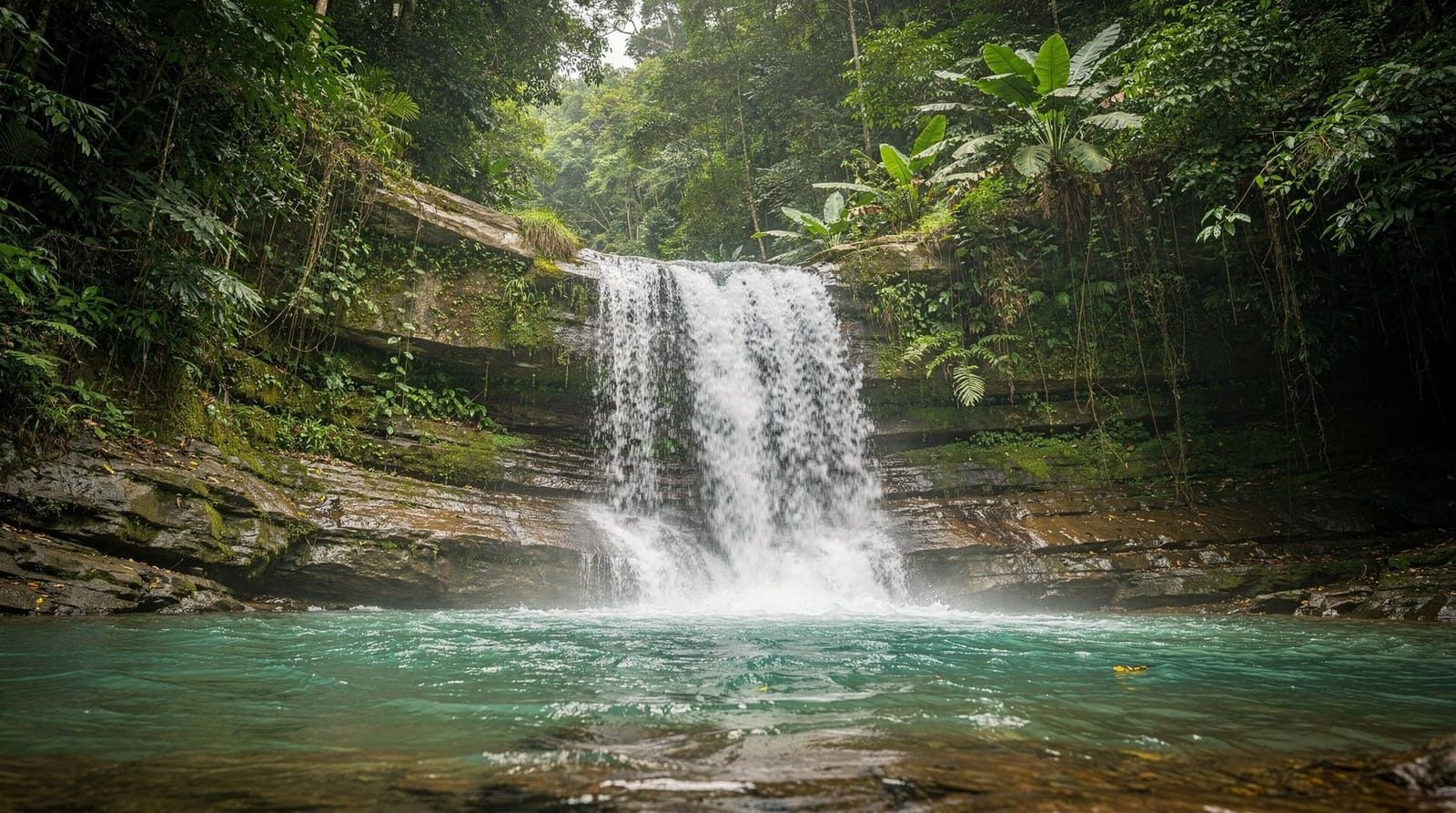
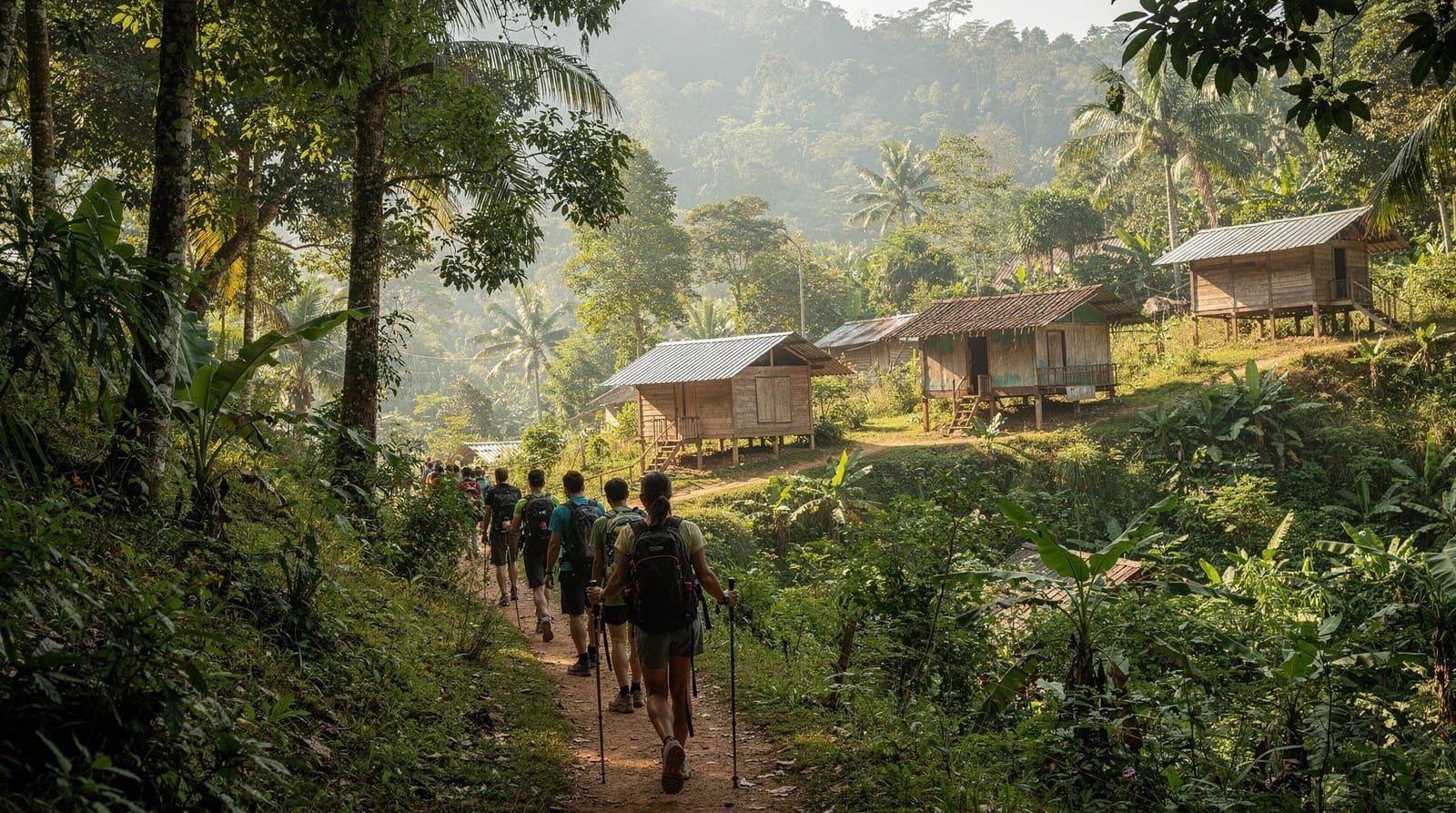
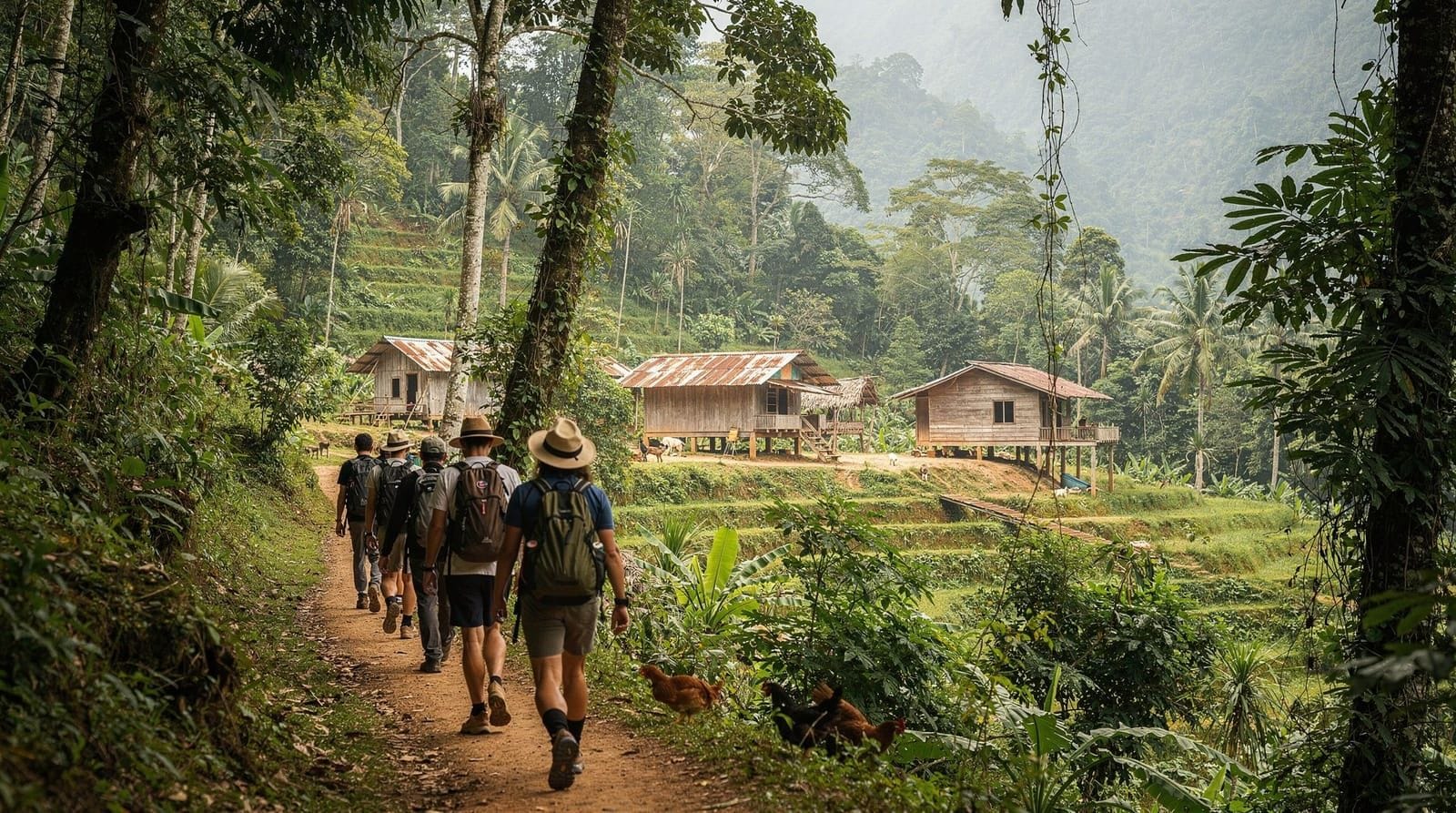
Pha Dok Siew is a shorter, lower-elevation trail through denser forest, generally covered in under 1.5 hours and including a stop at a small waterfall along the route. It doesn’t carry Kew Mae Pan’s mandatory-guide requirement in the same way, and it stays open through the rainy season when Kew Mae Pan is closed, making it the more reliable choice if you’re visiting between June and October and still want a genuine trail walk rather than just the summit boardwalk.
The trade-off is scenery: Pha Dok Siew stays largely enclosed under forest canopy, without Kew Mae Pan’s open ridge views. It’s a pleasant, easy forest walk rather than a scenic showpiece, and honestly, most visitors who’ve done both describe Kew Mae Pan as the more memorable of the two when it’s actually open. A Doi Inthanon and Pha Dok Siew trail trek covers this route alongside the park’s other main sights in a single day.
Side-by-side comparison
| Kew Mae Pan | Pha Dok Siew | |
|---|---|---|
| Distance | ~3km loop | Shorter, under 2km |
| Time | 2-3 hours | Under 1.5 hours |
| Terrain | Open ridge, grassland, pine | Forest, waterfall stop |
| Views | Panoramic, open | Enclosed, forest canopy |
| Guide required | Yes, mandatory local guide | Generally not mandatory |
| Season | Closed roughly June-October | Open year-round |
| Difficulty | Moderate | Easy |
Which trail should you actually choose?
If you’re visiting during the dry and cool seasons (November-May) and have a genuine interest in hiking rather than just sightseeing, Kew Mae Pan is the clear priority — its views are simply a different tier of experience compared to anything else easily reached near the summit. If you’re visiting during the rainy months, or if a shorter, easier walk fits your day better, Pha Dok Siew is the sensible choice, and its waterfall stop adds a nature element the ridge trail doesn’t have.
If you’re building a single full day around the park’s whole set of sights — summit, pagodas, a waterfall, maybe a village stop — and time is genuinely tight, it’s worth being honest that neither trail is strictly mandatory. A Doi Inthanon hiking-focused day tour is the better booking if trails are your priority; a more general sightseeing tour may allocate less time to either path in favor of the pagodas and roadside waterfall stop.
Fitness and what to expect physically
Neither trail is technical in the sense of requiring ropes, scrambling, or specialized equipment, but both involve real, uneven ground rather than a flat paved path. Kew Mae Pan’s open ridge exposes hikers to sun and wind in a way the forested Pha Dok Siew route doesn’t, so sun protection matters more on the former even in cooler months. Both are manageable for most reasonably fit adults and older children, though neither is realistic for visitors with significant mobility limitations, given the natural, unpaved terrain throughout.
What to bring for either trail
Sturdy closed shoes rather than sandals, a layer for the cooler mountain air regardless of season, water (more than you’d bring for a city walk, since neither trail has reliable refill points), and a rain layer if visiting outside the driest months. For Kew Mae Pan specifically, sun protection matters given the exposed ridge; for Pha Dok Siew, insect repellent is worth adding given the denser forest cover.
How these trails fit into a broader park day
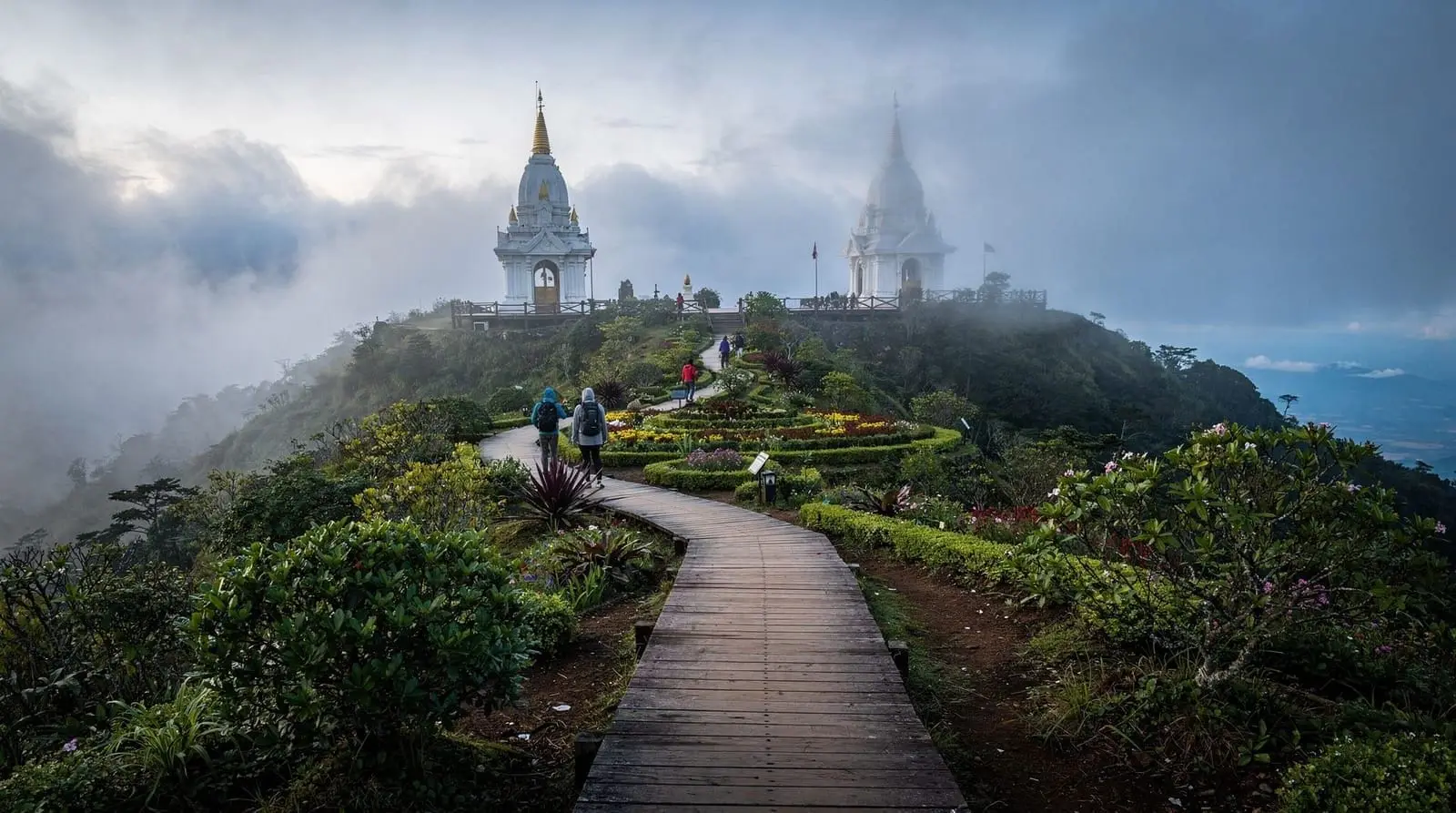
Most full-day Doi Inthanon itineraries build around one of these two trails alongside the summit boardwalk, the twin pagodas, and at least one waterfall — see our full Doi Inthanon guide for how the whole park fits together in a single day. If open-ridge views and a slightly more active hike sound appealing beyond just this park, our best viewpoints in Chiang Mai roundup covers other scenic lookouts in the wider region, including Mon Cham in the Mae Sa Valley.
Wildlife and plant life along each trail
Kew Mae Pan’s open ridge supports a genuinely different plant community from the rest of the park — grassland species, pine, and rhododendron thickets that bloom with color during the cooler months, alongside occasional sightings of the mountain’s higher-elevation bird species, some found nowhere else in Thailand given the unusual cool, high-altitude habitat. Pha Dok Siew, by contrast, stays within denser forest cover for its full length, with a plant community closer to the cloud forest found near the summit boardwalk — mosses, ferns, and epiphytes rather than open grassland. Neither trail is marketed specifically as a birdwatching route, but Kew Mae Pan’s open terrain generally offers easier spotting simply due to better sightlines than Pha Dok Siew’s enclosed forest canopy.
Group size and booking logistics
Kew Mae Pan’s mandatory guide requirement means groups are typically organized in small clusters at the trailhead, with the local guide leading anywhere from a couple of hikers to a modest group at once — arriving with a booked tour generally guarantees a guide is available without a wait, while showing up independently may mean joining an ad hoc group or waiting for the next available guide, particularly during the busier cool-season months. Pha Dok Siew doesn’t carry the same bottleneck, since it doesn’t require the same mandatory guide arrangement, making it the more flexible option for last-minute or independent planning.
Safety considerations specific to each trail
Kew Mae Pan’s open ridge exposes hikers to more direct sun and, at times, strong wind, along with a higher fall-related risk near the trail’s edges where the ground drops away toward the valley below — staying on the marked path matters more here than on most other trails in the region. Pha Dok Siew’s forest cover reduces sun exposure but its uneven, root-covered ground and occasional slippery sections near the small waterfall stop call for sturdy footwear and a steady pace rather than rushing between viewpoints. Neither trail carries significant wildlife-related safety concerns beyond standard forest precautions like watching your step and not approaching or feeding any animals encountered along the way.
Why the mandatory guide system exists at Kew Mae Pan
The requirement for a local Karen guide at Kew Mae Pan isn’t an arbitrary bureaucratic hurdle — it reflects both an effort to protect the trail’s fragile ridge-top ecosystem from unsupervised foot traffic straying off the marked route, and a direct economic benefit to the Karen community that has long lived on this part of the mountain, who are trained and compensated to lead visitors through the trail. Understanding this context reframes the guide fee less as an added cost and more as a direct, transparent way your visit supports the community whose land the trail crosses, a dynamic worth keeping in mind if you’re comparing the cost against simply walking Pha Dok Siew without a similar arrangement.
What experienced hikers say about choosing between the two
Travelers who’ve done both trails on separate visits generally describe Kew Mae Pan as the more memorable experience precisely because of how different it feels from everything else in the park — an open, wind-swept ridge in contrast to the enclosed forest character of the summit boardwalk, the pagodas’ gardens, and Pha Dok Siew alike. Pha Dok Siew’s appeal is more about reliability and ease than a standout experience in its own right; it’s the trail you do when Kew Mae Pan isn’t an option, or when you want a shorter, gentler walk without giving up a trail entirely. Neither assessment means Pha Dok Siew isn’t worth doing — its waterfall stop and forest setting are genuinely pleasant — but expectations matter, and treating it as Kew Mae Pan’s lesser substitute rather than its own distinct experience sets a more realistic bar.
Combining a trail with the rest of your Doi Inthanon day
Whichever trail you choose, it fits into a broader day that typically also includes the summit boardwalk, twin pagodas, and at least one waterfall — trying to fit both trails plus every other park highlight into a single day is an ambitious schedule that usually means rushing at least one stop. Most operators build itineraries around one trail rather than both, and it’s worth being upfront with a tour operator about which trail matters more to you if trail time specifically is your priority, since some general sightseeing tours allocate comparatively little time to either path in favor of the more photogenic pagodas and roadside waterfall.
Preparing physically for either trail
Both trails involve sustained walking over 1.5-3 hours depending on which you choose, at an elevation where the air is noticeably thinner and cooler than Chiang Mai city — not high enough to cause altitude sickness for most visitors, but enough that visitors accustomed to sea-level exertion may notice they tire slightly faster than expected. A reasonable level of everyday fitness is sufficient for either trail; neither requires dedicated hiking training, but visitors who rarely walk for extended periods should pace themselves rather than rushing, particularly on Kew Mae Pan’s longer loop.
What to pack specifically for trail day
Beyond the general park packing list, a small daypack with a rain cover is worth having for either trail, since mountain weather can shift quickly regardless of season, and neither trail has reliable shelter along its length. A basic first-aid kit or at least some blister plasters is a sensible addition given the uneven terrain on both routes, and a printed or downloaded offline trail map adds a useful backup even when hiking with a guide, particularly on Kew Mae Pan where the open terrain can make it harder to judge distance remaining without a reference.
Frequently asked questions about Doi Inthanon’s trails
Is Kew Mae Pan hard to walk?
It’s a moderate hike across roughly 3km of open, sometimes uneven ridge terrain — not technical, but a genuine walk rather than a paved stroll, and best attempted by visitors with reasonable everyday fitness.
What happens if I arrive when Kew Mae Pan is closed?
The trailhead simply won’t operate during the closure period, roughly June-October. Plan your day around Pha Dok Siew, the summit boardwalk, the pagodas, and the park’s waterfalls instead.
Is there a fee for the mandatory Kew Mae Pan guide?
Yes, a modest per-group fee collected at the trailhead, which funds the local Karen community managing access to the trail. Most guided day tours already include this in the overall tour price.
Can I hike Pha Dok Siew without a tour?
It’s more flexible than Kew Mae Pan, but since most visitors reach the park by tour or private car rather than public transport, arranging any trail visit independently still means sorting out your own transport into the park first.
Which trail is better for photography?
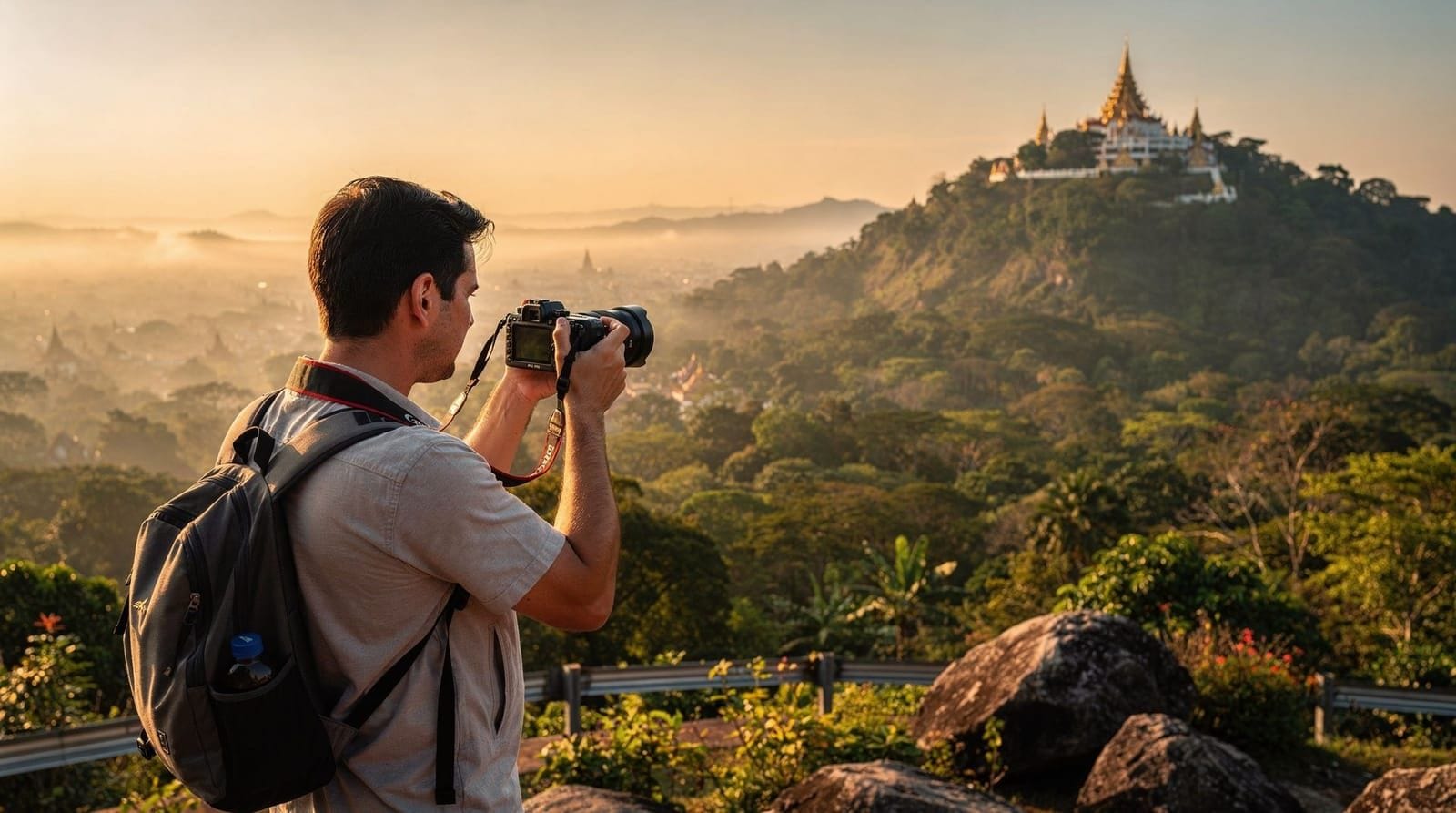
Kew Mae Pan, without question, given its open ridge views across layered mountains — a genuinely different landscape photography opportunity than the enclosed forest setting of either the summit boardwalk or Pha Dok Siew.
Top experiences
Bookable activities with verified prices and instant confirmation on GetYourGuide.