Best trekking routes in northern Thailand: Doi Inthanon, Chiang Dao and Mae Hong Son compared
Private Tour Doi Inthanon, Trekking Kew Mae Pan Nature Trail
Duration: Full day
Which trekking route near Chiang Mai should I choose?
Doi Inthanon suits travelers wanting a ridge-trail hike combined with waterfalls and Thailand's highest point in a single day. Chiang Dao suits those wanting cave exploration alongside a shorter hill-tribe village hike, closer to the city than Mae Hong Son. Mae Hong Son suits travelers with two or more days who want the most remote hill country and are comfortable with mountain-road travel to get there. Mae Wang, closer still, is the default choice for standard one-to-three-day commercial hill-tribe treks.
Chiang Mai sits at the center of several genuinely distinct trekking regions, and picking the right one matters more than most first-time visitors realize, since Doi Inthanon, Chiang Dao, and Mae Hong Son offer meaningfully different terrain, distance, and pace, not interchangeable versions of the same hike. This guide compares the three most common route families for travelers with time to trek beyond the standard Mae Wang day-trip circuit, alongside where Mae Wang itself fits into the picture, and lays out realistic cost, difficulty, and timing differences so you can match a route to how much time and energy you actually have rather than booking whichever listing appears first in a search.
The four main trekking regions at a glance
| Region | Distance from Chiang Mai | Best for | Typical commitment |
|---|---|---|---|
| Mae Wang / Mae Taeng | 45-90 minutes | Standard hill-tribe treks, waterfalls, bamboo rafting | 1-3 days |
| Doi Inthanon | 1.5-2 hours | Ridge trails, waterfalls, Thailand’s highest point | 1 day |
| Chiang Dao | 1.5-2 hours | Cave exploration plus a shorter hill-tribe hike | 1 day |
| Mae Hong Son | 6-8 hours by road (or via Pai) | Remote hill country, fewer crowds | 2+ days |
Mae Wang and Mae Taeng: the default choice
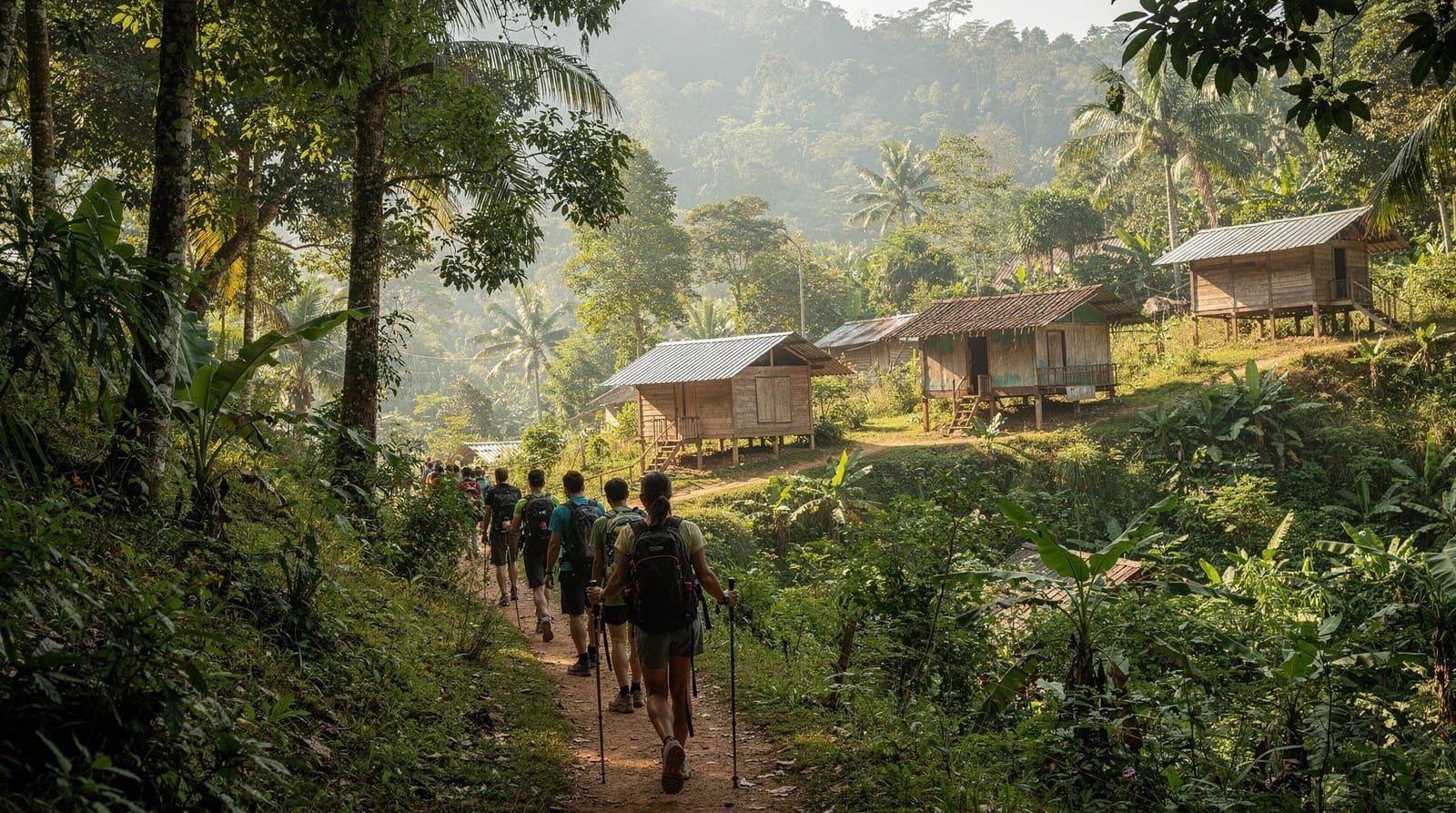
For most travelers booking a standard one-day or multi-day hill-tribe trek, Mae Wang and the neighboring Mae Taeng valley are where the trip actually happens, and our main trekking guide and one-day trekking guide both cover this region in depth. It’s the closest genuine trekking country to the city, at 45-90 minutes’ drive, with the densest concentration of Karen villages set up specifically for trekking, homestays, and bamboo rafting. The trade-off is popularity: this is also the most heavily visited trekking region near Chiang Mai, so expect to share trails and villages with other groups, particularly during the cool-season peak (November-February).
Doi Inthanon: trails plus Thailand’s highest point
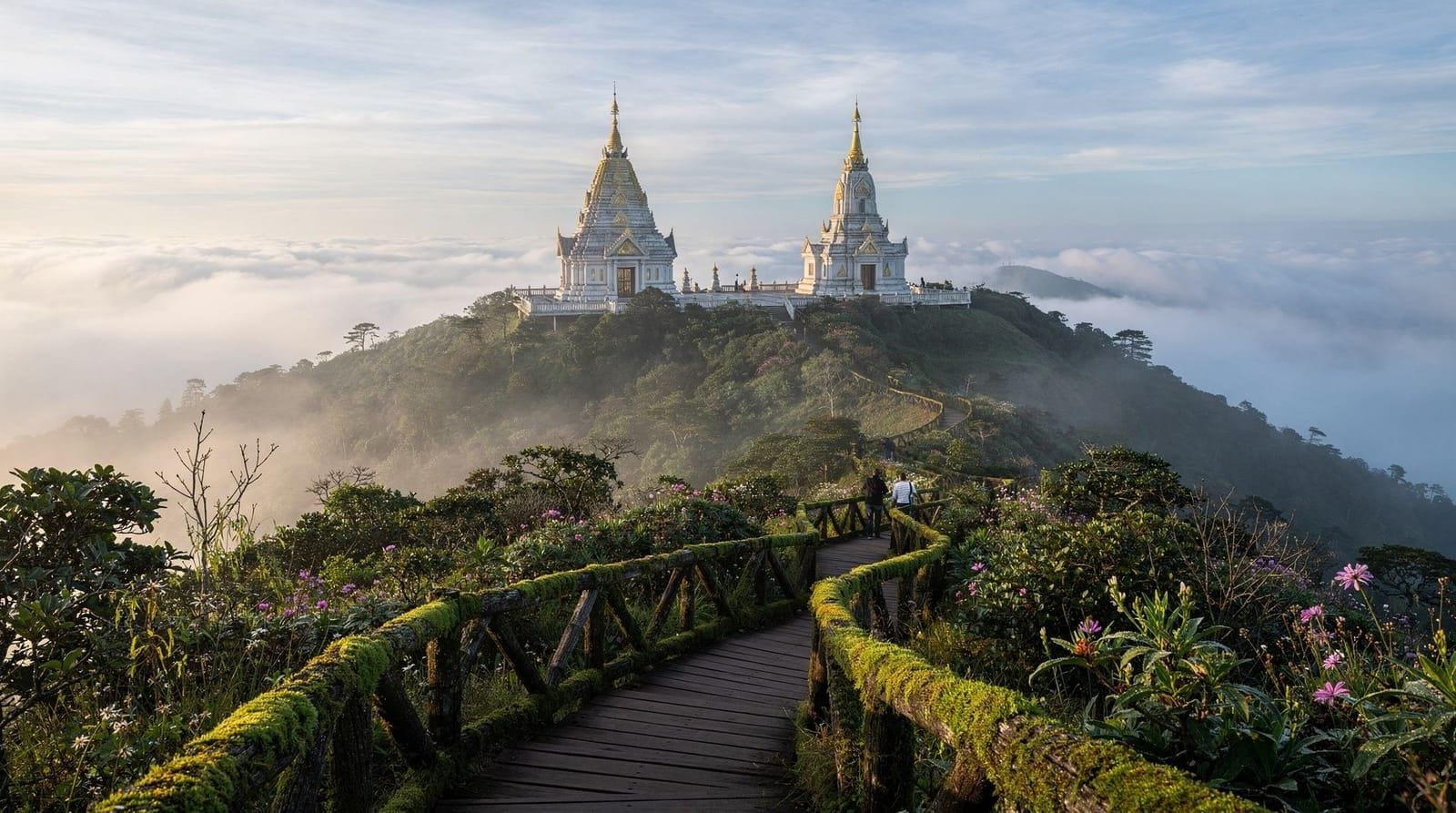
Doi Inthanon offers a genuinely different kind of day: rather than a single walking route, the national park packs a ridge-top trail, three separate waterfalls, twin royal pagodas, and Thailand’s highest point into one park boundary connected by a single access road. The standout hike here is the Kew Mae Pan trail, a roughly 3km loop across open ridge country with panoramic views distinct from the enclosed jungle terrain typical of Mae Wang routes, though it’s typically closed June-October during the rainy season. A private Doi Inthanon tour with Kew Mae Pan trekking combines the trail with the park’s other highlights in a single day. Our full Doi Inthanon guide and national park hiking trails guide cover the park’s full trail options, including the gentler Pha Dok Siew alternative.
Doi Inthanon suits travelers who want scenery and a structured, well-marked trail over a deep hill-tribe cultural immersion, though the park’s lower slopes do include Karen communities like Mae Klang Luang, known for rice terraces and small-scale coffee farming.
Chiang Dao: caves plus a shorter hill-tribe hike
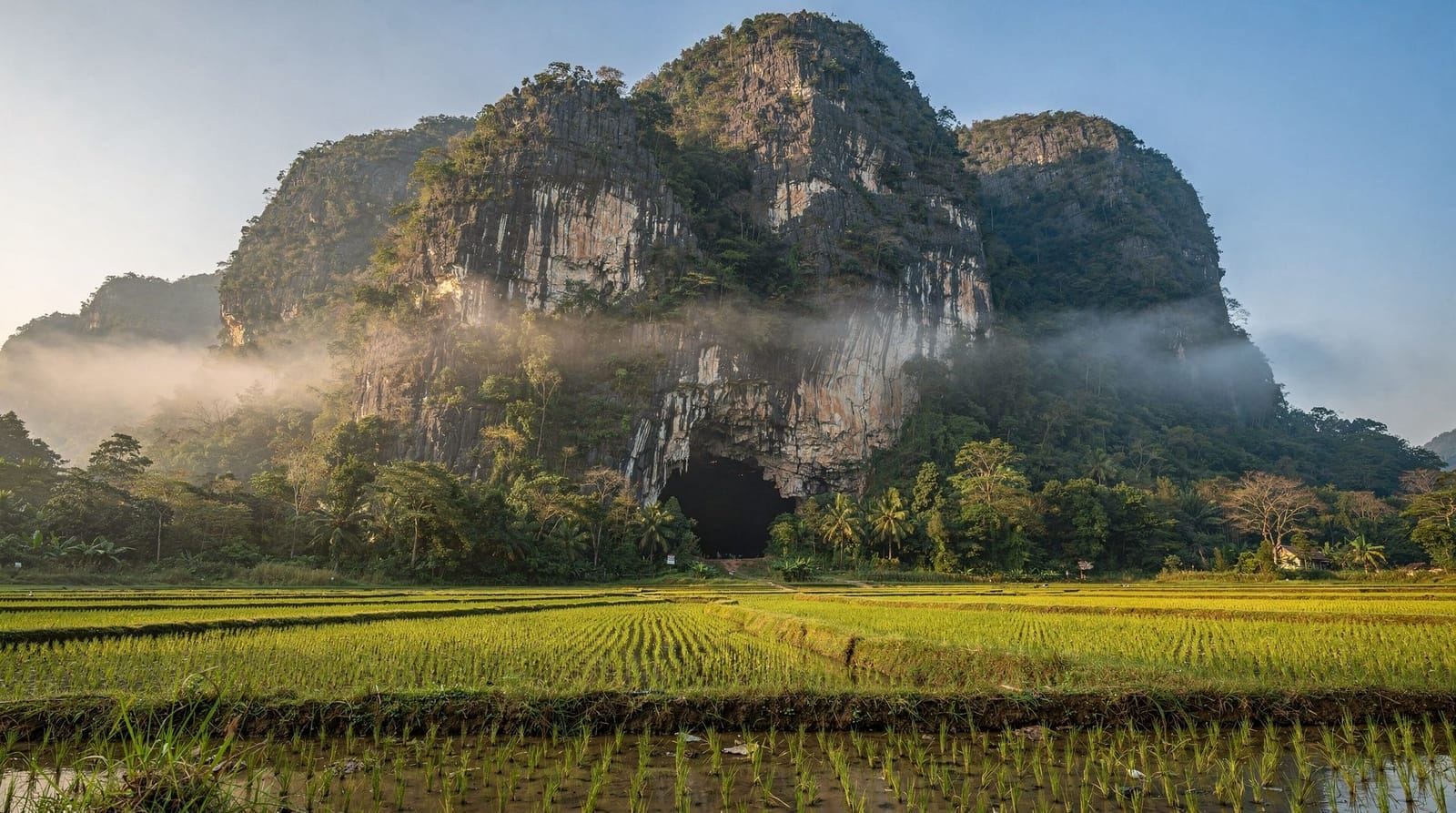
Chiang Dao, about the same driving distance as Doi Inthanon but in the opposite direction, centers on Thailand’s third-largest cave system and Doi Luang, the country’s third-highest mountain, rather than pure jungle trekking. Several itineraries combine a cave visit with a shorter hill-tribe hike, a genuinely different day than either Doi Inthanon or Mae Wang. A Chiang Dao cave visit combined with five hill-tribe villages pairs the cave system with a broader, multi-community sample in a single day, similar in structure to the five-hill-tribes format covered in our one-day trekking guide. Our Chiang Dao day trip guide covers the cave and surrounding area in full.
Chiang Dao sees meaningfully fewer trekkers than Mae Wang, given its distance and its cave-first framing rather than a trekking-first one, making it a reasonable choice for travelers wanting a quieter alternative without committing to a full Mae Hong Son trip.
Doi Inthanon multi-day: a middle ground
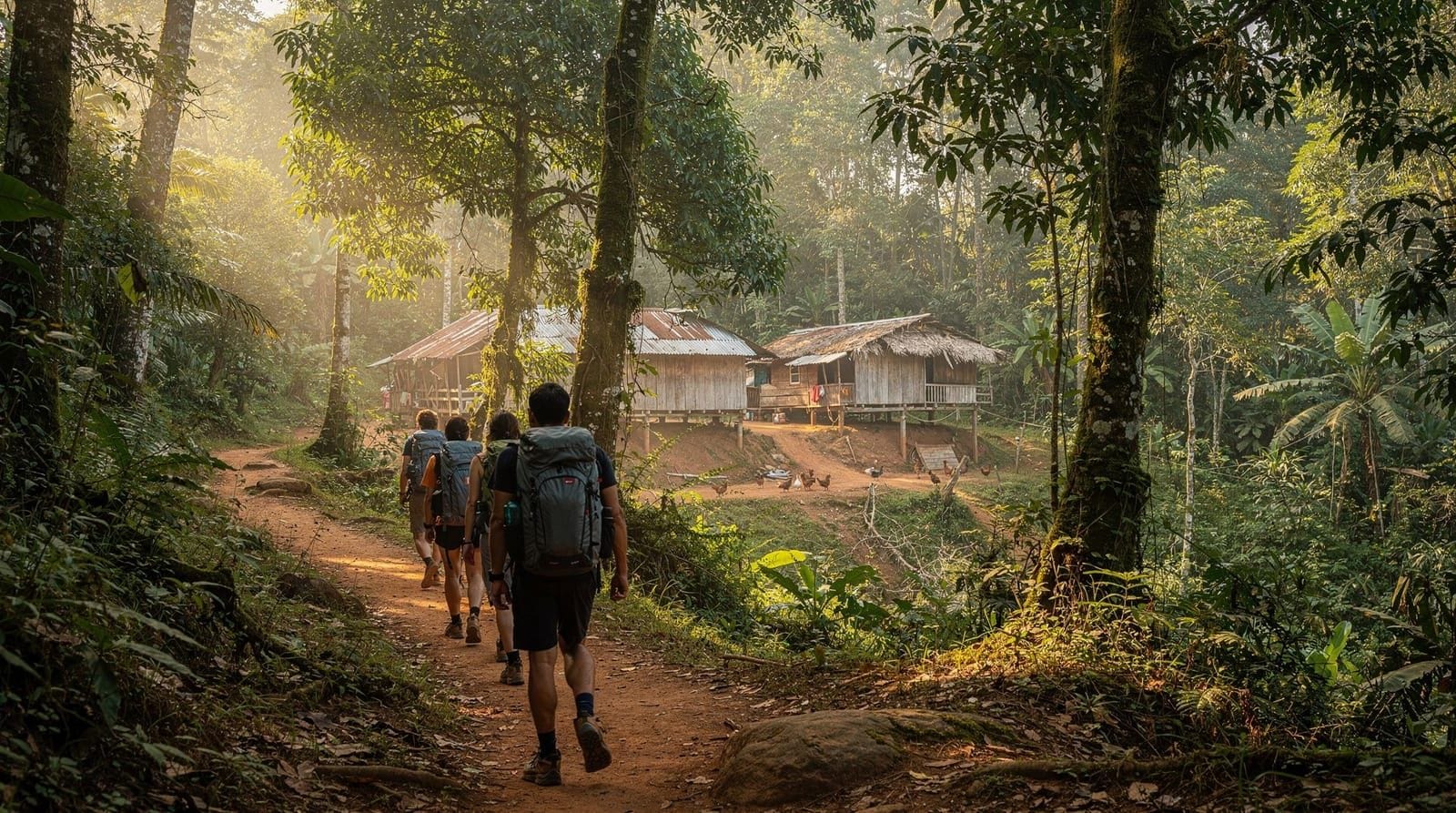
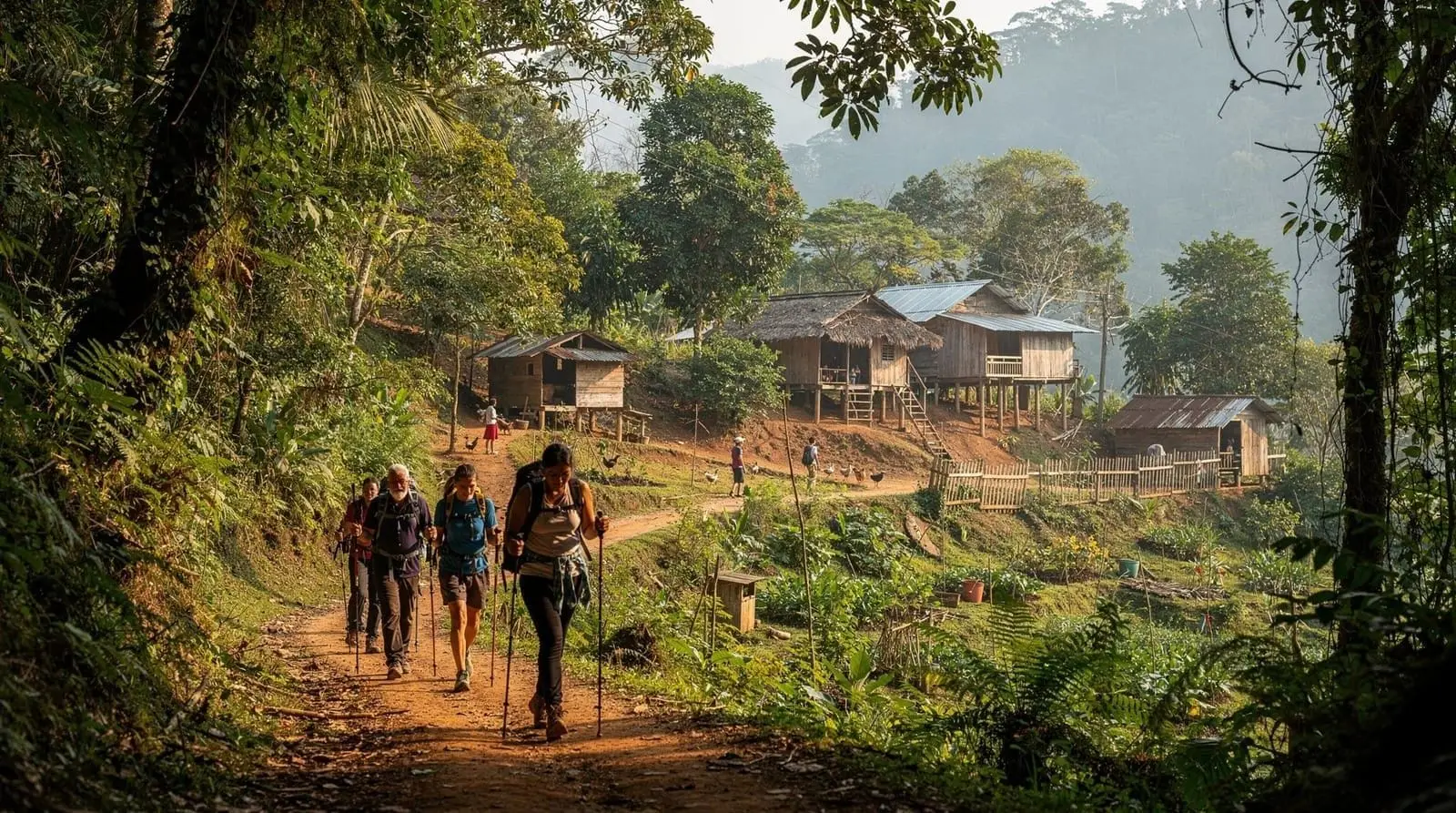
Travelers wanting more trekking time without the full distance of a Mae Hong Son trip have a middle option: multi-day treks based around the Doi Inthanon area itself rather than a single-day park visit. A three-day nature and Karen hill-tribe trek in the Doi Inthanon area combines the park’s terrain with a genuine multi-day, overnight-village structure closer to what a Mae Wang multi-day trek offers, but set in Doi Inthanon’s higher-elevation, cooler terrain instead.
Mae Hong Son: the remote option
Mae Hong Son province, reached either directly by a long mountain road (6-8 hours) or via a stop in Pai, represents the most remote and least-visited hill country accessible from Chiang Mai. This is genuinely different terrain and pace from anything closer to the city: fewer commercial trekking operators, more Karen and Shan cultural influence given the province’s proximity to Myanmar, and a slower, less packaged feel overall. A three-day jungle trek with a White Karen local guide is representative of the kind of extended, remote trekking available in this broader region, reaching villages and terrain well beyond what a Mae Wang day trip covers. Given the driving distance involved, a rushed one-day version of this route undercuts the entire point of visiting; our Mae Hong Son loop guide covers how to plan a proper multi-day version of this trip.
Cost comparison across regions
Price differences between these regions mostly reflect distance and duration rather than the region itself. A Mae Wang or Mae Taeng one-day trek runs roughly 1,200-2,200 THB (about 33-61 USD at 36 THB/USD), with multi-day versions running 2,500-5,500 THB (about 70-153 USD) depending on length. Doi Inthanon day tours, which include national park entry fees on top of guiding and transport, typically run 1,500-2,800 THB (about 42-78 USD) for a standard group tour, with private options higher. Chiang Dao day trips combining the cave and a hill-tribe visit run similarly, around 1,500-2,500 THB (about 42-69 USD). Mae Hong Son multi-day trips cost more in absolute terms, generally 4,000-8,000 THB (about 111-222 USD) for two or three days, reflecting the extra driving distance, fuel, and overnight logistics involved in reaching genuinely remote hill country. None of these figures include tips, which are customary and appreciated for guides and, where applicable, village hosts.
Getting there: logistics for each region
Mae Wang and Mae Taeng trips depart directly from Chiang Mai with hotel pickup, no intermediate stops required, making them the simplest to book and join on short notice. Doi Inthanon and Chiang Dao similarly depart directly from the city, though the drive itself, 1.5-2 hours each way, eats more of the day than the closer Mae Wang valley, which is part of why both work best as a full-day commitment rather than a half-day add-on. Mae Hong Son requires more planning: either a direct 6-8 hour drive along a famously winding mountain road, or a two-stage approach via an overnight in Pai first, which most travelers find more comfortable and which doubles as its own worthwhile stop rather than pure transit time. Self-driving any of these routes is possible with an international driving permit and some experience with mountain roads, though the vast majority of visitors, especially for Mae Hong Son, join a guided tour or private driver rather than navigating unfamiliar mountain routes independently.
Combining routes with other activities
Each region pairs naturally with a different set of add-on activities, worth factoring into your choice if trekking is only part of your day or trip. Mae Wang and Mae Taeng treks commonly bundle in bamboo rafting, covered in our bamboo rafting guide, and sit close enough to Mae Rim that some travelers combine a trek with an ethical elephant sanctuary visit on the same or an adjacent day. Doi Inthanon pairs naturally with nothing else on the same day, given how much the park itself offers, though it’s commonly combined with Doi Suthep as a separate day earlier or later in a trip. Chiang Dao pairs well with a quieter overnight in the town itself for travelers wanting to split the cave and hiking portions across two more relaxed days rather than a single rushed one. Mae Hong Son, given its distance, is best treated as a standalone loop combined with Pai rather than squeezed alongside other Chiang Mai day trips.
Packing differences by region
While our general multi-day trekking packing list covers the core gear for any of these routes, a few region-specific details are worth flagging. Doi Inthanon’s summit area runs noticeably colder than the other three regions given its 2,565m elevation, so a genuine warm layer matters more here than for Mae Wang or Chiang Dao treks at lower elevation. Chiang Dao’s cave sections call for a headlamp or reliable flashlight and clothing you don’t mind getting dusty, distinct from the mud-and-water focus of jungle trekking elsewhere. Mae Hong Son’s longer, multi-day format calls for more attention to layering given the wider range of elevations and overnight temperature drops across a multi-day loop, plus the practical reality that laundry and resupply options are more limited the further you get from Chiang Mai.
Comparing difficulty and terrain
Mae Wang and Mae Taeng trails are generally the gentlest of the four regions, mostly maintained forest paths at lower elevation with regular rest stops built into commercial itineraries. Doi Inthanon’s Kew Mae Pan trail involves real elevation and open, exposed ridge walking, more demanding than the park’s alternate Pha Dok Siew trail but still manageable for most reasonably fit travelers with a required local guide. Chiang Dao’s cave-plus-hike itineraries vary by specific route, generally comparable to Mae Wang in difficulty with the cave portion adding its own separate physical demands (some crawling and low-clearance sections in parts of the cave system). Mae Hong Son routes vary the most, from relatively gentle village walks to genuinely more demanding multi-day mountain treks, and it’s worth asking a specific operator about daily distance and elevation rather than assuming based on the region’s remote reputation alone.
Seasonal differences across regions
All four regions follow broadly the same seasonal pattern, cool and dry November-February, wetter June-October, hazy February-April during burning season, covered in full in our trekking season guide. Elevation-dependent differences do exist: Doi Inthanon’s summit area and Mae Hong Son’s higher villages run noticeably cooler than Mae Wang’s lower valleys, which matters for packing regardless of season, and Kew Mae Pan’s rainy-season closure (roughly June-October) is a route-specific detail worth planning around if that trail is your main reason for choosing Doi Inthanon.
Which region suits families and less-experienced hikers
Families and travelers newer to hiking generally do best with Mae Wang or Mae Taeng, given the shorter drive, gentler terrain, and wide choice of operators experienced with mixed-ability groups. Doi Inthanon works well too if you stick to the boardwalk and pagoda areas rather than committing to the full Kew Mae Pan loop, since the park’s paved sections require minimal walking fitness. Chiang Dao’s cave sections involve some uneven, occasionally low-clearance terrain that’s worth checking against a family’s comfort level in advance, particularly for younger children or anyone with mobility concerns. Mae Hong Son, given both the distance and the more variable trail difficulty across its routes, is generally better suited to families with older kids or teenagers who already have some hiking experience, rather than a first hill-tribe trekking trip.
A note on required local guides
It’s worth knowing that several of the region’s more notable trails legally require a local guide, not just as an operator convenience but as a formal requirement tied to community land management. Doi Inthanon’s Kew Mae Pan trail requires a Karen guide arranged at the trailhead, a fee that funds the community managing the trail and ensures visitors stay on the marked route through ecologically sensitive ridge terrain. Similar local-guide requirements apply informally across much of Mae Wang, Mae Taeng, and parts of Mae Hong Son’s hill country, where trekking access has been negotiated between operators and the villages whose land the trails cross. This is worth understanding not as red tape but as a genuine, functioning example of the community-benefit model covered in our guide to visiting hill-tribe villages responsibly: the guide requirement itself is one of the more concrete, verifiable ways trekking tourism channels money back to the communities whose land and trails you’re using.
Which route to choose
If you have one day and want the most complete single-park experience, choose Doi Inthanon. If you want caves alongside a shorter hill-tribe hike and a quieter alternative to Mae Wang, choose Chiang Dao. If you have two or more days and want the most remote hill country with real distance from the city’s tourism infrastructure, choose Mae Hong Son, ideally routed through Pai. If you want the standard, well-established hill-tribe trekking format with the widest range of one-day and multi-day options, Mae Wang and Mae Taeng remain the default and, for most first-time trekkers, the right one to start with.
Final word: match the route to your trip, not the other way around
It’s tempting to pick a trekking route based purely on which listing has the best photos or the most reviews, but the more useful approach is working backward from how much time, budget, and appetite for remoteness you actually have. A traveler with a single free day and a preference for structured, well-marked trails is better served by Doi Inthanon than by attempting a rushed version of Mae Hong Son; a traveler with a week and a genuine interest in getting off the standard circuit is better served by planning around Mae Hong Son properly than by squeezing in a token Mae Wang day trek and calling it done. None of these four regions is objectively better than the others; they’re suited to different trips, and the comparison above is meant to help you match one to the trip you’re actually taking rather than the one a single search result happens to suggest first.
Frequently asked questions about trekking routes in northern Thailand
Which route is best for a first-time trekker?
Mae Wang or the Doi Inthanon foothills, both under two hours from Chiang Mai with well-established trails and a wide range of one-day options. Chiang Dao and Mae Hong Son suit travelers who already know they enjoy trekking and want a longer or more remote route.
Which route has the best waterfalls?
Doi Inthanon, with three distinct waterfalls within the same park boundary as the summit and pagodas, offers the most waterfall variety in a single trip.
Which route is most remote and least crowded?
Mae Hong Son province sees meaningfully fewer trekkers than Mae Wang, Mae Taeng or Doi Inthanon given the distance and mountain-road travel required. Chiang Dao sits in between.
Do I need multiple days for any of these routes?
Doi Inthanon and Chiang Dao both work well as single-day trips. Mae Hong Son genuinely benefits from at least an overnight given the driving time involved.
Which route is best for hill-tribe village visits specifically?
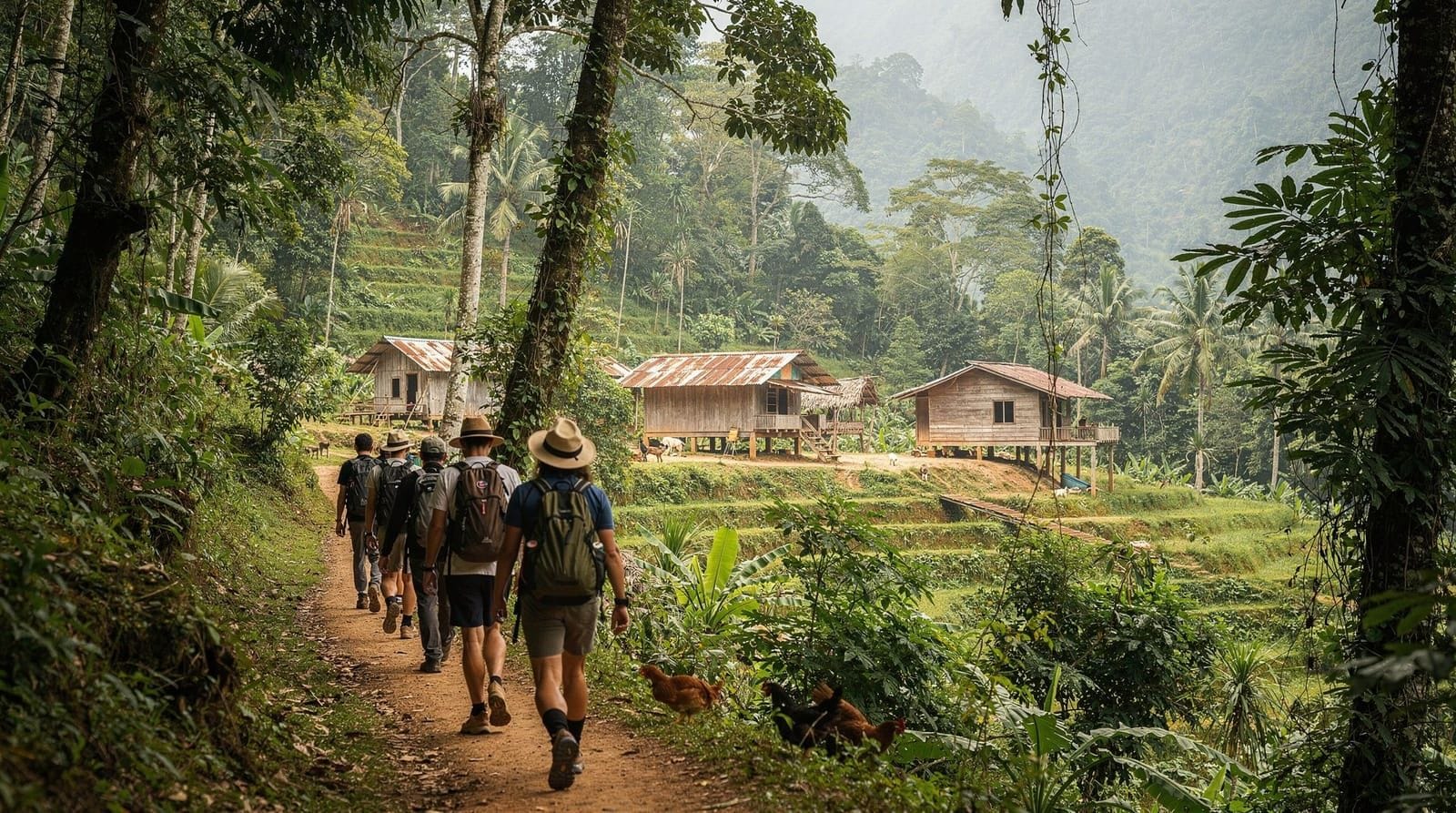
Mae Wang and Mae Taeng host the densest concentration of Karen villages set up for trekking and homestays. Chiang Dao includes hill-tribe stops on several itineraries, and Doi Inthanon’s lower slopes include Karen communities like Mae Klang Luang.
Can I combine more than one of these routes on the same trip?
Yes. Many travelers with five or more days combine a Doi Inthanon day trip, a separate Chiang Dao day trip, and a longer Pai-Mae Hong Son loop, treating each as a genuinely different kind of day.
Top experiences
Bookable activities with verified prices and instant confirmation on GetYourGuide.