Chiang Mai trekking guide: multi-day treks and hill tribes explained
Chiang Mai: 2-Day Hidden Jungle Trek & Local Hill-Tribe Stay
Duration: Multi-day
What does a Chiang Mai trek actually involve?
Most treks combine a few hours of jungle or ridge walking each day with a stay in or near a Karen, Hmong, Lahu or Lisu village, plus a waterfall stop and often bamboo rafting or an elephant sanctuary visit as a add-on. One-day treks run roughly 1,200-2,200 THB (about 33-61 USD at 36 THB/USD); two-day, one-night treks run 2,500-4,000 THB (about 70-111 USD); three-day treks run 3,500-5,500 THB (about 97-153 USD), usually including transport, guide, meals and village-stay fees.
Chiang Mai has been the launch point for jungle trekking in northern Thailand since backpackers first started walking into Karen and Hmong villages in the 1970s, and the trade has matured a lot since then without losing what made it worthwhile: genuine forest and ridge country, cool mountain air, and communities that have lived in these valleys for generations. What’s changed is the range of options and the amount of due diligence worth doing before you book, since “trekking” now covers everything from a rigorous three-day jungle route to a gentle half-day walk tacked onto an elephant sanctuary visit.
This guide covers how the trade actually works today: what a typical day looks like, which hill tribes you’re likely to meet, how to tell an ethical operator from one running a staged photo-op, what it costs, and when to go.
How Chiang Mai trekking actually works
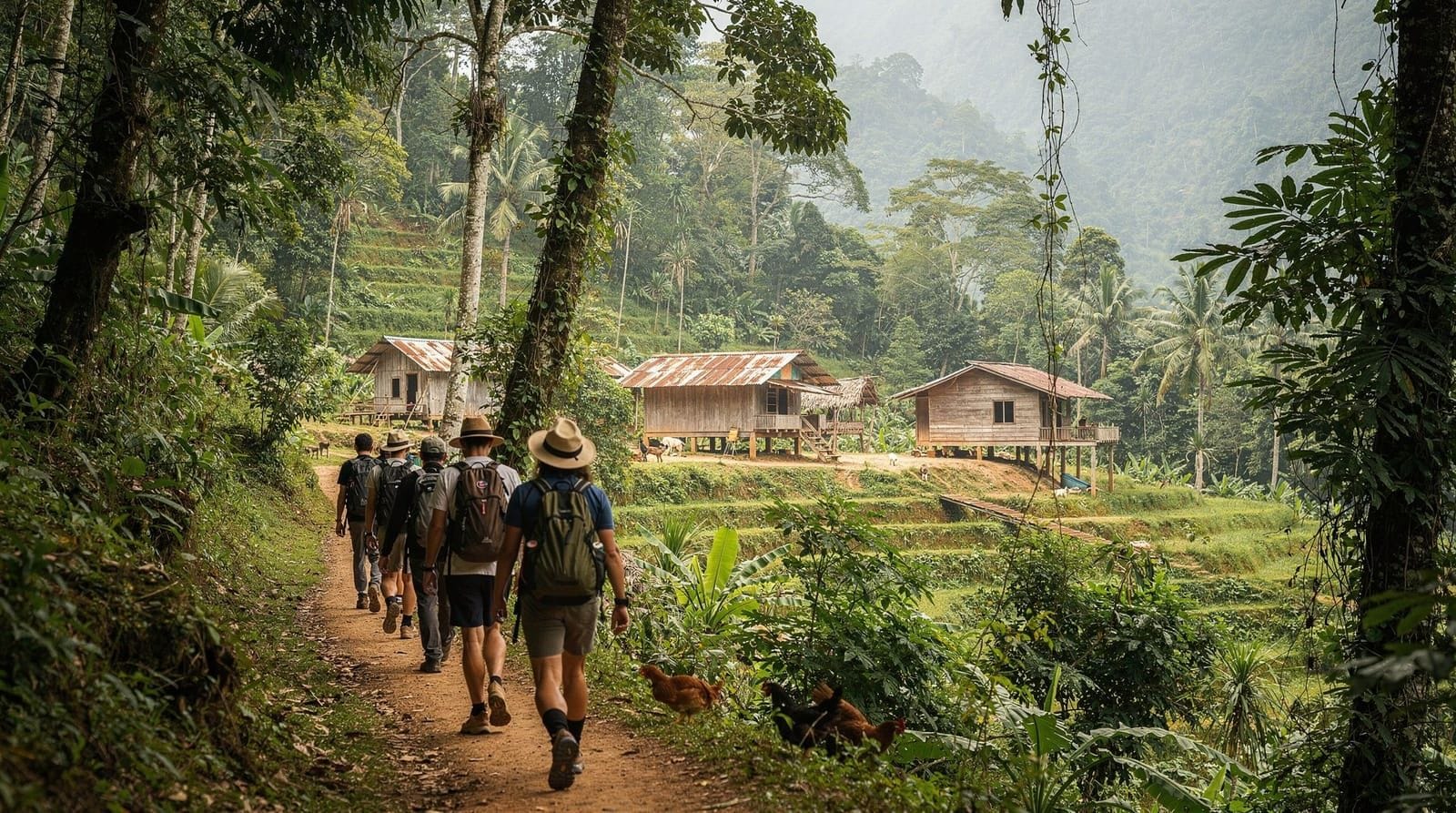
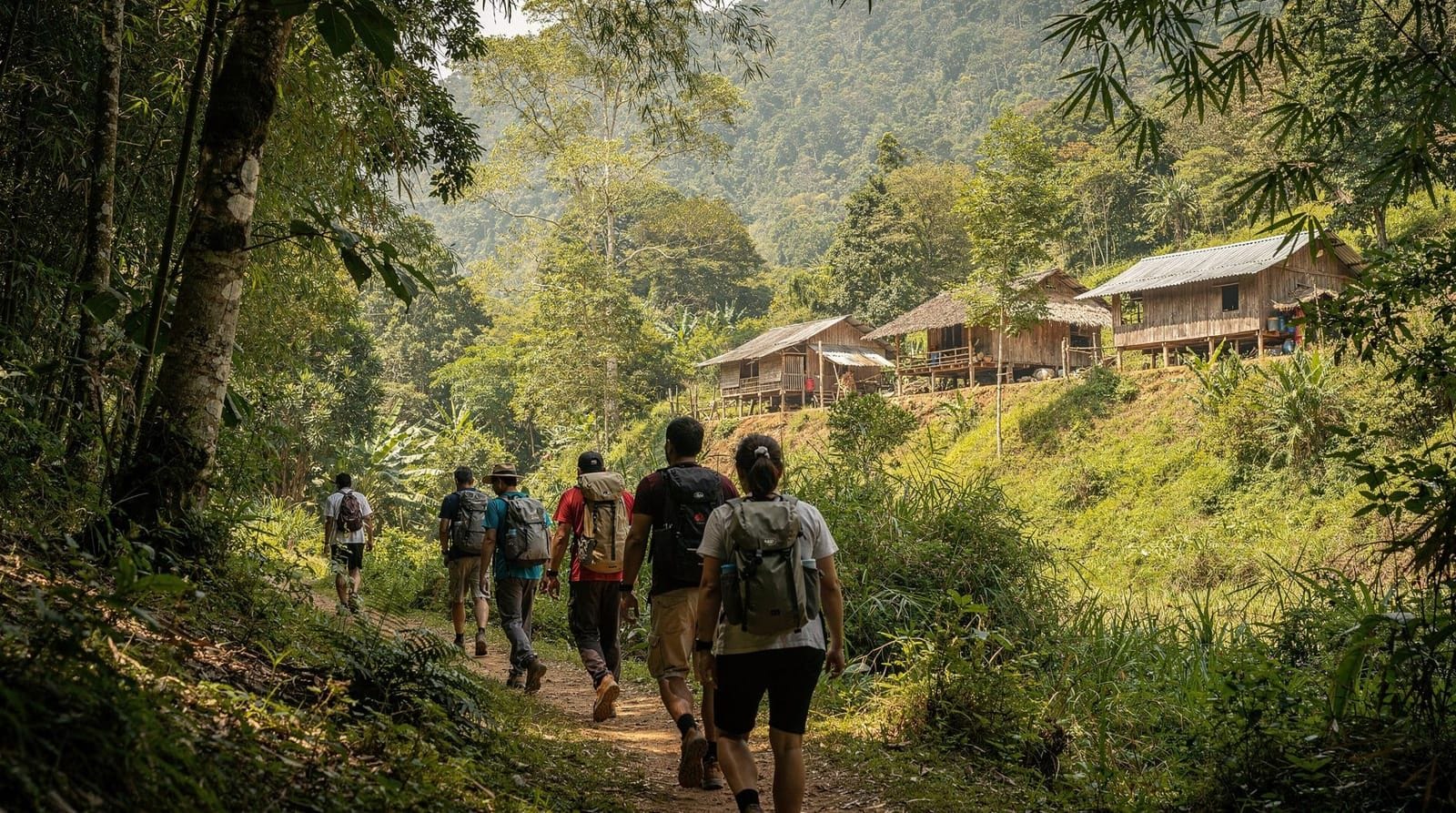
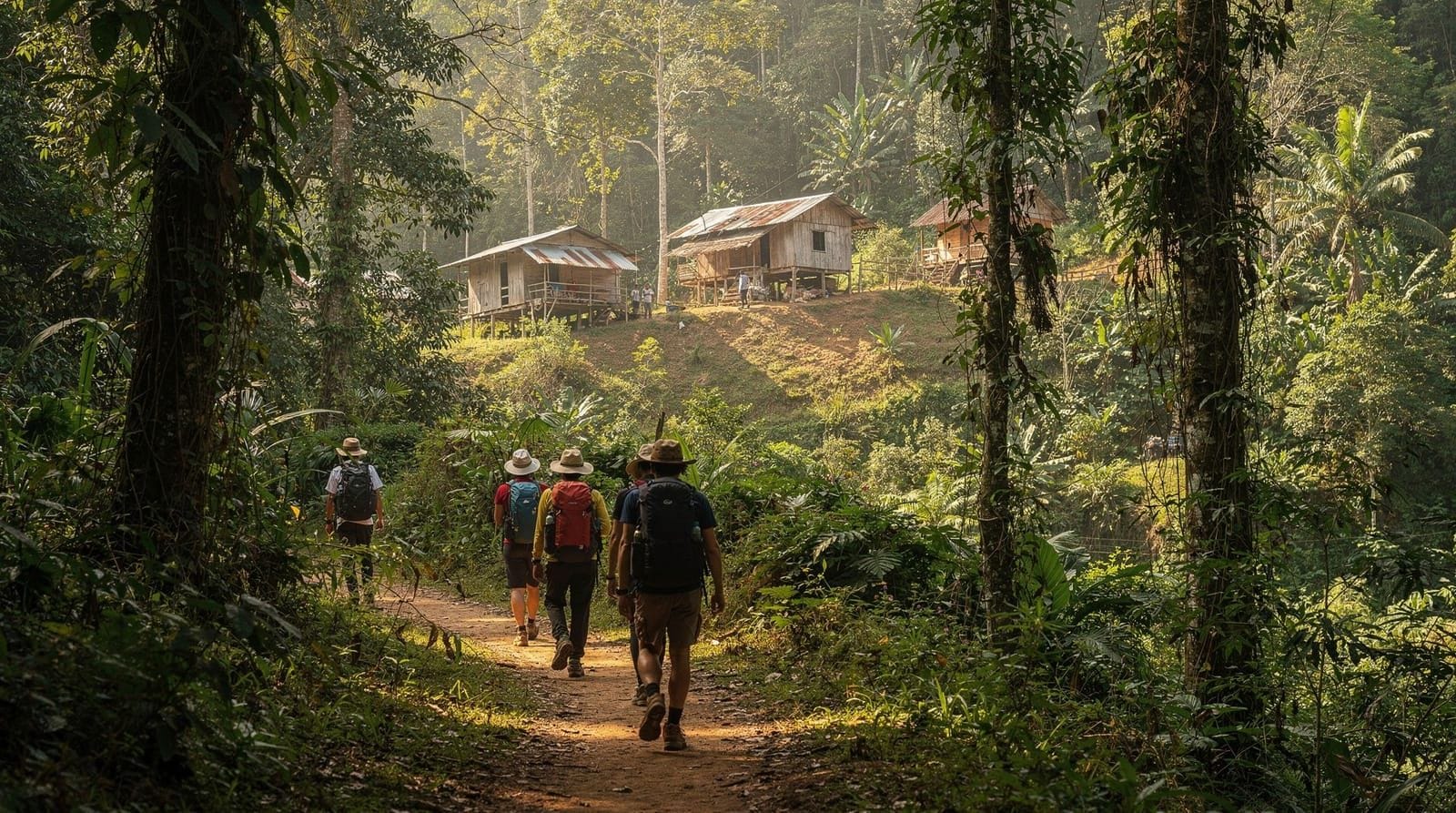
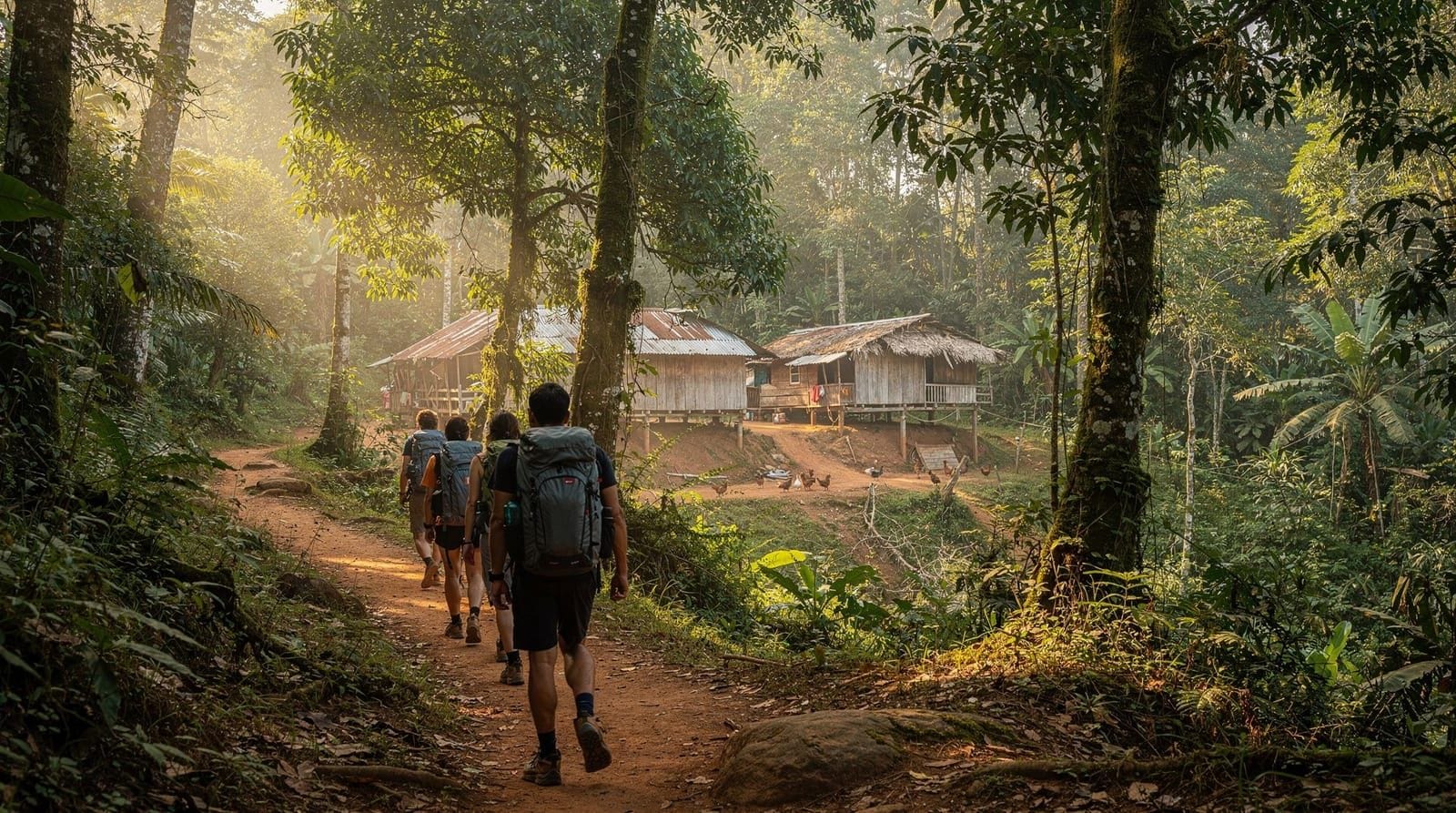
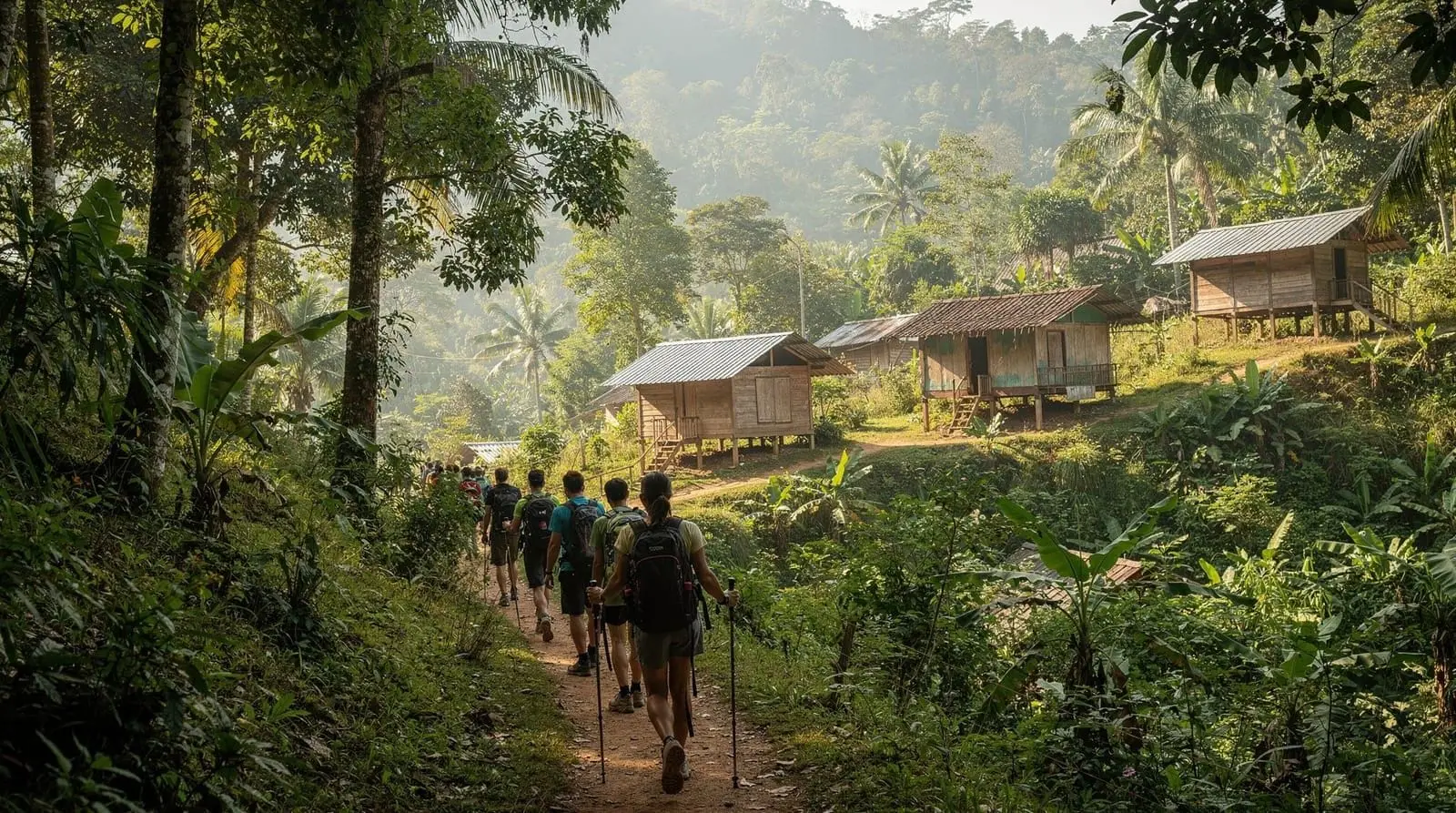
Almost every trek sold out of Chiang Mai follows a similar shape regardless of length. A driver-guide (or a van transfer to meet a local guide) takes you out of the city, usually 1-3 hours depending on the route, into hill country toward Mae Wang, Mae Taeng, Doi Inthanon’s foothills, or further out toward Chiang Dao and Mae Hong Son. From a trailhead, you walk a few hours of forest or ridge trail, often pausing at a waterfall for swimming, before arriving at a village for the night on multi-day routes, or looping back to the van on a one-day trek.
Multi-day treks add a second and sometimes third day: another few hours of walking, frequently to a different village or a specific attraction like bamboo rafting or an elephant visit, before returning to Chiang Mai on the final afternoon. This two-day hidden jungle trek with a local hill-tribe stay is a representative example of the format: a full first day of walking, an overnight in a village setting away from the main tourist routes, and a second day covering different terrain before the drive back.
What a typical day looks like
Mornings start early, usually a 7:30-8:30am hotel pickup, since the drive out of the city and the walking itself both benefit from beating the day’s heat. Once at the trailhead, guides set a pace suited to the group, typically covering 5-12km over 3-6 hours depending on the route and day, with regular rest stops and usually a lunch break built around rice, vegetables, and a protein cooked by the guide or served at a village home.
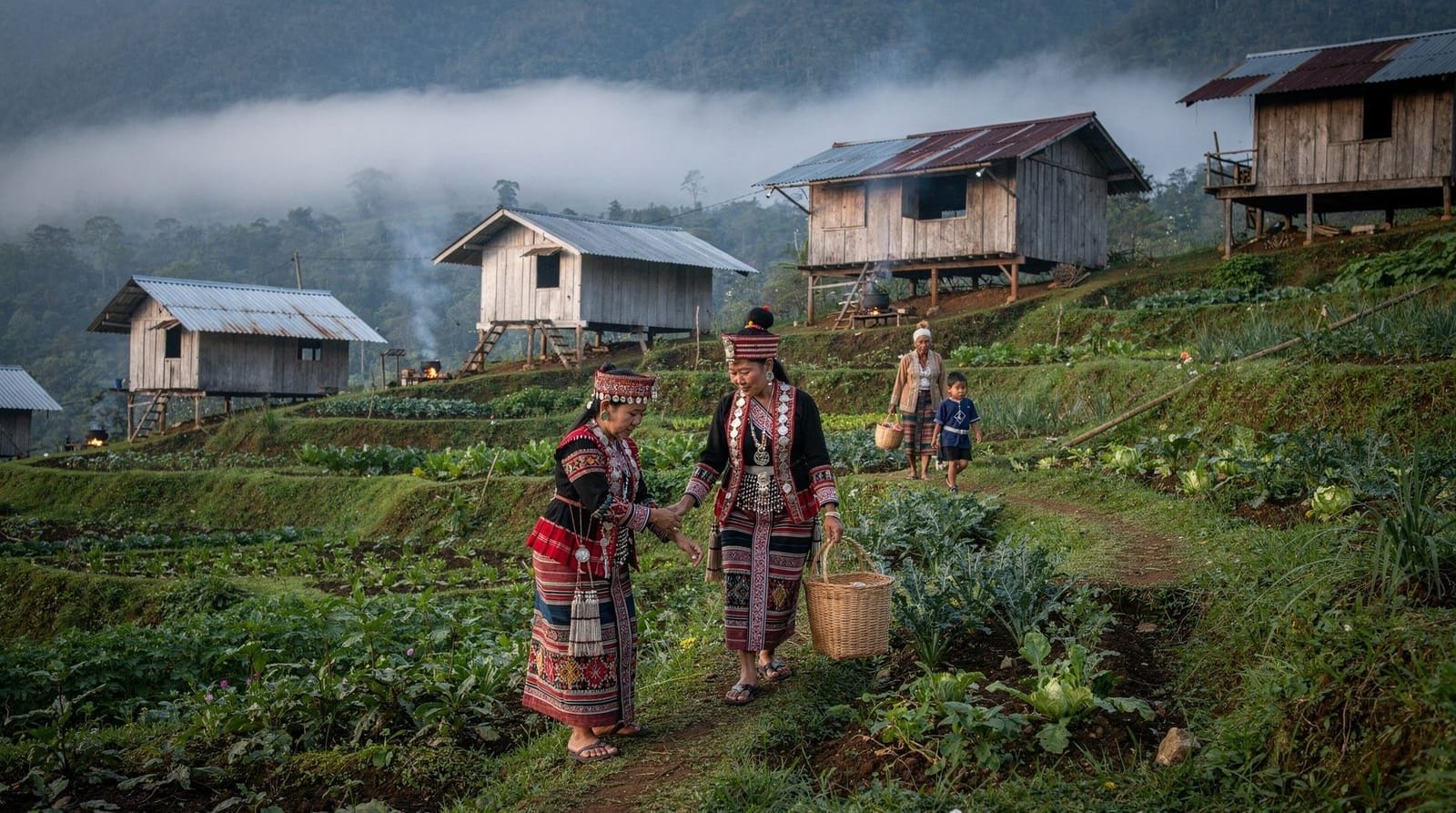
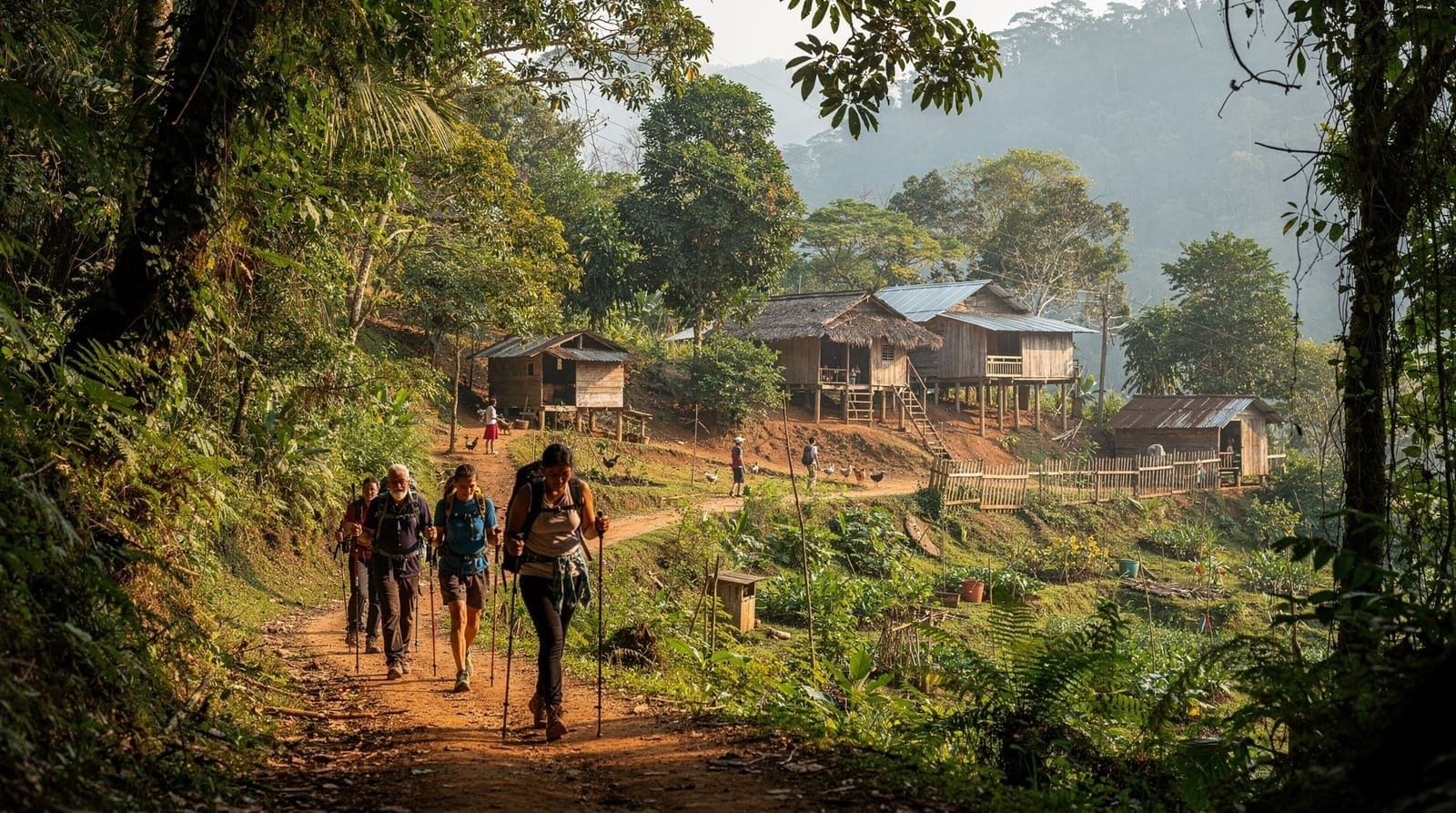
Villages on overnight routes usually put visitors up in a raised bamboo or wood longhouse, either a dedicated guesthouse structure or a section of a family home set aside for guests, with a shared mattress-on-the-floor arrangement rather than private rooms. Expect no hot water and, on more remote routes, a squat toilet rather than a western one — a detail worth knowing in advance rather than discovering on arrival. Evenings typically involve a home-cooked dinner, and on a good route, informal conversation with a village host through the guide, which is often the most memorable part of the whole trip precisely because it isn’t staged for a group.
A full-day tour visiting five hill tribes with a guide and van covers a broader, faster-paced sample of communities in a single day for travelers who want breadth over depth without an overnight commitment — see our one-day trekking guide for more on this format.
Which hill tribes you’ll actually meet
Northern Thailand’s hill-tribe population includes several genuinely distinct ethnic groups, each with its own language, dress, and history, and it’s worth knowing which one you’re likely to visit rather than treating “hill tribe” as one interchangeable category:
- Karen (also called Kariang or, by some communities, Pga K’nyau) are the largest group in the region and the community most Chiang Mai treks pass through, farming rice and running homestays across Mae Wang, Mae Taeng, and the Doi Inthanon foothills.
- Hmong villages sit at higher elevations, notably around Doi Suthep and Doi Pui, and are known for distinctive embroidered textiles and, historically, cash-crop farming that has shifted toward tourism, coffee, and flower cultivation over recent decades.
- Lahu communities are smaller and less visited on standard commercial routes, more common on longer or more remote itineraries toward Chiang Dao and Mae Hong Son.
- Lisu villages, similarly, appear on a smaller number of routes further from the city, known for elaborate multicolored dress worn especially at Lisu New Year.
- Akha communities are more strongly associated with routes out of Chiang Rai and the far north rather than Chiang Mai proper, though a handful of longer Chiang Mai itineraries do reach Akha villages.
Ask your operator directly which community a given trek visits. A specific, named answer (Karen village near Mae Wang, Hmong village on Doi Pui) is a good sign; a vague “hill tribe village” without specifics is worth a follow-up question.
Ethical trekking: what to look for
The single most important distinction in this industry is between a genuine community visit, where a village hosts trekkers, keeps a meaningful share of what you pay, and controls its own tourism on its own terms, and a staged “cultural show” built purely for photographs with little benefit flowing back to residents. This distinction matters most acutely around the so-called long-neck Kayan villages found on some day-trip itineraries, which our dedicated guide on long-neck Karen villages covers in full, and it applies in a milder form across hill-tribe trekking generally.
Signs of a genuinely community-run visit: a named village and named guide, a route that includes actual overnight hospitality (not just a drive-through photo stop), and an operator willing to explain, specifically, how villages benefit from your visit. Our guide to visiting hill-tribe villages responsibly goes deeper on the practical checklist.
Licensing is a useful, if imperfect, signal too. Trekking guides working commercially in Thailand are meant to be registered with the Tourism Authority of Thailand or hold a local guide license, and reputable operators can produce this on request. A licensed guide isn’t automatically a guarantee of an ethical itinerary, but an operator that can’t or won’t confirm its guides are licensed is worth treating with more scepticism than one that answers plainly. It’s also worth asking whether the guide is from the community you’re visiting or from outside it entirely, since local guides tend to have a real ongoing relationship with the village rather than a purely transactional one, and that relationship usually shows in how the visit is actually run.
A two-day Karen village homestay with meals is a useful reference point for what the community-first version of this trip looks like: an actual homestay arrangement rather than a drive-by stop, with meals prepared and shared by the host family.
Elephants and trekking: the honest version
Some multi-day treks bundle in a stop at an elephant camp, and this is exactly where the industry’s worst practices survive longest, since riding and performance-based “elephant shows” remain more common on bundled add-ons than on dedicated sanctuary tours. If a trek’s itinerary mentions elephant riding at any point, treat it as a signal to look elsewhere, both for the animal’s welfare and because it usually correlates with lower standards generally. Our guide on why elephant riding causes harm explains the physical damage involved, and our ethical elephant sanctuary guide covers how to book a genuinely no-riding program, whether as a standalone visit or paired with a trek.
Difficulty and fitness: what to actually expect
Commercial treks out of Chiang Mai are built for a broad range of fitness levels, not serious mountaineers, and daily distances of 5-12km on maintained trail with regular breaks are typical rather than the exception. That said, routes vary genuinely: Doi Inthanon’s Kew Mae Pan and Pha Dok Siew trails involve real elevation change, while lower valleys around Mae Wang stay closer to flat, forested terrain. If mobility or stamina is a concern, ask specifically about total distance, elevation gain, and terrain (paved, dirt, rocky, or river crossings) rather than relying on marketing terms like “easy” or “moderate,” which aren’t standardized across operators.
Bamboo rafting and waterfall stops
Many multi-day routes include a bamboo rafting section, floating a shallow river on a hand-built raft poled by a local guide, usually as an afternoon activity between walking sections rather than the main event. It’s a genuinely relaxing counterpoint to a morning of hiking and rarely involves real whitewater. Our bamboo rafting guide covers exactly what to expect, what to wear, and which routes include it as standard.
A handful of operators build routes around a specific theme rather than the standard waterfall-and-village combination, including hill-tribe-grown coffee farm treks with roasting and brewing included, worth seeking out if you want something a little different from the norm.
What multi-day trekking costs
One-day treks run roughly 1,200-2,200 THB (about 33-61 USD at 36 THB/USD, an approximate rate), typically including hotel transfer, guide, lunch, and any waterfall or bamboo-rafting stop. Two-day, one-night treks run 2,500-4,000 THB (about 70-111 USD), covering the overnight village stay, all meals, and transport. Three-day treks, which cover more ground and often reach more remote villages, run 3,500-5,500 THB (about 97-153 USD). A three-day jungle trek with a White Karen local guide sits at the upper end of this range and reflects the extra distance and depth involved in a genuinely multi-day route.
Prices well below these ranges are worth a second look — genuine village-stay fees, a fairly paid local guide, and proper food for two or three days aren’t free, and a suspiciously cheap trek is more likely cutting corners on exactly those things.
When to go
November through February, the cool season, is the most comfortable window for trekking: dry trails, clear skies, and cool enough temperatures that a few hours of uphill walking doesn’t become uncomfortably hot. The rainy season (roughly June-October) brings mud, occasional leeches on lower, wetter trails, and a real chance of a route being modified or postponed after heavy rain, though also lush, green scenery and fuller waterfalls. Late February through April brings the region’s burning-season haze from agricultural and forest fires, which doesn’t stop treks running but does dull long-distance mountain views and can affect visitors with respiratory sensitivity. Our trekking season guide breaks down month by month what to expect.
What to pack
Multi-day treks in particular reward planning ahead: proper broken-in trail shoes rather than new ones, quick-dry clothing, a headlamp for villages without reliable electricity, insect repellent, and a dry bag for electronics given the waterfall and rafting stops most routes include. Our full packing list for multi-day treks covers the complete gear list, including what village hosts typically can and can’t supply on arrival.
Where treks depart from and which valleys they cover
Most Chiang Mai treks operate out of a handful of valleys, each with a slightly different character. Mae Wang, roughly an hour southwest of the city, is the closest cluster and the default for shorter one-day and two-day routes, with a mix of Karen villages, bamboo rafting, and elephant camps packed into a relatively compact area. Mae Taeng, north of the city, offers similar terrain with a slightly different set of villages and is a common base for treks bundled with ziplining or ATV add-ons. Further out, routes toward Chiang Dao and the Doi Inthanon foothills tend to be quieter and less packaged, often reaching Karen communities that see fewer day-tour visitors, while the longest itineraries push toward Mae Hong Son province, genuinely remote hill country that essentially requires an overnight commitment given the distance involved. Our comparison of trekking routes across northern Thailand breaks down how these regions differ in practice.
Combining a trek with the rest of your trip
A trek doesn’t have to stand alone. Travelers with a week or more in the region often pair a two-day trek with a separate day trip to Doi Inthanon for the waterfalls and summit, or extend into a proper loop through Pai and Mae Hong Son, both of which sit in genuine hill-tribe country and let you keep exploring similar terrain at a slower pace. If jungle walking turns out to be the highlight of your trip, Chiang Dao offers a shorter, cave-focused day trip that works well as a lower-commitment follow-up rather than another full multi-day trek. Travelers deciding how much of their itinerary to dedicate to this kind of activity can also check our broader Chiang Mai adventure guide for how trekking compares against ziplining, rafting, and ATV options in terms of time and cost.
Booking direct vs through a hotel or agent
Trekking operators range from large, well-reviewed outfits running daily departures to small family operations working with a single village. Either can be genuinely good; what matters more is checking recent reviews specifically for mentions of elephant riding, group size, and whether the “hill tribe” visited is named specifically. A hotel-arranged trek is often reliable but rarely cheaper than booking directly, since the hotel typically takes a commission either way.
Frequently asked questions about Chiang Mai trekking
Do I need to be fit to trek near Chiang Mai?
Not especially. Most commercial treks cover 5-12km a day of moderate, well-used trail with rest stops, not technical mountaineering. A reasonable level of everyday fitness and comfort walking on uneven, sometimes muddy ground for a few hours is enough for the vast majority of routes.
Is trekking in Chiang Mai safe?
Yes, for the commercial routes covered by licensed operators, which make up the overwhelming majority of bookings. Guides know the trail, carry basic first aid, and routes avoid genuinely hazardous terrain. The realistic risks are mundane: twisted ankles on wet rock, dehydration, and sunburn on exposed ridge sections.
What’s the difference between a one-day and multi-day trek?
A one-day trek is a single hike, usually 3-5 hours of walking plus a waterfall or village stop, done as a day trip with no overnight stay. Multi-day treks add one or more nights in a village or jungle camp and go deeper into hill-tribe areas not accessible on a day-trip schedule.
Which hill tribes will I actually meet?
Most routes pass through Karen, Hmong, Lahu, or Lisu communities depending on the valley. Akha villages are more associated with routes out of Chiang Rai. Ask your operator which specific community a trek visits rather than accepting a vague answer.
Is elephant riding included in trekking packages?
It shouldn’t be, and reputable operators have dropped it entirely. A package still advertising elephant riding is a red flag about the operator’s overall standards, not just their elephant policy.
When is the best time to trek near Chiang Mai?
November through February offers the driest trails and clearest views. The rainy season (roughly June-October) brings mud and occasional leeches on lower routes, and February-April brings burning-season haze that dulls mountain views without stopping treks from running.
Can beginners or families with kids join a multi-day trek?
Younger kids and first-timers generally do better on a one-day trek or an easier two-day route, since some multi-day routes involve genuinely rustic overnight conditions. Ask about overnight facilities and daily walking distance before booking a multi-day route for a family.
Top experiences
Bookable activities with verified prices and instant confirmation on GetYourGuide.