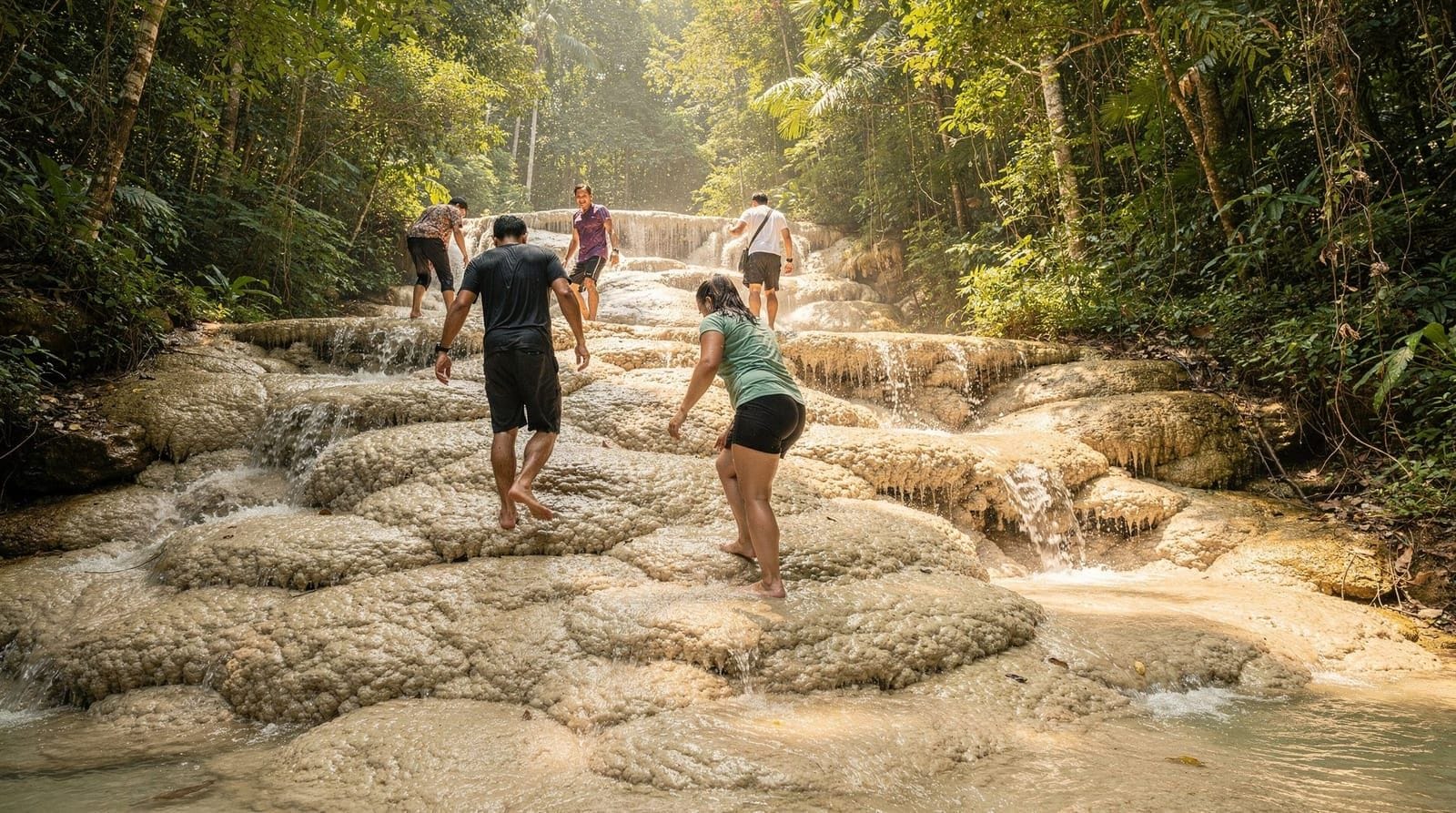
Chiang Mai adventure guide: ziplines, ATV, rafting and climbing
Flight of the Gibbon Full Day Chiang Mai Zipline Adventure
Duration: Full day
What adventure activities can you actually do around Chiang Mai?
The core lineup is ziplining (Flight of the Gibbon and several canopy operators near Mae Kampong), white-water rafting on the Mae Taeng river, ATV and quad biking through jungle trails, rock climbing at Crazy Horse Buttress, and cliff jumping at the Grand Canyon Hang Dong quarry. Most run out of the Mae Taeng valley north of the city, cost 1,200-3,500 THB (roughly $34-$100) per activity, and combine well into a single half- or full-day package.
Chiang Mai’s reputation runs mostly on temples, elephants and street food, but the province also sits at the edge of a genuinely mountainous, forested region that supports a small but well-established adventure sports scene. None of it competes with New Zealand-style extreme sports — this is guided, moderate-intensity adventure travel aimed at ordinary visitors rather than specialists — but for a few hours or a full day it’s a real change of pace from temple-hopping and market browsing. This guide covers what’s actually on offer, where it happens, what it costs, and the honest safety considerations that matter more here than the marketing copy usually admits.
Almost everything on this list clusters around the Mae Taeng valley, roughly 40-60 minutes north of the city, and around Hang Dong and San Kamphaeng to the south — meaning most activities are accessible as a half-day add-on rather than requiring a dedicated overnight trip.
The adventure hub: Mae Taeng valley and beyond
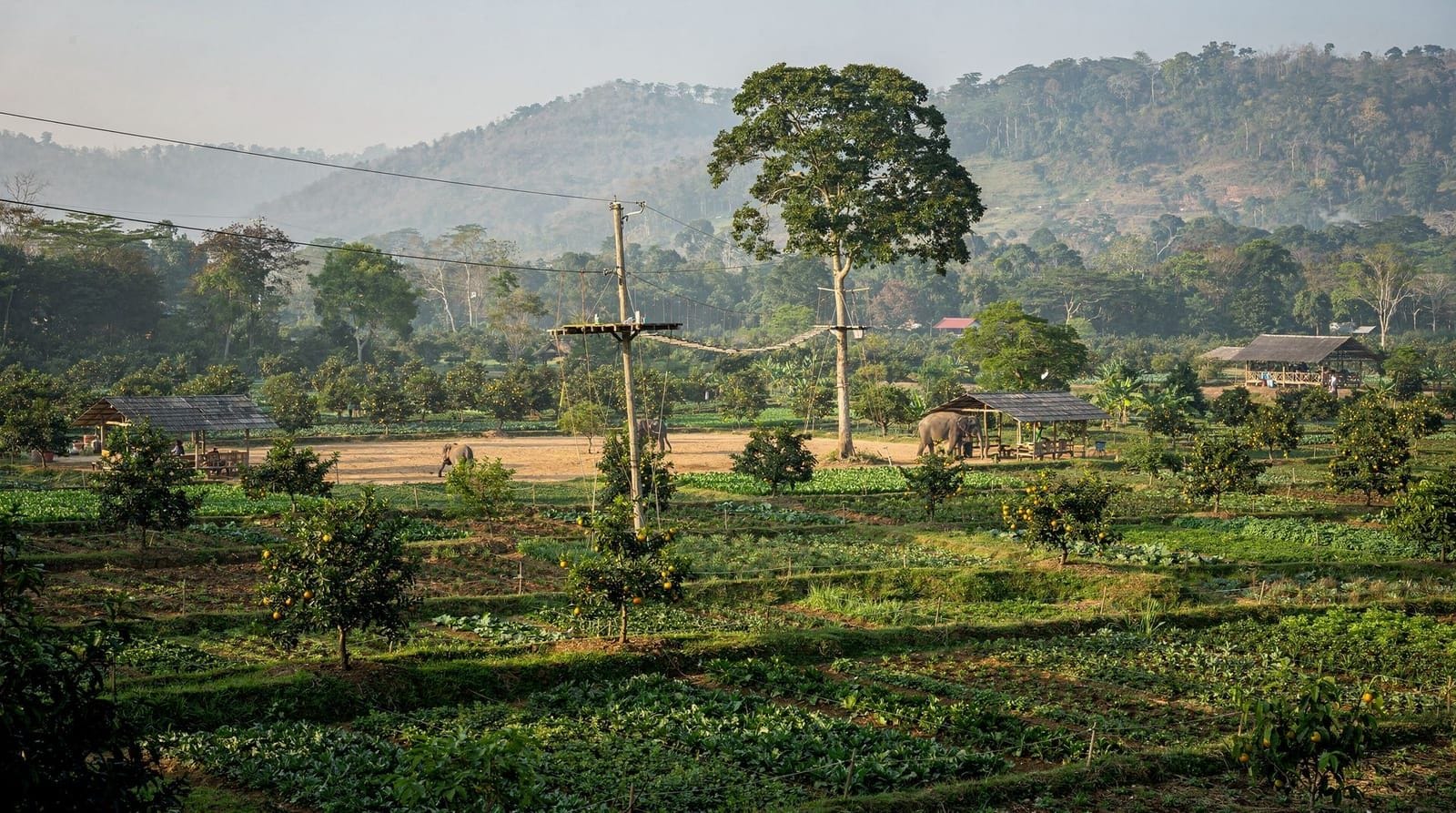
The Mae Taeng valley, north of Chiang Mai toward Mae Malai, is where most of the province’s commercial adventure operators are based. Its role comes down to geography: a genuine river with rapids, forested hillsides steep enough for zipline canopy runs, and enough flat riverside land for ATV trail networks and elephant camps to coexist within a compact area. Most operators offer hotel pickup from Chiang Mai, so you don’t need your own transport to reach the valley, and many packages combine two or three activities — rafting plus ATV, or zipline plus an elephant visit — into a single day to make the drive worthwhile.
Outside the Mae Taeng cluster, rock climbing centers on San Kamphaeng to the east, cliff jumping happens at the Hang Dong quarry southwest of the city (see our Mae Rim and Mae Sa Valley destination pages for the wider valley context), and caving-and-kayaking combination trips run out of Chiang Dao, about 90 minutes north.
Ziplining: Flight of the Gibbon and the canopy operators
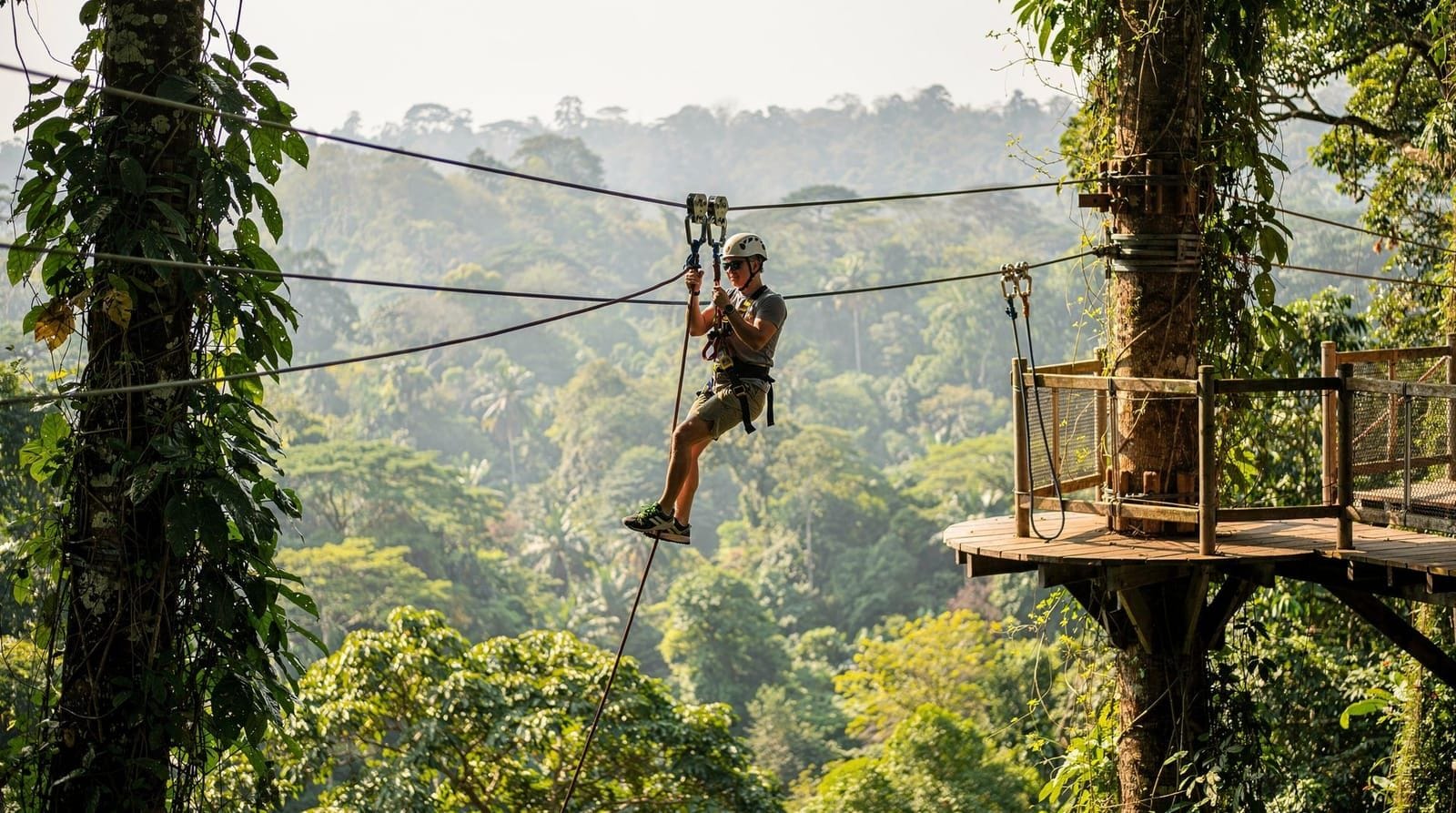
Flight of the Gibbon, based near Mae Kampong village, is the best-known zipline operator in the region and the one most tour listings default to — a full-day canopy tour combining a genuine forest-canopy zipline course (long lines, some over 300 meters, strung between platforms built into tall trees) with a village lunch stop. It isn’t the cheapest option, but it’s the most established, with routine equipment inspection and a track record that smaller newer operators haven’t yet built.
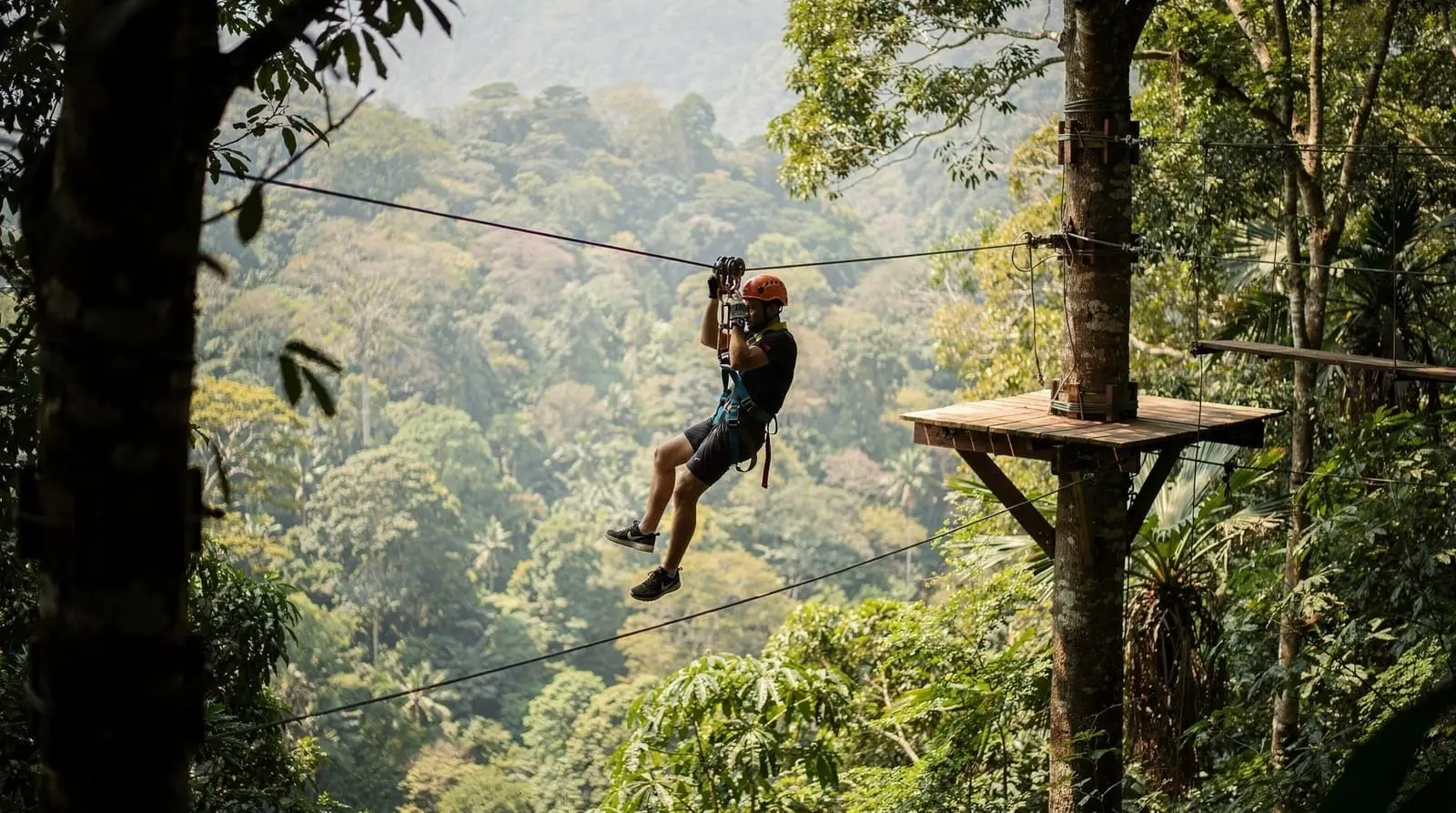
A handful of competing canopy operators — branded as Jungle Flight, Skyline, and various segway-and-zipline combination tours — run shorter, cheaper courses closer to the city, generally in the 1-3 hour range rather than a full day. These suit visitors who want the zipline experience without committing an entire day, though the canopy itself tends to be less dramatic than Flight of the Gibbon’s original forest course. Our dedicated zipline guide breaks down how the main operators compare on line length, price and what’s actually included.
Flight of the Gibbon’s full-day zipline adventure is the standard booking for travelers who want the best-known course rather than the cheapest one, and it includes hotel transfer both ways plus lunch.
White-water rafting on the Mae Taeng river
Rafting trips run on inflatable rafts down graded sections of the Mae Taeng, typically covering 8-10km over roughly two to three hours on the water, with a safety briefing and life jackets provided beforehand. Most commercial trips are pitched as “soft” or beginner-friendly rather than technical whitewater, suitable for first-time rafters, though the actual intensity swings noticeably with the season — see the seasonal note below before assuming a fixed experience.
Full details on operators, river sections and what grade to expect by month are in our white-water rafting guide, which also covers how rafting combines with ATV tours on the same river system.
ATV and quad biking through the jungle
ATV tours run on dirt trail networks through jungle and farmland near the Mae Taeng valley, typically in 3-hour blocks covering muddy tracks, shallow river crossings and the occasional steep climb, with a guide leading the group at a controlled pace rather than allowing independent high-speed riding. Most operators pair ATV with rafting or a waterfall stop in a combined package, since the two activities share the same river-valley geography and morning-versus-afternoon scheduling works well together.
A combined 3-hour ATV and white-water rafting adventure is the most common way to try both activities in a single half day, and it’s usually cheaper per activity than booking each separately. Our ATV and quad biking guide covers trail difficulty, what to wear, and which operators run the longer full-day routes.
Rock climbing at Crazy Horse Buttress and San Kamphaeng
Rock climbing is a smaller, more specialist niche than the zipline-ATV-rafting cluster, centered on Crazy Horse Buttress in the Mae On district east of the city — a limestone crag with routes across a wide difficulty range, from beginner top-rope routes to serious multi-pitch climbs for experienced climbers. It’s genuinely a different kind of activity: smaller groups, more one-on-one instruction time, and typically a half-day minimum rather than a quick add-on. Our rock climbing guide has the full rundown on route grades, gear rental, and which local guide services operate at the crag, since — unlike ziplining and ATV riding — this isn’t something bookable through the same mainstream tour catalogue.
Grand Canyon Hang Dong: cliff jumping at a flooded quarry
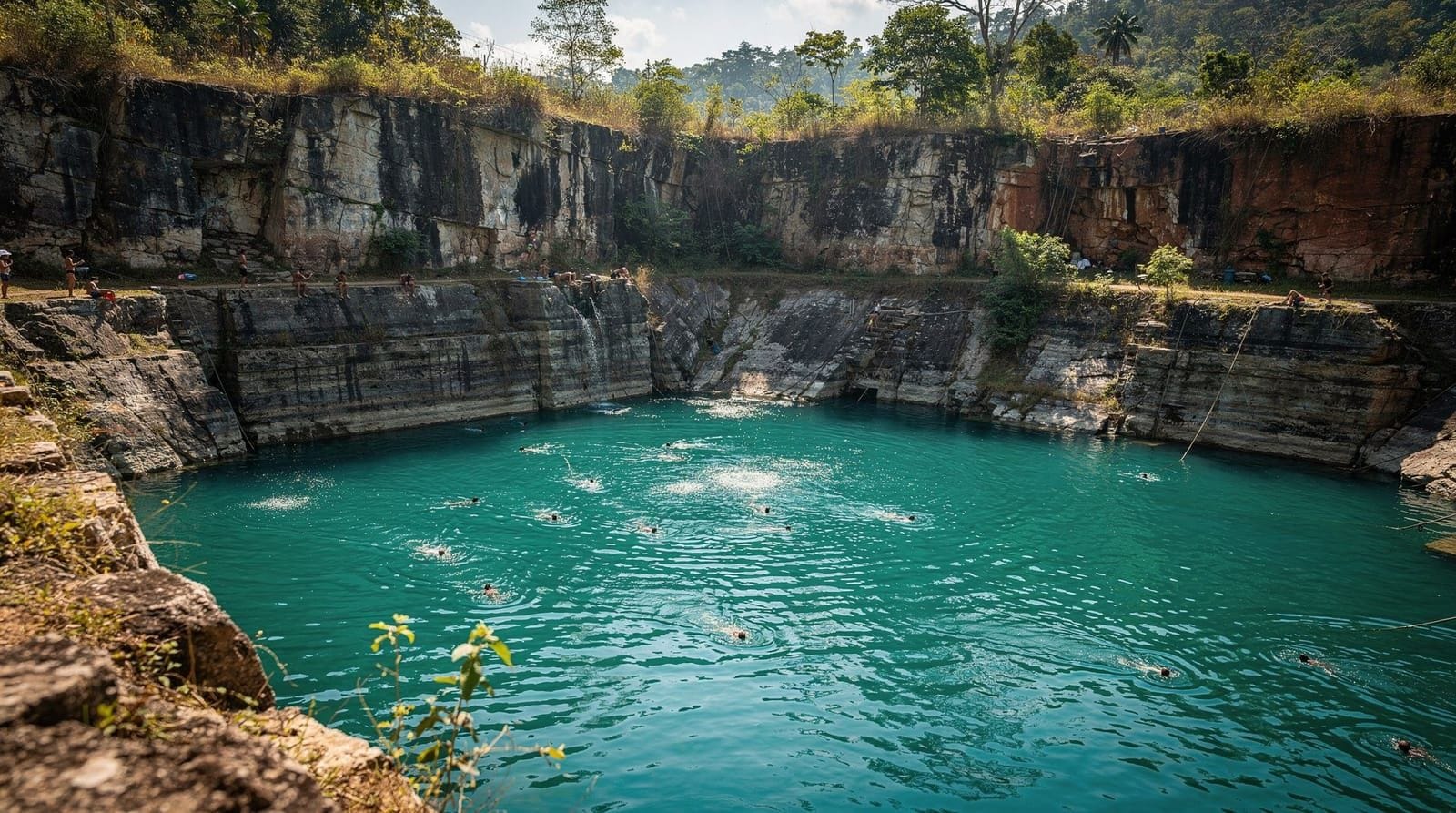
Southwest of the city near Hang Dong, a former stone quarry filled with rainwater over decades to form a striking turquoise lake, now run as the semi-formal “Grand Canyon” water park with marked cliff-jumping platforms, kayak rental and a lakeside café area. It’s popular with both tourists and local students on weekends, and photographs dramatically, but it deserves a more honest safety framing than most listings give it — see the dedicated section below and our Grand Canyon Hang Dong guide for jump-height specifics and current safety notes.
A standard Grand Canyon Water Park entry ticket covers access to the swimming and jumping areas; some ticket options add hotel transfer for travelers without their own transport.
Renting a motorbike vs joining a tour
A genuine minority of visitors choose to rent a motorbike and reach adventure sites independently rather than joining a guided tour — this can work for confident, licensed riders visiting fixed-location sites like Grand Canyon Hang Dong or Sticky Waterfalls, but it doesn’t substitute for the ATV, rafting or zipline activities themselves, which require the operator’s own vehicles and equipment regardless of how you arrive. Our motorbike rental guide covers the honest licensing and insurance realities, which matter more here than most rental shops volunteer upfront.
Combining activities: multi-adventure day packages
Because the Mae Taeng valley concentrates several activities in one area, many operators sell combination packages — ATV plus rafting, rafting plus a waterfall stop, or a zipline morning followed by an elephant sanctuary afternoon — as a single full-day booking with one pickup and one guide team. These packages are usually better value than booking two separate half-day tours, since you avoid paying for two separate transfers, though the pace can feel rushed if you’d genuinely rather linger at one activity.
A full-day beginner-friendly rafting and ATV package is a reasonable way to sample both activities without a packed, rushed itinerary, aimed specifically at first-timers rather than adrenaline seekers. For a caving-and-kayaking alternative further north, the full-day Chiang Dao caving and jungle kayaking trip pairs a genuinely different underground environment with a paddling component, worth considering if you’ve already done the standard Mae Taeng lineup on a previous visit.
What to wear and bring
Closed-toe shoes are effectively mandatory for ATV riding and rock climbing, and strongly recommended for ziplining, since sandals can slip out of footrests or platform harness clips. Quick-dry clothing works better than cotton for rafting and Grand Canyon Hang Dong, both of which guarantee you’ll get soaked, while a change of clothes for the ride home is worth packing regardless of which activity you choose. Sunscreen matters more than most visitors expect even on overcast days, since several hours on an open ATV trail or a raft with no shade adds up to real sun exposure. Leave valuables at your hotel rather than carrying them — reputable operators offer dry bags or lockers for rafting and Grand Canyon Hang Dong, but phones and wallets are routinely lost to water or mud on activities that weren’t designed around carrying anything.
Group size and private options
Most zipline, ATV and rafting tours run as shared group departures, typically 6-12 travelers per group, which keeps prices down but means less individual attention from guides and a fixed pace set by the group. Private tours are available for most of these activities at a meaningful price premium — often 1.5 to 2 times the shared-group rate — and are worth considering for families with young children, nervous first-timers who want more guide attention, or travelers on a tight schedule who don’t want to wait on slower group members. Rock climbing at Crazy Horse Buttress is the exception: it’s effectively always small-group or private by nature of how top-rope instruction works, so the group-size trade-off that applies to ziplining and ATV riding doesn’t really apply there.
Booking ahead vs same-day
Zipline and ATV operators generally accept same-day or next-day bookings during shoulder season, but cool-season weekends (November-February) and Thai public holidays can sell out popular departure times a few days ahead, particularly for Flight of the Gibbon’s most popular morning slots. Rafting availability depends more on river conditions than demand, so a same-day check with your hotel or a local tour desk is often reasonable outside peak season. If you have a fixed single free day in your itinerary and a specific activity you don’t want to miss, booking two to three days ahead removes the risk of a sold-out slot forcing a change of plans.
Safety standards worth checking before booking
Chiang Mai’s adventure tourism industry isn’t uniformly regulated the way it might be in countries with stricter outdoor-activity licensing, so equipment condition and guide competence vary noticeably between operators even within the same activity category. Before booking, it’s worth asking directly about harness and helmet age (zipline and climbing gear degrades with UV exposure and use), guide-to-guest ratios on ATV tours, and whether the company carries liability or accident insurance that covers foreign tourists specifically — a surprising number don’t, leaving your own travel insurance as the only real coverage. Recent reviews mentioning worn gear, rushed safety briefings, or unclear injury-handling procedures are a more reliable signal than a polished marketing website, and it’s reasonable to walk away from a booking if a safety briefing feels perfunctory once you’re actually on site.
When to go: rainy-season river levels and safety
Season affects these activities more than most listings acknowledge. The Mae Taeng river runs low in the late dry season (roughly March-May), sometimes too low for a satisfying rafting experience, while the peak rainy months (July-September) bring higher, faster water that’s more thrilling but genuinely riskier if a raft capsizes — ask your operator directly about current water levels rather than booking blind based on a generic seasonal description. ATV trails turn muddier and more slippery in the rains, which some riders enjoy and others find unpleasant. Ziplining and rock climbing are less season-dependent, though heavy rain can delay or cancel a zipline session for safety reasons. For the fuller month-by-month picture, see our best time to visit Chiang Mai guide.
Costs: what adventure activities actually cost in Chiang Mai
Expect roughly 1,600-2,900 THB ($46-$83) for a zipline tour depending on operator and course length, 1,200-1,800 THB ($34-$51) for a half-day ATV tour, 1,800-2,800 THB ($51-$80) for combined full-day ATV-and-rafting packages, and 300-500 THB (roughly $8.50-$14) for Grand Canyon Hang Dong entry. Rock climbing with a guide service typically runs higher, often 2,500-4,000 THB ($71-$114) for a half day including gear, reflecting the smaller-group, instructor-led format. Most tour prices include hotel pickup and return; lunch and bottled water aren’t always included on shorter half-day tours, so confirm this when comparing listings that otherwise look similarly priced.
Frequently asked questions about Chiang Mai adventure activities
Is Chiang Mai a good destination for adventure sports?
Yes, for moderate, guided adventure activities rather than technical extreme sports. The Mae Taeng valley concentrates ziplining, rafting and ATV operators within a similar drive time of the city, so a first-timer can realistically try two or three activities across a single trip without much extra logistics.
How much does a typical adventure activity cost in Chiang Mai?
Zipline tours run roughly 1,600-2,900 THB ($46-$83), half-day ATV tours around 1,200-1,800 THB ($34-$51), and combined ATV-plus-rafting full-day packages 1,800-2,800 THB ($51-$80). Prices usually include hotel pickup, equipment and a guide, though lunch isn’t always included on shorter tours — check before booking.
Is white-water rafting safe on the Mae Taeng river?
It’s generally safe with a reputable operator using life jackets and helmets, but conditions change with the season. Rainy-season months (roughly July-October) bring higher, faster water that’s more exciting but also more serious if a raft flips, while dry-season months can leave the river too low to run at all. Ask your operator about current water levels rather than assuming a fixed grade year-round.
Do I need experience to try ziplining or ATV tours here?
No. Almost every zipline and ATV operator around Chiang Mai runs beginner-oriented tours with a safety briefing and staff-led sessions, not independent riding. Guides typically ride alongside ATV groups and platform staff clip zipline harnesses in and out at each stop, so prior experience isn’t required for the standard commercial tours.
What should I check before booking an adventure tour operator?
Ask specifically about equipment condition (harness age, helmet fit), guide-to-guest ratios, and whether the company carries accident insurance covering tourists — not all do. Read recent reviews for mentions of worn gear or rushed safety briefings rather than relying on a polished website alone, and confirm your own travel insurance covers the specific activity, since some policies exclude ATV riding or rock climbing by default.
Can I do rock climbing without prior climbing experience?
Yes, at Crazy Horse Buttress, where local guide services set up top-rope routes and provide gear for complete beginners alongside routes for experienced climbers. It’s a genuinely different activity from the commercial zipline and ATV tours — smaller groups, more instruction, and a half-day minimum commitment.
Is cliff jumping at Grand Canyon Hang Dong actually safe?
It carries real risk that the quarry’s popularity sometimes obscures — the water is deep flooded rock with variable depth and no lifeguard coverage in many spots, and jumping injuries do happen. Stick to marked jumping platforms, never jump after drinking, and treat it as a swim-and-view stop rather than the centerpiece of your day if you’re risk-averse.
What time of year is best for adventure activities around Chiang Mai?
The cool season (November-February) offers the most comfortable temperatures for ATV riding and climbing, while rafting is often best in the tail end of the rainy season (September-October) when rivers run fuller without the heaviest downpours. Avoid the burning-season haze months (roughly February-April) if outdoor visibility and air quality matter to your plans.
Top experiences
Bookable activities with verified prices and instant confirmation on GetYourGuide.

Flight of the Gibbon Full Day Chiang Mai Zipline Adventure
Chiang Mai 3-Hour ATV & White-Water Rafting Adventure

Chiang Mai: Full-Day Chiang Dao Caving & Jungle Kayaking

Grand Canyon Water Park Ticket
Chiang Mai: Jungle Flight Zipline Adventure