Day trips from Chiang Mai
Chiang Mai: Doi Inthanon National Park Eco-Friendly Tour
What are the best day trips from Chiang Mai?
Doi Inthanon (Thailand's highest peak, ~1.5-2hr away) and the closer half-day options — Doi Suthep, Chiang Dao, Sticky Waterfalls, San Kamphaeng — work well as genuine single-day trips. Chiang Rai and the Golden Triangle are doable in a long day (~3-3.5hr each way) but calmer as an overnight. Pai and Mae Hong Son are better treated as multi-day trips than rushed day trips.
Chiang Mai sits at the center of a genuinely varied stretch of northern Thailand, and within a few hours’ drive you can reach a national park holding the country’s highest point, a temple city with some of the most photographed modern art in Thailand, a misty mountain loop, a limestone cave beneath a 2,225m peak, and a scattering of waterfalls, hot springs and craft villages that rarely make the international guidebooks. The hard part isn’t finding things to do — it’s being honest about which of these actually work as a single day and which ones punish you for trying to rush them.
Quick answer: the closer, self-contained options — Doi Suthep, Sticky Waterfalls, Chiang Dao, San Kamphaeng — genuinely suit a single day or even a half day. Doi Inthanon needs a full day but delivers on it. Chiang Rai and the Golden Triangle are doable as one very long day (3-3.5 hours each way) but noticeably better as an overnight. Pai and the Mae Hong Son loop should not be squeezed into a single day at all — the driving time alone eats most of the trip.
The short list: which day trips are actually worth it
Rather than ranking every possible excursion by popularity, it’s more useful to sort them by how well they actually fit into one day:
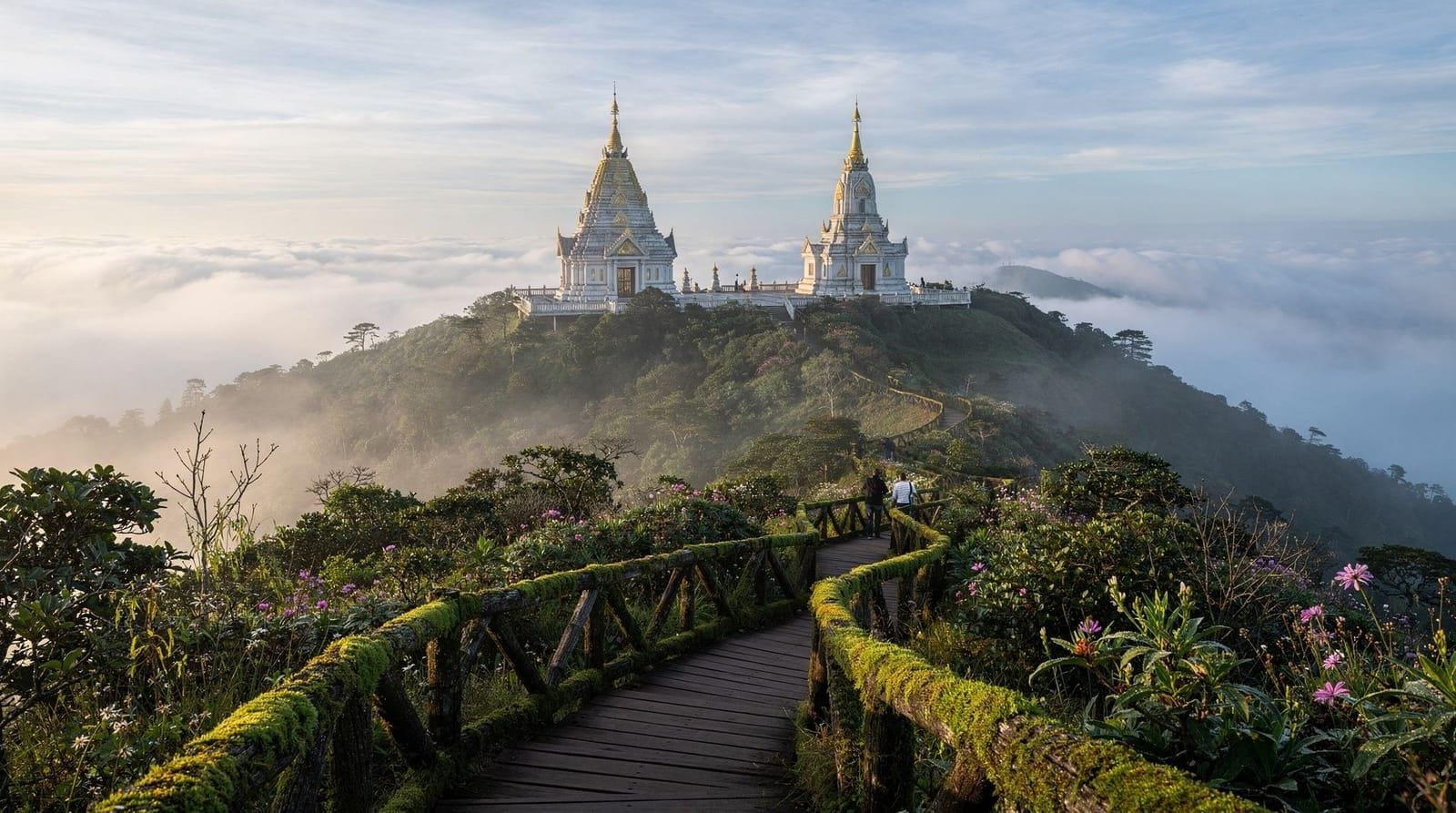
Full-day, worth the drive: Doi Inthanon is the standout — Thailand’s highest peak, twin royal pagodas, a cloud-forest nature trail and three separate waterfalls inside one national park, about 80km and 1.5-2 hours southwest of the city.
Half-day, easy wins: Doi Suthep (temple and city views, 15km/30min out), Chiang Dao (limestone cave beneath Thailand’s third-highest peak, 70km/1.5hr), Sticky Waterfalls at Bua Thong (climbable mineral falls, roughly 1 hour northeast) and San Kamphaeng hot springs paired with Bo Sang umbrella village (both roughly 45-60 minutes east).
Long single day, better as overnight: Chiang Rai and the Golden Triangle, roughly 3-3.5 hours each way (~180km).
Not a day trip: Pai (3-3.5 hours each way via the famous 762-curve road) and the full Mae Hong Son loop, which realistically needs 3-4 days.
Quieter alternative: Lampang, 100km/1.5 hours southeast, with far fewer tour buses than the Chiang Rai circuit.
Doi Inthanon: the highest-peak day
If you only do one longer day trip, this is the one most travelers rate highest afterward. The Doi Inthanon day trip guide covers logistics in detail, but the short version: a full-day tour departs Chiang Mai around 6:30-7:30am, reaches the misty summit boardwalk by mid-morning, then works down the mountain through the twin pagodas, a waterfall stop (usually Wachirathan, the most dramatic and least effort to reach), and often a Karen village visit at Mae Klang Luang. Foreigner park entry runs about 300 THB (~$8.50). A guided eco-friendly Doi Inthanon National Park tour is the simplest way to cover the spread-out sights without navigating the single winding access road yourself.
The trade-off is real: this is a full day, typically 8-10 hours door to door, and the summit area can be genuinely cold (near 0degC in the cool season), which surprises visitors who packed for tropical heat.
Chiang Rai and the Golden Triangle: the long-day trade-off
Chiang Rai holds the White Temple (Wat Rong Khun), the Blue Temple, the Black House museum, and — an hour further north — the Golden Triangle where Thailand, Laos and Myanmar meet along the Mekong River. All of it is genuinely worth seeing, and a White Temple and Golden Triangle day trip from Chiang Mai packages the whole loop into one very full day.
The honest catch is the distance: roughly 3-3.5 hours each way, meaning 6-7 hours of driving for what ends up being 4-5 hours actually at the sights. Many travelers who’ve done both a rushed Chiang Rai day trip and a relaxed overnight say the overnight wins by a wide margin — you see the same temples with less exhaustion and can add the night bazaar or a quieter morning at the Blue Temple before the tour buses arrive. If your schedule genuinely only allows one day, the Chiang Rai day trip guide and the Golden Triangle day trip guide go through exactly what a single day can and can’t cover.
Pai and Mae Hong Son: why these deserve more than a day
Pai’s 762-curve mountain road (Route 1095) is scenic, but it’s also the reason a same-day round trip is a bad idea for most travelers: 3-3.5 hours each way means 6-7 hours of driving to spend perhaps 3-4 hours in a town built around slowing down. Motion sickness on the curves is common enough that operators mention it upfront. The honest recommendation, covered fully in Pai day trip vs overnight, is at least one night — a private car day tour to Pai’s highlights works for those truly locked into a single day, but almost everyone who’s tried both says the overnight was worth rearranging plans for.
Mae Hong Son goes further still. A direct visit to Mae Hong Son town alone is 6-7 hours from Chiang Mai one-way; the full loop through Pai, Mae Hong Son and back is a multi-day mountain road trip, not a day trip in any realistic sense. The Mae Hong Son loop guide covers how the loop actually works for those with 3-4 days to spare.
The closer, easier half-day options
Not every worthwhile trip requires a full day of driving. Several destinations sit close enough to Chiang Mai that a half day — sometimes even a few hours after lunch — covers them comfortably.
Doi Suthep, at just 15km and about 30 minutes from the old city, is the classic half-day trip: the gold-chedi mountain temple, reached by the 306-step Naga staircase, with genuine city views on a clear morning. The Doi Suthep half-day itinerary covers combining it with Bhubing Palace’s gardens and the Doi Pui Hmong village on the same mountain road.
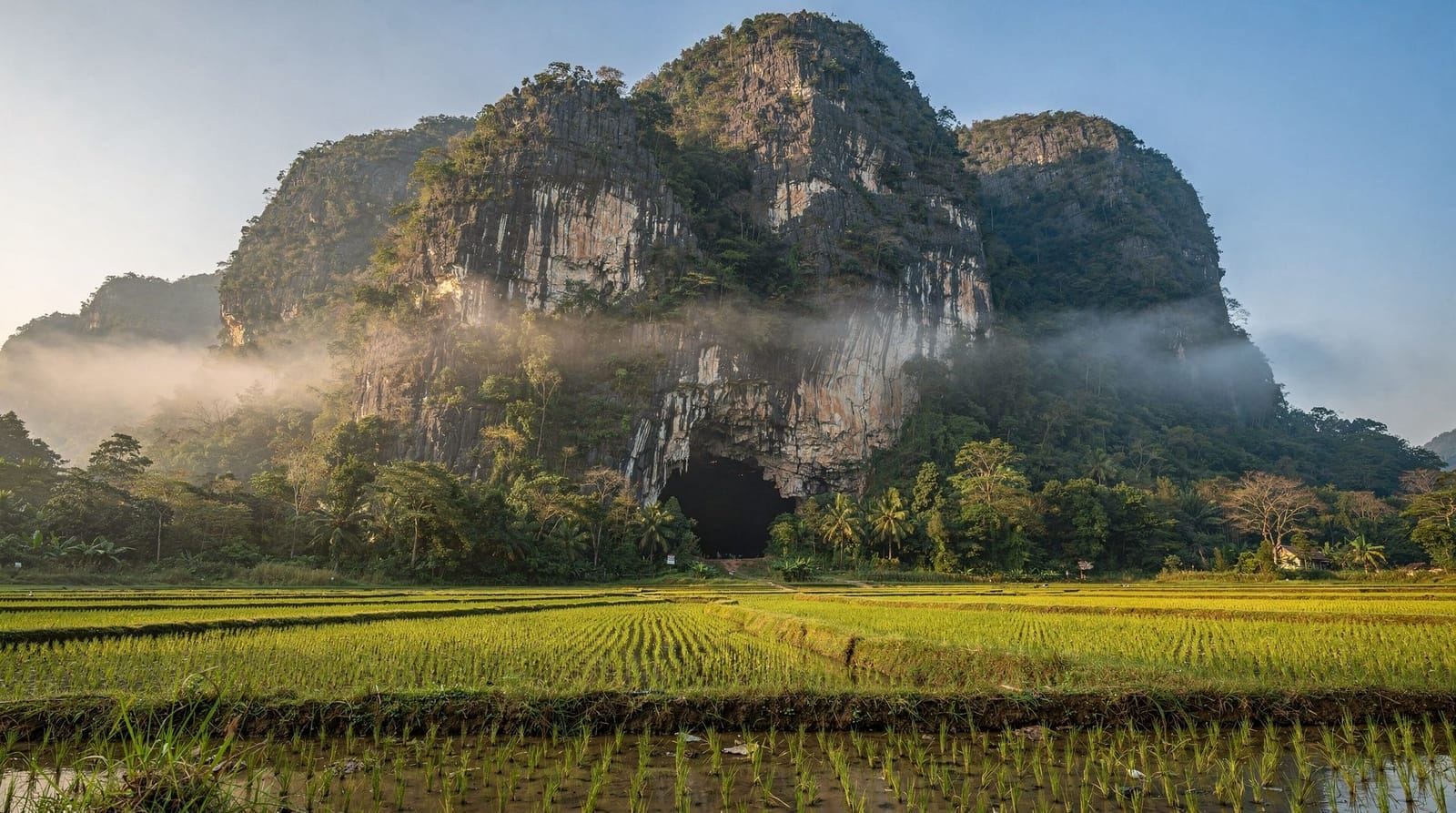
Chiang Dao, about 70km and 1.5 hours north, centers on Tham Chiang Dao — a limestone cave beneath Doi Luang Chiang Dao, Thailand’s third-highest peak. A short section is self-guided and lit; deeper chambers require a local lamp-guide hired on-site. A Mae Tang and Chiang Dao cave day trip bundles this with a stop en route. Full details in the Chiang Dao day trip guide.
Sticky Waterfalls at Bua Thong, roughly an hour northeast near Sri Lanna National Park, are mineral-coated limestone cascades you climb barefoot — genuinely one of the more unusual short trips near the city, and free to enter. The Sticky Waterfalls day trip guide has the full walkthrough.
San Kamphaeng hot springs, about 45-60 minutes east, pair naturally with the nearby Bo Sang umbrella village for hand-painted sa-paper umbrellas — together they make an easy half-day loop covered in the San Kamphaeng day trip guide.
Lampang: the quieter alternative
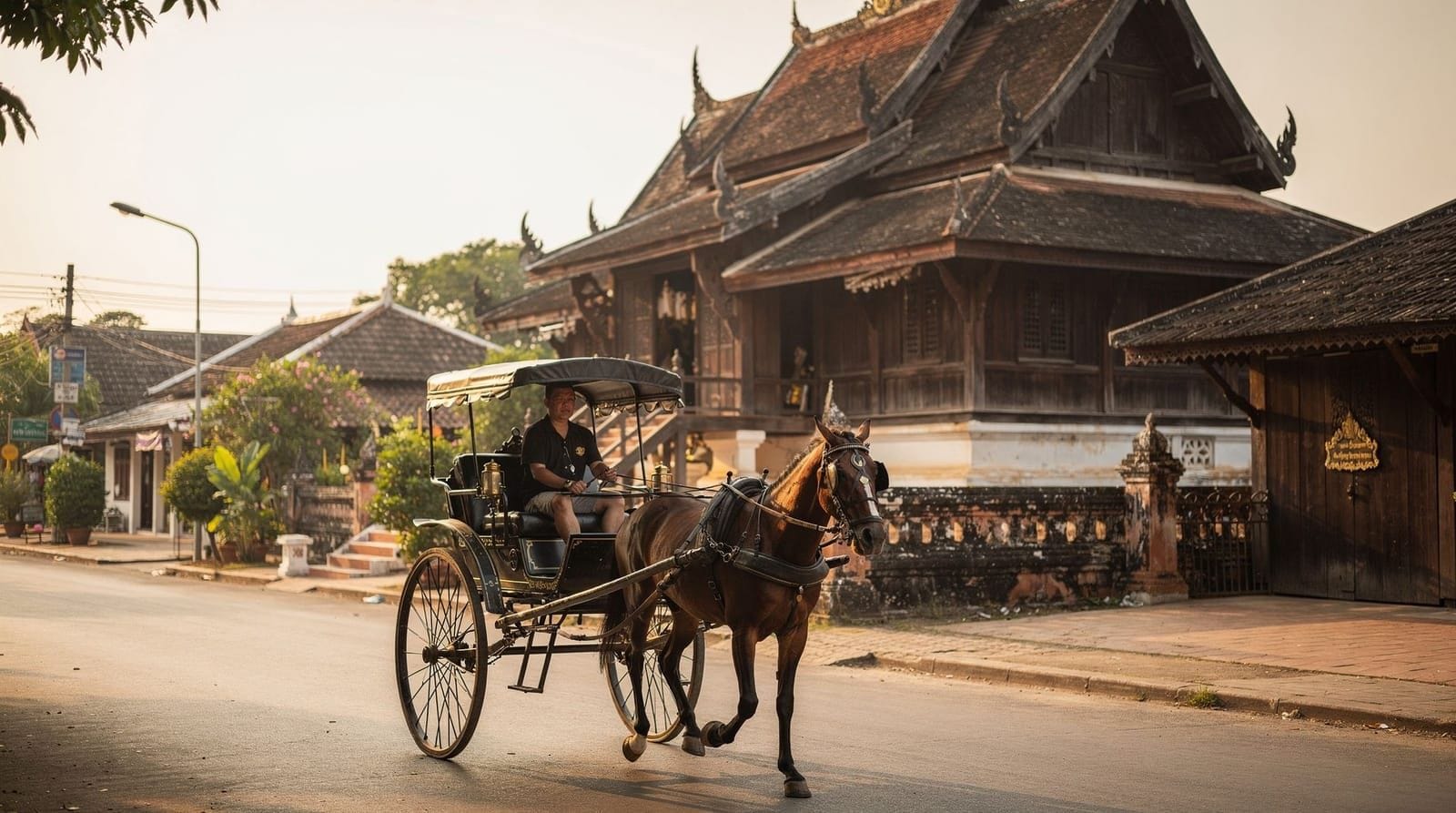
Lampang, about 100km and 1.5 hours southeast, is the only town in Thailand where horse-drawn carriages still operate as everyday transport, and it holds Wat Phra That Lampang Luang, a walled Lanna temple complex that draws a fraction of the crowds you’ll find at the Chiang Rai circuit. A Lamphun and Lampang temples tour covers both towns in a single day. The full Lampang day trip guide breaks down the old town, ceramics shopping and the outlying temple in more detail.
Choosing a tour vs self-drive
For the close-in half-day trips — Doi Suthep, Chiang Dao, Sticky Waterfalls, San Kamphaeng — self-driving by rented scooter or car is straightforward, since each destination is a single, direct route without much need to sequence multiple stops. For anything involving a national park with spread-out sights (Doi Inthanon) or a long highway drive with multiple temple stops (Chiang Rai, Golden Triangle, Lampang), a guided tour tends to be genuinely more efficient rather than just more convenient, since a driver-guide handles fee queues, parking and stop sequencing that would otherwise eat into your day.
Combining day trips
Some of these pair naturally into a single day without adding much travel time. Doi Suthep, Bhubing Palace and the Doi Pui Hmong village all sit along the same mountain road and are commonly combined. San Kamphaeng hot springs and Bo Sang umbrella village sit a short distance apart along the same eastern route. Chiang Rai and the Golden Triangle are almost always sold as a single combined tour rather than two separate trips, since the Golden Triangle sits about an hour further north of Chiang Rai town.
What doesn’t combine well: trying to add Doi Inthanon onto a Chiang Rai day (they’re in opposite directions from Chiang Mai), or treating Pai as a stopover on the way to somewhere else in a single day. If you’re planning a longer trip and want to sequence several of these logically, how many days in Chiang Mai and plan a trip to Chiang Mai both help map out a realistic multi-day schedule.
Weather and timing across day trips
November through February is the best window for nearly every day trip on this list — cool temperatures, clearer air, and comfortable conditions for the walking involved at temples, waterfalls and viewpoints. The exception worth flagging clearly is the burning season, roughly February through April, when agricultural burning across the region creates smoke haze that can significantly dull mountain views, particularly at higher elevations like Doi Inthanon’s summit or Doi Suthep. If clear photography and views matter to your trip, the Chiang Mai burning season guide explains what to expect and how to plan around it. The rainy season (roughly June-October) brings fuller waterfalls at Sticky Waterfalls, Mae Sa and Doi Inthanon, at the cost of occasional closures on trails like Kew Mae Pan.
Budget planning across day trips
Costs scale mostly with distance. Close-in half-day trips (Doi Suthep, Chiang Dao, Sticky Waterfalls, San Kamphaeng) on a shared tour typically run 800-1,500 THB ($23-42) per person, while a private Grab or driver for the same trips runs 500-1,000 THB ($14-28) one-way. Full-day trips further afield (Doi Inthanon, Chiang Rai, Golden Triangle, Lampang) on a shared group tour run roughly 1,000-2,500 THB ($28-70) per person including transport, park fees and sometimes lunch; a private car and driver for the same day runs 2,500-5,000 THB ($70-140) total, which becomes more economical split across three or four travelers. For a broader breakdown of Chiang Mai costs beyond day trips, see the Chiang Mai budget guide.
Getting around without your own transport
If you don’t want to rent a car or scooter, every day trip covered here is available as a shared-group or private tour with hotel pickup — which is what the large majority of visitors choose, particularly for the longer or mountain-road destinations. For the closer half-day options, Grab (ride-hailing) is a workable alternative to a formal tour if you’re comfortable arranging your own return trip; the getting around Chiang Mai guide covers songthaews, Grab and self-driving in more depth.
Family suitability across day trips
Not every day trip suits every age group equally. Doi Suthep and San Kamphaeng hot springs are both gentle enough for young children, with minimal walking and low physical demands. Sticky Waterfalls and Doi Inthanon’s nature trails work well for older children who are steady on their feet, though the barefoot climb at Bua Thong needs supervision regardless of the falls’ grippy reputation. Chiang Dao’s deeper cave passages and the Kew Mae Pan trail at Doi Inthanon are less suited to very young children given uneven terrain and, in the cave’s case, low lighting. The long drives to Chiang Rai, the Golden Triangle, and especially Pai or Mae Hong Son are the bigger factor for families — hours of winding mountain road can be hard on young kids regardless of how interesting the destination is, so weigh the drive time as heavily as the sights themselves when choosing with children in tow. The family-friendly day trips guide goes into this in more depth for travelers planning specifically around children’s needs and tolerances.
Accessibility notes
Mobility considerations vary significantly across these day trips. Doi Suthep’s Naga staircase is a genuine barrier for visitors with limited mobility, though the funicular offers an alternative route to the same summit temple. Bhubing Palace and the twin pagodas at Doi Inthanon both have paved paths and are comparatively accessible. By contrast, the Kew Mae Pan trail, Chiang Dao’s deeper cave passages, and the climbable sections of Sticky Waterfalls all involve uneven terrain unsuitable for wheelchairs or significant mobility limitations. If accessibility is a priority for your group, it’s worth communicating this directly to a tour operator when booking, since itineraries can often be adjusted to prioritize the more accessible stops within a given destination — the pagodas and Wachirathan waterfall at Doi Inthanon over the summit boardwalk, for instance, or Bhubing Palace’s gardens over the Doi Pui village’s uneven paths.
Photography across the region
Each day trip rewards slightly different timing for photography. Doi Inthanon’s summit boardwalk suits soft, diffused morning light filtered through cloud forest, while the twin pagodas photograph best once any overnight mist has burned off, typically mid-morning. Chiang Rai’s White Temple is most photogenic at opening, both for the lighting and for the empty grounds before tour buses arrive. The Golden Triangle’s river views are clearest in the morning, before afternoon haze sets in even outside burning season. If photography is a significant part of why you’re taking these day trips, building in slightly earlier starts than the standard tour schedule — where your itinerary allows it — consistently pays off across nearly every destination on this list. The best photo spots guide covers additional locations beyond the day-trip circuit if photography is a primary trip focus.
Frequently asked questions about day trips from Chiang Mai
What is the best day trip from Chiang Mai?
Doi Inthanon is the single best all-rounder — a full day covering Thailand’s highest point, twin royal pagodas, a nature trail and three waterfalls. For a shorter option, Sticky Waterfalls or Doi Suthep both work well as half days.
Can I visit Chiang Rai as a day trip from Chiang Mai?
Yes, but it’s a long day — about 3-3.5 hours each way, roughly 7 hours of driving for maybe 4-5 hours on the ground. Many travelers find an overnight in Chiang Rai far less exhausting.
Is Pai possible as a day trip?
Technically yes, but it’s not recommended. The 762-curve mountain road takes 3-3.5 hours each way, so a same-day round trip means 6-7 hours of driving for only a few hours in town. Most people who try it once regret not staying over.
How much does a day trip from Chiang Mai typically cost?
A shared group day tour usually runs 1,000-2,500 THB ($28-70) per person depending on distance, while a private car/driver day trip runs roughly 2,500-5,000 THB ($70-140) total for the vehicle, split between however many people are traveling.
Do I need a car to do day trips from Chiang Mai?
No. Every day trip covered here is available as a shared or private guided tour with hotel pickup, which is what most visitors choose given the driving distances and mountain roads involved.
Which day trips can be combined in one day?
Doi Suthep pairs well with Bhubing Palace and Doi Pui village since they sit on the same mountain road. San Kamphaeng hot springs pairs naturally with Bo Sang umbrella village. Chiang Rai and the Golden Triangle are usually combined as a single full-day tour rather than two separate trips.
What’s the burning season and does it affect day trips?
Roughly February-April, agricultural burning across northern Thailand and neighboring countries creates smoke haze that can significantly reduce mountain views and air quality, particularly at higher elevations like Doi Inthanon and Doi Suthep. If clear views matter to you, plan day trips for November-February instead.
Is it worth renting a car instead of joining a tour?
For close-in half-day trips like Doi Suthep or Sticky Waterfalls, self-driving is straightforward. For farther, multi-stop destinations like Doi Inthanon or Chiang Rai, a guided tour is usually more efficient since the sights are spread out and the driving is long.
Top experiences
Bookable activities with verified prices and instant confirmation on GetYourGuide.

Chiang Mai: Doi Inthanon National Park Eco-Friendly Tour

From Chiang Mai: White Temple & Golden Triangle Day Trip

From Chiang Mai: Day Tour to Pai Highlights by Private Car

Chiang Mai: 1-Day Trip Mae Tang & Chiang Dao Cave

From Chiang Mai: Lamphun and Lampang Temples Tour