Chiang Rai day trip from Chiang Mai
Chiang Mai: Chiang Rai Highlights in One Day
Duration: Full day
Is a Chiang Rai day trip from Chiang Mai worth it?
Yes, but it's a long day — about 3-3.5 hours each way (~180km), meaning 6-7 hours of driving to see the White Temple, Blue Temple and Black House in roughly 4-5 hours on the ground. It works, but an overnight covers the same sights with far less exhaustion.
Chiang Rai holds three of northern Thailand’s most photographed sights — the White Temple, the Blue Temple and the Black House museum — all within a short drive of each other, plus the Golden Triangle an hour further north. The question most travelers actually need answered isn’t whether Chiang Rai is worth visiting (it clearly is), but whether cramming it into a single day trip from Chiang Mai makes sense, or whether an overnight is the smarter call.
Quick answer: a Chiang Rai day trip from Chiang Mai is entirely doable — about 3-3.5 hours each way covers roughly 180km, and a full-day tour typically nets 4-5 hours actually at the sights. It works well if an extra night truly isn’t in your schedule, but travelers who’ve done both a rushed day trip and a relaxed overnight consistently say the overnight was worth the extra planning.
The honest math: how much driving vs how much sightseeing
A typical Chiang Rai day tour departs Chiang Mai between 6:30 and 7am, arrives by mid-morning, and returns to Chiang Mai by early evening — a round trip of roughly 7 hours of driving bookending 4-5 hours on the ground covering three or four stops. That’s not an unreasonable trade for a bucket-list sight like the White Temple, but it does mean each stop is timed tightly, and there’s little room for lingering, extended photography, or a leisurely lunch.
By contrast, an overnight in Chiang Rai turns the same sightseeing into a two-day trip with one afternoon and one morning free of driving fatigue, room for the night bazaar, and the option to visit the Blue Temple at a genuinely quiet hour rather than squeezed between bus stops.
What a typical day-trip itinerary covers
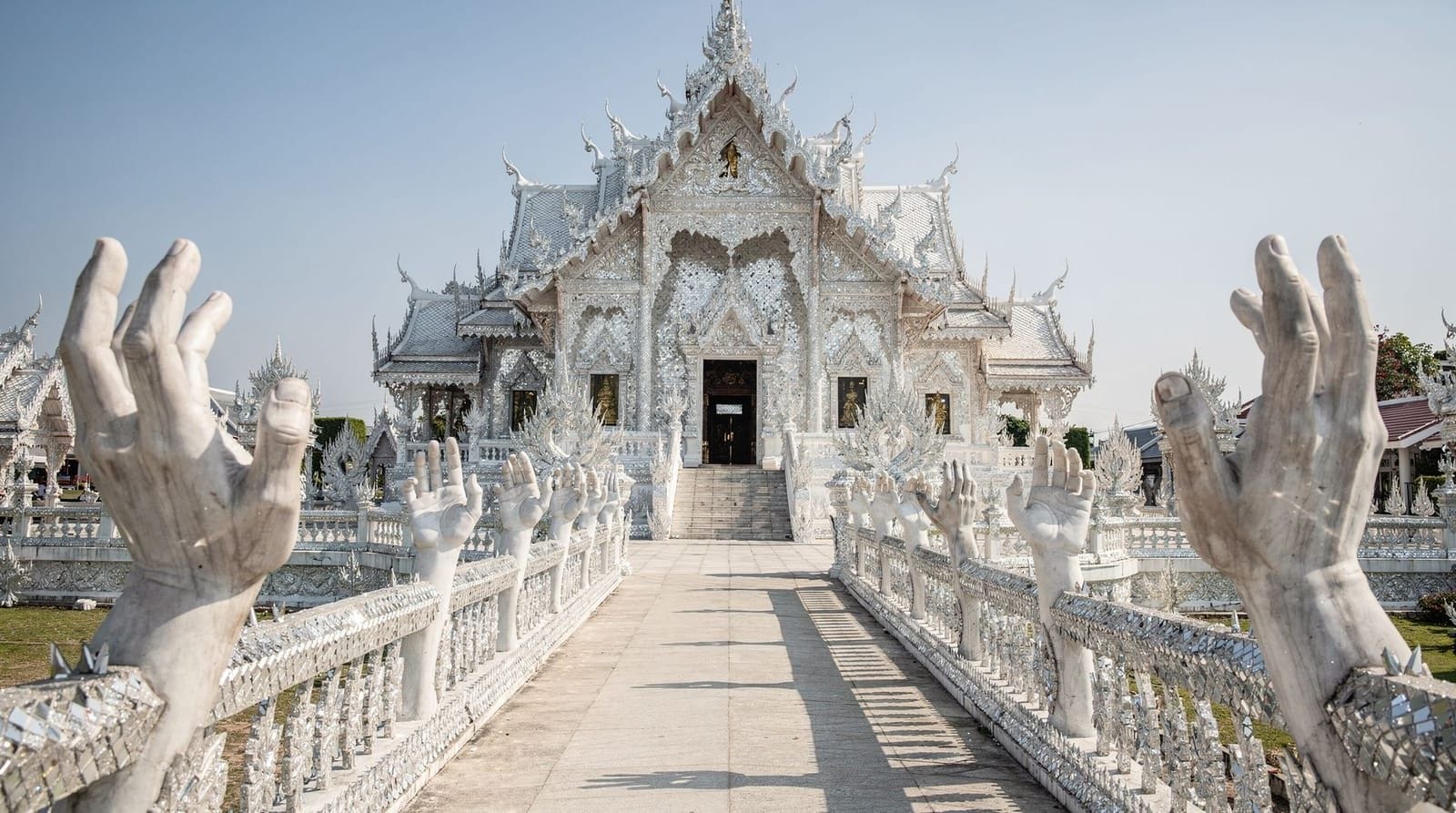
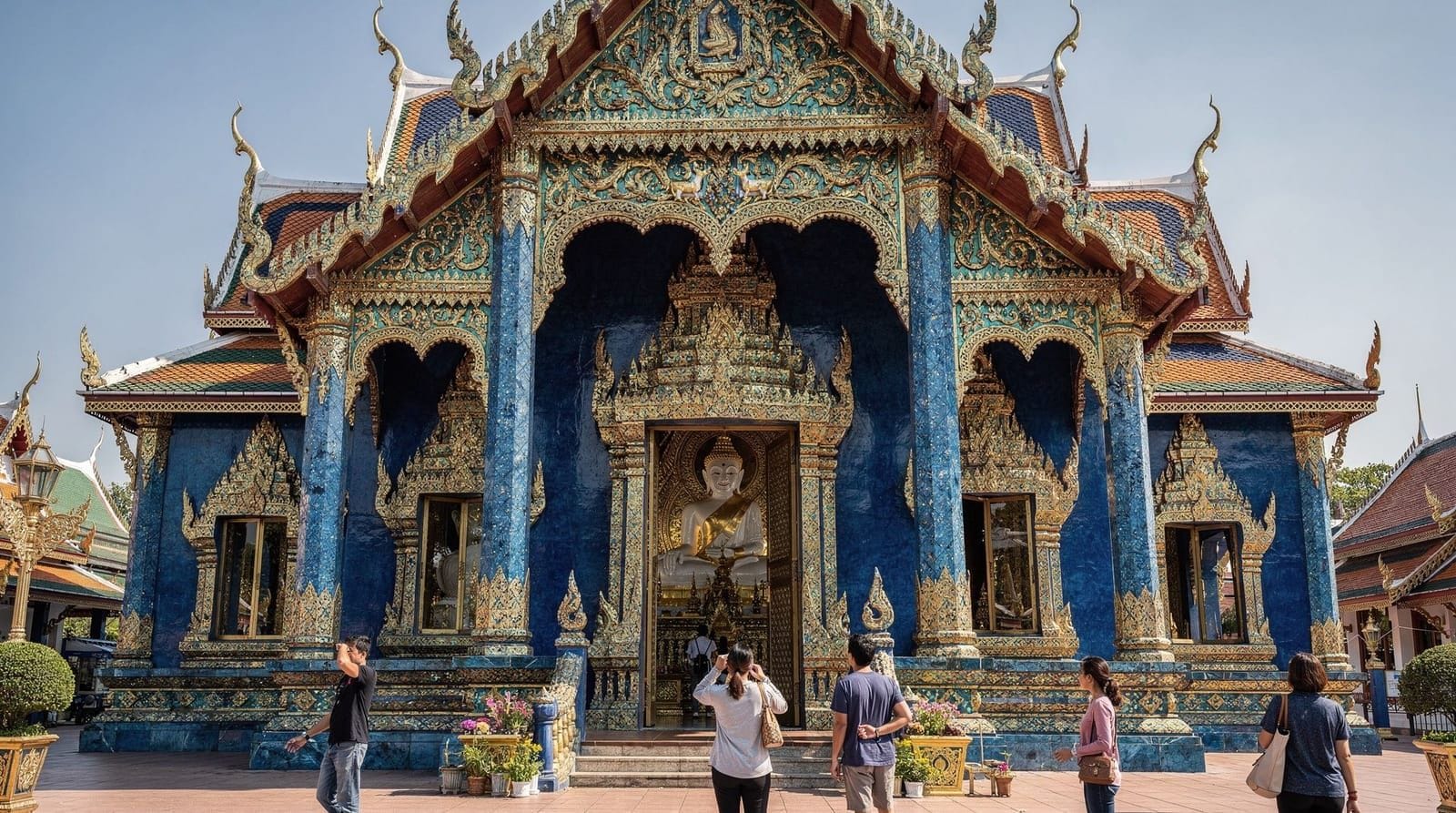
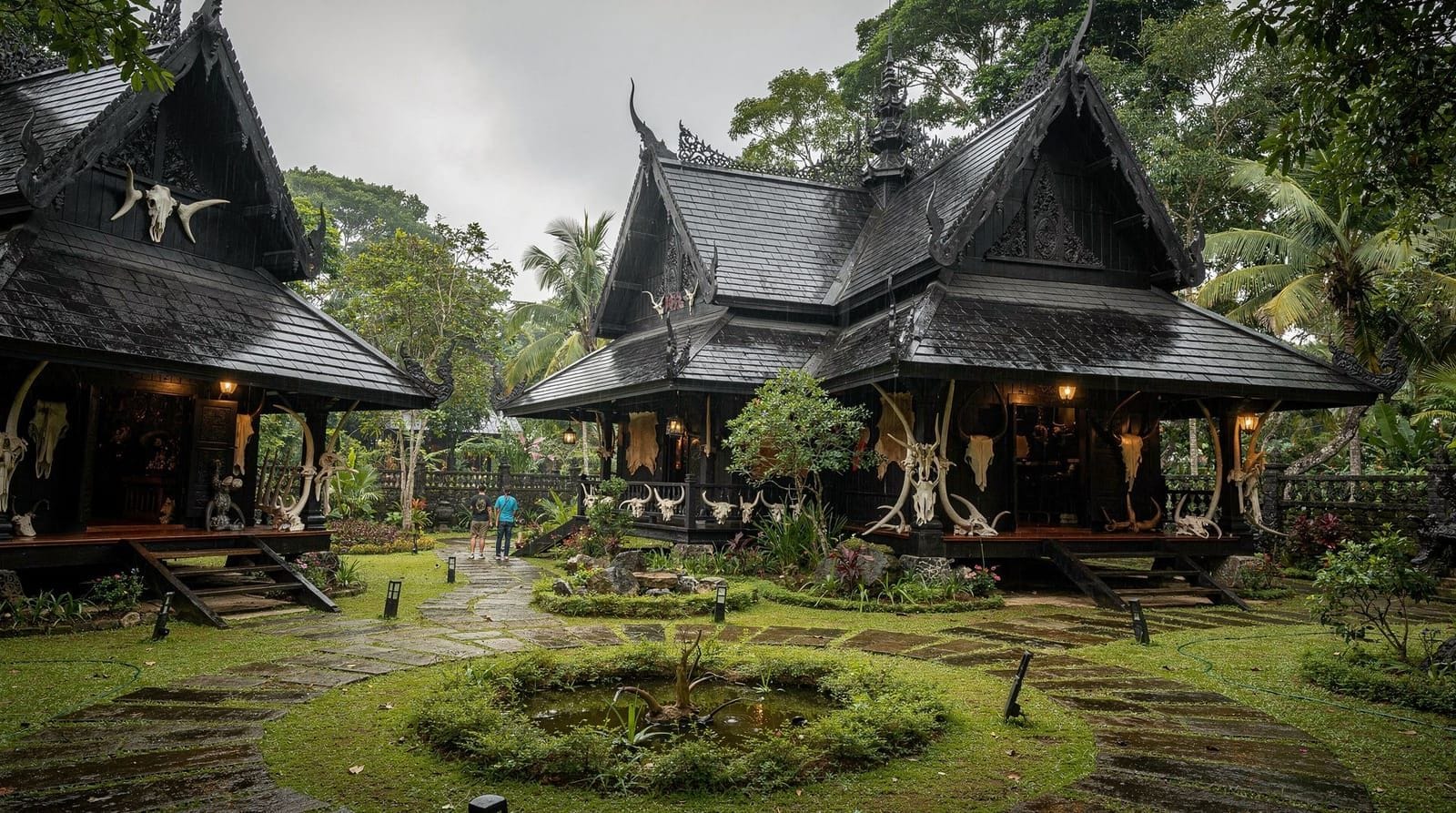
Most shared-group tours, like a Chiang Rai highlights in one day tour, follow a similar sequence: an early departure from Chiang Mai, arrival at Wat Rong Khun (the White Temple) by mid-morning before the worst of the crowds, a stop at the Black House (Baan Dam) museum, and a visit to the Blue Temple (Wat Rong Suea Ten) in town. Some itineraries swap in Singha Park or a hill-tribe village stop instead of one of these three; a White Temple, Blue Temple and Black House tour is the most common exact combination.
If your day trip has any flexibility, the White Temple vs Blue Temple comparison is worth reading beforehand to understand which one to prioritize if time runs short — the short version is that the White Temple takes longer (45 minutes to 1.5 hours given the crowds and scale) while the Blue Temple is a quick 20-40 minute stop.
Should you add the Golden Triangle?
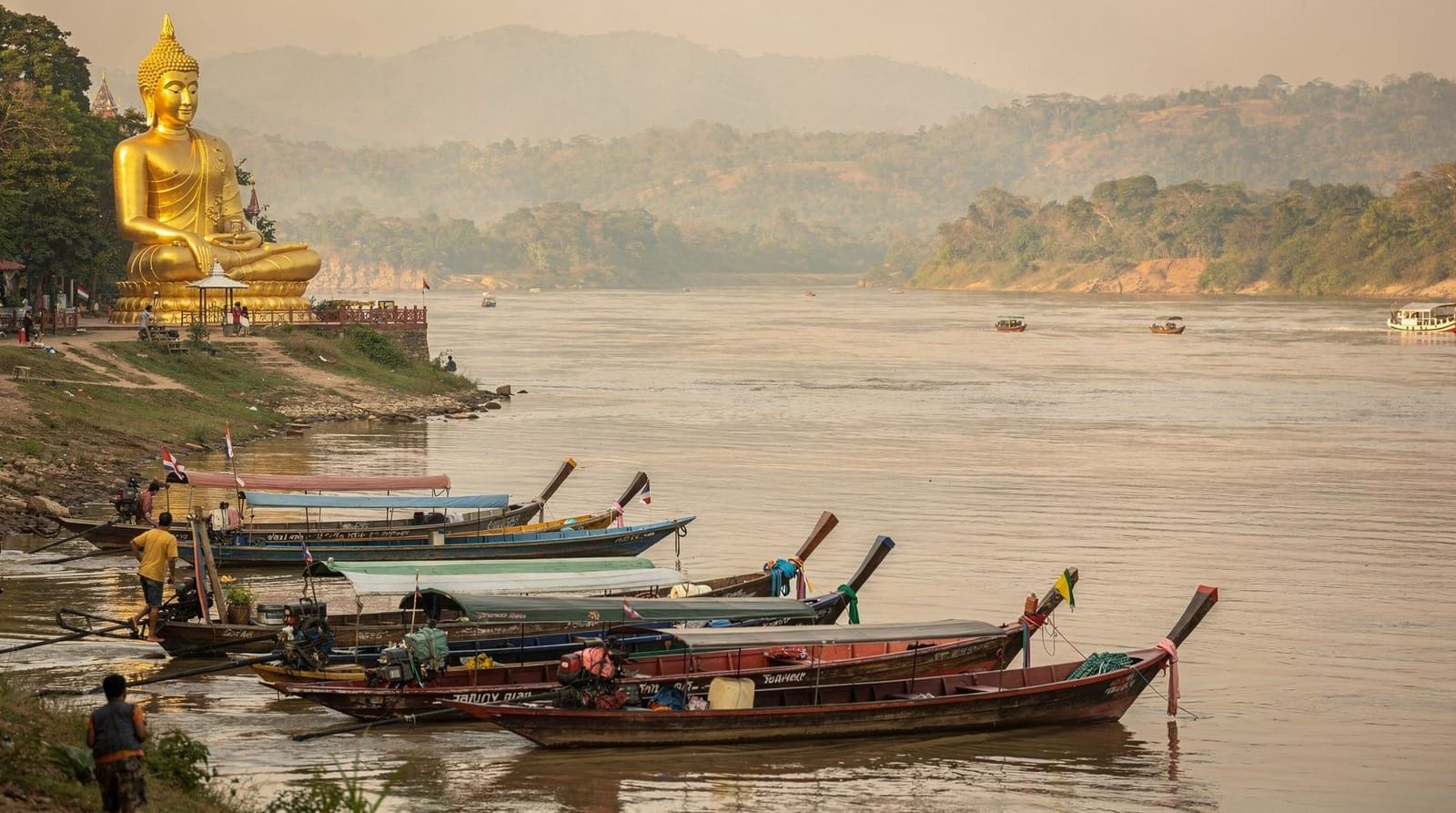
The Golden Triangle, where Thailand, Laos and Myanmar meet along the Mekong River, sits about an hour north of Chiang Rai town. Adding it turns an already long day into a genuinely packed one — a Chiang Rai temples and Golden Triangle tour typically means an earlier departure (before 7am) and a later return (after 7pm). It’s a popular combination precisely because most travelers only make the Chiang Rai trip once, but it’s worth knowing upfront that this version of the day trip leaves even less room for lingering at any single stop. The full Golden Triangle day trip guide breaks down what’s realistic to see there in the time available.
Tour vs self-drive
Self-driving to Chiang Rai is straightforward on paper — a well-maintained highway most of the way — but the practical benefit of a guided tour is less about the driving itself and more about sequencing: knowing which temple to hit first to beat the buses, where parking is available, and how long to actually budget at each stop. A shared tour with hotel pickup removes this planning entirely. For travelers who’d rather set their own pace, a private car and driver gives more flexibility to skip a stop that doesn’t interest you (the Black House isn’t for everyone) in favor of extra time at another.
The half-day reality if you’re pressed for time
If your Chiang Mai trip only allows a genuinely short window, prioritizing the White Temple alone — skipping the Black House and Blue Temple — is a realistic compressed option, since it’s the single most-requested sight and the one most visitors regret skipping. That said, at that point the 6-7 hours of round-trip driving for a single stop starts to look less proportionate, and it’s worth honestly asking whether that time might be better spent on a closer half-day trip like Doi Suthep or Sticky Waterfalls instead.
Getting there without a tour
Public minivans run regularly from Chiang Mai’s Arcade bus station to Chiang Rai, taking roughly 3-3.5 hours and costing a fraction of a private tour, though you’ll then need to arrange local transport (Grab or a chartered songthaew) between the White Temple, Black House and Blue Temple yourself, since they’re spread across a wider area than walking distance allows. The Chiang Mai to Chiang Rai transport guide covers minivan, bus, train and private transfer options in more detail if you’re planning to travel independently rather than joining a packaged tour.
Weather and timing
November through February offers the clearest air and most comfortable temperatures for a Chiang Rai day trip. The February-April burning season is worth flagging specifically here: Chiang Rai’s proximity to cross-border agricultural burning in Myanmar and Laos means its air quality can be noticeably worse than Chiang Mai’s during this window, which matters both for comfort and for photography at open-air sights like the White Temple grounds.
Comparing Chiang Rai to other long day trips
Chiang Rai isn’t the only far-flung option that raises the day-trip-vs-overnight question. Pai faces a similar distance trade-off along a much curvier road, and the honest answer there leans even more strongly toward an overnight. If you’re deciding between the two for a single extra night in your itinerary, Chiang Rai’s temples offer a different kind of experience (art and architecture) versus Pai’s slower, nature-and-cafe pace — see Chiang Mai vs Chiang Rai for how the two northern destinations compare more broadly.
A brief history behind the temples
Chiang Rai’s modern fame rests heavily on a wave of contemporary temple-building by Thai artists working in a distinctly personal style rather than strict traditional convention. Wat Rong Khun (the White Temple) is the work of artist Chalermchai Kositpipat, who began constructing it in 1997 as a self-funded project intended to be his life’s work, blending Buddhist iconography with modern pop-culture references worked subtly into the murals inside. The Blue Temple, Wat Rong Suea Ten, is a newer addition built in a similar spirit by a student of Chalermchai’s, while the Black House (Baan Dam) is the work of a different artist entirely, Thawan Duchanee, whose darker, more unsettling aesthetic was deliberately conceived as a tonal counterpoint to the White Temple’s purity theme. Knowing this context changes how the day reads — rather than three unrelated tourist stops, it’s a loose conversation between contemporary Thai artists working in the same city within a few decades of each other.
What to pack for the day
Given the length of the round trip, a few practical items matter more here than on shorter day trips. Modest dress — covered shoulders and knees — is required to enter all three temple sites, so plan clothing accordingly rather than assuming a wrap or sarong will always be available to borrow on-site (some locations provide them, but not reliably). Comfortable walking shoes matter more than usual given the White Temple’s scale, which involves more walking between structures than a typical single-building temple visit. A reusable water bottle is worth bringing given the length of the day and limited water access between stops on some tour itineraries. If you’re prone to motion sickness, note that while the Chiang Rai highway itself is straighter than the curvy roads to Pai, a 3-3.5 hour drive each way is still a meaningful stretch of travel time to prepare for.
Food along the way
Most day tours build in a lunch stop, typically at a restaurant along the highway or in Chiang Rai town itself, often serving northern Thai specialties like khao soi or a simple set menu rather than a specific must-visit destination. If your tour doesn’t include lunch, Chiang Rai town has a reasonable range of options near the Blue Temple and central market area, and the night bazaar (if your schedule stretches into the evening on an overnight trip) offers a wider street-food selection. Given the early departure most day trips require, a light breakfast before leaving Chiang Mai, rather than relying on a stop en route, is generally the more reliable plan.
Shopping and souvenirs
Chiang Rai’s night bazaar, most accessible on an overnight trip rather than a rushed day tour, offers a range of handicrafts, clothing and souvenirs distinct from Chiang Mai’s own markets, often reflecting the area’s proximity to Myanmar, Laos and the region’s hill-tribe communities. For day-trippers, the gift shops near the White Temple and Black House both sell related merchandise — Chalermchai Kositpipat’s artwork appears on various items near Wat Rong Khun, for instance — though prices at temple gift shops tend to run higher than equivalent items found in Chiang Mai or at the night bazaar, so it’s worth treating these more as convenient mementos than serious souvenir shopping unless time genuinely doesn’t allow for anywhere else.
Accessibility at the three main sites
Mobility considerations differ across the three temples. The White Temple involves the most walking of the three, across a large open complex with the bridge of “hands of desire” as its centerpiece approach — manageable for most visitors but a genuine consideration for anyone with significant mobility limitations given the site’s scale. The Blue Temple, by contrast, is compact and quick, with minimal walking required from parking to the main hall. The Black House spreads its pavilions across a wider garden area, with some uneven ground between structures, making it somewhat more demanding than the Blue Temple but less so than the full White Temple complex. If accessibility is a priority for your day, prioritizing the Blue Temple and a shorter visit to the White Temple’s main areas over an exhaustive tour of every Black House pavilion is a reasonable way to manage the day’s physical demands.
If Chiang Rai isn’t quite what you expected
A small number of visitors come away from Chiang Rai slightly underwhelmed, usually for one of two reasons: either they arrived at the White Temple too late and found it overrun with tour groups, or they expected a more traditional “ancient temple” experience and were surprised by how modern and, in the Black House’s case, deliberately unsettling the art actually is. Setting expectations correctly beforehand helps considerably — these are contemporary artistic statements built within the last few decades, not centuries-old heritage sites, and appreciating them on those terms (as you might approach a modern art museum rather than a historical monument) tends to produce a more satisfying visit than expecting classical Lanna temple architecture throughout.
Getting back to Chiang Mai in the evening
Most day tours schedule the return leg to arrive back in Chiang Mai between 7 and 8pm, meaning dinner plans back in the city are still realistic, if slightly later than usual. If you’re traveling independently rather than on a packaged tour, confirm the last minivan departure time from Chiang Rai well before you need it, since options thin out later in the evening and missing the last reasonably timed van can mean an unplanned, more expensive private transfer back. Building in a small buffer before your planned return departure — rather than cutting it close after a full day of sightseeing — avoids unnecessary stress at the end of an already long day.
Frequently asked questions about a Chiang Rai day trip
How long does it take to get from Chiang Mai to Chiang Rai?
About 3-3.5 hours by minivan, bus or private car for the roughly 180km route. Short domestic flights are also available and take about 40 minutes, though most day-trippers travel by road as part of a tour.
What can I actually see in a Chiang Rai day trip?
Most day tours cover the White Temple (Wat Rong Khun), the Black House museum, and the Blue Temple, sometimes with the Golden Triangle added as a longer full-day option. Fitting in all four plus hill-tribe villages in one day is unrealistic.
Should I do Chiang Rai as a day trip or overnight?
If your schedule allows it, an overnight is noticeably more comfortable — you avoid the return drive fatigue and can see the Blue Temple or night bazaar without rushing. A day trip works fine if an extra night genuinely isn’t possible.
What’s the best way to get to Chiang Rai from Chiang Mai for a day trip?
A shared or private guided tour with hotel pickup is the most common choice, since it removes the need to navigate the highway and sequence stops yourself. Self-driving is possible but adds logistics without much time saved.
How much does a Chiang Rai day trip cost?
A shared group tour typically runs 1,000-2,000 THB (~$28-56) per person including transport and entry fees for the main temples. Private tours cost more but allow a more flexible schedule.
Is the White Temple worth the drive to Chiang Rai?
Most visitors say yes — Wat Rong Khun’s bridge of hands and mirrored-glass exterior are genuinely distinctive, unlike anything else easily reached from Chiang Mai. Arrive close to the 8am opening to see it before tour buses fill the grounds.
Can I combine Chiang Rai with the Golden Triangle in one day?
Yes, this is the most common full-day tour combination, though it makes for a very long day. The Golden Triangle sits about an hour further north of Chiang Rai town.
Does burning season affect a Chiang Rai day trip?
Yes, often more than Chiang Mai itself, given Chiang Rai’s proximity to cross-border agricultural burning. Roughly February-April brings haze that can dull photography and outdoor visibility; November-February is the clearer window.
Top experiences
Bookable activities with verified prices and instant confirmation on GetYourGuide.