Chiang Mai to Chiang Rai transport: bus, minivan or private transfer
From Chiang Mai: Chiang Rai and Golden Triangle Private Full-Day Tour
Duration: Full day
What's the best way to get from Chiang Mai to Chiang Rai?
A VIP bus (operators like Nakhonchai Air run comfortable coaches) or a shared minivan from Chang Phueak or Arcade Bus Station both cover the roughly 190 km route in about 3-3.5 hours. A private car or a full-day guided tour that includes the drive plus temple stops along the way is the more comfortable option if you'd rather not manage stations and schedules yourself. There is no train service to Chiang Rai — road transport is the only realistic option.
Setting expectations: no train, road transport only
Chiang Mai and Chiang Rai are two of northern Thailand’s best-known cities, and it’s a reasonable assumption that a route between them would be rail-connected — it isn’t. Chiang Rai has no railway station, and no train service reaches it from Chiang Mai or anywhere else in the country. Every realistic option for this roughly 190 km trip runs on the road: VIP bus, shared minivan, or private car. This guide covers all three honestly, including where a guided tour effectively substitutes for arranging your own transfer.
Option one: VIP bus
Established coach operators, most notably Nakhonchai Air, run VIP buses between Chiang Mai and Chiang Rai multiple times a day, covering the route in roughly 3-3.5 hours on well-maintained highway. These are a genuine step up from a standard bus — reclining seats with real legroom, air conditioning, and on some services an onboard toilet, making this a comfortable and inexpensive way to cover the distance without needing a car. Buses depart from and arrive at dedicated stations in each city, typically Arcade Bus Station in Chiang Mai.
Option two: shared minivan
Shared minivans cover the same route, often slightly faster door-to-door since they make fewer stops than a full-size coach, but with noticeably less legroom and comfort over a 3+ hour ride. They’re a reasonable choice if bus timings don’t line up with your schedule or if you’re travelling with a smaller group that fills most of a van’s seats. Like the bus, minivans depart from Arcade Bus Station, with multiple daily departures.
Option three: private car or full-day guided tour
A private car with a driver is the most flexible and comfortable option, letting you set your own departure time and make stops along the way rather than being locked into a station schedule. Many travellers choose this in the form of a full-day guided tour, which functions as a private return transfer with sightseeing built in — typically including stops at Chiang Rai’s well-known temples and sometimes the Golden Triangle, so the transport cost effectively doubles as the day’s touring rather than a separate line-item.
Chiang Rai and Golden Triangle private full-day tour from Chiang MaiThis is worth being clear-eyed about: it’s a full sightseeing day, not a simple point-to-point transfer, so it suits travellers who want to see Chiang Rai’s temples in the same trip rather than those who just need to get from one city to the other as efficiently as possible. For a pure transfer without the tour structure, a private car booked through a travel agency or your hotel is the more direct (if pricier per person) alternative to the bus or minivan.
Comparing the options
| Option | Cost level | Time | Best for |
|---|---|---|---|
| VIP bus (Nakhonchai Air etc.) | Lowest | ~3-3.5 hours | Comfortable budget travel, no need for a car |
| Shared minivan | Low | ~3-3.5 hours | Flexible departure times, smaller groups |
| Private car / full-day tour | Higher | ~3-4+ hours with stops | Comfort, flexibility, combining transport with sightseeing |
Day trip vs. staying overnight in Chiang Rai
Given the 3-3.5 hour drive each way, a same-day round trip to Chiang Rai makes for a genuinely long day — realistic, but demanding if you also want to see the White Temple, Blue Temple and Golden Triangle without rushing. The full trade-offs of squeezing this into a single day versus staying overnight are covered in the Chiang Rai day trip guide, and the Golden Triangle extension specifically is covered in the Golden Triangle day trip guide.
Booking ahead during peak season
VIP bus and minivan seats rarely sell out entirely, but during the cool season (November-February), when both Chiang Mai and Chiang Rai see their heaviest tourist numbers, booking a seat a day ahead through an agency, your hotel, or online removes any uncertainty about same-day availability. Private car and tour bookings should be arranged at least a day in advance regardless of season, since vehicles and drivers are scheduled rather than kept on standby.
Which city should be your base?
Some travellers debate basing themselves in Chiang Rai for a night or two rather than day-tripping from Chiang Mai — a decision that depends more on how much time you have overall than on transport logistics alone, and is worth weighing separately from the transport question covered here.
Combining the trip with the Golden Triangle
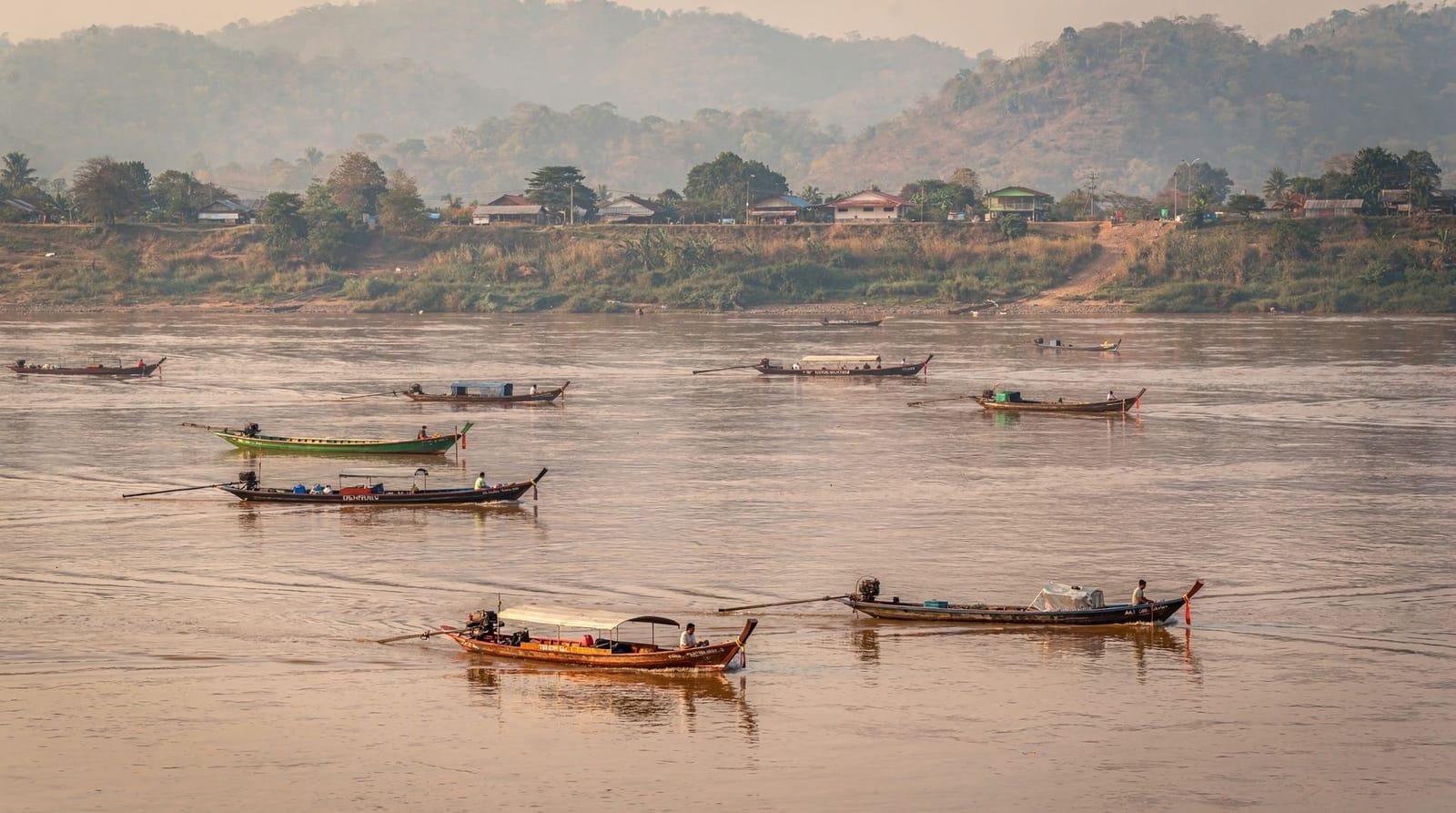
Many travellers extend a Chiang Rai trip to include the Golden Triangle, the point where Thailand, Laos and Myanmar meet along the Mekong River, roughly another 60-70 km beyond Chiang Rai itself. This addition works well as part of a full-day private car or tour booking, since it’s a further, less-served destination that public bus and minivan routes don’t cover as conveniently as the Chiang Mai-Chiang Rai leg itself. If the Golden Triangle is a priority, factor its additional distance into whichever transport option you choose, since a bare bus-and-return-bus plan to Chiang Rai alone won’t extend naturally to cover it without an additional local transfer.
Comparing bus operators
Several coach companies run the Chiang Mai-Chiang Rai route beyond Nakhonchai Air, with varying levels of comfort and departure frequency. Greenbus is another commonly used operator on this corridor, generally offering a similar standard of comfort at a comparable price point. Checking departure times against your planned arrival window in Chiang Rai (particularly if you want to reach the White Temple before its afternoon crowds build) is worth doing regardless of which operator you choose, since schedules and frequency can shift with season and demand.
Weather and road conditions on this route
Unlike the continuous mountain curves of the Pai road, the Chiang Mai-Chiang Rai highway is a more standard, gently graded route, meaning weather has less impact on journey time or comfort here than on some of the region’s more dramatic mountain roads. Rainy season downpours (roughly June-October) can still slow traffic somewhat and are worth building a little extra time buffer around if you have a tight onward connection in Chiang Rai, but this route doesn’t carry the same motion-sickness reputation as the Pai drive.
Stopping at Chiang Dao along the way
Some travellers with a private car or flexible schedule choose to break the Chiang Mai-Chiang Rai journey with a stop at Chiang Dao, roughly midway along a slightly different route north, known for its cave system and mountain scenery. This isn’t a natural stop on the direct bus or minivan route, which runs a more direct highway path, so it’s really only practical if you’ve arranged a private car or are self-driving, and it adds meaningful time to the overall trip rather than being a quick diversion.
Getting around Chiang Rai once you arrive
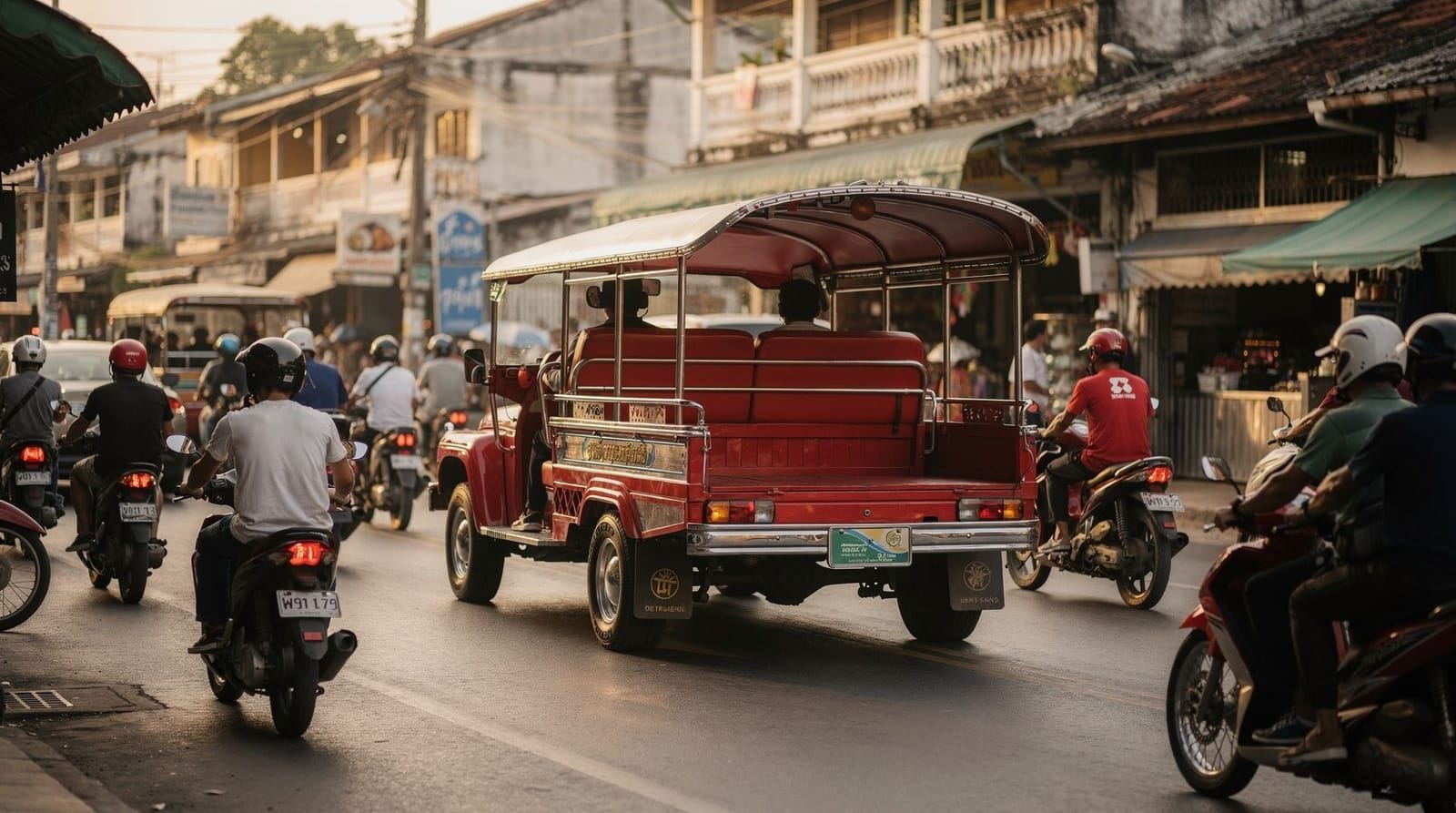
Chiang Rai’s city-level transport works similarly to Chiang Mai’s — local songthaews and Grab both operate within the city, covering the short hops between the bus station, central hotels, and nearby night markets. The region’s biggest draws, however, including the White Temple, Blue Temple and Black House, sit at some distance from the town centre and from each other, which is exactly why most bus and minivan travellers pair their arrival with a half- or full-day local tour, or a rented scooter, rather than relying on Grab alone to string together several spread-out sights in a single day.
Why some travellers choose the tour-as-transfer approach
Given that Chiang Rai’s main sights require their own local transport once you arrive, a growing number of travellers skip the separate bus-then-local-tour sequence entirely and instead book a single full-day tour from Chiang Mai that includes the drive there, sightseeing at the temples, and the drive back — effectively folding three separate logistics decisions (getting there, getting around, getting back) into one booking. This isn’t necessarily cheaper than doing each piece separately at the lowest possible price, but it removes a meaningful amount of coordination effort, which is worth factoring in in addition to the direct cost comparison.
Distance and scale: setting realistic expectations
Chiang Rai province is considerably larger than a single city, and its most photographed sights are spread across a wide area rather than clustered in a single walkable core the way Chiang Mai’s Old City is. The White Temple sits on the southern edge of Chiang Rai town, while the Golden Triangle lies a further hour or more to the north near the Mekong River. Building this scale into your expectations before you go — rather than assuming a single day covers everything at a relaxed pace — helps set a realistic itinerary regardless of which transport option gets you there in the first place.
What to pack for the journey
The highway route to Chiang Rai is comfortable enough that packing needs are minimal compared to the Pai road — a light layer for the bus or car’s air conditioning, a charged phone or camera for temple photography once you arrive, and snacks or water for the 3-3.5 hour journey are the main practical considerations. If you’re booking a full-day tour that includes temple visits, dress modestly with shoulders and knees covered, since Chiang Rai’s temples, like those across Thailand, expect this regardless of how hot the day is outside.
Booking through your hotel vs. independently
Most Chiang Mai hotels can arrange bus tickets, minivan seats, or a private car booking directly through the front desk, often at a similar price to booking independently through a travel agency or online. The convenience of having this handled by staff familiar with the current schedule and any seasonal changes is genuinely useful, particularly for a first Thailand trip where navigating a bus station independently feels like an added layer of complexity. That said, independent booking through reputable online platforms or a walk-in visit to a travel agency near the Old City works just as well and sometimes offers a slightly wider range of departure times to choose from.
A realistic timeline for a day-trip version
For travellers determined to do Chiang Rai as a single day rather than staying overnight, a realistic timeline looks like this: depart Chiang Mai by 6:30-7am (either via an early bus, minivan, or private car), arrive in Chiang Rai by roughly 10am, spend the day visiting the White Temple, Blue Temple and central Chiang Rai sights, then begin the return journey by mid-to-late afternoon to arrive back in Chiang Mai before or shortly after dark. This is achievable but leaves relatively little slack for a leisurely pace, which is exactly why many travellers who can spare the extra night choose to stay in Chiang Rai instead, freeing up a full, unhurried day for sightseeing without the return-trip clock running in the background.
A final word on choosing between the three main options
If you’re still undecided, a simple way to choose is by what you value most: pick the VIP bus if minimising cost matters most and you’re comfortable with a fixed schedule, pick a private car or full-day tour if you’d rather have flexibility and built-in sightseeing without separately arranging local transport once you arrive, and pick a shared minivan if you want a middle ground between the two on both price and flexibility. None of the three is a wrong choice for this well-travelled route.
Connectivity and staying comfortable en route
Mobile signal along the highway route is generally solid throughout, given how well-travelled this corridor is between two major northern cities, so streaming a downloaded playlist or staying connected for the 3-3.5 hour ride isn’t usually a concern. VIP buses and most private cars run air conditioning throughout, so bringing a light layer for the ride itself, even though Chiang Rai’s daytime temperatures outside are typically warm, is a small comfort worth packing.
Tipping and small practicalities on this route
A modest tip for a private car driver or full-day tour guide (roughly 100-200 baht per group) is a common courtesy at the end of the day, though not obligatory. VIP bus and minivan drivers are tipped far less commonly on this route, and simply paying the ticket price is entirely normal and sufficient.
Comparing this route to Chiang Mai’s other day-trip options
Relative to some of Chiang Mai’s closer day-trip destinations, like Doi Suthep or the San Kamphaeng area, Chiang Rai represents a meaningfully bigger transport commitment — 3-3.5 hours each way versus 30-60 minutes for the closer options. This is worth weighing honestly against your total trip length: a visitor with only three or four days in Chiang Mai might get more value from several closer half-day trips than spending the better part of two days on a single Chiang Rai round trip, while a visitor with a week or more has room to comfortably include both. Neither choice is wrong, but it’s a genuine trade-off worth making deliberately rather than defaulting to Chiang Rai simply because it’s a well-known name.
Frequently asked questions about Chiang Mai to Chiang Rai transport
Is the road from Chiang Mai to Chiang Rai as curvy as the Pai route?
No — this route runs mostly on standard highway rather than the tight mountain switchbacks of Route 1095 to Pai, making it a noticeably smoother, less motion-sickness-prone ride for most travellers.
Can I book bus or minivan tickets online before arriving in Thailand?
Yes, several booking platforms and the operators’ own websites allow advance ticket purchase, though buying a day or two ahead once you’re in Chiang Mai, either online or through your hotel, is equally reliable outside peak season.
Is it cheaper to book a private car through my hotel or independently?
Prices are often comparable, though it’s worth asking your hotel for a quote and comparing against an independent travel agency or online tour booking before committing, since rates can vary by operator.
What’s the fastest way to get from Chiang Mai to Chiang Rai?
A private car with no stops is technically the fastest point-to-point option, though a VIP bus running a direct schedule covers the distance in a similar 3-3.5 hour window at a fraction of the cost.
Do I need to arrange onward transport once I arrive in Chiang Rai?
If you’re arriving by bus or minivan, yes — Grab and local songthaews operate within Chiang Rai city similarly to Chiang Mai’s system, so onward transport to your hotel or the temples is straightforward. A private car or tour typically handles this for you as part of the same booking.
Is Chiang Rai worth visiting if I only have time for a day trip?
Many travellers find a single well-planned day enough to see the White Temple, Blue Temple and central Chiang Rai, though the Golden Triangle extension is a harder fit into the same day given the additional driving involved.