Blue Temple (Wat Rong Suea Ten)
Chiang Rai's vivid blue-and-gold temple — a striking white Buddha, far smaller crowds than the White Temple, and how to fit it into your day.
From Chiang Mai: Chiang Rai Temples Tour (Blue, White, Black)
Duration: Full day
Quick facts
- Getting there
- Within Chiang Rai town, ~5-10 min from the city center; ~3-3.5hr from Chiang Mai
- Key sight
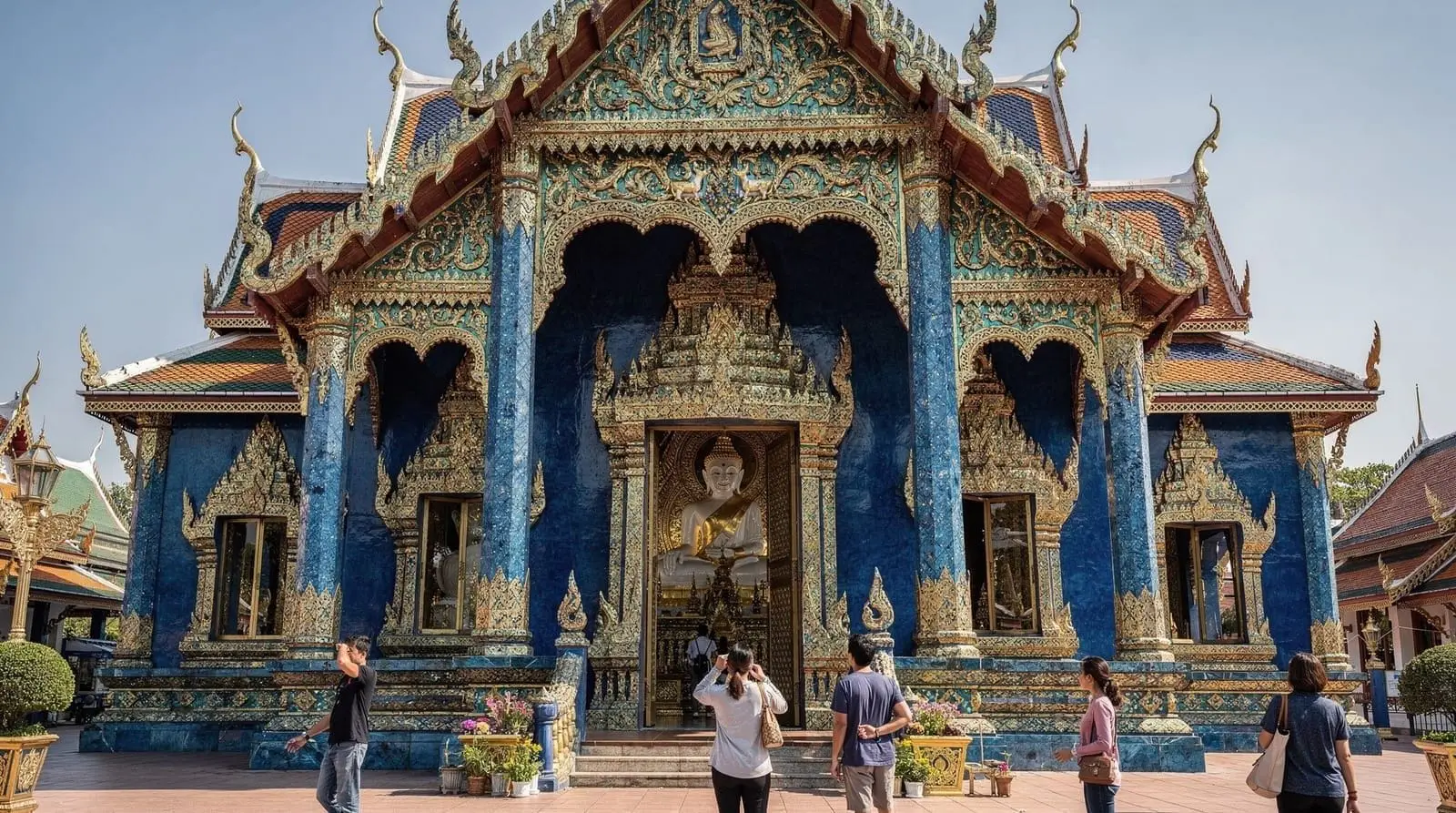
- Vivid blue-and-gold exterior and interior murals, with a striking white Buddha image at the main altar
- Time needed
- 20-40 minutes
- Best time
- Any time of day — far fewer crowds than the White Temple; morning light suits photography best
- Cost / entry
- Free, though a small donation is appreciated
The Blue Temple is often mentioned as the White Temple’s quieter, less crowded sibling, but the comparison undersells it — the sapphire-blue and gold exterior, and the striking white Buddha image inside, make it a genuinely distinctive stop rather than simply a fallback for visitors who found the White Temple too busy.
Quick answer: Wat Rong Suea Ten, known as the Blue Temple, sits within Chiang Rai town itself, just a few minutes from the city center. Its vivid blue-and-gold exterior, richly detailed interior murals, and a large white Buddha image at the main altar make it one of the most photogenic temples in the region, and unlike the White Temple, it draws a fraction of the crowds. Entry is free (a small donation is appreciated), and most visits take well under an hour.
A newer temple with an old name
The temple takes its Thai name — Wat Rong Suea Ten, “temple of the leaping tiger” — from tigers once said to roam the area, though the name predates the current structure by some distance. The building visitors see today is a relatively recent construction, renovated and repainted in its now-signature deep blue in the 2010s under the guidance of an artist trained in the same circle as Chalermchai Kositpipat, the creator of the White Temple. The stylistic kinship between the two is visible in the level of ornamentation and the modern approach to traditional Buddhist imagery, even though the color palette and mood are almost opposite.
The blue-and-gold exterior
Where the White Temple uses an all-white, mirror-mosaic surface to represent purity, the Blue Temple’s exterior is a deep, saturated blue accented with gold detailing along the roofline, door frames, and guardian figures flanking the entrance. The color is deliberately vivid rather than subtle, and it photographs strongly even under Chiang Rai’s sometimes hazy midday light, since the contrast between the blue surface and gold trim doesn’t rely on the same soft, glancing light that flatters the White Temple’s mosaic tiles.
Naga serpents, guardian lions, and other traditional Buddhist and Lanna decorative elements appear throughout the exterior, rendered in the same blue-and-gold palette rather than the more common natural stone or teak tones found at older temples elsewhere in the region.
Inside: the white Buddha and the murals
Step inside and the palette flips: the interior is dominated by an enormous white Buddha image seated at the main altar, its pale color standing out sharply against the deep blue and gold walls and ceiling surrounding it. The interior murals continue the blue theme, densely painted with scenes from Buddhist cosmology and mythology in a style that rewards a slow look rather than a quick pass-through — details reward visitors who take even five extra minutes to study the ceiling and side walls rather than photographing only the central Buddha image and moving on.
Getting there and combining with other sights
Because the Blue Temple sits within Chiang Rai town itself — unlike the White Temple and Black House, both located outside the city center — it’s the easiest of the three to reach independently by songthaew, tuk-tuk, or a short taxi ride if you’re staying overnight in Chiang Rai. From Chiang Mai, it’s part of the same roughly 3-3.5 hour drive that brings you to any of Chiang Rai’s sights, and it’s almost always visited as part of a combined temple circuit rather than a standalone day trip.
A Chiang Rai temples tour covering Blue, White and Black is one of the more common combined itineraries, sequencing all three sites in a single day. For a different pace, a Blue Temple and Black House private bike tour covers the same two stops by bicycle rather than coach, a pleasant option if you’d rather move at your own speed and avoid a bus schedule entirely.
The “leaping tiger” legend
The temple’s Thai name, Wat Rong Suea Ten, translates roughly to “temple of the jumping or dancing tiger,” a reference to local accounts describing tigers that once roamed the surrounding area and were said to leap across the nearby river at this spot before the town grew up around it. The name has stuck through the temple’s various rebuildings over the decades, even as the physical structure bears no direct visual reference to tigers, and it’s a small piece of local color that tour guides often mention while walking the grounds, giving the site a layer of folk history beyond its modern blue-and-gold appearance.
Getting there in more detail
Because the Blue Temple sits inside Chiang Rai town rather than out along a highway, reaching it doesn’t require the same dedicated transport arrangements as the White Temple or Black House. Songthaews and tuk-tuks operating within the town can drop visitors at the temple gate directly, and it’s close enough to several central guesthouses and hotels that a short walk is feasible for travelers staying nearby. This makes it one of the easiest stops in the entire Chiang Rai day-trip circuit to add on independently, even for visitors who’ve booked only transport to the White Temple and Black House and want to see one more sight on their own schedule before or after.
Who might want to skip it
If your schedule is genuinely tight and you can only manage one or two Chiang Rai stops beyond the White Temple, the Blue Temple is a reasonable one to deprioritize relative to the Black House, simply because the Black House offers a more distinct experience — an entirely different type of site rather than another temple, however differently colored. That said, given how quick a Blue Temple visit is (well under an hour) and how centrally located it is within Chiang Rai town, there’s rarely a strong practical reason to skip it entirely if you’re already in the city for any length of time.
Blue Temple vs White Temple: which to prioritize
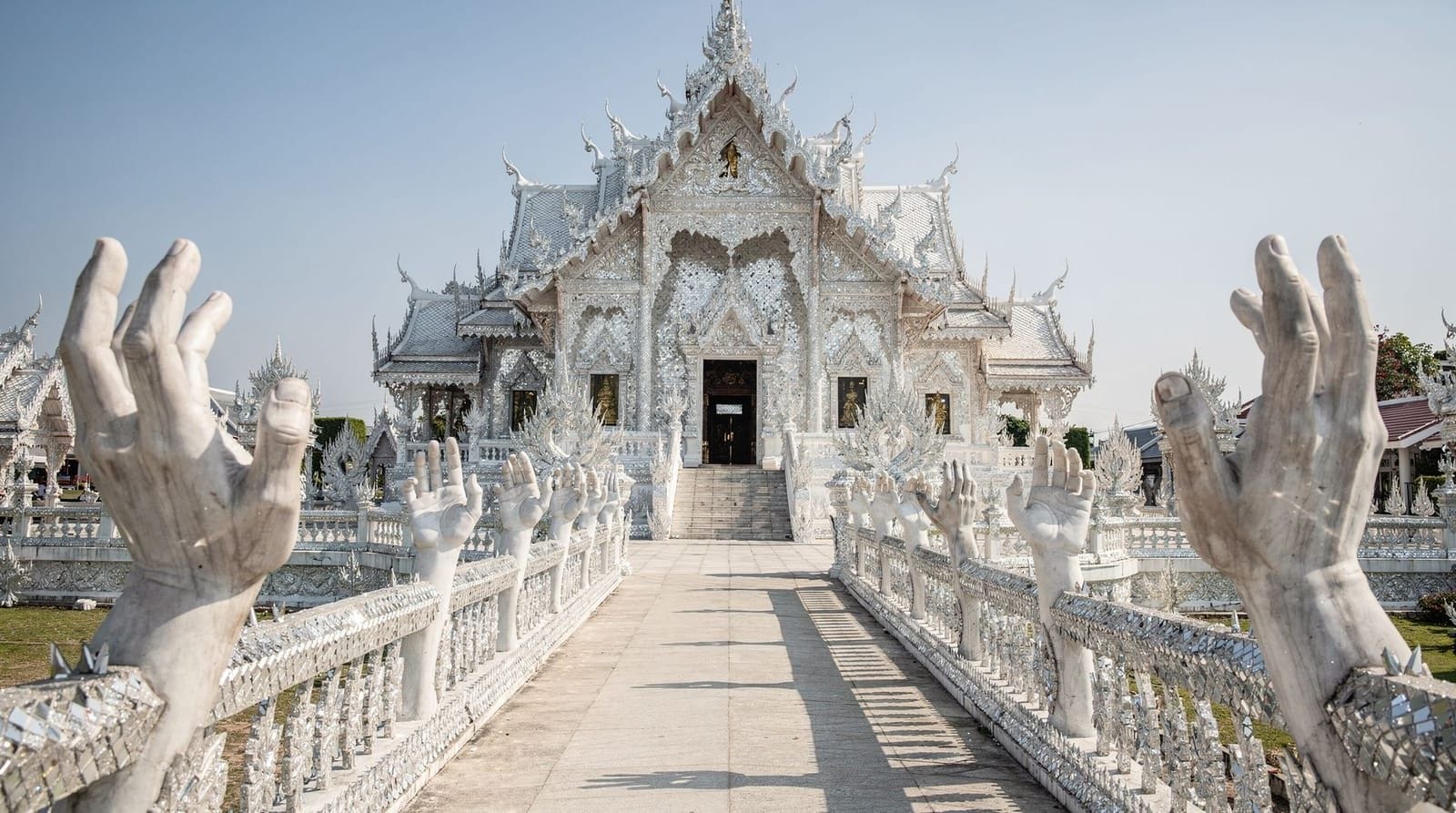
If your schedule genuinely allows for only one Chiang Rai temple, the choice comes down to what you’re looking for. The White Temple is larger, more elaborate, and more internationally famous, with the bridge of hands as its signature image — but it’s also considerably more crowded from mid-morning onward. The Blue Temple is smaller, quicker to see, and rarely crowded even at midday, with its own distinct visual identity rather than feeling like a lesser copy. Most visitors with a full day see both without difficulty, since they sit within a reasonable drive of each other near Chiang Rai; it’s really only travelers with a very tight schedule who need to choose.
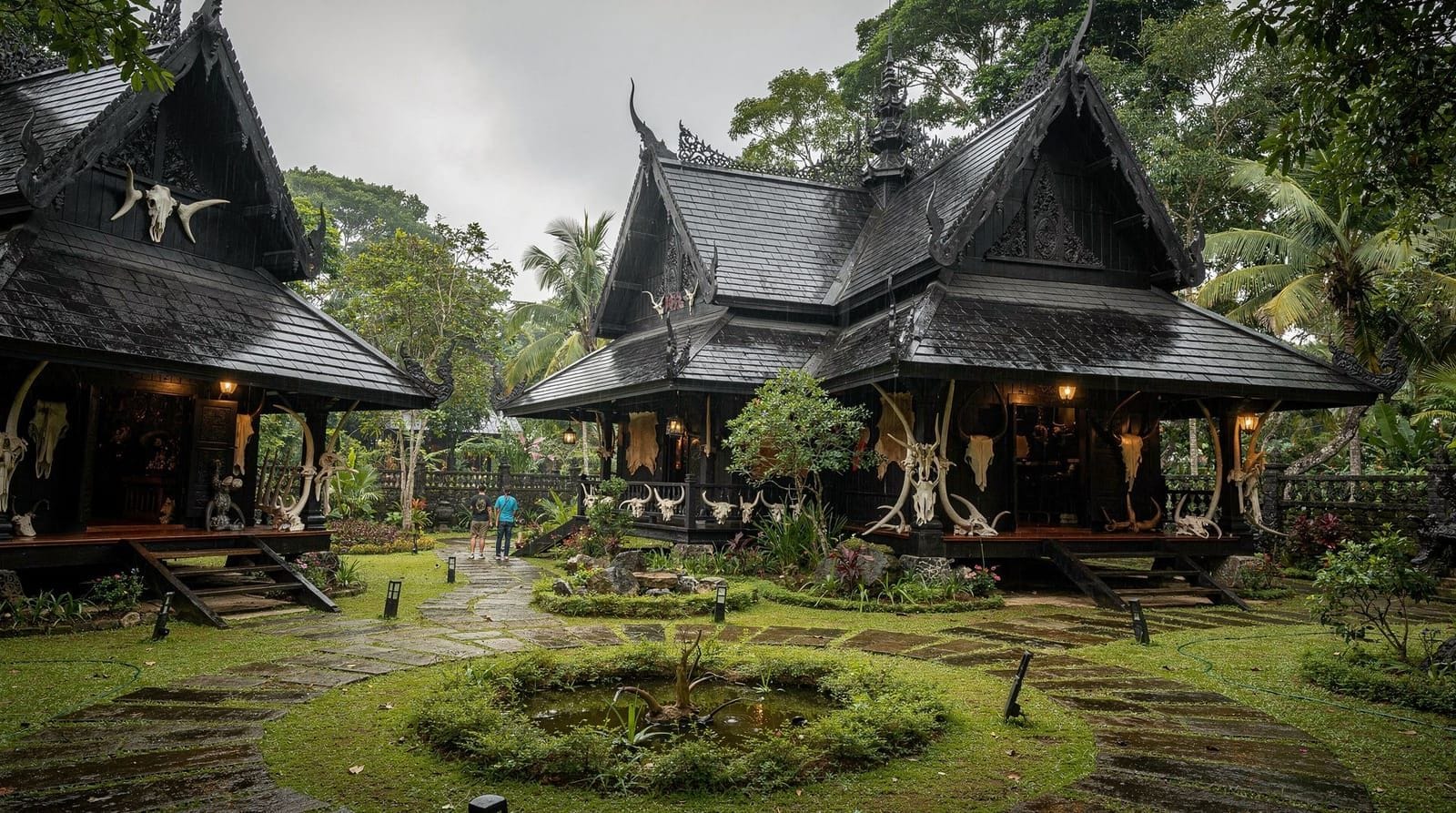
A combined stop at the Black House rounds out the standard circuit with something entirely different in tone — dark, unsettling, and secular rather than devotional — making the three-temple (or two-temple-plus-museum) combination one of the most efficient uses of a single day near Chiang Rai.
A quieter counterpoint to Chiang Rai’s temple boom
Chiang Rai’s temple scene over the last few decades has been shaped heavily by a handful of individual artists reworking or rebuilding older sites into striking modern statements, and the Blue Temple fits squarely into that pattern alongside the White Temple. What sets it apart is the relative lack of international marketing around it — there’s no single dominant image of the Blue Temple in the way the White Temple’s bridge of hands has become globally recognizable, and as a result it has largely escaped the same volume of tour-bus traffic despite being just as photogenic and considerably closer to the town center. This is worth knowing if your primary goal in visiting Chiang Rai’s temples is a calmer, less commercialized experience rather than checking off the most famous single site.
What to look for in the murals
The interior murals reward a closer look than most visitors give them on a quick pass-through. Painted directly onto the deep blue walls and ceiling in gold and white detail, they depict scenes drawn from Buddhist cosmology and Thai mythology, including references to the naga serpents that feature prominently on the exterior as well. Because the entire interior surface — walls, ceiling, and support columns — carries this dense mural work, the effect from just inside the entrance is genuinely immersive in a way that’s hard to appreciate fully from photographs alone; it’s one of the clearer cases in the Chiang Rai temple circuit where being there in person adds something photographs don’t fully capture.
Nearby food and market stops
Because the Blue Temple sits within Chiang Rai town rather than out on the highway like the White Temple and Black House, it’s within easy reach of the city’s own night bazaar and day markets, making it a convenient stop to combine with a meal or coffee break if you’re staying overnight rather than passing through on a tightly scheduled day tour. This is one of the practical advantages of an overnight stay in Chiang Rai over a single rushed day trip — the Blue Temple becomes a five-minute stop on the way to dinner rather than a separate leg of a long bus itinerary.
Practical details
Modest dress applies here as at any active Thai temple, though the site is generally relaxed about enforcement compared to some of the more heavily touristed temples in Chiang Mai’s Old City. There’s no significant entry queue even during Chiang Rai’s busier tourist months, and the grounds are compact enough that most visitors comfortably see everything in well under an hour, including time for photos both outside and inside the main hall.
Photography tips
Because the Blue Temple’s exterior color relies on saturation rather than the White Temple’s reflective mosaic surfaces, it photographs reasonably well across a wider range of lighting conditions, including the flatter, hazier light common during Chiang Rai’s February-to-April burning season that can dull the White Temple’s brighter contrasts. That said, morning light still gives the richest results, catching the gold trim against the blue surface with warmer tones than the harsher light of midday. Inside, the murals are typically lit well enough for photography without flash, though a steady hand or a brief pause helps in the dimmer corners of the main hall.
Chiang Rai’s wider temple landscape
Beyond the White, Blue, and Black House trio that dominates most itineraries, Chiang Rai town has a number of older, less internationally famous temples worth a mention for travelers with an extra day, including Wat Phra Kaew — the site where the Emerald Buddha now in Bangkok was originally discovered — and several smaller neighborhood temples in the old town that see far fewer foreign visitors than any of the three modern sites covered here. The Blue Temple sits at an interesting midpoint in this landscape: modern in construction and vivid in color like the White Temple, yet located within walking distance of the older town center rather than out along the highway, making it a natural bridge between Chiang Rai’s contemporary art temples and its quieter historical core.
A note on temple etiquette
As with any active place of worship in Thailand, a few basic points of etiquette apply at the Blue Temple beyond dress code: remove shoes before stepping onto any raised interior floor area, avoid pointing your feet toward the Buddha image while seated or photographing, and keep voices low if monks or worshippers are present, since the temple continues to function as a genuine place of practice alongside its role as a visitor attraction. None of this is heavily enforced by staff the way it might be at a more heavily managed site, which makes self-awareness on the visitor’s part the main safeguard for keeping the temple’s devotional atmosphere intact for local worshippers.
A quick note on timing your visit within a longer day
If the Blue Temple is one stop among several in a single Chiang Rai day — alongside the White Temple, Black House, and perhaps the night bazaar — its short visiting time and central location make it easy to slot in wherever it fits best logistically, unlike the White Temple and Black House, which typically anchor the start or end of an itinerary given their distance from town. Many drivers and guides use it as a natural midday stop between the two longer sights, breaking up the driving with a short, low-effort visit.
Best photo spots on the grounds
The exterior approach facing the main entrance gives the clearest full view of the blue facade with its gold roofline against an open sky, best captured from a slight distance rather than close to the steps. Inside, the white Buddha image against the deep blue backdrop photographs well from a centered position a few rows back from the altar, giving enough context of the surrounding murals without the image itself becoming too small in frame. Side angles along the exterior walkways also capture the naga and guardian figures in more detail than a straight-on shot of the main facade alone.
If you only have one afternoon in Chiang Rai
For visitors squeezed into a genuinely short window — a few hours between a flight connection or a brief stopover on the way further north — the Blue Temple’s central location and quick visiting time make it one of the more efficient single stops available, especially paired with a short walk through the adjacent night market if timing allows. It won’t replace a fuller visit to the temple circuit, the Black House, or the Golden Triangle, but it captures a genuine slice of Chiang Rai’s contemporary temple art without requiring the longer drives that the other sights demand.
Frequently asked questions about the Blue Temple
Is there an entry fee for the Blue Temple?
No — entry is free, though a small donation is welcomed and helps support the temple.
How far is the Blue Temple from the White Temple?
They’re both accessible from Chiang Rai town, though in different directions; most visitors see them as part of the same guided or self-arranged day rather than walking between them.
Is the Blue Temple less crowded than the White Temple?
Yes, noticeably. It draws a fraction of the visitors the White Temple sees, even at midday.
How much time do I need at the Blue Temple?
20-40 minutes is typical, including time to see both the exterior and the interior murals and Buddha image.
Can I visit the Blue Temple on my own without a tour?
Yes — since it sits within Chiang Rai town itself, it’s the easiest of the region’s major temples to reach independently by songthaew, tuk-tuk, or taxi if you’re staying overnight in the city.
What should I wear to visit the Blue Temple?
Shoulders and knees covered, as at any active Thai temple, though enforcement here is generally relaxed compared to Chiang Mai’s busier Old City temples.
Top experiences
Bookable activities with verified prices and instant confirmation on GetYourGuide.