Chiang Mai vs Chiang Rai: which northern city to choose
Chiang Mai: Chiang Rai Highlights in One Day
Duration: Full day
Should I visit Chiang Mai or Chiang Rai?
Chiang Mai is the larger, more developed city with the widest range of activities, restaurants, and accommodation, and works well as a base for a longer stay. Chiang Rai is smaller and quieter, built mainly around its striking modern temples (the White Temple and Blue Temple) and access to the Golden Triangle. Most travelers do Chiang Rai as a long day trip or one-night stopover from Chiang Mai rather than choosing one over the other outright.
Chiang Mai and Chiang Rai share a name, a region, and a lot of first-time-visitor confusion, but they’re genuinely different places serving different roles in a northern Thailand trip. Chiang Mai is the region’s largest city, a genuine multi-day destination with a huge range of temples, food, and activities. Chiang Rai is considerably smaller and quieter, built around a specific set of attractions, most famously its two striking contemporary temples, rather than offering the breadth of a standalone multi-day base.
The most useful way to frame the comparison isn’t “which city is better” but “how does Chiang Rai fit into a Chiang Mai-based trip,” since the overwhelming majority of visitors experience Chiang Rai as a day trip or short overnight stop from Chiang Mai rather than as an independent, equally weighted destination. This guide compares the two honestly and covers the practical question that actually matters for most itineraries: day trip, overnight stop, or skip it entirely.
Size and role in a trip
Chiang Mai is Thailand’s second-largest city and functions as a genuine multi-day base, with enough temples, food, markets, and day-trip options to comfortably fill four to seven days without repeating an activity. It’s the clear hub for northern Thailand travel, well connected by air to Bangkok and other Thai cities, with a developed guesthouse and hotel scene spanning every budget level.
Chiang Rai is a small provincial capital, walkable in its own right but considerably less developed for tourism than Chiang Mai, with a smaller range of accommodation and dining options concentrated mainly around its own compact old town. Most travelers treat it as a specific-attraction stop rather than a base for a longer stay, built around its headline temples and its role as the jumping-off point for the Golden Triangle further north.
The temples: historic vs contemporary
This is the comparison’s clearest point of contrast. Chiang Mai’s temples are historic, several dating back centuries, with Wat Chiang Man tracing to 1296, and concentrated closely enough within the Old City that a single morning can cover multiple significant wats on foot. They represent living Lanna Buddhist tradition, active places of worship woven into the city’s daily life.
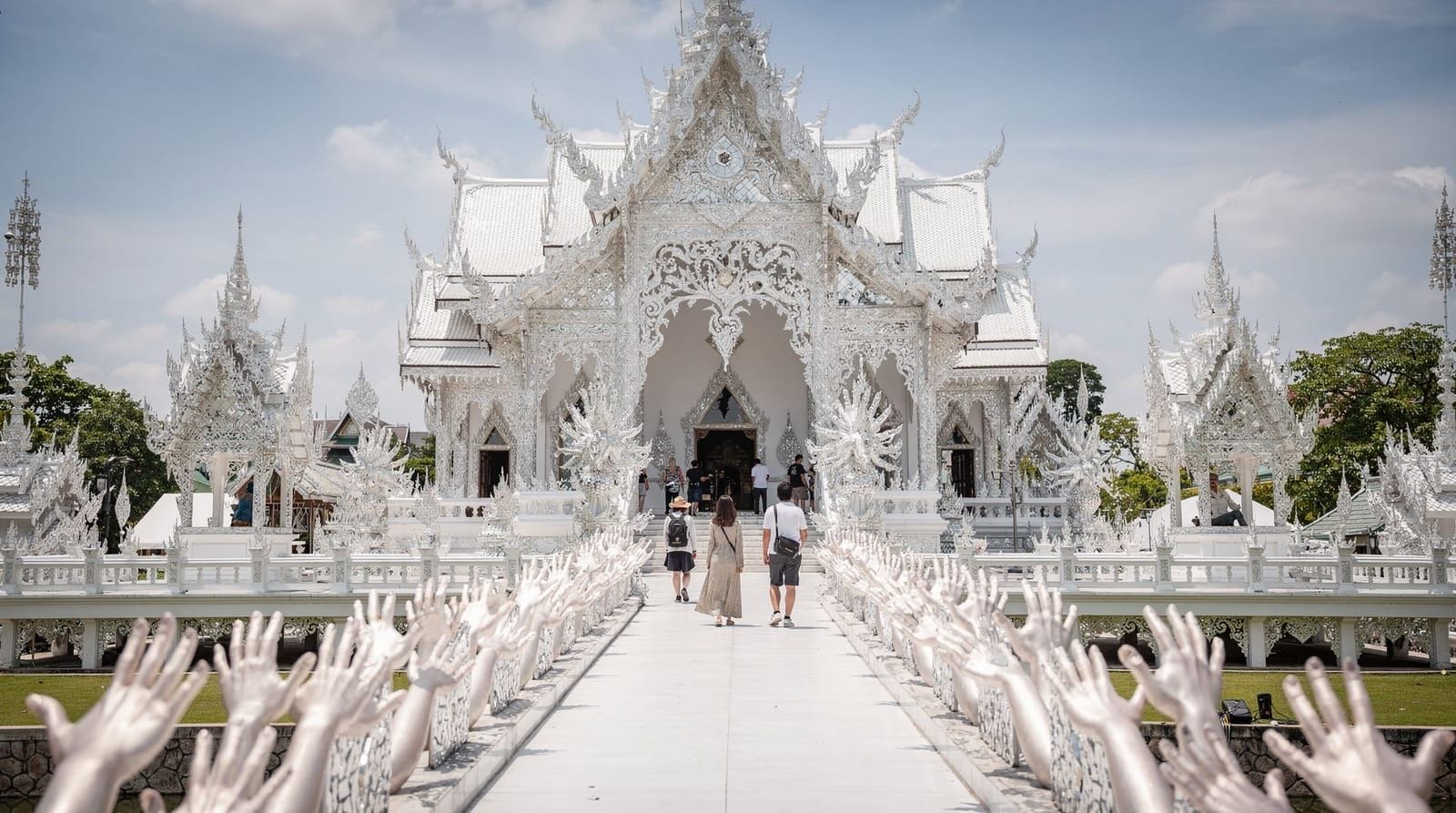
Chiang Rai’s headline attractions are a different category entirely: contemporary artistic works built within the last few decades. The White Temple, designed by artist Chalermchai Kositpipat and still under construction, is an intricate, almost surreal all-white structure incorporating imagery ranging from traditional Buddhist iconography to pop-culture references. The Blue Temple takes a similarly artistic, non-traditional approach with a striking sapphire-blue color scheme. Neither is a centuries-old historic site in the way Chiang Mai’s temples are; they’re modern artistic statements that happen to take the form of temples, and our White Temple vs Blue Temple guide compares the two directly for anyone deciding between them on a tight schedule.
Check the Chiang Rai highlights one-day tour for a full-day option covering the White Temple, Blue Temple, and typically a Golden Triangle stop, run as a single guided day trip from Chiang Mai.
Getting there and the day-trip question
Chiang Rai sits about 180-200 km (110-125 miles) from Chiang Mai, roughly 3-3.5 hours by car or minivan each way depending on the specific route and traffic conditions. A direct bus covers similar ground in about 3-4 hours at a lower cost, and flying is available and fast, around 40 minutes, though rarely worth arranging for a round trip this short unless it connects onward to another destination from Chiang Rai itself.
A day trip is entirely workable and is how most visitors experience Chiang Rai, but it makes for a genuinely long day: commonly 12-14 hours round trip once travel time, the two main temples, and typically a Golden Triangle stop are all included. This suits travelers with a tight overall Chiang Mai itinerary who want to tick off Chiang Rai’s highlights without giving up a full extra day and hotel night. Our Chiang Rai day trip guide covers the logistics of doing this well, including whether a tour or self-drive suits better.
An overnight stay is the better choice for travelers who want a more relaxed pace, time to see the White Temple in different light (it’s notably less crowded, and arguably more atmospheric, in the late afternoon than the mid-morning tour-bus rush), and the chance to explore Chiang Rai’s own smaller night market and old town without racing back to Chiang Mai before dark. The trade-off is an extra hotel night and a full travel day added to the itinerary, a real cost for travelers with limited total time.
Cost comparison
Chiang Rai is modestly cheaper than Chiang Mai across most categories, guesthouses, casual dining, and local transport, reflecting its smaller scale and lighter tourism footprint. The gap isn’t dramatic enough to be a primary deciding factor on its own, and for a day trip specifically, the cost difference barely registers since most of the spending, tour price, meals, any temple entry fees, happens over a single day rather than an extended stay. A simple room in Chiang Rai’s old town commonly runs somewhat below an equivalent Chiang Mai option, useful context mainly for travelers considering an overnight stop rather than those doing a same-day round trip. A full-day guided tour covering both temples and the Golden Triangle commonly runs a similar price whether booked from Chiang Mai or arranged locally in Chiang Rai, so the main cost variable for most visitors is really the choice between day trip and overnight, not which city serves as the base.
Food and atmosphere
Chiang Mai’s food scene is considerably larger and more varied, spanning northern Thai specialties, international cuisine, and the country’s best concentration of hands-on cooking classes. Chiang Rai’s dining scene is smaller but still solidly northern Thai in character, with its own night market offering a scaled-down but genuine version of the same food-market culture found in Chiang Mai, generally with fewer tourists and a more local feel given the lighter visitor numbers relative to Chiang Mai’s markets.
The overall atmosphere reflects the size difference: Chiang Mai has real energy and density even outside its busiest tourist zones, while Chiang Rai feels noticeably quieter and more provincial, a genuine appeal for travelers who find Chiang Mai itself already busy enough and want a calmer, smaller-scale stop as part of the same broader trip.
A shared history worth knowing
The two cities’ similar names aren’t a coincidence: both were founded by King Mangrai, the Lanna kingdom’s founding monarch, with Chiang Rai established first in 1262 as his original capital, before Chiang Mai was founded in 1296 and took over as the kingdom’s primary seat of power. This shared Lanna heritage explains why both cities feel culturally distinct from central Thailand, sharing dialect, cuisine, and architectural traditions that set the north apart from Bangkok and the south. Chiang Mai’s larger historic footprint today, more surviving old temples, a more intact Old City wall and moat, reflects its centuries as the kingdom’s capital, while Chiang Rai’s provincial, smaller-scale character today owes more to its long period as a secondary town than to any lesser historical importance. Understanding this shared origin makes the comparison feel less like two unrelated cities and more like two chapters of the same regional story.
Night markets compared
Both cities run a version of the classic northern Thai night market, but at different scales. Chiang Mai’s night markets, particularly the Sunday Walking Street and the nightly Night Bazaar, are large, well-established, and can feel genuinely crowded during peak season, spanning multiple streets with hundreds of stalls. Chiang Rai’s own night bazaar, near the bus station in the town center, is considerably smaller, easily covered in an hour or two, with a similar mix of food stalls, clothing, and handicrafts but a noticeably calmer, more local atmosphere given the lighter tourist volume. Travelers who found Chiang Mai’s markets overwhelming often find Chiang Rai’s version a welcome, more manageable contrast, while travelers specifically drawn to market culture and variety will get more from Chiang Mai’s larger scene.
Best time to visit each
Both cities share the same broad three-season climate pattern typical of northern Thailand, cool and dry from November through February, hot and increasingly hazy from March through May, and wet from June through October, since they sit within the same general region and airshed. This means the best time to visit Chiang Mai guide applies almost identically to Chiang Rai, and there’s no meaningful reason to time a Chiang Rai visit differently than the rest of a Chiang Mai-based trip. One small distinction: photographers aiming for the White Temple’s best light generally do better with an overnight stay allowing a late-afternoon visit, since the temple’s white facade and reflecting pools photograph particularly well in the softer light before sunset, regardless of which season the trip falls in.
Combining Chiang Rai with a wider northern loop
For travelers with more time, Chiang Rai works well as a stop on a wider northern Thailand loop rather than a simple there-and-back day trip. Some itineraries continue from Chiang Rai to Mae Hong Son or loop back through Pai, though this requires considerably more time, typically four to six days minimum, than the standard Chiang Mai day-trip approach. Our Chiang Mai vs Pai guide covers that separate mountain-town comparison for travelers weighing a broader multi-stop northern Thailand itinerary rather than a single Chiang Rai add-on.
Which approach suits which traveler
Travelers with a week or less in the Chiang Mai region are generally best served treating Chiang Rai as a single well-planned day trip, ideally via a guided tour that handles the transport and sequencing rather than a rushed self-drive attempt. Travelers with a more flexible schedule, particularly photographers wanting better light at the White Temple or anyone who values a slower pace over ticking off maximum sights per day, benefit from the overnight option. Travelers who have already visited Chiang Rai on a previous trip, or who have limited interest in temple architecture specifically, can reasonably skip it in favor of other day trips from Chiang Mai without missing out on anything essential to a first Chiang Mai visit.
Families with young children tend to do better with an overnight stay or skipping Chiang Rai altogether, since the long day-trip drive time can be genuinely tiring for kids, while couples and solo travelers with reasonable stamina for a long day generally find the single-day round trip a perfectly manageable, efficient way to see the highlights without disrupting the rest of a Chiang Mai-based itinerary.
Practical differences for independent travelers
Self-driving between the two cities is a realistic option for confident drivers, with the main route running along well-maintained highway for most of the journey, though the final approach into central Chiang Rai involves some town traffic worth budgeting a little extra time for. Public bus services connect the two cities frequently throughout the day, departing from Chiang Mai’s Arcade Bus Station, and represent the most budget-friendly independent option, though they take somewhat longer than a private transfer once boarding and station time are factored in. Minivan services split the difference, faster than the bus and cheaper than a private car, and are a common choice for independent travelers who don’t want to drive themselves but also don’t want the fixed schedule of a full guided tour. For travelers uncertain about self-driving on unfamiliar roads or who prefer not to manage the day’s logistics themselves, a guided day tour remains the simplest option, since it bundles transport, a knowledgeable driver, and a pre-planned sequence of stops into a single booking.
What each city offers beyond its headline attractions
Beyond the temple comparison, both cities have secondary attractions worth knowing about for travelers who want to go deeper than the standard day-trip checklist. Chiang Rai is home to the Black House (Baan Dam), artist Thawan Duchanee’s dark, provocative counterpoint to the White Temple’s serenity, often included alongside the two main temples on a fuller day-tour itinerary. It’s also the natural gateway to hill-tribe villages and highland scenery further north toward the Myanmar border, an area with a genuinely different character from the more heavily touristed routes around Chiang Mai itself. Chiang Mai, in turn, offers a breadth Chiang Rai simply doesn’t have the scale to match: multiple distinct neighborhoods each with their own character, a far larger selection of cooking schools and wellness spas, and closer, easier access to major nature destinations like Doi Inthanon and the elephant sanctuaries around Mae Rim. This breadth is precisely why Chiang Mai functions as the regional base while Chiang Rai remains, for most itineraries, a focused add-on rather than a competing hub.
Frequently asked questions about Chiang Mai vs Chiang Rai
Is Chiang Rai worth visiting if I’m already in Chiang Mai?
Yes, for most travelers. Chiang Rai’s White Temple and Blue Temple are genuinely distinct from anything in Chiang Mai, modern, artistically ambitious structures rather than historic wats, and a day trip or overnight stop is a common, worthwhile addition to a Chiang Mai-based itinerary.
How far is Chiang Rai from Chiang Mai?
About 180-200 km (110-125 miles), roughly 3-3.5 hours by car or minivan each way, depending on the route and traffic. A direct bus takes a similar 3-4 hours; flying is faster (about 40 minutes) but rarely worth it for a trip this short unless connecting onward from Chiang Rai.
Should I do Chiang Rai as a day trip or stay overnight?
A day trip works for travelers focused only on the two main temples and the Golden Triangle, but it makes for a long day, commonly 12-14 hours round trip including drive time. An overnight stay allows a more relaxed pace, time for Chiang Rai’s own night market, and the option to see the White Temple in different light, though it does cost an extra hotel night and travel day.
Which city has better temples, Chiang Mai or Chiang Rai?
They’re not really comparable in style. Chiang Mai’s temples are historic, some dating back centuries, and concentrated in a walkable Old City. Chiang Rai’s headline temples are contemporary artistic works, built within the last few decades, striking in a completely different way. Most travelers find both worth seeing rather than picking one over the other.
Is Chiang Rai cheaper than Chiang Mai?
Generally yes, modestly. Chiang Rai is smaller and less touristed, and accommodation and food both run somewhat cheaper on average than equivalent options in Chiang Mai, though the gap isn’t dramatic.
Can I combine Chiang Rai with the Golden Triangle in one day?
Yes, and it’s a common combination. Most Chiang Rai day tours from Chiang Mai bundle the White Temple, Blue Temple (or Black House), and a stop at the Golden Triangle, the Thailand-Laos-Myanmar tripoint, into a single long day, typically 12-13 hours including transport.
Top experiences
Bookable activities with verified prices and instant confirmation on GetYourGuide.