Chiang Mai night markets guide: which one to visit, and when
Chiang Mai: Nighttime City Highlights by EV Tram
Which Chiang Mai night market should I visit if I only have one evening?
If your evening happens to fall on a Sunday, go to Sunday Walking Street on Ratchadamnoen Road — it's the biggest, with the widest mix of food and crafts. On any other night, the Chang Phueak Gate street-food market or a stop at Warorot's evening edge gives a more local experience than the Night Bazaar, which runs nightly but is the most tourist-priced of the group.
Chiang Mai runs more overlapping night markets than most first-time visitors expect, and travel content often lumps them together as if they’re interchangeable. They aren’t. Some run every night of the year, some only appear once a week, and the gap in price and atmosphere between the most tourist-oriented option and the most local one is wide enough that picking the wrong one for your priorities is a genuinely common regret.
Quick answer: if your evening happens to land on a Sunday, Sunday Walking Street on Ratchadamnoen Road is the single biggest and most varied option. On any other night, Chang Phueak Gate’s street-food market or Warorot’s evening stalls feel more local than the nightly Night Bazaar on Chang Khlan Road, which is convenient but runs at a real tourist markup. Saturday Walking Street on Wualai Road, silver-focused and calmer, is the pick if your one free evening happens to be a Saturday.
The full lineup, at a glance
| Market | Runs | Focus | Crowd | Price vs. baseline |
|---|---|---|---|---|
| Night Bazaar (Chang Khlan) | Nightly | Souvenirs, clothing, food courts | Medium-high | 20-40% above |
| Kalare & Ploen Ruedee food courts | Nightly | Food | Medium-high | 20-40% above |
| Anusarn Market | Nightly | Seafood, massage | Low-medium | At baseline |
| Chang Phueak Gate | Nightly | Street food | Low-medium | At baseline |
| Warorot Market (evening edge) | Nightly (daytime is the main event) | Local food, flowers | Low | At baseline |
| Sunday Walking Street | Sundays only | Crafts, art, food | High | Slightly above |
| Saturday Walking Street (Wualai) | Saturdays only | Silver crafts, food | Low-medium | At baseline |
A more detailed side-by-side of just the two big markets is in our Night Bazaar vs. Sunday Walking Street comparison, and a food-specific ranking across all of them is in the best night markets for food guide.
Night Bazaar (Chang Khlan Road) — the nightly default, and the most overpriced
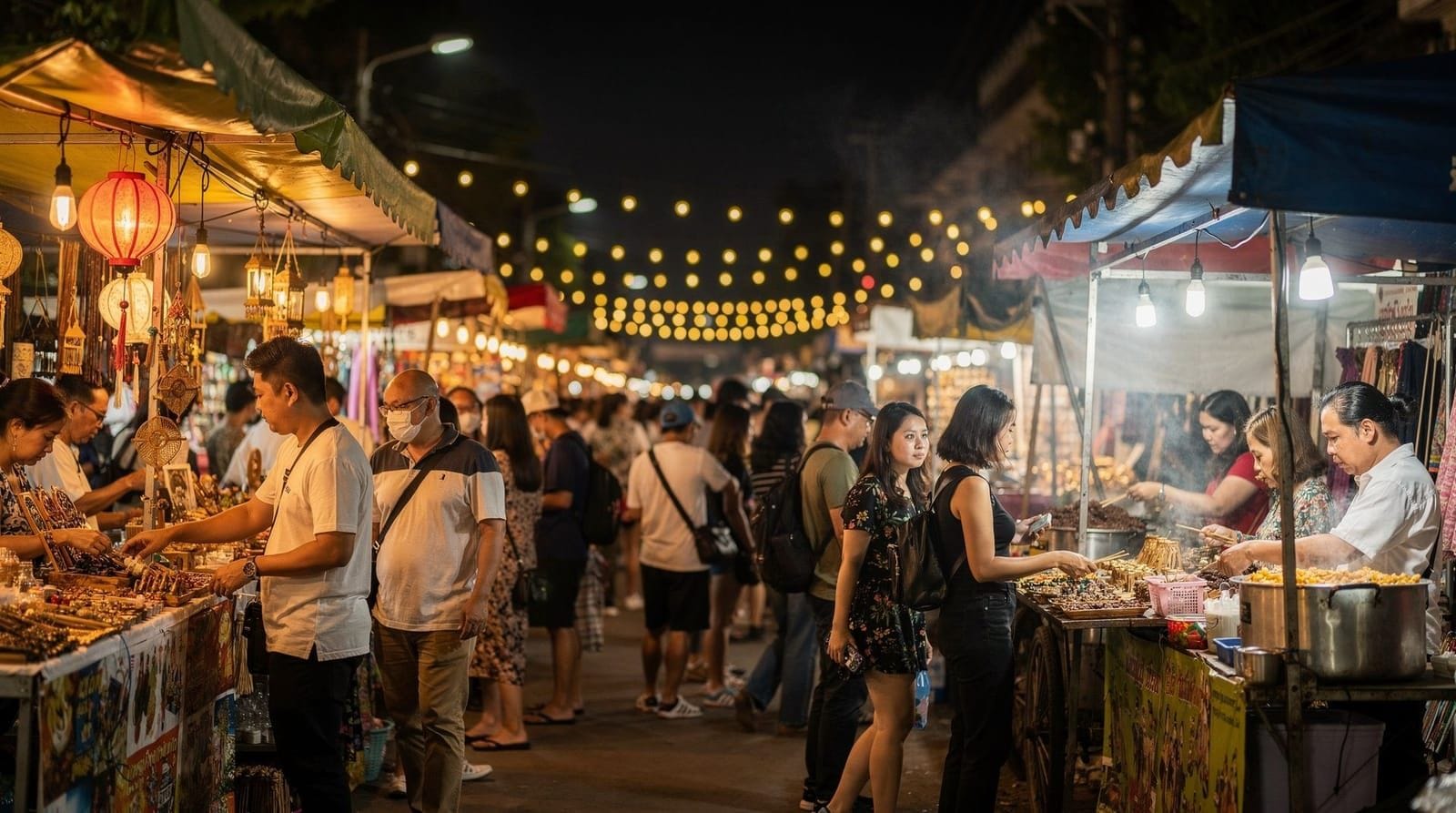
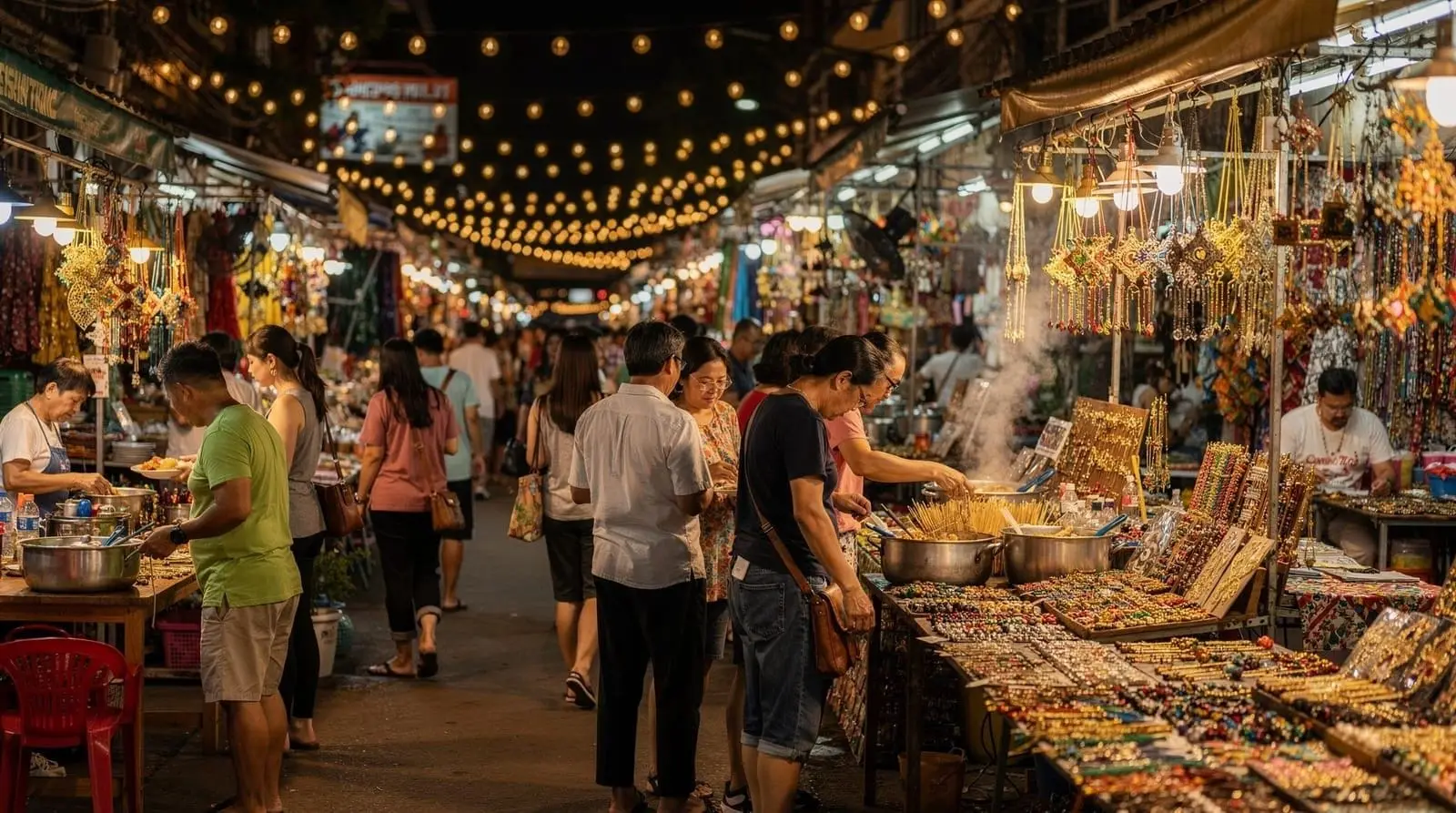
The Night Bazaar is the market most visitors stumble into first, simply because it runs every night of the year on a road lined with hotels. That reliability is its real strength: no calendar-checking required. Its weakness is just as real — stalls sell largely the same inventory found in similar tourist markets across Thailand (elephant-print trousers, phone cases, knockoff football shirts), and prices, even after bargaining, tend to land above what the same or similar items cost at Sunday Walking Street or Warorot. Treat it as an orientation stop on night one, not a destination to return to repeatedly.
Nighttime city highlights tour by EV tram is a reasonable way to see the Night Bazaar area alongside other lit-up parts of the city in one low-effort outing if you’re not planning to shop seriously there.
Kalare, Ploen Ruedee and Anusarn — food courts and a calmer seafood-and-massage alternative
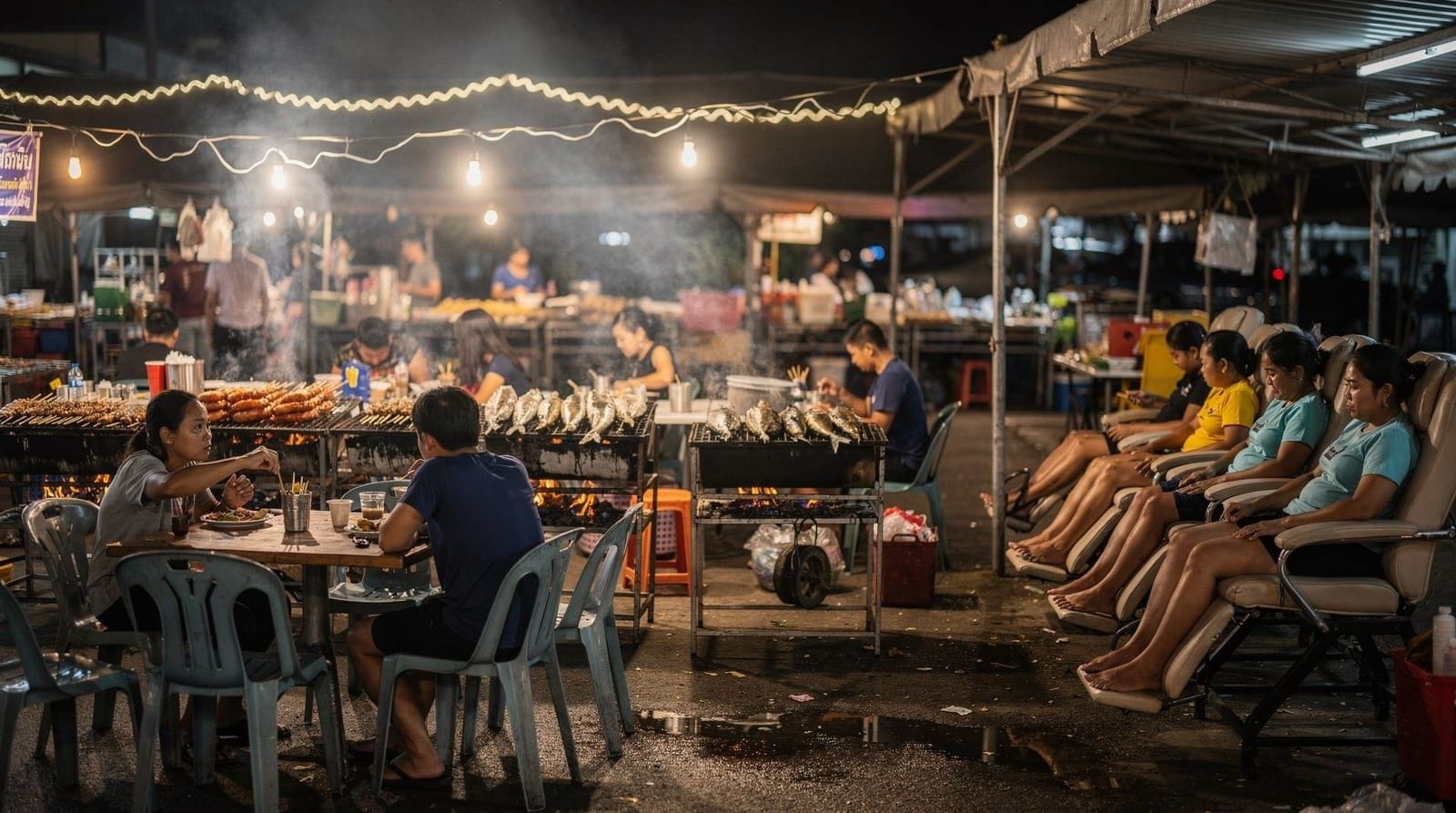
Two indoor-ish food courts, Kalare and Ploen Ruedee, sit within the Night Bazaar cluster and run nightly, with partial cover that’s genuinely useful during rainy season. A block over, Anusarn Market runs its own quieter version of the same evening — a seafood restaurant courtyard sold by weight, plus one of the densest clusters of massage shops in the city. We cover Anusarn’s specific value in the dedicated Anusarn guide; the short version is that it’s calmer and better value than the food courts one block over, without losing the convenience of the same general area.
Evening local street food and market tour threads together stops across this cluster with a guide doing the ordering, useful on a first visit if unfamiliar dishes and no English signage feel like a barrier.
Chang Phueak Gate — the least touristy nightly option
Just outside the Old City’s north gate, this nightly street-food market skews toward what Chiang Mai residents actually eat for dinner rather than souvenir shopping. There’s no entrance drama and no craft stalls competing for space — just carts and folding tables selling grilled meats, noodle soups and khao kha moo (stewed pork leg over rice) at prices close to Warorot’s baseline. It’s the market to pick on an ordinary Tuesday when neither weekend walking street is running and the Night Bazaar’s markup doesn’t appeal.
Warorot Market’s evening edge
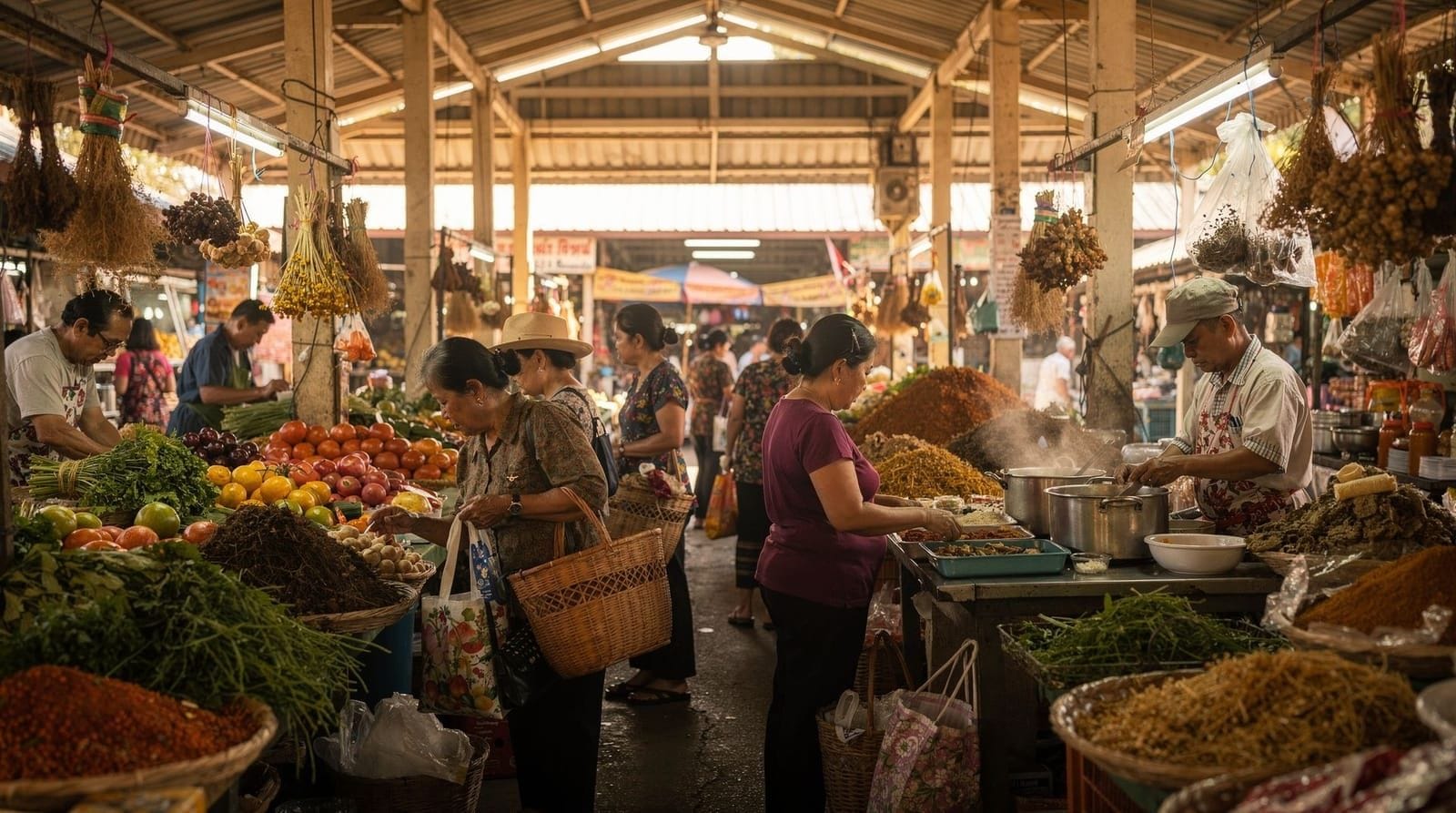
Warorot Market (Kad Luang) is primarily a daytime market, at its best in the early morning when the wholesale flower and produce trade is in full swing, but its food stalls stay active into the early evening and offer some of the most authentic, least-marked-up northern Thai dishes in the city center. It’s not a night market in the way the others are, but worth folding into an evening if you’re already in the Chang Khlan or Old City area before the bigger markets get going.
Sunday Walking Street (Ratchadamnoen Road) — the biggest single event
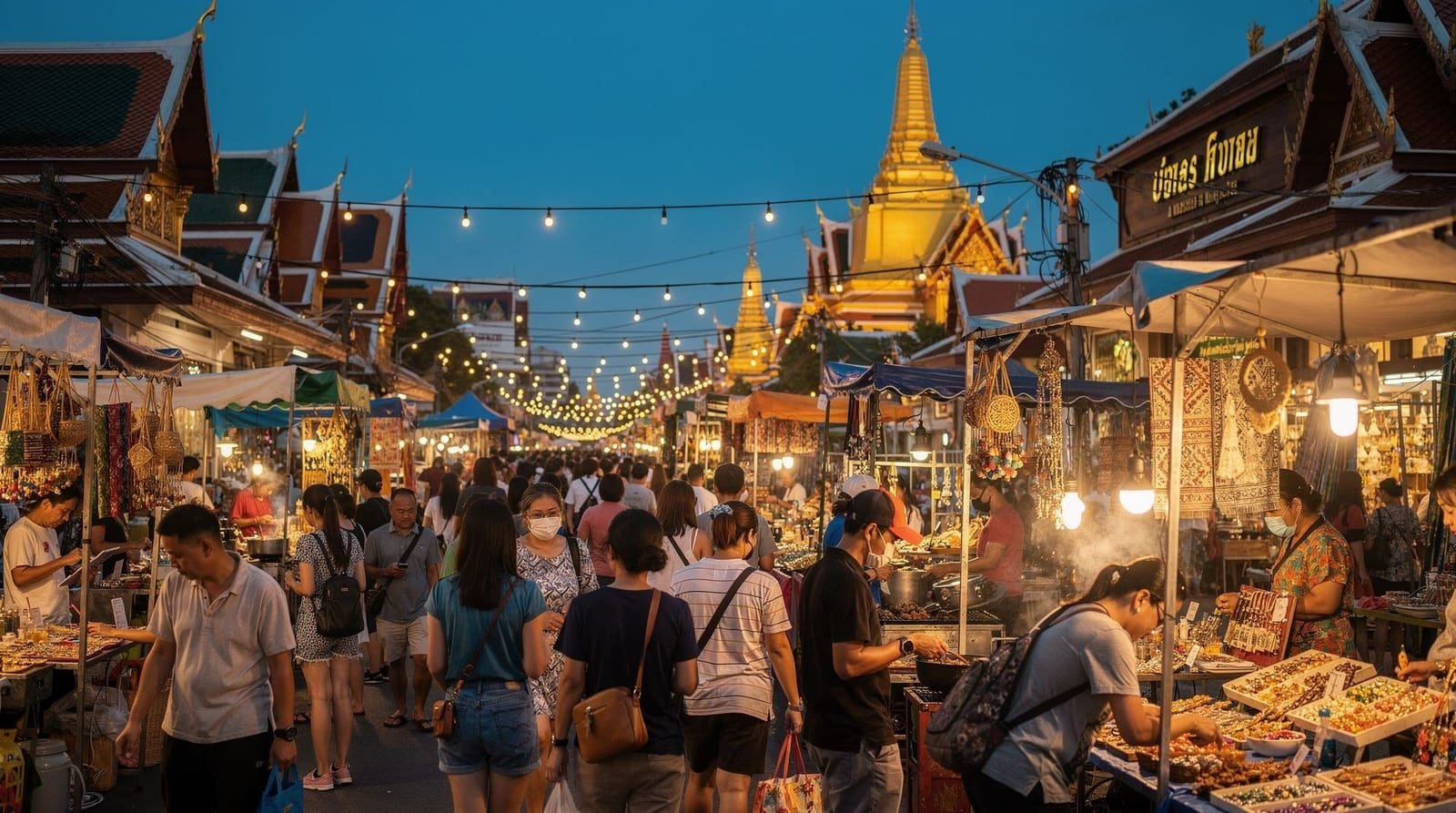
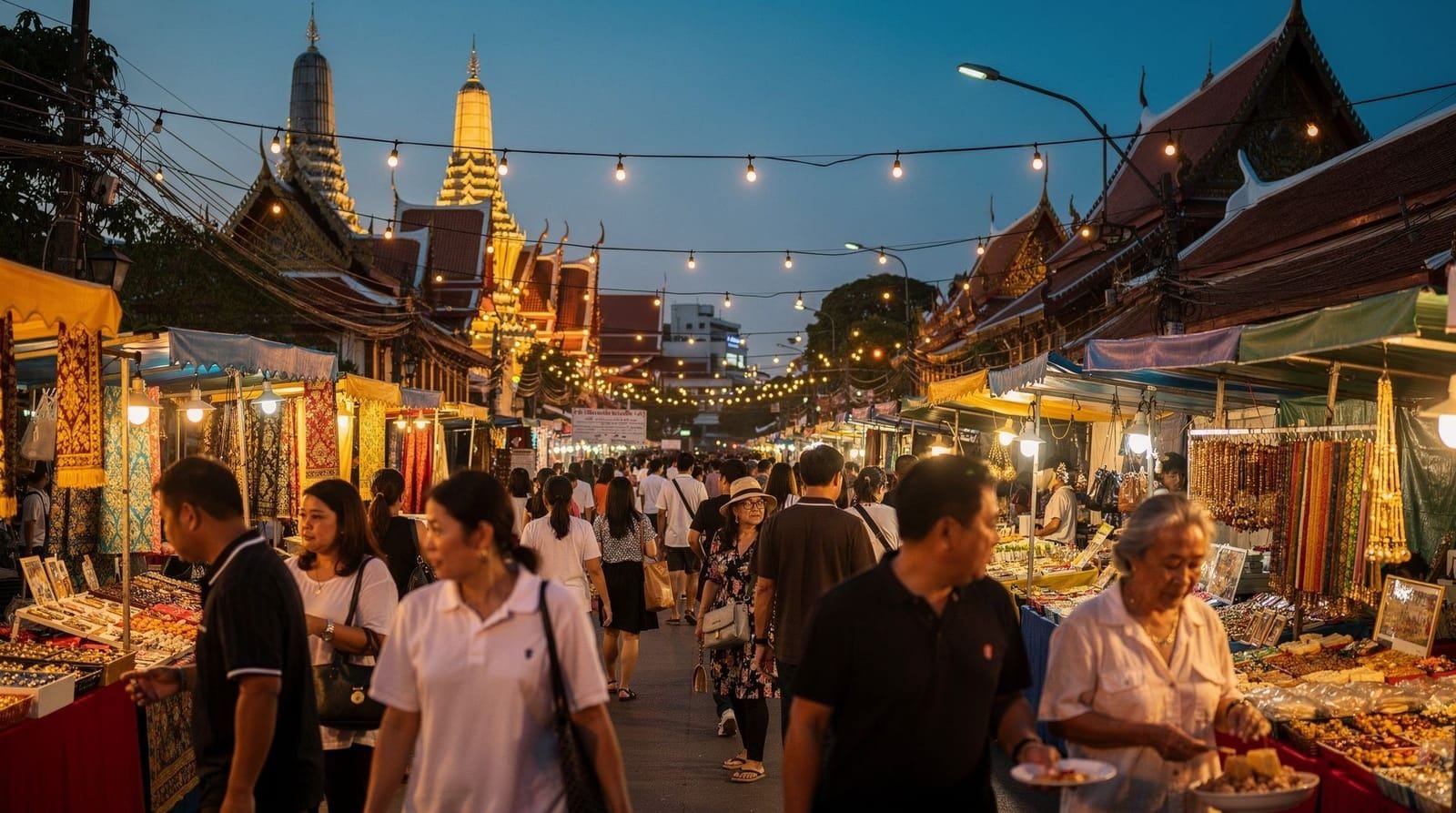
Every Sunday, Ratchadamnoen Road closes to traffic from roughly 4pm to 10-11pm and becomes Chiang Mai’s largest single market, running the full length of the road from Tha Phae Gate to Wat Phra Singh. Handicrafts, local art, hand-painted goods and dense street food fill the route and its temple courtyards, and the crowd is a genuine mix of Thai families and visitors rather than a purely tourist-facing event. It only runs on Sundays, so this one requires actual date-planning if it matters to your trip. A full logistics breakdown is in the Sunday Walking Street guide.
Walking food tour through the market is worth considering specifically for this market, since a guide can navigate the Sunday crowd more efficiently than solo wandering.
Saturday Walking Street (Wualai) — the silver-focused, calmer sibling
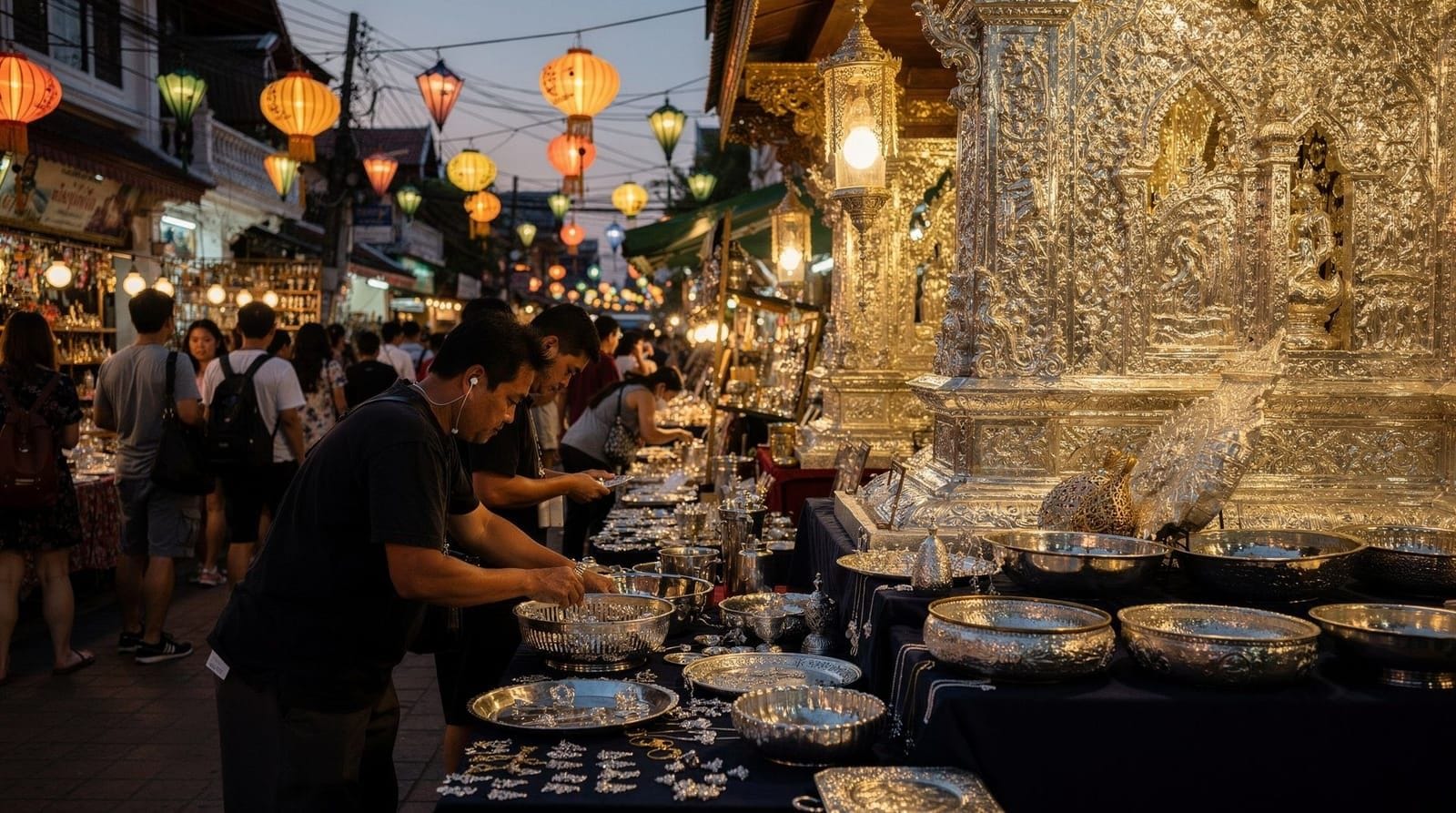
A smaller version of the same format runs on Saturday evenings along Wualai Road, historically tied to the neighborhood’s silversmithing trade and anchored by Wat Sri Suphan, the temple with hand-hammered silver panelling. It’s a fraction of Sunday’s size and noticeably calmer, and the better pick specifically if silver jewelry or homeware is the actual shopping priority. Full details are in the Saturday Walking Street Wualai guide.
Weekend arty markets: Jing Jai and Baan Kang Wat
Worth flagging separately, since they’re easy to confuse with the night markets but run on an entirely different schedule: Jing Jai Market (also known as Rustic Market) and Baan Kang Wat both run daytime, weekend-heavy hours with an organic, café-culture, artisan-craft feel closer to a farmers’ market than a street bazaar. Neither substitutes for an evening market visit, but both are worth a separate morning if slower-paced browsing, coffee and locally made goods (rather than mass-market souvenirs) are more your speed. They don’t fit into a night-market itinerary, so plan them as their own outing.
Malls as a rainy-night backup
Chiang Mai’s rainy season, roughly June through October, can shut down or thin out the open-air walking streets with little warning. On a night like that, MAYA and Central Festival malls in Nimman, One Nimman’s boutique plaza, and Think Park’s cluster of cafés and small shops all offer fixed-price shopping, air conditioning and food courts as a reasonable substitute for an evening that would otherwise have been a market. None of them replicate the market atmosphere, but all are legitimate options rather than a consolation prize.
Bargaining: what applies where
Haggling is expected at market stalls selling crafts, clothing and souvenirs — typically landing 10-30% below the first quoted price with a polite counter-offer — but not at food stalls, where prices are fixed and well known to regulars, and not at all inside the fixed-price malls. Our bargaining etiquette guide covers phrasing, tone and realistic expectations in more depth.
What’s actually worth buying
Umbrellas and paper goods tracing back to Bo Sang village, silver from Wualai, local artwork at Sunday Walking Street, and woodcarving from Baan Tawai all show up across these markets in varying quality — distinguishing genuinely handmade pieces from mass-produced imports is worth the extra few minutes it takes. A full breakdown by category is in the best souvenirs to buy in Chiang Mai guide.
Chiang Mai after dark by Vespa tour is a different way to see several of these market areas in one evening if a guided, moving tour appeals more than parking yourself in one market for the night.
Building a market-focused itinerary
If night markets specifically are a trip priority rather than an occasional stop, it’s worth checking the calendar before booking dates — a trip that includes both a Saturday and a Sunday evening in Chiang Mai lets you do both walking streets without missing either, while a short 3-4 night trip landing entirely on weeknights means leaning on the nightly options (Night Bazaar, Anusarn, Chang Phueak Gate) instead. Neither is a bad trip, but knowing which markets are actually available on your specific dates avoids the common disappointment of arriving expecting Sunday Walking Street on a Tuesday.
Practical notes that apply across all of them
Cash is the practical currency everywhere except the malls — carry small THB notes, since few stalls have change for a large bill. Comfortable, closed shoes beat sandals for an evening of standing and shuffling through crowds. And checking opening days before setting out saves a wasted trip: Sunday Walking Street is Sunday only, Saturday Walking Street is Saturday only, and everything else in this guide runs nightly.
Choosing based on what actually matters to you
Rather than trying to rank these markets on a single scale, it helps to be honest about what you’re actually optimizing for on a given evening. If reliability matters most — you land on a Tuesday and just want somewhere to go — the Night Bazaar, Kalare, Ploen Ruedee, Anusarn or Chang Phueak Gate are all there regardless of the date. If value and a genuine local atmosphere matter more, and your dates allow it, Sunday or Saturday Walking Street both outperform the nightly options on price and character. If food specifically is the priority rather than shopping, Chang Phueak Gate and the temple courtyards along Sunday Walking Street both beat the more convenience-oriented food courts at Kalare and Ploen Ruedee. And if a calm, low-key evening with a proper sit-down meal and a massage is what you’re after, Anusarn is a better fit than any of the higher-energy options.
Tourist traps worth knowing about within these markets
Even within markets that are broadly worth visiting, a few specific patterns are worth watching for. Some Night Bazaar vendors present prices as fixed when they’re actually negotiable, particularly with visitors who look unfamiliar with local norms — a polite counter-offer is always worth trying regardless of how a price is presented, per our bargaining etiquette guide. “Handmade” claims on textiles and carvings should be treated with reasonable skepticism at any of these markets — mass-produced items mixed in among genuinely handmade ones is a reality everywhere, not a Chiang Mai-specific problem, and asking a vendor directly where and how something was made often gets an honest answer. And at any market, comparing prices across two or three stalls selling similar goods before committing to a purchase is a simple habit that avoids the most common regret — paying full first-quote price for something sold cheaper a few stalls further along.
Budgeting across a market-heavy trip
If your itinerary includes several of these markets across a multi-night stay, it’s worth budgeting realistically rather than assuming each evening costs the same. A food-focused night at Chang Phueak Gate or Warorot’s evening stalls can run under 300 THB ($8.50) per person if shopping isn’t involved, while a Sunday Walking Street evening with some genuine souvenir shopping easily reaches 800-1,500 THB ($23-43) per person depending on what you buy. Night Bazaar evenings tend to cost more for equivalent goods given the markup discussed above, so treating it as an occasional stop rather than a nightly habit helps keep a multi-night trip’s market budget reasonable without sacrificing the experience.
How the markets developed differently
It’s worth understanding roughly why these markets feel so different from each other, since the history explains a lot about today’s character. The Night Bazaar grew organically over decades along Chang Khlan Road as Chiang Mai’s tourism industry expanded, shaped mostly by the steady stream of hotel guests in the surrounding area rather than by any single civic plan — which is a large part of why its inventory skews toward what reliably sells to visitors rather than toward the city’s own craft traditions. Sunday Walking Street, by contrast, was formalized by the municipality in the early 2000s out of a smaller, looser gathering of vendors along the same Ratchadamnoen Road corridor, and grew over the following two decades while retaining a genuinely mixed local-and-visitor crowd. Saturday Walking Street traces even more directly to a specific neighborhood’s craft identity — Wualai’s silversmithing tradition — rather than emerging as a general commercial event. Knowing this helps set expectations: the Night Bazaar is the most purpose-built for tourism, while the two walking streets carry more of an organic, civic or craft-rooted character.
A note for repeat visitors to Chiang Mai
If this isn’t your first trip and you’ve already done the obvious first-night Night Bazaar visit, it’s worth deliberately seeking out the quieter options this time — Chang Phueak Gate, Warorot’s evening stalls, or a return trip to Saturday Walking Street specifically for a silver purchase you’ve been considering since a previous visit. Repeat visitors often report more satisfaction from the less-hyped markets precisely because they no longer feel obligated to “do” the famous one again, freeing up an evening for something that better matches an already-informed sense of what Chiang Mai’s markets actually offer.
Frequently asked questions about Chiang Mai’s night markets
How many night markets does Chiang Mai actually have?
Six to eight distinct ones depending on how you count: the nightly Night Bazaar, Kalare and Ploen Ruedee food courts, Anusarn Market, Warorot’s evening stalls, Chang Phueak Gate, Sunday Walking Street and Saturday Walking Street.
Which night market is the least touristy?
Chang Phueak Gate and Warorot’s evening stalls skew most local. Saturday Walking Street on Wualai Road is also noticeably calmer than its Sunday counterpart.
Is the Night Bazaar worth visiting?
Worth one visit for orientation and convenience, but it’s the most overpriced and least distinctly northern Thai of the group — Sunday and Saturday Walking Street both offer a stronger sense of place.
Do I need to bargain at every market?
Only at stalls selling crafts, clothing and souvenirs — not at food stalls, and not inside the fixed-price malls.
What are Jing Jai and Baan Kang Wat, and are they night markets?
No — both are weekend daytime markets with an artisan, café-culture feel, worth a separate morning outing rather than folding into a night-market plan.
What should I do on a night none of the weekend markets are running?
The Night Bazaar, Kalare, Ploen Ruedee, Anusarn and Chang Phueak Gate all run nightly regardless of the day of the week.
Are Chiang Mai’s malls a reasonable alternative to the markets?
Yes, particularly on a rainy evening — MAYA, Central Festival, One Nimman and Think Park all offer fixed-price shopping and food as a legitimate backup.
Can I visit more than one night market in a single evening?
Only if they’re close together — the Night Bazaar, Kalare, Ploen Ruedee and Anusarn all sit within a short walk of each other, but Sunday Walking Street and Chang Phueak Gate are a songthaew ride apart and better treated as separate evenings.
Top experiences
Bookable activities with verified prices and instant confirmation on GetYourGuide.