Saturday Walking Street Wualai: planning a silver-focused evening
Chiang Mai: Silver Craftwork Temple Tour with Monk Meeting
What's the best way to plan a Saturday Walking Street Wualai visit?
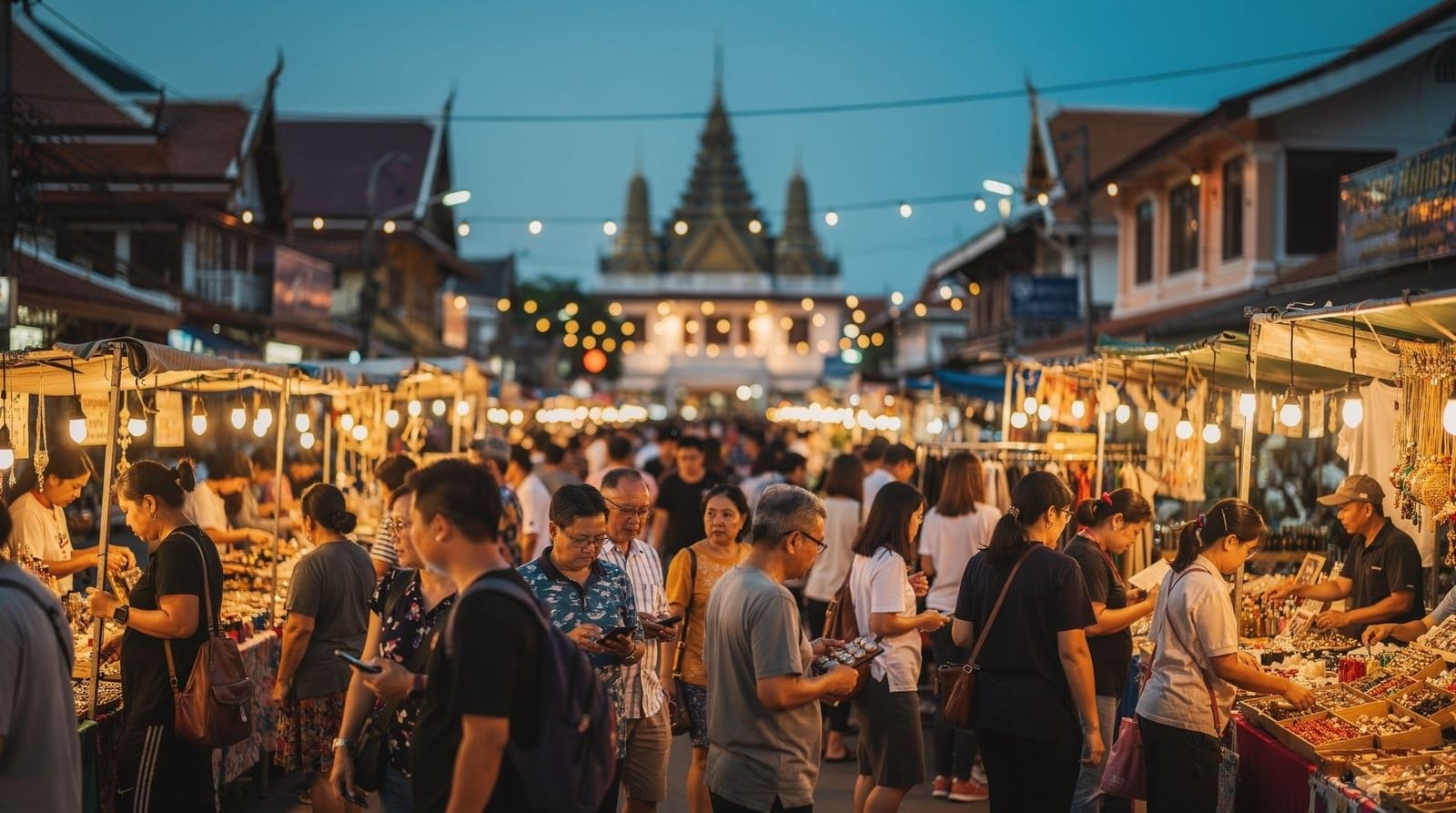
Arrive by 6pm, walk Wat Sri Suphan's silver-clad ordination hall while there's still some daylight to compare against the evening lighting, then work through the market's food and silver stalls before the 7-9pm peak crowd. Budget 1.5-2 hours; it's a much shorter route than Sunday Walking Street.
Saturday Walking Street on Wualai Road gets far less coverage than its Sunday sibling, mostly because it’s smaller and shorter — but for anyone whose actual shopping priority is silver, or who simply wants a calmer version of the walking-street format, that smaller scale is the whole point. Planning around its specific rhythm, rather than treating it as a miniature Sunday Walking Street, gets more out of the roughly 90-minute-to-two-hour window it realistically takes to walk.
Quick answer: arrive by 6pm, walk Wat Sri Suphan’s silver-clad ordination hall while there’s still daylight to compare against the evening lighting, then work through the food and silver stalls before the 7-9pm peak crowd builds. Because the market covers only a few hundred meters of closed road, 1.5-2 hours is realistically enough — no need to budget a full evening the way Sunday Walking Street demands.
Why this market runs differently from Sunday’s
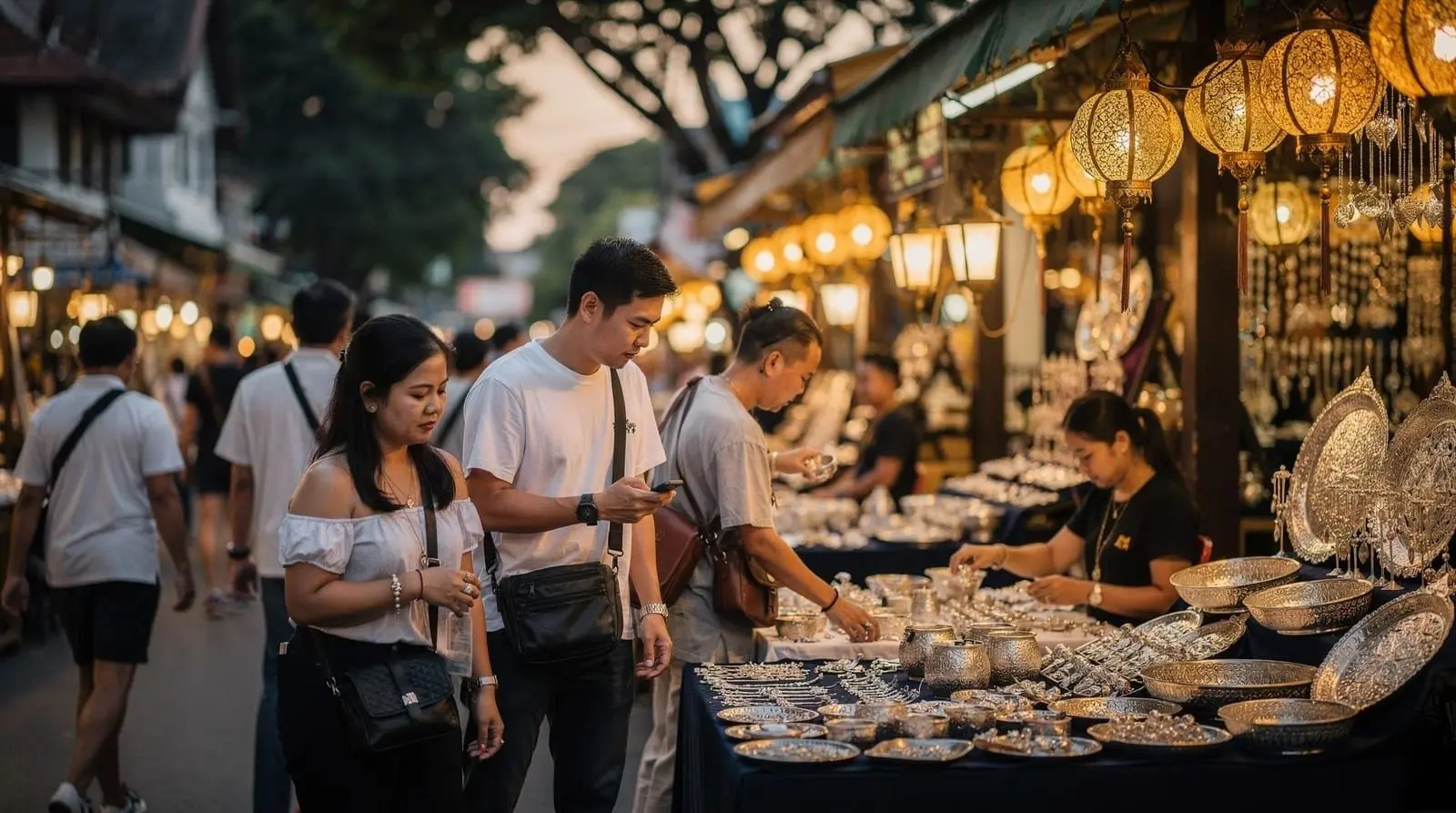
Wualai Road has been Chiang Mai’s silversmith quarter for generations, and the Saturday market is built specifically around that heritage rather than functioning as a generic souvenir bazaar. That focus is exactly why it’s shorter: instead of the broad mix of goods spread across Sunday Walking Street’s full 1.5 km route, Wualai concentrates silver jewelry, homeware and a solid run of street food into a few hundred meters of closed road. Planning for a themed, contained evening rather than a sprawling browse is the right mental model here.
Timing the visit around Wat Sri Suphan
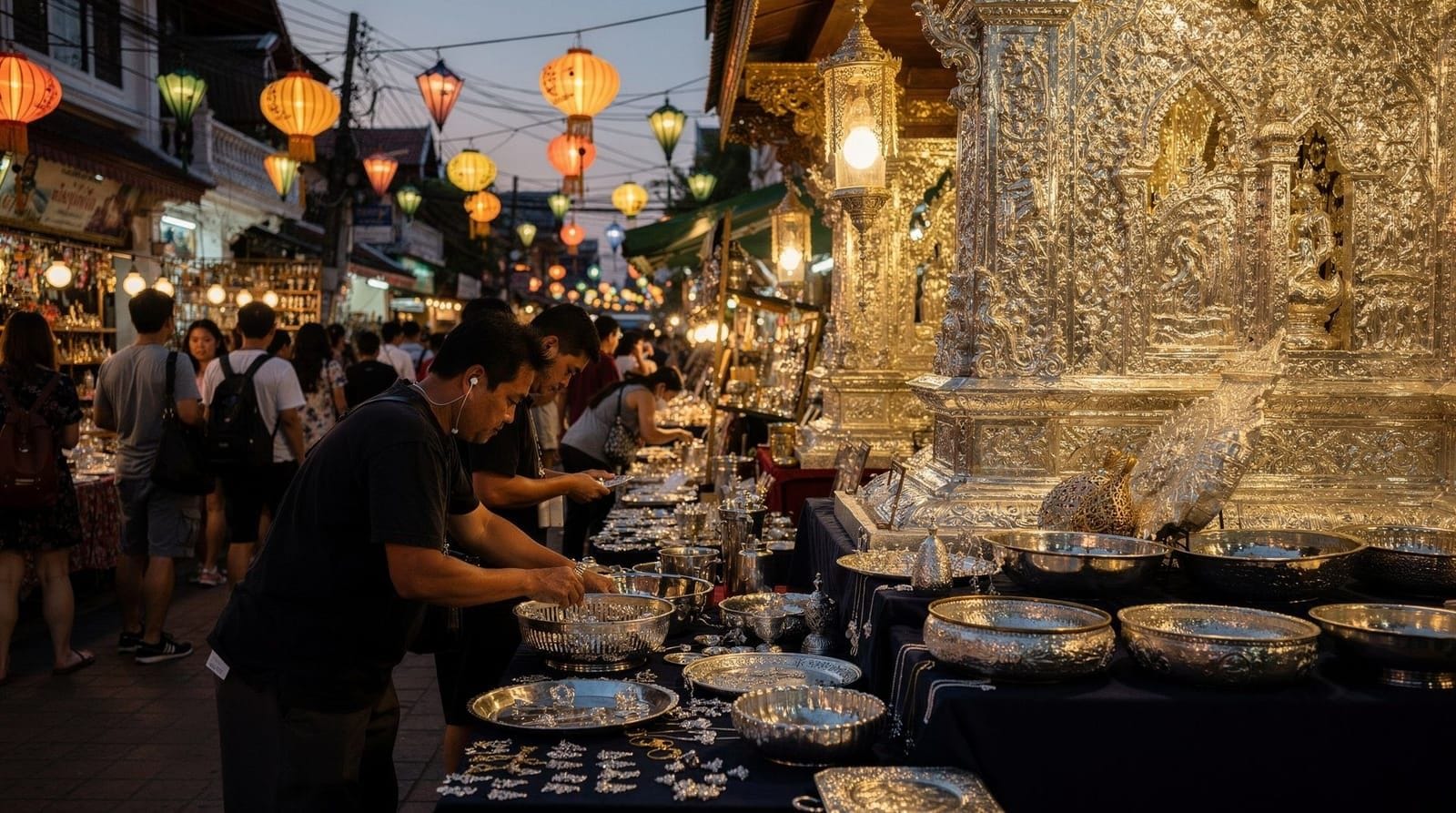
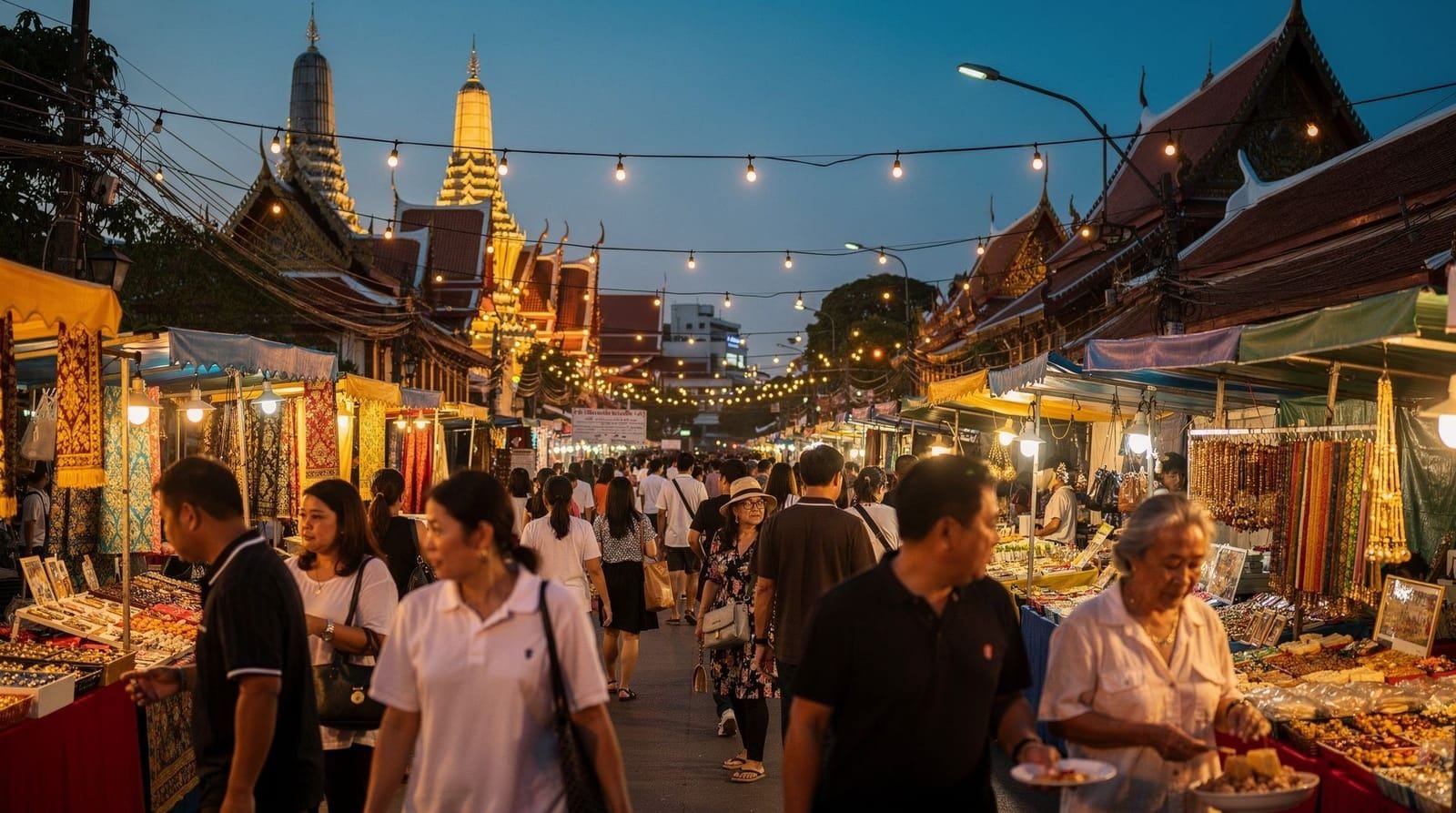
The market’s centerpiece, Wat Sri Suphan, has an ordination hall clad in hand-hammered silver and aluminum panels depicting Buddhist stories and Lanna motifs — detail that rewards a slow look rather than a quick photo. Arriving with some daylight left, before roughly 6:30pm, lets you compare the panels in natural light before returning after dark to see them lit for the evening market, which is a genuinely different and more atmospheric look at the same building. Note that women have traditionally not been permitted into the hall’s inner sanctum, though the grounds and exterior remain open to everyone — worth checking current signage on arrival rather than assuming either way.
Shopping for silver wisely
Because silver is the obvious purchase here, it’s worth knowing a few practical things before buying. Pure silver is soft and rarely used undiluted in jewelry — most pieces sold as “silver” in Thailand are sterling silver (a 92.5% alloy) or a lower-purity mix, and reputable stalls will generally state the grade directly if you ask. Buying from a stall attached to a visible workshop, where tools and half-finished pieces are on display, is a reasonable (though not foolproof) signal that you’re buying from an actual maker rather than a reseller of imported stock. Light negotiation is accepted, though workshop-front silversmiths selling their own handmade pieces may hold firmer on price than a general souvenir vendor would — see the bargaining etiquette guide for the general norms that apply here too.
Silver craftwork and temple tour with a monk meeting covers Wualai’s silversmithing history alongside a temple visit and a conversation with a local monk, useful if you’d rather have the craft techniques and Wat Sri Suphan’s iconography explained than pieced together from signage.
Food while you’re there
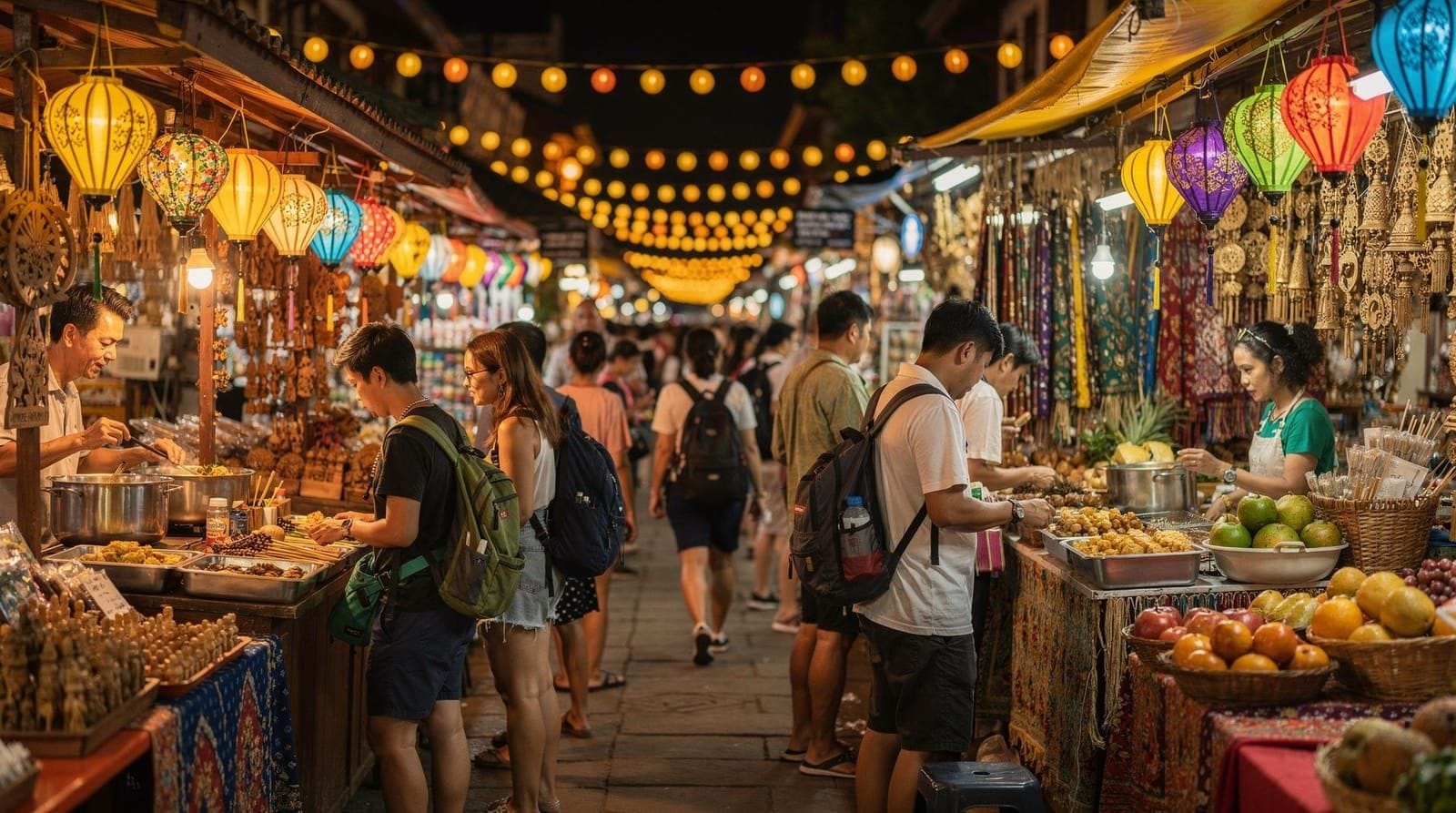
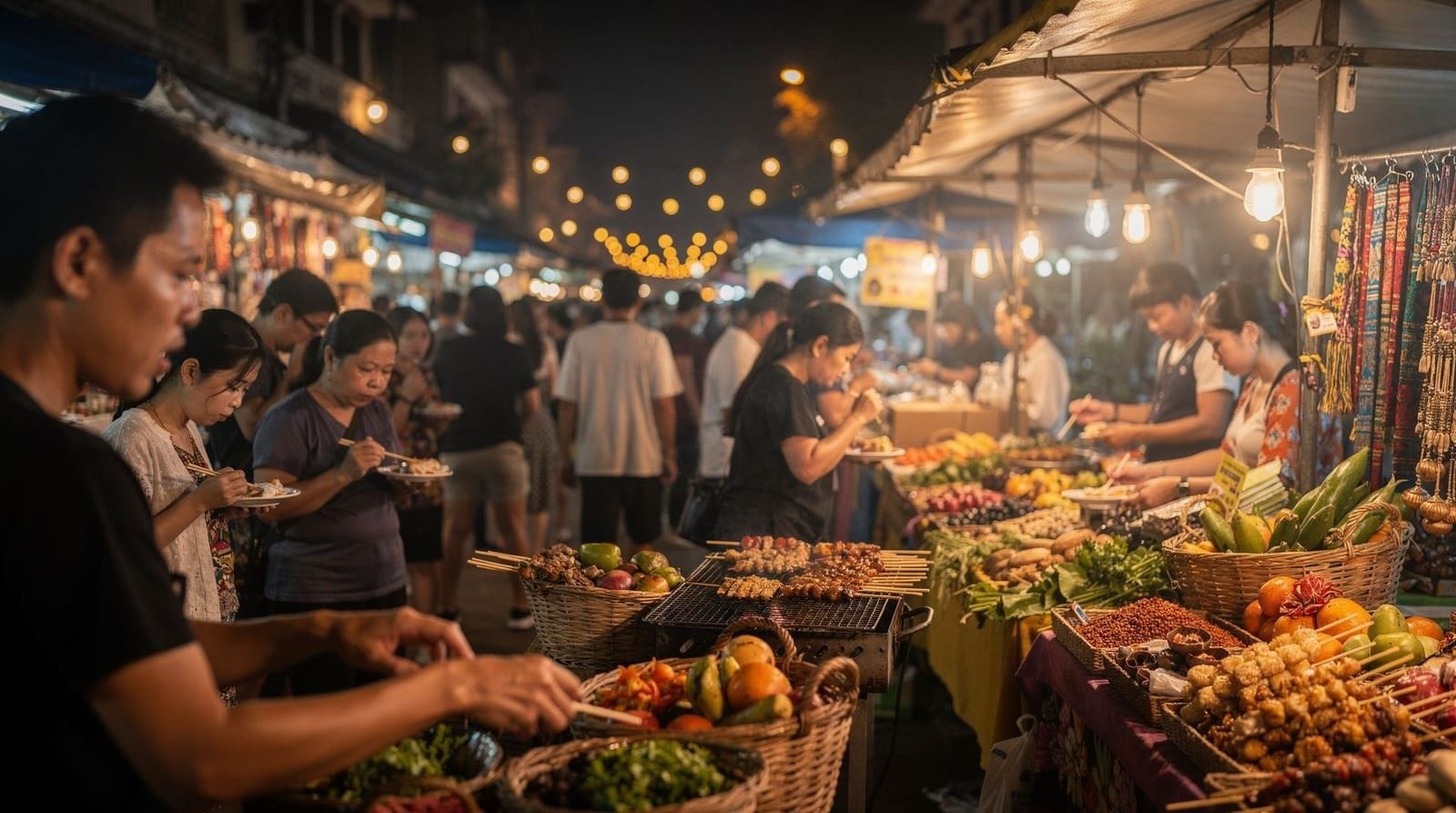
The market’s food stalls are worth budgeting real time for, not just a quick bite between shopping stops — grilled skewers, noodle dishes and Thai desserts at 30-60 THB per item, similar pricing to Chiang Mai’s other walking streets. Grazing across two or three stalls rather than committing to one large meal is the normal way to eat here, same as at the bigger Sunday market.
Walking food tour through the market is a reasonable option if you’d rather have a guide navigate the food stalls for you on a first visit, though the market’s smaller size makes solo navigation considerably easier here than at Sunday Walking Street.
Building a full Saturday around it
Wualai Road sits a five-to-ten-minute walk south of Chiang Mai Gate, which makes it an easy add-on to a day of Old City temple-hopping. Visiting Wat Phra Singh or Wat Chedi Luang earlier the same Saturday, then finishing at Wualai in the evening, sequences a full day without doubling back across the city. For visitors who’d rather have the silver temple folded into a broader day of sightseeing instead of a standalone evening market visit, a wider tour is worth considering.
Long Neck Village, Silver Temple and Chiang Mai top sites tour combines Wat Sri Suphan with other city highlights on a day when a free Saturday evening isn’t guaranteed but a free day is — useful since the temple itself is open daily regardless of the market schedule.
Practical logistics
Cash is essential — while some larger craft stalls may take mobile payment, small food and craft vendors overwhelmingly expect THB cash, and ATMs aren’t conveniently placed within the market itself. Withdraw what you expect to spend before setting out. Comfortable, closed shoes beat sandals given the amount of standing and shuffling involved, and a small cross-body bag is more practical than a backpack for navigating tightly packed stalls at peak hours. If you plan to enter Wat Sri Suphan’s grounds, modest dress (shoulders and knees covered) applies as at any Chiang Mai temple, despite the market atmosphere around it.
Getting there: it’s a straightforward walk from inside or near the Old City moat, or a 40-60 THB Grab or songthaew from elsewhere. Because the road closes to traffic during market hours, set a pickup point a block or two back from the closed section in advance rather than expecting a driver to reach you at the market’s edge when you’re ready to leave.
A brief note on the neighborhood’s craft history
Wualai’s association with silverwork stretches back generations, tied to communities of craftsmen who settled specifically in this area south of the old city walls and passed hammering and repoussé techniques down within families and workshops over successive generations. Unlike some craft traditions that have become largely ceremonial or purely tourist-facing, Wualai’s silversmithing has maintained a genuine working presence — several workshops along the road today have operated continuously for decades, producing everything from small decorative bowls to the temple ornamentation used at Wat Sri Suphan itself. That continuity is part of why the Saturday market feels different from one built purely around imported souvenir stock: the silverwork connects to a living local craft economy rather than existing solely as a tourist product.
Photography at Wat Sri Suphan and the market
Wat Sri Suphan’s silver-clad exterior is genuinely one of the more photogenic details in Chiang Mai, particularly once evening lighting picks out the hammered relief work on the panels. A slow walk around the ordination hall’s exterior, rather than a single quick photo from the entrance, reveals more of the individual panel detail depicting Buddhist stories and Lanna motifs. Along the market itself, the same general street-photography etiquette applies as at any Chiang Mai market — ask before photographing vendors directly at work, and expect a friendly response in most cases.
Weather and seasonal notes
Like the rest of Chiang Mai’s open-air markets, Saturday Walking Street runs across an unenclosed stretch of road, which means the June-October rainy season carries real risk of a disrupted evening — a sudden downpour can thin the market quickly, though its shorter length makes it easier to duck into a covered doorway or nearby shop than it would be along Sunday Walking Street’s longer route. November through February, the coolest and most comfortable season for an evening walk, is generally considered the best window if your trip dates are flexible enough to choose.
Combining silver shopping with a temple tour elsewhere in the city
If Wualai’s silver theme appeals but a single evening market doesn’t feel like enough silver-and-craft immersion, it’s worth knowing that similar silversmithing demonstrations sometimes appear bundled into broader temple and city tours that run during the day, independent of the Saturday market schedule. This gives an alternative route to the same general craft interest for visitors whose trip doesn’t line up with a free Saturday evening at all, without needing to skip the theme entirely.
Solo visitors and shorter stays
Because the market is compact and easy to navigate in under two hours, it suits solo travelers and short Chiang Mai stopovers particularly well — there’s no need to allocate a full evening the way Sunday Walking Street’s larger scale can demand. A solo visitor can realistically see Wat Sri Suphan, browse the silver stalls, eat a full meal across a couple of vendors, and be done within 90 minutes, making it a genuinely efficient addition to a busy itinerary rather than a commitment that eats an entire evening.
Returning during the week for a quieter look
Because Wat Sri Suphan is open daily, it’s entirely possible to visit the temple itself on a weekday, without the market running, if a quieter, more contemplative look at the silver panelling appeals more than the Saturday evening crowd and lighting. A weekday visit also makes sense if you want to browse the surrounding silversmith workshops without the market’s evening bustle, since several operate as ordinary shops during the day regardless of the Saturday market schedule. This is a genuinely useful option for visitors whose trip doesn’t include a free Saturday evening at all, since it decouples the temple visit from the market entirely.
Evenings when the market isn’t the main event
Some visitors deliberately time a Saturday evening around dinner or drinks elsewhere in the city, then treat a walk through Wualai as a late add-on once the crowds have started thinning closer to 9-10pm — a reasonable approach if a calmer, near-closing-time browse of the silver stalls appeals more than the busier 7-9pm window. Wat Sri Suphan remains lit and visible throughout the market’s operating hours, so arriving later still delivers the temple’s evening atmosphere even if the shopping window has narrowed by that point.
What to skip if you’re short on time
If your Saturday evening is limited to an hour, prioritize the temple and its immediate surroundings over walking the full market length — Wat Sri Suphan itself and the two or three silversmith stalls closest to it deliver the core experience most visitors are actually seeking. Extending further down the road adds more general food and craft stalls similar to what’s found at Chiang Mai’s other markets, valuable if you have the time but not essential to the market’s distinct silver-and-temple identity if you’re working with a genuinely tight schedule.
How Wualai compares to Chiang Mai’s other craft-focused stops
Silver at Wualai is one of several single-craft specialties scattered around greater Chiang Mai, alongside umbrella-making at Bo Sang village and woodcarving at Baan Tawai. What sets Wualai apart is that its craft and its market coexist in the same evening visit — you don’t need a separate daytime trip out of the city the way Bo Sang or Baan Tawai typically require, since the market itself runs right through the neighborhood where the silverwork happens. That makes it a more convenient stop for anyone short on time who still wants a genuine craft-village experience without dedicating a half-day to reaching one.
Accessibility notes
The closed section of Wualai Road is flat and paved, and the market’s shorter length compared to Sunday Walking Street makes it a somewhat more manageable option for anyone with mobility considerations, since there’s simply less ground to cover before reaching the market’s natural end point near Wat Sri Suphan. Peak crowding between 7 and 9pm still narrows the walkable path in the busiest stretch, so arriving by 6pm remains the more comfortable choice regardless of mobility needs.
Traveling with kids
Saturday Walking Street’s smaller scale makes it a genuinely easier family outing than its Sunday counterpart — less overwhelming crowd density, a shorter walk, and the visual spectacle of Wat Sri Suphan lit up in the evening tends to hold children’s attention without the fatigue that a longer Sunday Walking Street visit can produce. Food stalls along the route offer the same grazing-friendly format found at Chiang Mai’s other markets, making it easy to keep a family meal casual and unhurried.
Who this market actually suits
Be honest about what you’re optimizing for. If maximum variety in a single evening matters most, Sunday Walking Street the following night covers more ground and more categories of goods. If a contained, thematically coherent evening built around one neighborhood’s craft history — walkable start to finish in under an hour at a leisurely pace — is more your speed, or if silver specifically is the shopping priority, Wualai on a Saturday is the more purpose-built choice. Many visitors staying a full weekend simply do both rather than picking.
Frequently asked questions about planning a Saturday Walking Street Wualai visit
Is Wualai’s silver actually handmade?
Some of it, genuinely — stalls attached to a visible workshop with tools on display are a reasonable indicator of on-site production, though not a guarantee. Most pieces are sterling silver rather than pure silver, which is standard practice.
How is this different from Sunday Walking Street?
It’s shorter, calmer and built around one craft theme (silversmithing) rather than the broad souvenir-and-handicraft mix along Ratchadamnoen Road on Sundays.
Can I visit Wat Sri Suphan without the market running?
Yes, the temple is open daily. The Saturday market adds evening lighting and atmosphere, but a weekday visit works fine otherwise.
What should I combine this market with?
Old City temple-hopping earlier the same Saturday — Wualai Road is a five-to-ten-minute walk south of Chiang Mai Gate.
Do I need cash, and how much should I bring?
Yes, cash in THB is essential for food and craft stalls. Withdraw what you expect to spend before arriving, since ATMs aren’t conveniently placed within the market.
Is bargaining expected for silver specifically?
Light negotiation is generally accepted, though handmade pieces from workshop-front silversmiths may see less flexibility than general souvenir stalls.
How long should I budget for the visit?
1.5-2 hours covers the market properly — it’s considerably shorter than Sunday Walking Street’s full route.
Is this market good for a first-time visitor with only one weekend evening?
If silver or a calmer atmosphere matters most, yes. If overall variety matters more and your evening happens to be free either night, Sunday Walking Street covers more ground.
Top experiences
Bookable activities with verified prices and instant confirmation on GetYourGuide.