Best souvenirs to buy in Chiang Mai, and where
Bo Sang Umbrella Making Experience + Sticky Waterfall Tour
What's the single best souvenir to buy in Chiang Mai?
A hand-painted Bo Sang umbrella or paper product is the most distinctive, hardest-to-replicate purchase — genuinely made using a specific local craft technique rather than imported or mass-produced. For something smaller and cheaper, look for hand-hammered silver from Wualai Road's Saturday market.
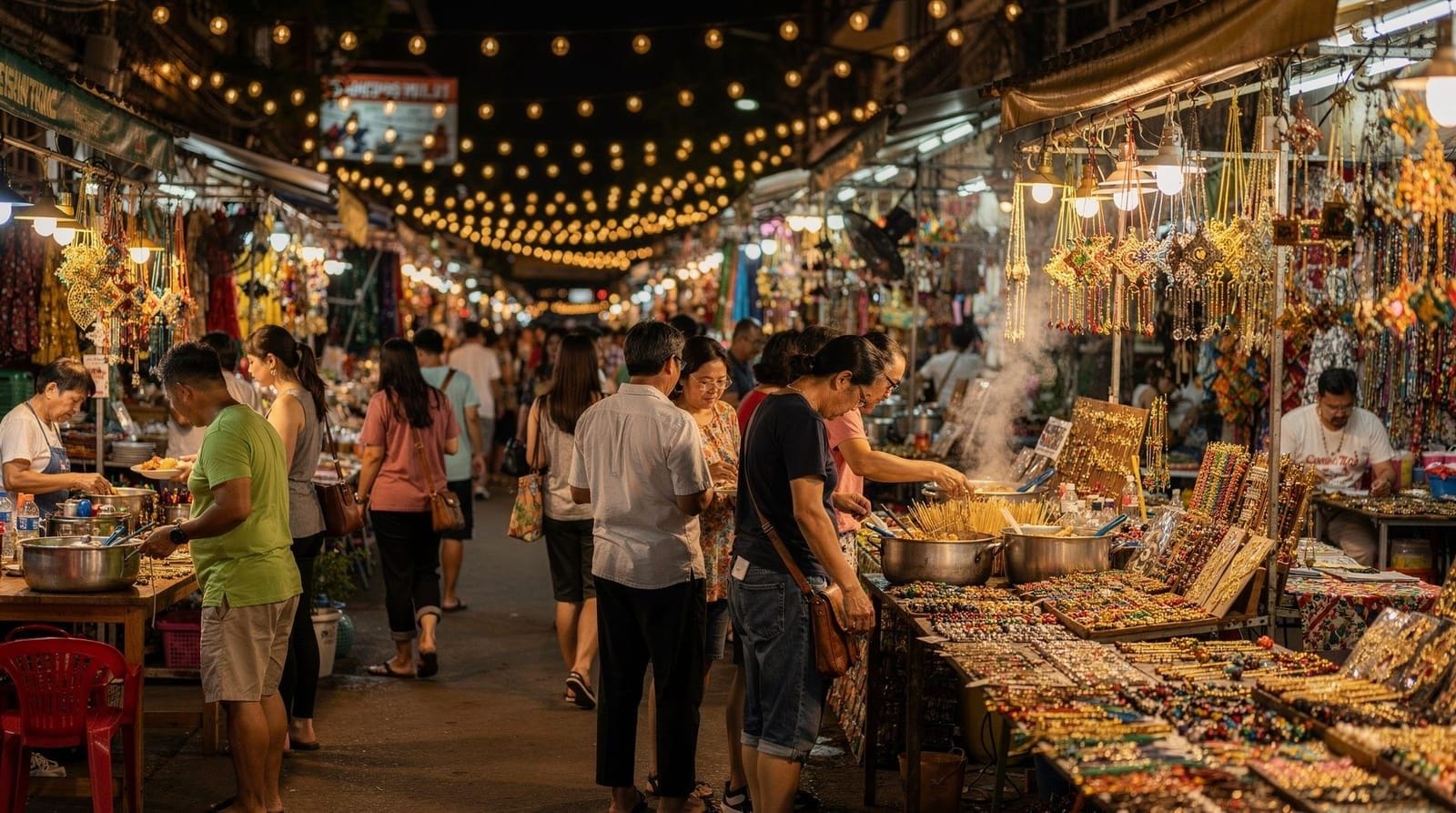
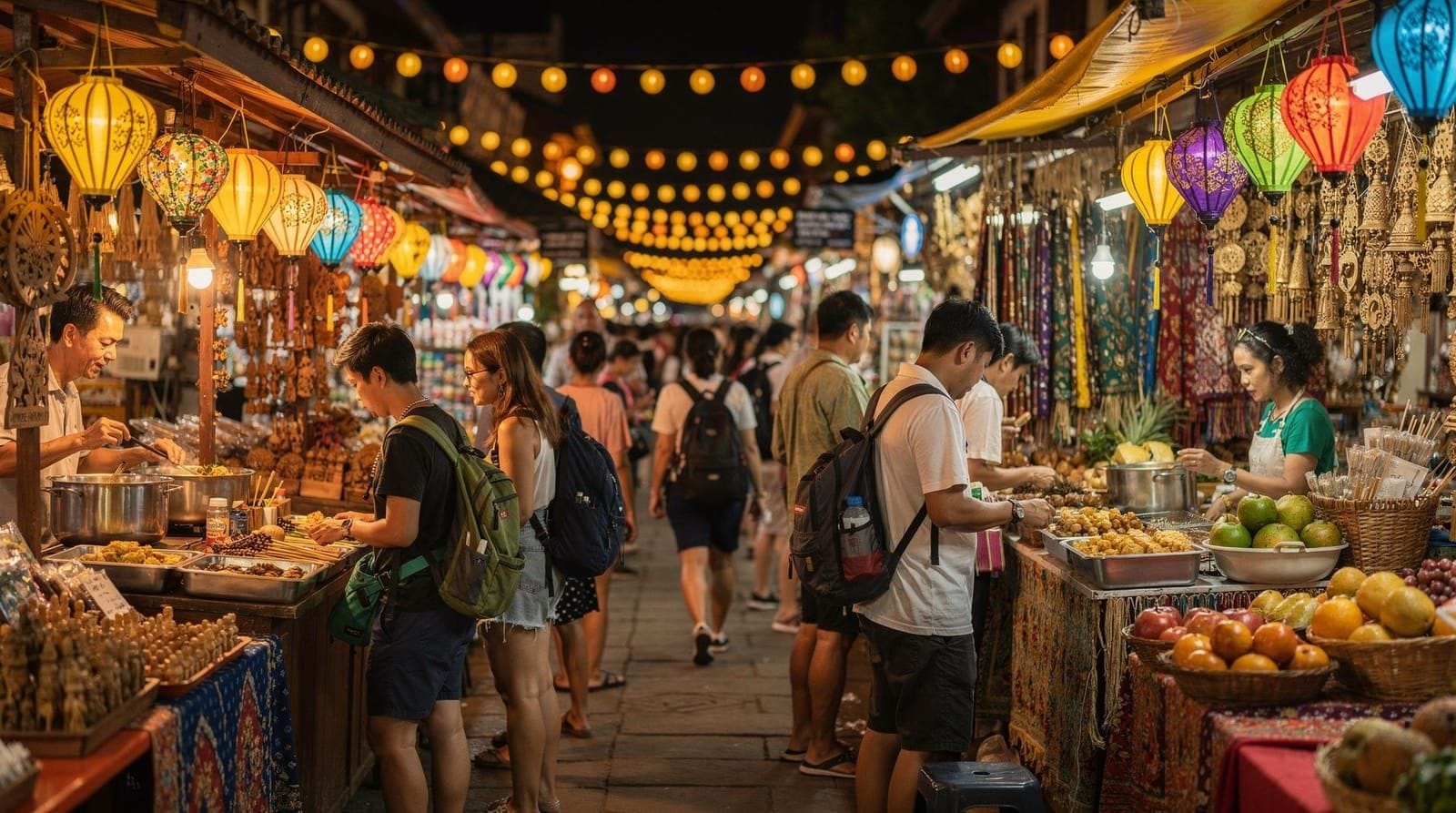
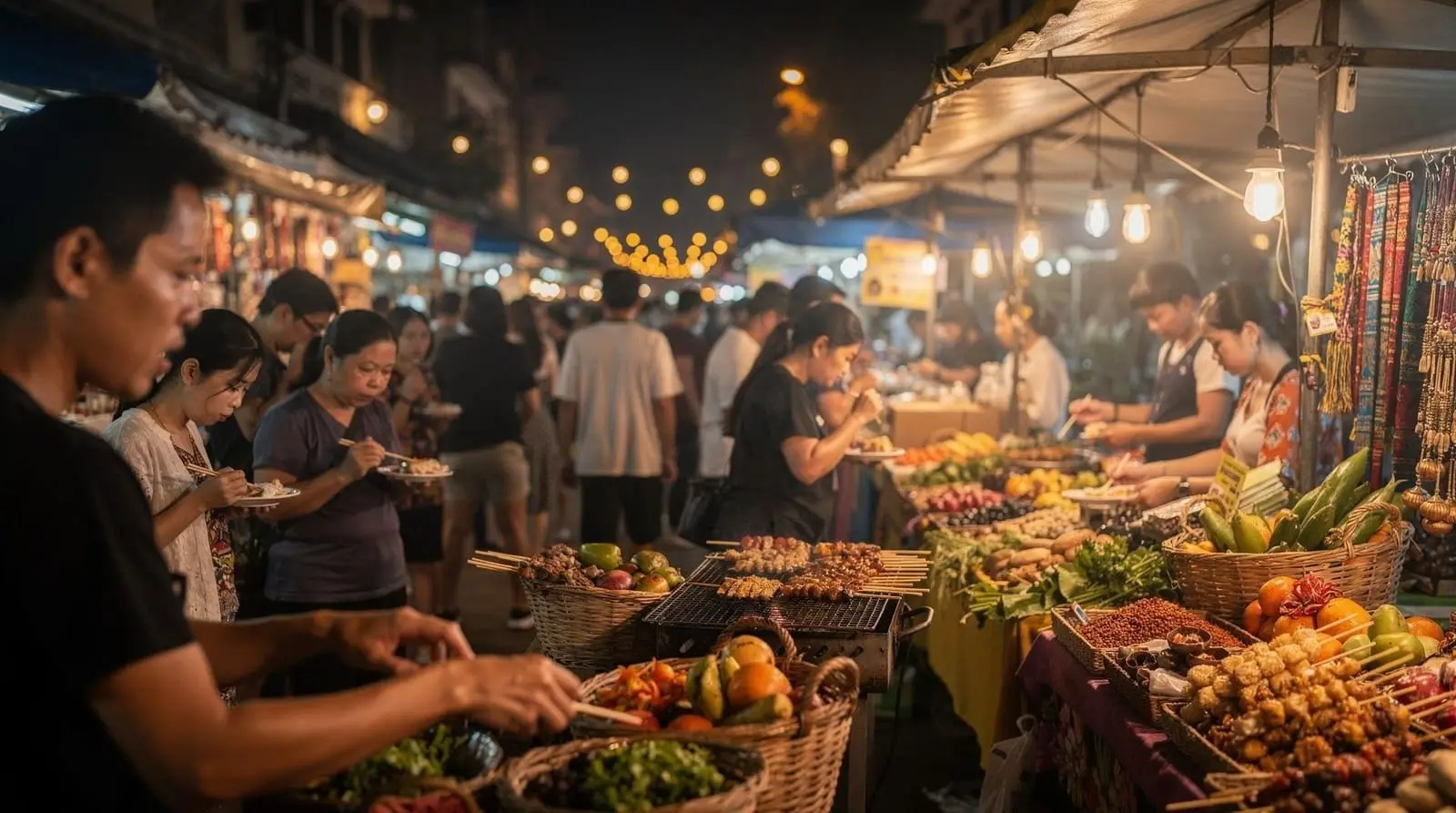
Every Chiang Mai market sells some version of the same generic inventory — elephant-print trousers, fridge magnets, phone cases — alongside genuinely distinctive local crafts, and the two are often mixed on the same table without much distinction. Knowing which categories are worth seeking out, and specifically where each is made rather than merely sold, turns an evening of browsing into something closer to actual craft shopping.
Quick answer: a hand-painted Bo Sang umbrella or paper product is the most distinctive, hardest-to-replicate purchase, made using a specific local technique rather than imported stock. For something smaller, hand-hammered silver from Wualai Road’s Saturday market is a strong second choice, and northern Thai textiles are the most practical option for anyone traveling light.
Hand-painted umbrellas and paper goods
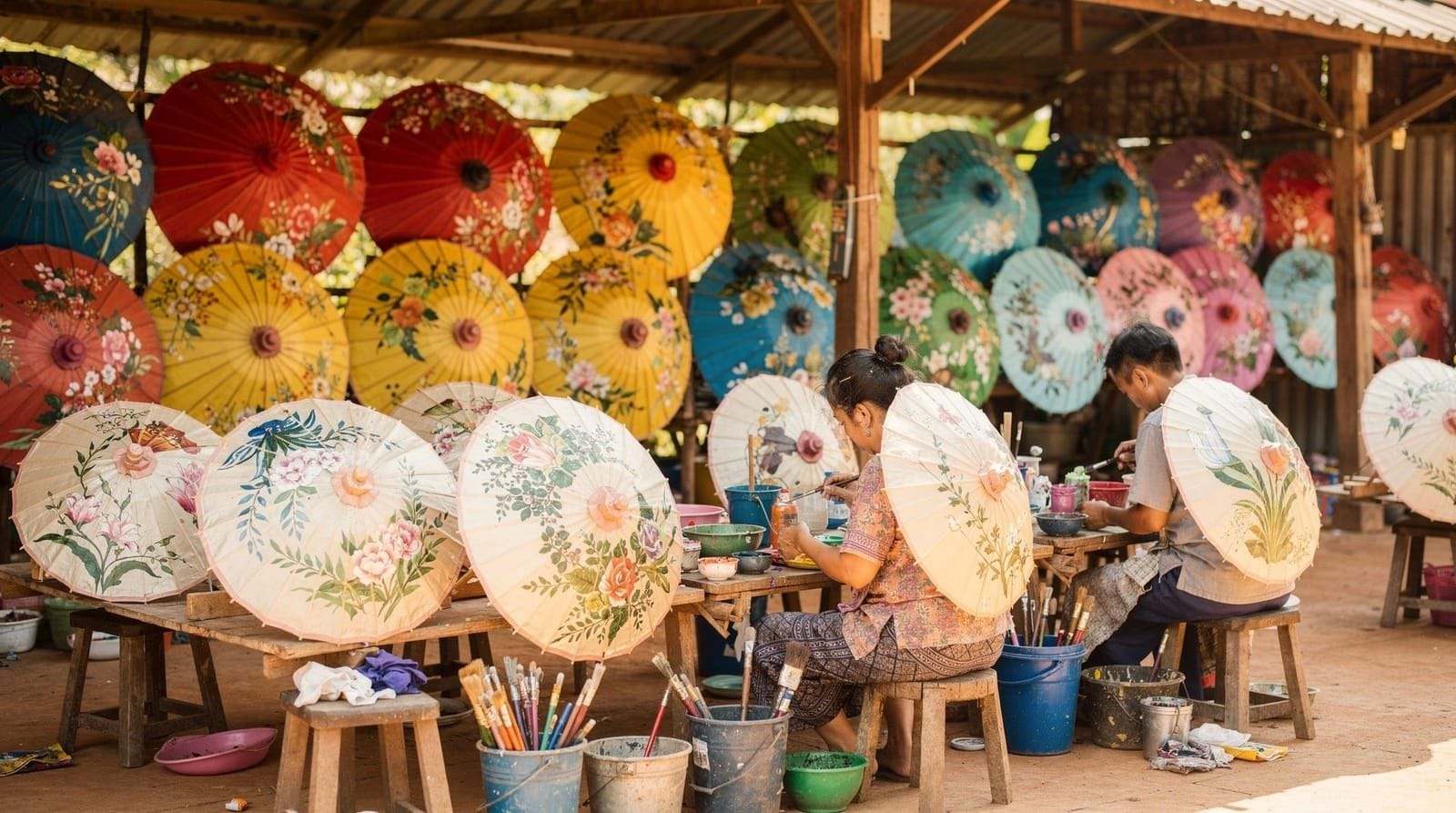
Traceable to Bo Sang village just outside the city, these umbrellas and paper products (lampshades, notebooks, decorative fans) use a specific technique — mulberry-bark paper stretched over a bamboo frame, hand-painted with floral or Lanna motifs — that’s genuinely distinct from anything mass-produced. The giveaway between a real one and a cheaper imitation is the brushwork: hand-applied strokes have visible variation and slight imperfection, while stenciled or printed patterns look uniform and flat. Buying directly at Bo Sang village guarantees the source; buying at a night market stall means checking the brushwork yourself, since both genuine and imitation versions circulate through the bigger markets.
Bo Sang umbrella making experience combined with Sticky Waterfalls is a way to make your own piece rather than just buying one, and pairs the craft village with a half-day outing rather than a standalone shopping trip.
Silver from Wualai
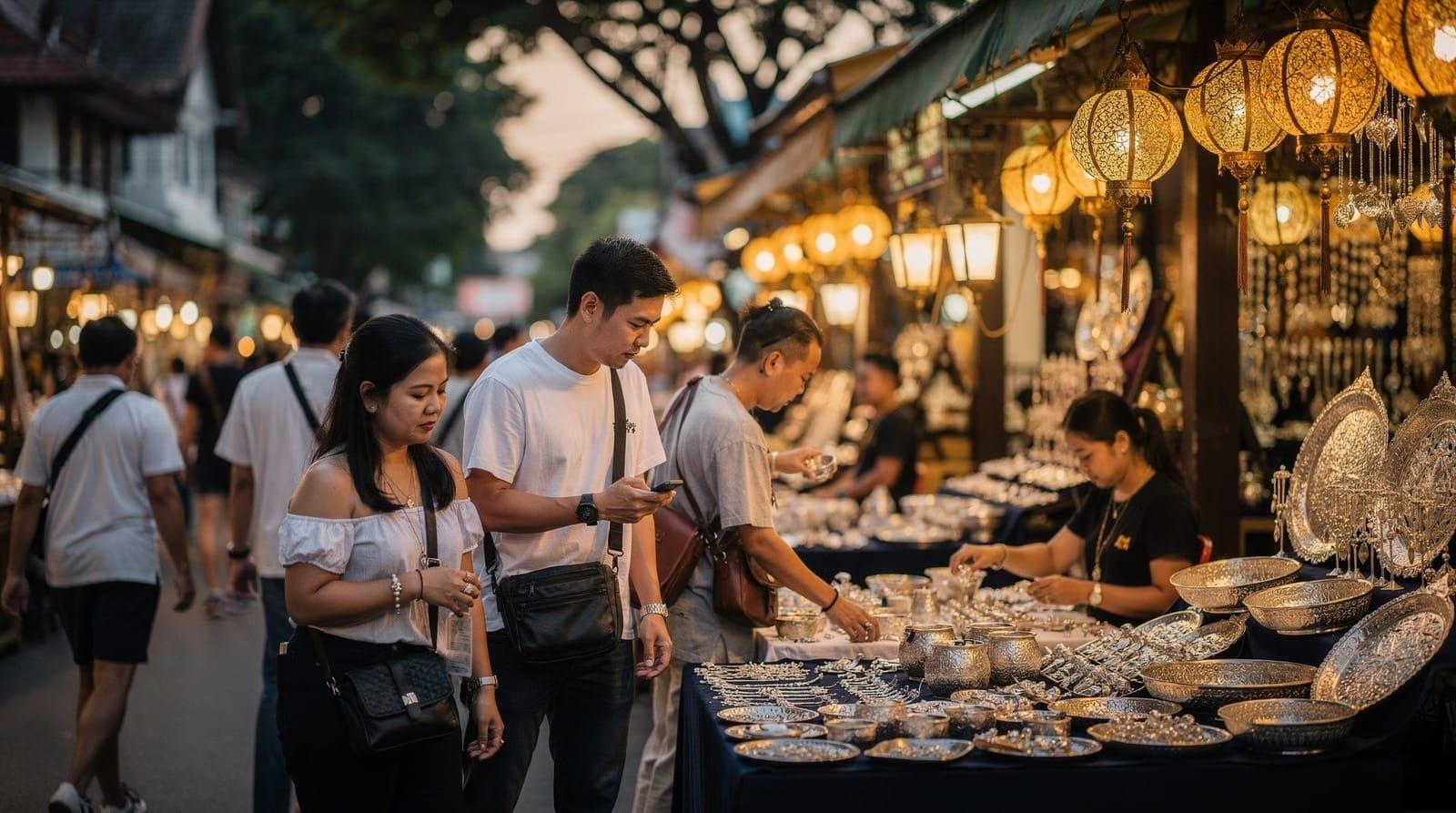
Wualai Road’s silversmithing tradition, showcased weekly at Saturday Walking Street, produces jewelry, bowls and decorative pieces genuinely made by local craftspeople rather than imported wholesale. As covered in our Saturday Walking Street Wualai guide, most pieces sold as “silver” are sterling silver rather than pure silver, which is standard practice worldwide — a reputable stall will state the grade directly if asked. Buying from a stall attached to a visible workshop, with tools and half-finished pieces on display, is a reasonable (though not foolproof) sign you’re buying from an actual maker.
Woodcarving from Baan Tawai
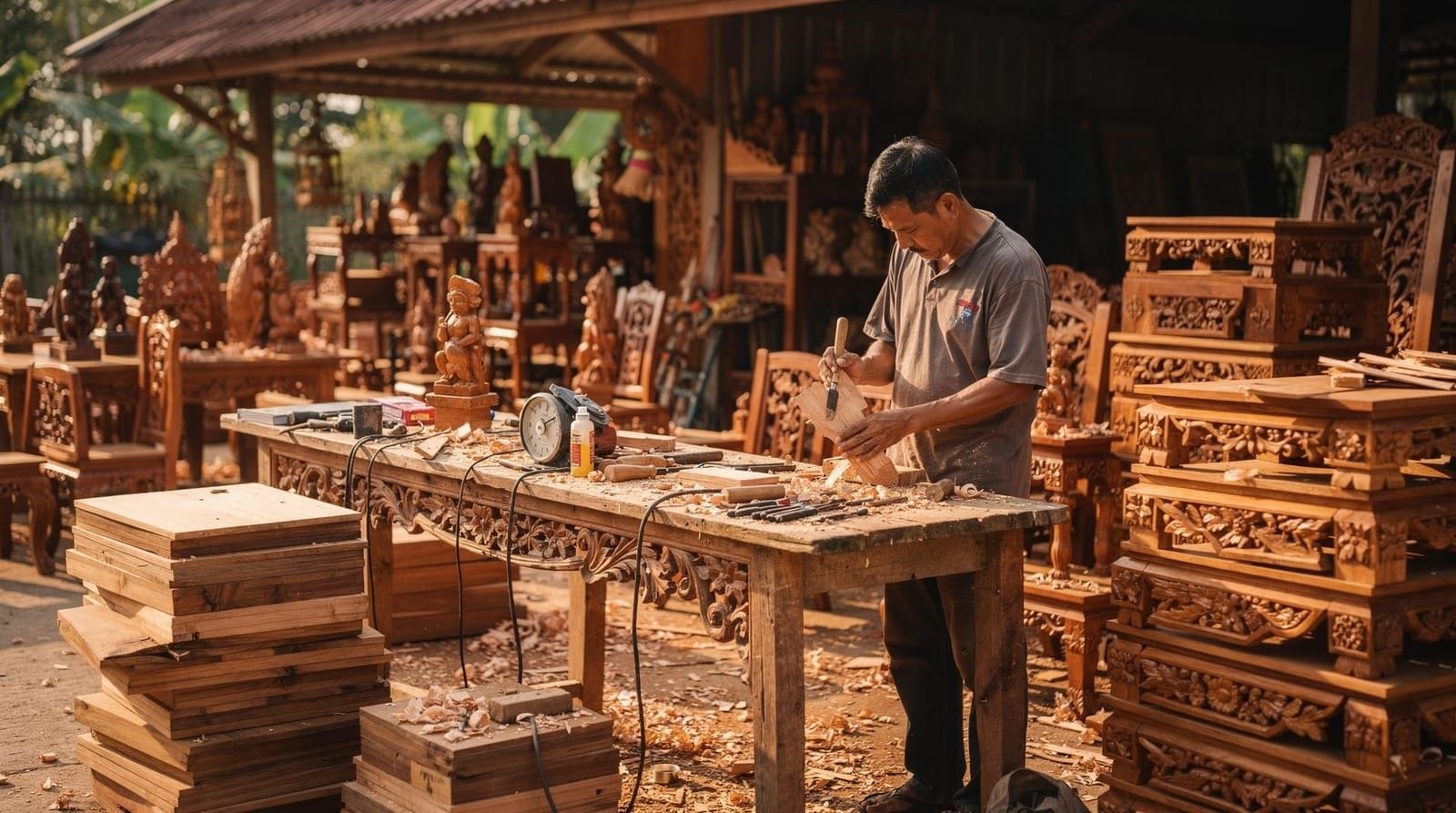
Baan Tawai village, southwest of the city, is the dedicated hub for wood carving and furniture-style pieces, with a far wider selection and more direct workshop pricing than the smaller carved items found scattered through the general night markets. It’s a better destination for anything larger or more serious than a market-stall knick-knack — carved animals, decorative panels, and furniture pieces that can be arranged for shipping if too large to carry.
Silk, celadon and the San Kamphaeng crafts road
The San Kamphaeng crafts road strings together silk weaving, celadon ceramics and other craft workshops along a single route east of the city, offering a more comprehensive look at production than a single market stall can. Silk scarves and fabric here tend to run a genuine range in quality and price depending on whether it’s handwoven or machine-made — asking directly, and looking at the weave’s regularity (handwoven silk has slight, natural irregularity that machine weaving lacks), helps distinguish the two.
Mae Kampong village, hot springs and Bo Sang tour is a way to combine craft-village shopping with a wider day trip rather than treating it as a dedicated shopping errand.
Local artwork at Sunday Walking Street
Original paintings and prints depicting Lanna temple scenes and northern Thai landscapes show up regularly at Sunday Walking Street, sold directly by the artists in many cases. Prices vary hugely based on size and the artist’s own reputation, and asking directly about the piece often gets a genuine conversation about the artist’s background rather than a generic sales pitch — a meaningfully different experience than buying a printed reproduction elsewhere.
Northern Thai textiles
Woven cotton and silk scarves, table runners and fabric lengths are among the most practical souvenirs available, since they pack flat and survive a suitcase far better than ceramics, woodcarving or anything fragile. Available across Sunday Walking Street, the San Kamphaeng crafts road and most general markets, with quality and price varying enormously — comparing a few stalls before committing reveals the real spread.
Food-based souvenirs
Coffee from Chiang Mai’s Nimman-area roasters, sold vacuum-packed and ready to travel, is a genuinely good option for anyone who wants something consumable rather than decorative. Packaged khao soi curry paste kits, available at Warorot Market and most Thai supermarkets, let you recreate the city’s signature dish at home, with instructions usually printed in both Thai and English. Dried fruit and locally made chili pastes round out the category, all of which travel well in checked luggage.
What to skip
A few categories are worth skipping unless you specifically want a cheap novelty: printed T-shirts with generic Thailand slogans, mass-produced “hill tribe” textiles that aren’t actually made by hill tribe communities (genuine pieces are sold through specific fair-trade shops rather than generic market stalls), and any electronics or branded goods, which carry no craft value and are widely available (often cheaper and more reliably functional) at home.
Where to shop by priority
If time is limited and you can only visit one or two places, prioritize based on what you actually want: Bo Sang village for umbrellas and paper goods, Saturday Walking Street for silver, Baan Tawai for woodcarving, and Sunday Walking Street as the single best general-purpose stop covering textiles, art and a broad craft mix in one visit. Our night markets guide covers the full lineup of markets if souvenir shopping is just one part of a broader evening plan.
Bargaining for these categories
Light negotiation applies to nearly everything in this guide except food-based souvenirs with printed prices — see the bargaining etiquette guide for the general norms, and note that genuinely handmade, higher-value pieces (silver, woodcarving, original art) tend to see less price flexibility than mass-produced items, since the labor and material behind them is real rather than padded into a first quote aimed at tourists.
Souvenirs by budget
A quick way to think about this category is by how much you’re willing to spend rather than only by type of item. Under 200 THB ($5.50) covers small paper goods, printed textiles, dried fruit and chili pastes — genuinely fine gifts that don’t require careful authentication. In the 200-1,000 THB ($5.50-28) range, hand-painted umbrellas, mid-size silver jewelry and woven silk scarves become realistic, and this is where checking for handmade quality actually starts to matter, since the price gap between a genuine piece and an import in this range can be significant. Above 1,000 THB ($28), larger silver pieces, serious woodcarving and substantial silk yardage move into genuine craft-investment territory, where buying from a visible workshop rather than a general market stall is worth the extra effort of seeking one out.
What locals actually buy versus what’s aimed at visitors
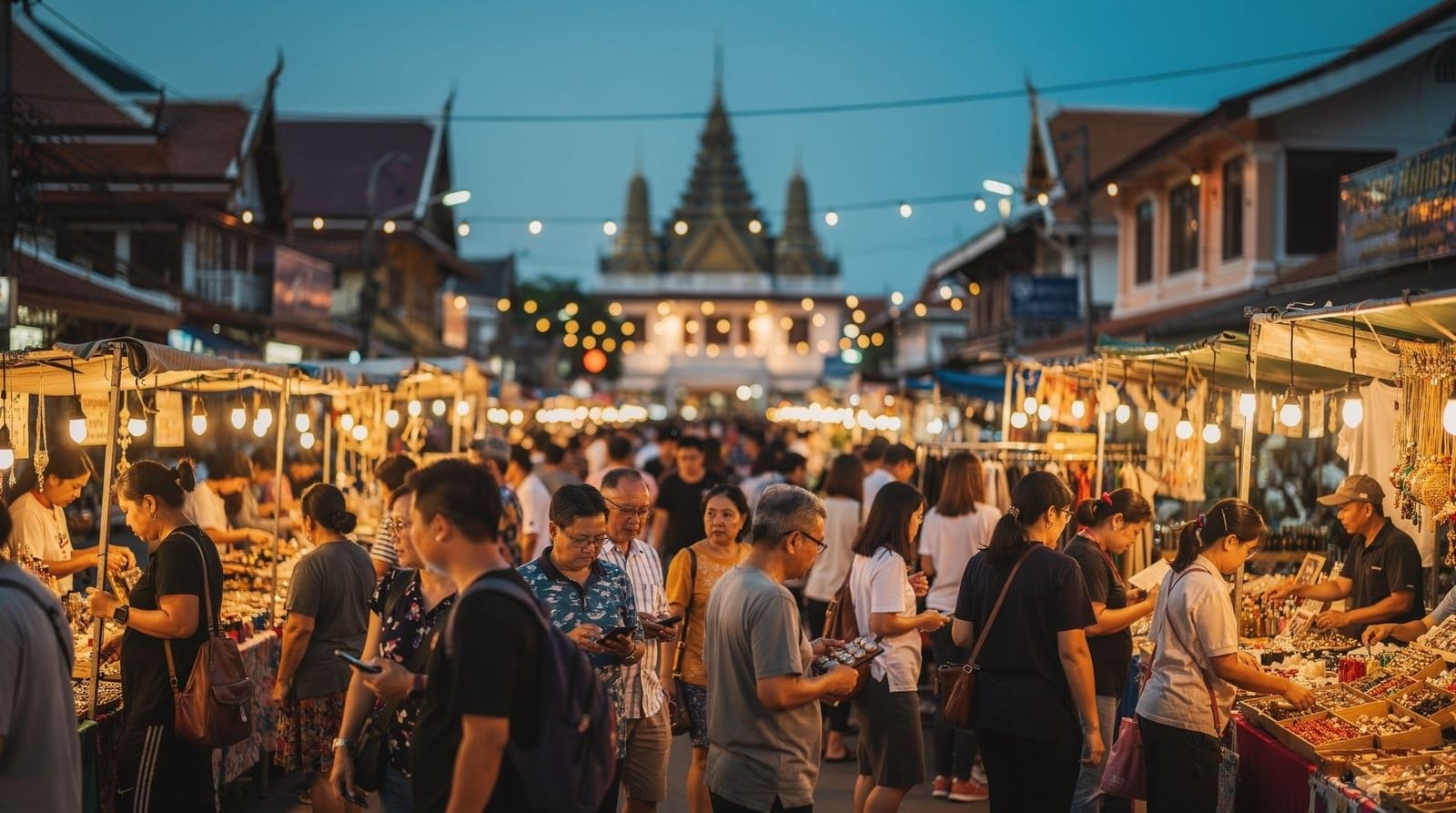
A useful cross-check when shopping any of these markets is noticing what Thai shoppers around you are actually buying rather than only what’s marketed toward visitors. At Sunday Walking Street and Saturday Walking Street, both of which draw a genuine local crowd, everyday household goods, snacks and clothing aimed at Thai shoppers sit alongside the more visitor-facing craft stalls — not souvenirs themselves, but a useful signal for gauging which stalls serve a real local customer base versus which exist purely for passing tourists. Vendors used to local repeat customers tend to be more consistent on quality and pricing than stalls that see mostly one-time visitor traffic.
Avoiding decision fatigue across a big shopping evening
With so many markets and craft villages each offering their own specialty, it’s easy to end an evening having bought a little of everything without actually being satisfied with any single purchase. A simple corrective is deciding in advance on one or two priority categories for a given outing — silver at Wualai on Saturday, say, or umbrellas and art at Sunday Walking Street — rather than trying to evaluate every possible souvenir category in a single browse. This focused approach tends to produce more considered purchases and a clearer sense of value than an unstructured wander through everything on offer.
Buying for practicality versus buying for meaning
Two reasonable but different shopping philosophies show up among travelers here, and it’s worth knowing which one you actually hold before you start browsing. Some travelers optimize purely for practicality — light, packable, inexpensive items that make sensible gifts without much thought required, which points toward the food-based souvenirs and small textiles covered above. Others optimize for meaning and are willing to accept extra weight, cost or fragility for something that genuinely represents a specific craft tradition or a personal experience from the trip, which points toward the silver, woodcarving and umbrella categories. Neither approach is more correct, but mixing the two without deciding in advance often produces a scattered set of purchases that satisfies neither goal particularly well.
Souvenirs tied to a specific experience
Some of the most meaningful souvenirs are the ones connected to something you actually did on the trip rather than simply bought. Making your own umbrella at a craft workshop near Bo Sang, or taking home the recipe booklet and ingredient list from a Chiang Mai cooking class, gives a souvenir a story attached to it that a purely market-bought item lacks. This category is worth considering alongside the purely retail options covered above, particularly for travelers who find generic shopping less appealing than something tied to a specific memory of the trip.
Souvenirs that reflect Chiang Mai specifically versus generic Thailand
A useful filter when deciding what to buy is asking whether an item is specific to Chiang Mai and northern Thai craft traditions, or whether it’s a generic “Thailand” souvenir that could just as easily have been bought in Bangkok or Phuket. Bo Sang umbrellas, Wualai silver, Baan Tawai woodcarving and San Kamphaeng silk and celadon are all genuinely tied to specific local production, while printed elephant-motif clothing, generic Buddha statuettes and keychains are widely sold, often from the same wholesale sources, across the whole country. Neither category is wrong to buy, but knowing the difference helps set expectations about what you’re actually getting for your money and how much of a Chiang Mai-specific story the item carries.
A note on quality control and returns
Unlike a fixed retail environment, there’s generally no formal return policy at any of Chiang Mai’s markets or craft villages — a purchase is final once made, which makes the inspection step (checking brushwork, asking about materials, examining stitching or weave) worth doing before paying rather than after. This is one more reason bargaining and quality-checking tend to happen together in practice: the negotiation itself often becomes an opportunity to look closely at an item and ask questions about it, rather than two entirely separate steps.
Timing your souvenir shopping across a trip
Rather than buying everything on your last evening under time pressure, it’s worth spreading souvenir shopping across a trip once you have a sense of what’s genuinely available and at what price. An early visit to Sunday Walking Street or the Night Bazaar, even without buying much, establishes a baseline sense of pricing that makes later purchases at craft villages or the Saturday market easier to evaluate. Saving the actual buying for later in the trip, once you’ve compared a few options, tends to produce both better prices and fewer regretted impulse purchases than trying to do all your shopping in a single rushed evening near departure.
Gifts versus keepsakes: two different shopping lists
It’s worth mentally separating souvenirs into two categories, since they call for different shopping strategies. Gifts for people back home tend to work best as smaller, less expensive items — food-based souvenirs, small paper goods, printed textiles — since they don’t require the recipient to share your specific taste or the item’s cultural context to appreciate them. Keepsakes for yourself are where it makes sense to invest more, in something like a genuinely handmade silver piece, an original painting, or a larger woodcarving that you’ve personally seen made or chosen with care — items where authenticity and personal connection matter more than practicality or cost.
Packing and shipping considerations
Woodcarving and larger ceramic pieces from Baan Tawai or the San Kamphaeng road can often be arranged for shipping directly from the workshop if too large or fragile to carry — worth asking about at the point of purchase rather than assuming it’s not possible. Textiles, paper goods and food items pack easily into checked luggage without special arrangements, while silver jewelry is small enough to carry in hand luggage without concern.
Frequently asked questions about Chiang Mai souvenirs
How do I tell handmade souvenirs from mass-produced imports?
Look for visible brushwork rather than printed patterns, ask directly whether a piece was made on-site, and be wary of identical items appearing in bulk across unrelated stalls.
Is silver from Chiang Mai actually pure silver?
Rarely — most is sterling silver (92.5% alloy) or a lower-purity mix, which is standard practice. Reputable vendors state the grade if asked.
Where should I buy woodcarving and furniture-style souvenirs?
Baan Tawai village, southwest of the city, is the dedicated hub with the widest selection and most direct workshop pricing.
What’s the best souvenir for someone who doesn’t want anything fragile?
Northern Thai textiles — they pack flat and travel well, available at Sunday Walking Street and the San Kamphaeng crafts road.
Are the umbrellas at every market the same as the ones from Bo Sang village?
Not always — some markets mix genuine Bo Sang-made umbrellas with cheaper printed imitations. Visiting Bo Sang village itself guarantees the source.
Is it worth buying food-based souvenirs like coffee or khao soi paste?
Yes — vacuum-packed coffee and khao soi curry paste kits are practical, travel well, and let you recreate a piece of the trip at home.
Can I bargain for these items?
Yes, generally, except for food-based souvenirs with printed prices. Genuinely handmade, higher-value pieces tend to see less price flexibility than mass-produced ones.
Can large pieces be shipped home instead of carried?
Often, yes — workshops at Baan Tawai and the San Kamphaeng crafts road can frequently arrange shipping for larger woodcarving or ceramic pieces; ask at the point of purchase.
Top experiences
Bookable activities with verified prices and instant confirmation on GetYourGuide.