Chiang Mai crafts guide: Lanna handicraft traditions and where to see them
Bo Sang Umbrella Making Experience + Sticky Waterfall Tour
What are Chiang Mai's main craft traditions, and where can I see them?
Chiang Mai's Lanna craft heritage centers on five main trades: hand-painted sa-paper umbrellas at Bo Sang, silk weaving and celadon pottery along the San Kamphaeng crafts road, hand-hammered silverware in the Wualai quarter, and teak woodcarving at Baan Tawai village. All sit within a half-day drive of the old city, most offer open workshops you can walk into for free, and several run hands-on classes if you want to try a craft yourself rather than just watch.
Chiang Mai’s reputation as northern Thailand’s cultural capital rests as much on its handicrafts as on its temples, and unlike a lot of “craft village” tourism elsewhere in Southeast Asia, most of what’s on display here is a genuine, still-working trade rather than a staged reconstruction. Hand-painted sa-paper umbrellas, silk pulled from cocoons and woven on a loom in front of you, silver hammered into shape by hand, teak carved into furniture and temple ornament - these are five distinct craft economies, each with its own village or district, each still employing artisans who learned the trade the same way their parents and grandparents did.
Quick answer: Chiang Mai’s Lanna craft heritage centers on five main trades and their home districts - hand-painted sa-paper umbrellas at Bo Sang, silk weaving and celadon pottery along the San Kamphaeng crafts road, hand-hammered silverware in the Wualai quarter, and teak woodcarving at Baan Tawai village. Most workshops are free to enter and welcome browsing without buying, several offer hands-on classes, and a single well-planned day can realistically cover two or three of these trades.
The five craft traditions, at a glance
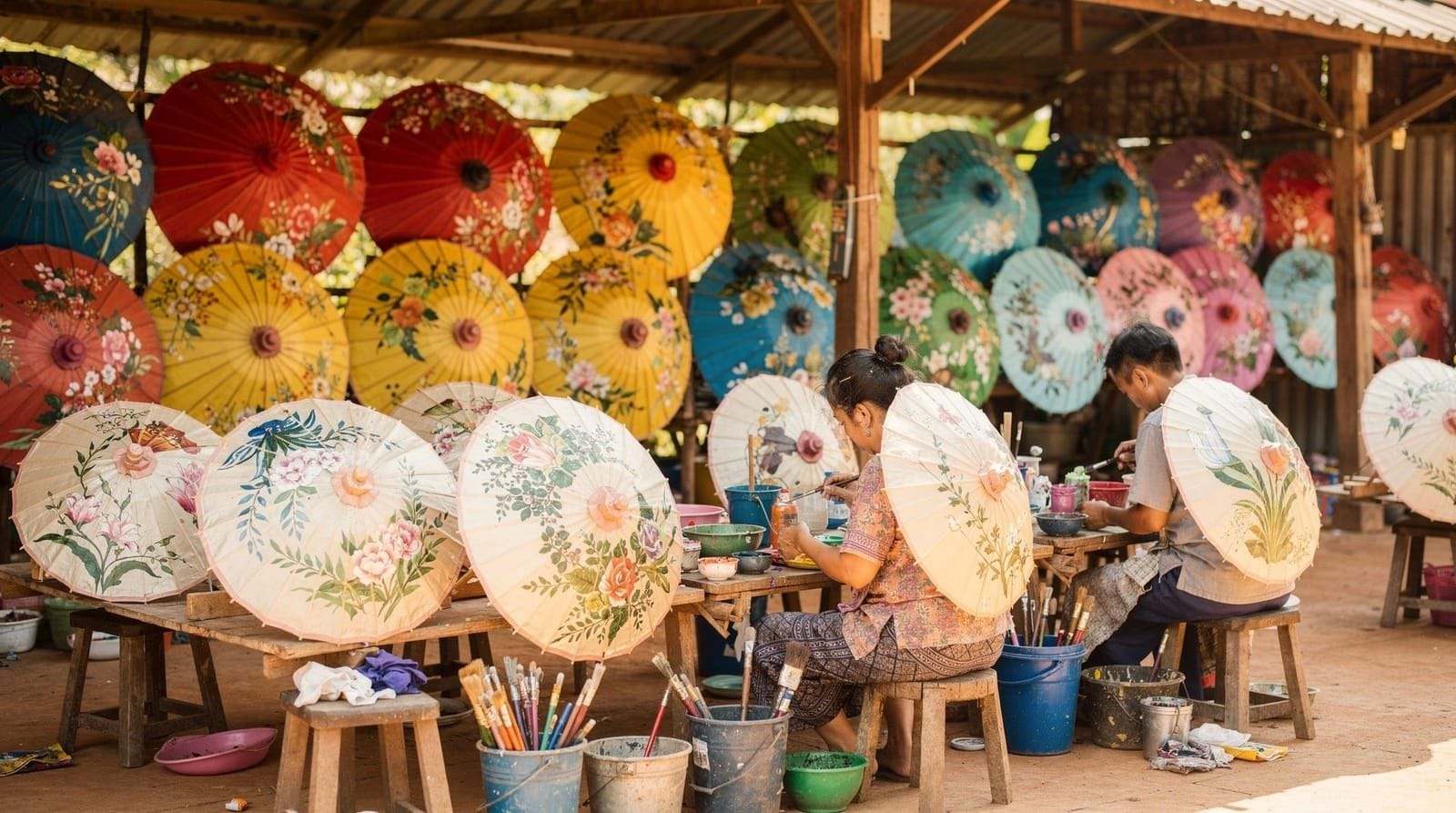
- Sa-paper umbrellas (Bo Sang) - mulberry-bark paper stretched over bamboo ribs, hand-painted freehand with floral and landscape motifs. The village hosts a dedicated Umbrella Festival each January.
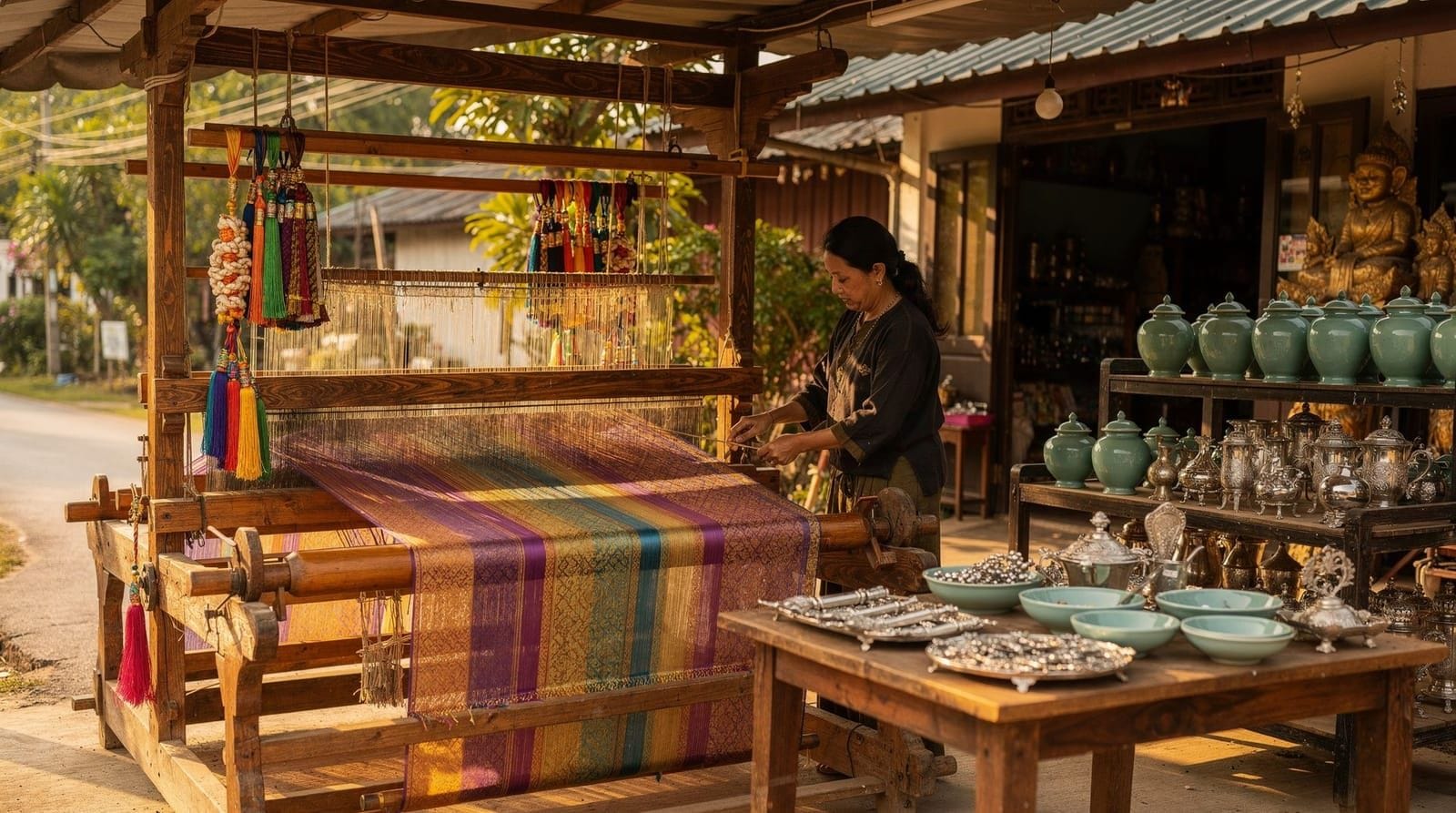
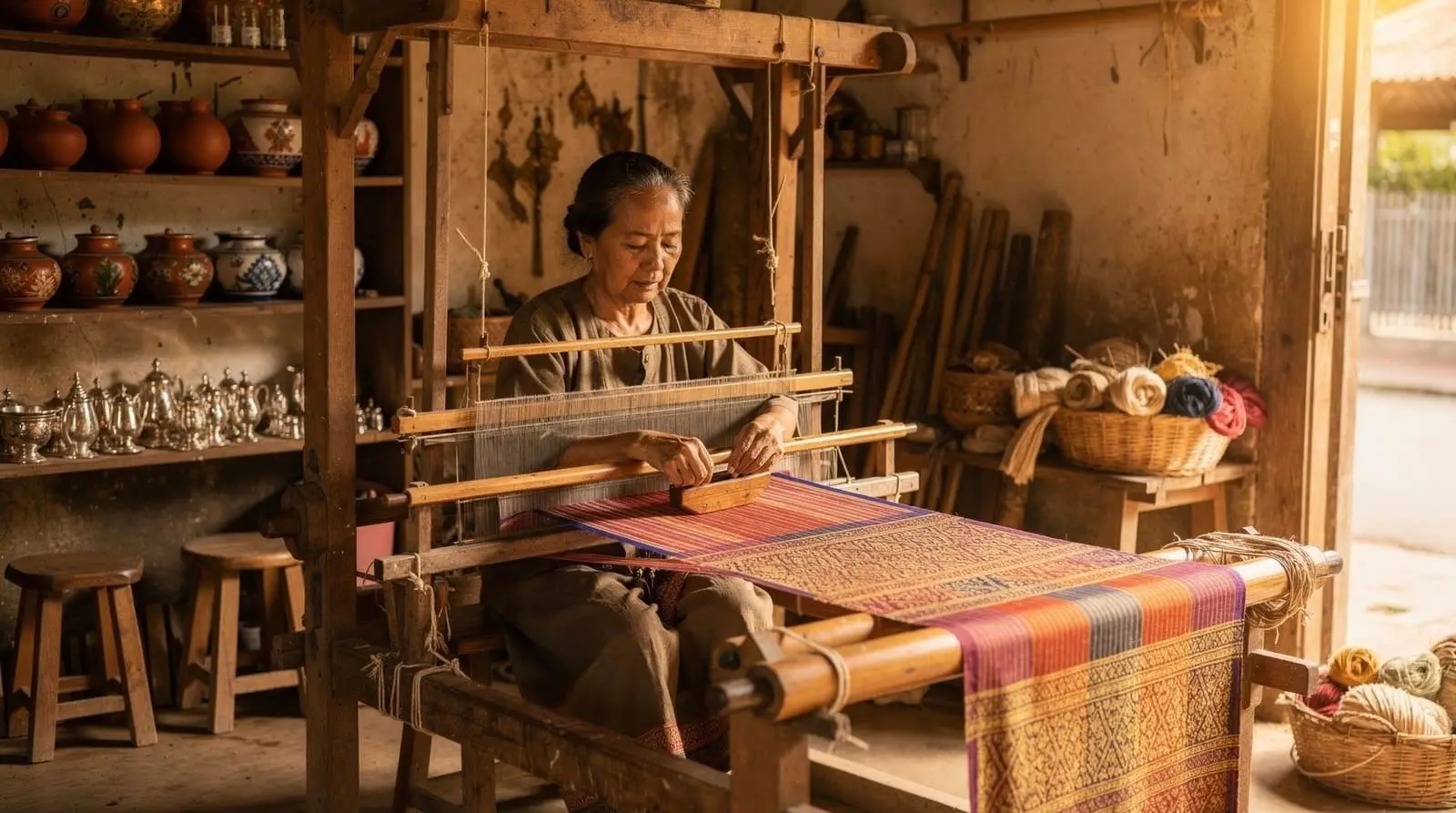
- Silk weaving (San Kamphaeng crafts road) - the full process from cocoon to finished fabric, demonstrated at workshops along Route 1006, covered in depth in our Thai silk weaving guide.
- Celadon pottery (San Kamphaeng crafts road) - pale green- to blue-glazed stoneware with roots in centuries-old Southeast Asian ceramic traditions, glazed and fired at workshops along the same corridor as the silk trade.
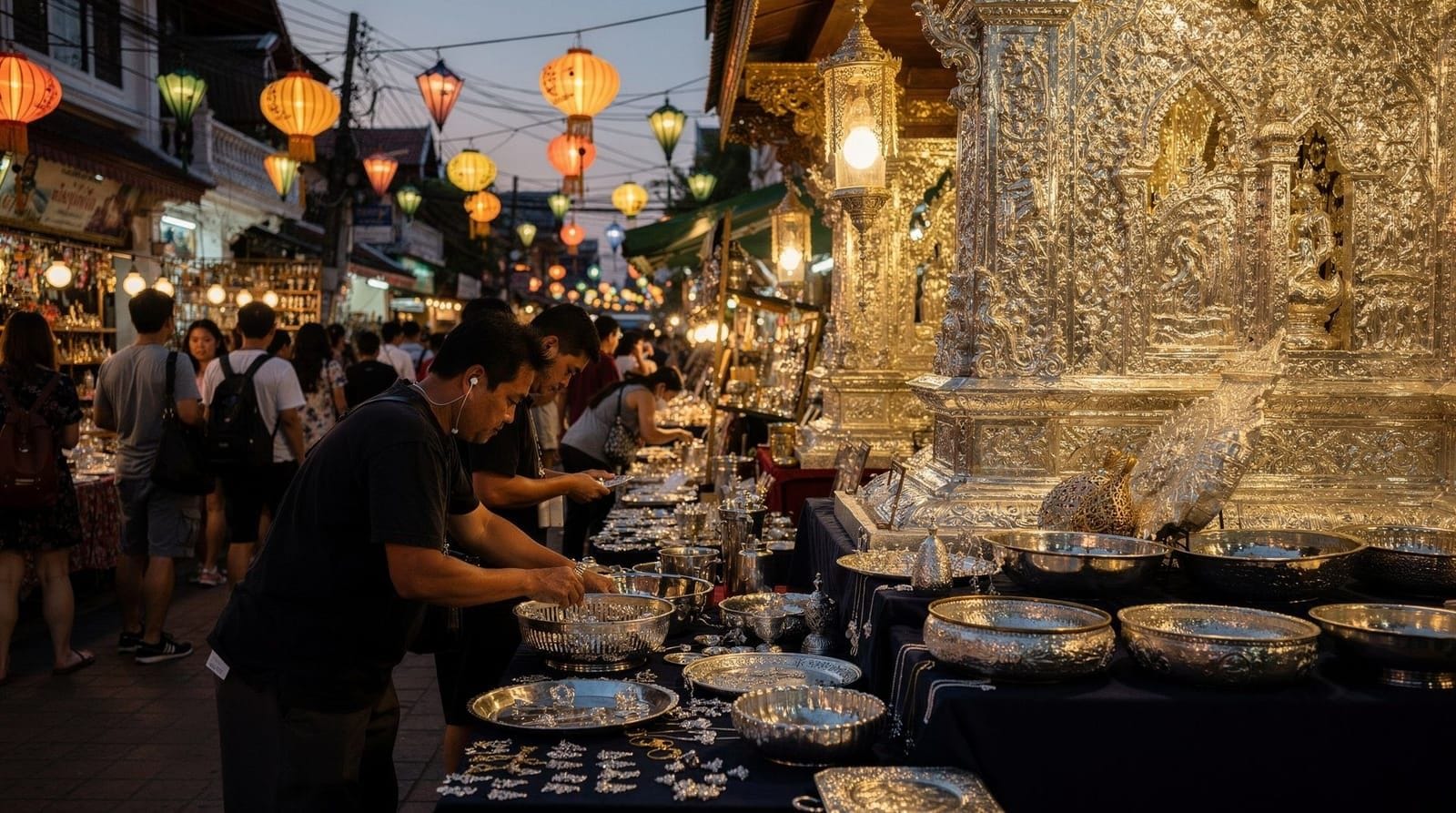
- Silverware (Wualai quarter, and workshops along San Kamphaeng road) - hand-hammered and engraved silver jewelry and homeware, produced using repoussé techniques passed down through generations of Wualai families.
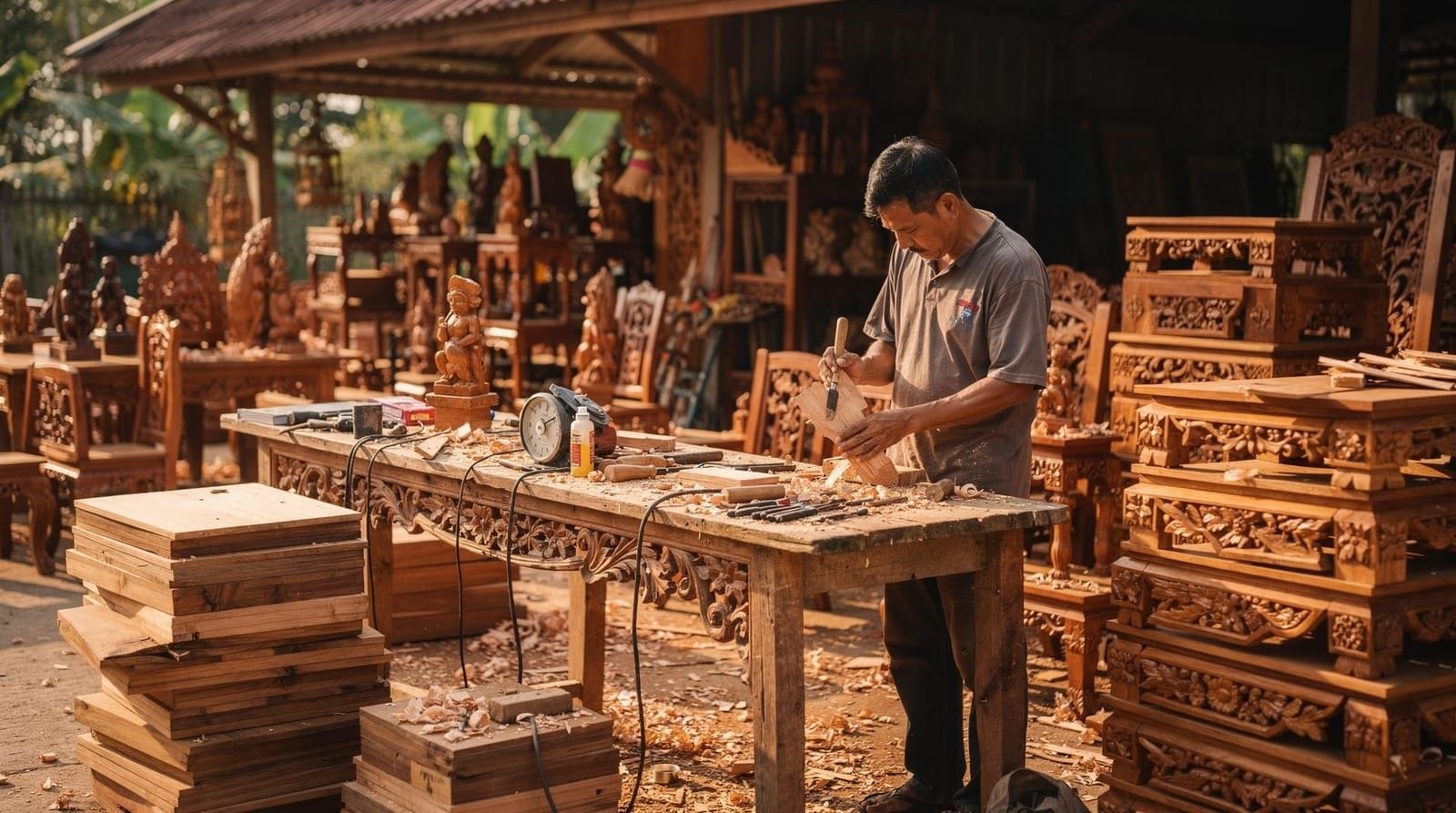
- Teak woodcarving (Baan Tawai) - carved furniture, decorative panels and temple ornament, on a scale that runs from small souvenir carvings to wholesale furniture production.
Book the Bo Sang umbrella-making experience with a Sticky Waterfall visit if you want a guided introduction to the umbrella craft on the same day as a stop at the climbable Sticky Waterfalls.
Where these crafts live: a rough geography
Chiang Mai’s craft districts cluster in two main directions from the old city, plus one neighborhood inside it.
- East (San Kamphaeng road): Bo Sang’s umbrella workshops sit closest to the city, about 9 km out, with the broader crafts road continuing further east through silk, celadon and silverware showrooms, and the San Kamphaeng hot springs at the far end. Most visitors treat this whole stretch as one loop.
- Southwest (Hang Dong direction): Baan Tawai’s woodcarving village sits south of Hang Dong town, roughly 18-20 km from the old city, in the same general corridor as Wiang Kum Kam’s ancient ruins and Royal Park Rajapruek’s botanical gardens.
- Inside the old city walls: the Wualai silversmith quarter runs south from Chiang Mai Gate, walkable from most old-city accommodation, and comes alive every Saturday evening as the Saturday Walking Street.
Because the east and southwest routes don’t overlap, most visitors split their craft touring across two separate outings rather than trying to cover everything in a single marathon day.
Where the traditions came from
None of these crafts appeared purely to serve tourism, even though the retail side has scaled up considerably around visitor demand over the past several decades. Sa-paper umbrella painting at Bo Sang is generally traced back around two centuries, to a monk said to have brought the technique from Shan State in present-day Myanmar and adapted it to locally available mulberry bark and bamboo. Wualai’s silversmithing tradition is tied to communities of craftsmen who settled south of the old city walls generations ago, passing repoussé hammering techniques down through families. Silk weaving and celadon pottery along the San Kamphaeng road developed as household and village-scale crafts across the wider region long before Route 1006 became a dedicated shopping corridor, and Baan Tawai’s woodcarving grew from a genuine local trade into what’s now Thailand’s best-known carving village.
What ties all five together is that the underlying skill - freehand painting, loom weaving, hand-hammering, chisel carving, glazing and firing - hasn’t fundamentally changed even as the surrounding retail infrastructure has. Watching an artisan work today is, in most workshops, watching the same technique their grandparents used, just now presented in a format built for visitors to watch and buy directly.
Choosing which crafts to prioritize
With five distinct trades on offer and limited trip time, it helps to decide in advance which ones actually interest you rather than trying to sample all of them thinly.
- If you want the single most photogenic, self-contained stop, Bo Sang’s umbrella village is hard to beat - a compact main street, colorful workshops, and a paint-your-own option that gives you a hands-on souvenir within an hour.
- If watching a technically impressive hands-on process matters most, prioritize silk weaving or silverwork - both involve visible, easy-to-follow manual technique (loom operation, hammering, engraving) that reads clearly even without narration.
- If you’re furnishing a home or seriously shopping for furniture, Baan Tawai is the clear pick, with a shopping scale and shipping infrastructure the other craft districts don’t match.
- If your schedule only allows an evening rather than a daytime excursion, the Saturday Walking Street along Wualai Road combines silver shopping, street food and Wat Sri Suphan’s illuminated silver-clad temple into a single walkable evening inside the city.
Building a craft-focused day (or two)
Day one: the eastern loop. Start at Bo Sang for the umbrella workshops, a paint-your-own session if you’re inclined, and browsing the village’s main strip. Continue east along the crafts road for a silk-weaving demonstration and a look at celadon glazing, then finish at the hot springs for a relaxing close before the drive back.
Book the silver craftwork temple tour with a monk meeting if you’d rather have a silverwork demonstration paired with a temple visit and the chance to speak with a monk, folded into the same eastern-district day.
Day two: Baan Tawai and the southwest. A morning at Baan Tawai, when showrooms are quieter and staff have more time to negotiate, followed by Wiang Kum Kam’s ancient ruins or Royal Park Rajapruek’s gardens in the afternoon.
Book the woodcarving workshop, cooking and massage retreat if you’d rather spend a full day or two actually learning to carve rather than only browsing showrooms.
An evening: Wualai on a Saturday. If your trip includes a Saturday, close out the craft theme with the Saturday Walking Street along Wualai Road, where the market’s silver stalls sit alongside Wat Sri Suphan, the temple whose ordination hall is clad in hand-hammered silver panels.
Beyond shopping: the cultural side of Lanna craft
Chiang Mai’s craft heritage isn’t purely a shopping activity - it’s tied closely to the wider Lanna cultural identity that distinguishes the north from central Thailand, a topic our Lanna culture explained guide covers in more depth. Temple architecture across the old city draws on the same woodcarving and metalworking skill sets found in the craft villages: the teak carving inside Wat Phra Singh’s Lai Kham chapel and the silver panelling at Wat Sri Suphan are both applications of exactly the same craftsmanship sold as souvenirs a few kilometers away, just directed toward devotional rather than commercial ends.
Book the morning Lanna cultural experience tour for a guided introduction to this broader cultural context alongside a craft demonstration, if you want the history and the hands-on experience covered together rather than piecing it together yourself.
The Lanna Folklife Museum, part of the Three Kings Monument complex in the old city, is worth a stop if you want the historical and anthropological framing - traditional dress, tools, house models and craft displays - before or after visiting the villages where these same crafts are still practiced commercially today.
For a fuller cultural evening rather than a daytime workshop visit, a khantoke dinner - a traditional Lanna-style seated meal served on a low pedestal tray, accompanied by classical northern Thai dance - is the most common way visitors experience Lanna performing arts alongside the region’s food, distinct from the visual and material crafts covered in this guide but drawing on the same regional identity.
Shopping honestly across all five crafts
A few honesty notes apply across every craft district in this guide, not just one:
Prices scale roughly with the skill and time involved in a piece across every craft here - a simply patterned umbrella or small celadon bowl costs a fraction of an elaborately hand-painted large umbrella or a fully hand-carved teak cabinet, and that difference is a fair reflection of labor rather than pure markup. Bargaining is expected on larger purchases at Baan Tawai and along the crafts road, less so on smaller, more fixed-price souvenir items.
Photographing Chiang Mai’s craft villages
Each district offers a genuinely different photographic character. Bo Sang’s main street is the most immediately colorful - rows of drying painted umbrellas propped open in workshop courtyards, best photographed in the morning before afternoon heat and any rain risk. The San Kamphaeng crafts road rewards closer, more technical shots: a weaver’s hands at the loom, a silversmith mid-hammer-stroke, a potter glazing a piece before firing. Baan Tawai’s showrooms are less about a single striking image and more about the sheer scale of carved teak on display, while Wualai’s Saturday evening market adds illuminated silver temple architecture to the mix, with Wat Sri Suphan’s exterior panels picked out dramatically once the sun goes down.
Across all of these, asking politely before photographing an individual artisan at close range is good practice, even where the open-workshop setup generally welcomes visitors watching and photographing the broader process from a respectful distance.
Practical tips for a craft-touring day
- Bring cash. Smaller workshops and individual stalls, especially at Bo Sang and Wualai, rely heavily on THB cash rather than card payment, even though larger showrooms along the crafts road and at Baan Tawai increasingly accept cards.
- Wear comfortable shoes. Expect a mix of paved village streets, showroom floors and, at Wualai on a Saturday, a genuinely crowded walking street.
- Ask about shipping before buying anything large. Silk yardage, celadon pieces and carved furniture all travel poorly in checked luggage; most established workshops arrange international shipping for an added fee, but costs and timelines vary enough between shops that a written quote is worth getting before committing.
- Set aside more time than you think you need. A rushed five-minute stop rarely does any of these crafts justice - budgeting twenty to thirty unhurried minutes per workshop makes for a noticeably better visit than trying to squeeze in every possible stop.
- Confirm any tour-included stops in advance if you’re booking a guided craft-district tour, since itineraries vary in exactly which crafts and villages they cover.
Getting between the craft districts
None of these districts are realistically reached on foot except Wualai, which sits an easy walk from Chiang Mai Gate. For the eastern San Kamphaeng route and the southwestern Baan Tawai/Wiang Kum Kam corridor, a Grab, private driver, or rental scooter is the practical choice - the workshops are spread over enough distance that public transit isn’t a workable option. A driver who waits between stops is considerably more efficient than trying to arrange fresh rides at each workshop, particularly on the multi-kilometer crafts road. A guided craft-and-culture tour combining several regional stops in one day, such as a silver temple and top-sites itinerary, is a reasonable alternative if you’d rather not plan the logistics yourself.
Who this guide suits
Frequently asked questions about Chiang Mai’s craft traditions
What is Lanna craft, exactly?
“Lanna” refers to the historical northern Thai kingdom centered on Chiang Mai, and “Lanna craft” describes the handicraft traditions - umbrella painting, silk weaving, silverwork, woodcarving, celadon pottery - that developed within that cultural and geographic region, distinct in style and history from crafts associated with central or northeastern Thailand.
Which craft village should I prioritize if I only have one day?
Bo Sang and the San Kamphaeng crafts road, since they sit on the same eastern route and can realistically be combined in a single day, unlike Baan Tawai, which sits on the opposite side of the city.
Is it rude to watch artisans working without buying anything?
No. Workshops across all of Chiang Mai’s craft districts are generally used to visitors watching a demonstration and moving on without a purchase - that’s a normal, accepted part of how these workshops interact with visitor traffic.
Can I learn a craft myself rather than just watching?
Yes - paint-your-own umbrella sessions at Bo Sang, woodcarving classes near Baan Tawai, and bamboo fan weaving workshops are all bookable, ranging from under an hour to a full multi-day retreat format.
How do these crafts connect to Chiang Mai’s temples?
Directly - the woodcarving skill seen at Baan Tawai is the same tradition behind temple woodwork like Wat Phra Singh’s Lai Kham chapel, and Wualai’s silversmithing produced the silver panelling on Wat Sri Suphan’s ordination hall.
Are there festivals tied to these crafts?
Yes - Bo Sang holds a dedicated Umbrella Festival each January, and northern Thailand’s broader Lanna cultural calendar includes Yi Peng, the lantern festival with roots in the same regional identity as these craft traditions.
Is Chiang Mai silk different from silk sold elsewhere in Thailand?
Northern Thai silk has its own regional weaving patterns and history distinct from the country’s more internationally famous northeastern silk regions - see our Thai silk weaving guide for how the process and styles compare.
How much should I budget for craft souvenirs?
It varies enormously by craft and piece size - small paper or celadon items can run under 500 THB (~$14), while large hand-painted umbrellas, fine silk yardage or carved furniture can run into the thousands of THB. Budget loosely and let quality and personal interest guide the actual spend rather than a fixed target.
Top experiences
Bookable activities with verified prices and instant confirmation on GetYourGuide.