Sunday Walking Street: how to plan your visit
Chiang Mai: Temples and Street Food Night Tour by Tuk Tuk
What's the best strategy for visiting Sunday Walking Street?
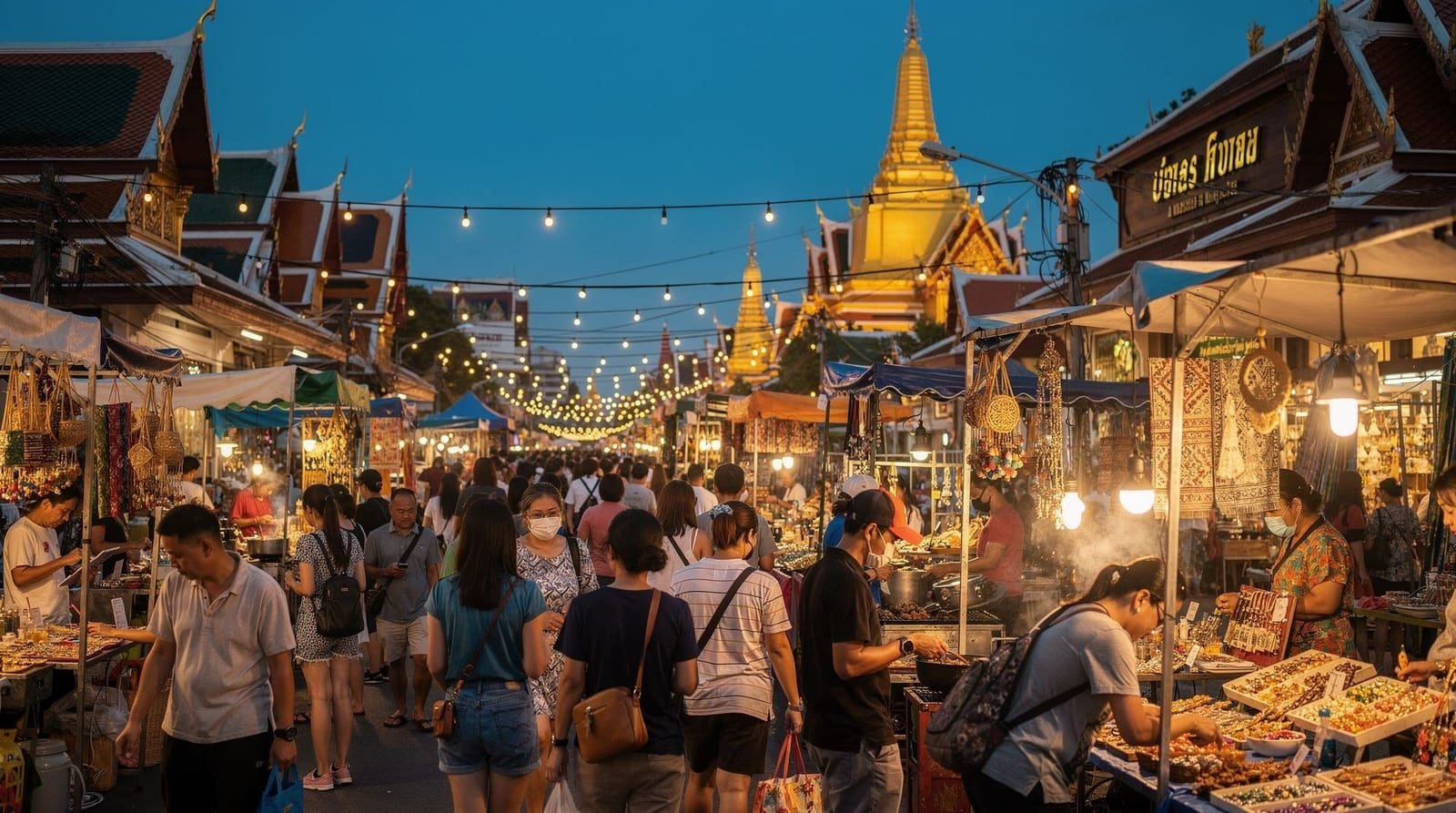
Arrive at Tha Phae Gate by 4:30pm, work your way west toward Wat Phra Singh while stalls are still easy to browse, and plan to eat inside one of the temple courtyards (Wat Chedi Luang's is the strongest) rather than waiting until the 7-9pm peak crowd makes browsing and eating both harder.
Sunday Walking Street is easy enough to describe in one line — Ratchadamnoen Road closes to traffic every Sunday afternoon and fills end to end with stalls — but a good visit depends less on knowing that it exists and more on timing, sequencing and knowing what to actually seek out along a 1.5 km route that’s genuinely difficult to cover in full on a single pass.
Quick answer: arrive at Tha Phae Gate by 4:30pm, work west toward Wat Phra Singh while the crowd is still manageable, and plan dinner inside one of the temple courtyards along the way rather than waiting for a table once the 7-9pm peak crush sets in.
Timing your arrival
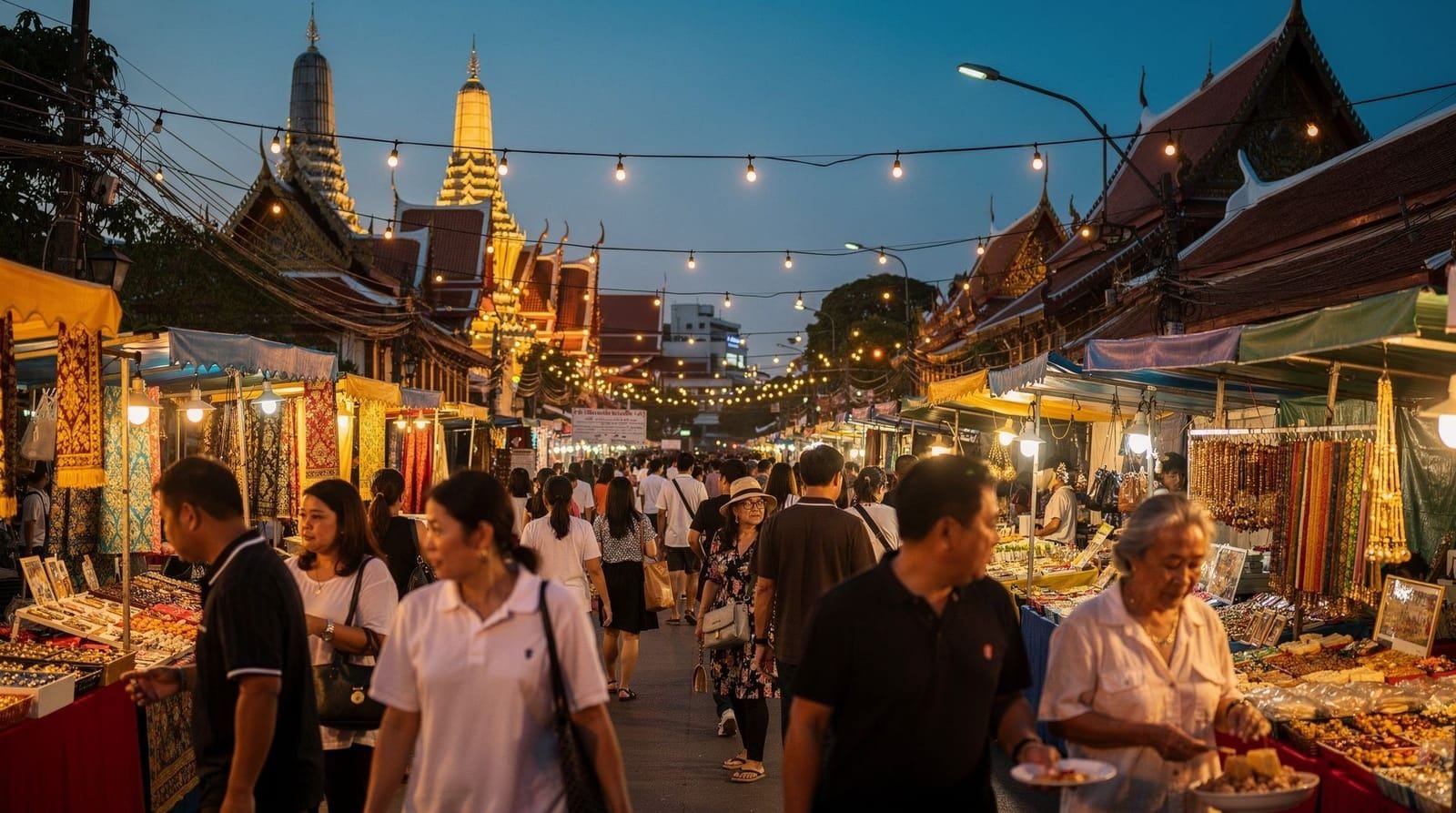
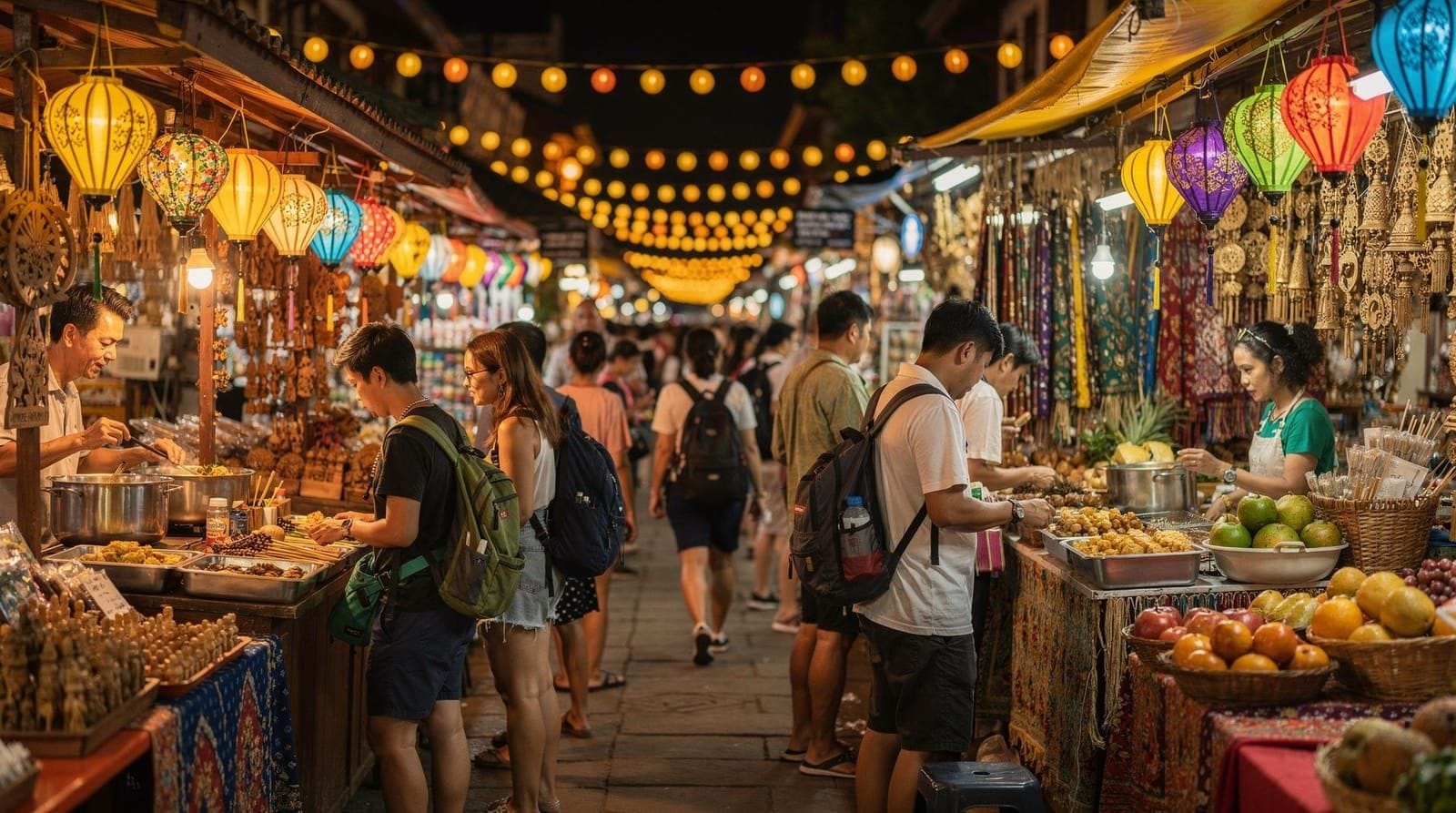
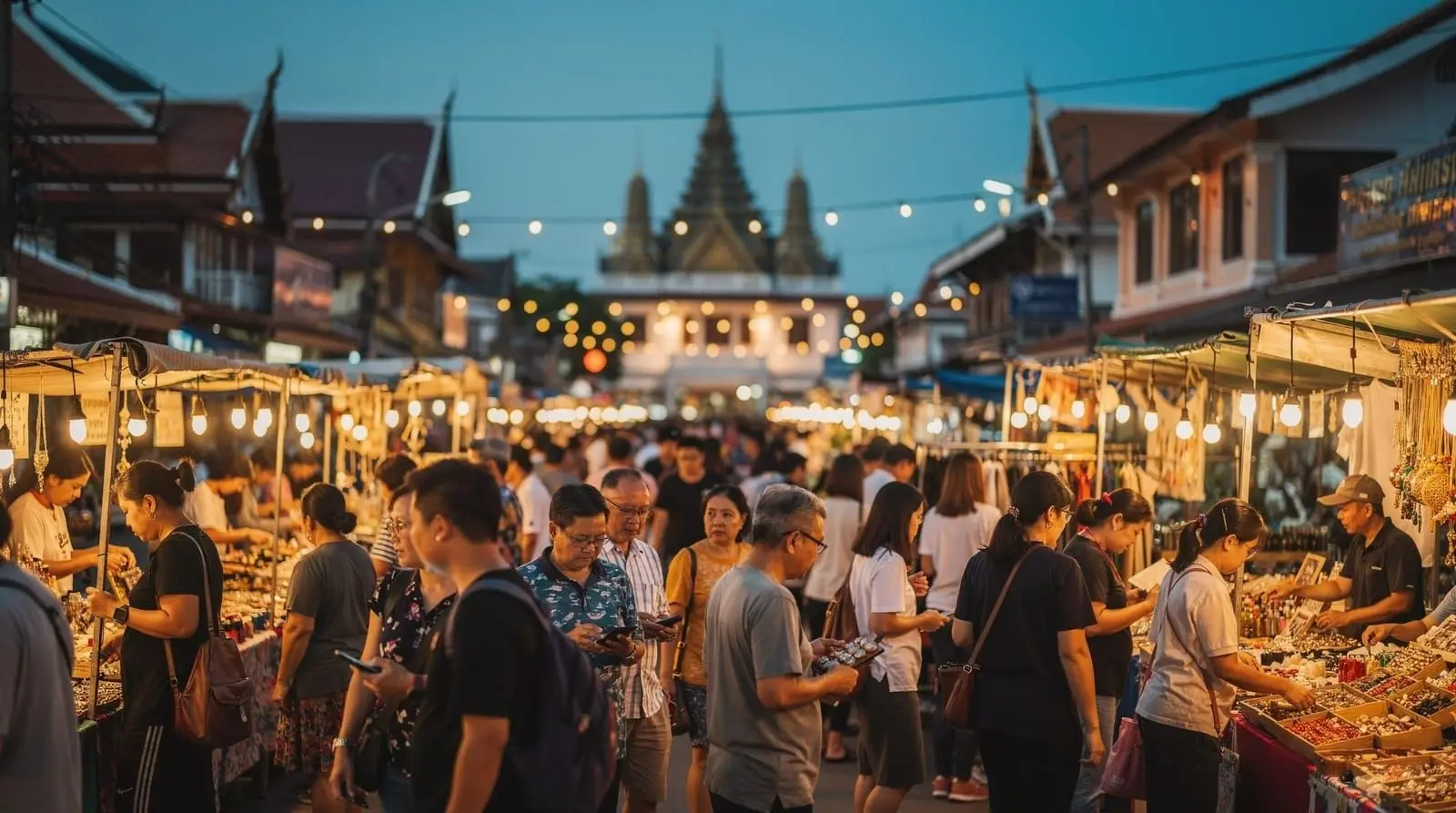
The market builds from its roughly 4pm start, becomes genuinely dense by 6-7pm, and stays crowded until it winds down around 10-11pm. Arriving right at opening, 4-4:30pm, is the single highest-leverage decision for a comfortable visit — stalls are set up and vendors are ready to sell, but the crowd hasn’t built, which means actual room to browse rather than shuffling with the flow of foot traffic. If the packed, high-energy version of the market is specifically what you want, 7-9pm delivers that, with the trade-off of slow movement and difficulty stopping without blocking people behind you.
Routing the walk
The market runs from Tha Phae Gate in the east to Wat Phra Singh in the west, with several side streets adding stalls beyond the main line. Starting at Tha Phae Gate and walking the full length toward Wat Phra Singh gives a natural, one-directional route that matches the crowd flow during peak hours — fighting against that flow later in the evening is both slow and mildly discourteous. Budget extra time if you want to detour down any side streets, since they genuinely widen the market beyond what a straight walk down Ratchadamnoen Road covers.
Guided local food and markets walking tour is worth considering if you’d rather have someone else handle the routing and point out specific stalls worth stopping for, rather than working it out solo on a first visit.
Where to eat along the way
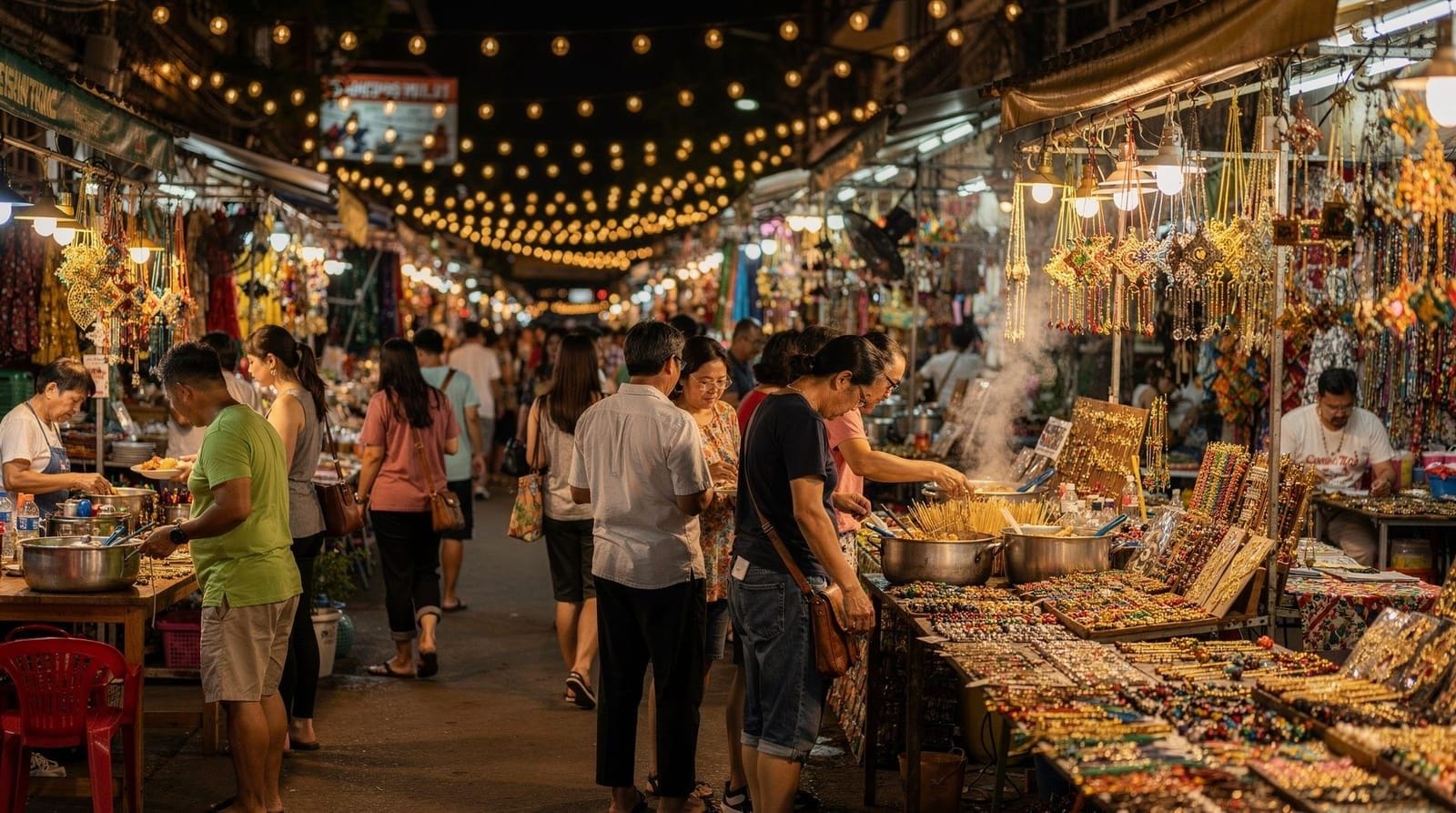
The temple courtyards along the route double as informal food courts on market night, and Wat Chedi Luang’s grounds are the strongest of them — genuinely one of the best concentrations of northern Thai street food anywhere in the city on a Sunday evening. Expect khao soi, grilled meats, fresh fruit shakes and dishes that don’t always make it onto standard restaurant menus, generally at 40-80 THB ($1.10-2.20) per dish. Plan to graze across several stalls rather than filling up at the first one, which is both the normal way to eat here and the more interesting one.
Temples and street food night tour by tuk-tuk combines a look at some of the Old City’s temples earlier in the evening with a food-focused stretch, a sensible option if a single guided outing covering both interests appeals more than doing them separately.
What’s genuinely worth buying
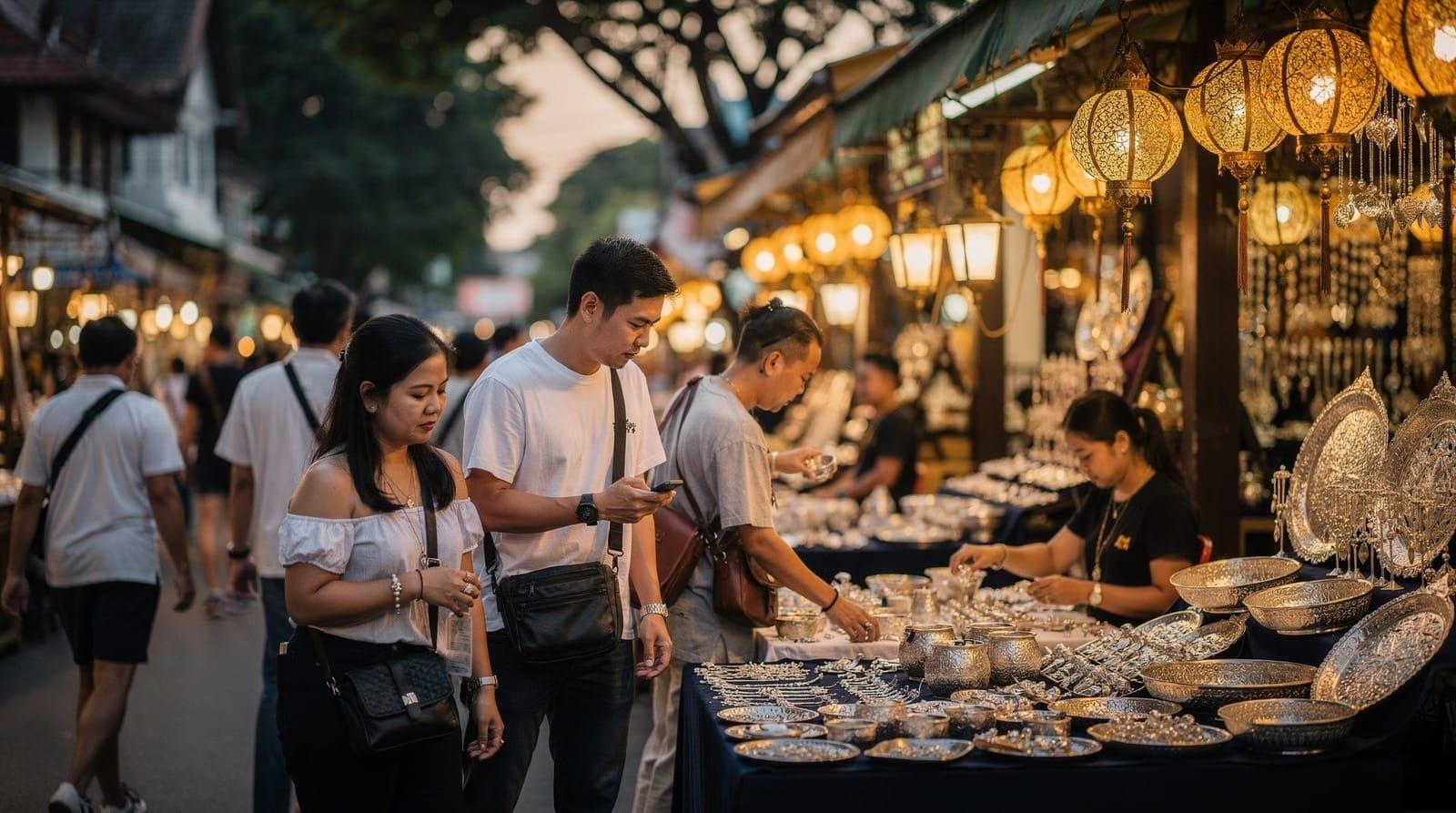
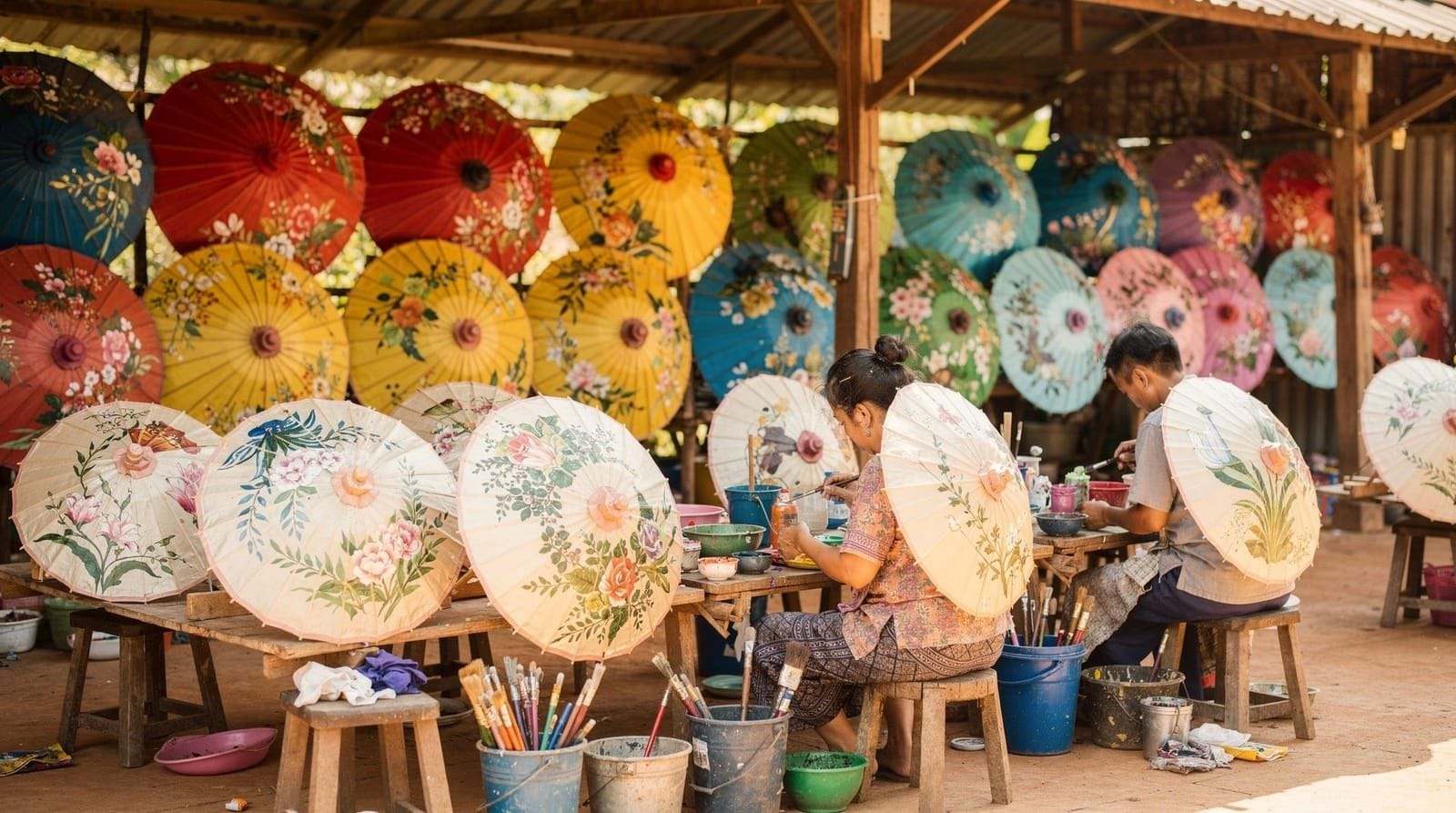
Skip past the generic souvenir stock and look specifically for hand-painted umbrellas and paper goods, traceable to the craft tradition centered in Bo Sang village outside the city — distinguishable from mass-produced versions by visibly hand-applied brushwork rather than stenciled patterns. Original local artwork depicting Lanna temple scenes and northern Thai landscapes is another category worth seeking out, with prices varying hugely by size and the artist’s reputation; asking directly about the artist often gets a genuine conversation rather than a sales pitch. Silver jewelry shows up here too, though Saturday Walking Street on Wualai Road the following night is the more purpose-built stop if silver specifically is the priority.
Bargaining here is expected but gentler than at some other regional markets — comparing prices across two or three stalls selling similar items before committing typically reveals a real 30-50% spread, and a polite counter-offer usually lands somewhere reasonable without a drawn-out negotiation. The full etiquette breakdown is in our bargaining etiquette guide.
Sequencing a full afternoon around it
Because the market doesn’t open until roughly 4pm, the hours before it make sense for Old City temple-hopping — Old City’s core temples, or specifically a quieter stop at Wat Chiang Man, fill the gap without wasting an afternoon waiting for the market to start. Transitioning directly from temple-hopping into the market once Ratchadamnoen Road closes to traffic is a genuinely efficient use of a single Sunday, avoiding both the awkward early arrival with nothing open and the late arrival that misses the calmer early hours.
Walking food tour through the market is another way to structure the evening if you’d rather have a guide time the route to hit the best food stalls before the worst of the crowd builds.
Budgeting the evening
For two people splitting several food stalls and browsing a handful of purchases, a realistic evening runs 600-1,200 THB ($17-33) total — food is cheap enough (individual dishes rarely exceed 80 THB) that shopping, not eating, is the real budget variable. A full, satisfying evening focused purely on food is achievable for under 500 THB ($14) per person if shopping isn’t the priority. Cash is essential for nearly every transaction; ATMs exist along the route but often carry a foreign transaction fee on top of your own bank’s charge, so withdrawing what you expect to spend beforehand is more cost-effective than repeated small withdrawals.
Traveling with kids or mobility considerations
Families do well arriving early, before 5pm, eating dinner in a temple courtyard while there’s still room to sit comfortably, and leaving before the 7-9pm peak density makes strollers and general navigation genuinely difficult. The same logic applies to anyone with mobility considerations — the road itself is flat and vehicle-free during market hours, but informal stall placement narrows the walkable path considerably once the crowd thickens.
Weather planning
Rainy season, roughly June through October, brings real risk of a Sunday evening downpour that can thin or shut down the market with little warning — vendors pack up quickly once rain starts. Checking the forecast before heading out during these months and having a backup indoor dinner plan in mind isn’t overcautious; the market genuinely can go from full swing to largely empty within twenty minutes of a serious shower.
Photographing the market well
The market photographs particularly well after dark, thanks to the dense string lighting most vendors use and the sheer visual density of stalls stretching into the distance along Ratchadamnoen Road. A wide shot taken from near Tha Phae Gate looking down the length of the market captures the scale better than trying to isolate individual stalls in a crowd. If you want portraits of vendors or street performers, asking permission first is standard courtesy, especially for anyone actively working (cooking, painting, performing) rather than simply standing near their goods — most are happy to be photographed but appreciate being asked. A tripod or larger camera setup is impractical once the evening crowd builds; handheld shooting is the only realistic approach past around 6pm.
Toilets, connectivity and other small logistics
Public toilets along the route are limited and often carry a small fee (5-10 THB); the 7-Eleven convenience stores common throughout the Old City are a reliable fallback if you’d rather not search for a dedicated facility. Mobile signal and Grab availability remain reliable throughout the market’s duration, useful for arranging a pickup once you’re ready to leave, though remember that any ride will need to collect you from outside the closed section of road rather than from within the market itself.
Practical budget expectations, broken down
It’s worth breaking the 600-1,200 THB per-couple estimate down further so you know where the money actually goes. Food typically accounts for the smaller share of that total — grazing across five or six stalls at 40-80 THB each comes to roughly 200-480 THB for two people eating well. The remainder is almost entirely shopping-dependent: a couple of small paper goods or a printed textile might add another 200-400 THB, while a more serious purchase like an original painting or a larger hand-painted umbrella can push the evening’s total considerably higher on its own. Knowing this breakdown in advance makes it easier to set a rough shopping budget before you start browsing, rather than discovering it after several purchases.
Solo travelers and the market
Sunday Walking Street works well for solo travelers, since the grazing-style food format and the general atmosphere don’t require a companion to enjoy fully — many visitors report it as one of the more comfortable solo evenings in the city precisely because eating alone at a folding table in a temple courtyard is entirely normal here, not the slightly awkward experience it can be at a formal sit-down restaurant. Street performers and the general spectacle along the route also give solo visitors something to watch and linger near without needing conversation, which some travelers specifically value on an evening they’re navigating alone.
Returning on a later trip or later in your stay
If your first Sunday Walking Street visit happens early in a longer Chiang Mai stay, it’s worth treating it partly as reconnaissance — noting which stalls or categories caught your eye without necessarily buying everything on the spot. Returning on a later Sunday, if your trip includes more than one, lets you make more considered purchases once you’ve had time to compare against the Saturday Wualai market, craft villages, or other markets around the city, rather than committing to the first appealing piece you see on night one.
Packing light for the evening
Since the market involves several hours of walking, standing and grazing across food stalls, packing light for the evening pays off — a small cross-body bag rather than a backpack, a phone with enough charge for photos and Grab at the end of the night, and enough small-denomination cash rather than a wallet full of large notes. Leaving valuables not needed for the evening back at your accommodation is a simple precaution given the crowd density during peak hours, rather than carrying everything you own into the busiest stretch of the market.
What a second lap of the market reveals
If your visit runs the full 2-4 hours, it’s worth deliberately walking the route twice rather than once — the first pass to scope out what’s available and note anything that catches your eye, and a second, slower pass to actually buy. Stalls near the busiest sections often have near-identical neighbors a short distance away selling similar goods at different prices, something that’s easy to miss on a single rushed walk-through but becomes obvious once you’ve seen the full route and can compare from memory. This two-pass approach also naturally spaces out the food stops, since a full stomach after the first pass makes the second pass a pure shopping errand rather than another eating opportunity.
Making the most of a short visit
If two hours is genuinely all you have, prioritize ruthlessly rather than trying to cover the full route at a rushed pace. Enter at Tha Phae Gate, walk only as far as Wat Chedi Luang’s food courtyard, eat there, browse the stalls along that first stretch, and treat the remainder of the route toward Wat Phra Singh as a bonus rather than an obligation. This shorter version still captures the market’s best food and a representative sample of the craft stalls, without the frustration of feeling rushed through a full 1.5 km walk in too little time.
Combining with the Night Bazaar the same trip
Many visitors treat Sunday Walking Street and the Night Bazaar as two separate outings rather than a single evening, since the two sit on opposite sides of the city and each deserves unhurried attention. A reasonable approach for a multi-night stay is an early orientation visit to the Night Bazaar on an ordinary weeknight, followed by Sunday Walking Street once you’ve had time to see the city and know what’s genuinely worth buying. Our Night Bazaar vs. Sunday Walking Street comparison covers the fuller decision in more depth if only one fits your schedule.
A note on safety and awareness
The market’s popularity means pickpocket risk, while still low by regional standards, is somewhat higher here than in quieter parts of the city simply due to crowd density — a zipped bag worn in front and a phone kept out of a loose back pocket are sensible precautions rather than paranoia. Beyond that, Sunday Walking Street carries no particular safety concerns beyond ordinary city-center awareness; it’s a heavily trafficked, well-lit route with a steady vendor and visitor presence throughout its operating hours.
Getting there and leaving
Because the road closes to traffic, Grab and songthaew drop-offs happen at the perimeter, typically near Tha Phae Gate or a side-street entrance, rather than inside the market itself. If you’re staying inside the Old City, walking directly is usually simpler than arranging any transport at all. When leaving, walking a block or two away from the closed section before hailing a ride tends to be faster than trying to flag something down right at the market’s edge.
Frequently asked questions about visiting Sunday Walking Street
What time should I arrive at Sunday Walking Street?
Aim for 4-4:30pm, right at opening, for the easiest browsing before the 6-9pm peak crowd builds.
How long should I budget for the visit?
Two to four hours, depending on whether you’re focused on a quick browse-and-eat or a full walk of the route with shopping.
Should I eat before I go, or eat at the market?
Eat at the market — the temple courtyards along the route, especially Wat Chedi Luang’s grounds, are one of the best reasons to visit.
What’s the single best thing to buy here?
Hand-painted umbrellas and paper goods, and original local artwork, stand out as the most distinctive purchases over the generic souvenir stock.
Can I combine this with temple visits earlier in the day?
Yes — Old City temple-hopping in the afternoon transitions naturally into the market once Ratchadamnoen Road closes around 4pm.
Is it worth going with a guide, or is self-guided fine?
Self-guided works fine for browsing, since the route is a single obvious line. A guided food tour adds value mainly for ordering unfamiliar dishes.
What should I do if it starts raining?
Head for a temple courtyard or covered side stall — heavy rain during June-October can clear the market quickly, so don’t wait it out in the open.
Do I need to worry about pickpockets here?
Standard city-center precautions apply, and risk rises somewhat with crowd density during the 6-9pm peak — a zipped bag and phone kept secure is sensible rather than paranoid.
Top experiences
Bookable activities with verified prices and instant confirmation on GetYourGuide.