Chiang Mai vs Pai: city base or mountain town
Chiang Mai: Charming Pai in One Day Trip with Driver
Duration: Full day
Should I visit Chiang Mai or Pai?
They serve different purposes rather than competing directly. Chiang Mai is a genuine city with far more restaurants, temples, and activities, well suited to a multi-day stay. Pai is a small, laid-back mountain town reached via a famously winding 762-curve road, best for 2-3 relaxed days of canyon views, hot springs, and a slower pace. Most travelers do both: Chiang Mai as the main base, Pai as a 2-3 night side trip.
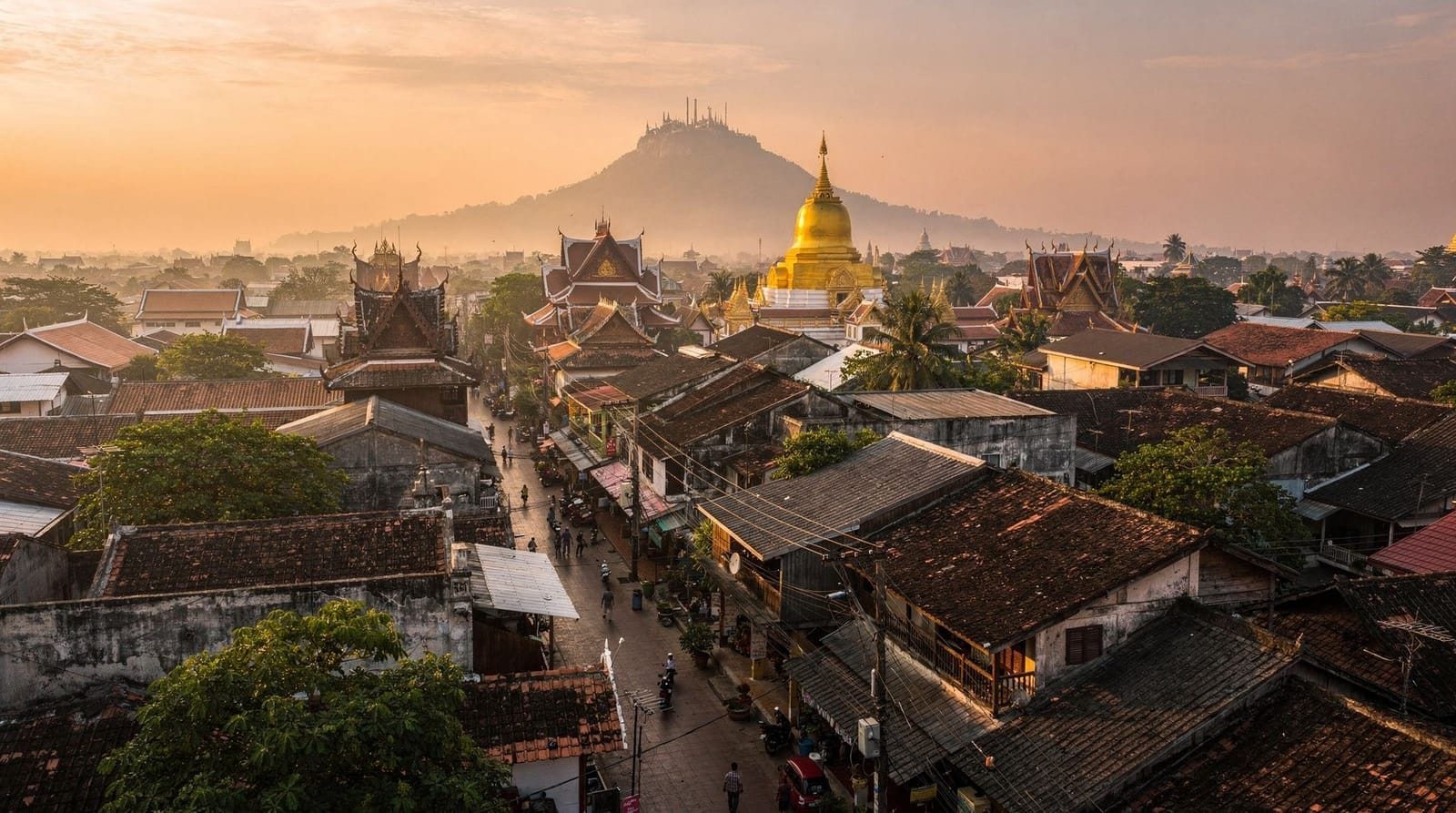
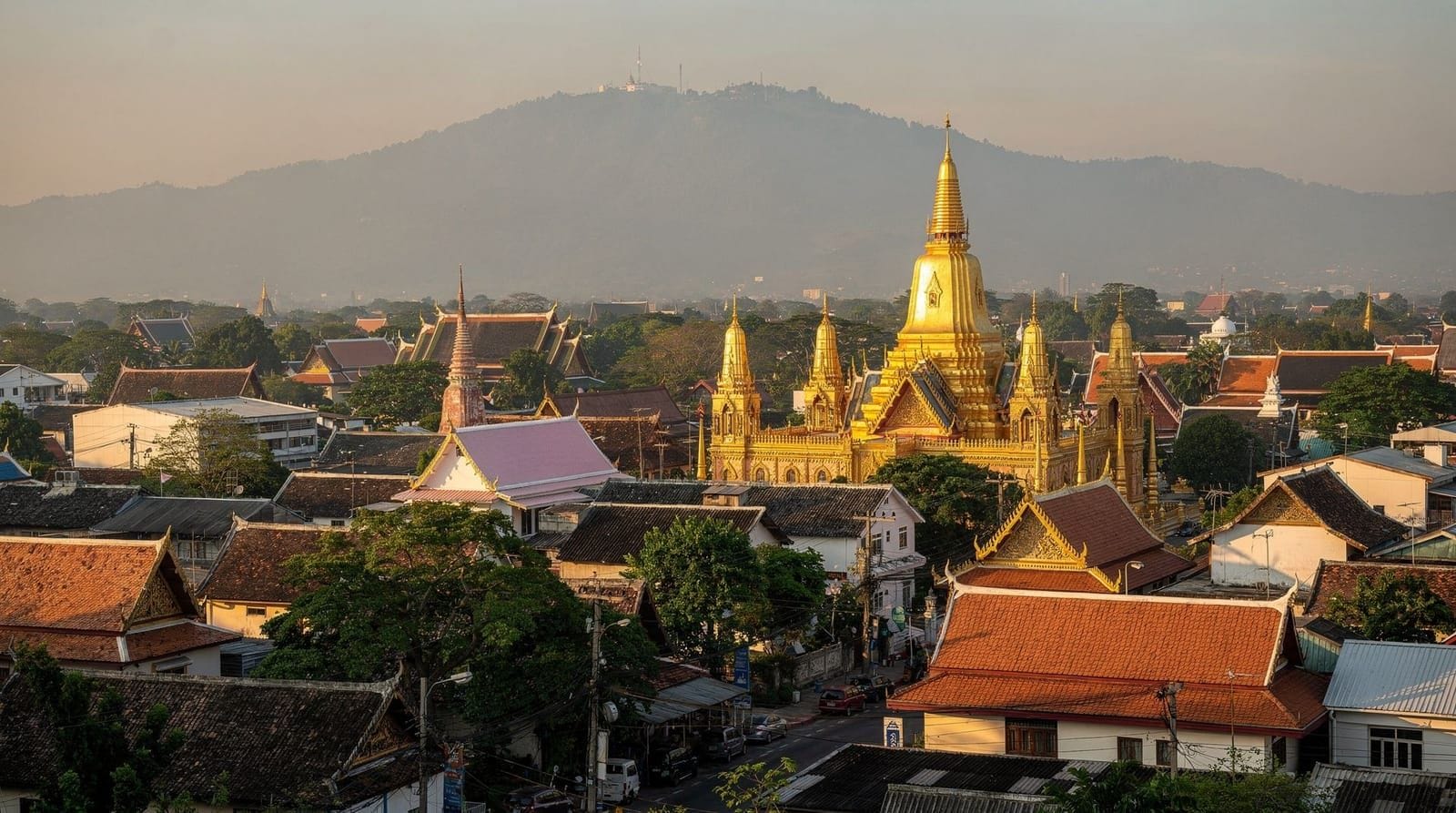
Chiang Mai and Pai sit only about 130 km (80 miles) apart, but the winding mountain road between them makes the trip feel considerably longer, and the two places themselves feel further apart still in character. Chiang Mai is a real city: temples, markets, restaurants, and enough activities to fill a week without repeating. Pai is a small, laid-back mountain town wrapped around a river valley, built for a slower kind of trip, canyon views, hot springs, a walkable night market, rather than a comprehensive list of things to do.
The most useful framing isn’t “Chiang Mai or Pai” but “how much time to give Pai within a Chiang Mai-based trip,” since the overwhelming majority of visitors treat Pai as a deliberate, slower-paced side trip rather than an alternative main base. This guide compares the two honestly, covers the notorious road between them, and answers the practical question of how many days Pai actually deserves.
Two very different scales
Chiang Mai functions as a legitimate multi-day base with enough breadth, historic temples in the Old City, a cooking-class scene, elephant sanctuaries, multiple distinct neighborhoods, to comfortably fill four to seven days. Pai is a fraction of that scale: a small town built around a single main walking street, a cluster of guesthouses, and a set of nearby natural attractions, canyon, waterfalls, hot springs, that can realistically be covered within two to three days without much left unexplored.
This isn’t a criticism of Pai; it’s simply built for a different kind of stay. Where Chiang Mai rewards structured sightseeing across distinct neighborhoods and activities, Pai rewards unstructured time, a slow breakfast overlooking rice fields, an afternoon at the hot springs, an evening browsing the night market, with far less pressure to fill every hour with a new attraction.
The road: the defining feature of the comparison
No comparison between Chiang Mai and Pai is complete without addressing the road itself, since it shapes nearly every practical decision about the trip. The route runs about 130 km (80 miles) and is famous, almost to the point of local legend, for its roughly 762 curves, taking 3-4 hours by car, minivan, or motorbike depending on driving style and stops along the way. It passes through genuinely scenic mountain and forest terrain, and many travelers who make the drive describe the journey itself as a highlight rather than merely a means to an end.
The winding nature of the road is a real and specific consideration for anyone prone to motion sickness; taking preventive medication before departure is a sensible precaution rather than an overreaction, and sitting toward the front of a minivan tends to help. Self-driving a scooter for the full route is an option some travelers choose, but it demands real riding experience and comfort with continuous switchback turns over several hours, and it isn’t a beginner-friendly ride. Full transport logistics, including van, bus, and private-car options, are covered in our Chiang Mai to Pai transport guide.
Book the Pai day trip with a private driver for a way to experience the famous winding road and Pai’s highlights without managing the navigation and motion-sickness logistics yourself.
Day trip or overnight: the honest answer
A day trip to Pai is technically possible but a genuinely poor use of time for most travelers: roughly 6-8 hours of round-trip driving for perhaps 3-4 hours of actual time in the town itself, a ratio that undersells everything Pai is actually good at, its slow pace, its hot springs, its rice-field views at golden hour. Our Pai day trip vs overnight guide covers this trade-off directly, but the short version is that most travelers who make the drive choose to stay at least one night, and 2-3 nights is the range most commonly recommended for actually settling into the town’s rhythm rather than rushing through a checklist.
What Pai offers that Chiang Mai doesn’t
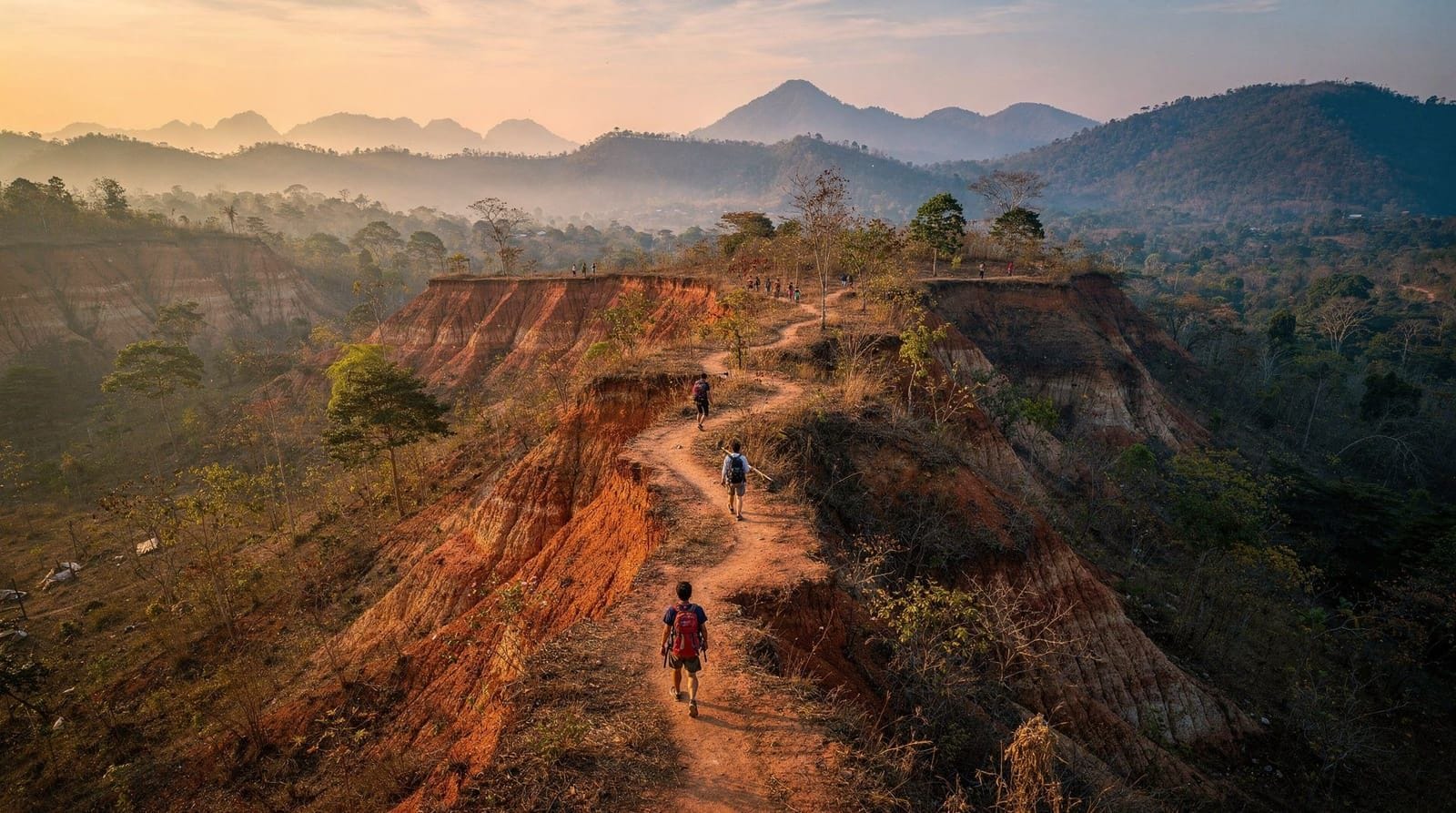
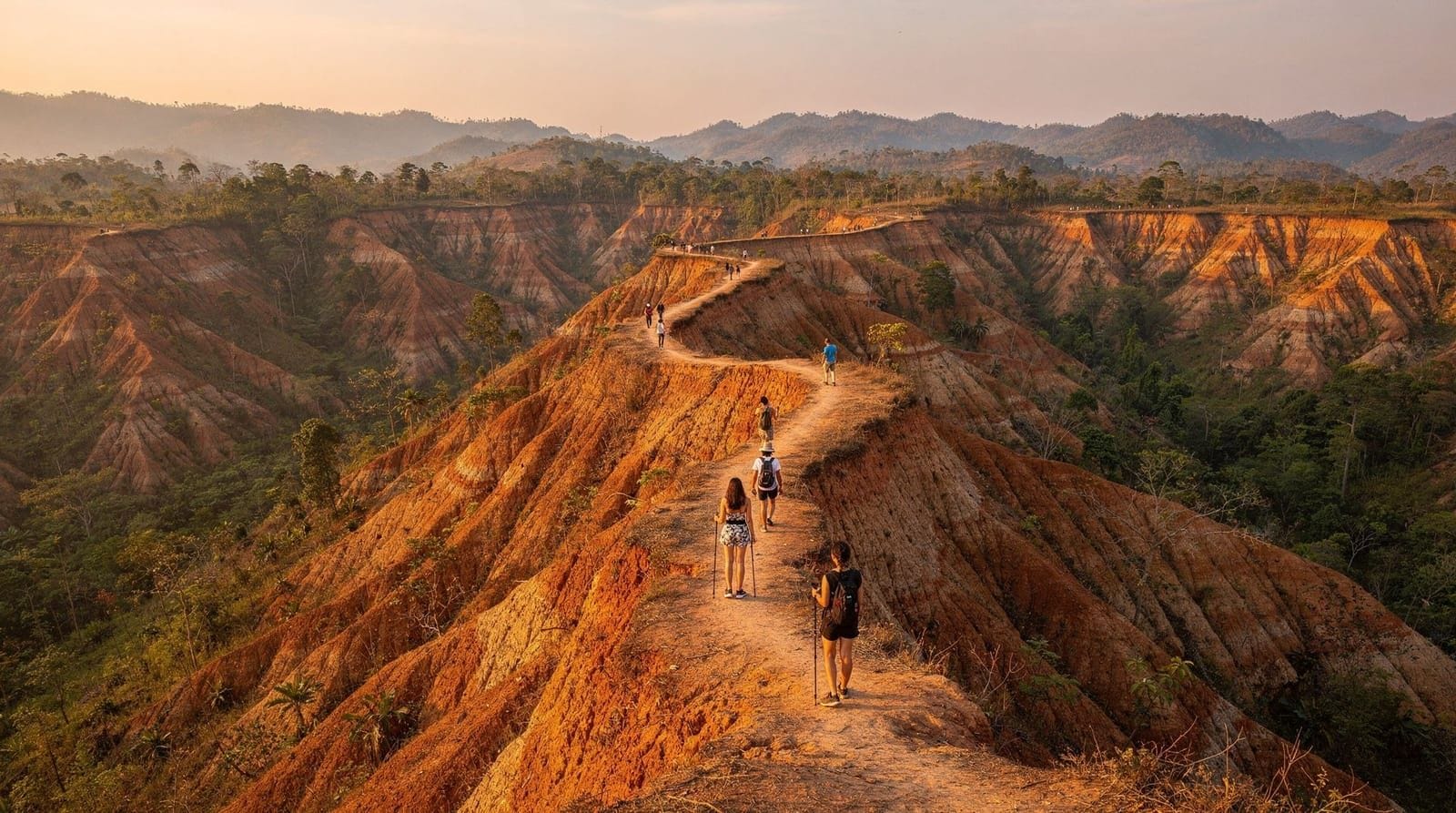
Pai’s specific draws are genuinely distinct from anything easily accessible in Chiang Mai itself. The Pai Canyon, a network of narrow ridgelines with steep drop-offs on either side, offers dramatic sunset views unlike anything in the Chiang Mai valley. Natural hot springs sit a short scooter ride from the town center, a relaxing soak that pairs well with a slower, less structured day. Rice-field scenery surrounds the town closely enough that a short walk or bike ride delivers genuine countryside views within minutes, a contrast to Chiang Mai’s more urban immediate surroundings. The town’s own night market, considerably smaller than Chiang Mai’s, has a distinct backpacker-meets-local character that draws a different, often younger and more budget-focused crowd than Chiang Mai’s own markets.
What Chiang Mai offers that Pai can’t match
Chiang Mai’s breadth is the clearest advantage in the other direction: significantly more restaurants and dining variety, a far larger selection of cooking schools and spas, historic temples dating back centuries within an easily walkable Old City, and closer, easier access to major activities like ethical elephant sanctuaries and Doi Inthanon. Chiang Mai International Airport also gives direct access to the rest of Thailand and beyond, while Pai has no comparable transport hub of its own and depends entirely on the road connection to Chiang Mai (or the longer route via Mae Hong Son) for onward travel.
Cost comparison
Pai is generally somewhat cheaper than Chiang Mai for accommodation and casual dining, reflecting its smaller scale and stronger backpacker-oriented tourism scene, though the gap is modest rather than dramatic. Guesthouse rooms in Pai commonly undercut equivalent Chiang Mai options by a meaningful but not huge margin, and street food and casual restaurants run at broadly similar prices in both. Transport between the two adds its own cost, whether a shared minivan seat, a private car, or fuel for a self-driven scooter, worth factoring into an overall Pai side-trip budget alongside accommodation and food. A shared minivan seat each way commonly runs a modest, fixed fare per person, while a private car or driver costs meaningfully more but adds flexibility to stop at viewpoints along the winding route, a trade-off worth weighing against how much the journey itself matters to the overall trip.
Accommodation styles compared
Chiang Mai’s accommodation scene spans everything from budget hostels to international-chain luxury hotels, spread across genuinely distinct neighborhoods, the historic Old City, the café-driven Nimman district, and the riverside area, each with its own character and price range. Pai’s guesthouse scene is smaller and more uniform in style, dominated by bungalow-style rooms and boutique riverside or rice-field-view properties that lean into the town’s relaxed, nature-adjacent identity rather than offering Chiang Mai’s range of urban hotel styles. Neither is better in an absolute sense, but travelers with a strong preference for a specific hotel style, a proper spa resort, a serviced apartment, a large international chain, will generally find more of what they want in Chiang Mai, while travelers drawn to a simple bungalow with a river or rice-field view will find Pai’s more specialized offering better suited to that specific taste.
A quick decision guide
For travelers trying to decide quickly how to structure a trip involving both places, a few simple rules of thumb hold up well. If total time in the region is five days or less, it’s usually better to skip Pai entirely and spend the full stretch in Chiang Mai, since the road trip and adjustment time eat disproportionately into a short visit. If time runs to a week or beyond, adding 2-3 nights in Pai within an otherwise Chiang Mai-based trip is a well-tested, low-risk structure that most travelers come away happy with. If motion sickness, mobility limitations, or a strong preference for structured, packed sightseeing over unhurried downtime are significant factors, it’s reasonable to skip Pai and use the time for additional Chiang Mai day trips instead, since nothing about Pai is essential to a well-rounded first visit to the region the way, say, a temple visit or a cooking class arguably is.
Combining both: the recommended approach
For most travelers with a week or more in the Chiang Mai region, the strongest approach uses Chiang Mai as the main base, typically four to five days, and adds a 2-3 night Pai side trip within that overall window, rather than trying to split time evenly between the two. This structure takes advantage of Chiang Mai’s breadth for the bulk of the trip while still giving Pai enough time to actually deliver its slower-paced appeal rather than compressing it into a rushed day trip. Travelers with more time and an interest in the wider region sometimes extend the Pai leg into a loop continuing to Mae Hong Son, covered in our Mae Hong Son loop guide, though this adds several more days of driving on similarly winding roads and suits travelers who specifically enjoy that kind of road trip.
Best season for the Pai side trip
Pai shares the same broad three-season climate as Chiang Mai, but the mountain road and the town’s specific character respond to the seasons a little differently than the city itself. Our best time to visit guide applies to the wider region, but a few Pai-specific notes are worth adding. Cool season (November-February) is Pai’s most popular window by a wide margin, when the town’s famous misty mornings, particularly striking from a hilltop viewpoint like Yun Lai, are at their most atmospheric, and the surrounding hills stay green without the harshest sun of hot season. Hot season (March-May) brings noticeably warmer temperatures to the valley and coincides with the regional burning-season haze covered in our burning season guide, which affects Pai’s air quality similarly to Chiang Mai’s given their shared location within the same northern Thailand airshed. Rainy season (June-October) is the trickiest window for the road itself: heavy rain occasionally triggers minor landslides or road damage on sections of the winding route, which can cause delays, though the route is rarely closed outright and operators generally reroute or wait out the worst of a given storm. Travelers with flexible dates get the best combination of comfortable Pai weather and a reliable road by targeting the cool season window specifically.
Food scene: simple vs varied
Pai’s food scene reflects its small scale and its specific mixed backpacker-and-local character: a walkable strip of cafés, guesthouse restaurants, and night-market stalls serving a mix of Thai staples and Western comfort food, respectable but limited compared to a genuine city dining scene. It’s a fine, often charming scene for a two-to-three-night stay, but it doesn’t offer anything like Chiang Mai’s depth of specialty options, and travelers looking specifically for a serious food-focused trip will find Chiang Mai the far stronger base. Chiang Mai’s street food scene and its concentration of cooking schools simply have no equivalent in a town Pai’s size, and most travelers correctly treat Pai’s dining as a pleasant, relaxed complement to a trip rather than a reason to visit in its own right.
How Pai became a backpacker favorite
Pai’s transformation from a quiet rural town into one of northern Thailand’s best-known backpacker stops happened gradually from the 1990s onward, as word of its scenery, relaxed pace, and relatively low cost spread among travelers looking for an alternative to busier destinations. That reputation has shaped much of what the town offers today: a dense cluster of guesthouses, a walking-street night market catering heavily to a young, budget-conscious crowd, and a generally laid-back, low-key atmosphere that contrasts with Chiang Mai’s more comprehensive, all-ages tourism infrastructure. This background is useful context for setting expectations: Pai isn’t a polished resort town, and its appeal lies specifically in that same slightly rough-around-the-edges, unhurried character that first drew travelers there decades ago, an atmosphere some visitors love and others find underwhelming if they arrive expecting Chiang Mai-level infrastructure in miniature.
Photography and scenery differences
Pai’s compact size works in its favor photographically: rice fields, the canyon, and surrounding hills are all within a short scooter ride of the town center, making it easy to catch golden-hour light at multiple spots within a single evening. The Yun Lai viewpoint’s sea-of-mist mornings during cool season are a genuinely distinct shot unavailable anywhere near Chiang Mai city itself, given Pai’s higher valley elevation and more consistent morning fog pattern. Chiang Mai’s photographic strengths lean toward its temples and Old City architecture, along with the more dramatic elevation views available from Doi Suthep or the botanic gardens in Mae Rim, a different but equally rewarding set of subjects. Photographers with time for both destinations get meaningfully different portfolios from each, which is itself a reasonable argument for doing both rather than choosing one over the other.
Frequently asked questions about Chiang Mai vs Pai
Is the road to Pai really that winding?
Yes. The route from Chiang Mai to Pai is famous for its roughly 762 curves over about 130 km (80 miles), taking 3-4 hours by car or minivan. It’s a genuine consideration for anyone prone to motion sickness, worth taking motion-sickness medication in advance if that’s a concern, though the winding sections pass through genuinely scenic mountain terrain.
Can I visit Pai as a day trip from Chiang Mai?
It’s possible but not ideal. A day trip means roughly 6-8 hours of driving for perhaps 3-4 hours of actual time in Pai, a poor ratio given the town’s slow-paced appeal. Most travelers who visit Pai stay at least one night, and 2-3 nights is the more commonly recommended stretch to properly enjoy the pace.
How many days should I spend in Pai?
2-3 nights is the sweet spot for most travelers, enough time to see the canyon, a waterfall or two, the hot springs, and the town’s night market without feeling rushed, but not so long that Pai’s limited range of activities starts to feel repetitive.
Is Pai worth the winding drive?
For most travelers, yes, especially those drawn to a slower, more nature-focused pace than Chiang Mai offers. Travelers highly prone to motion sickness, or with very limited total time in the region, may reasonably decide the drive isn’t worth it and prioritize other day trips instead.
Which is cheaper, Chiang Mai or Pai?
Pai is generally somewhat cheaper for accommodation and casual dining, reflecting its smaller scale and more backpacker-oriented tourism scene, though the difference is modest rather than dramatic.
Do I need to rent a scooter in Pai?
It’s genuinely useful. Pai’s main attractions, the canyon, waterfalls, hot springs, are spread outside the compact walkable center, and a scooter is the most flexible way to see several in a day, though the mountain roads warrant caution and appropriate riding experience.
Top experiences
Bookable activities with verified prices and instant confirmation on GetYourGuide.