Mae Hong Son loop guide
From Pai: Private Mae Hong Son Highlights Car Tour
Duration: Full day
What is the Mae Hong Son Loop?
A roughly 600km mountain road circuit from Chiang Mai through Pai, Mae Hong Son town, and back, following winding routes 1095 and 108 through Thailand's misty northwest. It's a multi-day road trip, not a day trip — most travelers allow 3-4 days to complete the loop at a reasonable pace.
The Mae Hong Son Loop is the most ambitious road trip commonly attempted out of Chiang Mai — a roughly 600km circuit through winding mountain routes 1095 and 108, taking in Pai, Mae Hong Son town, and a string of misty, remote villages along the way. It gets grouped with “day trips from Chiang Mai” in search terms constantly, but the honest first thing to say about it is that it isn’t one, and treating it as one leads to a genuinely bad trip.
Quick answer: the Mae Hong Son Loop is a multi-day mountain road circuit, not a day trip. Most travelers allow 3-4 days from Chiang Mai to complete it at a reasonable pace, covering Pai, Mae Hong Son town, and the return leg through a different set of winding mountain roads.
Why this isn’t a day trip, or even an overnight
A direct, one-way trip to Mae Hong Son town alone takes 6-7 hours from Chiang Mai by road — nearly double the drive to Pai, which itself already isn’t recommended as a day trip. The full loop, continuing beyond Mae Hong Son town back to Chiang Mai via a different mountain route, covers roughly 600km total. Attempting this in anything less than 3 days means either skipping most of what makes the loop worthwhile or driving dangerously long hours on continuously winding roads.
A realistic 3-4 day route
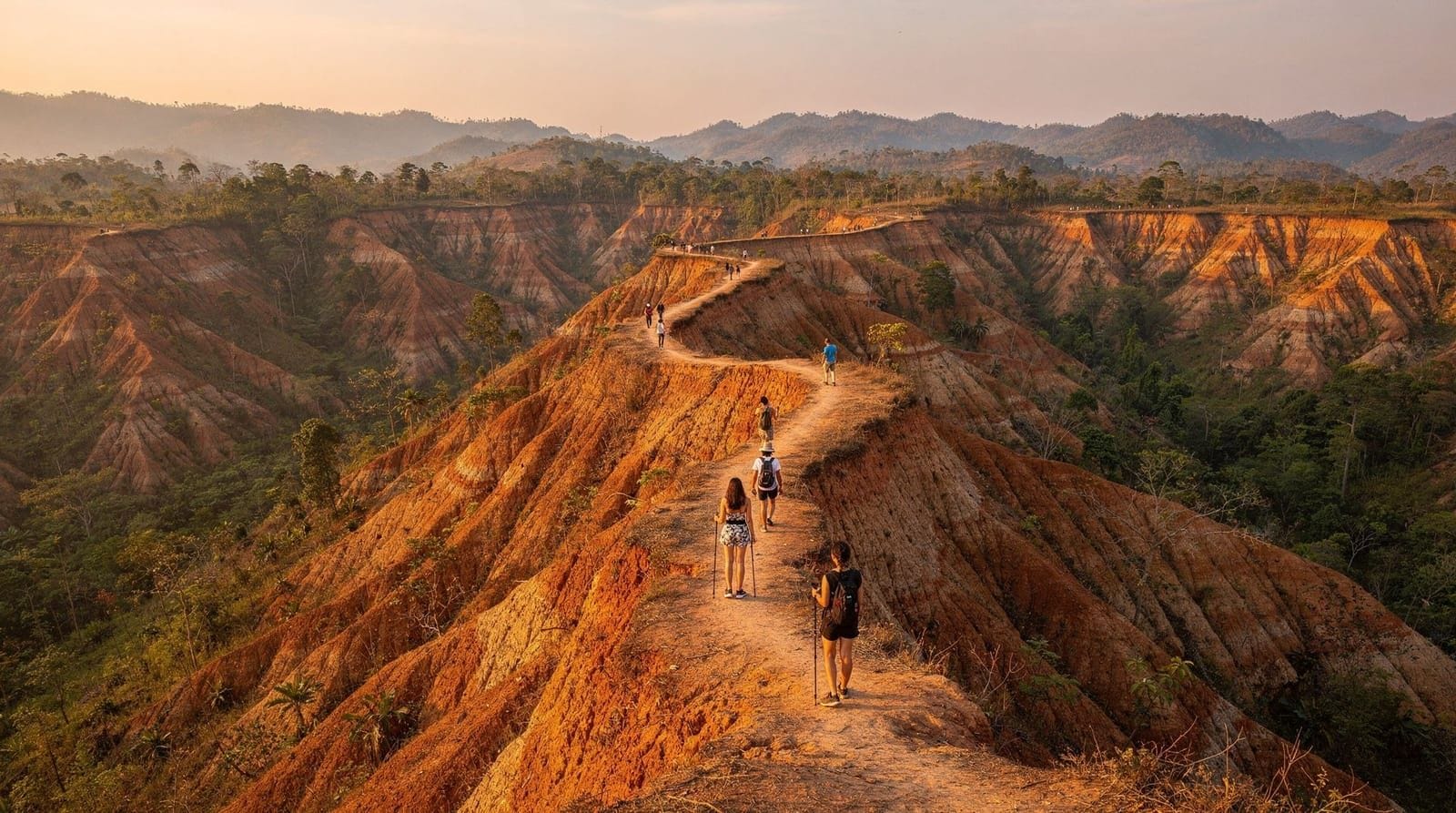
Most itineraries follow a similar shape: day one covers the drive from Chiang Mai to Pai along Route 1095 (3-3.5 hours, 762 curves), with an overnight in Pai. Day two continues from Pai to Mae Hong Son town, a further 3-4 hours along an equally winding route, stopping at viewpoints and villages en route — a private Mae Hong Son highlights car tour from Pai covers exactly this leg for travelers who’d rather not navigate themselves. Day three explores Mae Hong Son town itself and its surroundings, before day four’s return drive to Chiang Mai via Route 108, a different and equally scenic southern route through Mae Sariang.
A 2-day private Pai tour with an English or Chinese-speaking guide is a reasonable way to cover the Pai portion of the loop with logistics handled, extendable into the fuller Mae Hong Son leg for travelers ready to continue further.
What Mae Hong Son town itself offers
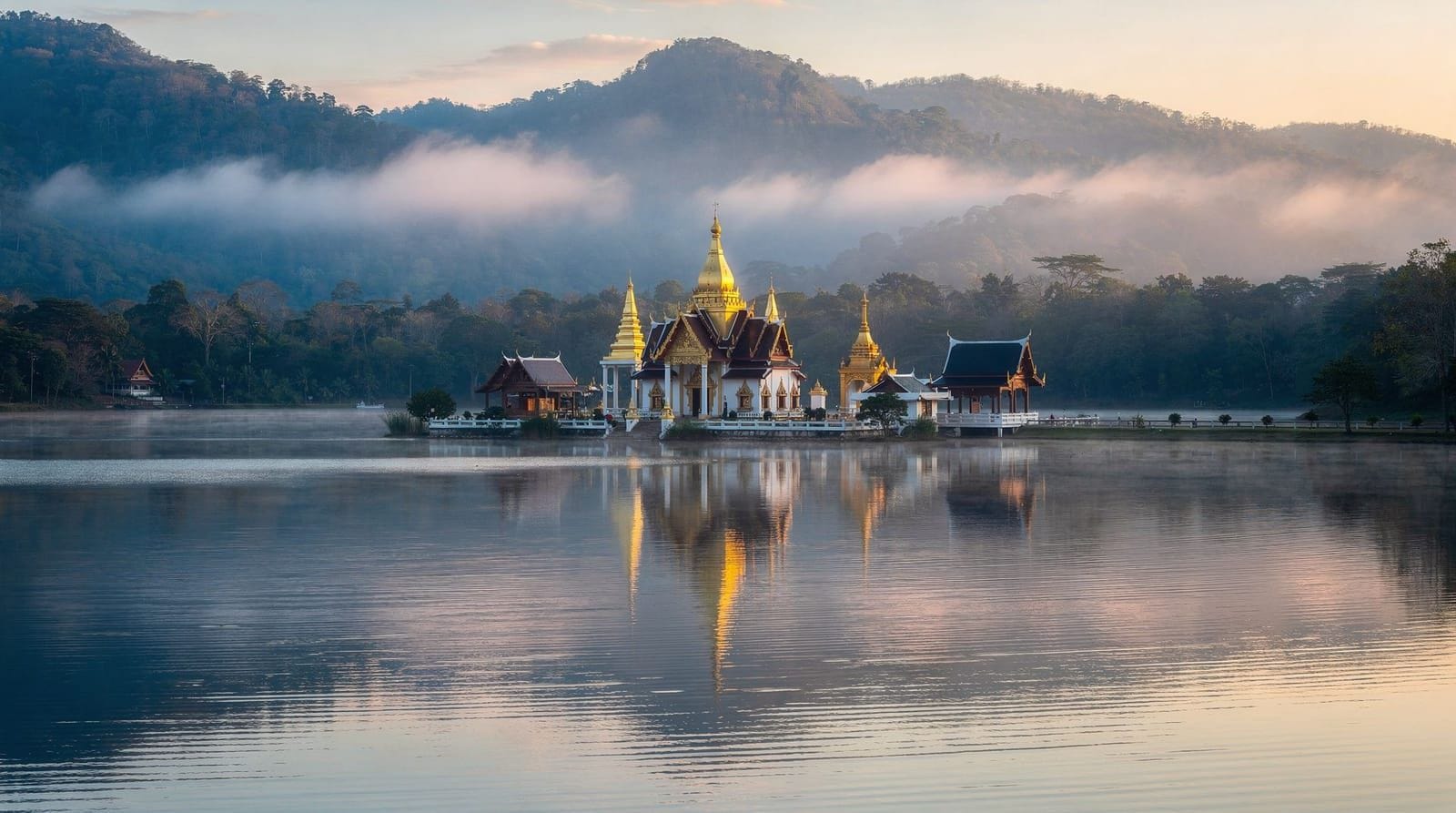
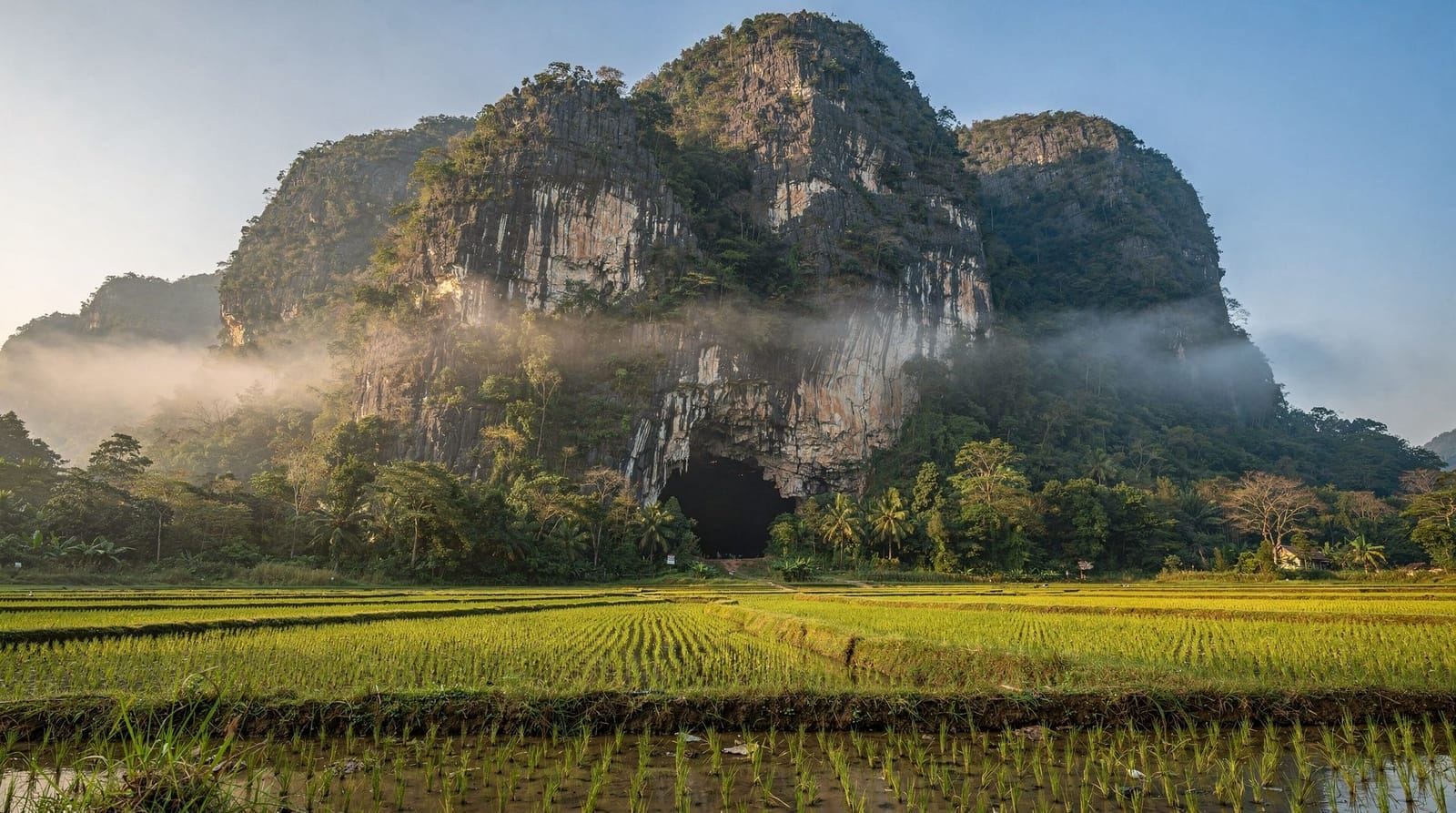
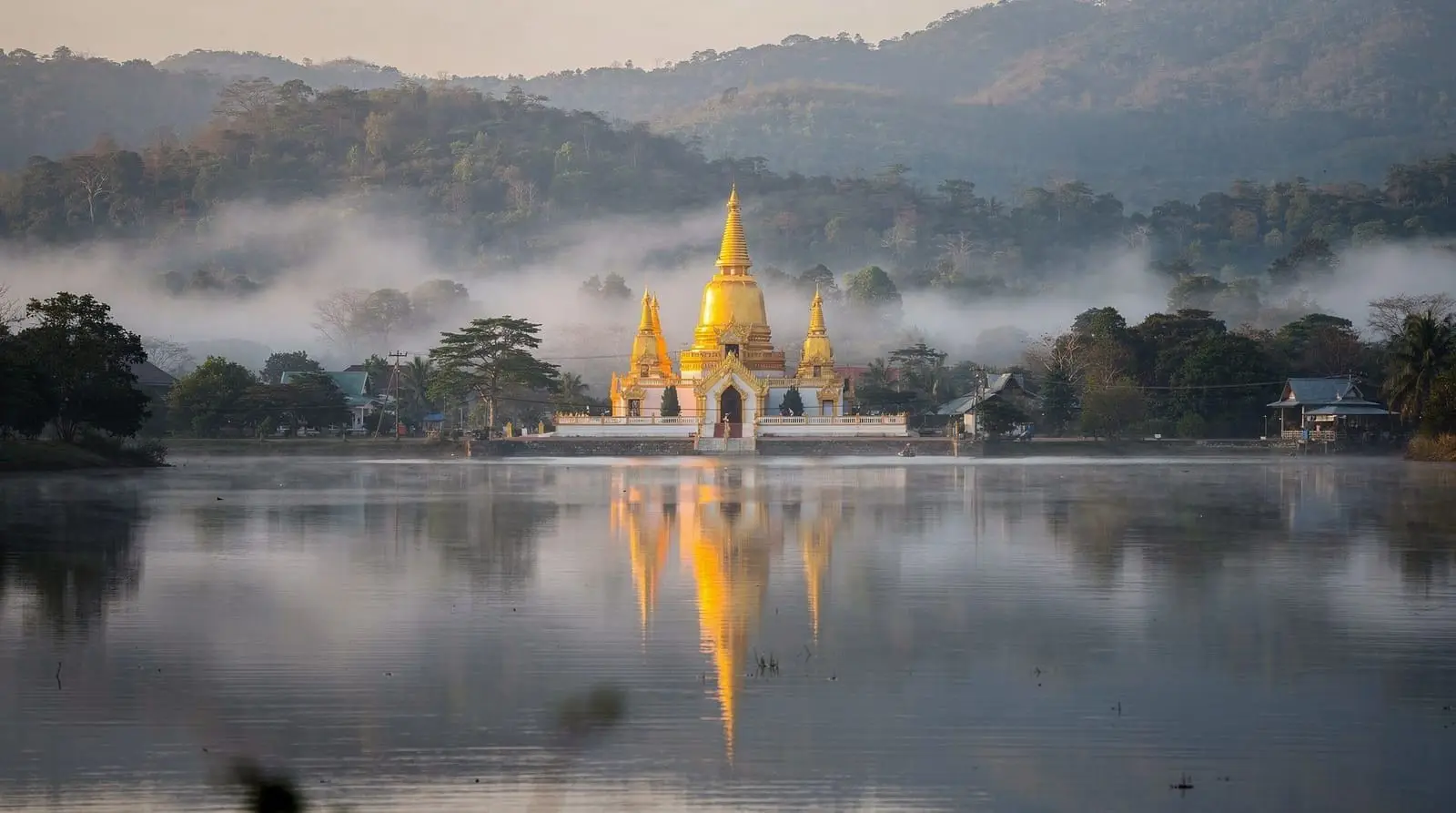
The town’s centerpiece is its small lake, ringed by Wat Chong Kham and Wat Chong Klang temples, whose reflections in the still water make for one of the loop’s most photographed scenes, particularly at dawn or dusk. Nearby, the Su Tong Pae bamboo bridge crosses rice paddies to a small monastery, while Ban Rak Thai, a Chinese Yunnanese tea-plantation village further out, and Pang Ung, a pine-forested lake sometimes called “the Switzerland of Thailand,” both reward the extra driving with scenery genuinely different from anywhere closer to Chiang Mai. The Fish Cave, a shorter stop nearer town, rounds out a typical day of sightseeing once you’ve arrived.
Long-neck Karen villages: an honest take
Several stops along the loop and around Mae Hong Son promote visits to long-neck Karen (Kayan) villages, where women wear traditional brass neck coils. It’s worth being direct about this: many of these setups, particularly the more heavily promoted roadside versions, function closer to paid photo-op displays than genuine community visits, and have drawn increasing criticism for exploiting a vulnerable refugee population (many Kayan communities in this area are stateless or have limited legal status in Thailand) for tourist income that doesn’t always reach the community fairly. A growing number of thoughtful travelers choose to skip these visits entirely on ethical grounds. If you do choose to visit, prioritize an operator that’s transparent about how the community is compensated, and treat it as a considered decision rather than a default stop on the itinerary.
Tour, self-drive, or private car
Confident, experienced motorbike riders often prefer self-driving the loop for the flexibility to stop at any viewpoint, though this demands real riding competence given the continuous curves across multiple driving days. A private car and driver removes the physical demands while still allowing a customized pace, and is the more common choice for travelers without motorbike experience or those simply preferring not to drive several consecutive days themselves. Fully organized multi-day tours exist too, bundling accommodation, meals and driving into a single package for travelers who’d rather not plan the logistics themselves.
Best time to do the loop
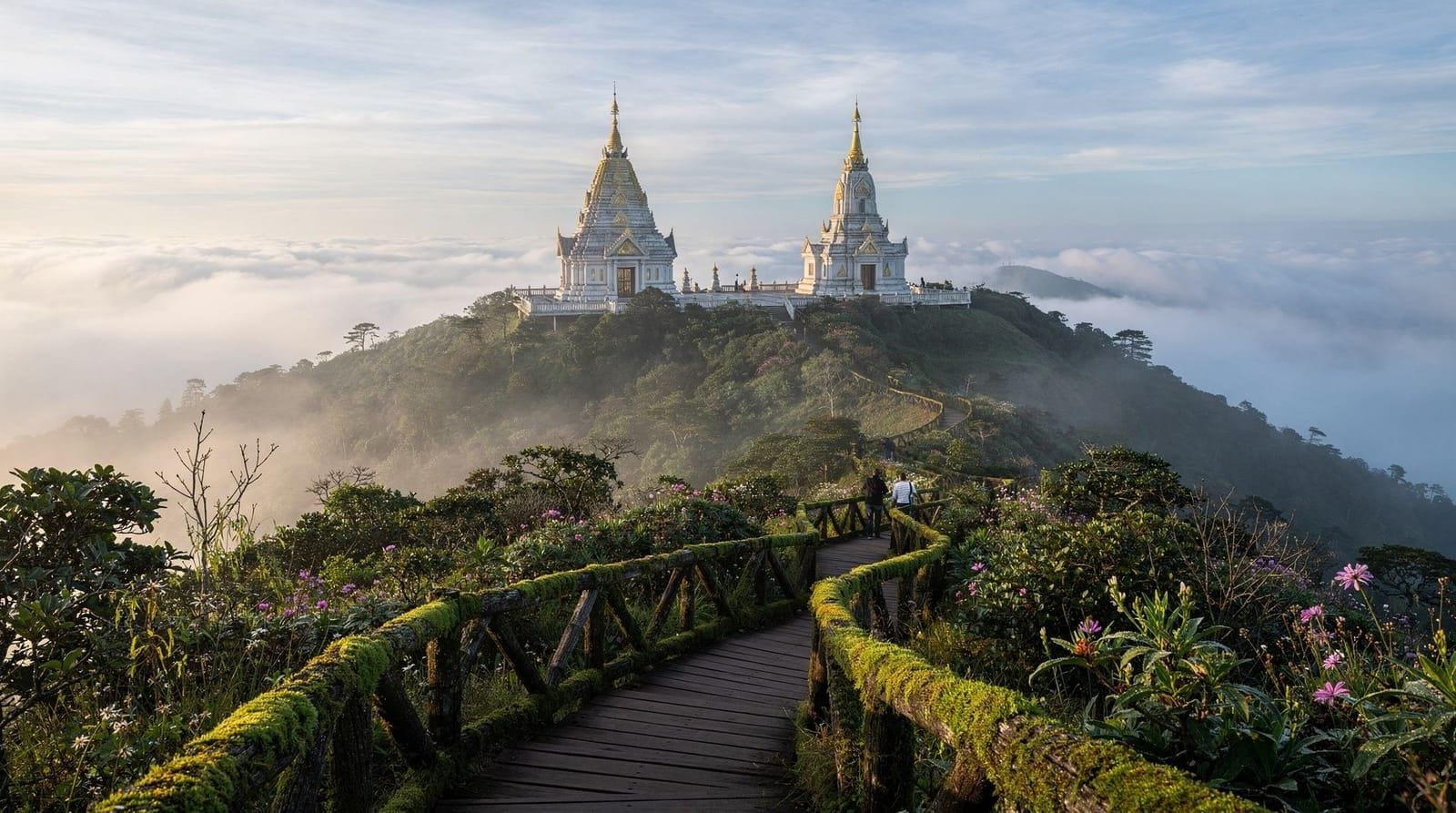
November-February is the clear favorite — cool temperatures, clearer air, and the misty mountain atmosphere that gives Mae Hong Son its “city of three mists” nickname. The June-October wet season brings lusher scenery but increased landslide risk on some mountain sections, and the February-April burning season can haze the views that make the loop worthwhile in the first place, similar to its effect on Chiang Rai and Doi Inthanon further east.
If you don’t have 3-4 days
For travelers whose schedule genuinely can’t accommodate the full loop, doing Pai alone as a 2-3 night stop, without continuing to Mae Hong Son town, is a far more realistic and satisfying alternative than attempting a rushed partial loop. Pai alone still delivers the 762-curve road experience and the town’s own attractions without the additional days the full Mae Hong Son leg requires.
A history of the region
Mae Hong Son province’s remoteness — bordered by Myanmar and separated from the rest of northern Thailand by successive mountain ranges — shaped much of its distinct character, including a significant Shan (Tai Yai) cultural influence reflected in local architecture, food and festivals, distinct from the Lanna heritage more dominant in Chiang Mai itself. The province was historically difficult to reach even by regional standards, with the modern paved road network connecting it to Chiang Mai only really developing from the mid-20th century onward, which helps explain why the area retained a slower pace and more insular feel even as other parts of northern Thailand modernized more quickly. This same remoteness is a large part of the loop’s appeal today — a genuine sense of distance and difference within a relatively short overall trip from Chiang Mai.
Food along the loop
Shan cuisine features prominently in Mae Hong Son town and the surrounding area, distinct from the central Thai and even the northern Thai (Lanna) food more familiar to visitors coming from Chiang Mai. Dishes like khao soi appear here too, but with local variations, alongside Shan-style tofu dishes, fermented soybean preparations, and a general food culture shaped by the province’s historical ties to Shan State in Myanmar as much as to central Thailand. Ban Rak Thai, the Chinese Yunnanese tea-plantation village on the loop, offers a genuinely different food experience again — Yunnanese-style dishes and tea served overlooking the plantation’s hillside terraces, one of the more distinctive dining stops on the entire route.
Packing list for the loop
Given the multi-day nature of the trip and the range of elevations and temperatures involved, packing thoughtfully matters more here than for a single day trip. Layers are essential — mornings in Mae Hong Son and along the higher sections of the route can be genuinely cold, especially November-February, while midday temperatures in the valleys warm up considerably. A basic first-aid kit and any regular medications are worth carrying given the remoteness of some stretches of the route, along with cash, since ATM access becomes less reliable the further you travel from Chiang Mai and Pai. If self-driving, carrying a paper map or offline map download is a sensible backup given patchy mobile signal in some mountain sections.
Accommodation along the loop
Both Pai and Mae Hong Son town offer a reasonable range of accommodation, from simple guesthouses to more comfortable mid-range hotels and a scattering of boutique resorts, particularly around Pai given its longer-established tourism industry. Along the route itself, smaller towns and villages like Mae Sariang (on the Route 108 return leg) also have basic guesthouse options for travelers wanting to break the loop into shorter daily driving segments rather than two long days either side of a single Mae Hong Son stay. Booking ahead is more important during the cool-season peak (November-February), when both Pai and Mae Hong Son see significantly higher domestic and international visitor numbers than during the shoulder seasons.
Accessibility considerations
Given the loop’s fundamentally road-trip nature — long stretches of winding mountain driving connecting each stop — accessibility considerations center as much on the drive itself as on any individual destination. The physical demands of hours of curving roads are real regardless of mobility status, and travelers with any driving-related discomfort concerns should strongly consider a private car and driver over self-driving, allowing rest stops as needed rather than committing to a fixed schedule. At the destinations themselves, Mae Hong Son town’s temples and the Su Tong Pae bamboo bridge involve manageable walking, while Pang Ung and some of the more remote village stops require somewhat more uneven terrain, worth flagging to a driver or tour operator in advance if mobility is a specific concern for your group.
A shorter alternative version of the loop
For travelers with only 2-3 days rather than the full 3-4 recommended for the complete loop, a compressed version — Chiang Mai to Pai (with an overnight), then a day trip from Pai to Mae Hong Son highlights and back to Pai, rather than continuing the full circuit to Mae Hong Son town and returning via Route 108 — captures much of the loop’s mountain scenery and misty atmosphere without the full multi-day commitment. This isn’t the complete Mae Hong Son Loop experience, since it skips the return leg through Mae Sariang and doesn’t include an overnight in Mae Hong Son town itself, but it’s a genuinely reasonable compromise for travelers who want a taste of the region without dedicating the better part of a week to it.
What to bring for the multi-day trip
Beyond the layers already mentioned, a few additional items are worth packing specifically for the loop’s multi-day nature: a change of clothes for each day rather than relying on laundry access, which is less reliable in smaller towns along the route; a portable phone charger given the long driving days between reliable charging opportunities; and any snacks or motion-sickness aids you rely on, since shop availability becomes less predictable the further you travel from Chiang Mai and Pai. A physical copy of your accommodation bookings and any relevant contact numbers is a sensible backup given patchy mobile signal in some mountain sections of the route.
A final word on pacing
The single most common regret among travelers who’ve completed the Mae Hong Son Loop isn’t choosing the wrong route or missing a specific stop — it’s underestimating how tiring consecutive days of winding mountain driving actually are, even when broken up by overnight stops. Building in at least one slower day within the loop, whether that’s an extra night in Pai at the start, a full rest day in Mae Hong Son town rather than treating it as a single overnight stopover, or simply not overpacking each day’s itinerary with too many viewpoint stops, makes a meaningful difference to how the trip is remembered afterward.
Frequently asked questions about the Mae Hong Son Loop
How long does the full Mae Hong Son Loop take?
Most travelers allow 3-4 days for the complete loop from Chiang Mai, though it’s possible to do a faster version in 3 days if you’re comfortable with longer driving days.
Can I do the Mae Hong Son Loop as a day trip?
No. The full loop covers roughly 600km of winding mountain roads; even a direct one-way trip to Mae Hong Son town alone takes 6-7 hours from Chiang Mai. This is a multi-day trip by any realistic measure.
What’s the difference between visiting Pai and doing the full loop?
Pai alone is a single stop about 3-3.5 hours from Chiang Mai. The full Mae Hong Son Loop continues from Pai through Mae Hong Son town and back to Chiang Mai via a different route, adding several more days and hundreds of additional kilometers.
Should I rent a car, motorbike, or join a tour for the loop?
Confident, experienced motorbike riders often prefer self-driving for the flexibility to stop wherever they like, while a private car and driver or a multi-day organized tour removes the physical demands of the winding roads for those less comfortable riding long mountain routes themselves.
What are long-neck Karen villages and should I visit one?
These are villages where Kayan (long-neck) women wear brass neck rings, often promoted as a cultural attraction. Many of these setups function more as paid photo-op displays than genuine community visits, and a growing number of travelers choose to skip them on ethical grounds; if you do visit, choose an operator that pays the community directly rather than treating it as a roadside stop.
What’s the best time of year for the Mae Hong Son Loop?
November-February gives the clearest, coolest conditions and the “city of three mists” atmosphere the region is known for. Roads carry more landslide risk in the June-October wet season.
What are the highlights of Mae Hong Son town itself?
Wat Chong Kham and Wat Chong Klang temples reflecting on the town lake, the Su Tong Pae bamboo bridge, Ban Rak Thai’s Chinese tea-plantation village, Pang Ung’s pine-forested lake, and the Fish Cave.
Is the loop safe to drive?
Yes for confident, attentive drivers, though the continuous curves demand real focus and aren’t recommended for inexperienced motorbike riders. Road conditions can also be affected during the wet season, so checking current conditions before departing is worthwhile.
Top experiences
Bookable activities with verified prices and instant confirmation on GetYourGuide.