Pai motorbike loop diary: 762 curves, one bad decision, no regrets
The number gets thrown around so often — 762 curves between Chiang Mai and Pai — that it stops meaning anything until you’re on curve 140-something, wrist aching, and a truck loaded with durian is coming the other way on a corner with no shoulder. That’s when the number becomes real. We rode it on a rented Honda Click, two of us, one bike, over three days in late January, and this is the honest version, not the highlight reel.
We picked up the bike from a shop near Chang Phueak Gate the evening before, mostly because our guide to renting a car and scooter in Chiang Mai had already talked us out of the cheapest option — the shop with no helmets on display and a deposit that involved handing over a passport. The place we used wanted an International Driving Permit, took photos of the bike’s existing scratches with us standing next to it, and charged 200 THB (about $5.50) a day for a 125cc automatic with two full-face helmets thrown in. That paperwork felt tedious at 6pm the night before a 3am alarm, but it’s the difference between a refundable deposit and a very bad afternoon at a rental counter when you get back.
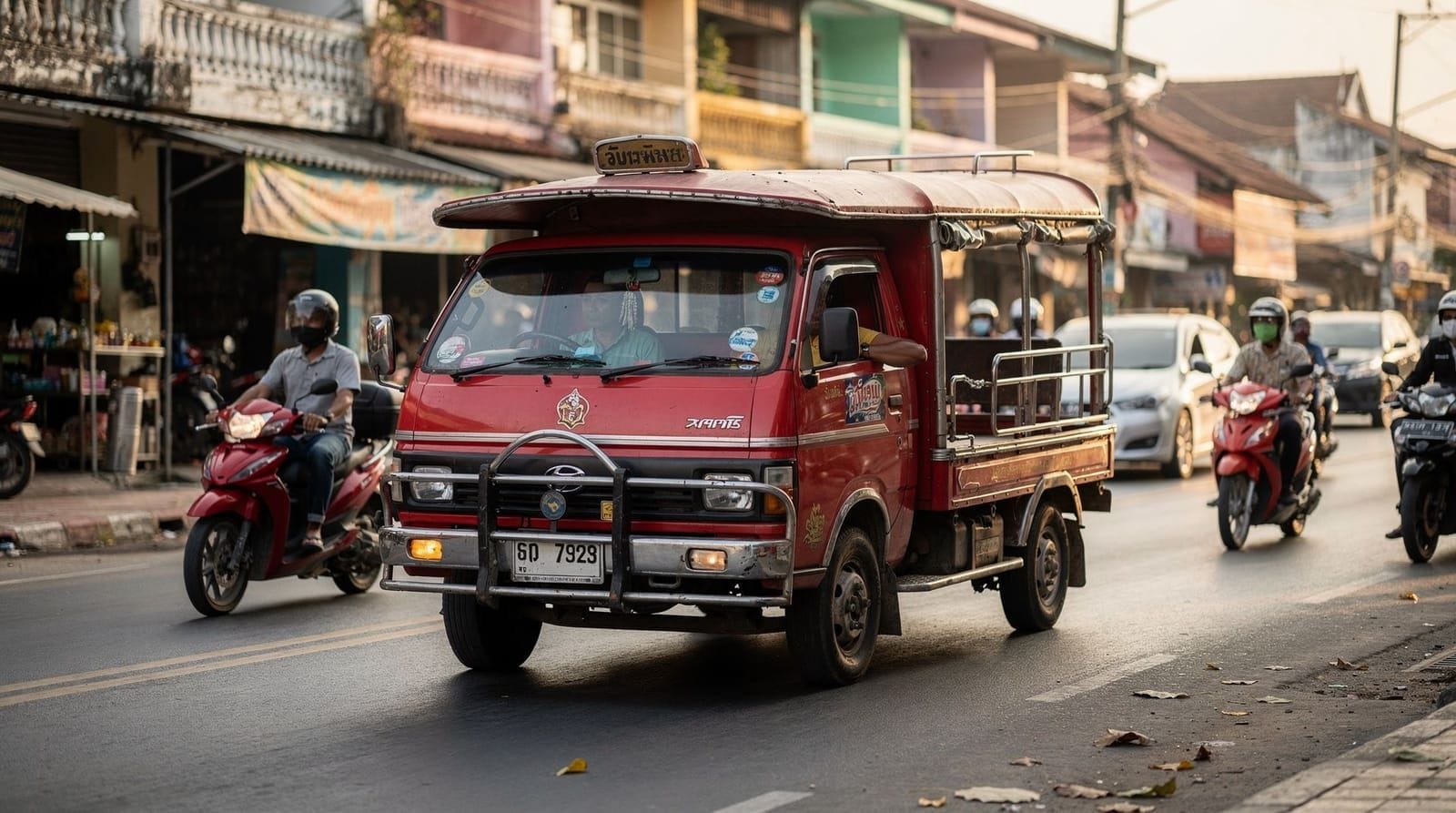
Leaving before the songthaews wake up
We left Chiang Mai at 6:15am, which in hindsight was the single best decision of the trip. The first 40km toward Mae Rim are flat, fast, and full of trucks; by the time the road starts climbing past Mae Malai, the curves begin in earnest and the traffic has thinned to almost nothing. If you’ve read anything about the transport options from Chiang Mai to Pai, you’ll know the minivan does this same stretch in under three hours flat, sealed windows, motion-sickness bags in the seat pocket. We took five and a half, and every extra hour was the point.
The road number is 1095, and it earns its reputation in the first hour past the checkpoint at Mae Malai. The curves aren’t gentle sweeping bends — they’re tight, blind, and stacked back-to-back for kilometers, climbing through pine forest that smells like nothing else in northern Thailand. Somewhere around kilometer marker 40 we stopped counting and just rode. That’s the honest advice nobody puts in the marketing copy: don’t try to hit every curve fast. The joy of this road is in the rhythm, not the speed.
The fuel stop that almost wasn’t
Small confession: we did not check the fuel gauge carefully enough leaving Mae Malai, and by the little village before Mok Fa Waterfall the needle was flirting with empty with no station in sight for what the map claimed was another 15km of climbing. We ended up buying two liters from a roadside stand — a plastic bottle, a funnel, and a woman who clearly deals with this exact panic from foreign riders on a weekly basis — for 60 THB. It’s a scene that repeats along the whole route: informal fuel stops in glass Sang Som bottles, priced a little above pump rate, and worth every baht when you’re the one running low at kilometer 55.
Lesson learned and passed on freely: fill up completely in Mae Malai even if the tank looks half full, because the stretch after that has real gaps.
Pai canyon at the wrong time and the right time
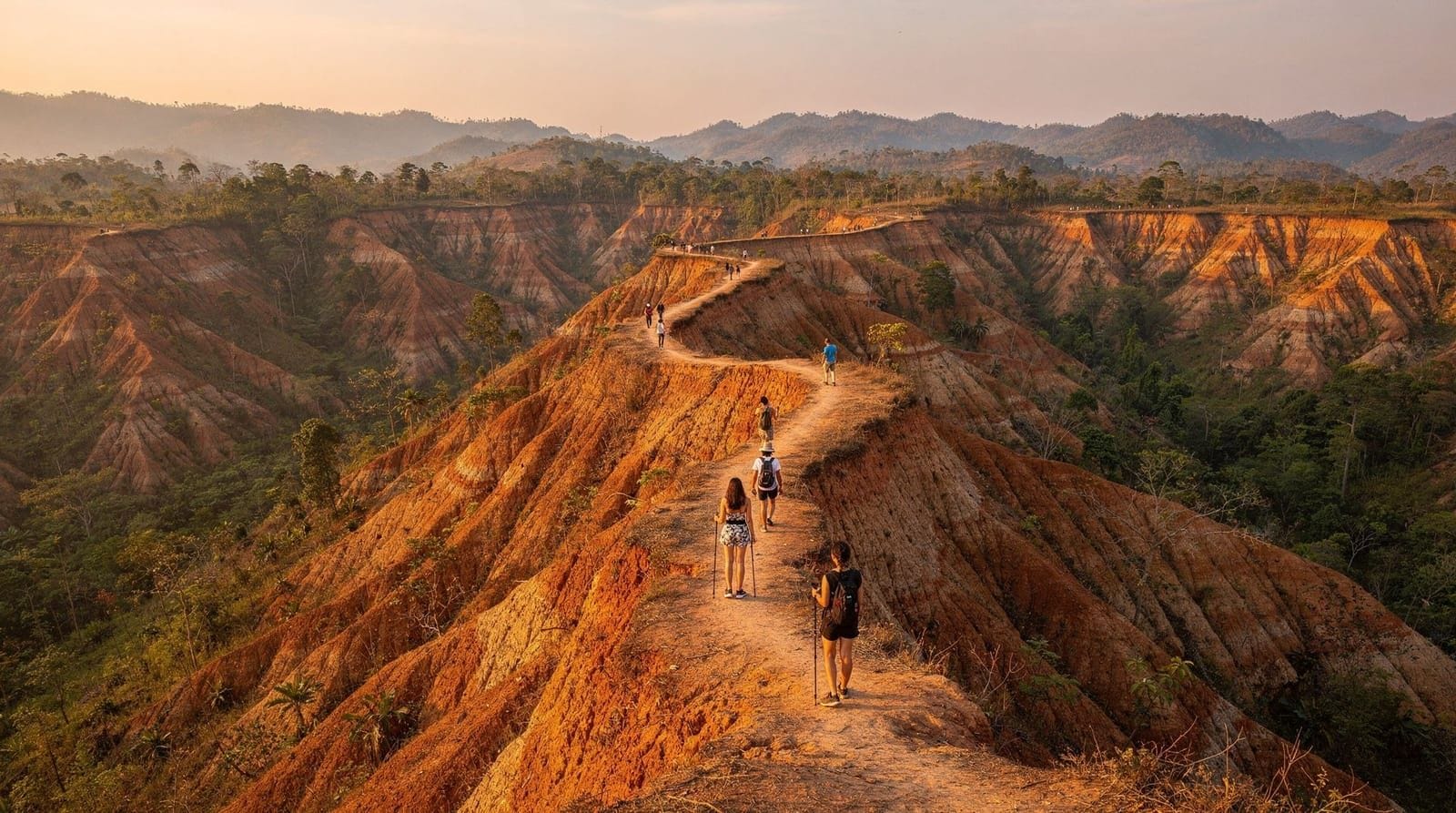
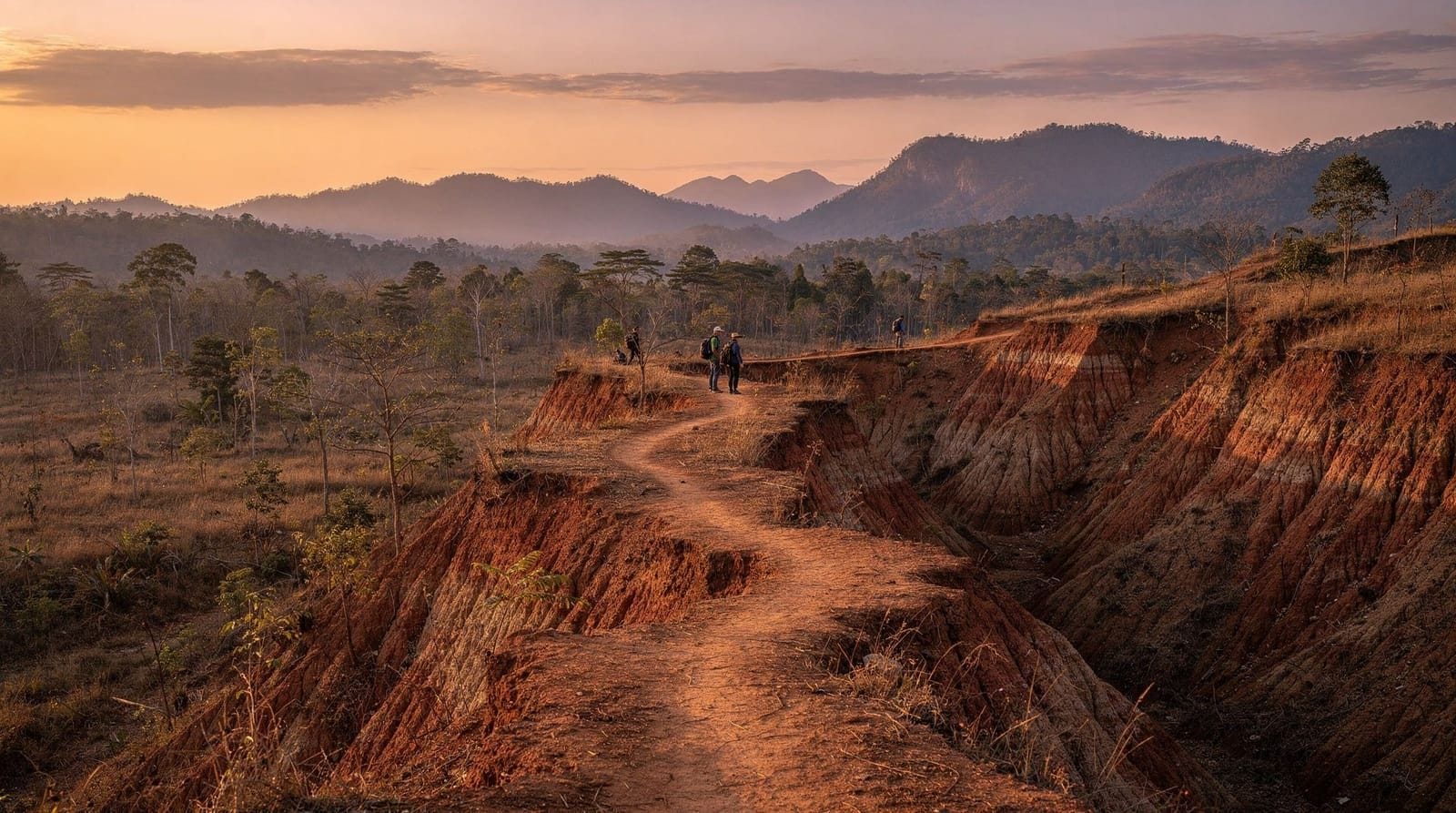
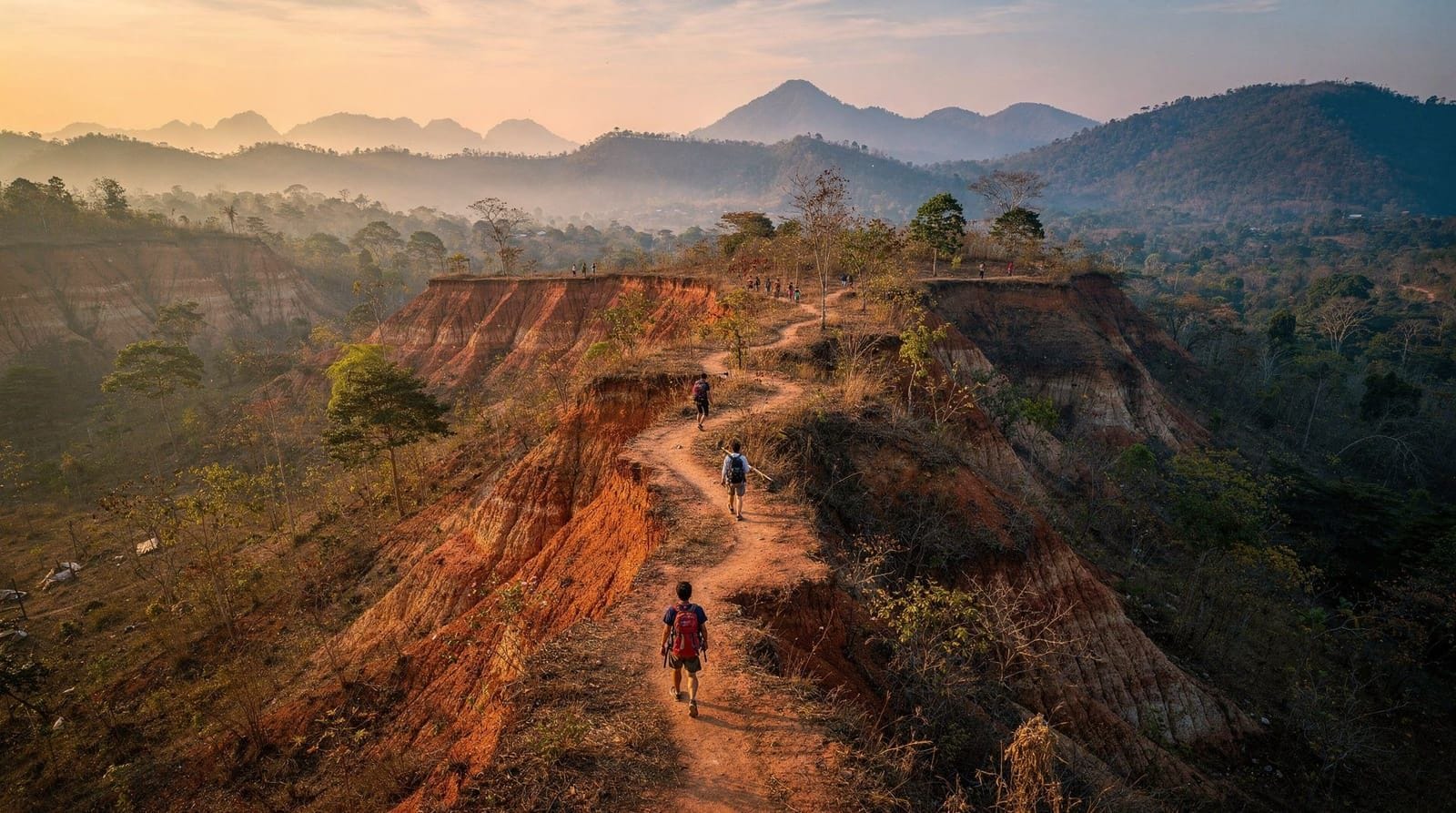
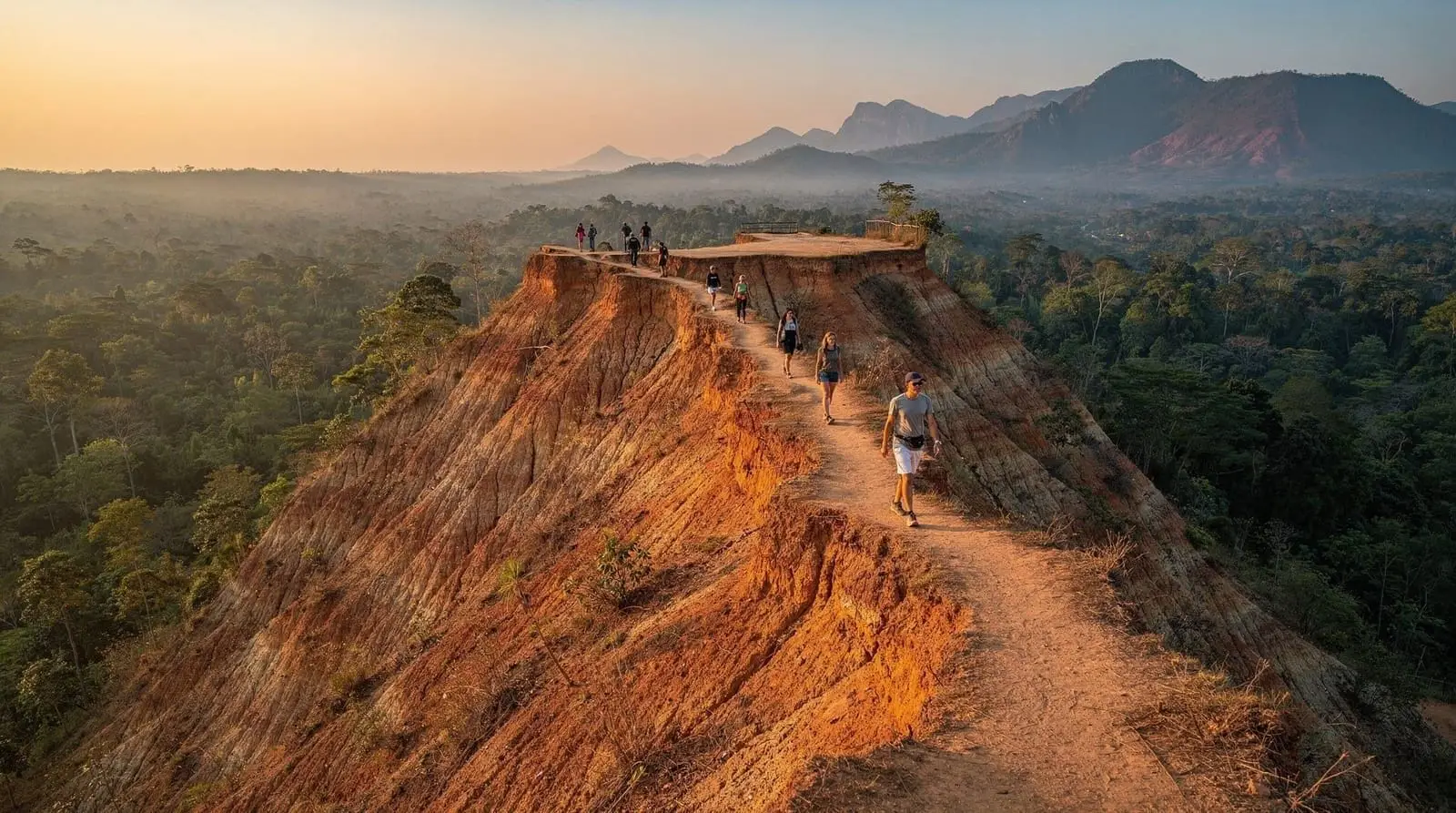
We arrived in Pai a little after noon, checked into a guesthouse on the river side of town, and made the classic first-timer mistake of going straight to Pai Canyon in the flat, hazy midday light. It was hot, crowded with day-trippers who’d taken the tour route in from Chiang Mai, and the ridge walk along the canyon’s narrow spine felt more like a queue than an adventure. We went back the next evening for sunset instead, and it was a completely different place — golden light on the eroded red-earth ridges, maybe a dozen people total, silence except for wind. If you only do the canyon once, do it at 5pm, not noon.
The town itself splits opinion for good reason. Pai’s walking street at night is genuinely fun for one visit — live music spilling out of bamboo bars, a food market with real northern Thai cooking alongside the banana pancake stalls — and genuinely repetitive by the third night. Two nights felt right for us. Three would have been one too many.
Hot springs and the slow second day
Our second full day in Pai wasn’t about the canyon at all — it was about doing almost nothing, which after a five-and-a-half-hour ride the day before felt like the correct call. We rode a short 8km out to one of the hot spring pools outside town in the late morning, expecting something touristy and overpriced, and instead found a modest, locally run pool with a 100 THB entry fee and maybe fifteen other visitors, mostly Thai families rather than the backpacker crowd we’d assumed would dominate. The water sat somewhere around 40°C, hot enough to feel medicinal rather than merely warm, and we spent close to two hours doing nothing but soaking and watching steam rise off the surface in the cooler midday air at altitude.
That slow pace mattered more than it sounds. Riding switchback mountain roads for hours is a specific kind of fatigue — not exhausting in an obvious way, but a low-grade tension in the shoulders and forearms that builds without you noticing until you finally stop gripping the handlebars. Anyone planning this same route should budget at least one full day in Pai with nothing scheduled, rather than trying to pack canyon, waterfalls, hot springs, and walking street into a single 24-hour stopover. We’d originally planned two nights with a fuller itinerary and ended up cutting half our plans just to sit still, and neither of us regretted it.
A detour to Chiang Dao on the way back
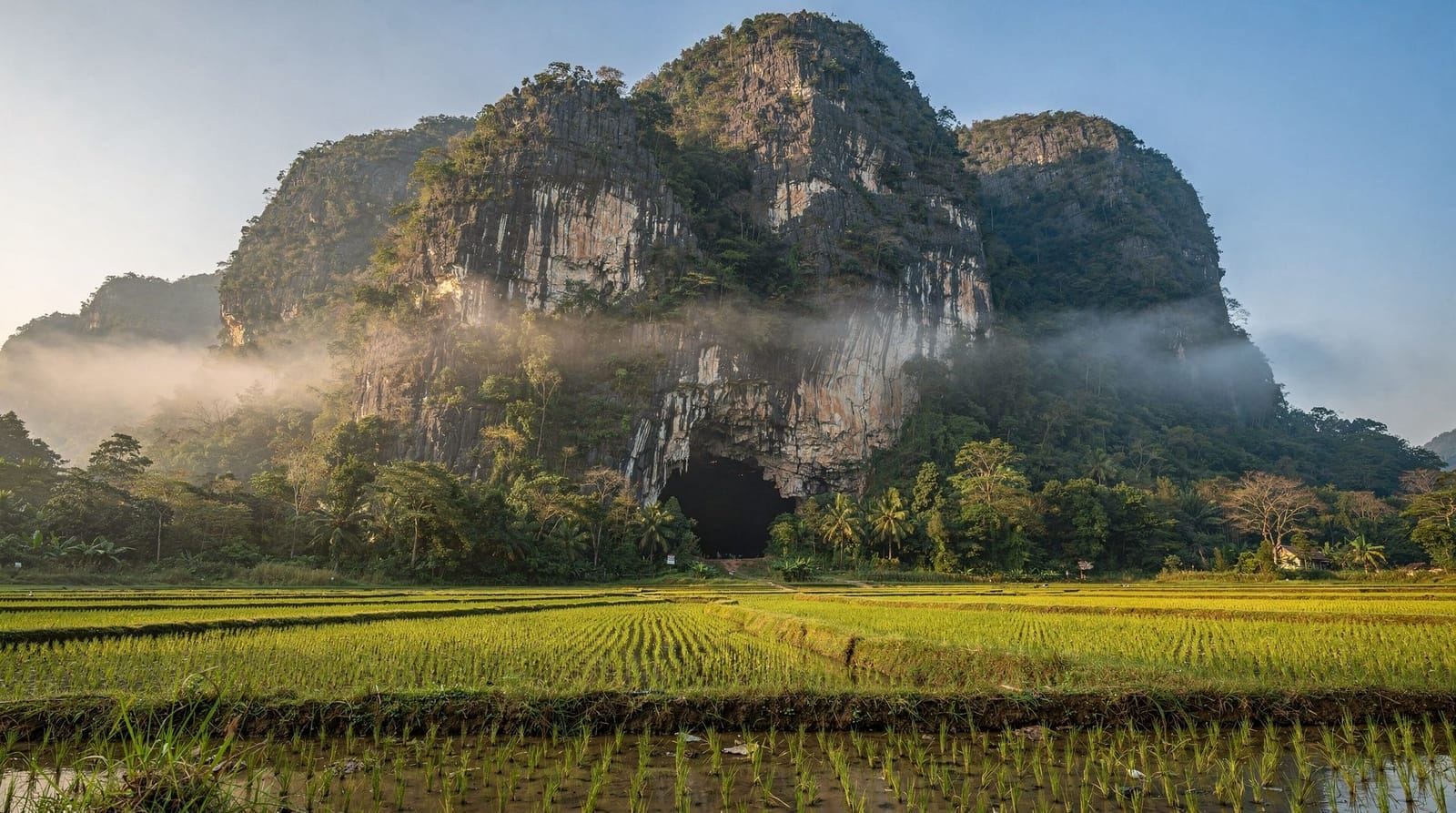
Rather than riding the full 1095 straight back to Chiang Mai on our final day, we took a slight detour through Chiang Dao, breaking the return journey into a shorter, less punishing ride and adding a stop at the cave system there that neither of us had originally planned for. It turned out to be one of the better spur-of-the-moment decisions of the whole trip — the cave’s cooler underground chambers were a welcome break from the midday heat, and the mountain looming over the town gave us one more genuinely dramatic backdrop before returning to the flatter roads leading into the city. If you’re doing this route and have a flexible extra half-day, building in a Chiang Dao stop rather than treating the return leg as a single uninterrupted push is worth the detour.
What we’d pack differently next time
A few practical lessons worth passing on plainly, since none of the general packing guides we’d read beforehand covered them specifically. A buff or light scarf that can be pulled up over the nose and mouth made a real difference against dust and bugs at speed, more than either of us expected before the trip. A dry bag or at minimum a solid plastic liner for anything in the bike’s under-seat storage is worth the few extra dollars — an unexpected afternoon shower on day two soaked through a regular tote bag and left a paperback book unreadable. And despite the daytime heat, the temperature drop after dark at Pai’s elevation is real enough that a proper light jacket, not just a t-shirt, made the difference between a comfortable evening at the walking street and an uncomfortably chilly one.
We’d also, in hindsight, have spent less time worrying about hitting every single marked viewpoint along the route and more time simply stopping wherever the road happened to open up to a decent view — some of our favorite unplanned stops were pull-offs with no name and no signage, just a wide shoulder and a valley view that happened to catch the light well as we rode past.
The road we didn’t take
We’d toyed with continuing on to Mae Hong Son to complete the full loop, and if you’re weighing that decision, our Mae Hong Son loop guide lays out honestly what that extra leg costs you in curves (over 1,800 of them by some counts) and time. We didn’t have the days for it this trip, and turning back toward Chiang Mai after Pai instead of pushing on wasn’t a failure — it was the right call for a long weekend rather than a week. If you’re deciding between a Pai day trip and staying overnight, that’s a separate question worth reading through in our Pai day trip vs. overnight comparison; for us, self-driving made the overnight option the only sensible one, since doing those curves twice in one day on no sleep sounded like a genuinely bad idea.
For travelers who’d rather skip the fuel-bottle negotiations and ride pillion instead of white-knuckling the handlebars themselves, a private car option exists and it’s not a compromise — it’s just a different trip:
Pai highlights day tour by private car from Chiang MaiThe ride back
Riding 1095 south, toward Chiang Mai, is a genuinely different experience from riding it north — the curves that felt intimidating going up feel almost familiar coming down, mostly because your body has learned the rhythm of leaning into blind corners without seeing the exit first. We left Pai at 7am to beat both the heat and the tour vans, and by the time we reached the Mae Malai checkpoint again, we’d stopped flinching at oncoming trucks. That adjustment — from tense to almost relaxed — is, more than the canyon or the waterfalls or the walking street, the actual souvenir of this ride.
Would we do it again on a rented bike rather than by minivan or private car? Yes, without hesitation, but with two caveats we didn’t fully appreciate beforehand. First: this is not a beginner’s road. If you’ve never ridden a motorbike on mountain switchbacks, three days isn’t enough time to learn on a route with genuine cliff drops and zero guardrails in places. Second: the rainy season closes this option down considerably — landslip risk and fog on the passes make it a fair-weather ride, which is one more reason we picked late January. If you’re checking whether your travel dates line up, our rainy season guide for Chiang Mai and the best time to visit overview both cover why November through February is when this road makes the most sense.
We got back to Chiang Mai at 3pm, returned the bike with the same scratches we’d left with plus one we had to admit to (a curb, not a curve, embarrassingly), got our deposit back in full, and spent the evening not moving from a single spot at a riverside restaurant. Three days, roughly 480 THB in rental fees per day including fuel, and a road that lives up to its number — just not in the way the marketing suggests. It’s not about conquering 762 curves. It’s about learning to stop counting them.