Renting a car or scooter in Chiang Mai: licensing, insurance, reality
What do I need to legally rent a scooter in Chiang Mai?
A valid motorcycle license from your home country plus an International Driving Permit (IDP) with a motorcycle category — a car license alone does not legally cover riding a scooter in Thailand. Bring both documents, a helmet is mandatory by law, and confirm the rental shop's insurance actually covers you rather than accepting a verbal assurance. Typical rental cost runs 200-300 baht per day for a standard automatic scooter.
Why this deserves an honest, unglamorous guide
Renting a scooter in Chiang Mai is genuinely one of the best ways to reach places a songthaew or Grab won’t easily cover — the foothill roads up to Doi Suthep, the loop through Mae Rim’s gardens and elephant sanctuaries, the winding routes around San Kamphaeng. It’s also an area where a lot of well-meaning advice online glosses over the real risks: shops that don’t ask for a license, insurance that turns out to have gaps, and a passport-holding deposit practice that’s been a known problem for years. This guide covers what you actually need, in plain terms, without either scaremongering or pretending the risks aren’t real.
What license you actually need
A regular car driving license from your home country does not legally cover riding a motorcycle or scooter in Thailand. What you need is a valid motorcycle license from home, paired with an International Driving Permit (IDP) that includes a motorcycle category — arranged before you travel, since IDPs are typically issued by your home country’s motoring authority and can’t be obtained once you’ve landed. If you don’t hold a motorcycle license at home, you legally cannot ride one here either, regardless of what a rental shop is willing to hand over without checking.
Cars require the equivalent car-category IDP alongside your home license. Rental shops for cars generally check documents more carefully than scooter shops do, given the higher value and liability involved.
Why the license actually matters, beyond the legal technicality
It’s tempting to treat this as a formality that rental shops don’t enforce anyway, but the practical consequences are real. Riding without a valid motorcycle license means a fine if stopped at a checkpoint, and more seriously, it can void both the rental shop’s insurance and your own travel insurance policy if you’re involved in an accident — precisely the moment you’d most need that coverage to actually apply. This is the single most common way visitors end up facing large, unexpected medical or repair bills after a Chiang Mai scooter accident, and it’s entirely avoidable with proper documentation arranged before the trip.
Insurance: what to actually check
Rental shop insurance varies significantly in what it covers — some policies carry a high excess (meaning you pay a substantial amount out of pocket before the policy kicks in), others exclude single-vehicle accidents or damage sustained while riding without a valid license. Before signing anything, ask directly: what’s the excess, what’s excluded, and does the coverage require a valid motorcycle license (it usually does implicitly, since riding without one is illegal). Pairing this with your own travel insurance policy’s vehicle coverage — checking its terms for the same license requirement — gives a more complete safety net than relying on the rental shop’s policy alone.
The passport-deposit problem
A number of rental shops, particularly smaller, less formal operations, still ask to hold a passport as a security deposit rather than cash or a card. This is worth pushing back on: holding your passport gives a shop real leverage to claim inflated “damage” charges when you return the bike, since walking away without your passport isn’t a realistic option. A cash deposit (commonly a few thousand baht) or a credit card hold are the safer alternatives, and increasingly, more established shops offer this without much resistance if you simply ask. If a shop insists on the passport with no alternative, treating that as a signal to look elsewhere is a reasonable, low-cost precaution.
Documenting the bike before you ride off
Before leaving the rental shop’s lot, walk around the scooter or car and photograph every panel, noting existing scratches, dents, or worn tires. This takes two minutes and is your clearest protection against a shop later claiming pre-existing damage happened during your rental. Test the brakes, horn, indicators and headlight in the lot itself, and confirm the fuel gauge reading matches whatever you’re expected to return it at (full-to-full is standard practice).
Police checkpoints: what to expect
Checkpoints appear periodically around Chiang Mai, more frequently around major holidays like Songkran when authorities step up enforcement. Officers typically check for a valid license and helmet use, and sometimes vehicle registration paperwork. Riders without a valid motorcycle license face a fine on the spot; more importantly, being cited at a checkpoint for an invalid license creates a paper trail that can complicate an insurance claim if you’re later involved in an accident, even one that happens on a completely separate day.
Helmets and basic road safety
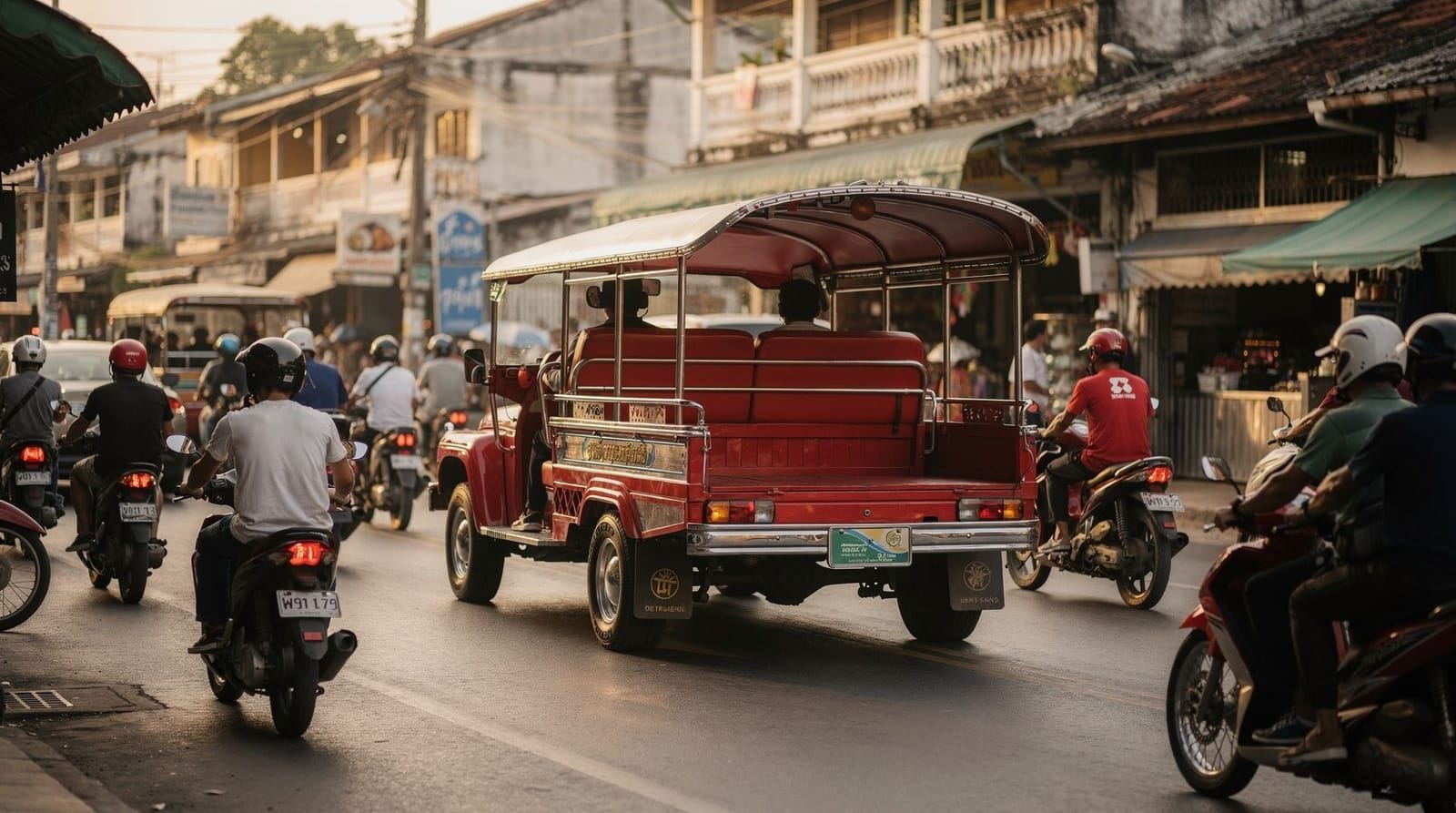
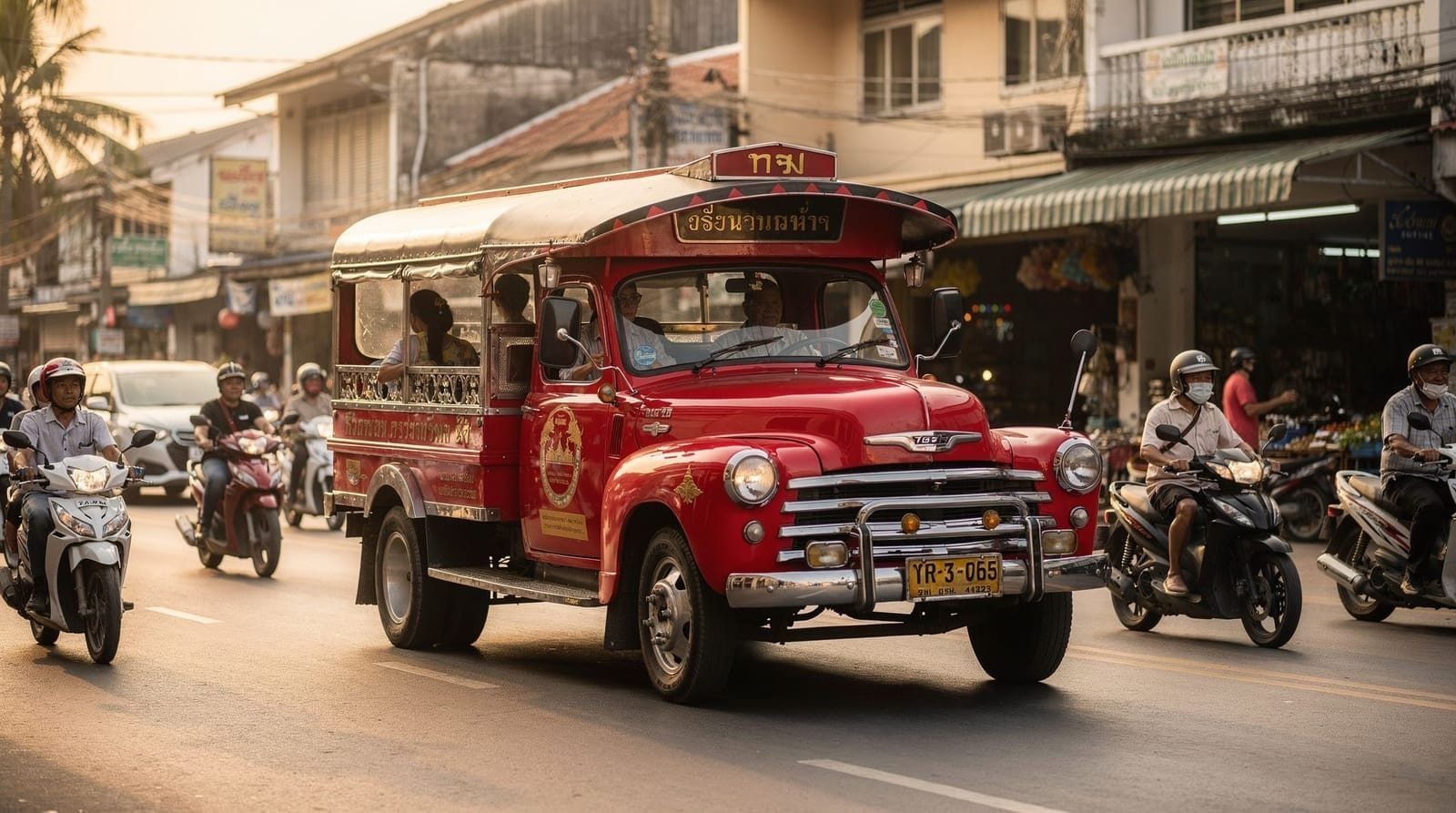
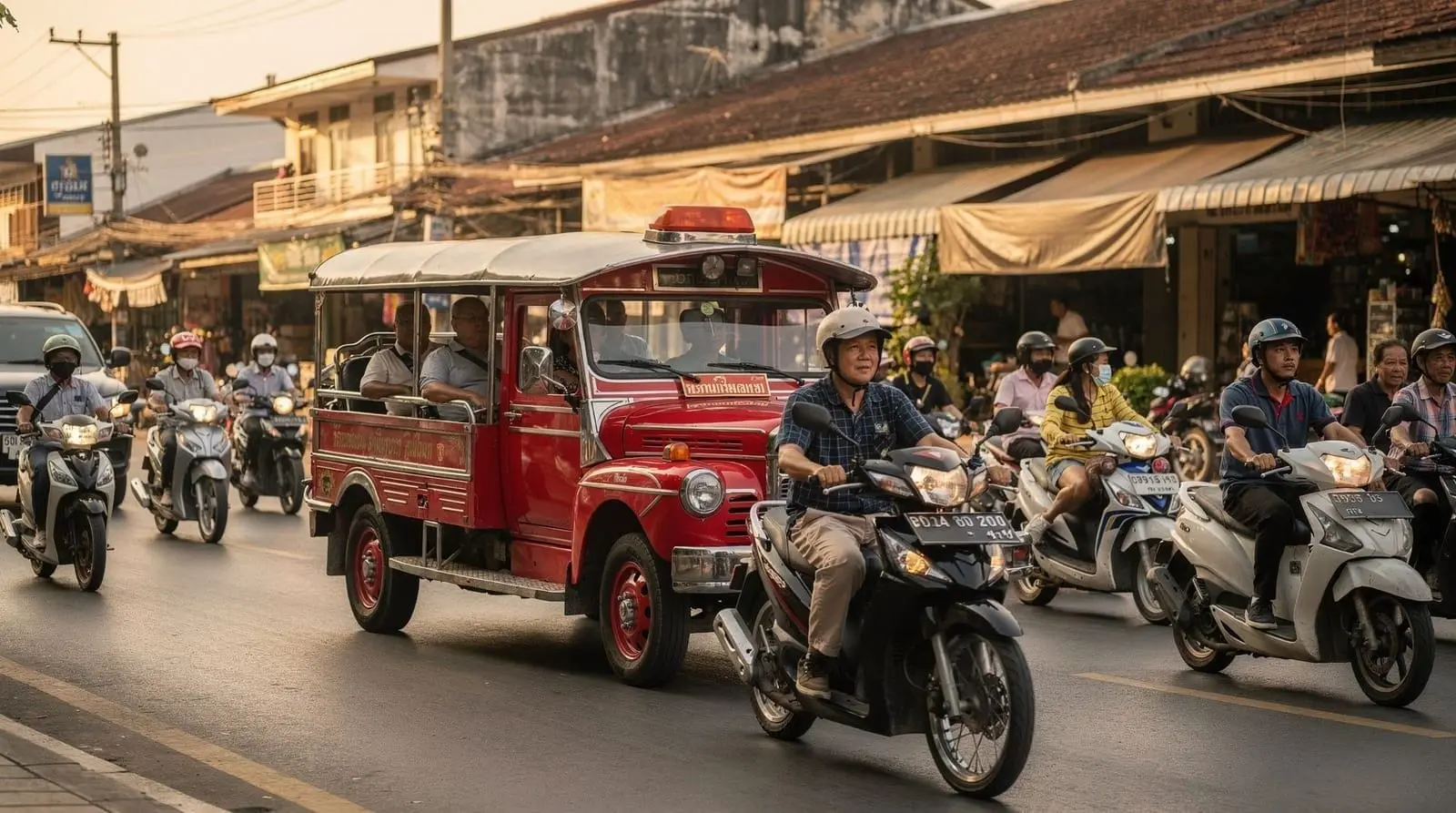
A helmet is legally mandatory for both rider and any passenger, and enforcement at checkpoints is real, not theoretical. Beyond the legal requirement, Chiang Mai’s traffic includes a genuine mix of scooters, cars, songthaews and pedestrians navigating the same narrow Old City roads, and riders unfamiliar with Thai traffic patterns — including the common practice of scooters filtering between lanes — benefit from a cautious, defensive approach in the first day or two before the local rhythm becomes familiar.
When renting actually pays off
A scooter earns its cost most clearly on day trips outside the city core — up to Doi Suthep, through the Mae Rim valley’s gardens and sanctuaries, or around the San Kamphaeng crafts road — where songthaews and Grab either don’t reach or become considerably more expensive over the distance and multiple stops involved. For purely in-town errands inside the Old City, walking, songthaews or Grab are usually more practical than dealing with parking and one-way streets on a rented bike; the fuller comparison of all these options is in the getting around Chiang Mai guide and the Grab app guide.
If you’re considering riding to Pai
Some visitors extend the idea of self-driving from in-town errands to the full Chiang Mai-to-Pai mountain route — a meaningfully bigger undertaking given the road’s 762 curves and multi-hour duration. This is only appropriate for genuinely experienced riders, and the specific considerations for that route are covered separately in the Chiang Mai to Pai transport guide.
A realistic rental checklist
Before handing over payment: confirm the license requirement and have your IDP ready, ask specifically about the deposit method and decline a passport hold if an alternative is offered, photograph the vehicle from multiple angles, test the brakes and lights in the lot, and clarify the insurance excess and exclusions in plain language rather than accepting a vague verbal reassurance. None of this takes more than ten extra minutes and meaningfully reduces the odds of a costly dispute at return time.
Fuel, parking and everyday practicalities
Fuel is sold by the litre at standard petrol stations throughout the city, and a full tank on a small scooter typically costs well under 100 baht, easily covering a full day of in-town riding or a single day-trip loop. Smaller, informal roadside fuel stops selling petrol from repurposed glass bottles also exist, usually at a slight premium, useful in a pinch but not a substitute for a proper station fill-up before a longer ride. Parking in the Old City is generally straightforward at guesthouses, temples and most restaurants, though the busiest stretches of road near the Night Bazaar and Sunday Walking Street can get crowded during peak hours, and it’s worth allowing a few extra minutes to find a spot rather than assuming one will be immediately available.
Chain shops vs. small independent operators
Rental options range from small, family-run shops with a handful of scooters parked outside a shopfront to larger, more formalised rental chains with standardised contracts and clearer insurance documentation. Neither category is automatically better — plenty of small shops are perfectly reputable and have rented to visitors for years without issue — but larger operators tend to be more consistent about offering non-passport deposit options and providing clearer written insurance terms, which matters if you’d rather not rely on a verbal assurance. Reading a few recent reviews for a specific shop before committing is a reasonable extra step, particularly for a longer or higher-value car rental.
What actually happens if you’re in an accident
If an accident does happen, the practical sequence matters: contact the rental shop as soon as it’s safe to do so, and if there’s any significant damage, injury, or dispute about fault, involve the local police, since an official report is often required for insurance claims regardless of which side was responsible. Photographs of the scene, the vehicles involved, and any visible damage are worth taking immediately if you’re able to, mirroring the same documentation habit recommended at pickup. Being upfront with your travel insurer about exactly what happened, including your license and IDP status, is the surest way to actually use whatever coverage you’re entitled to rather than discovering a gap in the claim process itself.
Returning the bike without a dispute
At return time, the same documentation habit from pickup pays off — comparing your handover photos against the bike’s current condition gives you a clear, evidence-based response if a shop raises a damage claim you don’t recognise. Returning with the same fuel level noted at pickup (typically full-to-full) avoids a common source of last-minute disagreement over a small top-up charge. If a dispute does arise over a charge you believe is unfair, calmly asking to see the specific damage in question, referencing your own photos, resolves the situation in the shop’s favour or yours far more often than an emotional back-and-forth.
Alternatives if you’d rather not drive at all
Not every visitor wants to manage licensing, insurance and checkpoint risk directly, and that’s a perfectly reasonable choice — a chauffeur-driven car rental, where you book a vehicle with a driver included for a day or multiple days, removes the self-driving element entirely while still giving you a private, flexible vehicle for day trips to places like Mae Rim or San Kamphaeng. This costs more than a self-rented scooter but sidesteps every consideration in this guide around licenses, insurance gaps and checkpoint risk, and it’s worth genuinely weighing against self-rental rather than assuming a scooter is always the default or cheapest overall option once time, stress and risk are factored in alongside the rental price itself.
Where a rented vehicle changes what’s possible
The honest case for renting isn’t just cost savings over songthaews and Grab — it’s access. A loop through Mae Rim’s valley, taking in an ethical elephant sanctuary, a botanic garden and a waterfall in a single self-timed day, is considerably harder to arrange with shared or on-demand transport than with your own scooter or car, since each stop involves waiting for a return ride otherwise. The same logic applies to a slower, self-paced morning at Doi Suthep before the tour buses arrive, or stringing together several stops along the San Kamphaeng crafts road without needing to negotiate a new fare at every turn. This is where the extra effort of sorting licensing and insurance genuinely pays for itself in flexibility.
A note on renting as part of a couple or small group
If you’re travelling with a partner or in a small group, it’s worth discussing upfront who will actually be riding or driving, since Thai law and rental shop insurance apply specifically to the named renter unless additional riders are separately registered. Two people sharing a single scooter is common and generally fine for shorter trips, but check the specific rental agreement’s terms on passenger limits and insurance coverage for a second rider before assuming it’s automatically included. For groups of three or more wanting to travel together without splitting into multiple vehicles, a rented car or a chauffeur-driven option is usually the more practical and comfortable choice than multiple scooters trying to stay together on the road.
Final honesty check before you commit
None of the cautions in this guide are meant to discourage renting — plenty of visitors rent scooters in Chiang Mai every single day without incident, and doing so opens up a genuinely wider range of day trips than relying on songthaews and Grab alone. The point is simply that the honest version of this decision includes a valid license, real insurance verification, a documented pickup condition, and a clear-eyed view of the checkpoint and road-safety realities — not a rushed five-minute handover with a shop that never asks for a license and holds your passport as the only deposit option. Taking the extra ten minutes at pickup is the single highest-value habit covered in this entire guide.
Balancing convenience against the honest workload
Renting a vehicle in Chiang Mai does involve more upfront effort than any other option in this guide — arranging an IDP before you travel, verifying insurance terms, documenting the bike’s condition, and staying alert to checkpoints throughout your rental period. That workload is real, and it’s fair to weigh it against the alternative of simply relying on Grab and songthaews for in-town needs and booking a private driver or tour for anything further out. Neither approach is objectively correct; the right call depends on how much you value the specific freedom a rented vehicle provides against the extra planning and risk management it asks of you in return.
Frequently asked questions about renting a car or scooter in Chiang Mai
Can I rent a car in Chiang Mai without an International Driving Permit?
Technically some agencies may not ask, but legally you need an IDP with a car category alongside your home license — the same reasoning applies as with scooters: without it, insurance coverage can be compromised in an accident.
Is it cheaper to rent for a week rather than day by day?
Yes, most shops offer a meaningfully better per-day rate for weekly rentals compared to booking single days repeatedly, worth asking about upfront if you know you’ll need transport for several days.
What happens if the scooter breaks down during my rental?
Reputable shops typically offer roadside assistance or a swap vehicle — ask about this policy before renting, particularly if you’re planning to ride outside the immediate city area where help may take longer to arrive.
Are automatic or manual scooters more common to rent?
Automatic scooters are by far the more commonly available and easier option for visitors unfamiliar with a manual clutch, and most shops stock predominantly automatics for exactly this reason.
Do I need special insurance to ride to day-trip destinations like Doi Suthep or Mae Rim?
The same rental insurance and license requirements apply regardless of destination within the province — there’s no separate policy needed specifically for day-trip routes, though longer rides do carry more cumulative exposure simply from more time on the road.
Is Chiang Mai traffic difficult for a first-time scooter rider?
It can be, particularly in the Old City’s narrow one-way streets and around busier arterial roads during rush hour — a short practice ride in a quieter area before tackling busier routes is a sensible way to build confidence.