Is Chiang Mai safe? An honest assessment for travellers
Is Chiang Mai safe to visit?
Yes, by most measures. Chiang Mai has low violent crime by international standards, and the real risks for visitors are road traffic (especially scooters), heat and dehydration, burning-season air quality (roughly February-April), and a handful of well-known non-violent scams rather than personal danger. Standard travel precautions cover almost every practical risk.
Safety questions about Chiang Mai tend to get answered with either blanket reassurance or exaggerated caution, and neither is especially useful for actually planning a trip. The honest picture: Chiang Mai has low violent crime by international standards and a well-developed tourist infrastructure, but it isn’t risk-free, and the risks that do exist are specific and mostly predictable — road traffic, heat, a known set of non-violent scams, and, for part of the year, air quality.
This guide covers each of those honestly, without either dismissing them or overstating them, so you can take sensible precautions rather than either worrying unnecessarily or being caught off guard by something a more sanitized guide left out.
It’s also worth saying plainly what this guide isn’t: a substitute for checking your own government’s current travel advisory for Thailand before you go, particularly if political developments or regional events have shifted the picture since this guide was last reviewed. Government advisories are the authoritative, continuously updated source; this guide covers the stable, day-to-day practical risk landscape that doesn’t change much year to year.
Violent crime: genuinely low, but not zero
By international standards, Chiang Mai has low rates of violent crime against travellers, and the vast majority of visits pass without any safety incident beyond the ordinary hassle of any tourist destination. Thailand’s tourist police maintain a visible presence in areas with high visitor traffic, and the tourism-dependent local economy creates a real incentive to keep the city safe for the visitors it relies on. That said, “low” isn’t “zero” — petty theft, opportunistic bag-snatching in crowded markets, and occasional altercations involving alcohol (particularly late at night around bar areas) do happen, at a rate broadly comparable to most mid-sized cities with a significant nightlife and tourism scene.
Standard precautions cover nearly all of this: keep bags zipped and worn in front in crowded markets, don’t leave valuables unattended at beach-style riverside bars or night markets, and use the same late-night judgment you’d apply in any unfamiliar city — a Grab ride home rather than walking alone through poorly lit backstreets after a late night out, for instance.
Road traffic and scooters: the real risk
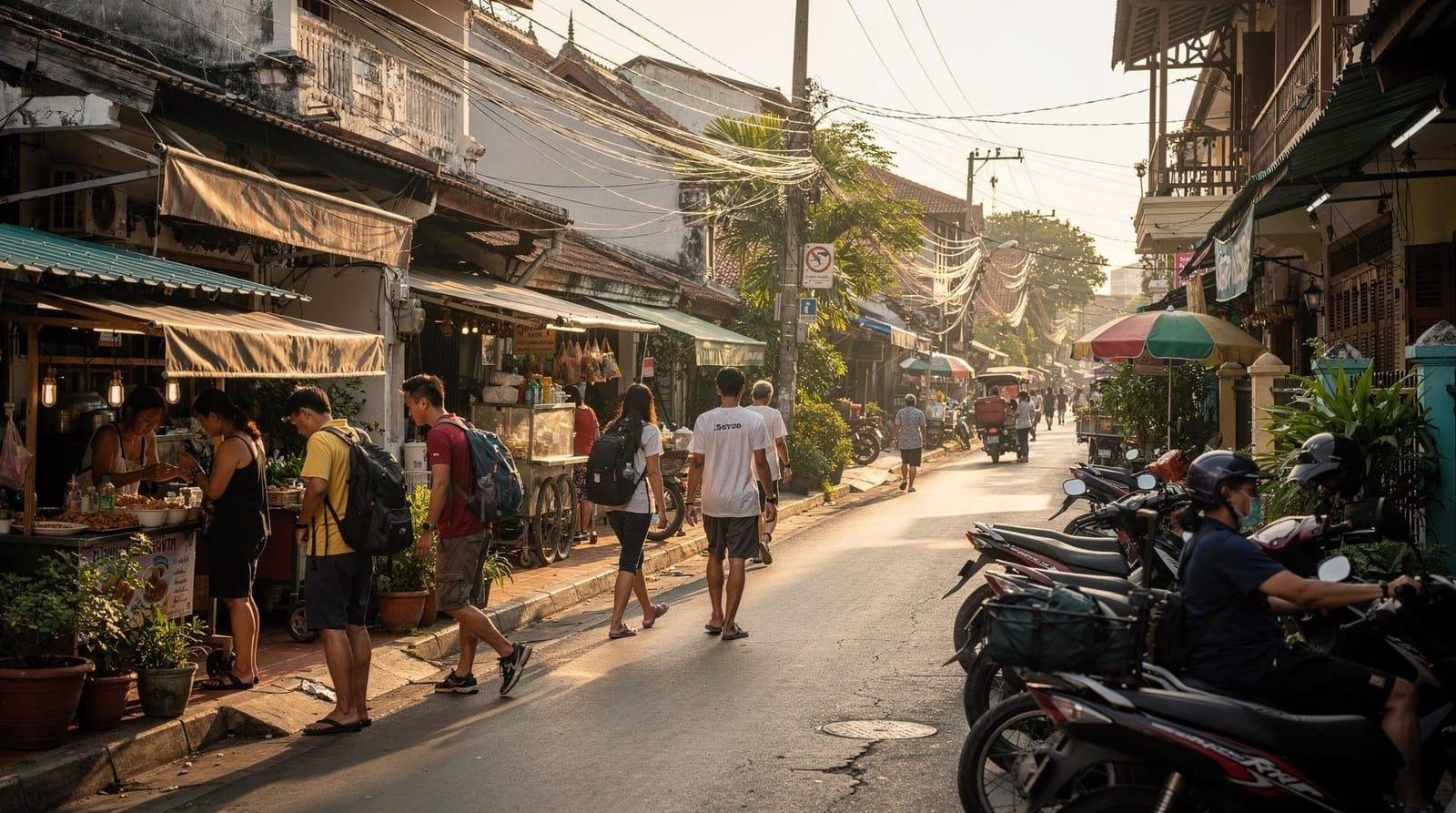
If there’s one safety topic worth taking more seriously than typical travel-safety content suggests, it’s road traffic, and scooters specifically. Thai road norms, junction behavior and general traffic density differ from what many visitors are used to, and a meaningful share of traveller injuries across Thailand each year involve scooter accidents — often riders without a proper motorcycle license, without prior scooter experience, or without a helmet. Renting a scooter without genuine confidence and prior experience riding one, purely because it’s cheap and convenient, is the single biggest avoidable risk most visitors take in Chiang Mai.
If you do rent a scooter, wear a proper helmet regardless of local enforcement levels, check your travel insurance explicitly covers scooter use (many standard policies exclude it or require a specific license class), and consider Grab or songthaews instead if you’re not genuinely comfortable riding in unfamiliar traffic. As a pedestrian, crossing roads takes a bit more attentiveness than in cities with stronger pedestrian-priority norms — traffic doesn’t always stop at marked crossings the way it might at home, so cross deliberately and with clear eye contact toward oncoming vehicles rather than assuming right of way.
Common scams, and how to sidestep them without stress
Chiang Mai has a small, well-known set of scams that target visitors, and recognizing them removes most of the risk. The most common is a tuk-tuk or taxi driver offering a suspiciously cheap fare, or even a free ride, in exchange for a short stop at a gem shop, tailor or jewellery store along the way — these stops pay the driver a commission and pressure visitors toward inflated, low-quality goods. A related version involves being told a temple or attraction is “closed today” with a helpful offer to take you somewhere else “even better” instead — it’s very rarely true, and continuing to your original destination usually reveals it’s open as normal. Politely declining and continuing with your own plan resolves both scenarios without confrontation.
Overcharging on unmetered transport is another recurring friction point rather than a scam exactly — agree a price before getting in a tuk-tuk, or use Grab, which fixes the fare upfront and removes the negotiation entirely. Rental scooter deposit disputes, where a shop claims pre-existing damage at return time to withhold a deposit, are a less common but real issue — photograph the scooter thoroughly from multiple angles before riding off, which resolves most disputes in your favor if one arises.
Food and water safety
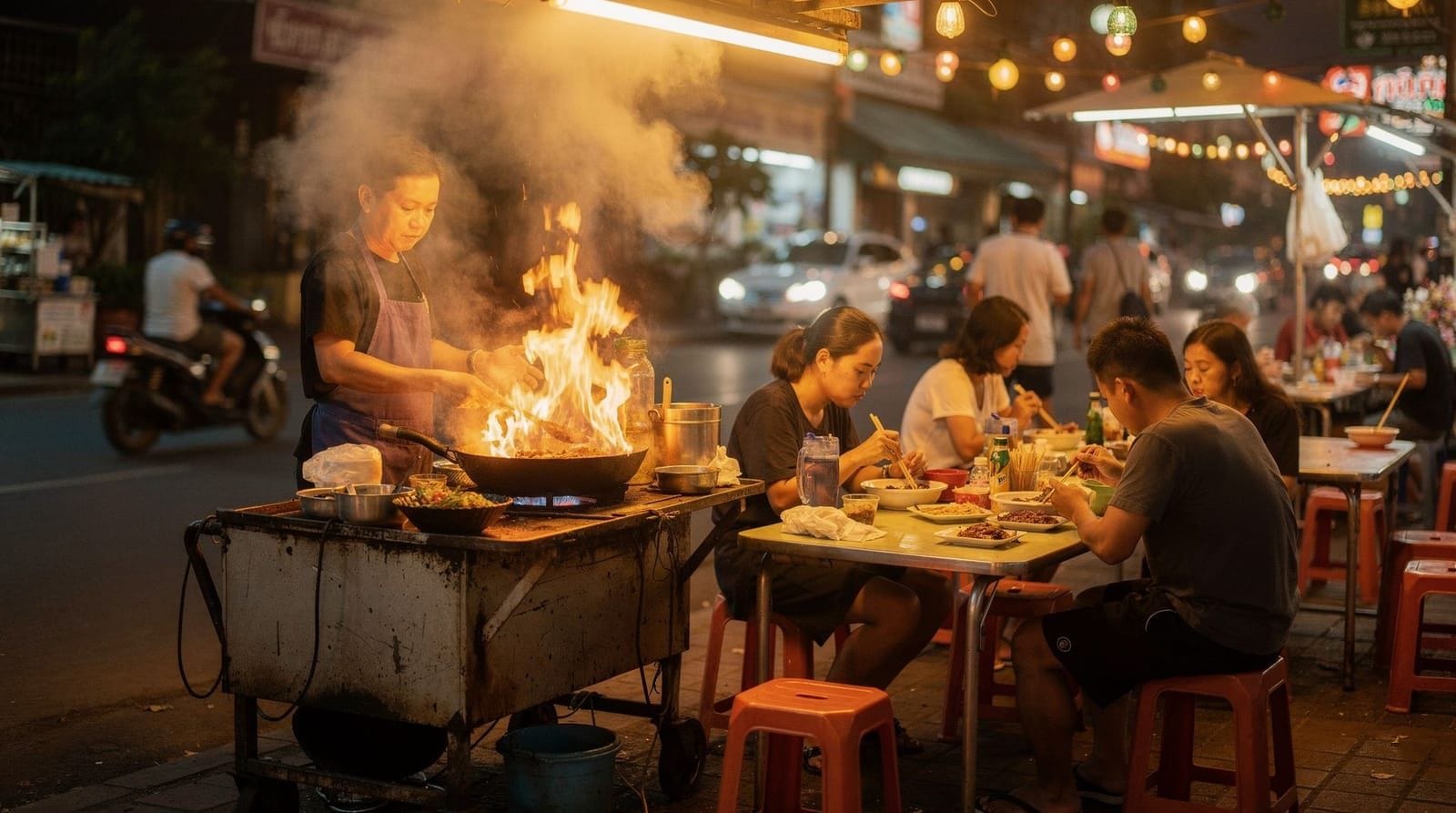
Tap water isn’t recommended for drinking — stick to bottled or filtered water, which is inexpensive and sold everywhere from convenience stores to hotel lobbies. Ice at reputable restaurants and from established commercial suppliers is generally fine, since it’s produced to a food-safety standard rather than made from tap water directly, though it’s a reasonable instinct to be more cautious at very informal roadside stalls. Street food is safe at the vast majority of stalls, particularly ones with high turnover, visible fresh cooking, and separate handling of raw and cooked ingredients — busy stalls with a strong local customer base are typically both the tastiest and the safest option, since poor hygiene shows up in customer numbers quickly in a food scene this competitive. Our dedicated street food safety guide covers specific signals worth checking before ordering in more depth.
Health, heat and burning-season air quality
Heat and hydration deserve more attention than most visitors give them, particularly during the hot season (March-May) when temperatures and humidity both climb. Mild heat exhaustion — headache, fatigue, dizziness — is a more common visitor complaint than anything crime-related, and it’s almost entirely preventable with regular water intake, sun protection, and pacing outdoor activities to avoid the harshest midday hours where possible.
Burning season, roughly February through April, brings agricultural smoke haze that can meaningfully affect air quality for weeks at a time, thick enough to reduce mountain views and to matter for anyone with asthma or other respiratory sensitivities. It’s not typically dangerous for a short visit by a healthy traveller, but it’s worth checking air quality readings if your trip falls in that window and packing a well-fitted mask as a precaution if you’re sensitive to smoke or poor air quality — our packing list guide covers this in more detail.
Routine travel health precautions apply otherwise: standard travel vaccinations recommended for Southeast Asia (check with a travel health provider before your trip), mosquito repellent given the presence of mosquito-borne illness risk across the region, and comprehensive travel insurance that covers medical treatment, which is genuinely inexpensive relative to the cost of an uninsured hospital visit.
Solo, female and family travel notes
Chiang Mai is a well-established solo and solo-female travel destination, with a mature backpacker and long-stay infrastructure that includes plenty of social, well-reviewed accommodation and organized activities that make meeting other travellers straightforward if wanted. Standard precautions — sticking to well-lit, populated areas at night, using Grab rather than unmarked taxis late at night, and sharing your accommodation and rough itinerary with someone back home — cover the practical bases well. Families report Chiang Mai as one of the more relaxed, manageable Southeast Asian destinations to bring children to, given the low crime rate, the slower overall pace compared with bigger cities, and family-friendly activities like ethical elephant sanctuaries; road-crossing safety with children and sun/hydration management are the practical priorities rather than anything more serious.
Seasonal weather occasionally produces localized flash flooding during the heaviest rainy-season downpours, particularly in low-lying areas near rivers and canals, though this is rarely severe enough to disrupt a typical visit and local infrastructure generally clears standing water within hours. Checking local news or your accommodation’s guidance during an unusually heavy multi-day rain spell is a reasonable precaution rather than a standing concern for most of the rainy season, which otherwise consists of short, predictable afternoon showers rather than sustained flooding conditions.
Money and connectivity safety
A few safety considerations overlap with money and connectivity specifically. Use ATMs attached to banks or in well-lit, populated locations rather than isolated stand-alone machines, and check for any signs of tampering before inserting a card — our money, ATMs and currency guide covers realistic fees and safer withdrawal habits in more detail. Public wifi at cafés and hotels is generally fine for casual browsing, but avoid accessing banking or other sensitive accounts over unsecured public networks; a local eSIM with its own mobile data, covered in our SIM card and internet guide, is a safer default for anything sensitive.
Credit and debit card skimming is not a widespread problem in Chiang Mai specifically, but the same general precautions worth applying anywhere still apply: prefer ATMs inside bank branches or well-trafficked malls over stand-alone street machines, cover the keypad when entering your PIN, and check your bank statements periodically during and after the trip rather than only reviewing them once you’re home, so any unusual charge gets caught and disputed quickly.
Emergency numbers and healthcare access
Chiang Mai has good private healthcare access by regional standards, with several private hospitals in and around the city that see foreign visitors regularly and typically have English-speaking staff and straightforward processes for travel-insurance billing. Thailand’s national emergency numbers are worth saving in your phone before you need them: 191 for police, 1669 for medical emergencies and ambulance dispatch, and 1155 for the tourist police, who specifically handle visitor-related incidents and scams and are generally more responsive to tourism-specific issues than the general police line. Private hospital emergency rooms tend to be faster and more visitor-friendly than public hospital emergency departments for anything beyond a minor issue, though at a higher cost that travel insurance should cover — confirm your policy’s process for hospital billing versus reimbursement before you travel, since some private hospitals bill insurers directly while others require you to pay upfront and claim afterward.
Natural and animal-related risks
Chiang Mai’s natural risks are mostly minor and manageable rather than dramatic. Stray dogs are common throughout the city and surrounding areas; the overwhelming majority are non-aggressive and accustomed to people, but avoid approaching unfamiliar dogs closely, particularly around food, and consider a rabies pre-exposure vaccination if your trip includes extensive rural trekking or a long stay, as a sensible precaution rather than a sign of unusual danger. Mosquito-borne illness (dengue in particular) is a genuine regional risk, more so in rainy season and in rural or jungle areas than in the city center — repellent and covering up in the evenings reduces this risk meaningfully. Snakes and other wildlife exist in rural and forested areas visited on treks and some day trips but are rarely encountered and even more rarely a genuine threat if you stay on marked trails and use a guide for anything off the beaten path.
Nightlife and evening safety specifics
Chiang Mai’s nightlife, centered around a handful of bar areas near the moat and in Nimmanhaemin, is generally low-key compared with Thailand’s more intense nightlife destinations, and incidents tend to correlate with alcohol and the same judgment factors that apply anywhere: know your limits, watch your drink, and travel with people you trust rather than alone late at night if you’ve been drinking. Ladyboy cabaret shows and similar tourist-oriented nightlife are a normal, safe part of the scene, though as with any tourist entertainment, agree on prices for photos or drinks before committing to avoid an inflated bill afterward. Late-night solo walks back to accommodation are generally low-risk in well-populated areas but a Grab ride is inexpensive enough that it’s rarely worth skipping purely to save the fare.
LGBTQ+ traveller safety
Thailand, and Chiang Mai specifically, is broadly considered one of the more LGBTQ+-welcoming destinations in Asia, with a visible and generally well-accepted LGBTQ+ community and nightlife scene, and no legal prohibition on same-sex relationships. Public attitudes are generally tolerant, particularly in tourist-facing areas, though the same general discretion that applies to public displays of affection of any kind in a culturally conservative country is worth keeping in mind, more a matter of local social norms than any specific risk to LGBTQ+ travellers.
Day trips and border-area considerations
Popular day trips from Chiang Mai — Doi Inthanon, Chiang Rai, Chiang Dao — carry no meaningfully different safety profile from the city itself. The Golden Triangle day trip, which reaches the Thailand-Laos-Myanmar tripoint area, is a well-established, safe tourist route despite its proximity to a historically sensitive border region; organized tours stick to normal tourist areas and don’t involve any actual border crossing risk. If independent travel closer to the Myanmar border is being considered beyond standard day-trip routes, check current government travel advisories for that specific area beforehand, since conditions there can differ from the well-trodden Chiang Mai-Chiang Rai-Golden Triangle tourist corridor. Mountain day trips involving any real altitude, such as Doi Inthanon in cool season, also warrant checking the weather forecast the morning of, since fog and cooler temperatures at elevation can catch out visitors dressed for the city center’s climate.
Visa and paperwork safety
Staying on the right side of Thailand’s entry requirements is also a safety matter in the broader sense — an overstayed visa carries real legal and financial consequences, covered in detail in our visa and entry requirements guide. Keeping a photo of your passport’s photo page and entry stamp on your phone, separate from the physical document, is a sensible backup in the rare case of a lost or stolen passport, alongside knowing your embassy’s location and contact details for the same scenario. Budgeting appropriately for the trip, covered in our budget guide, and deciding on realistic trip length in our how many days guide, both indirectly support a safer trip too, since rushed, under-budgeted travel tends to correlate with more corner-cutting on the precautions covered throughout this guide.
The bottom line
Chiang Mai’s real safety profile is considerably better than a worst-case reading of scam warnings and road-safety cautions might suggest, and considerably more nuanced than a blanket “it’s totally safe” reassurance. Most visitors who take the small number of specific precautions above — skip the scooter unless genuinely experienced, use Grab over unmarked late-night taxis, drink bottled water, and check air quality if travelling in burning season — have an entirely uneventful, safe trip, which is the honest, unglamorous reality behind both the reassuring and the alarmist versions of this question. Violent crime is genuinely rare; the practical risks worth actually planning around are road traffic and scooters, heat and hydration, a small and recognizable set of non-violent scams, and burning-season air quality for part of the year. Covering those specific bases, rather than worrying generally, is what actually keeps a Chiang Mai trip safe — our full trip-planning guide ties this together with the rest of what to prepare before you go.