First time in Chiang Mai: what to expect
What should first-time visitors to Chiang Mai know before arriving?
Chiang Mai moves at a slower, less frantic pace than Bangkok or most Western cities; temple etiquette (covered shoulders and knees, shoes off, quiet volume) applies everywhere; cash still matters alongside cards; and the biggest first-trip mistakes are over-scheduling, choosing an elephant riding camp, and trusting a tuk-tuk driver's unsolicited shopping recommendation.
Chiang Mai is often described as Thailand’s gentler introduction, and for most first-time visitors that description holds up: it is smaller, slower and easier to get oriented in than a first stop, without losing much in the way of temples, markets, food or things to actually do. What tends to catch newcomers off guard is not any single dramatic culture shock but a set of smaller adjustments — pace of life, how money and bargaining actually work, temple etiquette, and the sheer amount of unplanned time it is worth leaving in a schedule.
Expect a slower, less frantic pace than Bangkok or most Western cities; temple etiquette (covered shoulders and knees, shoes off before entering, a quiet volume throughout) applies at every active temple without exception; cash still matters alongside cards, particularly at markets and with songthaews; and the biggest first-trip mistakes are over-scheduling the days, choosing an elephant riding camp over a genuine sanctuary, and trusting a tuk-tuk driver’s unsolicited shopping recommendation.
The pace of the city is the real adjustment
Chiang Mai simply runs slower than most visitors expect from a city of its size and tourist profile. Shops open later than a Western visitor might assume, particularly outside the main tourist strips, and things that feel urgent elsewhere — a bus running a few minutes late, a restaurant taking its time with an order — are treated with a shrug here rather than frustration. The single biggest adjustment first-time visitors need to make is scheduling fewer things per day than instinct suggests: two or three real activities, with generous gaps between them, works far better than an itinerary packed wall to wall, and the city’s best moments tend to surface in those gaps rather than during the planned activities themselves.
This slower rhythm is not laziness or inefficiency, it is closer to a different set of priorities around what counts as time well spent. A long lunch, an unplanned stop at a roadside coffee cart, or simply sitting at a temple for twenty minutes longer than intended are treated as legitimate uses of a day here in a way that can feel unfamiliar to visitors arriving from more schedule-driven cultures. Building in slack rather than fighting it tends to produce a considerably better trip than trying to impose a tighter schedule onto a city that is not built for one.
Temple etiquette: the rules that actually matter
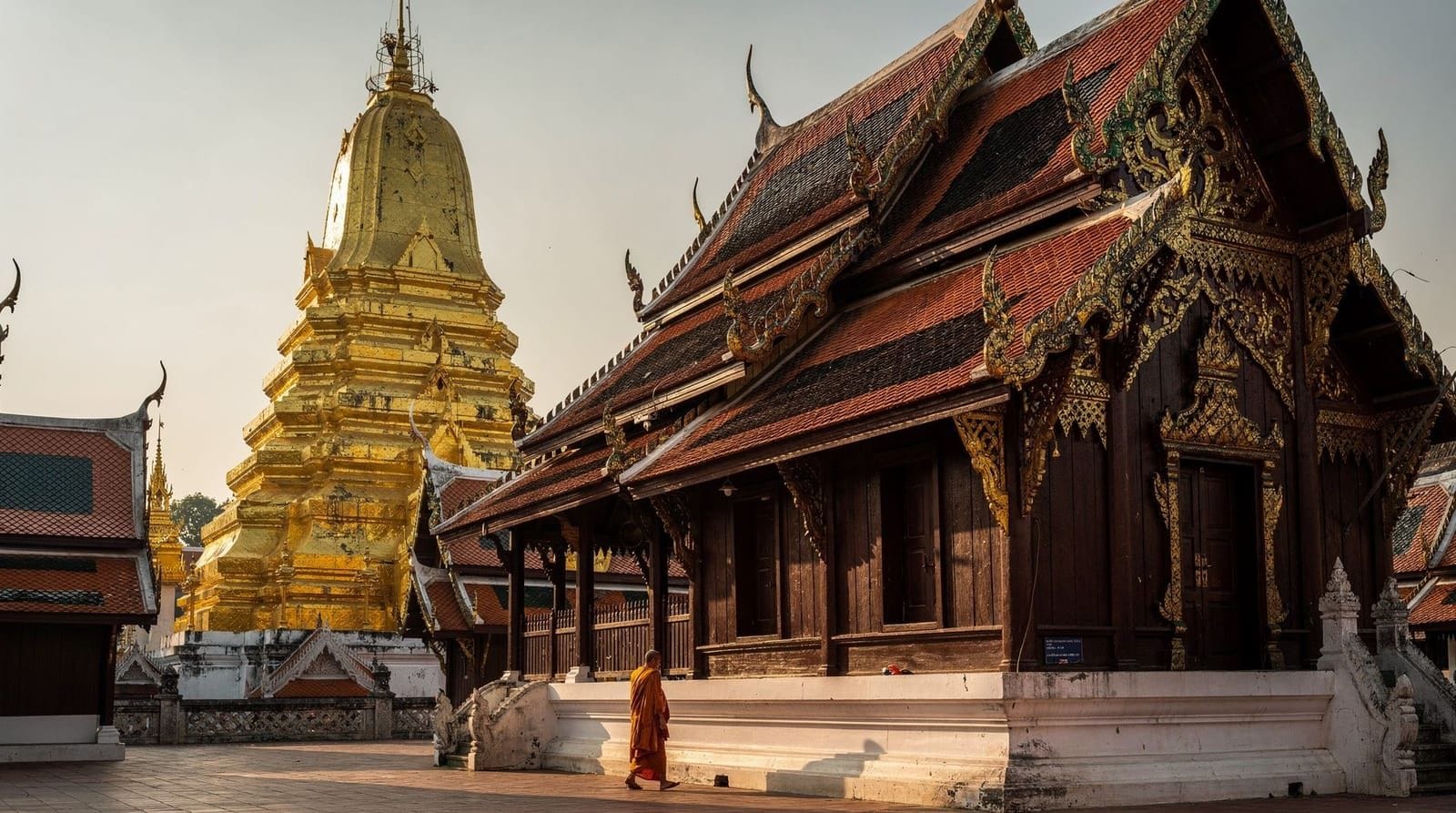
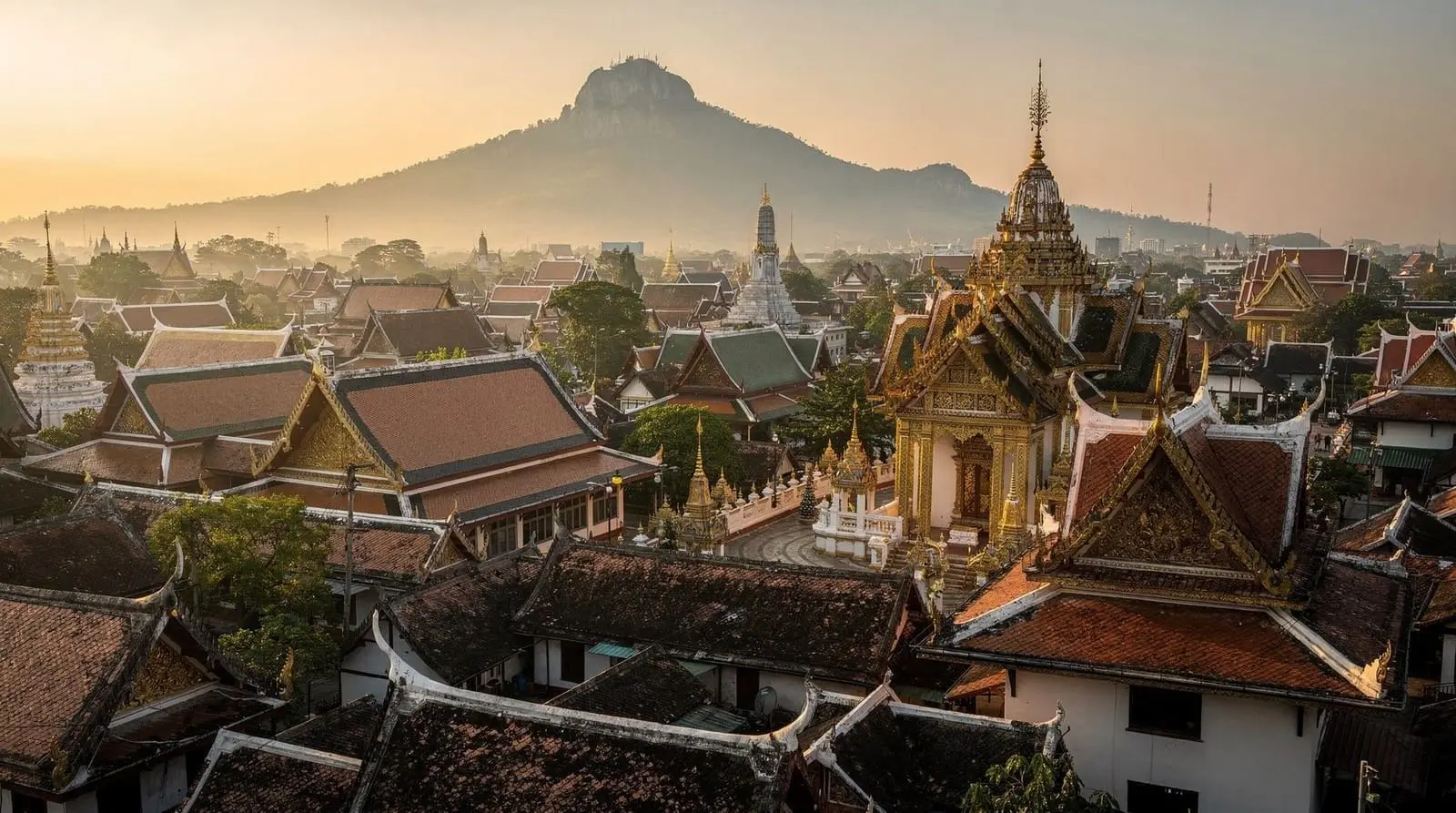
Every active temple in Chiang Mai — and there are more than thirty inside the Old City alone — follows broadly the same etiquette, and getting it right is straightforward once you know the basics. Shoulders and knees should be covered before entering any building requiring it (the open courtyards are generally more relaxed than the interior halls); shoes come off before stepping into any structure with a raised threshold or a shoe rack visible at the entrance; and volume should stay low throughout the grounds, temples being active places of worship rather than static museum exhibits. Photography is generally welcome in outdoor areas, though flash photography of Buddha images and photographing monks without asking first are both worth avoiding as a simple courtesy.
Feet carry particular significance in Thai Buddhist custom, since they are considered the lowest, least respectful part of the body; pointing the soles of your feet at a Buddha image or at another person, whether sitting on temple floors or elsewhere, is a small but real faux pas worth being conscious of. None of this requires research beyond a basic awareness — most temples are forgiving of an honest mistake from a visitor clearly making an effort, and staff will usually just point out gently if something needs adjusting rather than making an issue of it. A fuller rundown, including specifics for particular temples, is covered in the temple etiquette guide.
Money, bargaining and what actually costs what
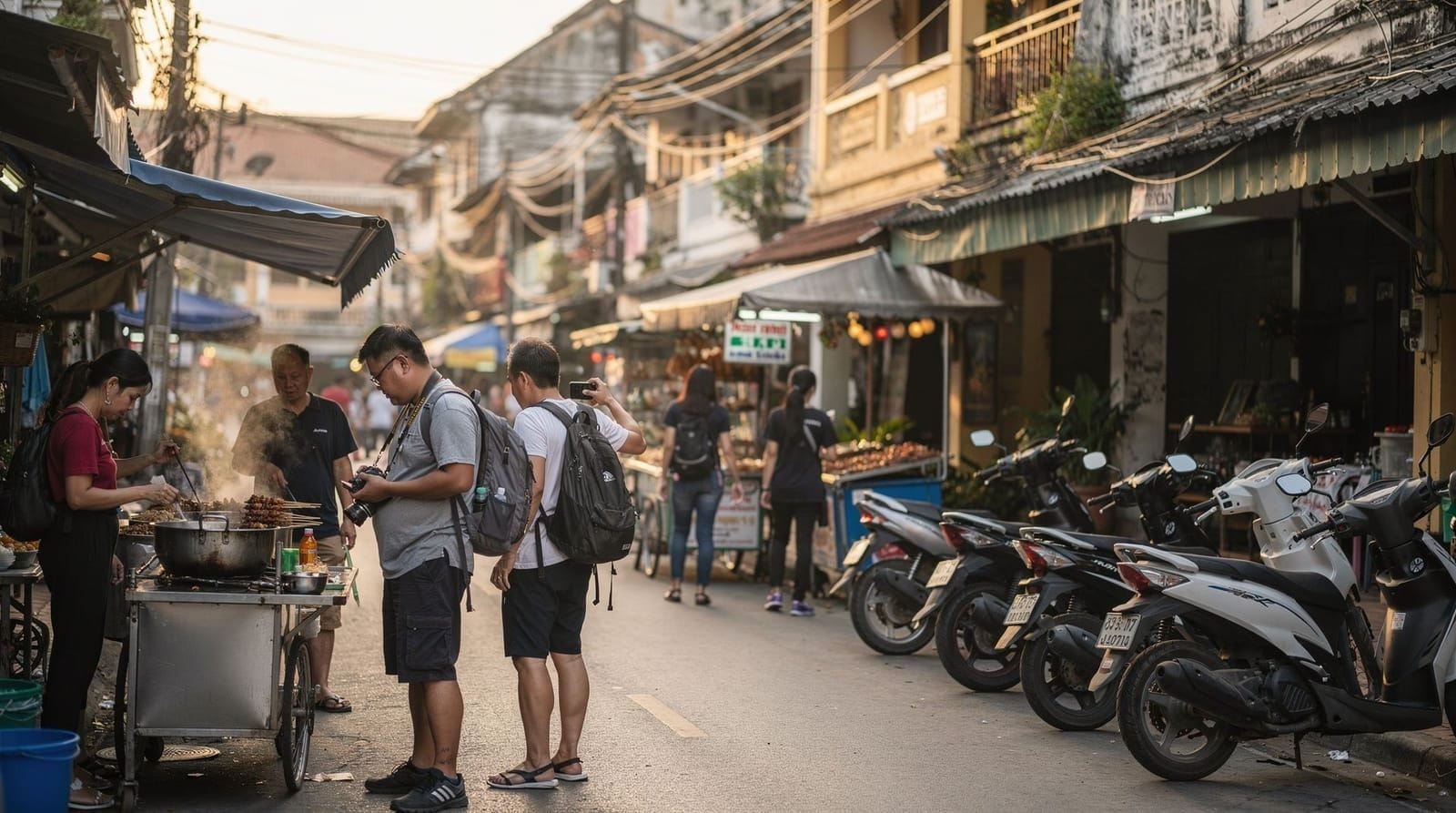
Thailand runs on a cash-and-card mix that skews more toward cash than many first-time visitors expect. Hotels, malls, larger restaurants and most tour bookings take cards without issue, but markets, street food stalls, songthaews and smaller family-run shops are frequently cash-only, and it is worth carrying a few thousand THB (roughly USD 30-85) on a typical day to cover those. ATMs are common throughout the city, though nearly all charge a foreign transaction fee on top of whatever your home bank charges, so withdrawing a larger amount less frequently tends to work out cheaper than several small withdrawals.
Bargaining is expected at markets and with unmetered transport, but it operates on a fairly gentle register here compared to some other Southeast Asian destinations — starting around 30-40 percent below the first quoted price and settling somewhere in the middle, conducted with a smile rather than an aggressive back-and-forth, is the realistic norm. Fixed-price shops, malls and restaurants are not for bargaining, and attempting it there tends to land oddly rather than charmingly. A rough sense of typical costs helps calibrate expectations: a bowl of khao soi runs 50-80 THB (roughly USD 1.50-2.30), a Grab across the city centre rarely exceeds 100 THB, and an hour-long traditional Thai massage at a mid-range shop runs 250-400 THB. The Chiang Mai budget guide breaks this down by travel style in more detail.
Language and getting around without much Thai
English is widely understood in hotels, tour operations and most restaurants catering to visitors, but it thins out noticeably with songthaew drivers, market vendors and staff outside the main tourist areas. This is rarely a real obstacle — pointing, translation apps and a general spirit of goodwill cover most situations — but learning a handful of basic phrases (a greeting, thank you, and numbers) is both genuinely useful and consistently well received as a small sign of effort. Grab, the ride-hailing app, works reliably throughout the city and sidesteps most of the language and fare-negotiation issues that can arise with unmetered transport, making it the default recommendation for visitors without any Thai. Songthaews remain useful for short, opportunistic hops if one happens to be heading your direction, but they work on a more informal, shared basis than a booked ride, and confirming the destination and rough fare before climbing in avoids most misunderstandings.
Safety: what is a real concern and what is not
Violent crime targeting tourists is genuinely rare in Chiang Mai, and most visitors, including solo women, report feeling comfortable moving around the city during the day and well into the evening. The more realistic risks sit elsewhere: scooter accidents are a leading cause of tourist injury in Thailand generally, often involving visitors without motorcycle experience renting a bike on impulse; overcharging and minor scams, particularly the tuk-tuk-to-gem-shop pipeline and inflated “friendly” quotes for unmetered transport, are common enough to be worth knowing about in advance; and during burning season, February through April, air quality can be poor enough on the worst days to matter for anyone with respiratory sensitivity. None of this should be alarming, but it is worth a few minutes’ orientation before arriving, covered in more depth in the is Chiang Mai safe guide.
Weather and when the “worst” season actually is
Chiang Mai’s weather runs in three broad seasons: a cool, dry stretch from November to February that is the most comfortable for walking-heavy days; a hot season building through March and April; and a rainy season from roughly June to October with short, generally predictable afternoon downpours rather than all-day rain. The detail that surprises many first-time visitors, because it rarely comes up in generic Thailand advice, is burning season: from February through April, agricultural burning across the wider region produces smoke haze that can reduce mountain views and affect air quality, sometimes significantly on the worst days. This does not make the season a write-off, but it is worth knowing about ahead of a trip, particularly if a clear view from Doi Suthep or outdoor activity comfort matters to your plans — the burning season guide covers how to plan around it.
Where to base yourself for a first visit
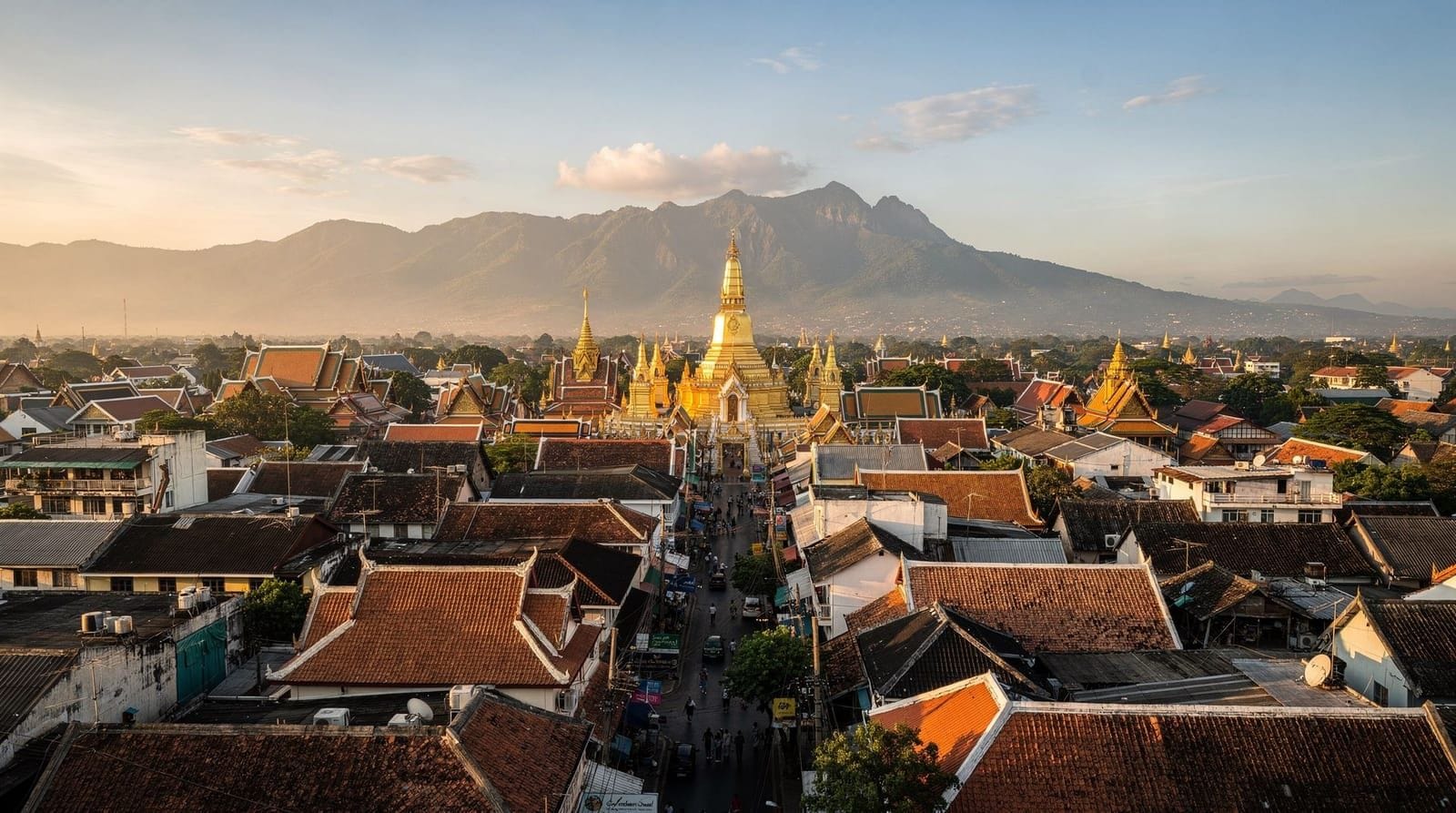
Choosing a neighbourhood matters more in Chiang Mai than in many cities, since the Old City and Nimmanhaemin offer genuinely different first-trip experiences rather than interchangeable versions of the same base. The Old City puts the major temples, guesthouses and Sunday Walking Street within walking distance and suits visitors who want to be immersed in the historic core from the first morning; Nimman trades some of that immediacy for a younger, café-and-boutique-driven atmosphere a short Grab ride away. Neither is a wrong choice for a first visit, and the full trade-off is covered in the Old City versus Nimman guide if the decision is still open.
What to actually do first
There is no single correct order, but a reasonable first full day in the city runs something like: a slow morning walking the Old City temples, starting with Wat Phra Singh, a leisurely lunch somewhere without a fixed plan, and an easy evening at a night market or Sunday Walking Street if the dates line up. Save the bigger, more logistically involved activities — an ethical elephant sanctuary, a cooking class, a mountain day trip — for the second and third days once you have a feel for the city’s pace and your own jet lag has settled, and resist the temptation to book everything before arrival simply because it is available online; a couple of open days built into even a short trip tend to get used well once you have a feel for what the city actually offers. The Chiang Mai highlights guide and Chiang Mai bucket list both go deeper into specific activities once the broad orientation covered here feels settled.
Arrival and the first 24 hours
Chiang Mai International Airport sits close enough to the city that the drive into the Old City or Nimman rarely takes more than twenty to thirty minutes outside rush hour, considerably shorter than the airport transfers many visitors are used to elsewhere. A metered taxi from the official rank or a pre-booked hotel transfer are both straightforward on arrival; Grab also operates from the airport, though pickup can involve a short walk to a designated area rather than a curbside collection. Given how short the transfer is, there is rarely a reason to arrange anything elaborate.
The first day is worth treating as deliberately light regardless of how energetic you feel on arrival, since jet lag tends to catch up in the early afternoon even when the morning felt fine. A short walk, a coffee, and an early temple visit make a reasonable first half-day; save anything requiring real stamina, like a full day trip or a longer trek, for the second or third day once your body clock has caught up. Staying hydrated and getting some daylight exposure on the first afternoon, rather than retreating straight into an air-conditioned room to nap, tends to shorten the adjustment period noticeably.
Staying connected
A local SIM or eSIM is worth arranging either before arrival or at the airport on landing, since Thailand’s mobile networks are reliable and reasonably priced, and constant connectivity makes Grab, translation apps and maps considerably easier to rely on throughout the trip. Airport kiosks for the main carriers are well signposted and typically have English-speaking staff who can set a visitor up within a few minutes; hotel wifi is generally solid as a backup but is not a substitute for mobile data once you are out exploring. Reception is consistently good throughout the city centre and most of the surrounding valley, thinning out only in some of the more remote mountain areas covered by day trips further afield.
Cultural notes worth knowing beyond the basics
Thailand’s monarchy is held in genuine, widespread respect, and public criticism of the royal family, even in casual conversation, is both a serious cultural misstep and, in some circumstances, a legal issue under lèse-majesté law — a topic simply not worth raising, even lightly or jokingly. Monks occupy a similarly respected position: women should avoid physical contact with monks, including passing objects directly hand to hand, a norm that is easy to accidentally break without meaning any disrespect at all, and monks generally appreciate a visitor who asks rather than assumes. More broadly, a calm, even temper is valued highly in everyday interactions; visibly losing your temper in a dispute over a fare or a bill, however justified it might feel, tends to make a situation worse rather than better and is read as a loss of face for everyone involved, not just the visitor.
Frequently asked questions about a first trip to Chiang Mai
Is Chiang Mai a good first destination in Thailand?
Yes. It is considerably calmer and easier to navigate than a first stop, with a walkable Old City, a strong tourist infrastructure and a slower pace that suits visitors easing into Southeast Asian travel rather than diving straight into a larger, more overwhelming city.
What should I wear in Chiang Mai, especially at temples?
Lightweight, breathable clothing for the heat generally, with shoulders and knees covered for any temple visit. Some temples keep sarongs or wraps available to borrow at the entrance for visitors who arrive underdressed, but it is more reliable to simply pack accordingly.
How much cash should I carry in Chiang Mai?
Enough for markets, street food, songthaews and temple donations, since many smaller vendors are cash-only; a few thousand THB on hand covers a typical day. Cards are widely accepted at hotels, malls and larger restaurants, and ATMs are common though most charge a foreign transaction fee.
Is Chiang Mai safe for solo travellers?
Yes, broadly. Violent crime targeting tourists is rare; the more realistic risks are scooter accidents, overcharging scams and, during burning season, air quality. Standard city precautions apply, and solo travellers, including solo women, generally report feeling comfortable moving around during the day and evening.
Do people speak English in Chiang Mai?
English is widely understood in tourist-facing businesses, hotels and most restaurants, though less so with songthaew drivers, market vendors and staff outside the main visitor areas. A handful of basic Thai phrases go a long way and are genuinely appreciated.
What is the biggest mistake first-time visitors make in Chiang Mai?
Over-scheduling. Chiang Mai rewards a slower pace with two or three real activities a day rather than five, and the city’s best moments — a quiet temple corner, an unplanned café stop, a conversation with a shop owner — tend to happen in the gaps between planned activities, not during them.
How many days should a first Chiang Mai trip be?
Three days covers the essential Old City temples, one elephant sanctuary and one market evening. Five to seven days allows a more relaxed pace plus at least one day trip to the mountains or a neighbouring town without the trip feeling like a checklist.