Chiang Mai neighborhoods: a guide to every area worth staying in
Chiang Mai: Half-Day Private City Tour by Tuk Tuk
Duration: Half day
What is the best neighborhood to stay in in Chiang Mai?
The Old City suits first-time visitors best, since it puts the major temples, guesthouses and the weekly walking street within walking distance. Nimmanhaemin suits longer stays, digital nomads and anyone prioritising coffee and contemporary dining. Riverside and Night Bazaar suit visitors who want larger hotels and easy shopping access. There is no single best answer, only a better fit for a given trip.
Chiang Mai reads as a single compact city on a map, but on the ground it splits into a handful of areas that genuinely feel like different places to live in for a week, not just different neighbourhoods on the same theme. The walled Old City, the café-dense grid of Nimmanhaemin, the hotel-heavy riverside strip around the Night Bazaar, the plain and local Santitham district just north of the moat, and a scatter of smaller pockets around Wualai, Chang Phueak and the university side all have their own pace, price level and kind of traveller they suit. Picking the right one shapes daily life on a trip more than most guidebooks admit — what you stumble across walking to breakfast, how much of each day gets eaten by transport, and whether the city feels immersive or merely convenient.
This guide compares every area worth actually staying in, with honest detail on what each one costs, who it suits, and what it trades away to get there. It is not a hotel list. It is a decision framework, meant to be read once before booking anything, so the choice of base reflects the trip being taken rather than whichever guesthouse happened to rank first in a search.
How Chiang Mai’s layout actually works
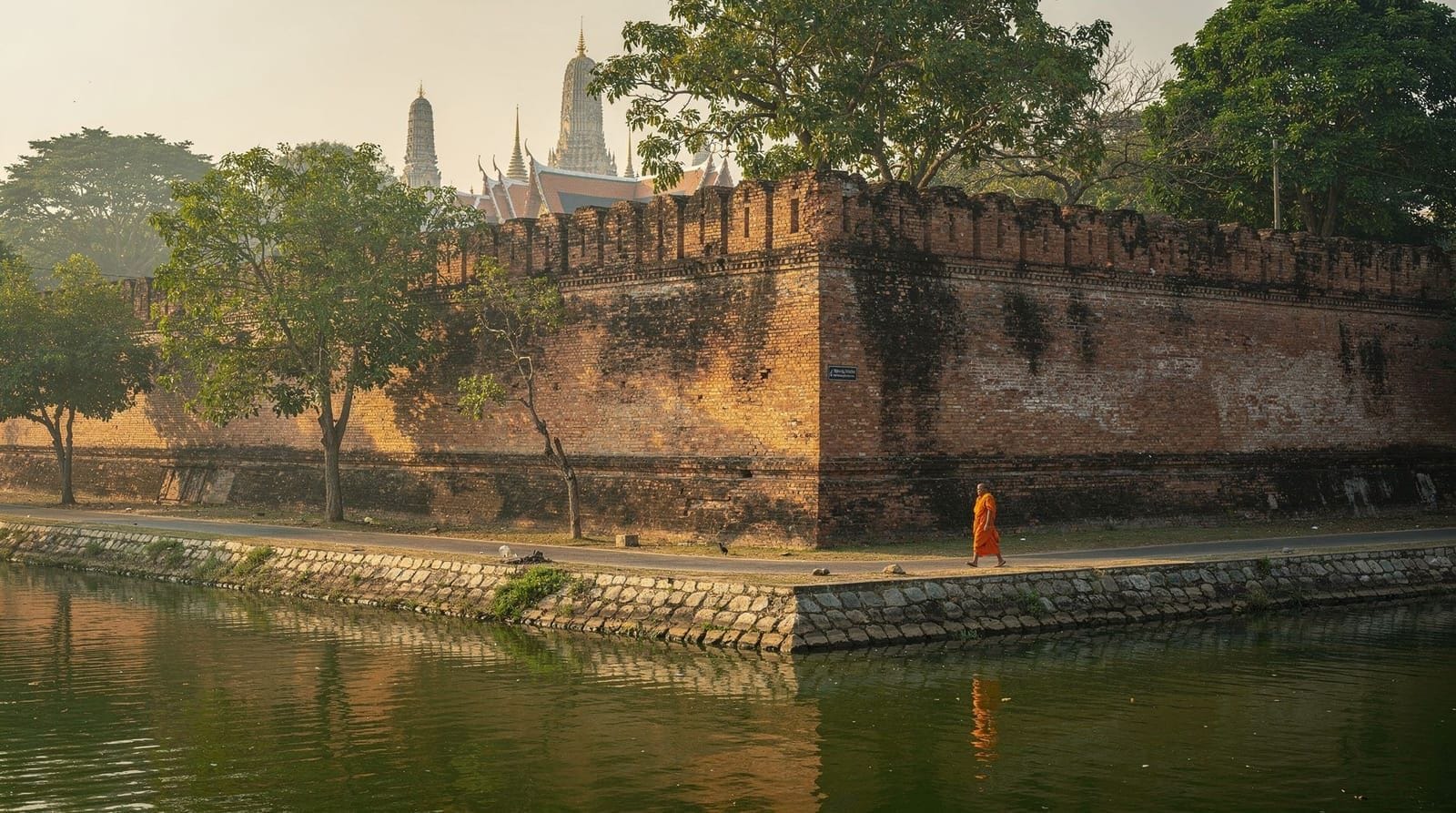
The Old City sits inside a nearly square moat, a legacy of the 13th-century Lanna capital, with four main gates and a genuinely walkable historic grid packed with temples and guesthouses. Nimmanhaemin lies a few kilometres west, adjacent to Chiang Mai University and Huay Kaew Road, and grew up around the university crowd before becoming the city’s café and design district. The riverside and Night Bazaar area sits east of the moat along the Ping River and Chang Khlan Road, historically the trading district and now the city’s densest concentration of larger hotels. Santitham is the quieter, plainer grid immediately north of the moat, functionally a local extension of the Old City without its tourist density. Smaller pockets — Wualai and Hai Ya south of the walls, Chang Phueak by the north gate, and the Suthep side near the university and the mountain road — round out the picture for specific kinds of trip.
None of these areas sits more than about 20 minutes from any other by Grab or songthaew, which matters because it means the choice of base is less about access to any single attraction and more about the texture of daily life: what is a short walk versus a short ride, what the streets look and sound like after dark, and what kind of food and shopping sits immediately outside the door.
Old City: temples, guesthouses and the historic core
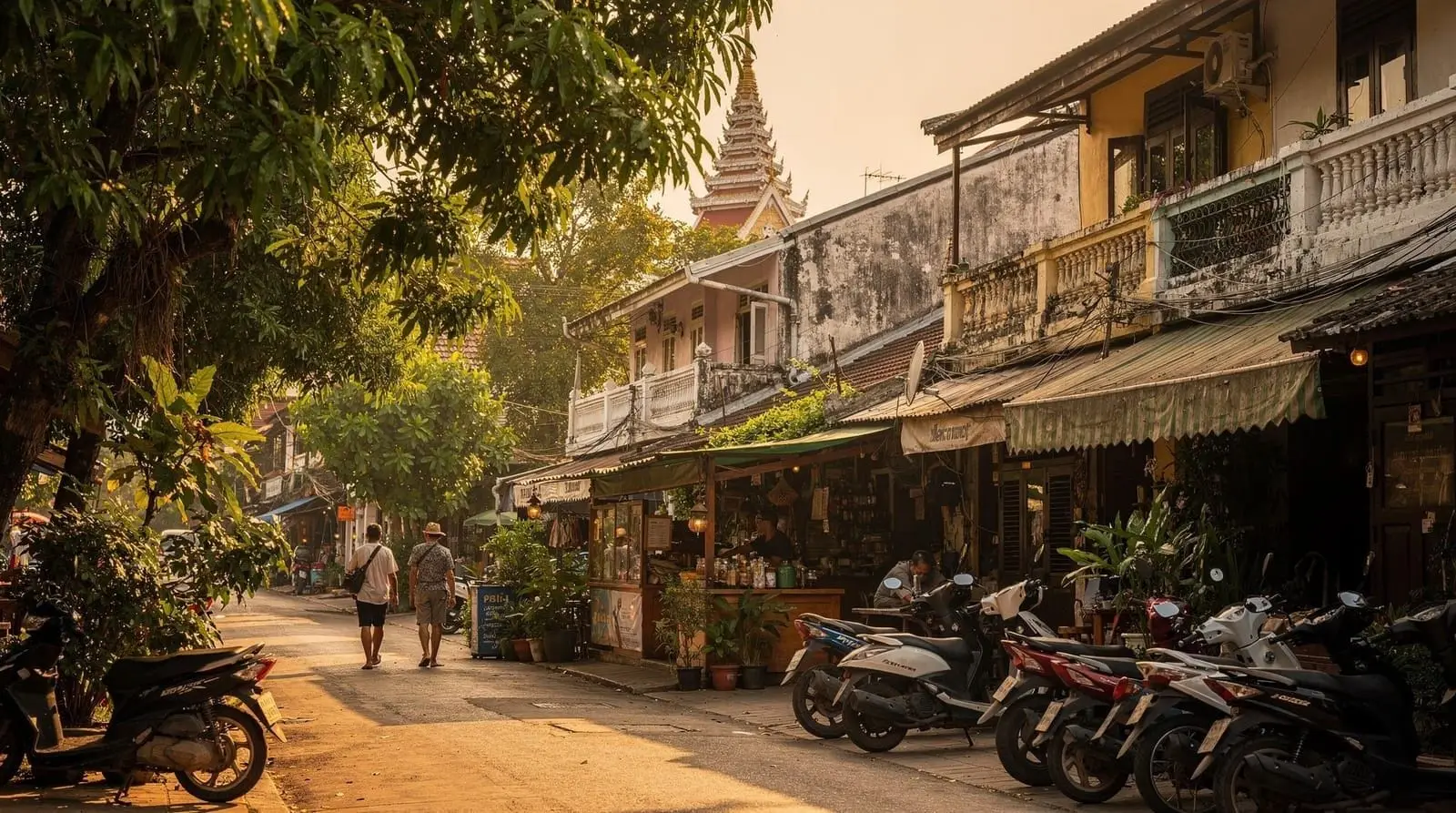
The Old City is the moated, walled quarter that most visitors picture when they think of Chiang Mai, and it remains the default first-time base for good reason. Wat Phra Singh and Wat Chedi Luang, the city’s two most significant temples, sit inside the walls along with a dense cluster of smaller wats, meaning a genuinely leisurely morning of temple visits needs no transport at all. Tha Phae Gate, the eastern entrance, anchors the area’s main pedestrian energy and is where the weekly Sunday Walking Street market begins, closing the main east-west road to traffic for an evening market that stretches over a kilometre.
Accommodation here runs from simple hostel dorms around 250-400 THB (USD 7-11) a night to boutique guesthouses in converted teak shophouses at 1,200-2,500 THB (USD 33-70), with the density of small independent properties giving the area a lived-in, historic character rather than a polished one. The trade-off is genuine crowding near the main gates in high season, and noise levels that vary sharply block by block — streets near Tha Phae Gate and the main bar strips run loud into the evening, while the quieter interior lanes toward the northern and western walls stay noticeably calmer. A guided temple-hopping route or a guided Old City and temples walking tour is a reasonable way to get oriented on day one before deciding where within the walls actually appeals for a longer stay.
Nimmanhaemin: cafés, design and the university crowd
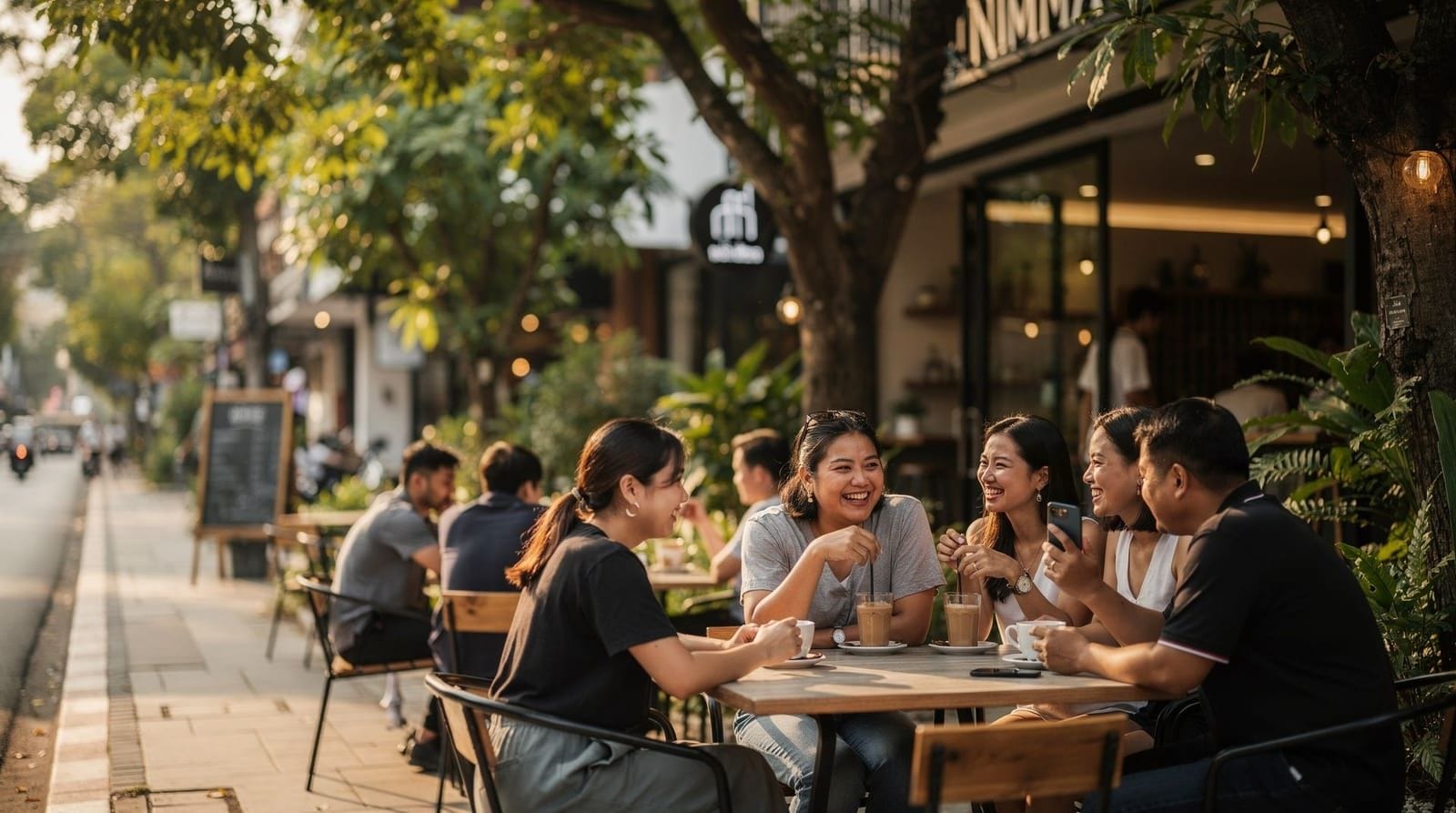
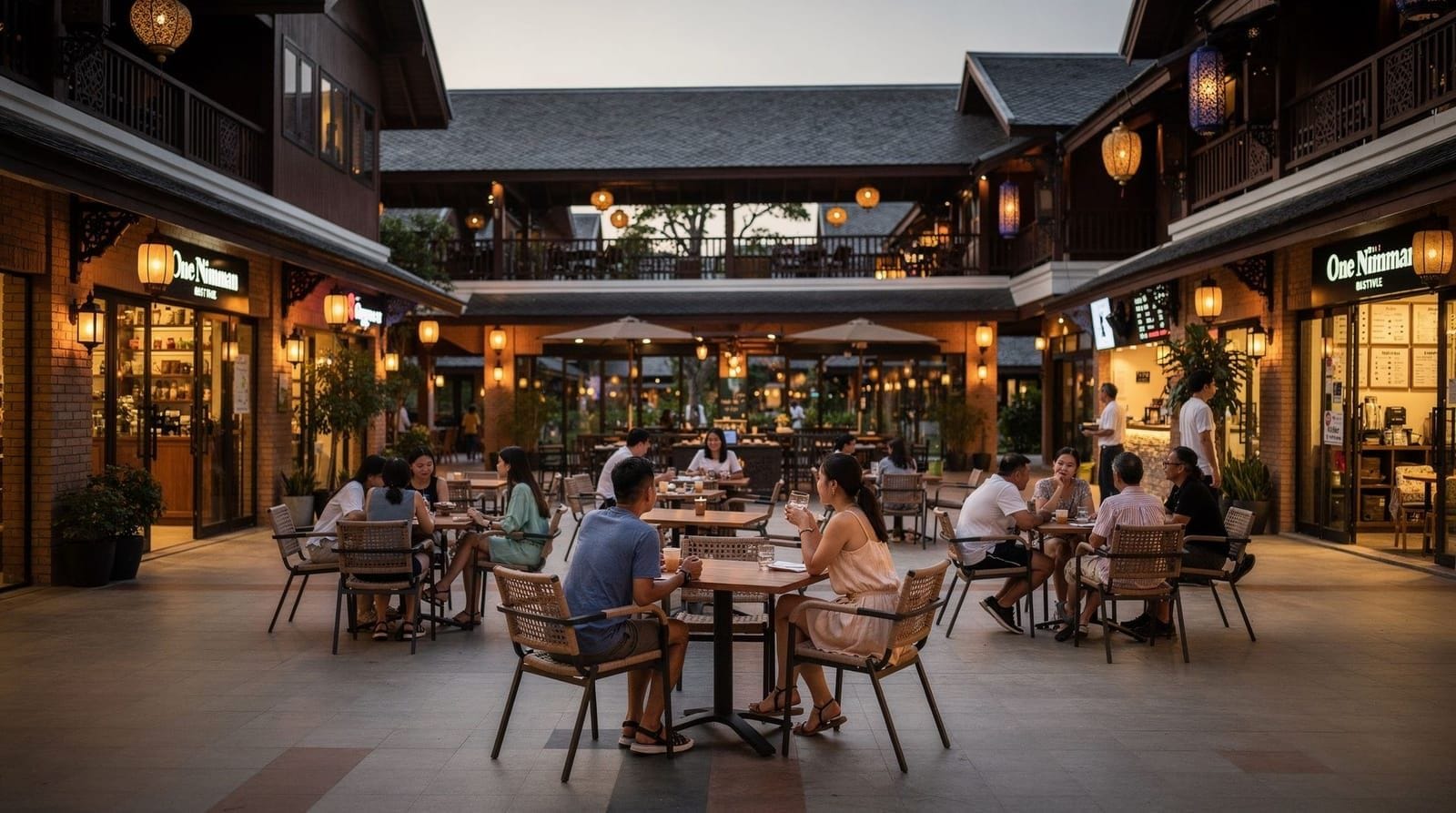
Nimmanhaemin, usually just called Nimman, trades the Old City’s historic density for a contemporary, design-conscious atmosphere built around specialty coffee, independent boutiques and restaurants skewing modern Thai and international. One Nimman, the open-air lifestyle complex at the district’s centre, anchors a walkable core that suits slow mornings and laptop work as much as sightseeing, and the area sits directly adjacent to Chiang Mai University and the Huay Kaew area, putting a genuinely different, greener kind of nearby nature within reach.
The crowd leans younger and more mixed between digital nomads, students and longer-stay visitors than the Old City’s more transient temple-hopping traffic, and the area’s popularity with remote workers has produced a real cluster of coworking-friendly cafés with dependable wifi. Coffee and a pastry at a well-regarded café commonly runs 120-200 THB (USD 3.30-5.50), noticeably more than an equivalent Old City street stall, reflecting the area’s more upscale positioning. Nightlife concentrates in rooftop bars and later-closing cafés rather than bar-street density, and the area is quieter after midnight than its café-driven daytime energy suggests. A spa session at Oasis Spa in Nimman or an evening at Let’s Relax Spa at One Nimman fits the district’s slower, more self-care-oriented pace well.
Riverside and Night Bazaar: hotels, shopping and the Ping River
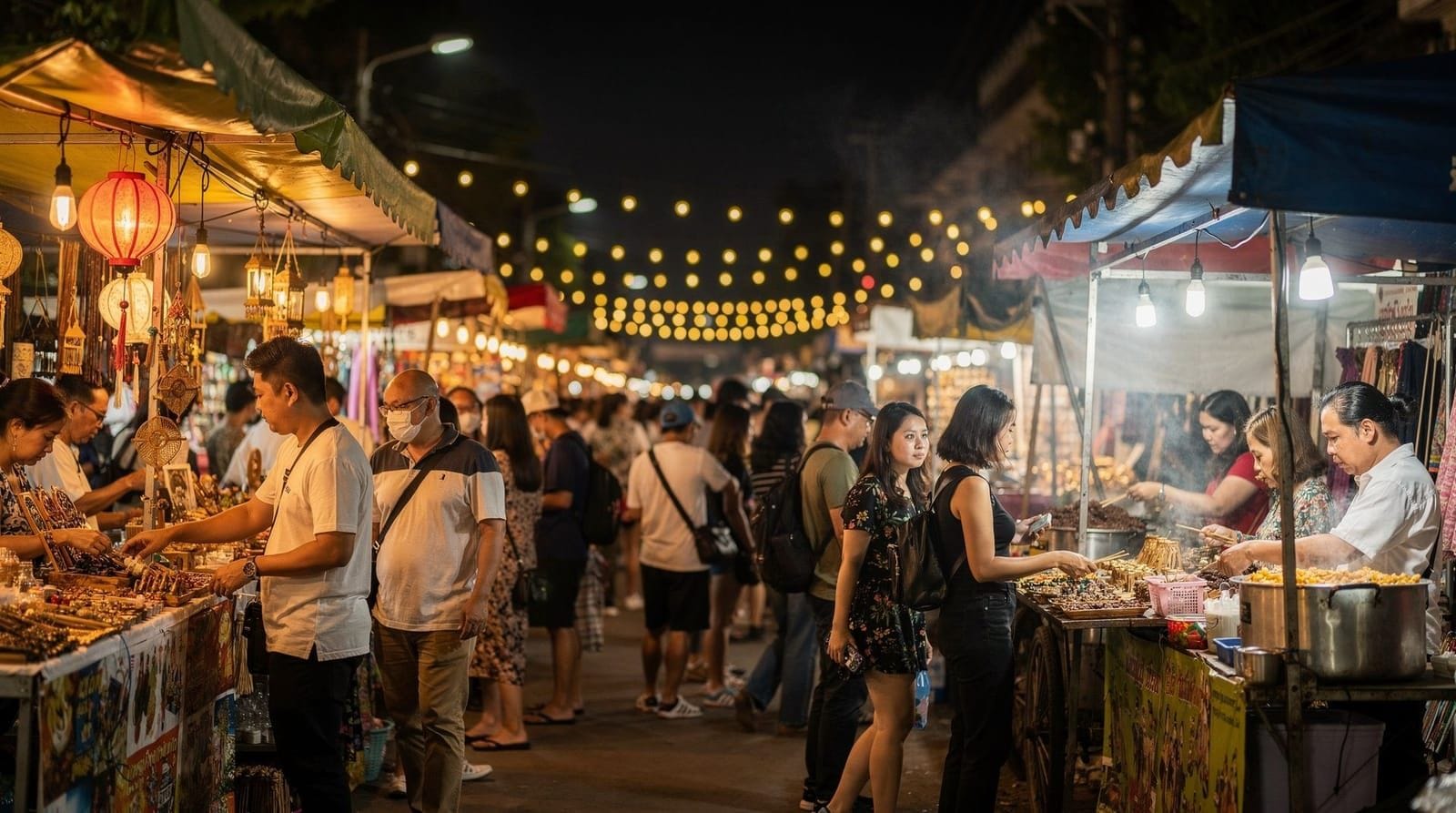
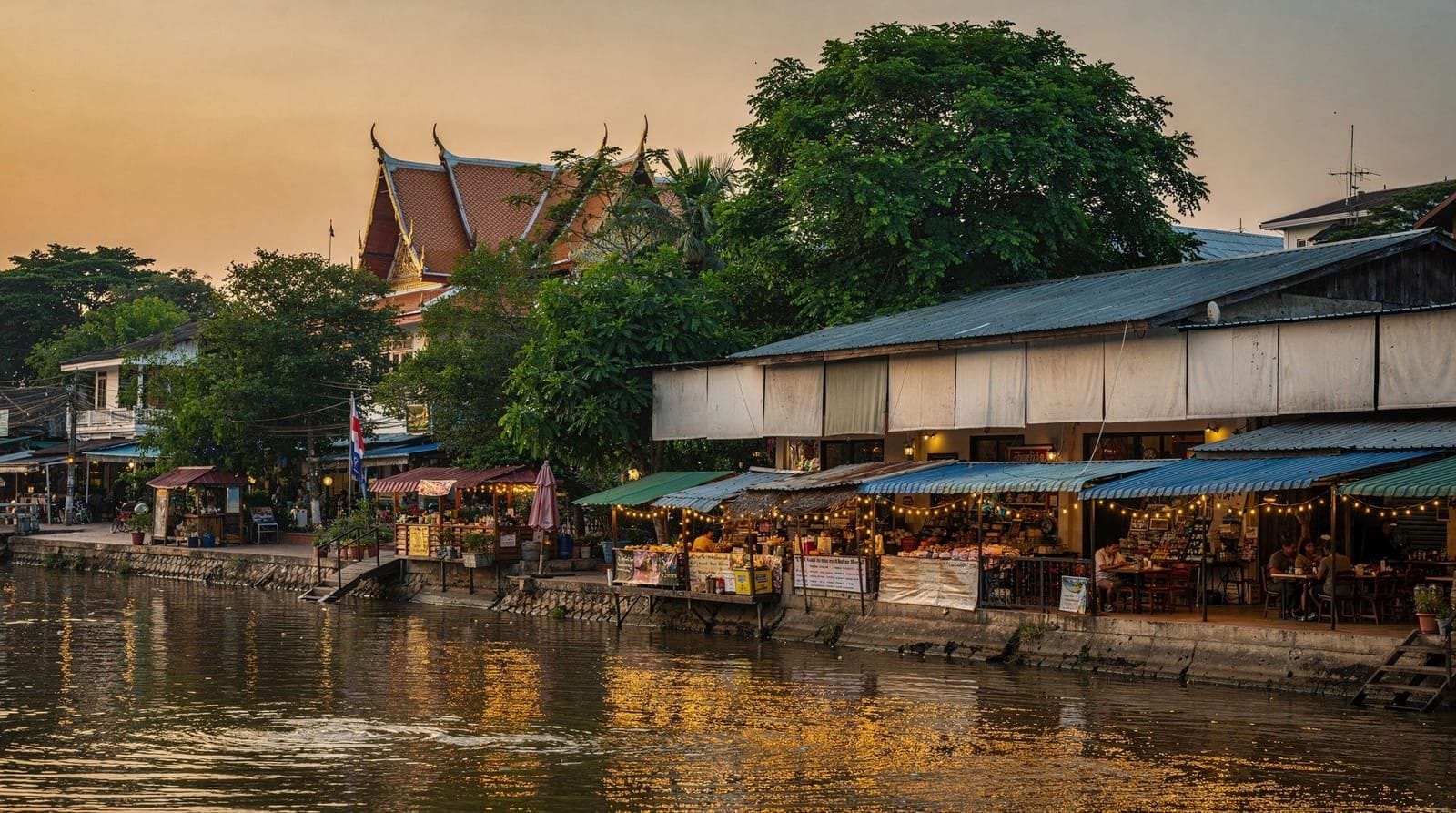
The area east of the moat, running from the Ping River and Wat Ket across to Chang Khlan and the Night Bazaar, is the city’s most hotel-dense district, home to a real concentration of larger properties, including several international chains, alongside riverside boutique hotels with genuine river views. This is the practical, somewhat more transactional option: fewer independent guesthouses, more predictable mid-range and upscale hotel stock, and immediate proximity to the nightly market for food, souvenirs and the adjacent Muay Thai fights at Kalare Night Bazaar’s boxing stadium.
Wat Ket, on the quieter eastern riverbank, offers a genuinely calmer register within the same broad area, with small galleries and riverside dining that feel a step removed from the Night Bazaar’s commercial density. Warorot Market, the city’s main day market for Thai-Chinese food and household goods, sits within easy walking distance from the northern end of this district. Hotel pricing runs from around 800 THB (USD 22) for simple mid-range rooms up to several thousand THB a night for riverside suites, generally comparable to Old City boutique pricing at equivalent quality tiers. An evening local street food and market tour is a solid way to get an oriented first evening in this district before deciding whether the shopping-heavy Chang Khlan side or the calmer Wat Ket side suits a longer stay better.
Santitham: cheap, local and increasingly popular with long-stayers
Santitham, the grid immediately north of the moat around Chang Phueak, is Chiang Mai’s plainest and least touristy central neighbourhood, and increasingly popular precisely because of that. Prices run genuinely local — a full meal at a Santitham noodle shop or khao soi stall commonly costs 40-60 THB (USD 1.10-1.65), noticeably less than equivalent Old City tourist-facing options — and the area has a real everyday texture of local markets, motorbike repair shops and residential streets rather than a curated tourist strip. It sits close enough to both the Old City and Nimman (typically a 10-minute Grab to either) to work as a cheaper, calmer alternative base for visitors who do not need to be inside the walls or inside Nimman itself.
The trade-off is an honest one: fewer boutique guesthouses, a plainer streetscape, and no walkable temple cluster of its own, though Wat Chiang Man and the northern stretch of the Old City walls are a short walk from Santitham’s southern edge. It suits long-stay visitors, budget-conscious travellers and anyone who has already done the Old City’s sightseeing on a previous trip more than a first-time visitor on a short stay.
Wualai and Hai Ya: silversmiths and the Saturday market
South of the Old City walls, the Wualai and Hai Ya area is Chiang Mai’s traditional silversmithing district, historically home to artisans from the Shan states and still lined with silver workshops and shopfronts. The weekly Saturday Walking Street market transforms Wualai Road into a pedestrian market mirroring the Old City’s Sunday version, with a slightly more craft- and silverware-heavy character than the Sunday market’s broader mix. This is not really a standalone base for most visitors — accommodation options are thinner than in the Old City proper — but it works well as a secondary stop, and a handful of guesthouses along the southern edge of the Old City walls put it within easy walking reach.
Chang Phueak and the north gate: everyday street food
Chang Phueak, the area around the Old City’s northern gate, blends into Santitham but has its own identity built around a genuinely excellent, entirely local night market for street food, running most evenings with none of the souvenir-shopping character of the Night Bazaar. It is worth knowing about even for visitors basing elsewhere, since it is one of the more honest, least-touristed food experiences within easy reach of the Old City walls, and a reasonable dinner stop after an afternoon inside the moat.
Suthep and the CMU side: green, quiet, mountain-adjacent
The area toward Suthep-Muang and the base of the mountain road, overlapping with the university side of Nimman, is the greenest and quietest of the city’s central options, with easy access toward Doi Suthep and the mountain without the density of either the Old City or central Nimman. It suits visitors prioritising nature access, a scooter-based trip, or a genuinely quiet stay over walkable sightseeing, and works well paired with day trips into the Mae Rim valley given its position on the western side of the city.
How to choose: a decision framework by traveller type
A first-time visitor on three to five days weighted toward temples and classic sightseeing does best in the Old City, since it minimises transport planning for the highest-priority activities. A digital nomad or long-stay visitor generally does better in Nimman, or in Santitham for a cheaper, quieter variant of the same convenience. A visitor prioritising larger hotel stock, shopping and a predictable international-standard experience over independent character fits the riverside and Night Bazaar area. Families often do well in either the Old City or the riverside area depending on whether walkable sightseeing or hotel amenities matter more, since both have well-reviewed options across most budget tiers. Anyone on a repeat visit who has already covered the temples tends to get more out of Nimman, Santitham or the Suthep side than a second stint in the Old City.
Noise, safety and walkability after dark
None of these areas is unsafe by ordinary travel standards, but they differ noticeably in how they feel after dark. The Old City’s main gate streets and bar strips stay loud and busy into the night, while its interior lanes thin out fast, and walking alone late at night on the smaller side sois is worth a bit more attention than on the main roads. Nimman is quieter after midnight than its daytime café energy suggests, with wider, better-lit streets and nightlife concentrated in a handful of specific bars rather than spread across the district. The riverside and Night Bazaar area stays busy and well-lit along the main shopping strip well into the evening, given its hotel density and market foot traffic, though the Wat Ket side across the river is noticeably calmer. Santitham and Chang Phueak are quiet, residential and well-lit on the main roads but have fewer people around after 10pm than any of the more central options, which some travellers read as calmer and others as simply less convenient if arriving back late.
Budget snapshot across neighborhoods
As a rough guide, a private mid-range room runs 800-1,500 THB (USD 22-42) a night in Santitham or Chang Phueak, 1,200-2,500 THB (USD 33-70) in the Old City, 1,500-3,000 THB (USD 42-84) in Nimman, and a similarly wide 1,000-3,500 THB (USD 28-98) range on the riverside and Night Bazaar side depending on how close to the water or how large the hotel is. Food follows a similar pattern: Santitham and Chang Phueak offer the cheapest genuinely local meals, the Old City and riverside area sit in the middle with a mix of tourist-facing and local pricing, and Nimman runs highest for both coffee and restaurant meals given its more upscale positioning. None of these differences are large enough on their own to dictate a choice of base, but they compound meaningfully over a week-long stay, particularly for long-stay visitors watching a daily budget closely.
Getting between neighborhoods
A Grab between any two of these areas typically runs 10-20 minutes and 50-120 THB (USD 1.40-3.30), which is short enough that the choice of base matters more for spontaneous, unplanned movement than for access to any specific attraction. Songthaews, the shared red pickup trucks, cover similar routes for a flat 30-40 THB per person but run less predictably outside main roads. A nighttime city highlights tour by EV tram or a half-day private city tour by tuk-tuk is a reasonable way to see several of these districts in a single outing before deciding where to base a longer stay, and both cover ground that would otherwise take several separate Grab rides to piece together.
Frequently asked questions about Chiang Mai neighborhoods
Which neighborhood should a first-time visitor to Chiang Mai choose?
The Old City, in almost every case. It puts Wat Phra Singh, Wat Chedi Luang and the weekly Sunday Walking Street within an easy walk, which removes most transport planning during the highest-priority sightseeing days of a short trip.
Is Nimman too far from the temples and the Old City?
No. A Grab between Nimman and the Old City typically takes 10-15 minutes and costs 60-100 THB (roughly USD 2-3), close enough that combining a temple morning with a Nimman coffee afternoon is a normal single day rather than a logistical project.
Where should digital nomads and long-stay visitors base themselves?
Nimmanhaemin, generally, given its density of reliable-wifi cafés, coworking spaces and serviced apartments built for month-long stays. Santitham is a cheaper, quieter alternative for the same crowd, with a shorter commute to Nimman than the Old City has.
Is the riverside and Night Bazaar area worth staying in?
It suits visitors who want larger hotels, brand consistency and easy access to the nightly Chang Khlan market, more than travellers chasing an independent guesthouse or boutique-café atmosphere. It is a reasonable, unglamorous, well-connected default rather than a standout choice.
What is Santitham like compared to the Old City?
Santitham is a mixed residential-commercial area just north of the moat with genuinely local prices and food, far fewer tourists, and a shorter Grab to Nimman than the Old City has, at the cost of less immediate walkable sightseeing and a plainer streetscape.
Can I split my stay across more than one Chiang Mai neighborhood?
Yes, and for trips of six nights or longer it is a reasonable way to get more than one texture of the city without excessive daily commuting, since no two of these areas sit more than about 20 minutes apart by Grab.
Top experiences
Bookable activities with verified prices and instant confirmation on GetYourGuide.