Long-neck Karen villages near Chiang Mai: context, ethics and alternatives
Chiang Mai: 2-Day Karen Village Homestay with Meals
Duration: Multi-day
Should I visit a long-neck Karen (Kayan) village near Chiang Mai?
Most operators would advise against the common day-trip version of this stop. Many long-neck villages sold to tourists are static displays built specifically for paid photography, and many residents are stateless Kayan refugees from Myanmar with genuinely limited freedom to leave or choose other work. If meeting Karen communities on their own terms is what interests you, a homestay or trekking visit to a village that isn't organized around a single paid photo stop is the more defensible alternative, and this guide covers exactly what those look like.
Long-neck Karen villages, more precisely Kayan villages, appear on a surprising number of day-trip itineraries sold out of Chiang Mai and Chiang Rai, usually as a striking, easily marketed photo stop between temples or a golden triangle tour. They’re also one of the most consistently criticized forms of tourism in northern Thailand by human rights researchers, journalists, and increasingly by responsible-travel advocates within the industry itself. This guide lays out the actual history and context behind these villages, why the standard tourist version raises real ethical concerns, and what a more defensible way to engage with Karen and Kayan communities looks like.
What “long-neck” actually means
The term refers to Kayan women who wear stacked brass coils around their neck, a tradition specific to a sub-group within the broader Karen ethnic family originally from Kayah State in what is now Myanmar. Girls typically begin wearing a small number of coils in childhood, adding more over the years. Contrary to a common misconception, the coils don’t stretch the neck vertebrae themselves; they gradually press down the collarbone and compress the upper ribcage, creating the visual effect of an elongated neck. It’s a genuine cultural and, for some women, personal or aesthetic practice with real history behind it, not something manufactured for tourists. The ethical concerns covered in this guide are about how the practice has been commercialized for a tourist audience, not about the tradition itself.
Why the coils are worn: competing explanations
There isn’t a single agreed-upon origin story for the neck-coil tradition, and it’s worth knowing that several explanations circulate, sometimes presented with more certainty than the actual historical record supports. Some accounts describe the coils as a beauty ideal specific to Kayan culture, worn from childhood as a marker of identity and status. Others describe a protective folk explanation, the idea that the coils once discouraged tiger attacks by making the neck a less viable target, though this is contested among anthropologists and may be a retrofitted explanation rather than the original reason. Some Kayan women who wear the coils today describe personal or family reasons tied to identity and continuity with older relatives rather than any single origin myth. The honest answer is that the tradition predates its tourist commercialization by generations, and the coils carry real cultural meaning for the women who choose to wear them, separate entirely from how the practice gets marketed to outside visitors.
How these villages ended up in Thailand
Most long-neck villages marketed to tourists in Thailand today, concentrated mainly around Mae Hong Son province and to a lesser degree near Chiang Rai, trace back to Kayan refugees fleeing conflict, displacement, and persecution in Myanmar beginning in the late 1980s and continuing through subsequent decades. Many residents hold refugee status or are otherwise stateless within Thailand rather than holding Thai citizenship, a legal status that significantly restricts their ability to work outside the village, travel freely within Thailand, or access many of the rights and services citizens have. This context rarely appears anywhere on a tour listing, but it’s central to understanding why these villages exist in their current form and why leaving isn’t a simple option for many residents.
Legal status and why it matters to how these villages operate
Refugee and stateless populations in Thailand, including many Kayan residents of these villages, historically faced significant restrictions on movement, formal employment, and access to citizenship pathways, though policy and individual circumstances vary and some residents and their children have gained Thai citizenship or legal residency over time. This legal backdrop matters directly to the ethics discussion, because it shapes how much genuine choice a given individual has over whether to participate in the tourist-village model at all. A Kayan resident with full legal work rights and freedom of movement choosing to work in a cultural tourism village is in a materially different position than one whose legal status leaves few other realistic income options. Tour marketing almost never mentions any of this, which is exactly why it’s worth knowing before you decide whether and how to visit.
Who actually profits from the entry fee
Reporting by journalists and researchers who have investigated these villages over the years has documented that entry fees are often collected and controlled by village landlords, local business operators, or intermediary agencies rather than distributed evenly, or even substantially, among the residents on display. In some documented cases, individual coil-wearing women receive a modest daily or monthly stipend rather than a meaningful share of what visitors actually pay at the gate, with the larger portion going to whoever operates the site commercially. This is one of the clearest, most concrete reasons the “at least it’s income” argument doesn’t fully resolve the ethical tension: even when tourism income exists, it isn’t necessarily reaching the people being photographed in proportion to what visitors are paying to see them.
Why the “human zoo” criticism exists
Journalists, human rights organizations, and researchers who have studied these villages extensively use language like “human zoo” because many function, in practice, as static entry-fee attractions: visitors pay to enter, walk through, and photograph residents who are essentially on display, with limited legal ability to pursue other work and, in some documented cases, limited freedom to leave the village at all. This is meaningfully different from a functioning Karen or Hmong village that also welcomes visitors, shares its culture on its own terms, and has residents who came to guiding or hosting work as one option among several available to them. The distinction that matters throughout our broader guide to responsible hill-tribe village visits is exactly this one: genuine community-controlled tourism versus a village effectively organized around outsider consumption.
The genuinely difficult question
It would be dishonest to present this as a simple call. Some residents and researchers who’ve spent real time in these communities argue that tourism income, however structurally compromised, remains one of relatively few realistic income sources available given restricted legal work rights for stateless residents, and that outright avoidance doesn’t necessarily improve individual lives on the ground. Others argue, with equal seriousness, that continued tourist demand is precisely what has entrenched the display-village model instead of supporting stronger paths toward citizenship, legal work rights, and genuine self-determination. Neither position resolves the tension cleanly. What most responsible-travel voices converge on is a more modest, practical stance: if you do visit, favor operators who pay transparently and directly, prioritize buying textiles and crafts straight from residents over an entry-fee-only model, and don’t treat the visit as a casual photo op detached from the underlying situation.
What a more defensible alternative looks like
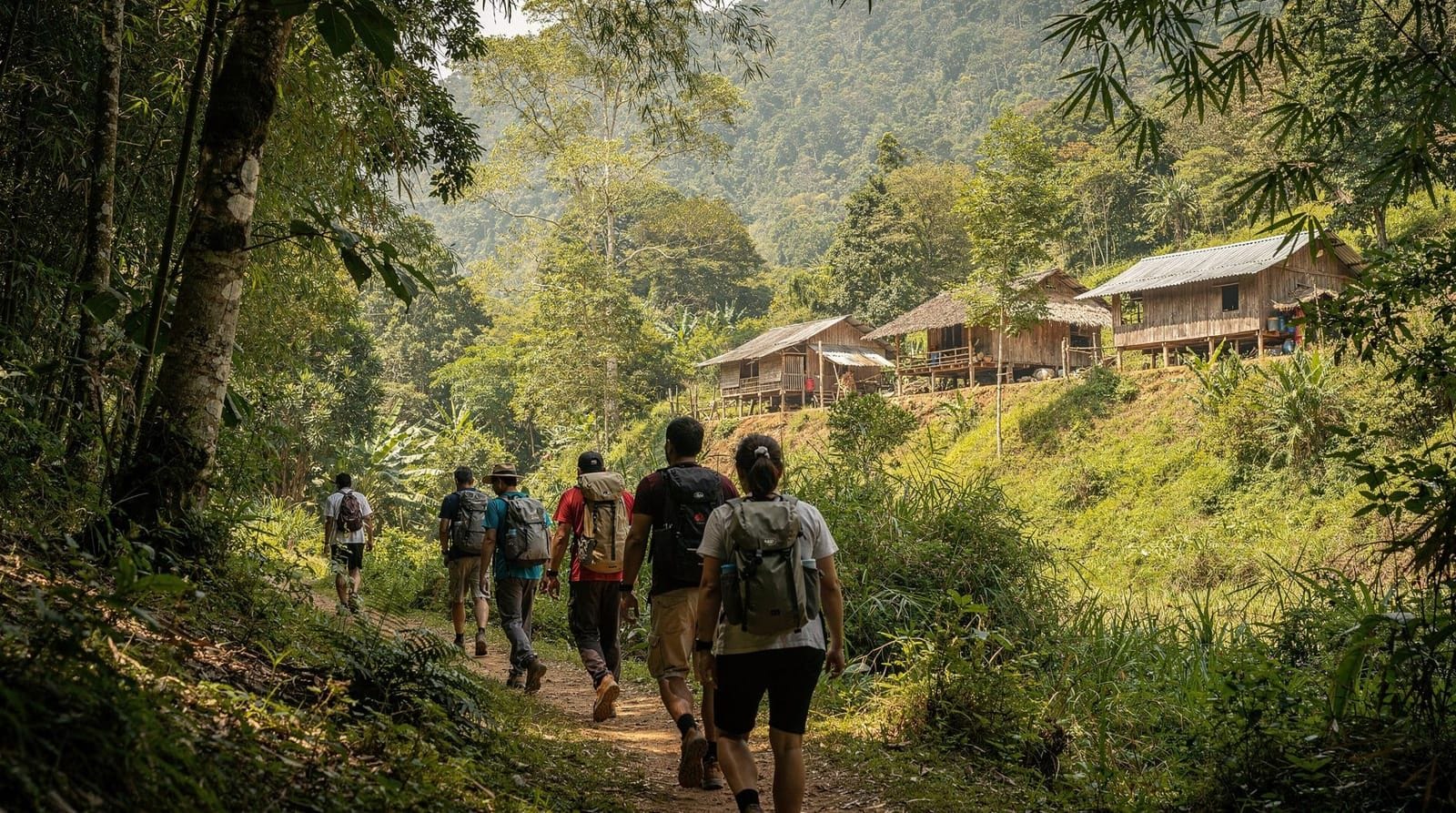
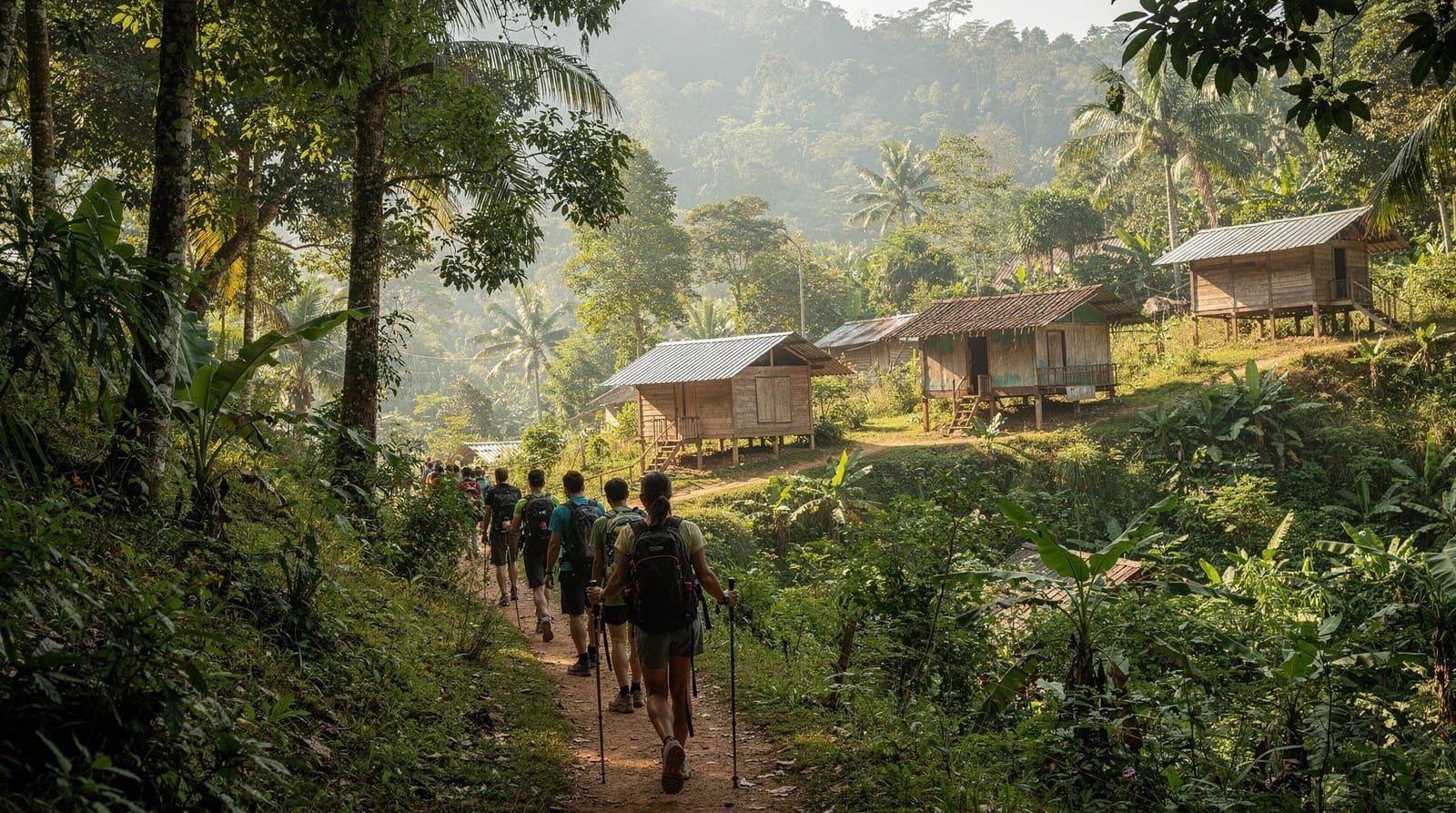
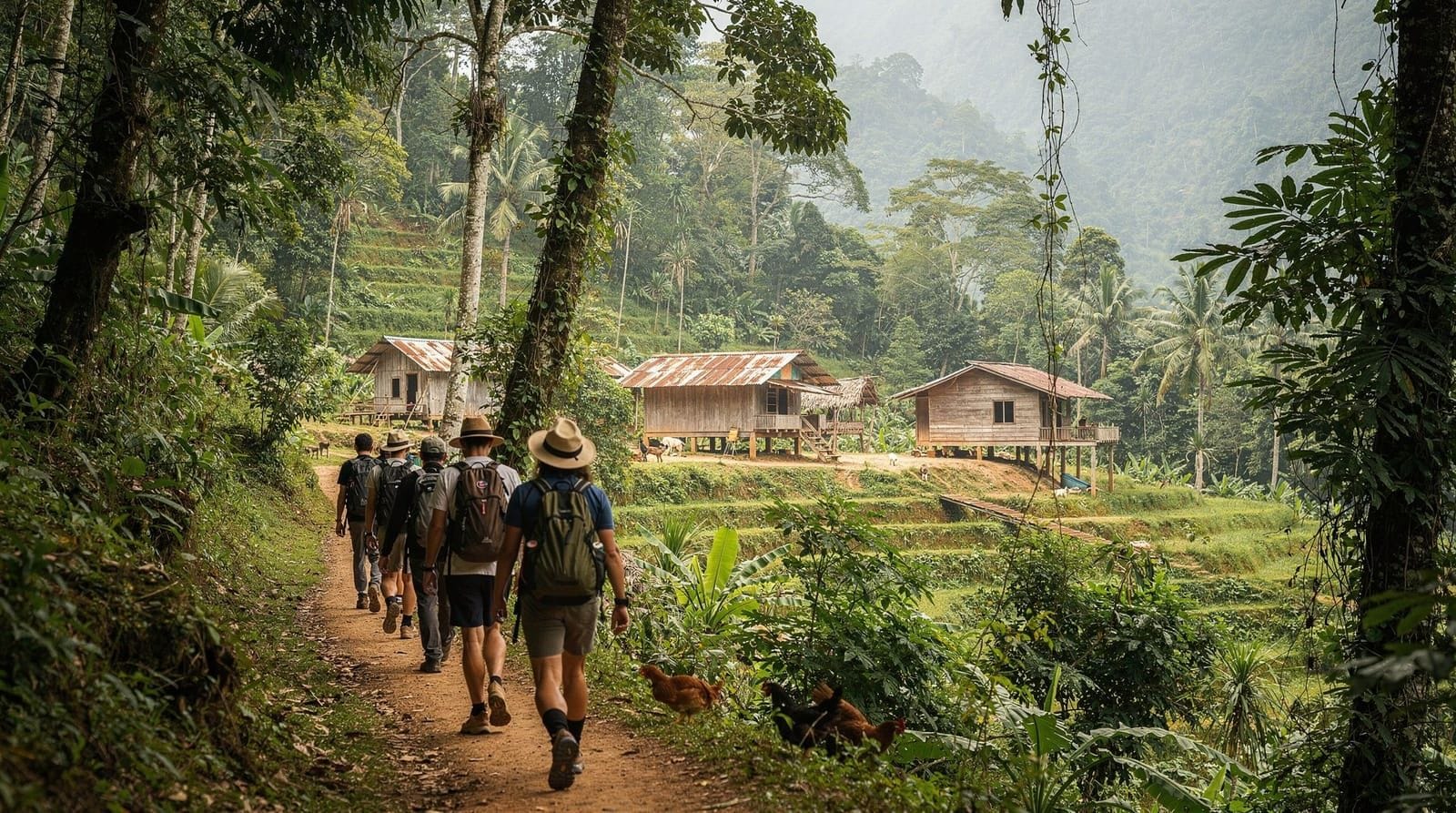
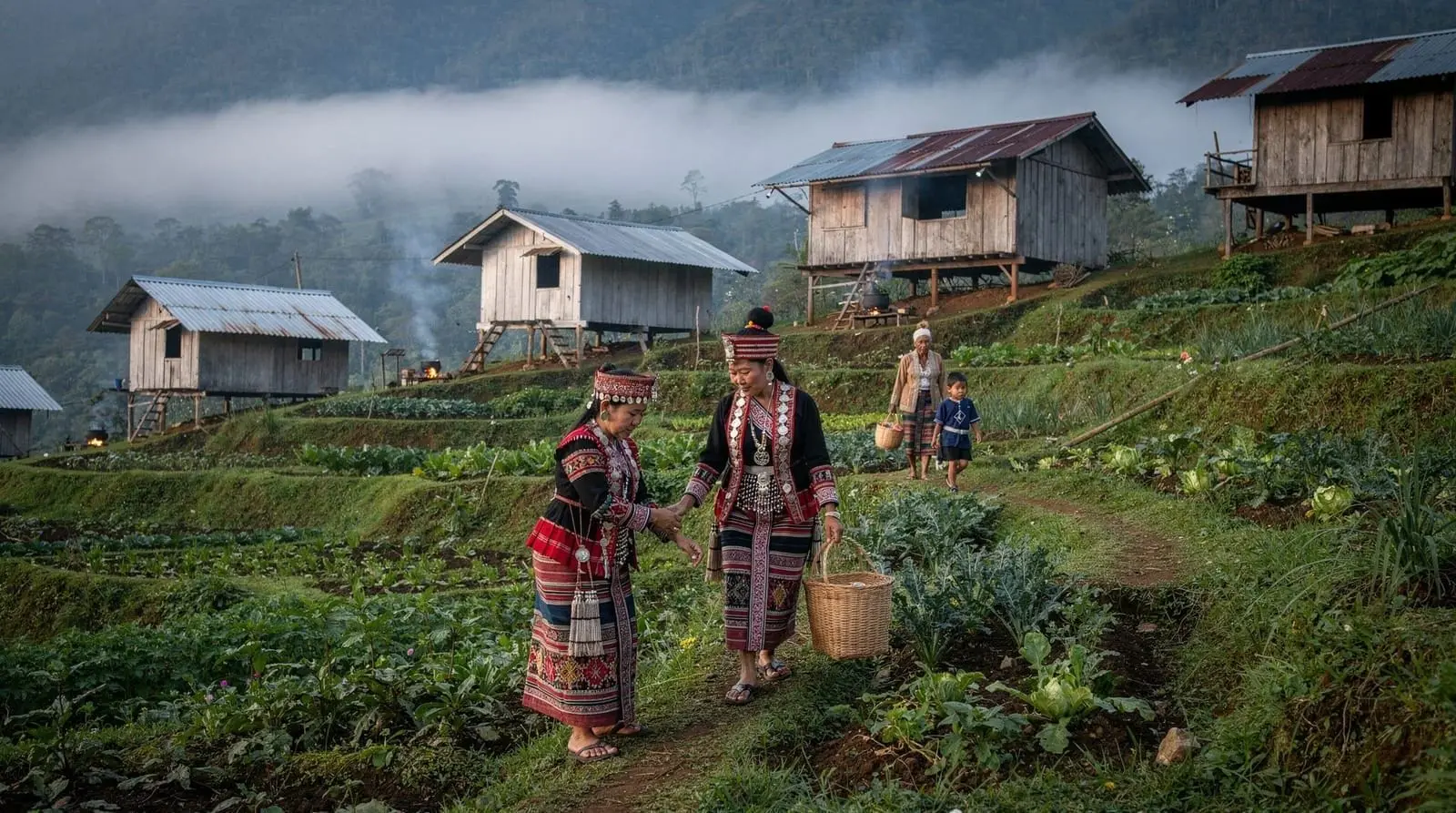
If meeting Karen communities is genuinely what interests you, a trekking or homestay visit to a village that runs its own tourism program, rather than one organized around a single static display, is the more defensible option available near Chiang Mai. A two-day Karen village homestay with meals puts you in an actual working village in the Mae Wang or Mae Taeng area, with an overnight stay and shared meals as the core of the visit rather than a paid walkthrough. A two-day eco-trek to the White Pakayaw village similarly centers the trip on trekking and genuine community time rather than a single photographed stop. Neither of these routes involves the long-neck display model at all; both are built around Karen communities engaging in tourism on broadly their own terms, which is the distinction this whole guide is built around.
If a long-neck stop is bundled into a tour you want
Some Chiang Rai and Golden Triangle day-trip itineraries include a brief long-neck village stop as one element among several stronger stops, like the White Temple or the Golden Triangle itself. If you’re otherwise interested in a specific multi-stop itinerary, it’s entirely reasonable to ask the operator directly whether the long-neck stop can be dropped or substituted, and a responsible operator should be able to accommodate that request without difficulty. Treating this as a normal, unremarkable question, rather than an awkward one, is itself a useful signal of how seriously an operator takes ethical concerns their own customers raise. Our broader guide to avoiding scams and low-value tours covers a similar pattern of asking direct, specific questions before booking rather than relying on marketing copy, a habit that applies well beyond this single issue.
What responsible travel organizations generally advise
Most responsible-tourism guidance, from established travel organizations to individual guidebooks and journalists who cover the region, converges on a broadly similar recommendation: avoid the standalone, entry-fee-only version of a long-neck village visit where it’s the sole reason for the stop, and if a genuine, transparently-run Kayan cultural program does exist in a given area, look specifically for one where residents are paid directly and fairly, retain freedom of movement, and have some documented say in how the village presents itself to visitors. That’s a higher bar than most listings can actually clear, which is part of why the more straightforward recommendation for most travelers is simply to redirect that portion of their itinerary toward a Karen or Hmong community visit built around trekking or homestay rather than a paid photo stop, covered in detail in our guide to visiting hill-tribe villages responsibly.
If you’ve already visited, or are still deciding
Some travelers reading this will have already visited a long-neck village, often without knowing this context in advance, since it’s genuinely rare for a tour listing or driver to explain any of it unprompted. That’s a common experience, not a reason for excessive guilt, and the more useful response is simply carrying this context forward into future travel decisions, in this region and elsewhere, rather than dwelling on a past visit made without full information. If you’re still deciding whether to include a long-neck stop on an upcoming trip, weighing the genuinely difficult tradeoffs covered above against a clearer alternative, like a Karen homestay trek, is a reasonable way to resolve the decision without needing to have a fully settled answer to the wider debate.
The wider pattern: staged culture as a tourist product
The long-neck village is the most extreme and most documented example of a broader pattern worth watching for across hill-tribe tourism generally: cultural presentation staged specifically for outsider consumption rather than reflecting how a community actually lives day to day. This shows up in smaller ways too, residents asked to wear traditional dress specifically because tourists expect it rather than as everyday practice, or villages presented as more “untouched” or “remote” than they actually are for marketing purposes. Our honest look at Chiang Mai’s tourist traps and our broader overtourism piece both cover related versions of this same dynamic across the wider Chiang Mai tourism economy, not just hill-tribe visits specifically.
Elephants face a similar version of this problem
There’s a useful parallel here with elephant tourism, another area where a genuinely difficult, unresolved historical situation (elephants displaced from logging work after Thailand’s 1989 logging ban) gets sold to tourists through a marketing lens that doesn’t always reflect the underlying welfare reality. Our guide on why elephant riding causes harm and our ethical elephant sanctuary guide apply a similar honest-planner standard: understand the actual history and stakes involved, then choose the option that most respects the wellbeing and autonomy of whoever, or whatever, you’re visiting, rather than the one with the most striking marketing photo.
A note on language
It’s worth being precise with terminology, since imprecise language is part of how the more troubling aspects of this tourism model get obscured in marketing. “Long-neck Karen” is the common tourist-facing shorthand, but the more accurate term for the specific ethnic sub-group involved is Kayan, a distinct community within the broader Karen family of peoples, itself one of several ethnic groups collectively and imprecisely lumped together as “hill tribes” in tourism marketing generally. Using “Kayan” specifically, rather than the vaguer “long-neck” label, is a small but genuine step toward treating the community as a specific people with a real history rather than a visual curiosity.
Where these villages are actually located
Most long-neck villages sold to Chiang Mai and Chiang Rai visitors sit in Mae Hong Son province or along Chiang Rai day-trip routes rather than immediately around Chiang Mai city itself, which means most visitors encounter them as an add-on within a longer regional itinerary rather than a standalone Chiang Mai activity. Knowing this in advance means you can research and decide on this specific stop well before committing to a broader multi-day itinerary that includes it, rather than being surprised by it mid-trip.
Making a decision you feel comfortable with
There’s no universally “correct” answer that resolves every part of this debate, and this guide hasn’t tried to manufacture one. What it has tried to do is give you the actual context, history, legal background, and range of views involved, so that whatever you decide, visiting, skipping the stop entirely, or choosing a Karen homestay trek instead, it’s an informed decision rather than one made on the strength of a tour listing’s photo alone. That’s a reasonable standard to hold yourself to here, and honestly, across most of the ethically complicated tourism choices this region presents.
Frequently asked questions about long-neck Karen villages
What does “long-neck” actually refer to?
It refers to Kayan women who wear stacked brass coils around their necks from a young age, a tradition within a specific sub-group of the wider Karen ethnic family from Myanmar’s Kayah State. The coils compress the collarbone and ribcage rather than stretching the neck vertebrae themselves, creating a visual impression of a longer neck.
Are long-neck villages near Chiang Mai the same as Kayan communities in Myanmar?
Not exactly. Most were established or grew after Kayan refugees fled conflict in Myanmar from the late 1980s onward, and many residents hold refugee or stateless status in Thailand, significantly limiting their legal ability to work outside the village or travel freely.
Why is this considered a “human zoo”?
Because many of these villages function as static, entry-fee attractions where residents are essentially on display for photographs with limited ability to leave or work elsewhere, distinct from a functioning village that welcomes visitors on its own terms.
Isn’t visiting still better than these villages having no income at all?
This is genuinely debated without a clean answer. Some argue tourism income is currently one of few realistic options given restricted work rights, while others argue tourist demand entrenches the display-village model instead of supporting genuine paths to citizenship and work rights.
What should I visit instead if I want to meet Karen communities?
A Karen village trek or homestay in areas like Mae Wang or Mae Taeng, where communities run their own tourism programs and host overnight guests rather than operating a single static photo stop, is a substantially more defensible alternative.
Do all long-neck village tours work the same way?
No. Some combine a brief stop with other stronger, more consensual community visits, while others are built entirely around the display-village stop. If one is bundled into an itinerary you want, ask whether it can be swapped or skipped.
Top experiences
Bookable activities with verified prices and instant confirmation on GetYourGuide.