One-day trekking near Chiang Mai: routes, cost and what to expect
Chiang Mai: 1-Day Trekking Experience to Village & Waterfall
Duration: Full day
Can you do a proper jungle trek near Chiang Mai in a single day?
Yes. Most one-day treks combine 3-5 hours of walking through Karen or Hmong hill country with a waterfall stop and often a village visit or bamboo rafting, all within about a 1-3 hour drive of the city. Expect to pay roughly 1,200-2,200 THB (about 33-61 USD at 36 THB/USD) including hotel transfer, guide, and lunch, with no overnight commitment required.
Not everyone visiting Chiang Mai has two or three days to spare for an overnight jungle trek, and the good news is that a genuinely worthwhile trekking experience doesn’t require one. A well-run one-day trek covers real trail, a real waterfall, and often a real village stop, all within a schedule that gets you back to your hotel by dinner. This guide covers what a single day of trekking actually involves, which routes work best in that timeframe, and how to decide whether a day trip or a full multi-day commitment (covered in our main trekking guide) is the better fit for your trip.
Both formats share the same core building blocks, walking, a waterfall, a village, but differ in pace and depth, and knowing that upfront makes it easier to pick the right one for your trip rather than booking the first listing you see.
Who a one-day trek suits
A single-day trek makes the most sense for travelers with limited time in Chiang Mai, those testing whether trekking suits them before committing to a multi-day route, families with younger children who’d rather avoid a rustic overnight stay, and anyone building a varied itinerary who wants one solid day of jungle walking alongside temples, markets, and other city-based activities rather than dedicating two or three consecutive days to a single theme. It’s a lower-commitment way to get the core trekking experience, at some cost to depth and distance covered.
What a typical one-day trek includes
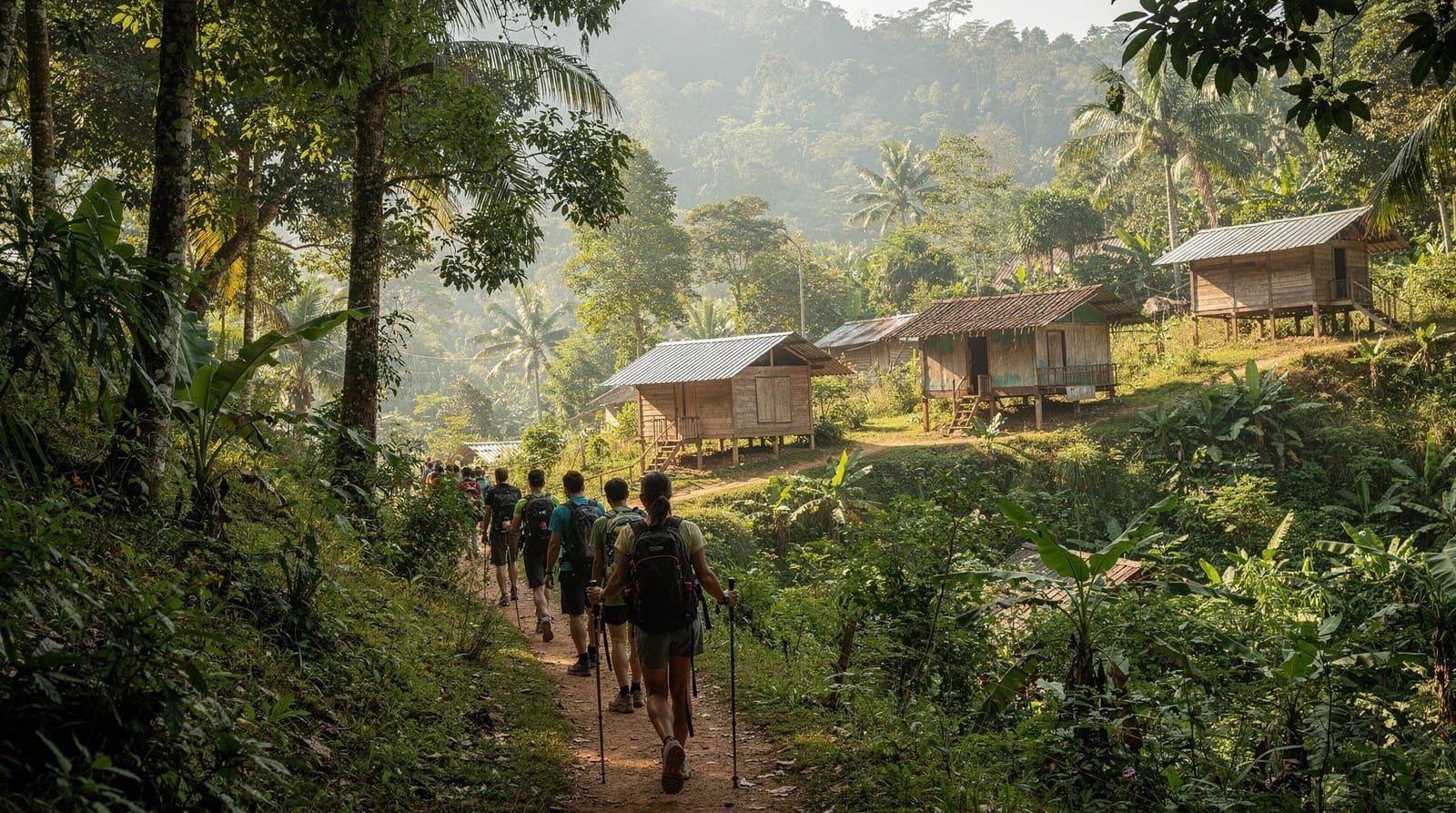
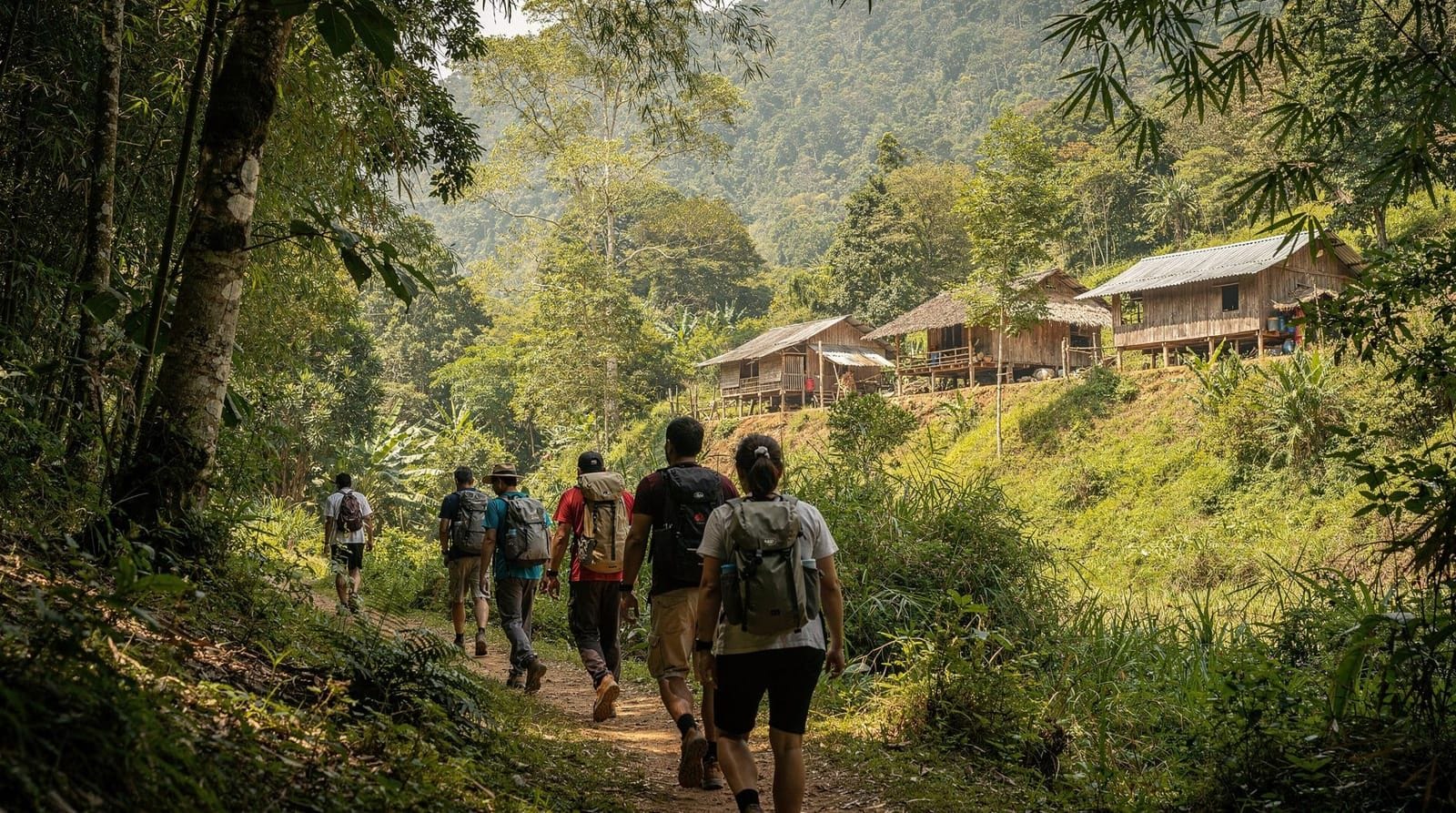
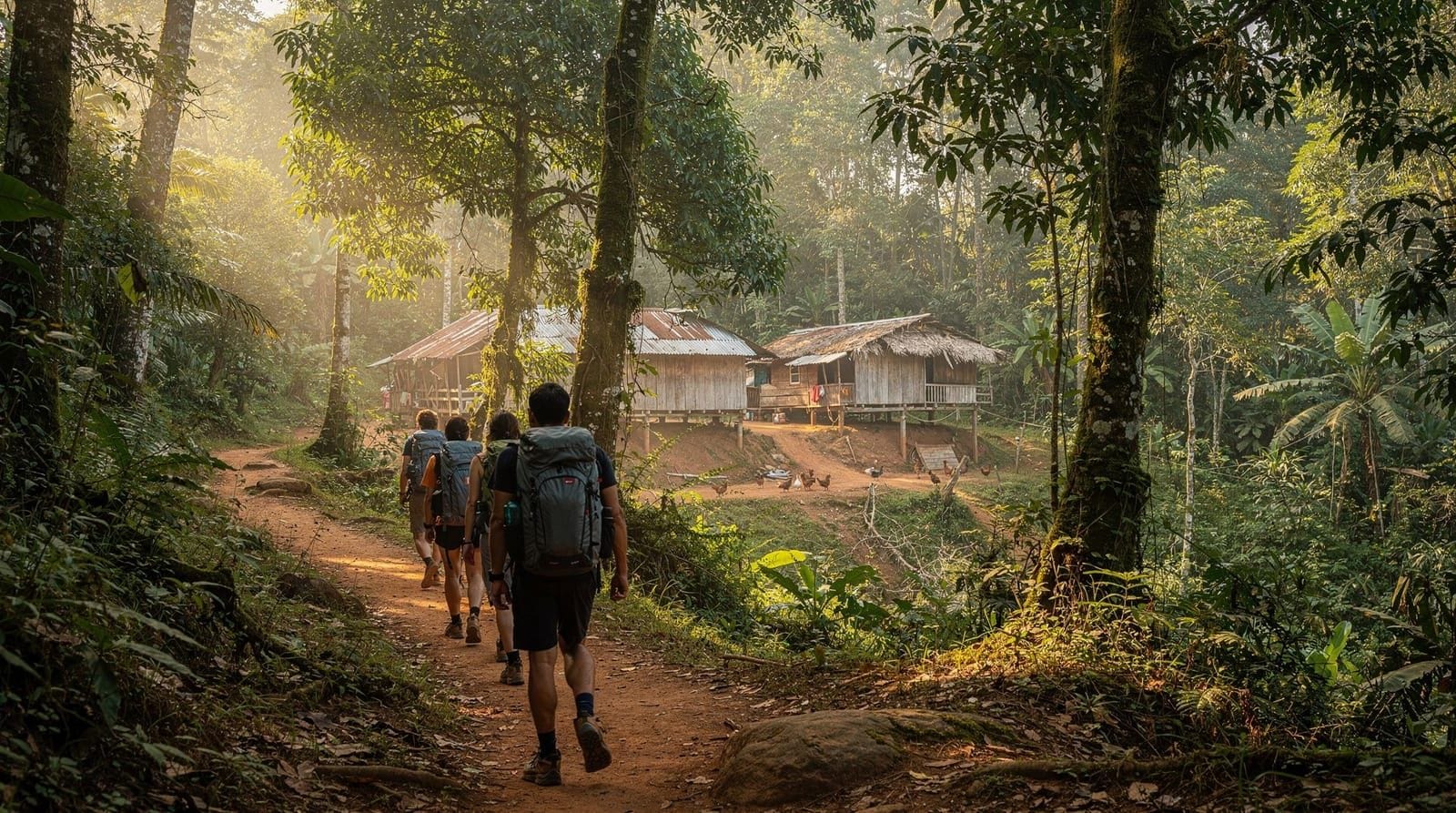
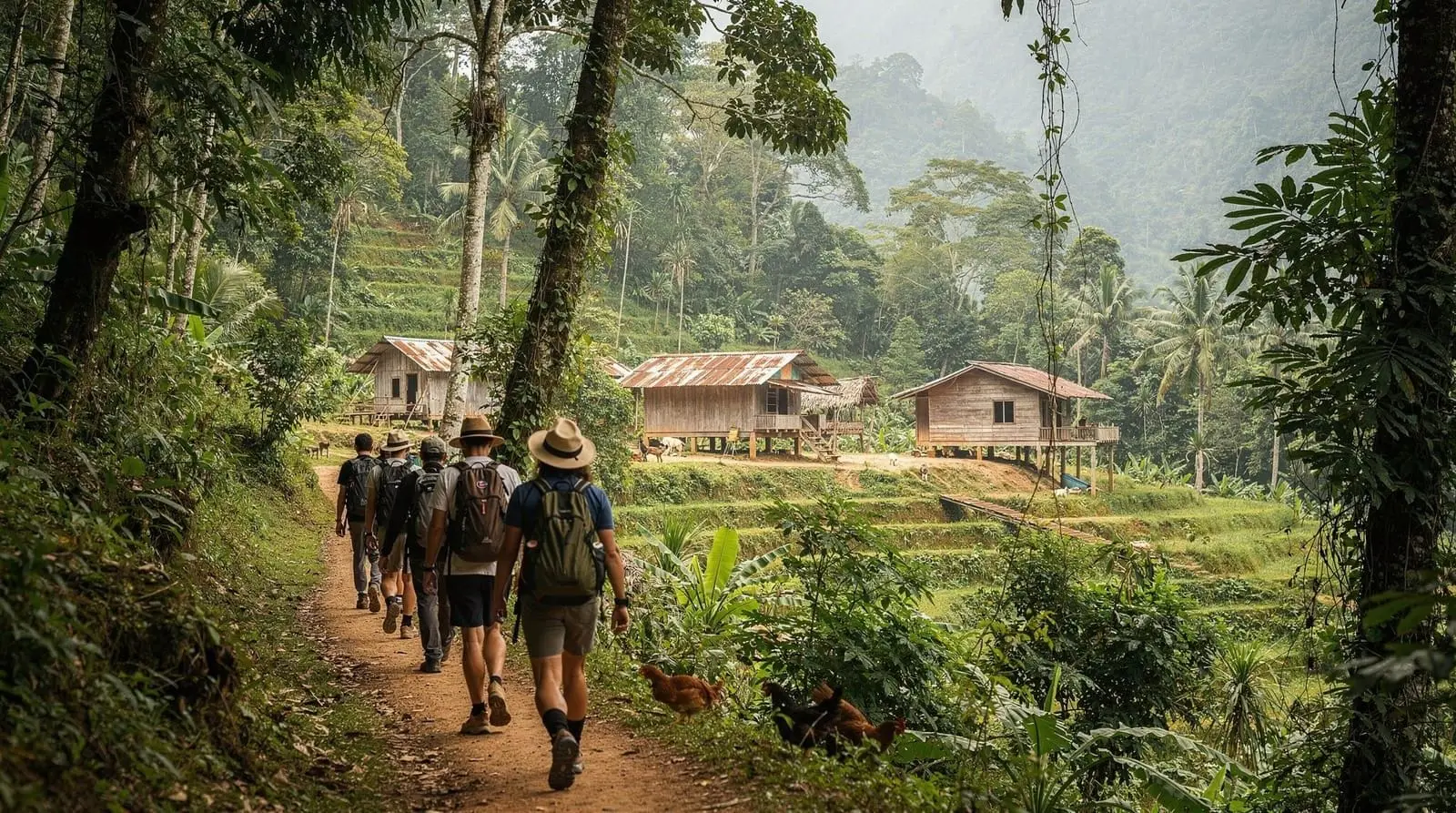
Pickup is usually early, between 7:30 and 8:30am, with a 1-3 hour drive out toward one of the region’s trekking valleys depending on the specific route. From the trailhead, expect 3-5 hours of walking broken into segments, typically a morning stretch through forest or ridge trail, a stop at a waterfall for swimming, and often a village visit where lunch is served or purchased. Many routes finish with an activity like bamboo rafting before the drive back, arriving at your hotel by late afternoon.
A one-day trekking experience to a village and waterfall in the Doi Inthanon area follows almost exactly this shape: morning trailhead walk, waterfall stop, and a village visit, all in a single day without an overnight commitment.
Popular single-day routes
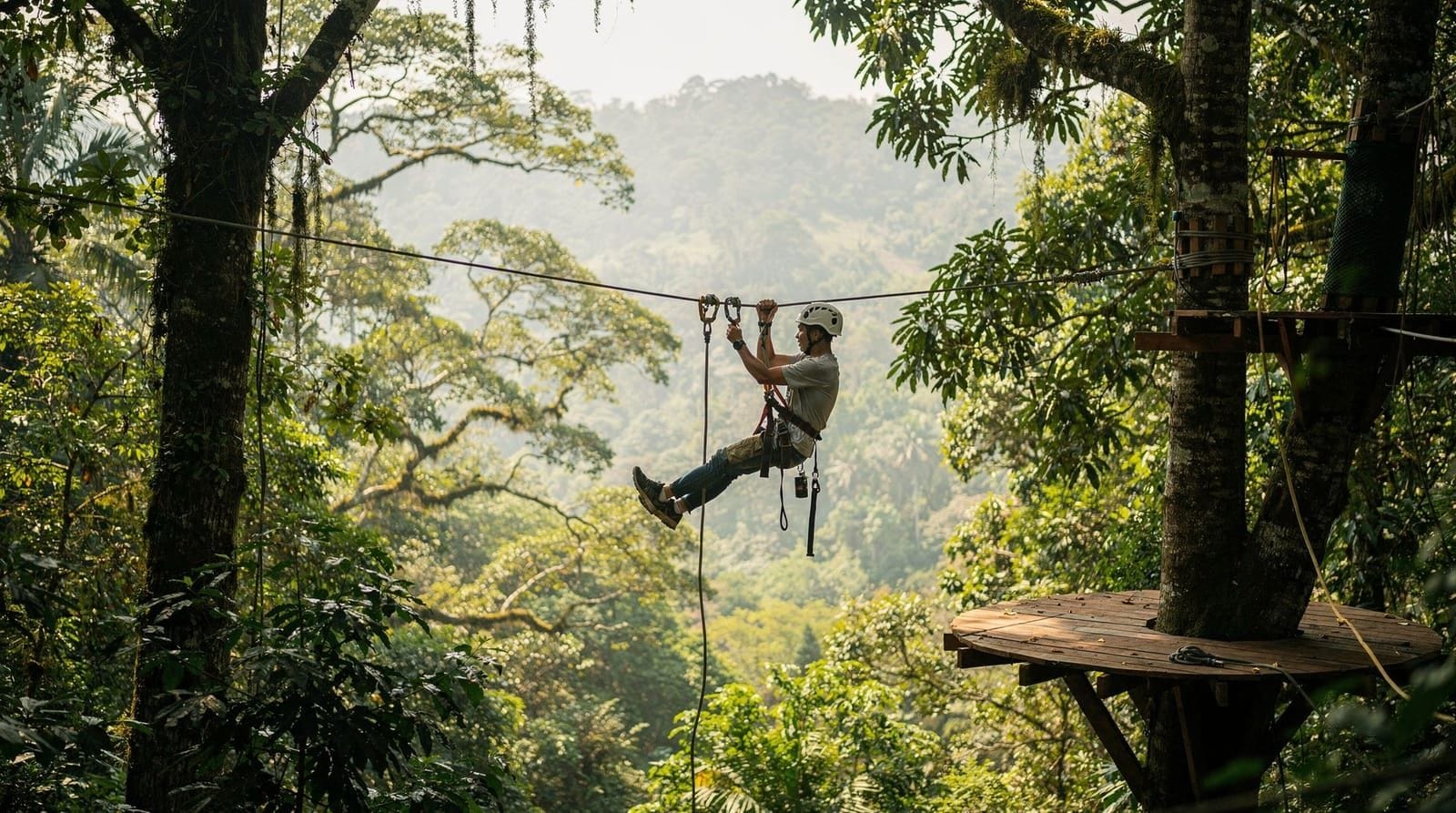
Mae Wang, about an hour southwest of the city, is the most common base for one-day treks, offering a dense cluster of Karen villages, waterfalls, and bamboo-rafting rivers within a compact, easily reached area. Doi Inthanon’s foothills combine trekking with the park’s cooler elevation and, on some itineraries, access to genuine national-park trail sections around Doi Inthanon rather than commercial trekking land specifically. Mae Taeng, north of the city, offers similar terrain and is a common base for routes that bundle in a zipline or rafting add-on, and sits near enough to Mae Rim that some itineraries combine a short walk with an ethical elephant sanctuary stop earlier or later in the day. Chiang Dao, further out, centers more on cave exploration than pure jungle walking but includes hill-tribe village stops on several of its itineraries; see our Chiang Dao day trip guide for that specific combination. A smaller number of one-day routes head toward the Sticky Waterfalls at Bua Thong, pairing a shorter hike with the area’s distinctive climbable limestone falls rather than a standard swimming stop. Our comparison of trekking routes across northern Thailand covers how these areas differ in more depth, including which suit multi-day trekking better than a single day.
A representative hour-by-hour day
Knowing roughly how the hours break down helps set expectations before you book. A typical single-day trek to Mae Wang or the Doi Inthanon foothills runs something like this: 7:30-8:00am hotel pickup and a drive of 60-90 minutes out of the city; 9:30-10:00am arrival at the trailhead and a short briefing from the guide on the route and any safety points; 10:00am-12:30pm the first walking stretch, usually the longest of the day, through forest or ridge trail with a couple of short rest stops; 12:30-1:30pm lunch, either at a village home or a scenic spot along the trail, typically rice, a stir-fried vegetable dish, and a simple protein; 1:30-3:00pm a shorter afternoon activity, commonly a waterfall swim, a village visit, or bamboo rafting depending on the specific route; and a return drive that gets most groups back to their hotel between 4:30 and 6pm. Routes vary, but this general rhythm, morning walk, midday lunch, afternoon activity, holds across most single-day itineraries out of Chiang Mai.
Group size and guide qualifications
Group sizes on shared one-day treks typically run 6-12 people per guide, though private and small-group options exist at a higher price point for travelers who’d rather not join a larger shared van. A useful, if imperfect, screening question before booking is whether the guide is licensed with the Tourism Authority of Thailand or a recognized local guide association, since reputable operators can confirm this without hesitation. Group size also affects the experience directly: a smaller group moves faster on the trail, gets more individual attention from the guide, and creates a less disruptive presence when visiting a village, which matters both for your own experience and for the community being visited.
What food is actually served
Lunch on a standard one-day trek is usually a simple set meal, jasmine rice with two or three shared dishes, commonly a stir-fried vegetable, a mild curry, and a protein like chicken or pork, occasionally served at a village home rather than a restaurant. Vegetarian options are widely available if you flag dietary requirements when booking, since rice-and-vegetable dishes are already a normal part of Northern Thai cooking. Bottled water is typically provided throughout the day, though carrying a reusable bottle and asking about refill points is a reasonable way to cut down on plastic waste on a day that already generates less of it than most city-based activities.
The five-hill-tribes format: breadth over depth
One distinctive single-day format worth understanding on its own terms is the multi-village tour, sometimes marketed as visiting four, five, or more hill-tribe communities in a single day. A full-day tour visiting five hill tribes with a guide and van is built around breadth: shorter stops at several distinct communities rather than one longer visit and a substantial hike at any single location. This suits travelers who want a broad sense of the region’s cultural diversity in one day, though it necessarily means less walking and less time at any one village than a single-destination trek. If depth matters more to you than breadth, a route built around one waterfall and one village with a longer hike between them, like the Doi Inthanon-area option above, is the better fit.
Difficulty: what’s realistic in a day
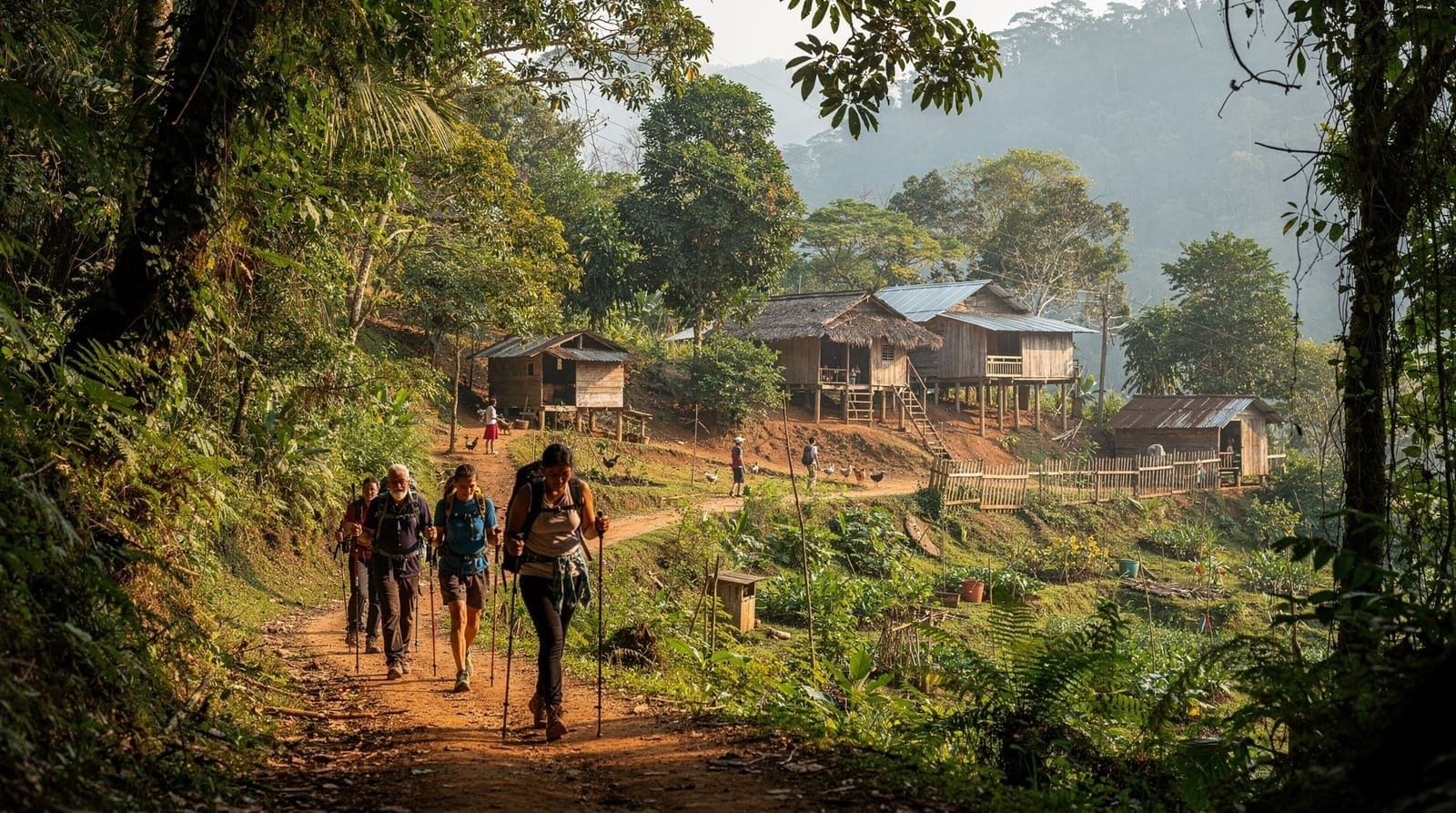
Because a single-day trek has to fit driving time both ways plus the activity itself into roughly 9-10 hours door to door, the actual walking window is naturally shorter and less strenuous than a multi-day route’s daily distance. Most one-day itineraries stay in the 5-10km range on maintained, non-technical trail, with regular breaks built in around the waterfall and village stops. This makes a one-day trek a genuinely accessible option for moderately active travelers who wouldn’t necessarily sign up for a demanding multi-day hike. A private day trek to a Karen tribe village and two waterfalls is a good example of the more relaxed, single-village-plus-nature format that suits travelers wanting a slower, less crowded day than the multi-village tours offer.
Ethics still apply on a day trip
Everything that applies to multi-day trekking ethics applies equally on a single day, arguably more so, since day-trip formats are where staged, low-benefit village visits are most common, precisely because a quick photo stop is easier to slot into a tight schedule than a genuine overnight stay. Ask the same questions you would for a multi-day trek: which specific community you’re visiting, whether the guide is licensed, and whether elephants are involved, since riding remains more common on bundled day-trip add-ons than on standalone sanctuary tours. Our guide to visiting hill-tribe villages responsibly and our guide on why elephant riding causes harm both apply directly here.
Combining a trek with other day activities
Because a one-day trek uses a full day on its own, most travelers don’t stack it with a second major activity on the same day, though it pairs naturally with a rest day at a market or temple the day before or after. Travelers weighing trekking against Chiang Mai’s other big single-day activities, ziplining, whitewater rafting, ATV routes, ethical elephant visits, will find a full side-by-side comparison in our Chiang Mai adventure guide, which is worth reading if you only have room in your itinerary for one or two of these options rather than several.
Photography and village etiquette
A one-day trek’s village stop is usually brief, which makes it especially important to get photography etiquette right in a short window. Always ask before photographing individuals, particularly children, rather than treating a village as a backdrop; a smile and a gesture toward your camera is enough to communicate the request even without a shared language, and a firm no should be respected without argument. Dress modestly for the village portion of the day, covering shoulders and knees, since this is someone’s home and workplace, not a museum exhibit. If your guide offers context on the community’s history or current livelihood, it’s worth listening closely rather than treating the stop purely as a photo opportunity, since that context is often the most genuinely informative part of the visit.
Weather and what to wear
Northern Thailand’s climate varies enough by season that what you wear on a one-day trek should change accordingly. In the cool season (November-February), mornings at higher elevations can be genuinely chilly, so a light long-sleeve layer over quick-dry clothing works well and warms up as the day goes on. In the hot season (March-May) and through the rainy months (June-October), breathable, quick-dry fabric matters more than layering, alongside strong sun protection given how exposed some ridge sections are. Closed-toe shoes with real tread are worth the trade-off against sandals even on a single-day trek, since wet rock near waterfalls and muddy sections after rain are the two most common causes of minor injury on these routes. Our Chiang Mai packing list covers the general list for the trip as a whole, though a one-day trek specifically calls for less gear than the multi-day version covered in our full packing guide for multi-day treks.
What it costs
Budget roughly 1,200-2,200 THB per person (about 33-61 USD at 36 THB/USD, an approximate rate) for a standard one-day trek including hotel transfer, guide, lunch, and any waterfall or bamboo-rafting stop. Private tours, like a small-group or single-family departure rather than a shared van, run somewhat higher, often 1,800-3,000 THB (about 50-83 USD) per person depending on group size. Prices toward the lower end of the range are worth a closer look at the itinerary, since a genuinely fair wage for the guide and a fair fee to the village being visited both cost something real.
What happens if it rains
Northern Thailand’s rainy season, roughly June through October, doesn’t shut down one-day trekking outright, but it does change what a given day looks like. Trails get muddier and slower to walk, waterfalls run fuller and more dramatic, and some operators reroute a portion of the walk to avoid the muddiest sections or shift more of the day toward bamboo rafting, which actually benefits from higher water levels. A responsible operator will tell you in advance if heavy rain the night before has made a specific section unsafe rather than pushing ahead regardless, and it’s reasonable to ask directly about contingency plans when booking during the wetter months. Genuine full-day cancellations are uncommon; partial rerouting is the more typical response.
Booking tips
Read the itinerary for specifics rather than marketing language: how many kilometers of walking, which named village or villages, whether lunch is included or purchased separately, and whether elephants feature anywhere in the day. Recent reviews mentioning group size, guide quality, and whether the walking matched the description are more useful than star ratings alone. It’s also reasonable to ask an operator directly, before booking, what happens in the event of heavy rain or a trail closure, and whether a refund or reschedule is offered rather than a forced substitute activity. If you’re deciding between a day trek and committing to a multi-day route, our main trekking guide lays out the tradeoffs in cost, distance, and depth side by side.
When to go
The same seasonal patterns that affect multi-day trekking apply to single-day routes: November-February offers the driest, clearest conditions, the rainy season (roughly June-October) brings mud and fuller waterfalls, and February-April brings burning-season haze that dulls views without stopping treks from running. Because a one-day trek is a smaller time commitment, it’s also a reasonable way to trek during a shoulder-season visit when you might not want to risk a multi-day route against unpredictable weather. Our trekking season guide covers this month by month.
Frequently asked questions about one-day trekking in Chiang Mai
Is a one-day trek worth it compared to a multi-day trek?
It depends on what you want. A one-day trek gives you a genuine taste of hill-tribe trekking without an overnight stay, suiting travelers on a tighter schedule. A multi-day trek reaches more remote villages and includes an actual overnight stay that most travelers describe as the more memorable part of the experience.
How much walking is actually involved?
Typically 3-5 hours over the course of the day, covering roughly 5-10km of trail with regular rest stops, plus time at a waterfall and any village visit. This is moderate, not technical, trekking.
What time do one-day treks start and finish?
Most operators pick up between 7:30 and 8:30am and return to your hotel by late afternoon, typically 4:30-6pm, given the drive time on top of the walking itself.
Do one-day treks include elephants?
Some do, as a bundled add-on. If elephant riding is mentioned anywhere in the description, treat it as a red flag and look for a route that excludes elephants or pairs with a genuinely ethical, no-riding sanctuary visit instead.
Can kids join a one-day trek?
Generally yes, more comfortably than a multi-day route, since there’s no overnight stay to manage. Confirm the specific walking distance and terrain with the operator for younger children.
What should I bring for a one-day trek?
Closed walking shoes you don’t mind getting wet, a change of clothes for the waterfall stop, sun protection, insect repellent, and a dry bag for electronics.
Which is better for a first-timer: a five-hill-tribes tour or a single-village trek?
A five-hill-tribes tour gives breadth, a quick sample of several communities in one day, while a single-village trek gives depth and a slower pace. It depends on whether you’d rather see more or experience more of one place.
Top experiences
Bookable activities with verified prices and instant confirmation on GetYourGuide.