Ethical elephant sanctuary in Chiang Mai: how to choose
Chiang Mai: Small Group Ethical Elephant Sanctuary Tour
Duration: Half day
What makes an elephant sanctuary in Chiang Mai actually ethical?
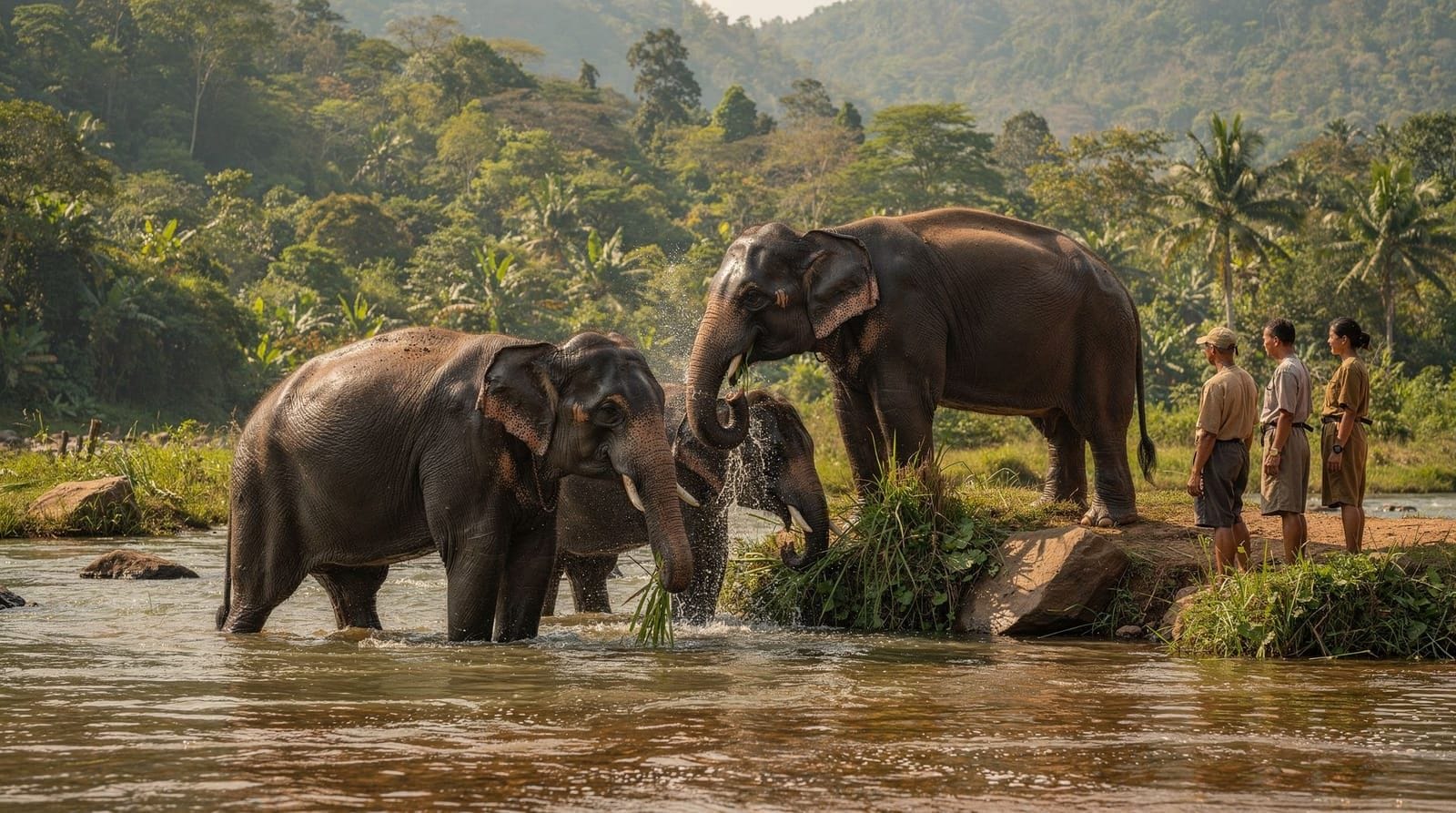
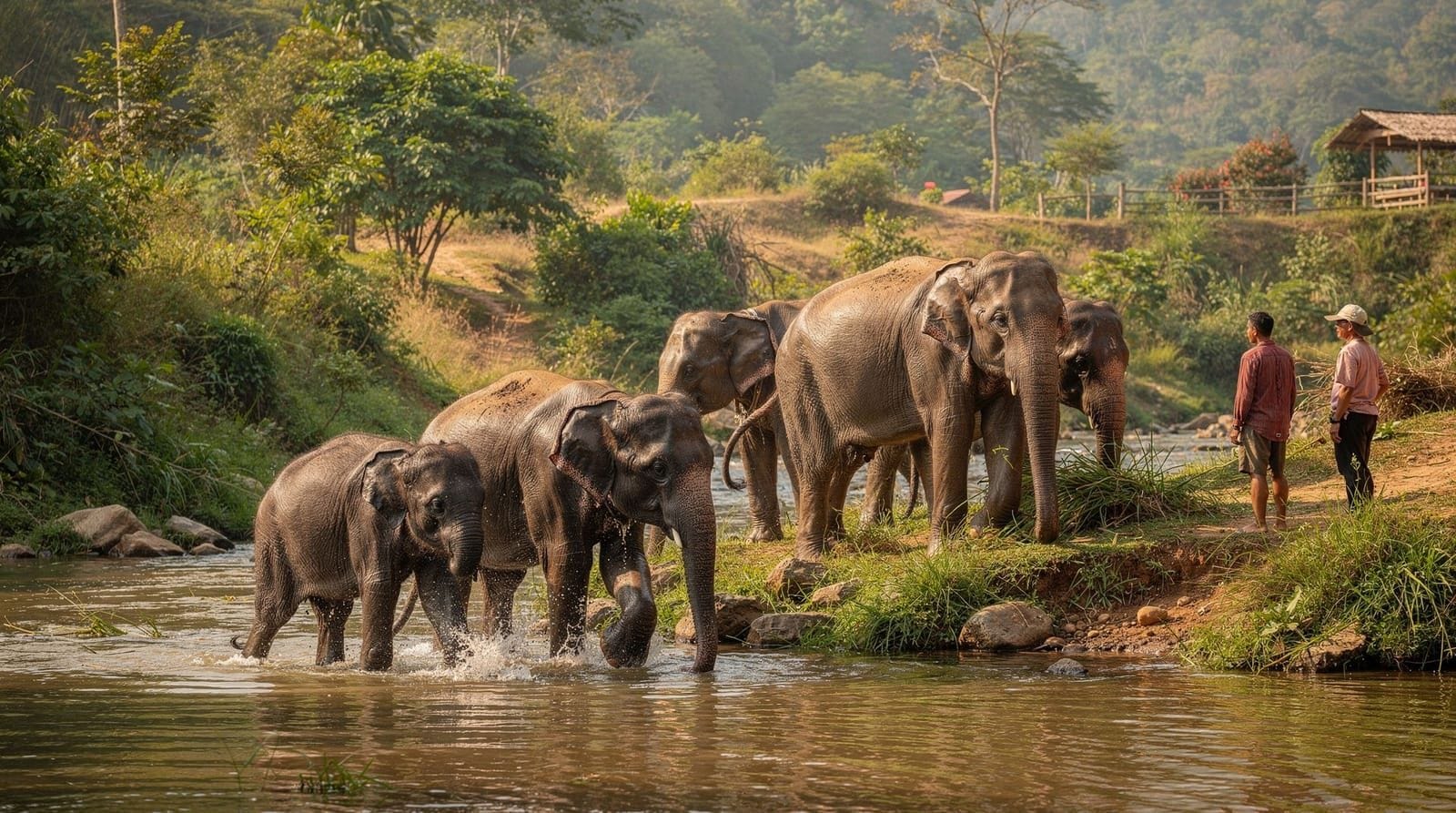
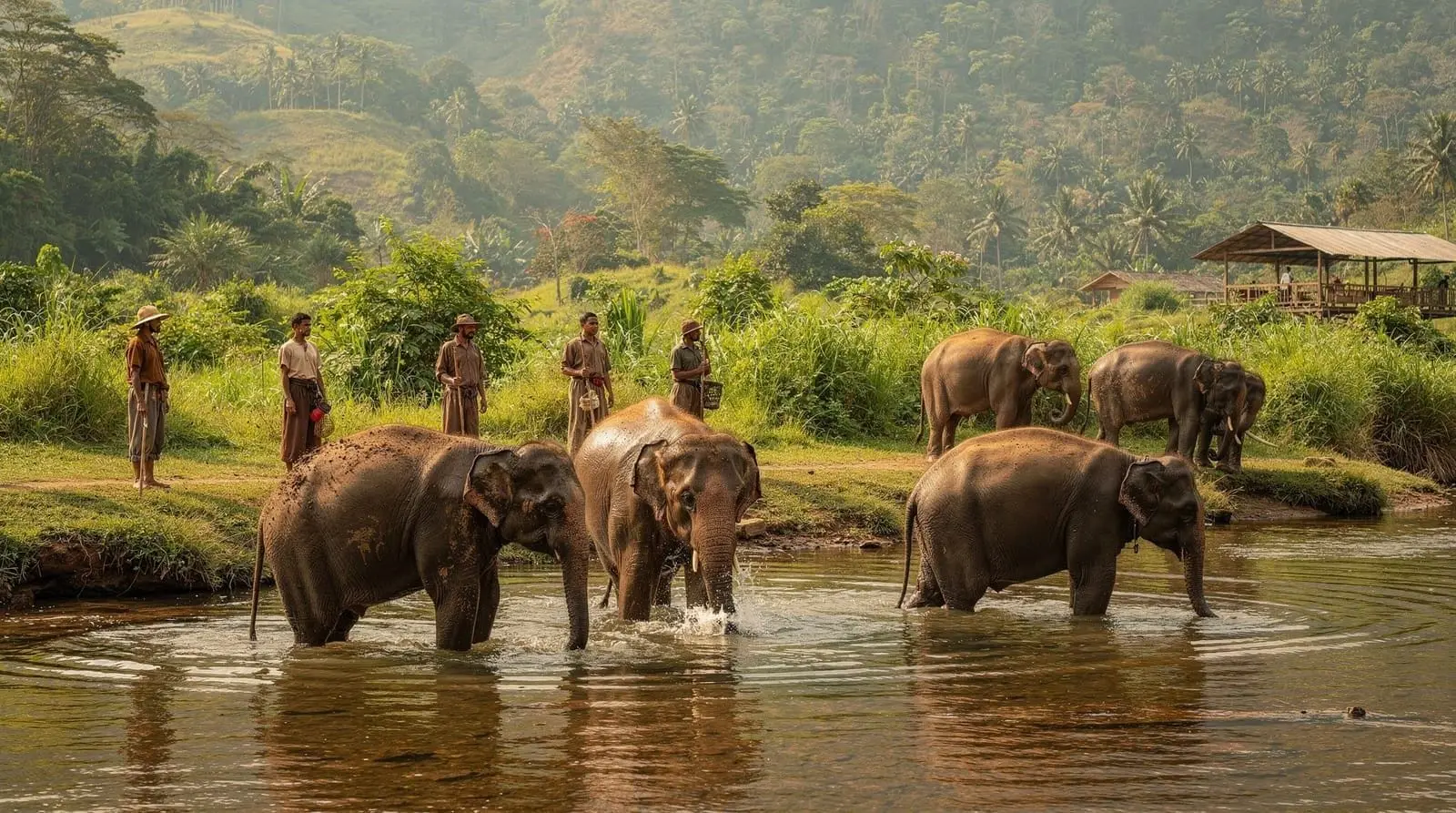
A genuinely ethical sanctuary never offers riding or shows, uses no bullhook, keeps groups small, and can explain each elephant's rescue story, usually retirement from logging, riding camps, or street begging. Expect observation, feeding, and supervised bathing rather than close-contact group swimming sessions, and expect to pay roughly 1,200-2,800 THB (about 33-78 USD at 36 THB/USD) depending on whether the visit is half or full day.
Chiang Mai has more elephant tourism operators within an hour’s drive than almost anywhere else in Thailand, and the word “sanctuary” appears on nearly all of their websites regardless of what actually happens on site. That gap between branding and practice is the single biggest source of traveler confusion in the whole province, and it’s worth sorting out before you book anything.
Most first-time visitors want to know one thing before they touch a booking button: what actually separates a genuine sanctuary from a riding camp wearing a rescue-shaped costume. The short version is that a real one never lets guests ride or watches elephants perform tricks, never uses a bullhook, keeps groups small enough that an elephant can walk away from an interaction it doesn’t want, and can tell you, specifically, where each animal came from, usually a logging camp, a trekking operation, or the street-begging trade, and how long it’s been retired. If a listing can’t or won’t answer that last question, that’s the tell.
Why “sanctuary” doesn’t automatically mean ethical
There is no legal or licensing standard in Thailand that restricts who can call their operation a sanctuary. It’s a marketing word, not a certification, which means a camp that still offers riding, forces elephants to paint pictures or play football for an audience, or crowds twenty guests around a single animal for a bathing photo can use exactly the same vocabulary as a genuine rescue operation. Both will show photos of elephants in a river. Both will use the words “rescue” and “ethical” somewhere on the page. The difference is entirely in what’s actually scheduled for your visit, not in what the name promises.
This matters because Chiang Mai’s tourism boom over the past fifteen years created real financial incentive for camps to rebrand without changing their underlying model. A riding camp that removes the word “riding” from its marketing while keeping the same infrastructure, the same bullhooks, and the same daily schedule of tourist-facing tricks costs the operator nothing and captures a growing segment of travelers who specifically search for “no riding” or “ethical” experiences. Recognizing the difference is a skill worth building before you book, not something to leave to a website’s self-description.
The checklist: what a genuinely ethical visit looks like
A handful of concrete, checkable facts tell you almost everything you need to know about an operator before you arrive:
- No riding, ever, for any elephant on site. Not “riding available but optional,” not “bareback riding only” as if that’s a meaningfully different practice. Riding causes real, documented spinal and joint damage over time (more on this in our dedicated guide on why elephant riding causes harm), and any operator still offering it is not operating an ethical program regardless of anything else on the itinerary.
- No bullhook use, and ideally none visible on site. The ankus, a metal hook used to direct elephants through pain compliance, has no place in a genuine observation-and-feeding program. If you see one hanging on a mahout’s belt, that’s worth asking about directly.
- No performances. Painting, football, dancing, or any trained trick performed on cue for a paying audience is incompatible with the sanctuary model, regardless of how the trick is marketed as “enrichment.”
- A specific rescue story per elephant. Genuine operations know and will tell you where each animal came from and how long it’s been at the property. Vague answers (“we rescue elephants from bad situations”) without specifics are a soft red flag.
- Small groups. A program capping visitors at roughly 8-15 guests per elephant, or per small group of elephants, gives the animals real room to disengage. Some of the biggest complaints about even “ethical” operators involve oversized bathing sessions, which brings us to the honest controversy below.
- Feeding and observation as the core activity, not bathing as the headline event. The best programs treat close bathing time as one optional element among several, not the entire two-hour photo opportunity.
Check the small-group ethical elephant sanctuary tour if a capped group size and a no-riding, no-performance program matter most to you, since the “small group” framing in the listing reflects exactly this checklist.
Red flags: how fake sanctuaries disguise riding camps
A few specific phrasings and situations are worth treating as warnings rather than reassurance:
- “Bareback riding” or “no saddle” as a selling point. This is sometimes marketed as a gentler alternative to riding with a wooden or metal chair (a howdah), but the underlying spinal load and stress on the animal is still present. It is not a middle ground; it’s riding with different phrasing.
- A visible bullhook, even one that’s “just for emergencies.” Genuine no-contact programs don’t need one on hand, because compliance isn’t being enforced through pain in the first place.
- Photos showing elephants performing tricks anywhere on the operator’s marketing, even from a few years back. Camps rarely retrain their entire operating model overnight; old performance photos usually mean the practice either continues quietly or was very recent.
- Extremely low prices relative to comparable listings. A half-day program running noticeably below the roughly 1,200-1,800 THB range other legitimate operators charge is often cutting corners somewhere, usually staff, food quality, or genuine retirement status of the animals.
- Group sizes that feel more like a factory line than a program, with multiple tour buses unloading simultaneously and a rotating schedule of twenty-minute slots per group.
- Vague or evasive answers about where elephants came from when you ask directly, either in reviews or when you contact the operator before booking.
Our guide comparing Elephant Nature Park to riding camps walks through several real-world examples of how this marketing gap plays out, and our Chiang Mai scams guide covers the broader pattern of tourist-facing misdirection in the city beyond just elephants.
What actually happens during an ethical visit
A typical half-day or full-day program follows a similar shape across most legitimate operators, even though the exact order varies:
- Hotel pickup, usually between 7:30 and 8:30am for a morning slot, with the drive to Mae Rim, Mae Taeng, or occasionally further out running 45-90 minutes depending on which valley the sanctuary operates in.
- Orientation and a change of clothes, where staff explain the day’s activities, the individual elephants you’ll meet, and basic safety guidance (how to approach, how to offer food, what distance to keep from an elephant’s trunk and legs).
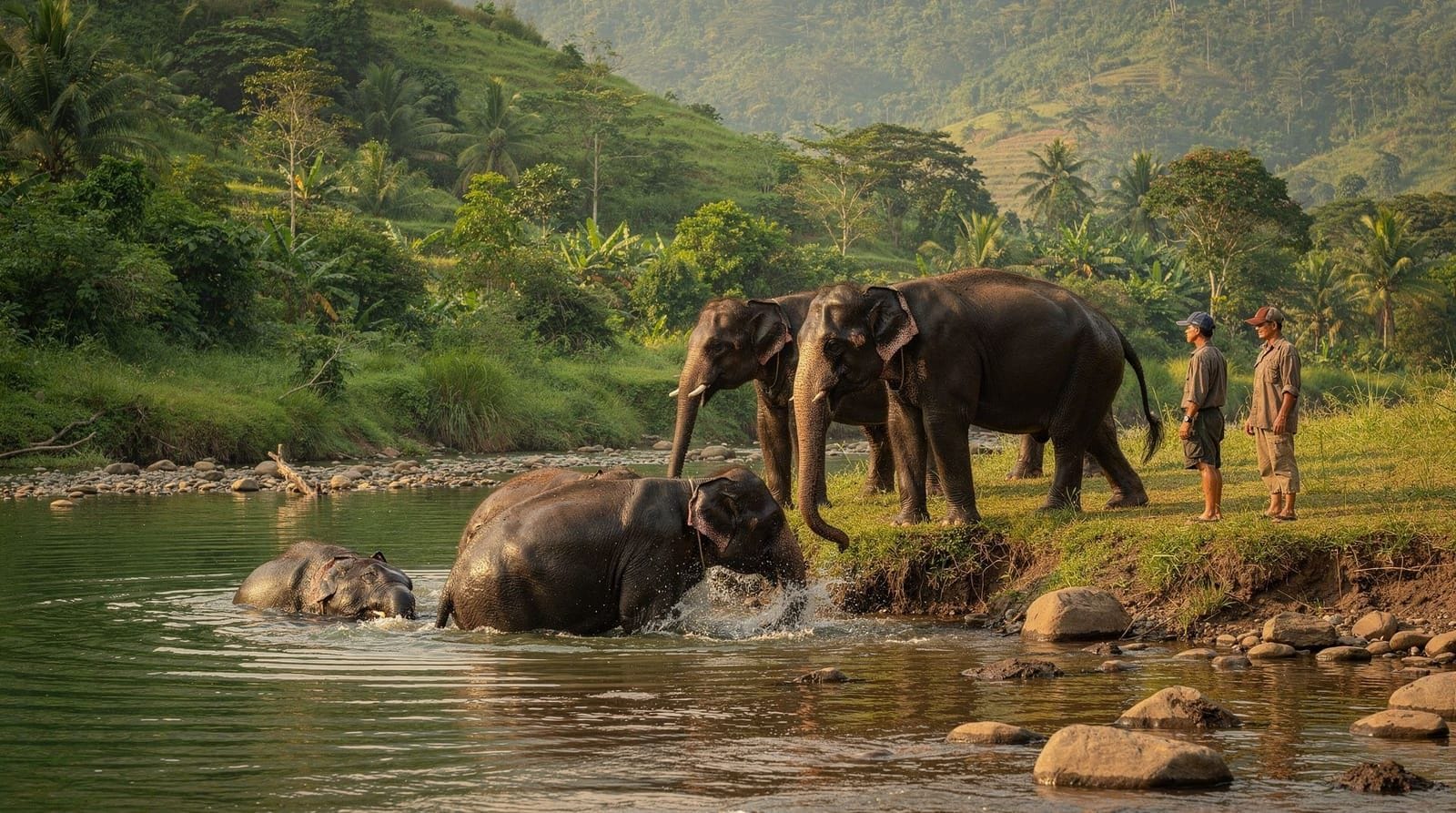
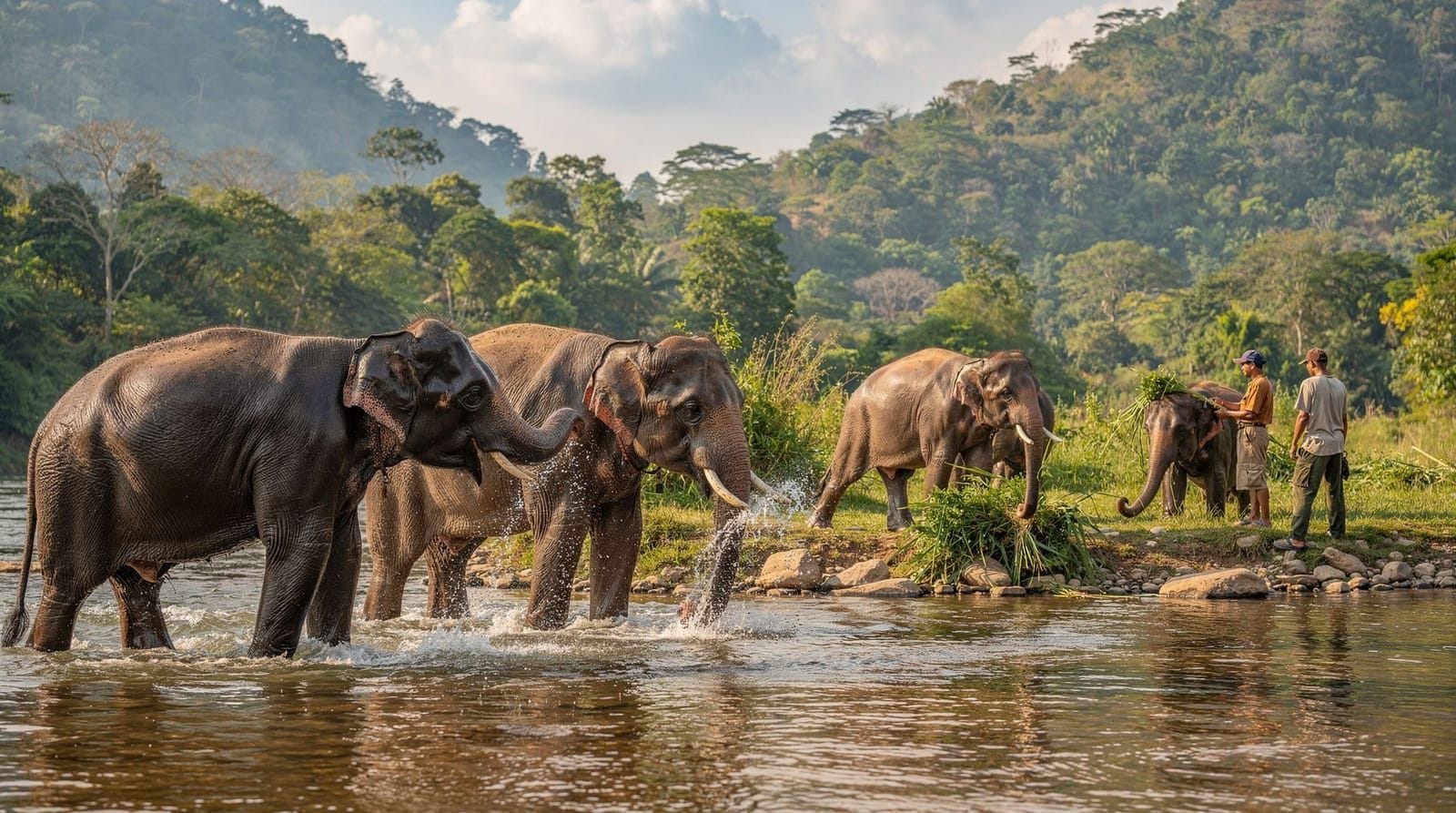
- Feeding, typically hand-feeding bananas, watermelon, or sugar cane while the mahout narrates each elephant’s background and personality.
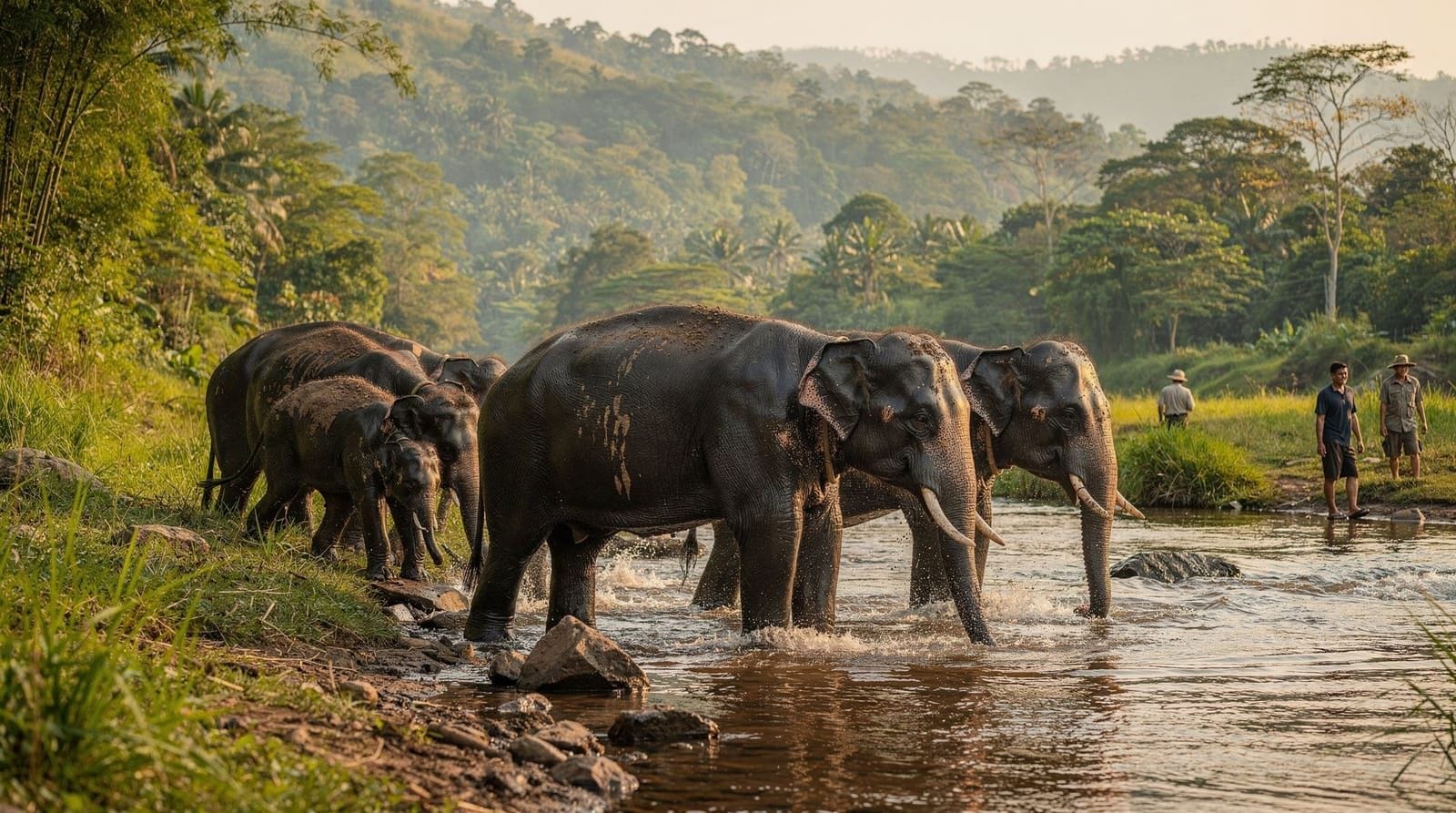
- Walking and observation, following the herd through open pasture or forest as they graze, dust-bathe, and interact with each other, which is often the most genuinely engaging part of the day precisely because nothing is staged for the camera.
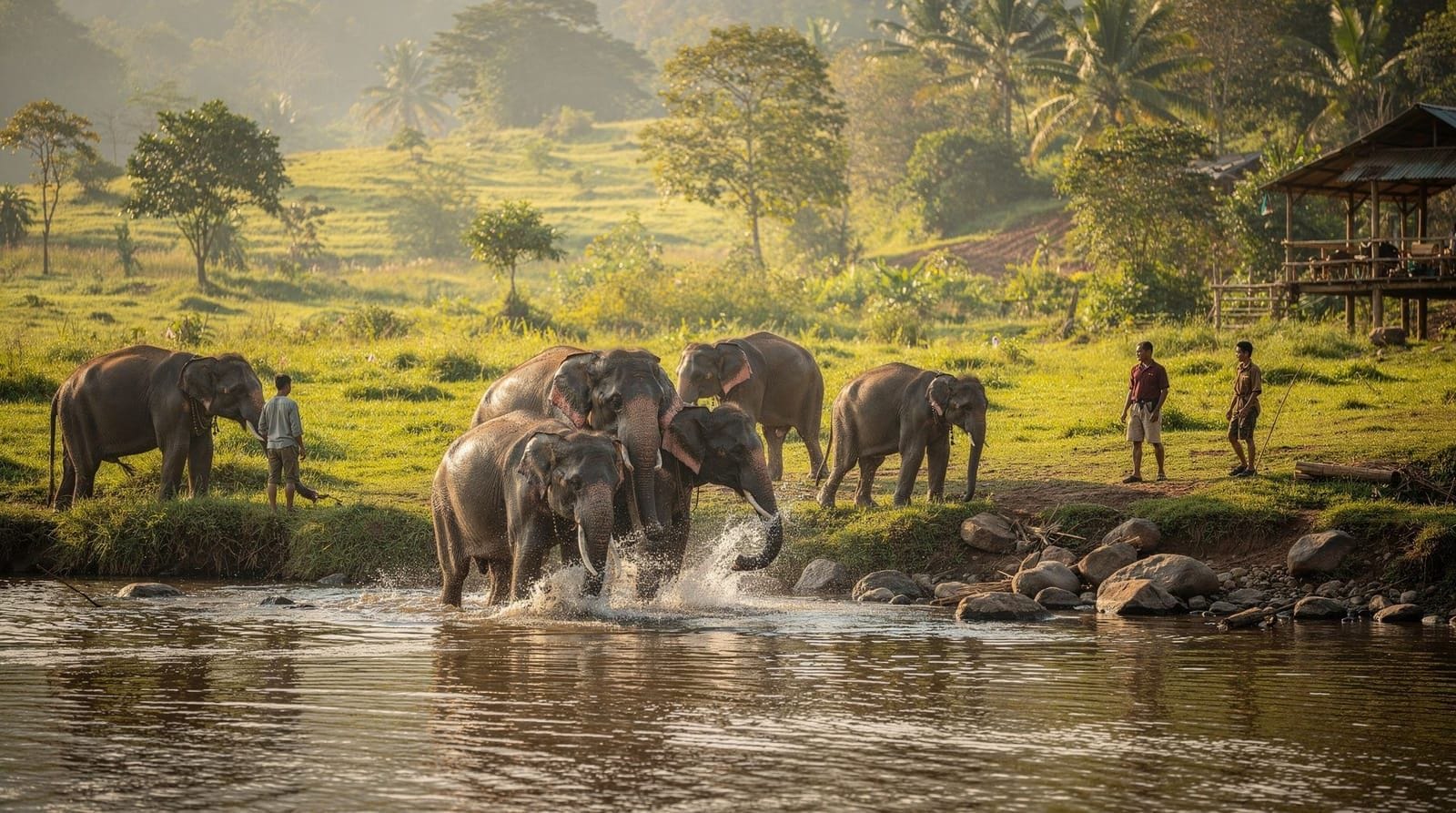
- A mud bath or river bathing session, ideally shorter and smaller-group than the feeding portion, sometimes optional.
- Lunch (on full-day programs), typically a Northern Thai set meal, before an afternoon session or a second activity like a nearby waterfall.
Look at the ethical elephant encounter feeding program for a listing built specifically around the feeding-and-observation model rather than bathing as the main event.
The group-bathing controversy, honestly
It’s worth being direct about something even genuinely well-run sanctuaries get criticized for: crowded group bathing sessions. A river-bathing photo opportunity with fifteen tourists splashing water on one or two elephants at the same time is a recognizable, popular activity, but a real body of concern among elephant welfare researchers holds that it can stress the animals in ways not so different from other forms of forced interaction, just with better public relations. Elephants that seem calm in these settings are not necessarily comfortable; they may simply be habituated or have no practical way to leave.
The more defensible model limits bathing to smaller groups, shorter durations, and gives elephants a genuine option to disengage, whether that means retreating to a mud wallow instead of the river or ending the session early if a mahout signals the animal seems stressed. When you’re evaluating a listing, it’s fair to ask directly how many guests bathe with each elephant at a time and whether the animals have an alternative. An operator willing to answer specifically is a good sign in itself.
Where Chiang Mai’s ethical sanctuaries operate
The Mae Rim and Mae Sa valley area, about 30-45 minutes north of the old city, hosts the largest concentration of elephant operations of any kind in the province, including most of the well-regarded ethical ones. A smaller cluster operates further out toward Mae Taeng and Chiang Dao, generally 60-90 minutes from the city, often with more space per elephant and a quieter, less tour-bus-heavy atmosphere as a result. A few programs combine a visit with Doi Inthanon or the Sticky Waterfalls, which can make sense if you want to pair the sanctuary with a second half-day activity rather than treating it as a full-day commitment on its own.
See the elephant care program at a retirement park for an option built around elephants specifically retired from logging and riding work, if that rescue framing matters to how you choose.
What it costs: half day vs full day
Expect roughly 1,200-1,800 THB (about 33-50 USD at 36 THB/USD, an approximate rate) for a half-day program and 2,000-2,800 THB (about 56-78 USD) for a full day, both usually including hotel transfer. Full-day programs typically add lunch and either a longer, less rushed schedule with the same elephants or a second stop such as a waterfall. Neither format involves riding or performance at a genuinely ethical operator; the difference is pacing and depth, not what’s ethically permitted. Our full comparison of half-day and full-day programs breaks down which suits which kind of traveler in more depth.
Check the sanctuary tour with local hill tribe caretakers if you’re interested in the community and mahout side of the story alongside the elephants themselves.
Elephant Nature Park and the rescue-sanctuary model
Elephant Nature Park, founded by Lek Chailert north of Chiang Mai, is the most widely known example of the no-riding rescue-sanctuary model in Thailand and one of the few individual elephant operations most travelers have heard of before they arrive. It popularized the idea that a large-scale elephant tourism operation could run profitably without riding or performances, built around elephants retired from logging, riding camps, and the street-begging trade, several with visible injuries from their previous work. It’s a genuine reference point for what the model looks like at scale, though it’s neither the only nor necessarily the most accessible option: it’s popular enough that its own group sizes and booking lead times can be a practical drawback compared to some of the smaller operators covered in our side-by-side sanctuary comparison and our dedicated Elephant Nature Park comparison guide.
How to book without getting fooled by marketing
A few practical habits protect you from the gap between branding and reality more than anything else:
- Read the itinerary line by line, not just the headline description. “Elephant experience” or “elephant interaction” without specifics is vaguer than it needs to be; a good listing spells out feeding, walking, and bathing as distinct, described activities.
- Check recent reviews specifically for the words “ride,” “riding,” or “show.” Reviews mentioning these, even positively, are a signal worth weighing heavily against the listing’s own marketing copy.
- Contact the operator directly if anything is unclear, and ask plainly whether riding, bullhooks, or performances are part of any program on site, not just the one you’re booking.
- Favor operators that name individual elephants and their histories in their own materials, since specificity is hard to fake convincingly across dozens of reviews and photos.
- Treat unusually low prices as a prompt to look closer, not as a deal, given what genuine care and retirement work actually costs to run day to day.
If you’re traveling with children, our family-focused elephant sanctuary guide covers age suitability and pacing in more detail, and our packing guide covers exactly what to bring so you’re not caught out on the day.
Frequently asked questions about ethical elephant sanctuaries in Chiang Mai
What is phajaan, and do ethical sanctuaries use it?
Phajaan, sometimes translated as “the crush,” is a traditional training method that breaks a young elephant’s will through confinement, sleep deprivation, and pain so it will submit to riding and commands. No ethical sanctuary uses phajaan or any bullhook-based training. It’s the core reason riding tourism is incompatible with elephant welfare, and any operator that still rides elephants is, by definition, relying on training that traces back to this method.
Is it OK to bathe elephants in a river as part of a sanctuary visit?
It’s a genuinely mixed picture. Supervised, brief bathing at a mahout’s direction can be part of a legitimate program, but large tour-group bathing sessions where fifteen to twenty tourists crowd into a river with one elephant can stress the animal as much as riding does, just with better marketing. Look for sanctuaries that limit bathing time, group size, and frequency per elephant, or that let elephants opt out into a mud wallow instead.
How much does an ethical elephant sanctuary in Chiang Mai cost?
Roughly 1,200-1,800 THB (about 33-50 USD) for a half day and 2,000-2,800 THB (about 56-78 USD) for a full day including hotel transfer and lunch on full-day programs. Prices below this range are a reason to check the itinerary closely, since genuine rescue and care work is not cheap to run.
Can I still get close to elephants without riding them?
Yes. Ethical programs typically involve hand-feeding fruit and sugar cane, walking alongside elephants in an open enclosure or forest, and standing or sitting nearby while they graze, mud-bathe, or rest. You get closer, more relaxed interaction than a riding platform ever allowed, just without climbing on the animal’s back.
Are all sanctuaries with “no riding” in the name actually ethical?
No. Some operators have simply removed riding from the brochure while keeping bullhooks on site, running oversized bathing sessions, or still performing tricks like painting or football. Ask directly whether elephants perform any trained behavior for an audience, and whether a bullhook is used or even present, before booking.
Is Elephant Nature Park the only ethical option in Chiang Mai?
No, though it’s the most famous. Elephant Nature Park, founded by Lek Chailert, popularized the no-riding rescue-sanctuary model in the Chiang Mai area and remains a genuine reference point, but a number of smaller operators around Mae Rim and Mae Taeng run comparable observation-and-feeding programs at a lower price point and with smaller groups.
What should I pack for an elephant sanctuary visit?
Old clothes and closed shoes you don’t mind getting muddy, sun protection, insect repellent, a dry bag for your phone, and cash for tips. Most programs supply a sarong-style outfit to change into. See our full packing guide for the complete list.
Is a half-day or full-day sanctuary visit better for first-timers?
A half day covers the essentials, feeding, walking, and often a mud bath, in about 4-5 hours and suits most first-time visitors well. A full day adds a slower pace, lunch, and often a second activity like a waterfall stop, which is worth the extra cost if you want more unhurried time with the herd rather than a second attraction.
Top experiences
Bookable activities with verified prices and instant confirmation on GetYourGuide.

Chiang Mai: Small Group Ethical Elephant Sanctuary Tour
Chiang Mai: Ethical Elephant Encounter Feeding Program
From Chiang Mai: Elephant Care Program and Nursery Tour
Chiang Mai: Ethical Half Day Elephant Sanctuary & Waterfall
Chiang Mai: Elephant Dream Project Sanctuary - Half-Day