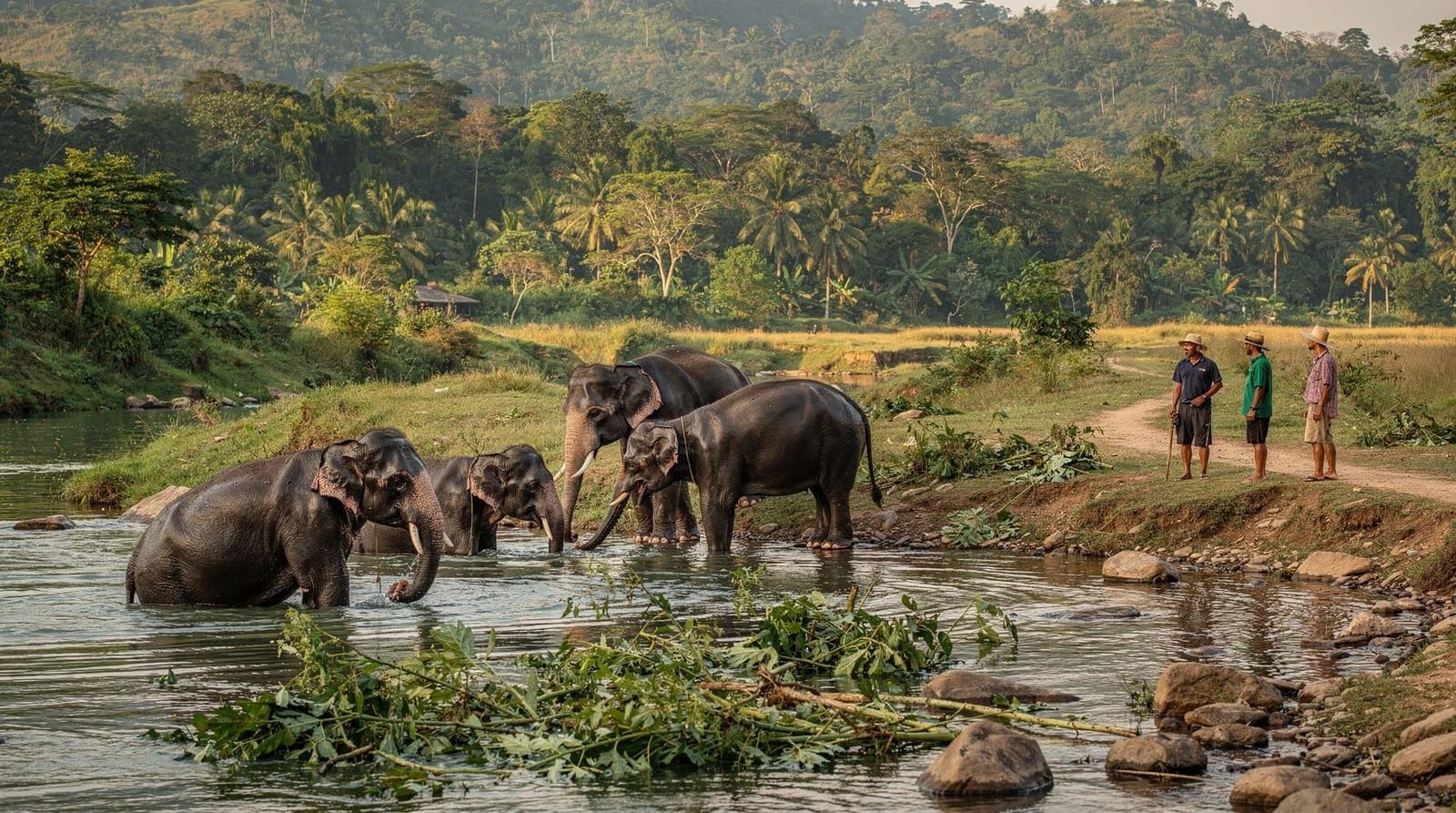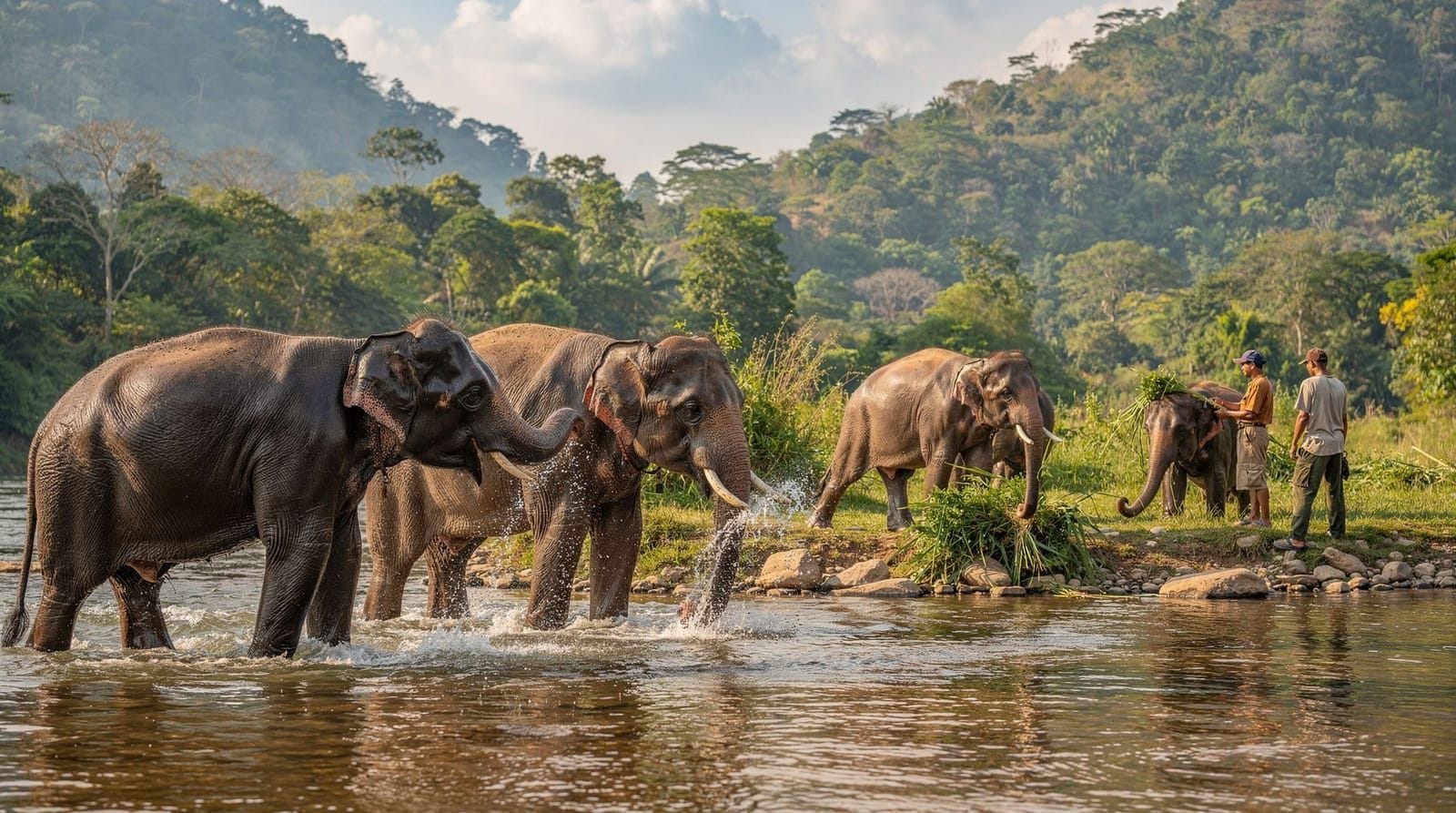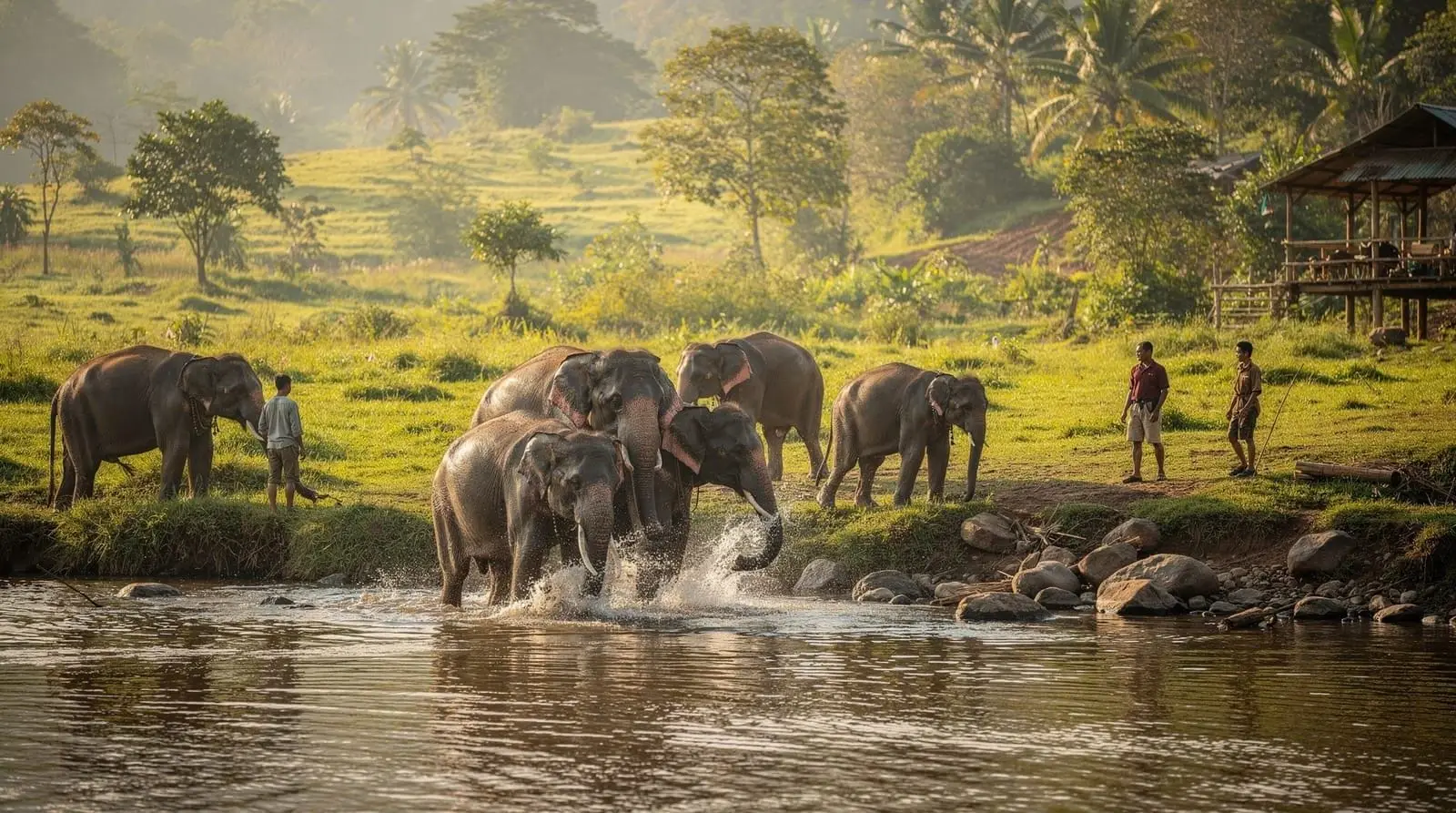
Half-day vs full-day elephant sanctuary in Chiang Mai
Chiang Mai: Ethical Half Day Elephant Sanctuary & Waterfall
Duration: Half day
Should I book a half-day or full-day elephant sanctuary tour?
A half day (roughly 4-5 hours, 1,200-1,800 THB or about 33-50 USD) covers feeding, walking, and usually a mud bath, and suits most first-time visitors, families with young children, or anyone combining the sanctuary with another activity the same day. A full day (roughly 7-8 hours, 2,000-2,800 THB or about 56-78 USD) adds lunch, a slower unhurried pace, and often a second stop like a waterfall, worth it if you want more time with the herd rather than a second attraction.
Once you’ve settled on a genuinely ethical operator, the next practical decision is duration, and it’s easy to underestimate how much this choice shapes the actual day: a half-day program compresses the same core activities into a tighter window, while a full day spreads them out and typically adds lunch and a second stop. Neither format changes the underlying welfare standard; both should still mean no riding, no bullhook, and no performance, covered in full in our ethical sanctuary selection guide.
If you need the short version: a half day (roughly 4-5 hours, 1,200-1,800 THB or about 33-50 USD at 36 THB/USD, an approximate rate) covers feeding, walking, and usually a mud bath, and suits most first-time visitors, families with young children, or anyone combining the sanctuary with another activity the same day. A full day (roughly 7-8 hours, 2,000-2,800 THB or about 56-78 USD) adds lunch, a slower and less rushed pace, and often a second stop such as a waterfall, and is worth the extra cost if you want more unhurried time with the herd rather than a second attraction entirely.
What actually changes between the two formats
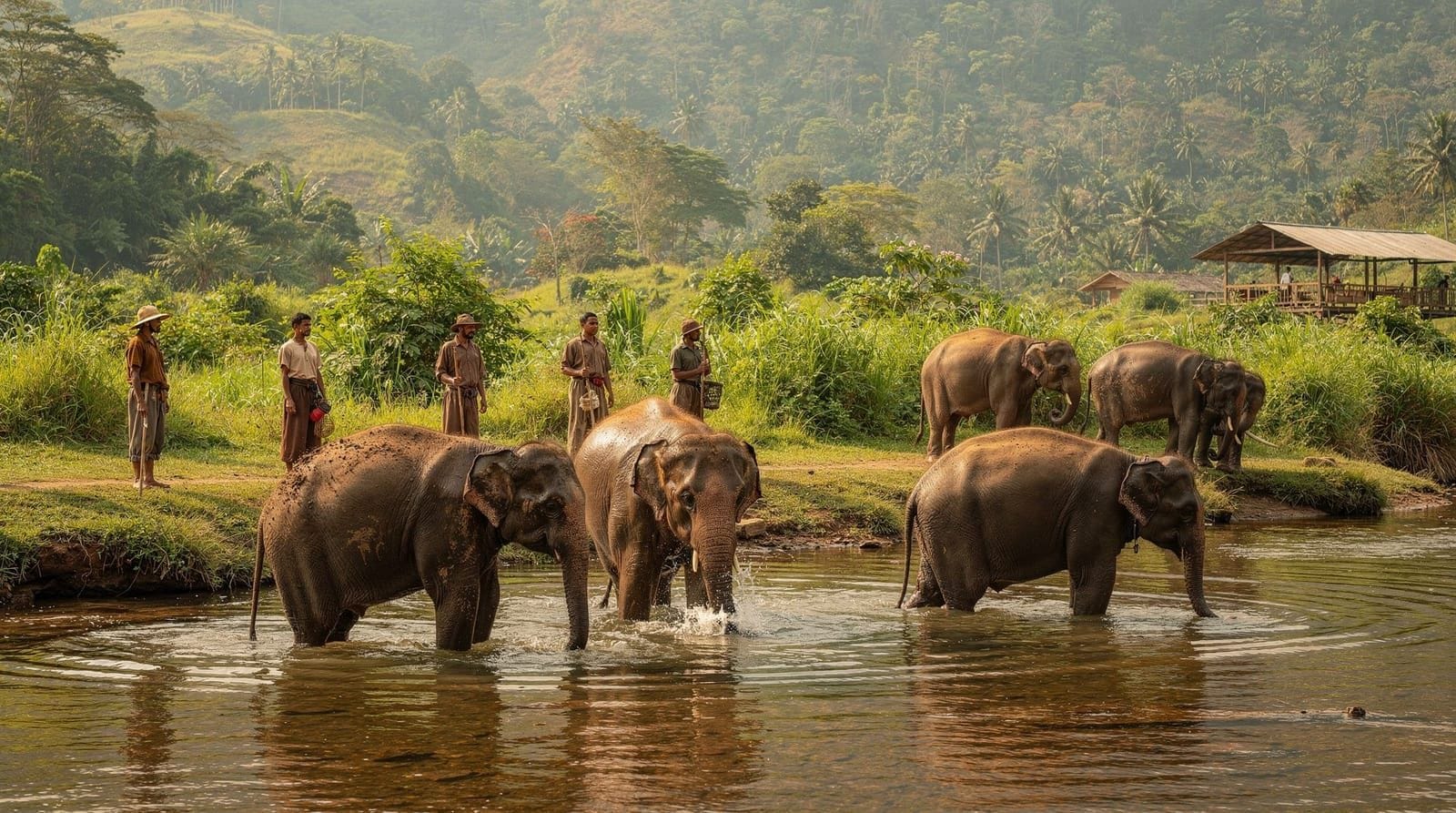
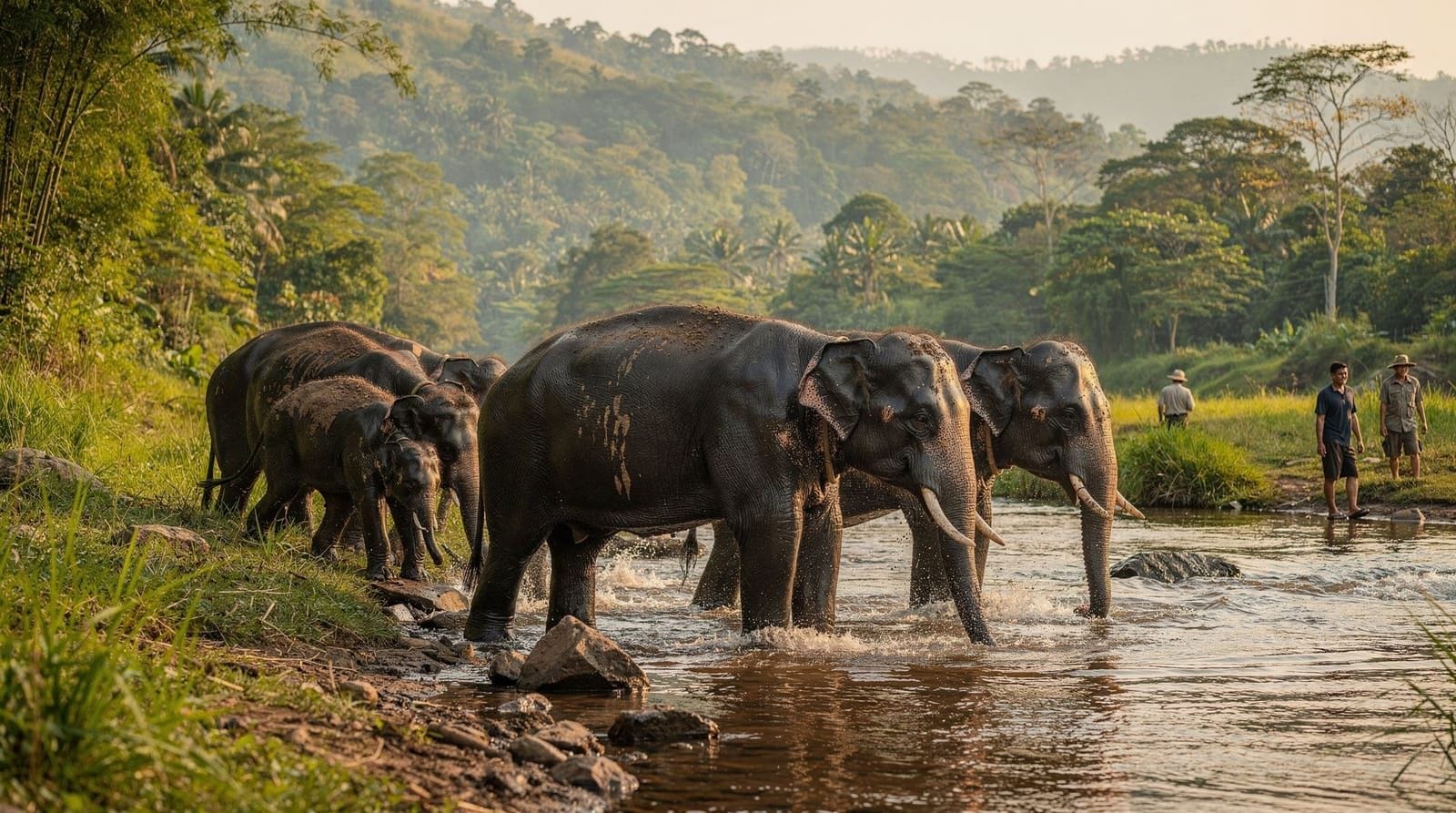
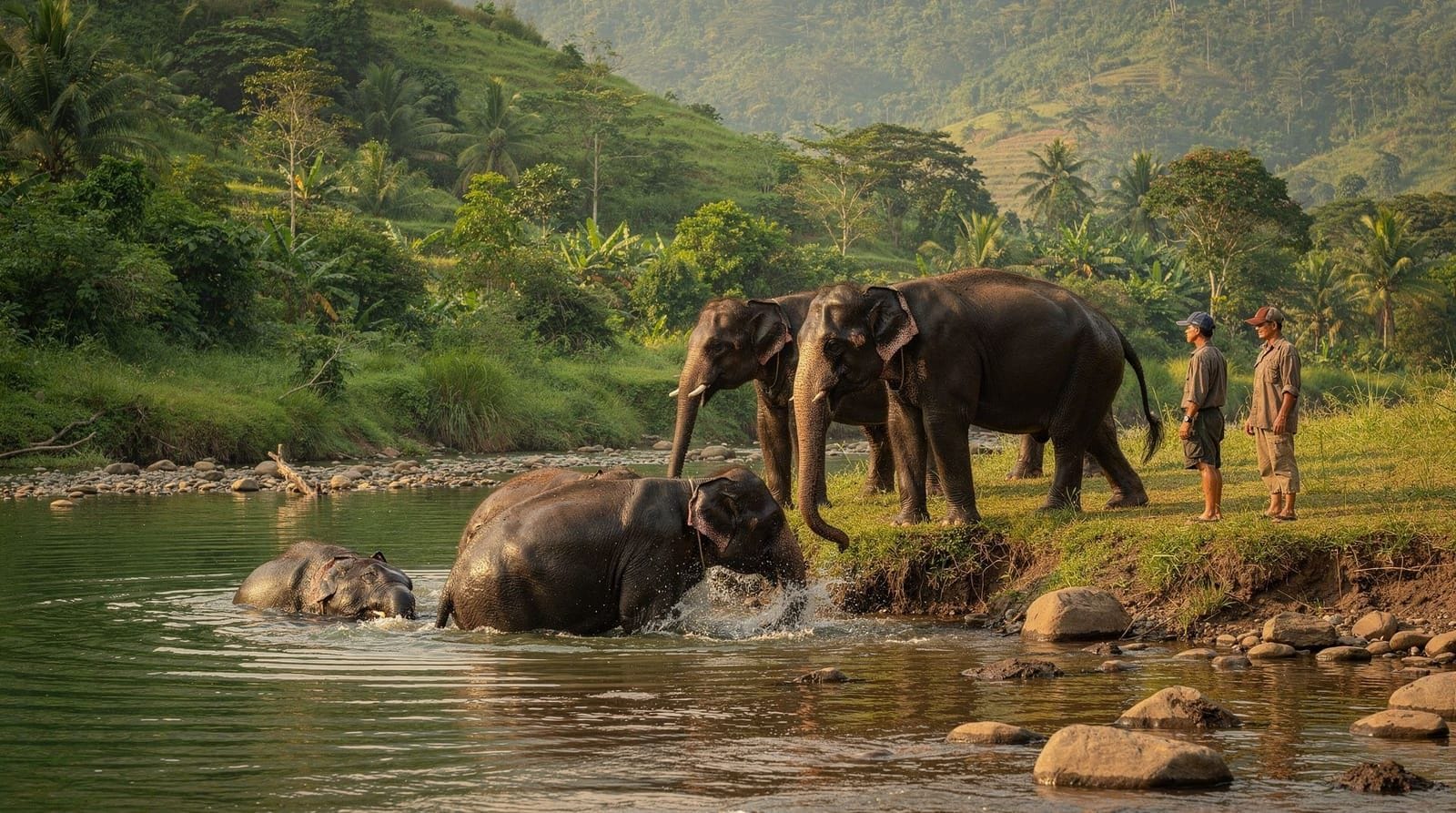
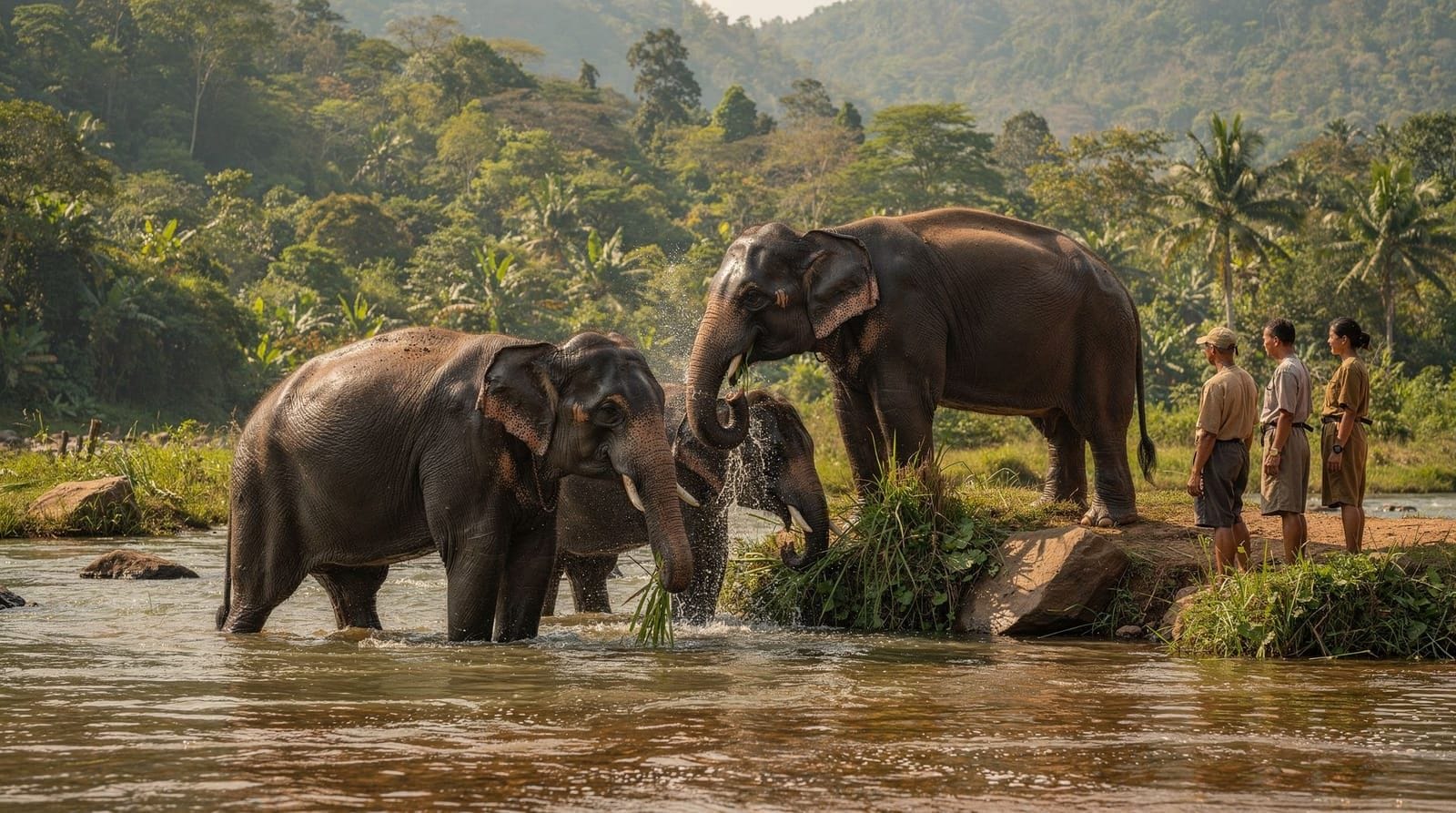
It helps to think of the full day as an extension of the half day rather than a different program. Both typically include an orientation and change of clothes, hand-feeding, walking alongside the herd through open pasture or forest, and a bathing or mud-bath session. The full day adds time at each of these stages so the pace feels less rushed, plus a lunch break and, on many listings, a second activity folded into the same booking, such as a waterfall stop or a short hike. No listing worth booking restricts feeding, walking, or bathing exclusively to one format or the other; the difference is depth and pacing, not access to specific activities.
Half day: what’s included and who it suits
A typical half-day slot runs about 4-5 hours door to door, including transfer, and follows a fairly standard shape: hotel pickup (commonly 7:30-8:30am for a morning slot, or early afternoon for a second daily slot), a short orientation, feeding, an hour or so of walking and observation with the herd, and a bathing or mud-bath session before the return transfer. Lunch typically isn’t included, since the program wraps before or shortly after a normal mealtime depending on slot.
This format suits most first-time visitors well, since it hits every core activity without demanding a full day of your trip. It’s also the more practical choice for families with young children, given less overall time in the heat, and for anyone who wants to pair the sanctuary with a second, separate activity later the same day, since a morning slot typically wraps by early-to-mid afternoon.
Check the ethical half-day elephant sanctuary and waterfall tour for a half-day format that already folds in a second stop, if you want the compressed schedule without giving up a waterfall visit.
Look at the half-day elephant jungle sanctuary tour with lunch and transfer included if you specifically want a half-day booking that still covers a meal, since not every half-day listing does.
Full day: what’s included and who it suits
A full-day program typically runs 7-8 hours including transfer, extending every stage of the half-day format and adding a proper lunch break, usually a Northern Thai set meal served at the sanctuary or a nearby restaurant. Many full-day listings also add a second activity in the afternoon, most commonly a nearby waterfall, sometimes bamboo rafting, or in a few cases a short hike, making the day feel like two attractions in one booking rather than a longer version of a single one.
This format suits travelers who want unhurried time with the elephants without feeling like the schedule is moving them along, and anyone who’d rather combine the sanctuary with a second attraction in the same booking instead of arranging a separate outing another day. It’s a reasonable choice for couples and older children, though it does mean more total time outdoors in the heat, including some midday hours.
Check the Elephant Dream Project full-day sanctuary tour for a full-day program built around a single resident herd at a relaxed pace, or the half-day version of the same operator if a shorter format suits your schedule better. If you’d rather pair the sanctuary with a hike instead of a waterfall, a combined full-day option covering Doi Inthanon, Thailand’s highest peak, alongside an ethical elephant visit is also worth comparing.
Price gap, in real terms
Expect roughly 1,200-1,800 THB (about 33-50 USD) for a half day against roughly 2,000-2,800 THB (about 56-78 USD) for a full day, a gap of about 800-1,000 THB (22-28 USD) per person. That difference mainly buys lunch, extra time with the herd, and, on many listings, a second activity such as a waterfall or bamboo rafting stop rather than being a separate premium for the same experience. Whether it’s worth paying comes down almost entirely to pace preference: if a half day already feels like enough time with elephants, the full day’s extra cost is going toward a second attraction more than a better core experience.
See the elephant sanctuary, waterfall, and bamboo rafting full-day tour as an example of a full-day booking built around three distinct activities rather than two.
Heat and fatigue: the practical factor most people underweight
Chiang Mai’s climate matters more to this decision than most travelers expect before arriving. The hottest hours, roughly noon to 3pm and especially pronounced from March through May, fall squarely inside a full day’s schedule but largely outside a morning half-day slot. A half-day morning booking that wraps by early afternoon avoids the worst of the heat almost entirely; a full day cannot, by definition, since it spans the whole day including midday. If heat tolerance, your own or a child’s or an older relative’s, is a concern, that alone is a reasonable tie-breaker toward the half-day format, ideally the morning slot specifically over an afternoon one.
Family suitability: age, stamina, and realistic expectations
For families traveling with young children, a half-day morning slot is generally the more forgiving choice: less overall time outdoors, less midday heat exposure, and a shorter overall commitment if a child gets tired, overstimulated, or simply wants to stop earlier than the schedule allows. A full day can work well for families with older children or teenagers who have the stamina for a longer outdoor day and who’ll get more out of the added waterfall or hiking activity that often comes with the full-day format. Our dedicated guide on visiting an elephant sanctuary with kids goes deeper on age-specific suitability, what to expect from a child’s perspective, and how operators typically handle very young children.
Transfer and logistics: does duration change the drive?
Not meaningfully. Most sanctuaries sit roughly 45-90 minutes from central Chiang Mai depending on whether they’re in the closer Mae Rim valley or further out toward Mae Taeng, and this drive time applies whether you’ve booked a half or full day, since transfer is typically round-trip regardless of format. The only logistics difference worth planning around is pickup time: half-day morning slots usually mean an earlier start (around 7:30-8am) than a full day, which sometimes allows a slightly later 8-8:30am pickup since there’s more schedule to work with across the day.
A sample half-day schedule, hour by hour
To make the format concrete rather than abstract, a typical morning half-day booking looks roughly like this: 7:30-8am hotel pickup, 8:30-9am arrival and orientation with a change into provided clothing, 9-9:45am hand-feeding and introduction to the individual elephants, 9:45-10:45am walking with the herd through pasture or forest, 10:45-11:30am mud bath or river bathing session, and 11:30am-12:30pm return transfer, wrapping before the hottest part of the day. Afternoon half-day slots follow a similar shape shifted a few hours later, typically running from around 12:30 or 1pm through 5-5:30pm.
A sample full-day schedule, hour by hour
A full-day booking extends this same shape and adds a midday break and often a second activity: 8-8:30am hotel pickup, 9-9:30am arrival and orientation, 9:30-10:30am feeding, 10:30am-12pm walking and observation at a less rushed pace than the half-day version, 12-1pm lunch, 1-2:30pm a second activity such as a nearby waterfall or a bathing session, and 2:30-4:30pm return transfer, sometimes with a stop en route. The extra two to three hours compared to a half day go almost entirely toward lunch, unhurried herd time, and the added activity rather than compressing the same content into a longer wait.
Photography and quiet observation time
One underappreciated difference between the formats is how much unhurried time you get for photography or simply watching the herd without a schedule pressing on you. A half day’s tighter timeline means less slack if you want to linger at a particular moment, a mother and calf interacting, an elephant dust-bathing at length, while a full day’s more spacious schedule generally allows a mahout to let a group stay somewhat longer at a good moment before moving to the next stage. If unhurried observation and photography are a priority over simply “seeing everything,” that’s a point in the full day’s favor independent of the added activity.
Booking tips specific to each format
For half-day bookings, morning slots fill first, particularly during the November-to-February peak season, so booking a few days ahead rather than the same day is the safer approach if you have a specific morning in mind. For full-day bookings, confirm specifically what the added afternoon activity is before you book, since “full day” listings vary meaningfully in whether that extra time goes toward a waterfall, bamboo rafting, a hike, or simply more time with the same herd, and the difference matters depending on what else is already on your itinerary that day.
Making the call for your trip
If you’re still unsure, a few simple questions settle it for most travelers: are you combining the sanctuary with another activity the same day (choose half day); do you want lunch and a second attraction folded into one booking (choose full day); are you traveling with young children or heat-sensitive travelers (lean half day, ideally morning); is this the single dedicated activity for your day with no other plans competing for time (either works, and full day gives you more for a modest extra cost). None of these questions touch on ethics, since that standard, no riding, no bullhook, no performance, should hold regardless of which duration you book. Our side-by-side comparison of Chiang Mai’s top-rated ethical sanctuaries is the next step once you’ve settled on format, and our combo tours guide covers the waterfall-and-sanctuary pairing specifically if that’s the direction you’re leaning.
Weighing your specific trip against these two formats
If you’re still weighing the decision, it helps to think about it less as “half day versus full day” in the abstract and more as a question about the rest of your Chiang Mai itinerary. Travelers with only two or three days in the city and a long list of other sights, temples, markets, Doi Suthep, tend to lean toward the half day precisely because it frees up the afternoon for something else. Travelers with a more open schedule, or those who’ve specifically prioritized the elephant sanctuary as the highlight of their trip, more often choose the full day so the visit doesn’t feel rushed relative to how much they were looking forward to it. Neither instinct is wrong; they simply reflect different trip shapes.
What previous visitors say about regretting either choice
Reading enough reviews across both formats turns up a consistent pattern: regret about the half day usually centers on wishing there’d been more unhurried time before the schedule moved the group along, while regret about the full day usually centers on the added activity feeling like a lesser afterthought compared to the elephant time itself, or the day simply running longer than expected given the heat. Neither complaint is about the ethical standard of the visit, which is a useful reminder that this decision is really about your own energy and schedule preferences rather than about picking the “better” sanctuary experience in any absolute sense.
What stays the same regardless of duration
However you decide between the two formats, the underlying ethical standard doesn’t change with duration or price. A shorter, cheaper half-day booking is not a compromise on welfare compared to a longer, pricier full day; both should be built around the same no-riding, no-bullhook, no-performance baseline described in our ethical sanctuary selection guide. Choosing between formats is entirely a question of your own schedule, budget, and tolerance for heat and a longer day outdoors, not a trade-off against how well the elephants are treated.
Frequently asked questions about half-day vs full-day elephant sanctuary visits
What’s included in a half-day sanctuary visit that isn’t in a full day?
Nothing is exclusive to the half-day format; a full day includes everything a half day does plus more time, usually lunch, and often an added activity such as a waterfall stop. The half day is simply a shorter, more compressed version of the same core program: feeding, walking, and bathing.
Is the full-day option worth the extra cost?
It depends on pace preference. The price difference is roughly 800-1,000 THB (about 22-28 USD), which mainly buys lunch, a second activity, and considerably less rushing between activities. If you specifically want more unhurried time with the elephants rather than a second attraction, it’s worth it; if a half day already feels like plenty of time, it may not be.
Is a full day too much for young children?
For many families, yes. A full day involves several hours outdoors in Chiang Mai’s heat, including midday, plus a longer drive and more overall walking. A half-day morning slot, finishing before the day’s hottest hours, is generally the easier choice for children under about seven or eight.
Does lunch come with the half-day option?
Usually not; most half-day programs run either morning or afternoon and don’t cross into a mealtime, though a small number of afternoon slots include a light snack. Full-day programs almost always include a Northern Thai set lunch as part of the package.
Which is less tiring in the heat, half day or full day?
A half day, especially a morning slot that wraps before early afternoon, is the less demanding option for heat exposure, since Chiang Mai’s hottest hours (roughly noon to 3pm, especially March through May) fall outside a typical morning half-day schedule. Full-day programs unavoidably include some midday time outdoors.
Can I combine a half-day sanctuary visit with something else the same day?
Yes, this is one of the half day’s main advantages. A morning sanctuary slot typically wraps by early-to-mid afternoon, leaving time to add a market visit, a temple, or a shorter nearby stop, whereas a full-day program is designed to fill the entire day on its own.
Are half-day and full-day sanctuary visits equally ethical?
Yes, format has nothing to do with the ethics checklist. Both should be no-riding, no-bullhook, no-performance, small-group programs; the only difference is duration, pacing, and what’s included, not the underlying welfare standard.
Top experiences
Bookable activities with verified prices and instant confirmation on GetYourGuide.

Chiang Mai: Ethical Half Day Elephant Sanctuary & Waterfall
Chiang Mai: Elephant Dream Project Sanctuary - Full Day
Chiang Mai: Elephant Dream Project Sanctuary - Half-Day
Chiang Mai: Elephant Jungle Sanctuary with Lunch & Transfer
Chiang Mai: Inthanon, Ethical Elephant Sanctuary & Waterfall