Elephant sanctuary and waterfall combo tours
Chiang Mai: Ethical Half Day Elephant Sanctuary & Waterfall
Duration: Half day
Are elephant sanctuary and waterfall combo tours worth it, or do they rush the elephant visit?
A well-run combo tour typically allots 2-3 hours to the sanctuary and 1-1.5 hours to the waterfall, which is enough time at both if the operator manages transfers efficiently, though it is less elephant time than a dedicated half-day sanctuary-only visit. Combo tours suit travelers with limited days who want to see both in one trip; two separate half-days suit those who want a fuller, less rushed program at each.
Booking a single day that covers both an elephant sanctuary and a waterfall sounds like an obvious efficiency win, and often it is - but the honest answer depends entirely on how the operator has allotted the hours, something the marketing copy on a listing page rarely spells out clearly.
Quick answer: A well-run combo tour typically allots 2-3 hours to the sanctuary and 1-1.5 hours to the waterfall, which is enough time at both if the operator manages transfers efficiently, though it is less elephant time than a dedicated half-day sanctuary-only visit. Combo tours suit travelers with limited days who want to see both in one trip; two separate half-days suit those who want a fuller, less rushed program at each.
Why this pairing exists geographically
The reason sanctuary-and-waterfall combos are so common in Chiang Mai’s tour market isn’t marketing invention - it’s geography. Most ethical elephant sanctuaries sit in the Mae Rim and Mae Taeng valleys northwest of the city, and Sticky Waterfalls (Bua Thong Waterfall) sits in the same general corridor, roughly 20-40 minutes’ drive from many sanctuary sites. That short connecting distance is what makes the combination logistically sensible rather than a long, tour-operator-invented detour.
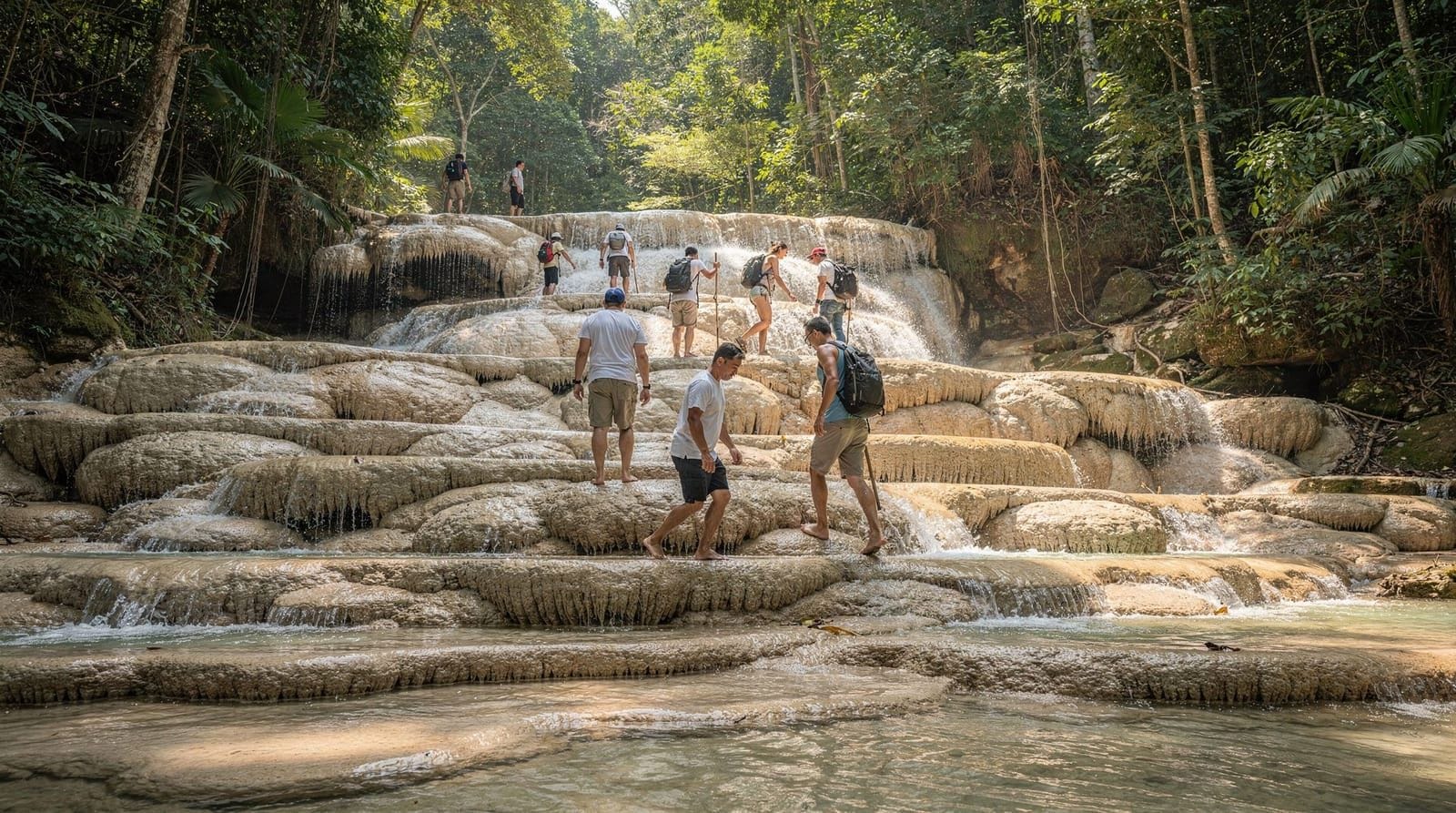
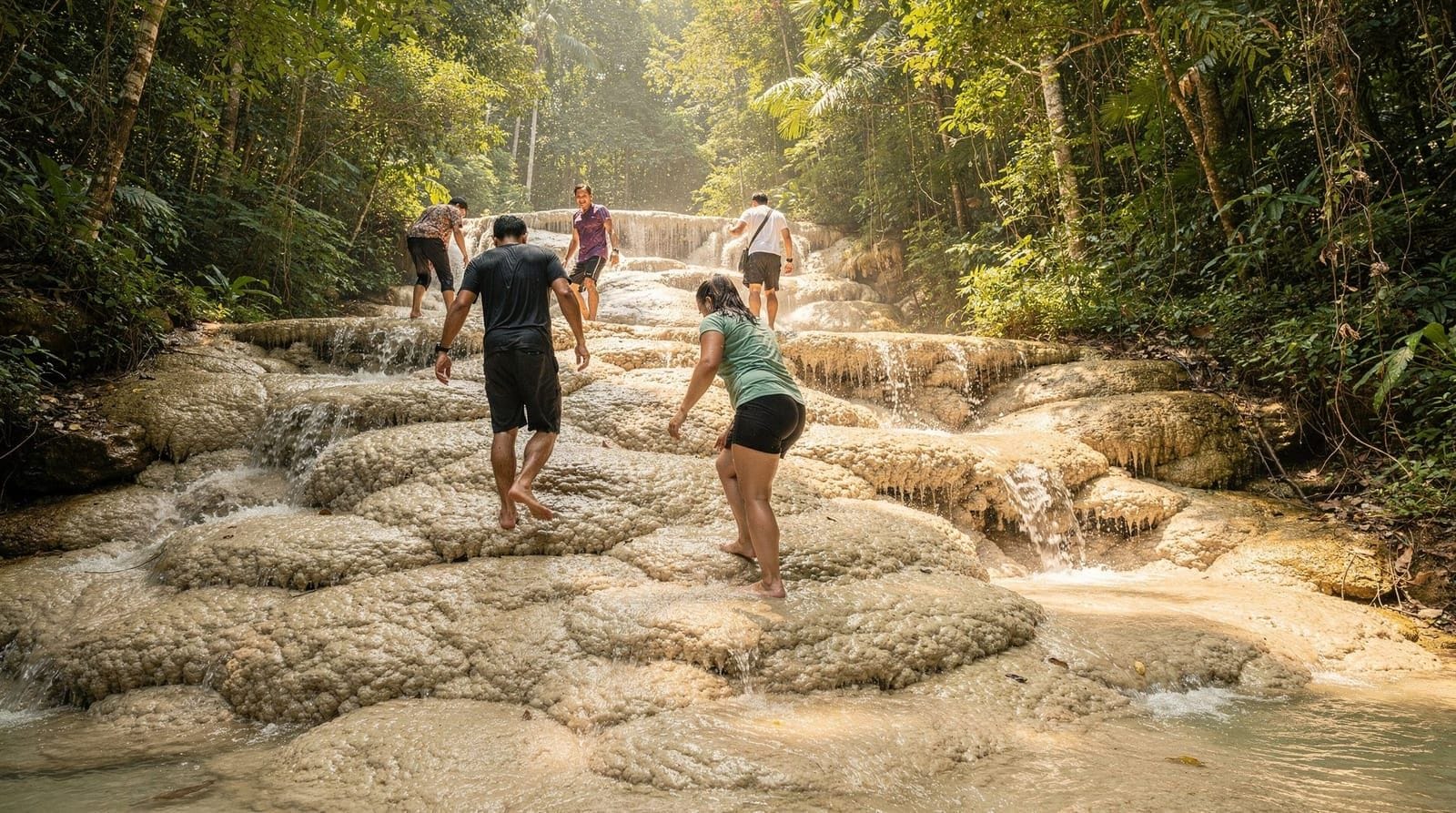
Sticky Waterfalls itself is the near-universal waterfall pairing, distinguished by a limestone and mineral deposit that gives the rock an unusually grippy, almost sticky texture underfoot - hence the name - which lets visitors walk up sections of the cascade barefoot, something most Thai waterfalls don’t allow safely.
The core question: does combining rush the elephant time?
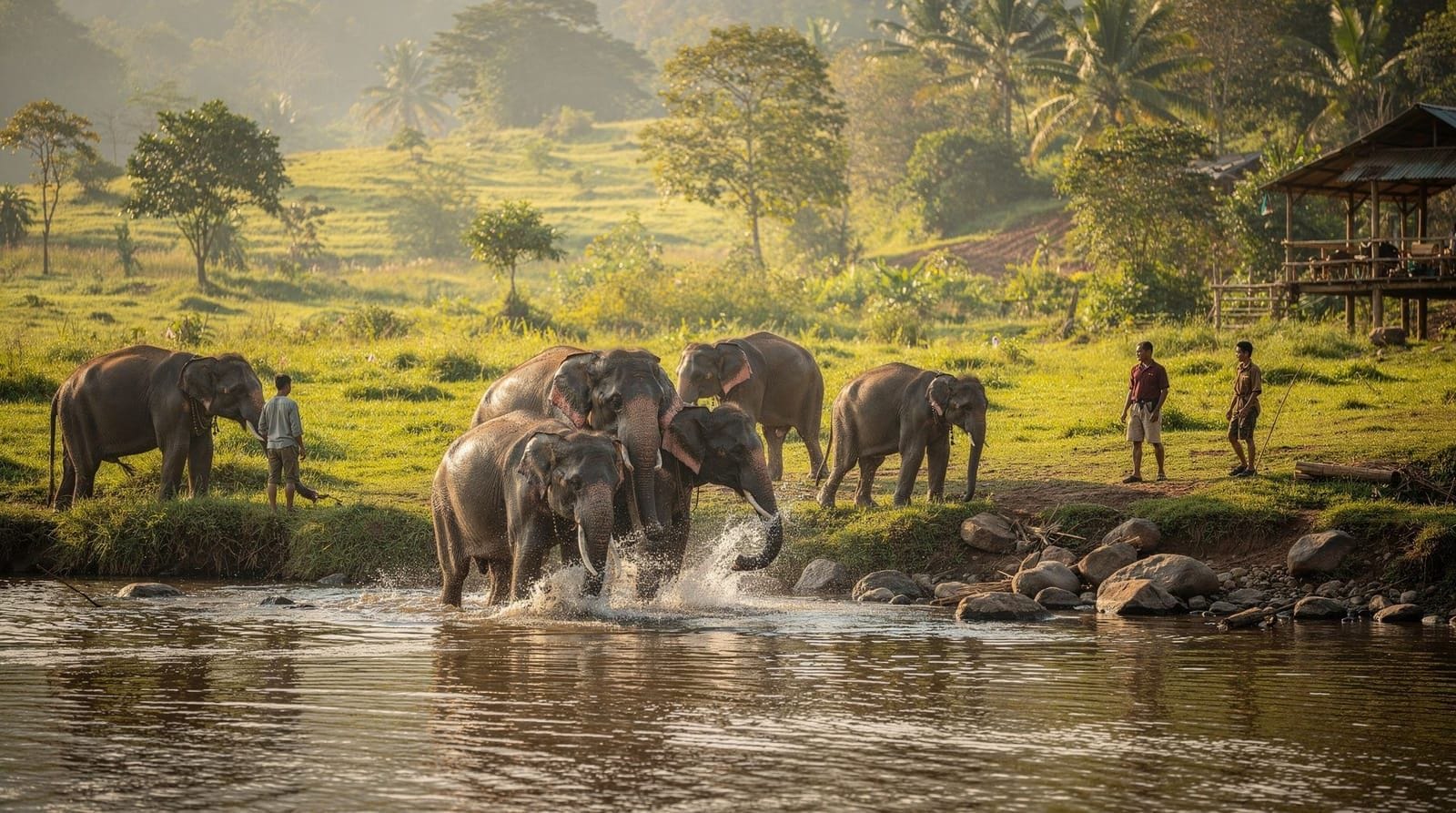
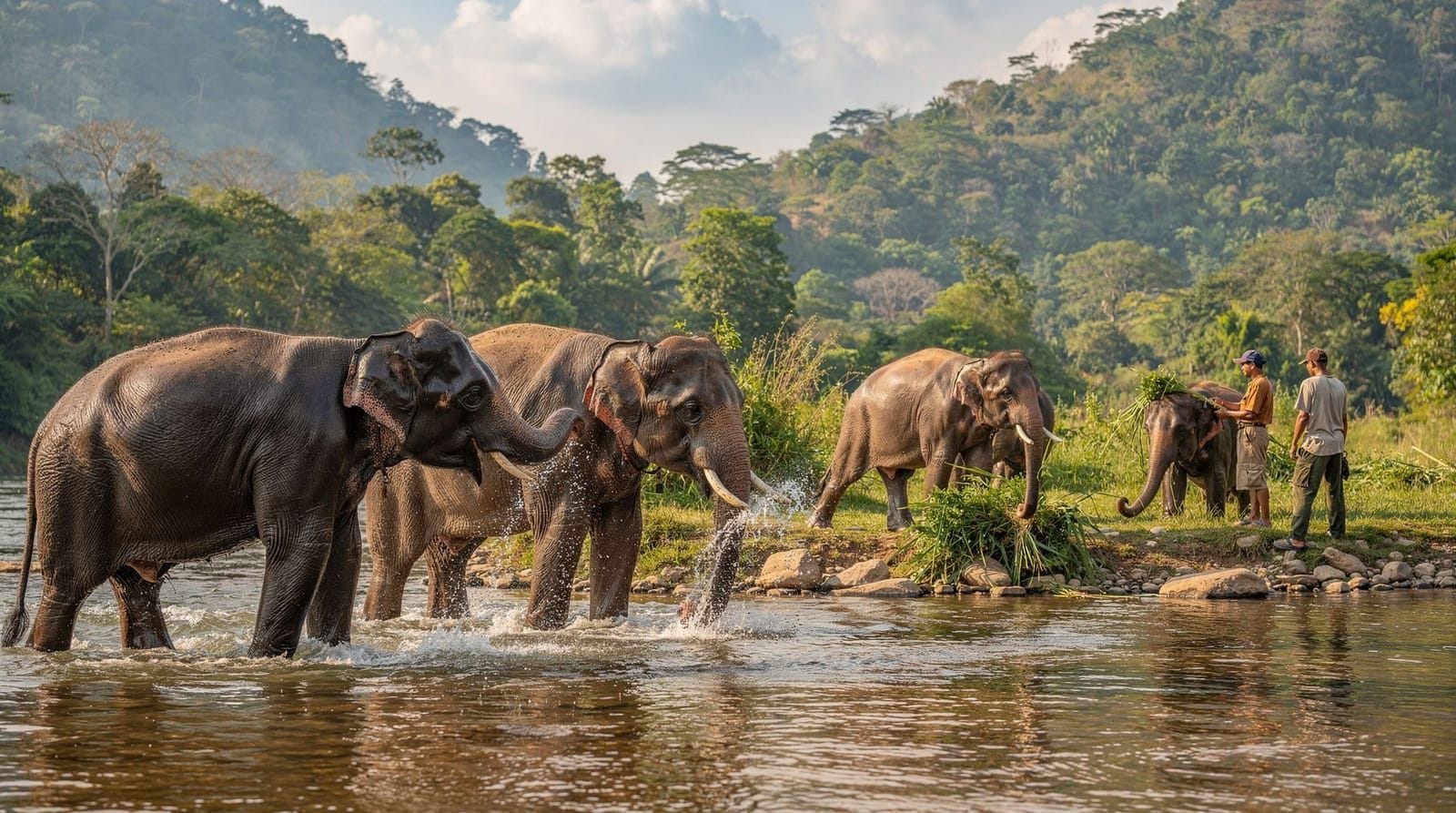
This is the honest crux of whether a combo tour is worth booking, and the answer genuinely varies by operator. Some combo itineraries protect a full 2.5-3 hour elephant segment - feeding, walking, and an optional bathing session - and treat the waterfall as a genuinely secondary 60-90 minute stop on the way back. Others compress the elephant portion to 90 minutes or less specifically to leave more daylight for waterfall swimming, especially on itineraries marketed primarily around the waterfall rather than the sanctuary.
There’s no reliable shortcut to figuring out which type of itinerary you’re looking at other than reading the hour-by-hour breakdown on the specific listing, not just the headline description. A program description that leads with “elephant sanctuary” and mentions the waterfall as a secondary stop tends to protect elephant time better than one that markets the waterfall first. Our ethical half-day elephant sanctuary and waterfall tour is structured with the sanctuary segment as the primary block and the waterfall as a shorter add-on, which is the pattern worth looking for regardless of which specific operator you book.
What a typical combo day looks like, hour by hour
A representative combo itinerary from central Chiang Mai runs something like this: 7:30-8am hotel pickup, 45-60 minute drive to the sanctuary, a safety briefing and 2-2.5 hour sanctuary program (feeding, walking, optional bathing), a 20-40 minute drive to Sticky Waterfalls, 45-90 minutes at the falls for wading, swimming, and photos, lunch either at the sanctuary or a nearby restaurant depending on the operator, and a return drive arriving back in the city by mid-to-late afternoon. Total elapsed time from pickup to drop-off typically runs 7-9 hours, longer than a sanctuary-only half-day but shorter than pairing two full separate half-days on different days.
Some operators, like the elephant sanctuary, waterfall, and bamboo rafting tour, add a third activity into the same day. That’s worth scrutinizing even more carefully for time allocation - a day split three ways has less margin for any single activity to run long without cutting into the next, and it’s the itinerary type most likely to feel rushed at each individual stop.
Pricing: combo versus two separate half-days
Combo tours typically run 1,500-2,500 THB per person (roughly USD 42-70), including transfer, lunch, and both activities. That’s broadly comparable to, or modestly higher than, a sanctuary-only half-day priced around 1,200-2,000 THB (roughly USD 33-56), which makes sense given you’re paying for an additional stop and a longer day.
Two separate half-days - a sanctuary morning one day, a waterfall or Mae Sa Valley day trip another - cost more in total (two separate transfer and activity fees) but each individual day runs shorter and less rushed. The honest calculation: if your remaining Chiang Mai itinerary has spare days, splitting the two activities usually gives a better experience at each; if you’re down to your last day or two in the region, a well-structured combo is a reasonable, non-compromising way to fit both in.
Is it worth it, or should you split the two activities?
There’s no universally correct answer here - it depends on your itinerary’s remaining slack and your priorities. A combo tour is worth booking if: you have limited days left in Chiang Mai, you’re comfortable with a longer single day (7-9 hours), and you’ve checked that the specific itinerary protects a genuine 2+ hour elephant segment rather than treating it as an afterthought to the waterfall.
Splitting into two separate half-days is worth the extra planning if: you have flexible time, you want the fullest, least-rushed version of both the sanctuary program and the waterfall visit, or you’re traveling with young children whose attention span and energy don’t hold up well across a 7-9 hour combined day (our guide to visiting an elephant sanctuary with kids covers this specific trade-off for families). For a broader look at the format question independent of the waterfall add-on, see our half-day versus full-day elephant sanctuary comparison.
Logistics and what to bring
Bring everything from a standard sanctuary packing list - old clothes, closed-toe water shoes, sun and insect protection, a dry bag - plus a few combo-specific additions. Sticky Waterfalls’ mineral-coated rock is textured for grip but can still be slick when wet, so water shoes with some tread help more here than at a typical riverbank. Because you’ll transition directly from sanctuary mud and river water into waterfall wading (or the reverse, depending on itinerary order), a full change of clothes for the ride home matters even more than on a sanctuary-only day. Our complete what to wear and bring to an elephant sanctuary guide covers the rest in detail.
It’s also worth thinking through the order of activities before you book, since some operators run the waterfall stop first and the sanctuary second, while others reverse it. Doing the sanctuary first means you’ll likely arrive at the waterfall already a little muddy, which some travelers actually prefer, since it turns the wading and swimming stop into a natural rinse-off rather than a separate activity. Doing the waterfall first means starting the elephant segment clean and dry, but ending your whole day muddy for the drive home, which is more tolerable if your accommodation has an easy shower and laundry arrangement. Neither order is objectively better - it’s a matter of which end of the day you’d rather be less presentable for, and it’s a reasonable question to ask an operator directly if the listing doesn’t specify.
Checking the ethics of the elephant segment specifically
The combo format itself says nothing about whether the sanctuary half of the day meets ethical standards - that’s a separate check, and it’s the one that matters most. Whatever the itinerary looks like, confirm the elephant segment involves no riding, no bullhook use by staff or mahouts, no forced tricks or performances, and ideally a verifiable rescue story for the elephants you’ll meet. The elephant sanctuary, long neck village, and Sticky Waterfall tour and Sticky Waterfall and elephant sanctuary tour both pair an ethical no-riding sanctuary model with the waterfall stop, but always verify current program details on the listing since operators do change over time.
Our ethical elephant sanctuary destination page lays out the full selection criteria in depth, and our why riding elephants should be avoided guide explains the welfare reasoning behind each red flag, both worth reading before booking any combo itinerary regardless of how appealing the waterfall photos look.
Alternatives if a combo doesn’t fit your trip
If Sticky Waterfalls itself is the main draw and the elephant sanctuary is secondary for you, our dedicated Sticky Waterfalls guide covers visiting it on its own or as part of a broader day trip from Chiang Mai that might pair it with other Mae Rim stops instead of an elephant visit. And if you’re trying to decide which sanctuary to combine with a waterfall day in the first place, our Elephant Nature Park versus other sanctuaries comparison and our best ethical elephant sanctuaries in Chiang Mai, compared roundup both help narrow the choice before you book a combined itinerary.
Frequently asked questions about elephant sanctuary and waterfall combo tours
Which waterfall is usually paired with elephant sanctuary tours near Chiang Mai?
Sticky Waterfalls (Bua Thong Waterfall), roughly 45-60 minutes from central Chiang Mai and close to the main Mae Taeng valley sanctuaries, is the most common pairing due to its unusual mineral-coated limestone that visitors can walk up barefoot, plus its short distance from several sanctuary sites.
Does combining a sanctuary and waterfall visit rush the elephant time?
It can, depending on the operator - some combo itineraries compress the elephant segment to 90 minutes or less to fit the waterfall stop in, while others keep a fuller 2-3 hour elephant program and treat the waterfall as a shorter add-on. Reading the hour-by-hour itinerary before booking, not just the headline description, is the only reliable way to check.
How much do elephant sanctuary and waterfall combo tours cost?
Typical combo programs from Chiang Mai run roughly 1,500-2,500 THB per person (approximately USD 42-70), including transfer, lunch, and both stops - broadly comparable to or slightly above a sanctuary-only half-day, since you’re getting two activities rather than one.
Is it better to do the sanctuary and waterfall separately?
If you have the extra day and want unhurried time at both, yes - two dedicated half-days let you spend a fuller 4-5 hours at each rather than splitting one day between them. If your itinerary is tight, a well-reviewed combo tour is a reasonable compromise that still delivers a genuine, if shorter, version of each experience.
Can I swim at Sticky Waterfalls after visiting an elephant sanctuary?
Yes - swimming and wading are the main draw at Sticky Waterfalls, and most combo itineraries build in 45-90 minutes specifically for this, though bring a change of clothes since you’ll likely already be muddy or damp from the sanctuary portion.
What should I bring on a combo tour specifically?
Everything on a standard sanctuary packing list, plus water shoes with grip for the mineral-coated rock at Sticky Waterfalls (it’s textured but can still be slick when wet), and a dry bag, since you’ll be transitioning between mud, river, and waterfall spray in one day.
Do combo tours use ethical, no-riding elephant operators?
Reputable combo tours pair the waterfall stop with a genuine no-riding, no-bullhook sanctuary, but the combo format itself is not a guarantee - always check the specific elephant segment against the same ethical criteria (no riding, no forced performance, verifiable rescue story) you’d apply to a standalone sanctuary visit.
How long is the drive between the sanctuary and the waterfall?
Typically 20-40 minutes, since most ethical sanctuaries and Sticky Waterfalls sit within the same broad Mae Rim-Mae Taeng-Mae On corridor northwest and northeast of the city, making the combination logistically efficient rather than a long detour.
Top experiences
Bookable activities with verified prices and instant confirmation on GetYourGuide.

Chiang Mai: Ethical Half Day Elephant Sanctuary & Waterfall
Chiang Mai: Elephant Sanctuary, Long Neck & Sticky Waterfall
Chiang Mai: Elephant Sanctuary & Waterfall Group Tour
Chiang Mai Tour: Bua Tong Sticky Waterfall & Elephant Care
Chiang Mai: Elephant Sanctuary and Sticky Waterfall Tour