Sticky Waterfalls guide: how Bua Thong's climbable falls work
Chiang Mai Half Day Tour to Sticky Waterfall (Bua Tong)
Duration: Half day
What makes Sticky Waterfalls different from other waterfalls?
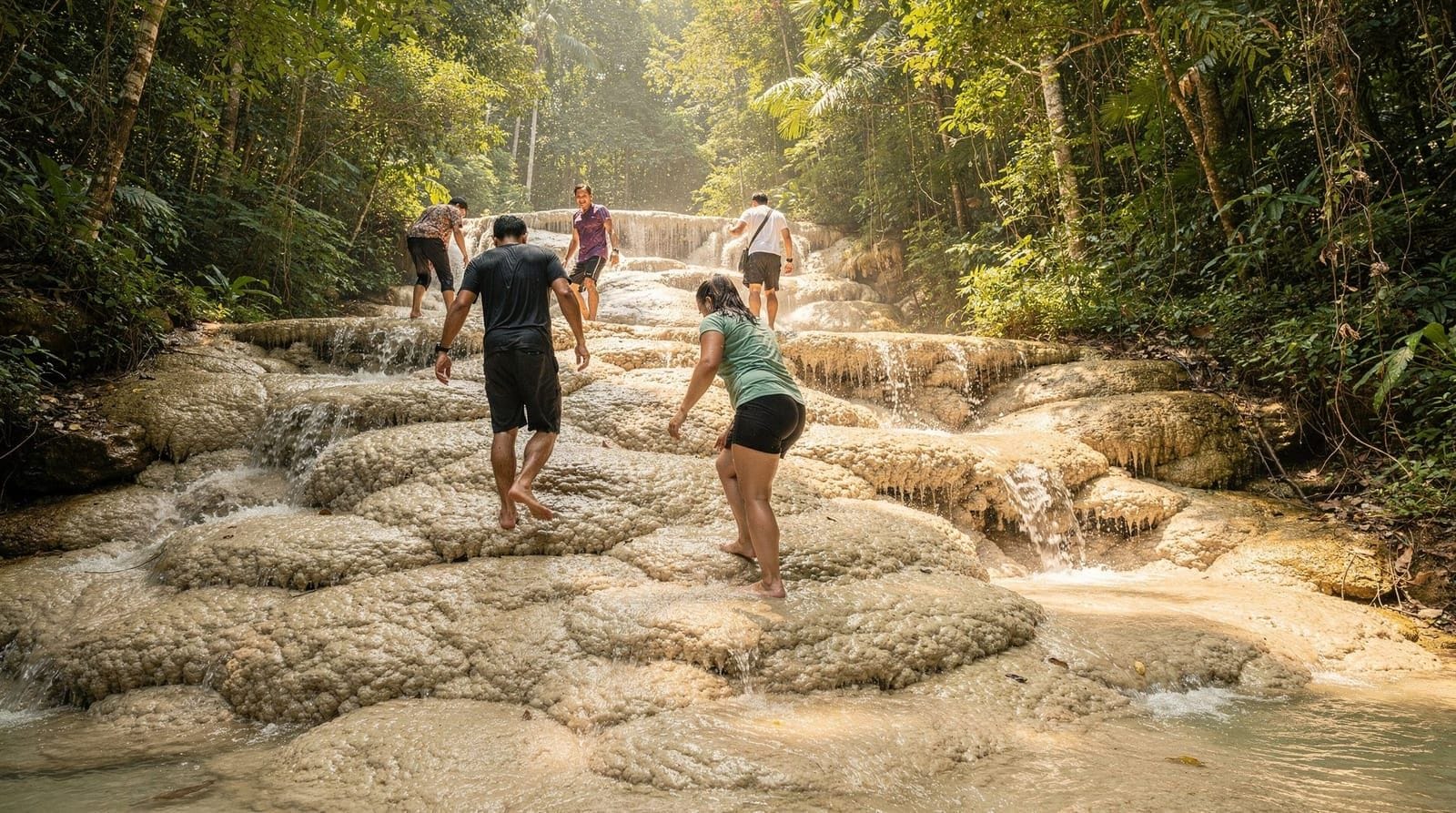
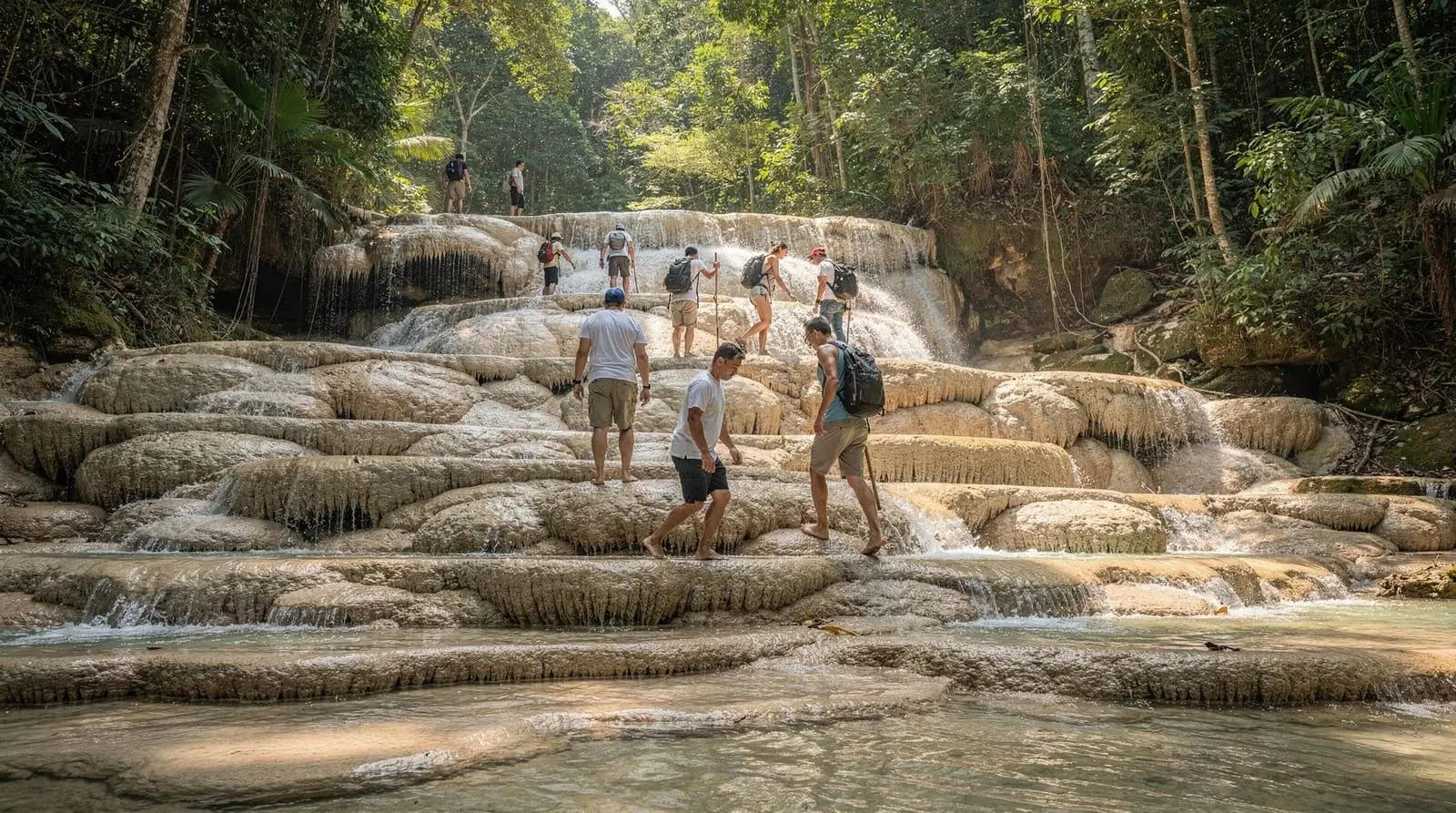
The rock at Bua Thong (Sticky Waterfalls) is coated in calcium carbonate deposited by the mineral-rich water, which creates a rough, grippy surface that visitors can walk and climb barefoot up the wet cascades without slipping — something not possible at a typical mossy, slick waterfall. It's about an hour north of Chiang Mai, entry is free, and most people visit for 1-2 hours as part of a half-day tour.
Sticky Waterfalls — properly Bua Thong Waterfall, in the San Kamphaeng district northeast of Chiang Mai — is one of the few natural attractions anywhere that’s actively designed to be walked and climbed rather than just viewed from a platform. The name comes from a genuine geological quirk: mineral deposits from the limestone-rich water coat the rock in a rough, porous crust that grips bare feet even when the surface is running with water, letting visitors climb straight up the cascades without the slipping you’d expect at a normal mossy waterfall.
Why the rock actually works this way
The water flowing over Bua Thong carries a high concentration of dissolved calcium carbonate, which precipitates out onto the rock surface over time, building up a textured, almost coral-like coating rather than the smooth, algae-slicked stone typical of most tropical waterfalls. This isn’t a marketing gimmick or a treated surface — it’s the same natural process that forms travertine terraces elsewhere in the world, just on a smaller, more accessible scale here. The practical result is that bare feet, rather than shoes, get the best grip, since skin conforms to the rough texture better than a rubber sole does.
What visiting actually feels like
Bua Thong is tiered across multiple cascades rising up a hillside, and most visitors work their way up several levels, pausing at small natural pools along the way for a swim before continuing higher or heading back down. The climb requires reasonable fitness and a willingness to get properly wet, but it isn’t technical — no ropes or equipment are involved, and the crowd ranges from young children with a parent’s hand to more adventurous visitors climbing well up the highest tiers. It’s genuinely more physical than a typical waterfall stop, closer in spirit to a scramble than a photo-op, which is part of why it’s become one of the more talked-about nature stops near the city.
Free entry, and what that means in practice
Entry to Bua Thong is free, one of the rare no-fee natural attractions in the area, a detail that matters when comparing it to Doi Inthanon’s roughly 300 THB foreigner park fee or the San Kamphaeng hot springs’ entrance charge. That said, “free” doesn’t mean facility-free — there are toilets, simple food stalls, and parking at the site, some of which may involve a small donation or parking fee depending on how you arrive. Guided tours charge for the transport and logistics of getting there, not for the falls themselves, so a tour price reflects convenience rather than an entrance fee being bundled in.
Best time to visit
Sticky Waterfalls flows year-round, but water volume and the overall experience shift meaningfully by season. During the rainy season (roughly June-October), the falls run fuller and more dramatic, though stronger flow also makes the higher tiers more physically demanding and occasionally slicker despite the mineral coating. In the cool and dry season (November-May), flow is gentler and the climbing experience calmer, making this the more comfortable window for visitors nervous about the climb itself, even if the falls look slightly less powerful in photos.
Morning visits, before both the day’s heat builds and any tour groups arrive in volume, tend to give the calmest experience at the lower pools before things get busier through midday.
How to visit: DIY vs. tour
Independent travelers can reach Bua Thong by rental car, motorbike, or a hired driver, with the site roughly 45-60 minutes from central Chiang Mai depending on traffic and the exact route through San Kamphaeng. Given the free entry, a self-arranged visit can be genuinely cheap — you’re paying only for transport.
For those without their own transport, a dedicated half-day Sticky Waterfall tour with hotel transfer handles the round trip without you needing to negotiate a driver or navigate independently, which is the simplest option if the falls are your only stop for the morning or afternoon. If you’d rather build a full day around the site with a more active pace, a climbing-focused Sticky Waterfall tour leans into the site’s actual appeal rather than treating it as a quick photo stop.
Combining Sticky Waterfalls with other stops
Sticky Waterfalls sits within a reasonable drive of several other San Kamphaeng-area attractions, and many operators bundle it with a second stop to build a fuller half or full day. A Sticky Waterfall, cave, and Thai buffet tour adds a nearby cave visit and lunch, useful if you’d rather not arrange food separately. Travelers interested in wildlife tourism sometimes combine the falls with a nearby operation via a Sticky Waterfall and elephant sanctuary combination — worth approaching with the same care discussed in our ethical elephant sanctuary guide, since not every operator pairing the two experiences applies the same welfare standards.
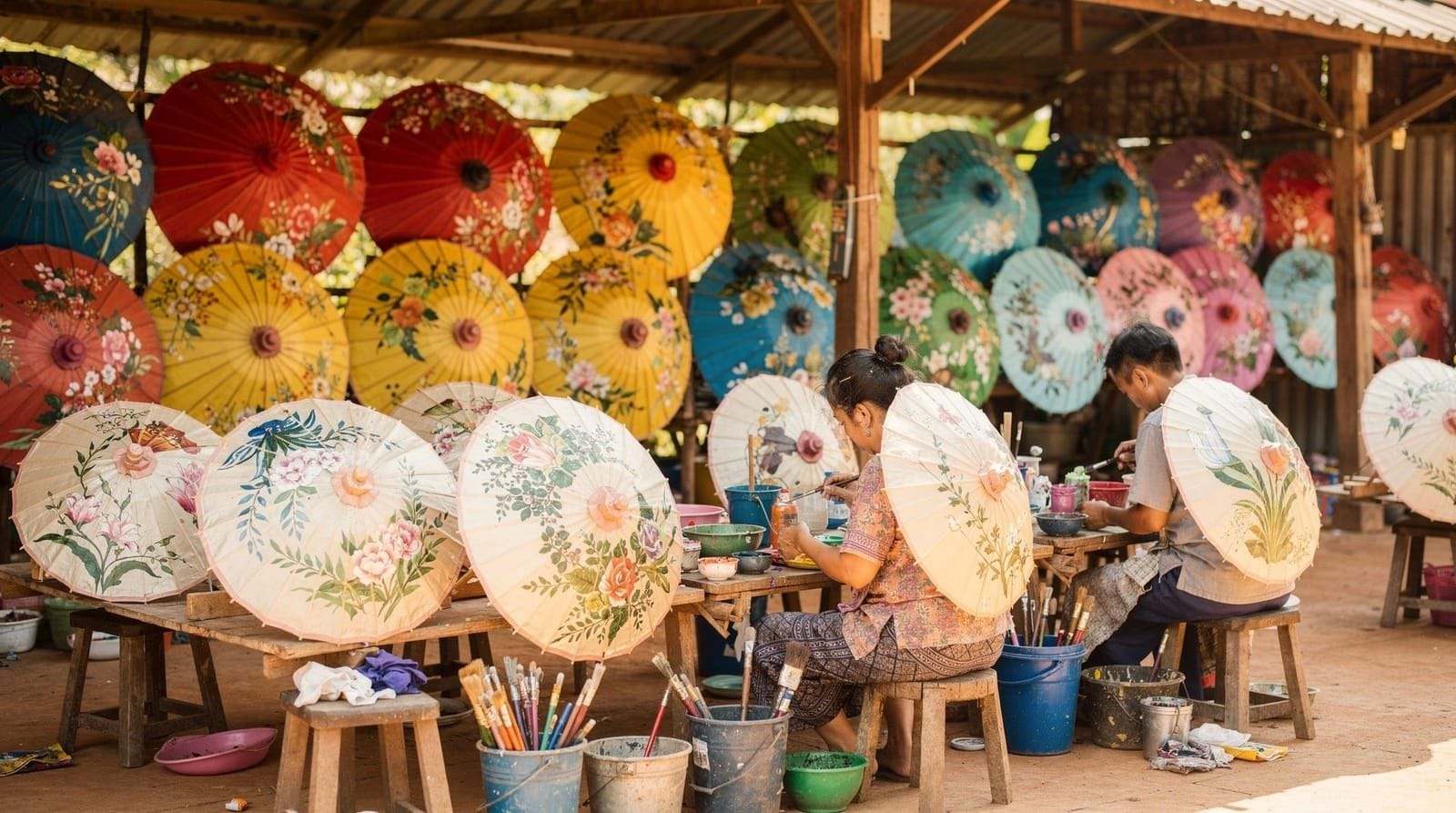
Beyond the immediate area, Bo Sang umbrella village and the San Kamphaeng hot springs both sit along the same general route out of the city, making a craft-village-and-waterfall or hot-springs-and-waterfall combination day a realistic option if you’re arranging your own transport rather than booking a fixed tour package. See our full San Kamphaeng day trip guide for how these stops fit together.
How it compares to Chiang Mai’s other waterfalls
Most waterfalls near Chiang Mai are viewing experiences — you walk to a platform, look, maybe wade in a pool at the base, and move on. Sticky Waterfalls inverts that by making the climb itself the point, which is why it draws a different kind of visitor than, say, the roadside Wachirathan falls inside Doi Inthanon National Park, or the tiered pools of Mae Sa Waterfall in the Mae Sa Valley. If you’re choosing between waterfall stops on a single trip and want an active, hands-on experience rather than a scenic pause, Bua Thong is the clearer choice; if you’d rather just admire a dramatic cascade without getting fully wet and climbing, Doi Inthanon’s falls or Huay Kaew waterfall closer to the city fit that mood better. Our best waterfalls near Chiang Mai roundup ranks all of the region’s main options side by side.
What to bring
Swimwear or clothes you don’t mind getting soaked, a change of dry clothes for the drive back, a small dry bag for your phone and valuables, and a towel. Sandals or flip-flops are useful for the walk in from the parking area, but plan to remove them before climbing, since bare feet grip the mineral-coated rock better than any footwear. Sun protection matters too — much of the lower falls area sits in open sunlight rather than shaded forest.
How Sticky Waterfalls became a must-do stop
Bua Thong existed as a locally known swimming spot long before it became a fixture on Chiang Mai tourist itineraries, with the climbable rock a known quirk among nearby residents well before organized tours began marketing it under the “Sticky Waterfalls” name. What changed its trajectory was straightforward word of mouth once photos and videos of visitors climbing barefoot up the cascades started circulating — a novelty that translates well visually and is genuinely rare among the world’s waterfalls. The site itself hasn’t been meaningfully altered to accommodate this popularity; there’s no added infrastructure beyond basic parking, toilets, and a few food stalls, which is part of why it still feels like a natural attraction rather than a manufactured tourist stop.
Accessibility and safety notes
The lower tiers and pools near the entrance are reachable on relatively flat ground and manageable for most visitors, including families with children old enough to be supervised near water. The higher tiers require genuine climbing rather than walking, with no railings or fixed safety equipment — this is a natural site, not a managed adventure park, and visitors are expected to assess their own comfort level at each tier before continuing upward. Wet rock, even mineral-coated and grippy, still carries some slip risk, particularly around the edges of pools where the coating is less developed, so moving deliberately rather than rushing is the sensible approach. Visitors with mobility limitations or significant balance concerns are better served sticking to the lowest, flattest pools rather than attempting the climb.
Wildlife and the surrounding forest
The forest surrounding Bua Thong forms part of the wider Sri Lanna National Park area, and the walk in from the parking area passes through genuine tropical forest rather than a manicured garden setting. Birdlife is reasonably active in the early morning hours before crowds build, and the shaded approach trail offers a noticeably cooler microclimate than the open falls themselves. It’s not a dedicated wildlife-viewing destination in the way some of the region’s national parks are, but the forest setting adds to the sense that this is a natural feature rather than a purpose-built attraction.
Combining a visit with nearby villages
Beyond the more commonly paired stops like Bo Sang and the San Kamphaeng hot springs, the wider San Kamphaeng district includes several small villages known for specific handicrafts — silk weaving, celadon pottery, and silverwork among them — strung along what’s sometimes called the crafts road. Travelers with a full day and their own transport can reasonably combine a morning at Sticky Waterfalls with an afternoon exploring one or two of these craft villages, a slower-paced alternative to the more common waterfall-plus-hot-springs pairing.
Photography at Sticky Waterfalls
The site photographs well in either bright midday sun, which brings out the white-grey tone of the mineral-coated rock against the surrounding green forest, or in the softer light of early morning before the falls get busy. Action shots of visitors mid-climb are the most commonly shared image from the site, and a slightly elevated position from one of the middle tiers looking down at climbers below tends to capture the scale of the falls better than a ground-level shot from the base. A waterproof phone case or action camera is worth considering if you want to document the climb itself rather than just posed shots from dry ground.
A realistic half-day itinerary
A reasonable half-day plan: depart Chiang Mai by mid-morning to arrive before the busiest midday period, spend 1-2 hours climbing and swimming across the tiers, change into dry clothes at the site’s basic facilities, and either head back to the city or continue on to a second nearby stop like Bo Sang or the hot springs for the remainder of the afternoon. Visitors who prefer a quieter experience should aim for an early morning arrival instead, before weekend day-trippers and tour groups build through midday.
Comparing Sticky Waterfalls to travertine sites elsewhere
Travelers who’ve visited travertine formations elsewhere in the world — terraced hot spring deposits or similar mineral-coated rock features — will recognize the same underlying geological process at work here, though Bua Thong’s cooler, flowing water and forest setting give it a distinctly different character from the often warmer, more mineral-heavy pools found at those better-known international sites. What sets Bua Thong apart even within this category is the sheer usability of the surface: many travertine formations are fragile or off-limits to walking precisely because of ongoing mineral deposition, while Bua Thong’s rock is robust enough to support regular foot traffic without visible degradation, at least at the scale of current visitor numbers.
Etiquette and respecting the site
Because Bua Thong remains free and relatively unmanaged compared to a ticketed attraction, a degree of visitor self-regulation matters more here than at a staffed national park. Packing out any rubbish, not leaving food waste near the pools, and being mindful of other visitors climbing the same tiers — particularly on busy weekends — all help keep the site in the condition that made it worth visiting in the first place. Loud music or large group behavior that disrupts the generally relaxed atmosphere is worth avoiding, both out of courtesy to other visitors and because it doesn’t reflect well on visitor behavior at a site with essentially no formal enforcement presence.
Is Sticky Waterfalls overhyped?
Given how heavily it’s featured in Chiang Mai content online, it’s fair to ask whether Sticky Waterfalls lives up to its reputation. Honestly, the core appeal — being able to climb a waterfall barefoot without slipping — is genuinely distinctive and not something you’ll find replicated at most other waterfalls anywhere, so the hype is largely justified on that specific point. Where expectations sometimes outpace reality is in assuming the site is more dramatic or larger in scale than it actually is; this is a modest, tiered cascade rather than a towering single-drop waterfall, and visitors expecting Niagara-scale drama will find the site more charming than awe-inspiring. Approached as a genuinely fun, active half-day stop rather than a bucket-list natural wonder, it delivers reliably on what it actually offers.
Frequently asked questions about Sticky Waterfalls
Where exactly is Sticky Waterfalls located?
In the San Kamphaeng district, roughly 45-60 minutes northeast of central Chiang Mai, within Sri Lanna National Park’s broader area.
Can children climb Sticky Waterfalls?
Many families do, particularly at the lower, gentler tiers, though supervision matters given the water and uneven natural surface. The upper tiers are steeper and better suited to older children and adults comfortable with a more physical climb.
Is Sticky Waterfalls the same as Bua Thong Waterfall?
Yes — “Sticky Waterfalls” is the popular English nickname for Bua Thong Waterfall, named for the grippy, mineral-coated rock surface rather than an official place name.
What’s the best month to visit for a full, dramatic waterfall?
The rainy season, roughly June through October, brings the fullest flow, though the climb can feel slightly more demanding when the rock is running harder with water.
Is there food available at the site?
Yes, simple food stalls operate near the entrance and parking area, though selection is basic — bringing snacks or water is a reasonable backup, especially if you’re visiting independently rather than on a tour that includes a meal stop.
Top experiences
Bookable activities with verified prices and instant confirmation on GetYourGuide.