A day out at the Sticky Waterfalls
We’d seen the photos — people apparently walking straight up a waterfall like it’s a staircase — and assumed some amount of exaggeration or careful camera angles. It isn’t exaggerated. This is what our day at Bua Thong Sticky Waterfalls actually looked like, mineral deposits and all, written up honestly rather than as a highlight reel.
Getting there: further than it looks on a map
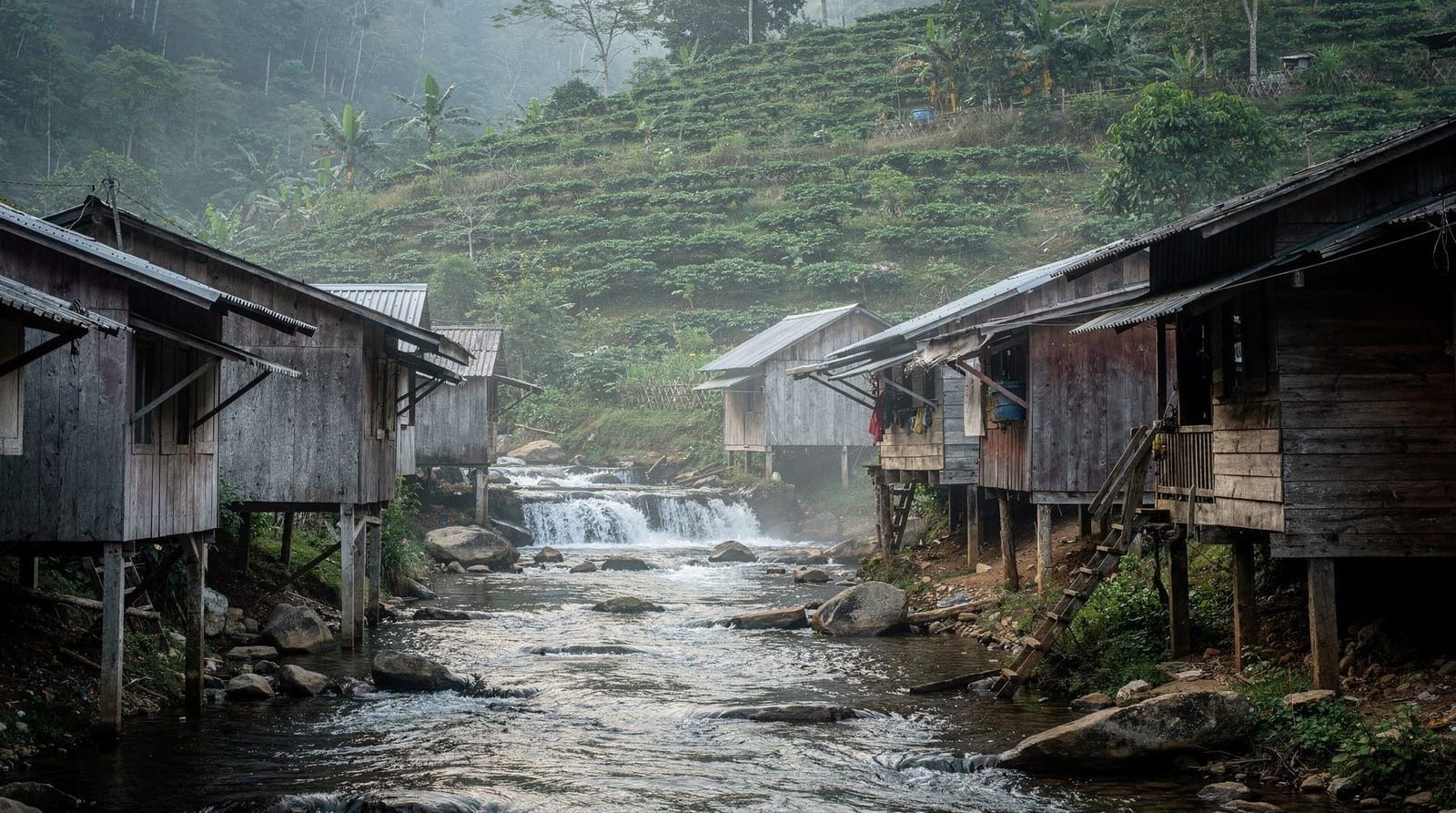
Bua Thong sits in San Kamphaeng district, roughly an hour to an hour and fifteen minutes northeast of central Chiang Mai depending on traffic through the city’s outer roads. We’d underestimated the drive time slightly, picturing something closer to 30 minutes given how often it’s mentioned in the same breath as closer San Kamphaeng attractions. A private car or organized tour handles the logistics without you needing to navigate; self-driving by scooter is doable but the last stretch of road narrows and winds enough that we were glad we weren’t managing that on unfamiliar mountain roads for the first time. The drive itself, once we stopped worrying about the time, turned into a pleasant enough part of the day on its own — rural countryside, small roadside fruit stands, none of the traffic density of the city.
Chiang Mai half-day tour to Sticky Waterfall with hotel transferThe mineral rock: it really does grip your feet
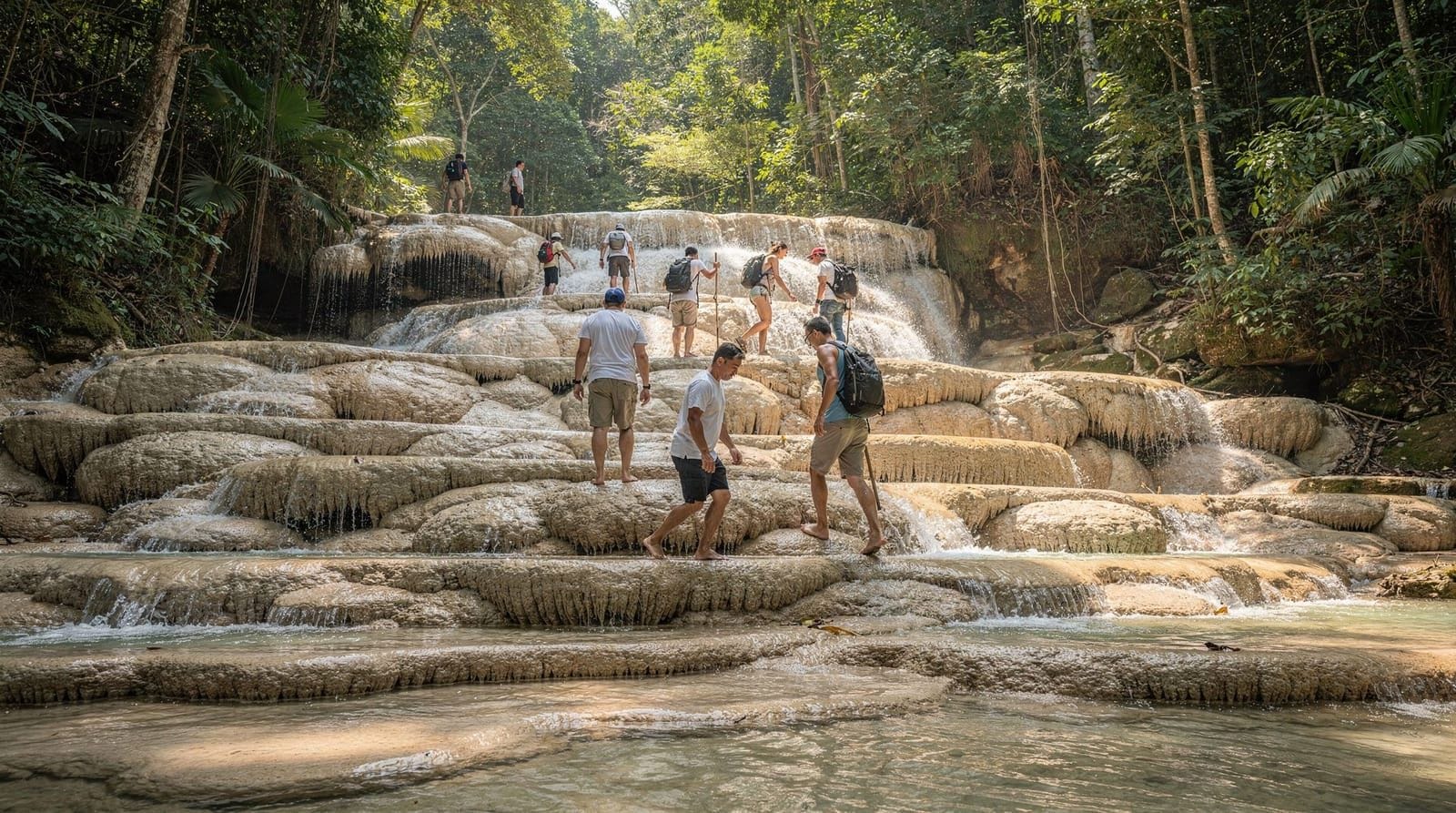
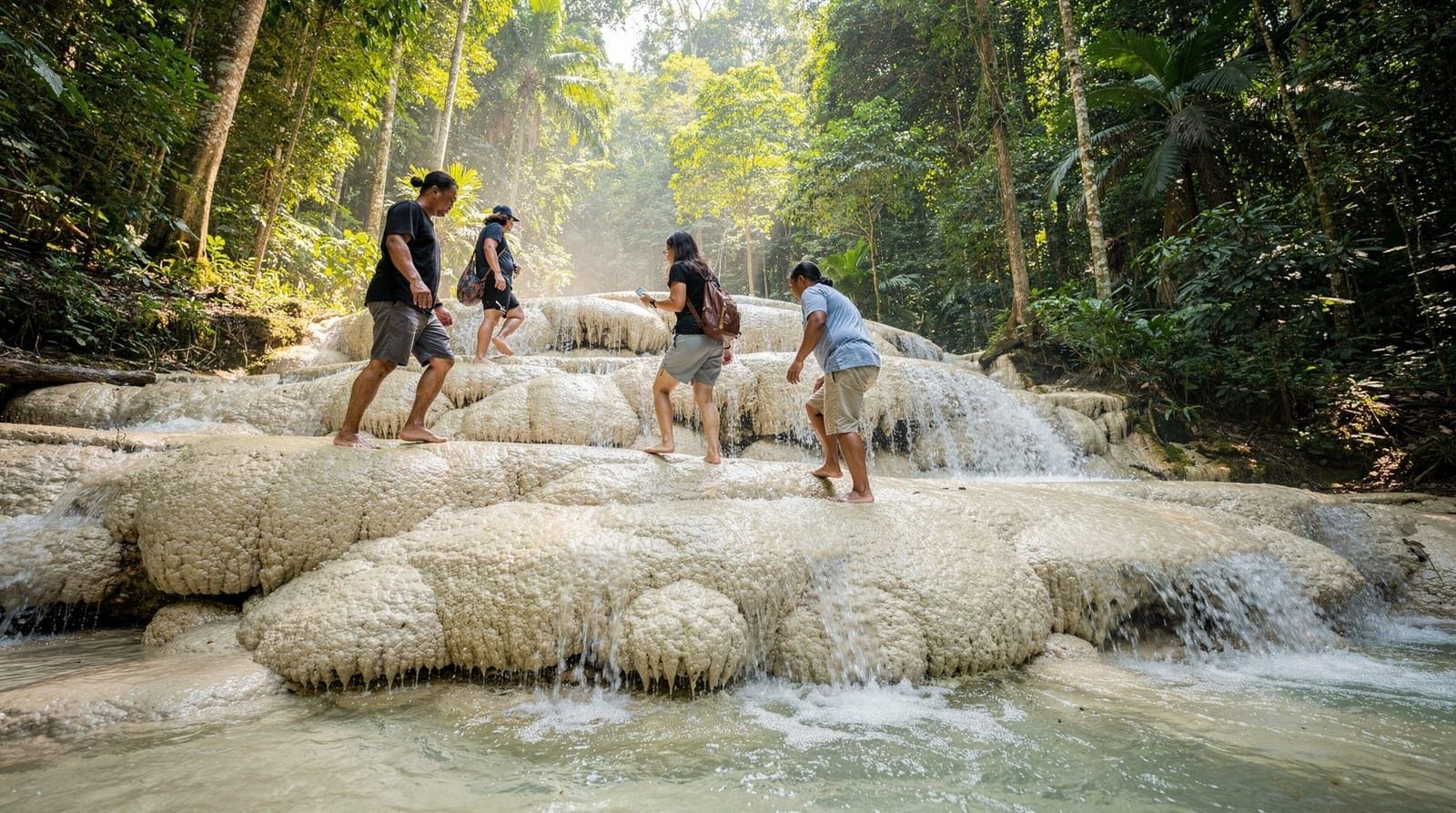
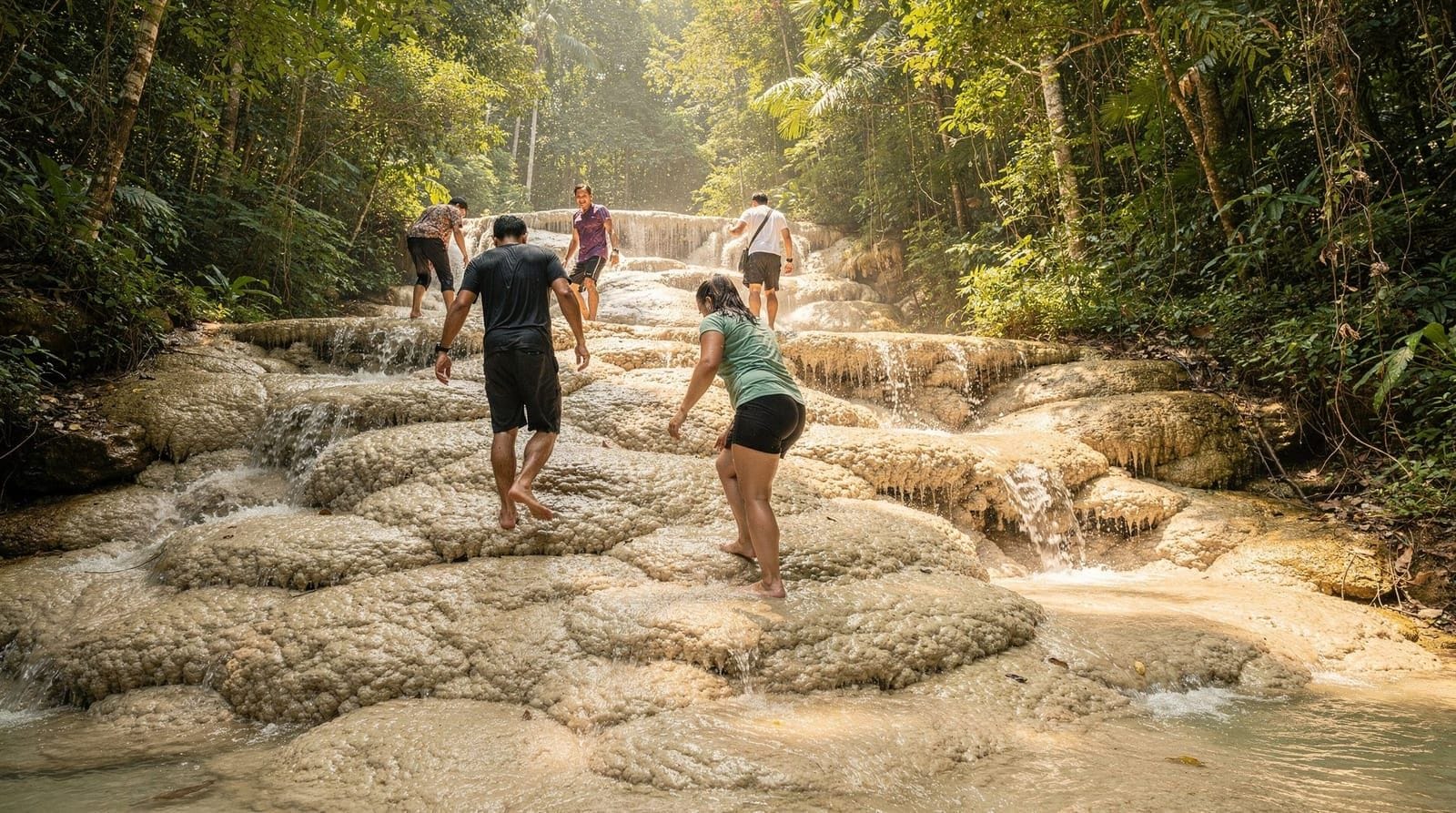
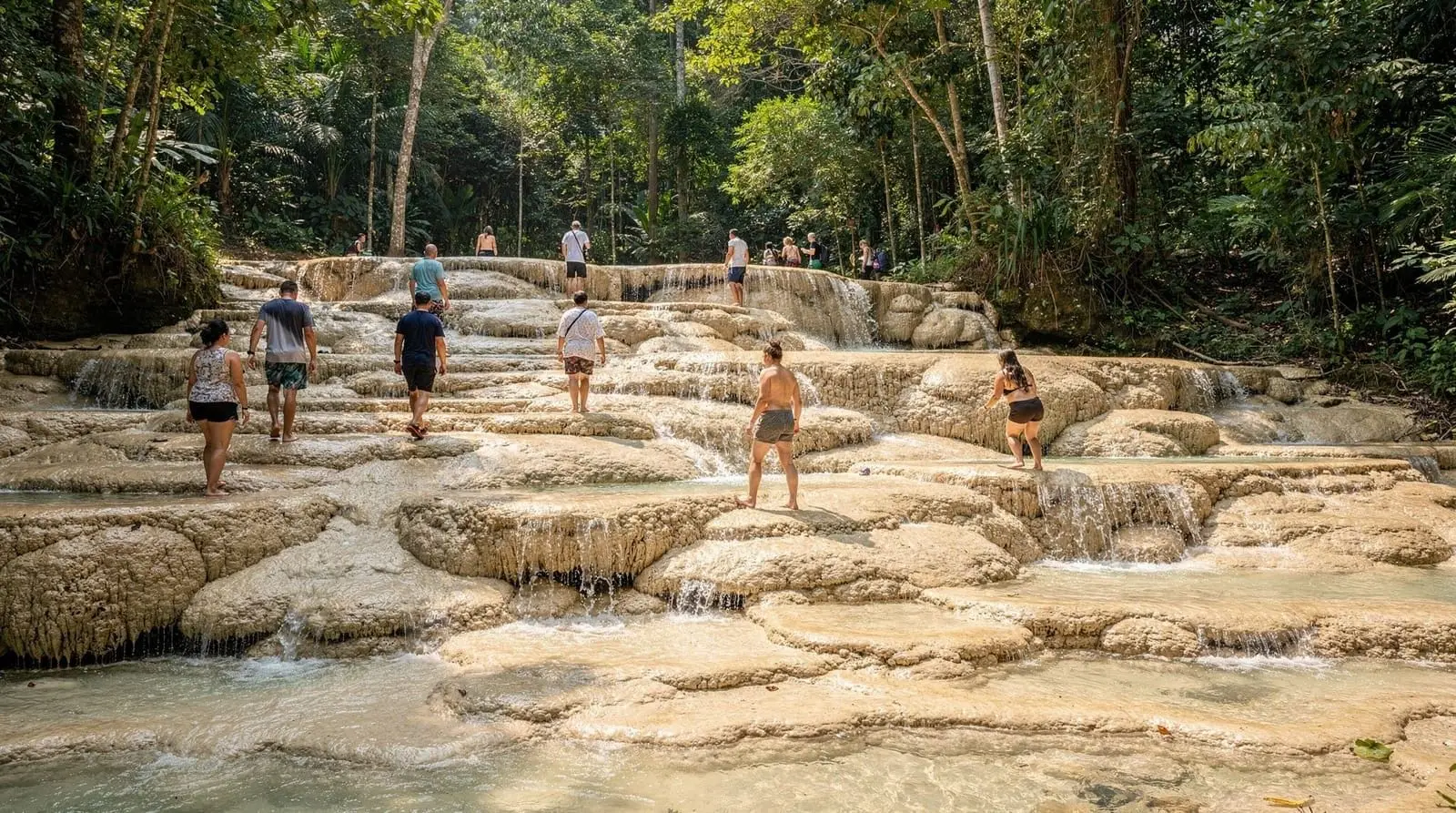
The waterfall’s actual party trick is the limestone and mineral deposit coating the rock surface, which creates a genuinely non-slip texture unlike almost any other wet rock we’ve walked on. Barefoot (shoes are actively discouraged and mostly pointless on this surface) we climbed sections that, by every visual logic, should have sent us sliding straight back down into the pools below. They didn’t. There’s a real moment of disbelief the first time you take a full step up a wet, flowing cascade and your foot just… holds. It’s the kind of thing that sounds like marketing copy until you’ve felt it yourself, and we found ourselves explaining the sensation to each other in the pool afterward, still slightly amazed by something that simple.
It gets busier than the photos suggest
The falls have clearly become a well-known stop, and by late morning the lower tiers had a real queue of people waiting their turn to climb popular sections, especially near the main viewing platforms where everyone wants the same photo angle. We arrived close to opening time, around 8am, and had the lower two tiers almost entirely to ourselves for the first hour, which made a genuinely large difference to how relaxed the whole visit felt. If you can only do one thing differently based on our experience, arriving early is it — by 11am, the difference in atmosphere compared to our first hour there was stark enough that we were glad we’d already gotten what we came for.
Climb Sticky Waterfall like Spiderman from Chiang Mai cityThe upper tiers require more commitment than they look
The falls run across roughly nine tiers up the hillside, and the lower few are gentle enough for almost anyone reasonably mobile. The upper tiers get noticeably steeper, wetter in places where the flow is stronger, and require a level of scrambling that isn’t obvious from the entrance photos everyone shares online. We turned back around tier six after one section that felt like it needed more confidence in our grip than we had that morning — not dangerous exactly, but not something to push through if you’re uncertain, particularly with kids or anyone with knee issues. A couple of more confident visitors climbed straight past us to the top tiers, so it’s clearly doable, just not something we’d push ourselves into on a first visit.
The cave detour we almost skipped
A short walk from the main falls area, a limestone cave opening is easy to miss if you’re focused entirely on the waterfall itself. We nearly skipped it, assumed it was a minor add-on, and ended up glad we didn’t — a cool, quiet contrast to the humid climbing, with basic but usable pathways inside. It doesn’t need much time, maybe twenty minutes, but it rounds out the visit if you’ve got it in the schedule, and the temperature drop inside was a genuinely welcome break from the midday heat by the time we got there.
What it actually costs
Entry to the national park area covering the falls runs a modest few hundred baht per person (roughly 200 THB, around $5–6), with additional small fees if you want a locker for valuables while you’re climbing (worth it — your phone and the wet rock do not mix well, something we watched happen to another visitor’s phone within our first half hour there). Add transport, and a half-day guided visit including hotel pickup runs in the range of 800–1,400 THB per person (roughly $22–39) depending on group size and whether lunch is included.
Combining it with the rest of San Kamphaeng
Because the drive out is a genuine time investment, most visitors — us included — combine Sticky Waterfalls with at least one other San Kamphaeng stop on the same day. We paired ours with a visit toward Mae Kampong village for lunch and coffee afterward, which turned a single-attraction trip into a fuller day without much extra driving given how close the two areas sit to each other. On a different visit, we’ve also seen people combine it with San Kamphaeng’s hot springs, though we’d suggest doing the waterfalls first while you have the energy for climbing, saving the hot springs’ slower pace for the tired end of the day rather than the reverse order.
Would this work as a family trip
We didn’t have kids with us on this particular visit, but we watched several families managing the lower tiers with children who looked around six or seven, and it seemed genuinely manageable at that age level on the gentler sections, with close supervision. The upper tiers, given the steeper scrambling involved, looked like a harder call for younger kids specifically, and we’d lean toward capping a family visit at the lower three or four tiers rather than pushing further. Our Chiang Mai with kids guide covers this and several other family-specific safety calls in more depth than we can from a single day’s observation.
The other visitors: who we actually saw there
The crowd skewed noticeably younger and more international than we expected for what’s technically a national-park-managed natural site — a lot of backpacker-style travelers and couples in their twenties and thirties, fewer families and fewer older visitors than we’d seen at, say, Doi Suthep or the Old City temples the same week. It gave the whole visit a slightly different, more casual energy than the more solemn temple-hopping days elsewhere in our itinerary, closer to a swimming-hole day out with friends than a cultural sightseeing stop.
A near-miss worth mentioning honestly
At one point on the fourth tier, one of us slipped on a section where the mineral coating had thinned from heavier foot traffic that day, and while it wasn’t a serious fall — a scraped knee, mostly wounded pride — it was a useful reminder that the “non-slip” reputation isn’t absolute everywhere on the falls. High-traffic sections, especially by afternoon, can lose some of the grip that makes the lower tiers feel so reliable earlier in the day, which is one more reason we’d push arriving early rather than treating the timing advice as merely about crowd avoidance.
What we wore, and what we wished we’d worn
We went in swimsuits with quick-dry shorts over them, which worked fine for the climbing itself but left us both a little exposed to sunburn on the exposed upper tiers where there’s essentially no shade for a couple of hours in the middle of the day. A rash guard or light long-sleeve swim shirt would have been the better call, and we noticed several more experienced-looking visitors wearing exactly that. Water shoes are pointless here — the mineral rock’s grip works specifically with bare feet — but we were glad of the dry bag we’d brought for phones and the car key, since the walk between tiers means crossing shallow, fast-moving water repeatedly.
Best time of year to visit
We went in the cool season, and the water level felt moderate rather than overwhelming, which suited our comfort level with the climbing. A local guide mentioned that the falls run considerably stronger and can become genuinely more difficult, even hazardous on the upper tiers, during and just after the rainy season peak, while the driest part of hot season can leave some of the upper cascades thinner and less visually dramatic than the photos everyone shares. Cool season, broadly, seemed like the most balanced window for both safety and the full visual effect of the falls.
Would we do it again
Yes, without hesitation, but earlier in the day and with lower expectations for the upper tiers. The lower falls alone are worth the drive for the genuine novelty of the climbable rock, and the crowd thins out dramatically if you’re willing to show up close to opening. What we’d change is bringing a proper change of clothes for the drive back rather than sitting in a damp swimsuit for an hour, a small logistical detail that made the return trip less comfortable than it needed to be. For the full logistics — what to wear, what to skip, and a tier-by-tier breakdown — our Sticky Waterfalls guide, half-day itinerary guide, and San Kamphaeng day trip guide cover the planning details we worked out the hard way, and our best waterfalls guide has the wider shortlist if Bua Thong leaves you wanting more.