San Kamphaeng hot springs: geothermal pools, egg boiling, and visiting logistics
Chiang Mai: Mae Kampong Village, Hot Springs & Bor Sang Tour
What are the San Kamphaeng hot springs, and how do I visit?
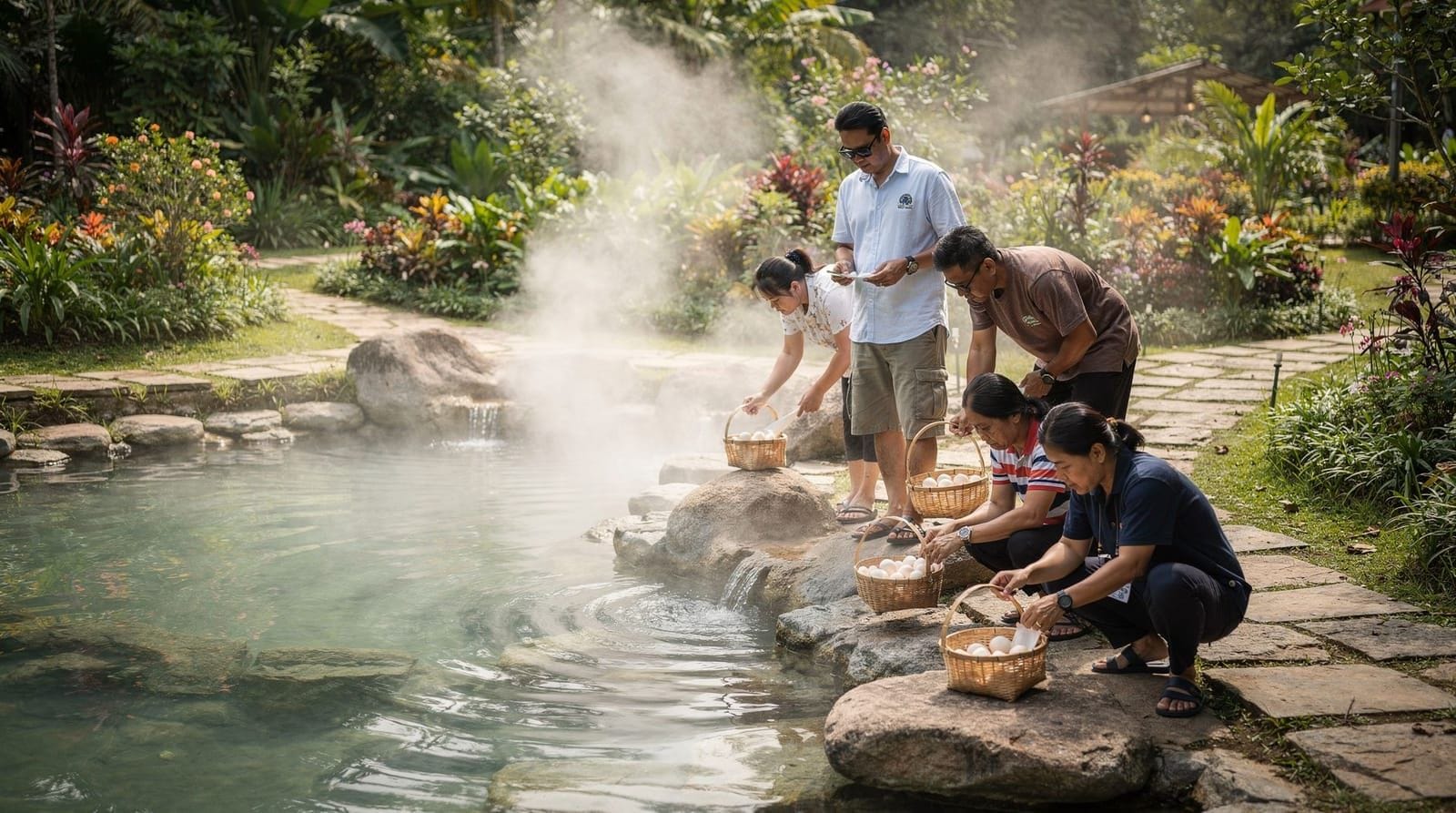
San Kamphaeng Hot Springs is a public geothermal park roughly 35-40 minutes east of Chiang Mai, with natural hot spring pools, a boiling geyser that periodically shoots several metres into the air, egg-boiling stations where visitors cook eggs directly in the mineral water, public and private soaking pools, and a fish spa. Entrance runs a modest fee (roughly 100-300 THB depending on which pools and facilities you use), and it's typically visited as a half-day trip combined with other San Kamphaeng-area stops.
East of Chiang Mai, past the craft villages that line the road toward San Kamphaeng, a public geothermal park offers one of the more unusual wellness experiences in the region: natural hot spring pools fed by underground volcanic activity, a periodically erupting geyser, and the slightly novel ritual of boiling your own egg directly in the mineral-rich water. It’s a different kind of wellness stop from Chiang Mai’s massage shops and spas covered elsewhere on this site - outdoor, natural, and built around geothermal geology rather than trained therapists - and makes an easy, worthwhile half-day addition to a San Kamphaeng-area day trip.
Quick answer: San Kamphaeng Hot Springs is a public geothermal park roughly 35-40 minutes east of Chiang Mai, with natural hot spring pools, a boiling geyser that periodically shoots several metres into the air, egg-boiling stations where visitors cook eggs directly in the mineral water, public and private soaking pools, and a fish spa. Entrance runs a modest fee (roughly 100-300 THB depending on which pools and facilities you use), and it’s typically visited as a half-day trip combined with other San Kamphaeng-area stops.
The geology behind the springs
San Kamphaeng’s hot springs exist because of underground geothermal activity - groundwater heated by proximity to residual volcanic and tectonic heat sources rises to the surface carrying dissolved minerals, most notably sulphur, which gives the springs their characteristic mild odour and the reputation for skin and circulatory benefits that Thai traditional wellness culture attributes to mineral bathing generally. Northern Thailand has several such geothermal sites scattered across the region, but San Kamphaeng’s is among the most developed and easily accessible from Chiang Mai, with the park infrastructure built specifically around visitor access rather than being a wild, undeveloped spring.
The main geyser
The park’s centrepiece is a fenced, actively boiling source pool that periodically shoots a jet of steam and water several metres into the air, a genuinely striking sight and the reason many visitors come specifically to see the geyser rather than only to soak. The eruption height and frequency vary with underground pressure and aren’t on a fixed visitor-friendly schedule, so there’s an element of chance in catching a particularly dramatic eruption during your visit, though the pool remains visibly active (steaming, bubbling) continuously even between the larger eruptions. Safety barriers keep visitors at a respectful distance from the near-boiling source water, and this area is strictly for viewing rather than bathing.
Egg boiling: the signature activity
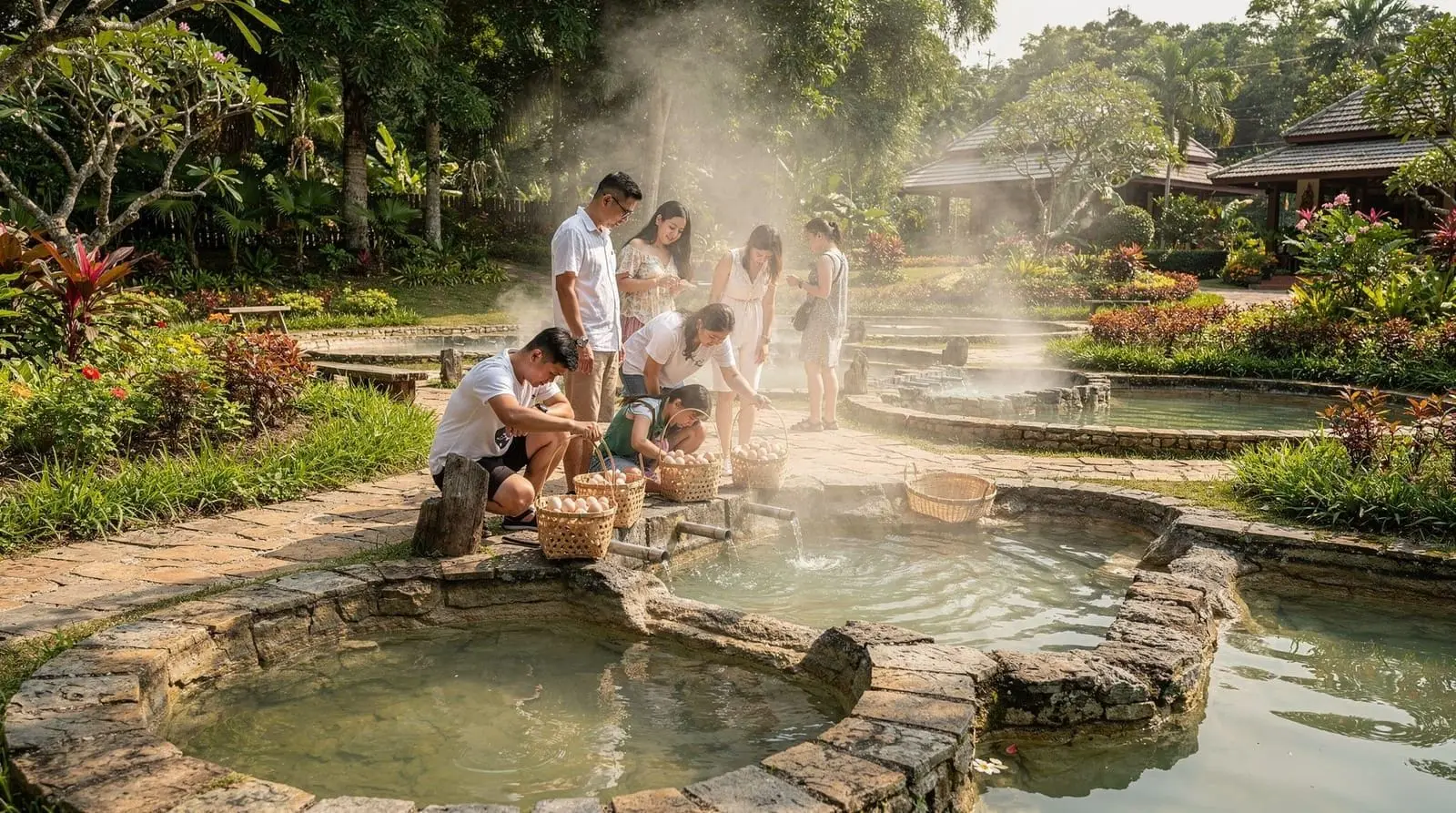
One of the park’s most popular and genuinely fun activities is egg boiling - baskets of raw eggs are sold at stalls near the hot springs, and visitors lower them on strings or in small baskets into designated hot pools close to the main source, where the water runs hot enough to cook an egg through in a few minutes. Cooked eggs are eaten on the spot, often with a simple accompanying dipping sauce also available nearby. It’s an inexpensive, low-effort activity (typically a small additional cost on top of the entrance fee for a basket of eggs) that adds a memorable, slightly playful element to what might otherwise be a purely observational visit.
Bathing pools: public and private
Beyond the geyser and egg-boiling area, the park maintains bathing pools mixed down to a comfortable soaking temperature considerably cooler than the near-boiling source water. Larger public pools accommodate general soaking (swimwear required, as at any public pool), while smaller private jacuzzi-style rooms can be booked for an additional fee, offering a quieter, more secluded soak for visitors who prefer not to share a pool with the general crowd or who want a more intimate experience, sometimes for a couple or small family group. A fish spa - small fish that nibble dead skin from feet, a novelty treatment found at various wellness spots across Thailand - is also typically available on-site as a further add-on.
Combining a visit with the Mae Kampong and Bo Sang area
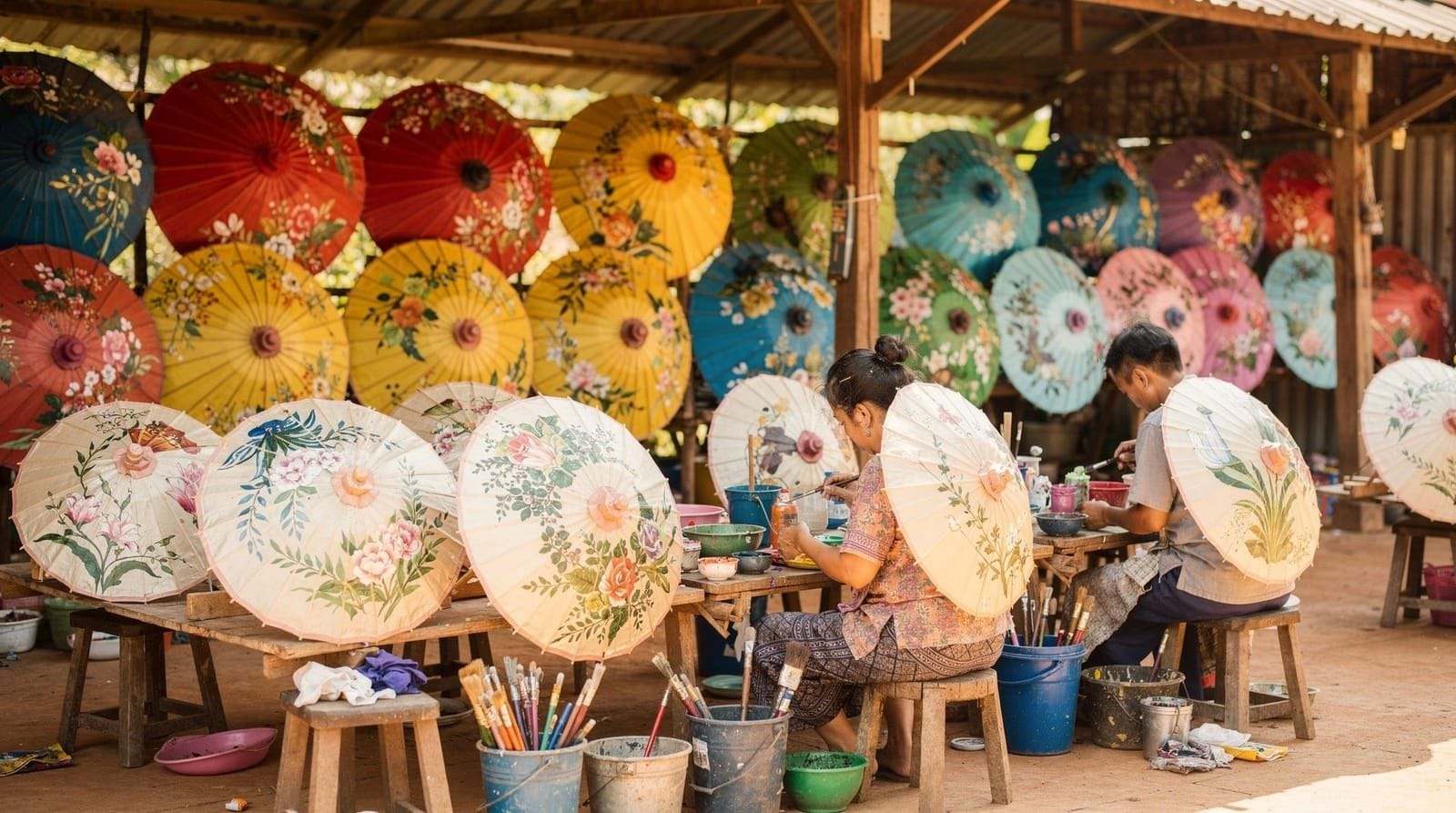
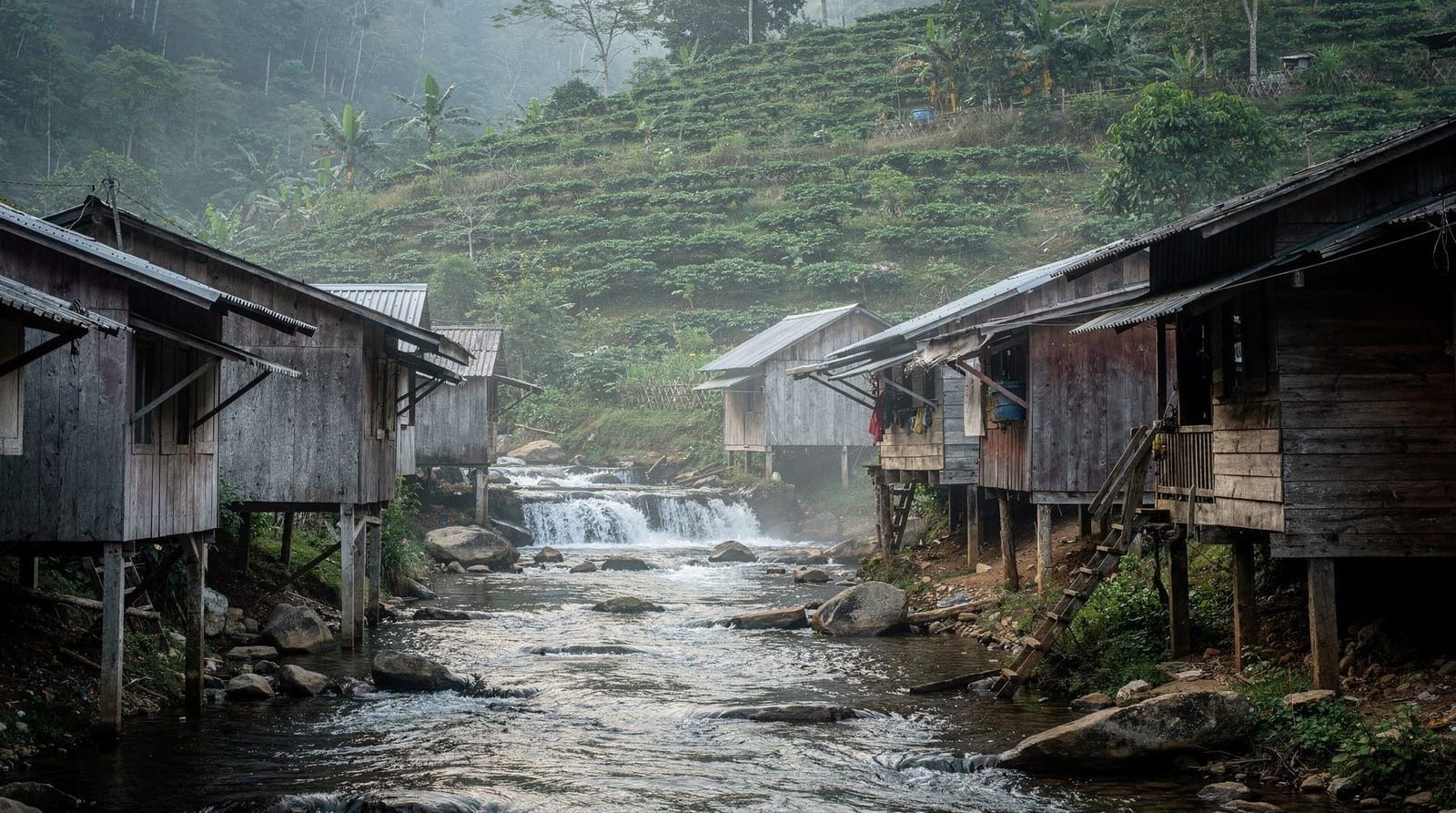
Because San Kamphaeng and the broader area east of the city hold several worthwhile stops close together, most visitors don’t treat the hot springs as a standalone destination trip but fold it into a broader half or full-day loop. A Mae Kampong village, hot springs, and Bo Sang tour packages exactly this combination, pairing a visit to the springs with Mae Kampong village’s mountain coffee-house setting and the Bo Sang umbrella village’s hand-painted craft workshops, removing the need to plan routing and timing between the separate stops yourself.
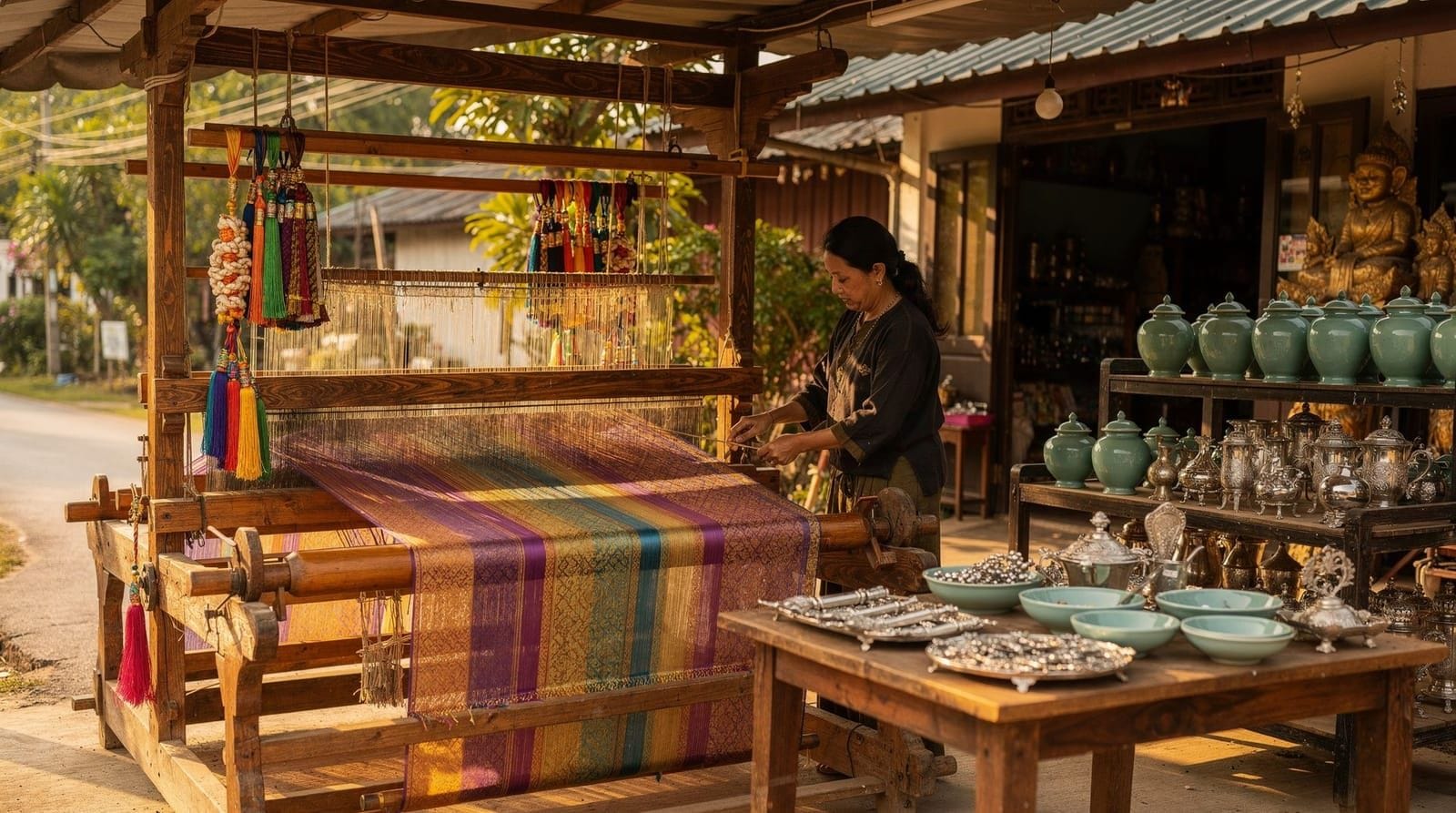
For visitors self-driving or hiring a private driver instead, the San Kamphaeng crafts road - the handicraft highway running through silk, celadon, and silverware workshops - sits along essentially the same route out of the city, making a self-planned itinerary combining crafts and hot springs straightforward without needing a guided format.
A closer look at the visitor facilities
Beyond the geyser, egg-boiling stalls, and pools, the park includes basic visitor amenities - changing rooms, restrooms, simple food stalls selling Thai snacks and drinks, and covered seating areas for resting between soaks or waiting out a sudden shower. The overall infrastructure is functional rather than polished, reflecting its status as a long-standing public park rather than a newly built commercial attraction, though this matches the straightforward, unpretentious character of the visit itself - most visitors come for the geothermal novelty and egg boiling rather than a resort-standard facility experience.
Some sections of the park include short garden paths and landscaped areas around the pools, giving the overall grounds a more pleasant, leisurely feel than a purely functional industrial hot-springs site might suggest, useful context for visitors expecting something closer to a rough, undeveloped natural spring rather than a maintained public park.
Comparing San Kamphaeng to other Thai hot springs
Thailand has several notable hot spring destinations beyond San Kamphaeng, including springs near Pai and Mae Hong Son further north, and San Kamphaeng’s main advantage over these alternatives is straightforward proximity - a 35-40 minute drive from central Chiang Mai versus a multi-hour journey to reach the Pai or Mae Hong Son springs. Visitors with limited time who still want to experience a Thai hot spring without dedicating a multi-day northern loop to it will find San Kamphaeng the clearly more practical option, even if some of the more remote springs further north are set in more dramatic natural surroundings. For visitors already planning a Pai or Mae Hong Son loop for other reasons, sampling the hot springs there in addition rather than instead of San Kamphaeng is a reasonable way to compare the different settings directly.
What makes the mineral water distinctive
The sulphur content that gives San Kamphaeng’s springs their characteristic mild smell is also the mineral most commonly credited in Thai traditional wellness culture with skin and circulatory benefits, similar to the reputation sulphur-rich hot springs carry in many other parts of the world. Whether or not the specific therapeutic claims hold up to rigorous scientific scrutiny, the physical sensation of soaking in genuinely warm, mineral-rich water in an outdoor setting is a pleasant, low-effort form of relaxation regardless of how literally you take the traditional health claims attached to it.
Practical tips for a smoother visit
A few practical notes make for a smoother visit: arriving earlier in the day, particularly on weekends, avoids the busiest crowds around the egg-boiling stalls and public pools, since the park draws a meaningful number of domestic Thai visitors in addition to international tourists, especially during holiday periods. Bringing a dry bag or plastic bag for wet swimwear on the journey back is a small but genuinely useful packing tip, since changing facilities, while available, aren’t always spacious. And confirming whether your chosen tour or private driver includes waiting time at the springs themselves, rather than a drive-by stop, avoids feeling rushed through what’s meant to be a relaxed, unhurried part of the day.
Getting there and timing
San Kamphaeng Hot Springs sits roughly 35-40 minutes by road east of central Chiang Mai, reachable by private car, hired driver, or as part of a guided day tour. Public transport options are limited and not particularly convenient for this specific destination, making a private vehicle or guided tour the practical default for most visitors rather than attempting a songthaew or public bus route. A standalone visit focused purely on the springs - viewing the geyser, boiling an egg, and a soak - takes roughly 1.5-2.5 hours, though most visitors extend the outing into a half-day or full-day loop covering the area’s other craft villages and attractions.
What to bring
Swimwear is necessary for the public bathing pools, along with a towel (some facilities rent towels on-site, but bringing your own avoids relying on that). Flip-flops or sandals make moving between the geyser viewing area, egg-boiling stalls, and pools considerably more comfortable than closed shoes, given the wet, sometimes slightly slippery ground around the mineral pools. Sun protection matters too, since much of the park is outdoors with limited shade around the main geyser and pool areas.
Health considerations
The same general cautions that apply to any hot-water soaking apply here: visitors with heart conditions, blood pressure issues, or who are pregnant should approach extended hot pool soaking cautiously and consider checking with a doctor beforehand if there’s a specific concern. Staying hydrated, limiting time in the hottest pools, and taking breaks in shaded seating areas between soaks are sensible practices, particularly during Chiang Mai’s hot season when ambient temperatures are already elevated before adding a hot mineral soak on top.
How this compares to Chiang Mai’s massage-based wellness scene
San Kamphaeng’s hot springs are a genuinely different category of wellness activity from the city’s massage shops and spas covered in the Thai massage in Chiang Mai guide - outdoor, geological, and centred on mineral bathing rather than trained therapeutic technique. Visitors building a full wellness-themed day sometimes pair a hot springs soak with a herbal steam sauna session back in the city, covered in the herbal steam and sauna guide, or a meditation session for a more complete, varied wellness itinerary spanning both natural and city-based experiences.
Seasonal considerations
The cool season (November-February) is arguably the most pleasant time to visit, since the contrast between cooler ambient air and the warm mineral pools feels especially good, similar to the appeal of a herbal steam sauna in cooler weather. The hot season (March-May) makes soaking in the hottest pools less appealing given already-high ambient temperatures, though the cooler public pools and the egg-boiling and geyser-viewing activities remain enjoyable year-round regardless of season. The rainy season (June-October) doesn’t meaningfully disrupt a visit, since the pools themselves are outdoor and unaffected by rain, though a sudden downpour may temporarily send visitors toward covered seating areas near the entrance.
Visiting with children
San Kamphaeng Hot Springs is a reasonably family-friendly stop, with the egg-boiling activity in particular tending to be a genuine highlight for children who enjoy the hands-on, slightly novel process of cooking their own snack in natural hot water. The main geyser and near-boiling source pools are safely fenced off, though supervising children closely around the edges of these areas remains sensible given the genuine heat involved. The cooler public bathing pools are suitable for children who can swim or are supervised closely, and the overall pace of a visit - unhurried, outdoor, with food stalls and space to move around - suits families better than some of Chiang Mai’s more structured indoor attractions.
Combining with a broader northern Thailand hot springs theme
Visitors particularly drawn to Thailand’s hot spring destinations sometimes build a loose theme across a longer northern Thailand trip, comparing San Kamphaeng’s easy-access convenience against the more remote, scenic springs found near Pai or as part of Chiang Rai day-trip itineraries that sometimes include a hot springs stop alongside temple visits. None of these are better or worse in an absolute sense - they simply trade proximity for setting, and visitors with the time to sample more than one get a genuinely interesting sense of how the same basic geothermal phenomenon plays out differently across the region’s varied landscapes.
Photography and the best times to visit for pictures
The geyser area photographs best in early morning or late afternoon light, when the steam catches the angled sun more dramatically than in the flat, harsh light of midday. Midday visits, while perfectly fine for the soaking and egg-boiling activities, tend to produce less visually striking photos of the steaming pools and geyser specifically, worth keeping in mind for visitors planning the trip partly around photography.
Entrance fees and what they cover
Entrance to the park typically runs a modest fee, with additional charges for specific facilities: egg baskets for the boiling activity, private jacuzzi room rental, and fish spa access are usually priced separately on top of the base entrance fee rather than bundled in automatically. Bringing small denomination Thai baht for these on-site add-ons avoids relying on cards or larger notes at what are generally simple cash-based stalls.
Building a full day around the springs
For visitors with a full day rather than a half day to spend east of the city, a sensible sequence starts with the hot springs in the cooler morning hours, moves on to Bo Sang’s umbrella village for craft demonstrations around midday, and finishes with a stop along the San Kamphaeng crafts road or a visit to Mae Kampong village in the mountains above, depending on how much driving time you’re comfortable with. This loop covers geothermal wellness, traditional craft, and a mountain village setting in a single day without excessive backtracking, since all of these stops sit roughly along the same eastward route out of Chiang Mai.
The honest bottom line
San Kamphaeng Hot Springs isn’t a must-see, first-priority Chiang Mai attraction in the way the Old City’s temples or Doi Suthep are, but it’s a genuinely enjoyable, inexpensive half-day addition for visitors who have a spare morning or afternoon and are already planning to explore the San Kamphaeng area’s craft villages. The egg-boiling activity in particular tends to be a memorable, slightly novel highlight that visitors mention well after the trip, disproportionate to how little time and money it actually costs to try.
For visitors deciding between adding San Kamphaeng to an already packed Chiang Mai itinerary or skipping it in favour of more time in the city itself, the deciding factor is usually whether the broader San Kamphaeng area’s craft villages already interest you - if so, folding in the hot springs costs very little extra time and rounds out the day meaningfully; if a dedicated trip east of the city doesn’t otherwise appeal, the springs alone are pleasant but not compelling enough to justify the round trip on their own.
Frequently asked questions about San Kamphaeng hot springs: geothermal pools, egg boiling, and visiting logistics
How hot is the water at San Kamphaeng hot springs?
Can I actually boil an egg in the hot springs?
Are there private pools, or is it all public bathing?
How do I get to San Kamphaeng hot springs from Chiang Mai?
How long should I plan for a visit?
Is San Kamphaeng worth visiting if I've already done Chiang Mai's spas and massage shops?
Top experiences
Bookable activities with verified prices and instant confirmation on GetYourGuide.