Meditation retreats in Chiang Mai: temple stays, courses, and what to expect
Meditation Retreat and Self-Care in Nature
Duration: Half day
What are the main meditation retreat options in Chiang Mai?
Options range from a half-day guided meditation and yoga session in a natural setting to full multi-day retreats combining meditation, yoga, and cultural immersion, plus more intensive temple-based vipassana courses at centres like Wat Ram Poeng (Wat Tapotaram), which run structured, multi-day silent-practice programs. Choose based on how much time you have and whether you want a light introduction or a serious, disciplined practice commitment.
Chiang Mai’s reputation as a wellness and meditation hub isn’t a marketing invention - the city sits within a genuine, long-standing tradition of Buddhist monastic education and meditation practice, with several temples running structured programs that welcome visitors alongside long-term practitioners and monastic students. The range runs from a gentle half-day introduction with a guide translating instructions in real time, to serious multi-day silent retreats that ask for real commitment and self-discipline.
Quick answer: Options range from a half-day guided meditation and yoga session in a natural setting to full multi-day retreats combining meditation, yoga, and cultural immersion, plus more intensive temple-based vipassana courses at centres like Wat Ram Poeng (Wat Tapotaram), which run structured, multi-day silent-practice programs. Choose based on how much time you have and whether you want a light introduction or a serious, disciplined practice commitment.
The two broad categories worth understanding
Chiang Mai’s meditation options split roughly into two categories that suit very different travellers. The first is accessible, guided, and social: half-day or full-day sessions, often combined with yoga, that take place in a temple courtyard, garden, or natural setting with an instructor actively teaching technique and translating as needed. These are designed for complete beginners and require no prior commitment beyond showing up. The second is intensive and monastic: structured courses at dedicated meditation temples, most notably Wat Ram Poeng, that follow the discipline of a formal vipassana tradition, involve periods of silence, and expect a multi-day minimum commitment. Knowing which category actually matches your available time and appetite for structure matters more than picking based on a temple’s name recognition alone.
Half-day and full-day guided sessions
For visitors wanting a genuine introduction without a major time commitment, a half-day yoga and meditation immersion in Thai culture combines basic seated meditation instruction with gentle yoga in a natural or temple-adjacent setting, run over roughly four hours including breaks and instruction. It’s built specifically for beginners, with an instructor guiding the group through breathing technique, basic posture, and short meditation sits interspersed with simple yoga sequences, rather than expecting independent practice from the outset.
For those with a full day to give it, a full-day yoga and meditation experience with lunch extends the same format across six to eight hours, allowing for longer, more developed meditation sits, a more thorough yoga component, and typically a shared meal as part of the cultural immersion, giving the day a more complete, retreat-like feel without requiring an overnight stay.
Multi-day retreat formats
Visitors with two to three days to dedicate specifically to wellness rather than sightseeing can consider a 3-day meditation, yoga, and cultural retreat, which builds a structured program across multiple days combining progressively deeper meditation instruction, daily yoga, and broader Thai cultural elements, typically including accommodation as part of the package. This format suits visitors who want the psychological benefit of stepping fully outside a normal sightseeing itinerary for a defined stretch, rather than fitting meditation in as one activity among many.
A gentler multi-day alternative, a meditation and yoga retreat set in nature, emphasises a natural, less urban setting as part of the retreat experience itself, useful for visitors who want the psychological reset of a green, quiet environment alongside the meditation instruction.
Wat Ram Poeng (Wat Tapotaram): the serious option
For visitors specifically seeking a rigorous, traditional vipassana course rather than a beginner-friendly guided format, Wat Ram Poeng - also known as Wat Tapotaram - on the western edge of the city near Doi Suthep’s foothills has long been one of Thailand’s most established centres for intensive insight meditation instruction, historically welcoming both Thai and international practitioners into structured, multi-day (often week-plus) courses. The format is genuinely monastic in character: participants typically wear white, follow a demanding daily schedule of sitting and walking meditation, observe periods of silence, and receive personal guidance from a meditation teacher through periodic interviews rather than group instruction alone.
This isn’t a casual drop-in activity, and arrangements for longer courses are generally made directly with the temple rather than through a standard tour booking platform - visitors interested in this route should research current program details and requirements directly before planning around it, since schedules, minimum stay requirements, and application processes can change and are set independently by the temple itself.
Wat Umong and other temple-based meditation settings
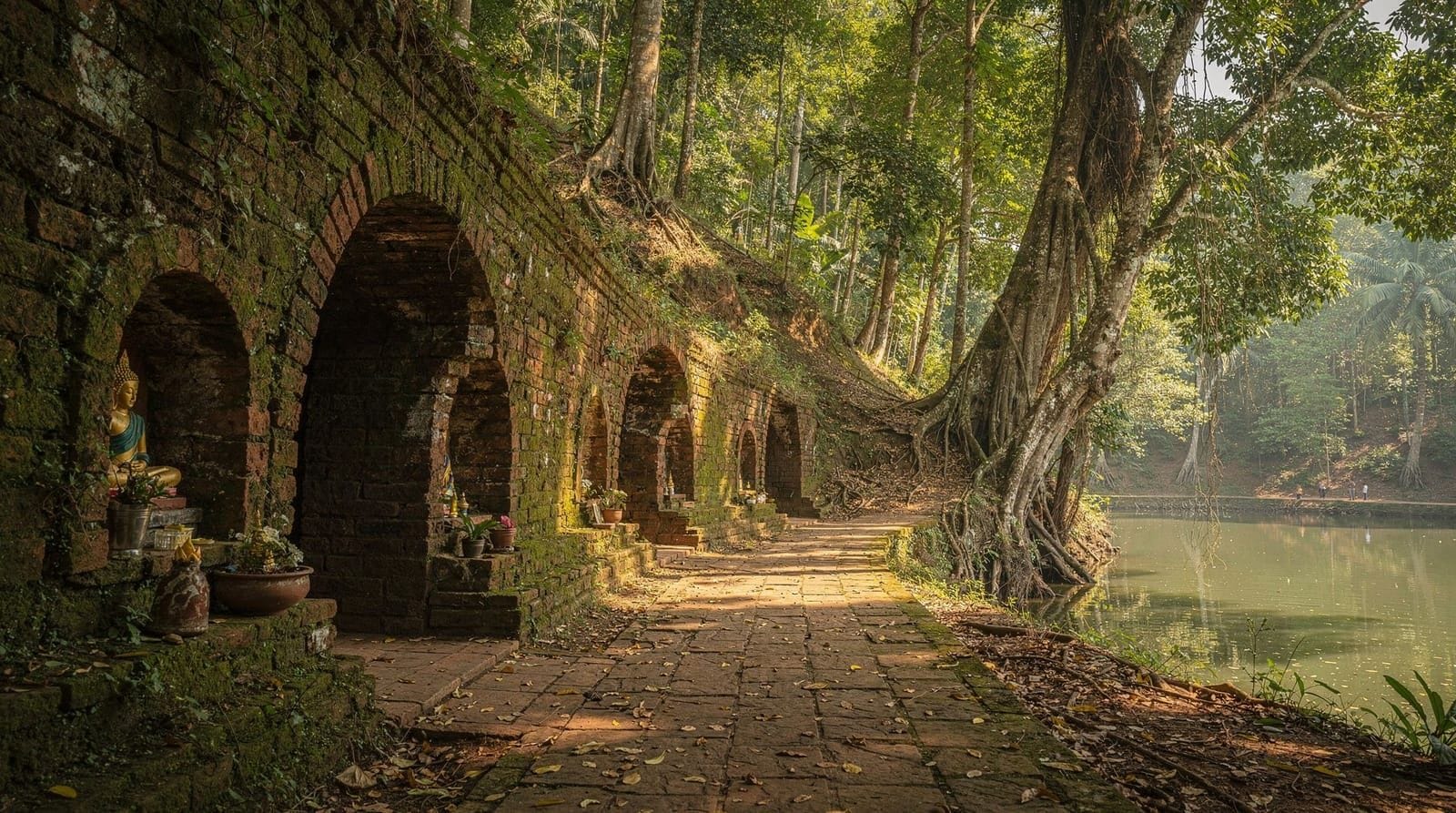
Beyond Wat Ram Poeng’s structured courses, Wat Umong, the forest tunnel temple west of the city, has a long-standing association with meditation and quiet contemplative practice, partly owing to its wooded grounds and talking-tree philosophy placards that invite reflection rather than pure sightseeing. It doesn’t run the same kind of structured multi-day course as Wat Ram Poeng, but its atmosphere makes it a popular spot for visitors to sit quietly and practise independently, or to combine a temple visit with informal reflection rather than a guided program.
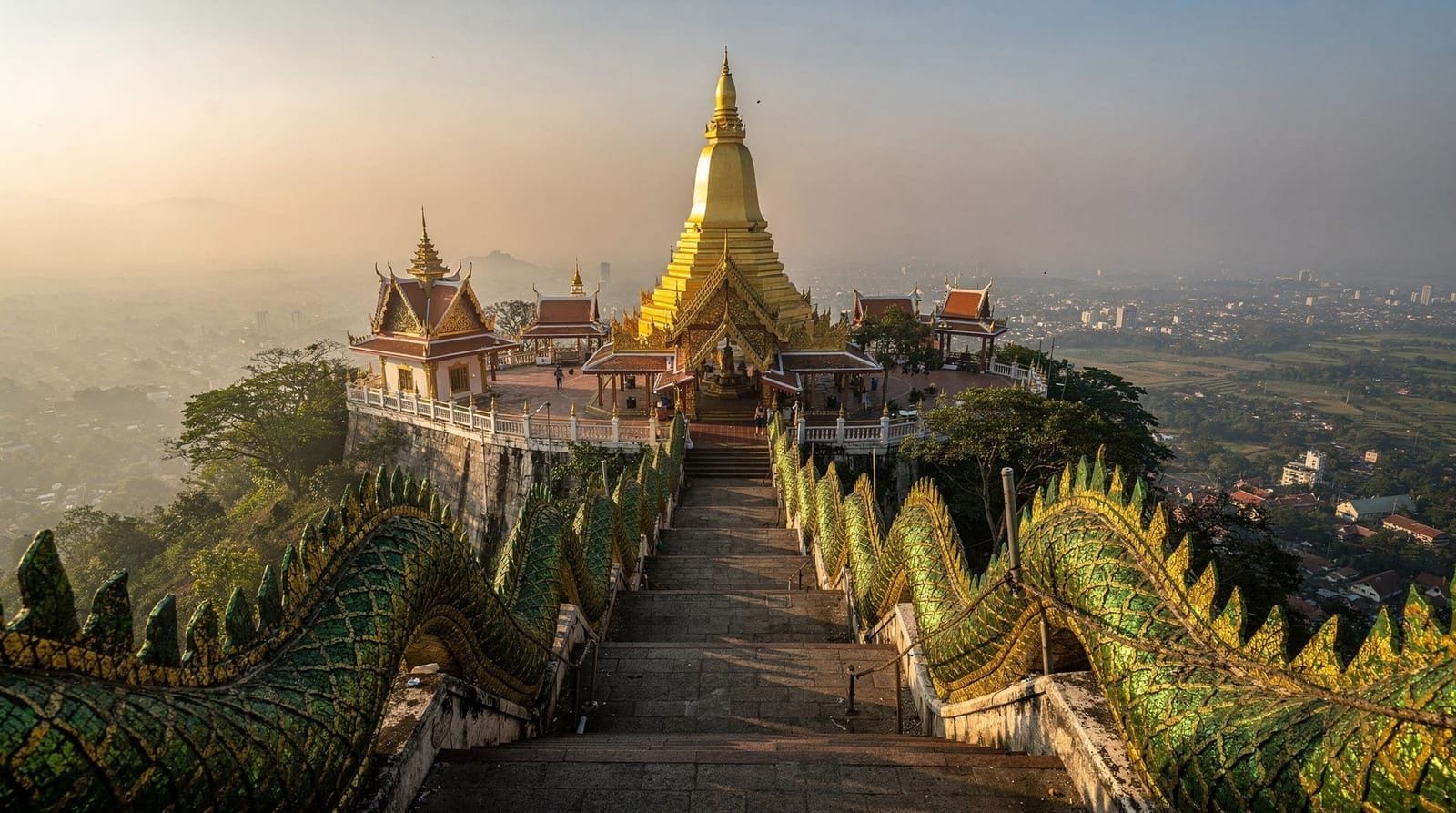
Doi Suthep’s monastery grounds, high above the city, offer a similar informal option - visitors occasionally combine a Doi Suthep visit with quiet meditation time in a quieter corner of the grounds away from the main pilgrimage crowds, particularly early in the morning before tour groups arrive in force.
What a half-day session actually involves, step by step
A typical half-day session begins with a welcome and brief orientation covering the basics of seated posture, breath awareness, and what the group will move through over the following hours. Instruction usually alternates between short seated meditation periods - perhaps 15-20 minutes at a time for beginners, since sitting still for longer stretches without any prior practice is genuinely difficult - and simple, accessible yoga sequences designed to loosen the body between sits rather than build strength or flexibility for its own sake. A guide or teacher, often bilingual or working alongside a translator, explains technique in plain language rather than assuming familiarity with Buddhist terminology, and there’s usually space for questions throughout rather than a strictly silent format. Sessions typically close with a short group reflection or discussion, giving participants a chance to compare notes on what came up during the practice.
What a multi-day retreat adds beyond the half-day format
Multi-day retreats extend this same foundation across several days, allowing for a natural progression that a single half-day session can’t replicate: early sessions focus on basic posture and breath, later sessions build toward longer sits and more sustained attention, and the cultural components (often including a visit to a local temple, a Thai cooking element, or craft activities) are spaced throughout to break up the intensity rather than being front-loaded. Accommodation is typically simple and functional rather than luxurious, in keeping with the retreat’s focus on practice over comfort, though this varies by specific program and is worth confirming before booking if creature comforts matter to you.
The extra time also allows for a genuine shift in how meditation feels day to day - many participants report that discomfort or restlessness during early sessions eases meaningfully by day two or three, once the body adjusts to sustained stillness, a progression a single half-day taste simply can’t provide regardless of how well it’s taught.
Who each format suits
The half-day and full-day guided sessions suit visitors curious about meditation as one part of a broader Chiang Mai trip, without wanting to dedicate multiple days away from other sightseeing. Multi-day retreats suit visitors specifically prioritising wellness and reflection as the primary purpose of a stretch of their trip, often timed at the start or end of a longer Southeast Asia itinerary as a deliberate decompression period. Wat Ram Poeng’s intensive courses suit a narrower group: those with either prior meditation experience or a genuine, well-considered interest in committing to a demanding practice schedule, rather than visitors looking for a wellness activity to check off a list. Being honest with yourself about which category you actually fall into before booking avoids the common mismatch of signing up for something more intensive than you’re prepared to engage with fully.
How this differs from monk chat
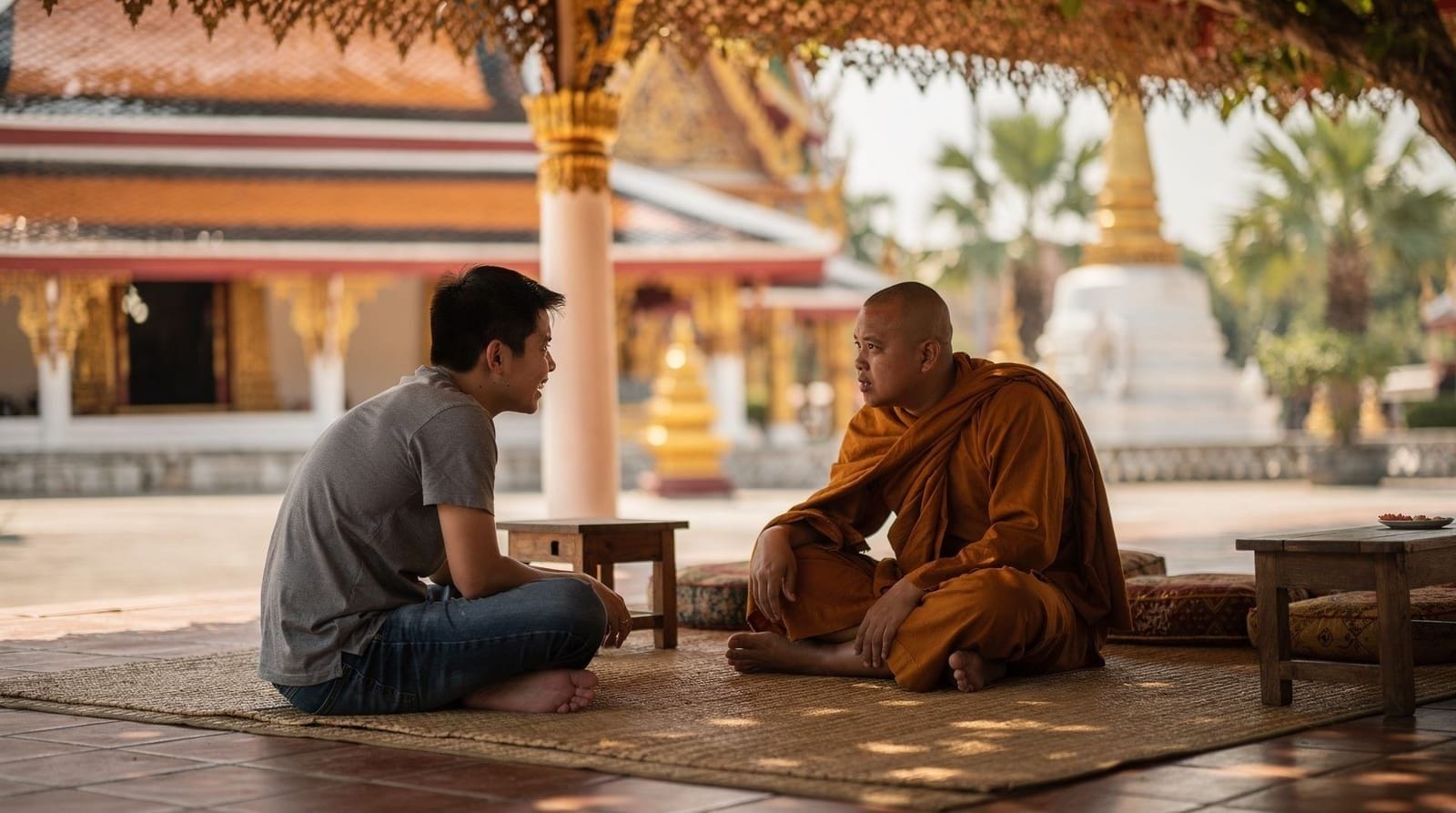
It’s worth distinguishing meditation retreats clearly from monk chat, a separate and much shorter activity involving open conversation with young monks studying English rather than structured meditation instruction. The two are sometimes confused by first-time visitors researching temple-based activities, but they serve entirely different purposes - monk chat is social and conversational, while a meditation retreat is instructional and practice-focused, typically with far less direct conversation built in.
What to wear and bring
Modest clothing covering shoulders and knees applies at any temple-affiliated meditation session, consistent with general temple etiquette across Chiang Mai. Beyond that baseline, comfortable, loose clothing that allows extended cross-legged sitting matters more here than at a typical sightseeing temple visit, since a meditation session involves genuinely long stretches of stillness rather than walking between halls. A light layer for cooler early-morning or evening sessions, a water bottle, and for multi-day retreats, whatever personal items the specific program’s packing list requests, round out practical preparation.
Language and instruction quality
Instruction quality varies meaningfully between programs, and it’s worth confirming in advance whether a specific retreat’s teacher works directly in English or through translation, since the nuance of meditation instruction - subtle corrections to posture, explanations of what a particular sensation during practice might mean - can lose something in translation if a teacher’s English is limited and no dedicated interpreter is present. Larger, well-established retreat operators generally staff sessions with bilingual teachers or trained assistants specifically because this gap matters for the quality of a beginner’s experience, while smaller or more improvised setups may not have addressed this as thoroughly. Reading recent participant feedback on communication quality specifically, rather than only overall satisfaction, is a useful filter when comparing options.
Group size and the retreat experience
Half-day and full-day sessions typically run in small groups - often under 15 participants - which keeps individual instruction meaningful and allows a teacher to notice and correct posture or technique issues on a per-person basis rather than lecturing to a large room. Multi-day retreats tend to run similarly small, partly a practical necessity given shared accommodation and meal logistics, and partly because the format’s value depends on a degree of personal attention that a much larger group would dilute. Wat Ram Poeng’s courses, being temple-run rather than commercially operated, can vary more in group size depending on the season and how many practitioners are in residence at a given time.
A note on donation-based versus fixed-price programs
It’s worth understanding this distinction clearly before committing to a specific format: commercially bookable half-day, full-day, and multi-day retreats operate on fixed, transparent pricing like any other tour product, generally including instruction, materials, and where relevant, meals or accommodation in the quoted price. Wat Ram Poeng and similarly monastic-run centres, by contrast, often operate on a donation basis in keeping with their non-commercial, religious character - there’s no fixed “price,” and participants are expected to contribute what they’re able to support the temple’s ongoing operation, a system that works because it’s rooted in the same voluntary-donation culture (dana) that underpins broader Thai Buddhist monastic life. Visitors more comfortable with clear, upfront pricing may find the commercial retreat formats a more straightforward fit, while those drawn to the more traditional, monastery-embedded experience should expect to navigate the donation system directly with the temple.
Setting realistic expectations
A half-day or full-day guided session is not going to produce a transformative spiritual experience for most visitors, and treating it as a pleasant, genuinely instructive introduction rather than expecting profound enlightenment sets a more realistic bar. Multi-day retreats and especially serious vipassana courses at centres like Wat Ram Poeng ask considerably more of participants - both in discipline and in genuine engagement with the practice - and tend to reward that investment more substantially, but they’re also a meaningfully bigger commitment than a half-day taster and shouldn’t be booked on a whim without some honest self-assessment of readiness.
Combining meditation with the rest of a wellness-focused stay
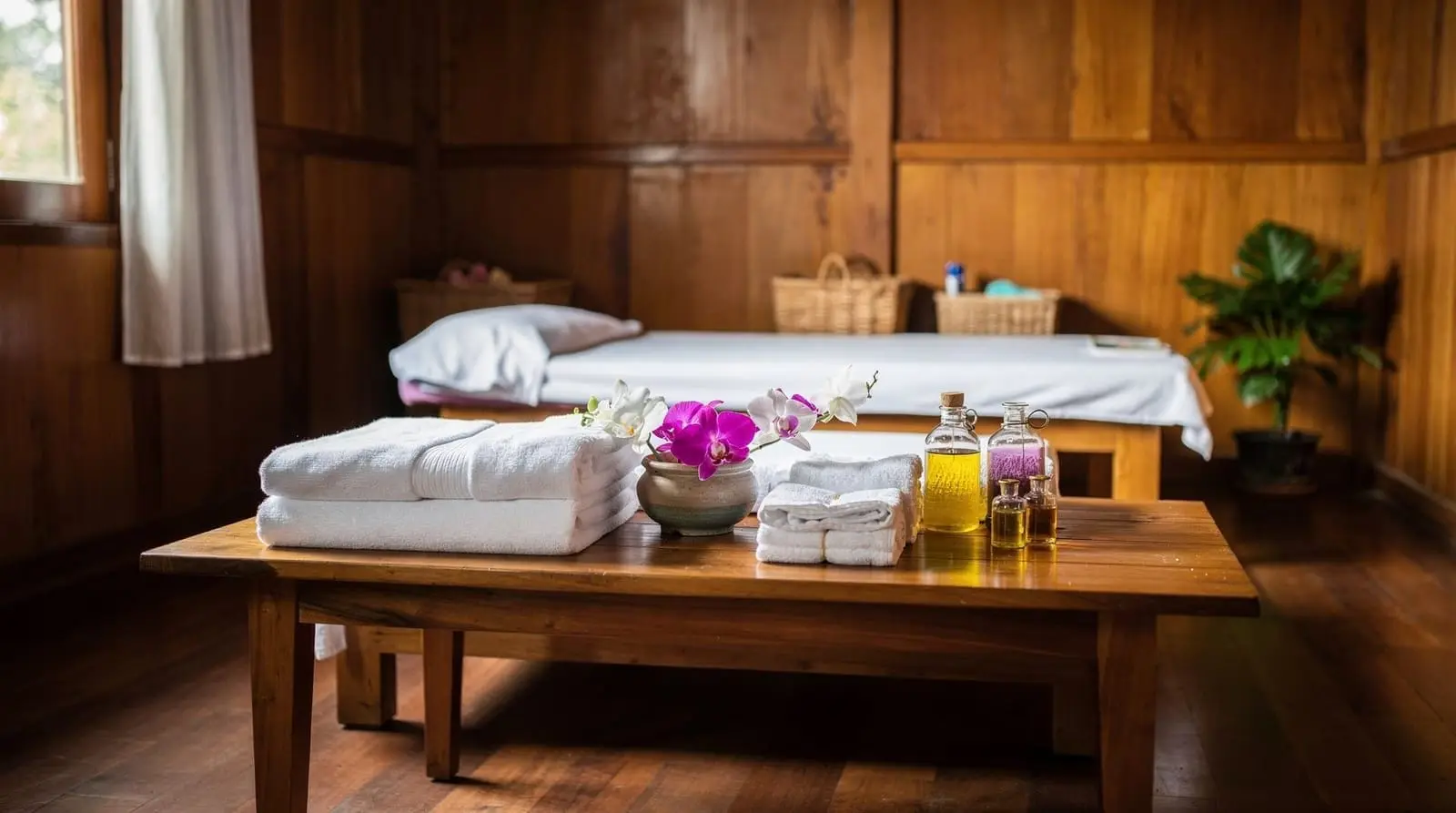
Meditation retreats pair naturally with other wellness activities covered elsewhere on this site - a Thai massage session the evening after an intensive meditation day, or a herbal steam sauna visit to unwind physically after a day of sitting practice, both extend a wellness-focused stretch of a Chiang Mai trip beyond the meditation component alone. For the full spread of wellness options in the city, the wellness and spa hub rounds up massage, spa, and meditation formats side by side.
Timing and seasonal considerations
The cool season (November-February) is the most comfortable time for outdoor or semi-outdoor meditation sessions, given more moderate temperatures for extended sitting. The hot season (March-May) can make midday outdoor sessions genuinely uncomfortable, and most programs shift timing to early morning or late afternoon accordingly. The rainy season (June-October) doesn’t typically disrupt indoor or covered sessions, though outdoor components of nature-based retreats may adjust around expected downpours.
Common first-timer mistakes to avoid
A handful of avoidable missteps come up repeatedly among first-time meditation retreat participants in Chiang Mai: booking a serious, disciplined multi-day course without any honest assessment of whether you’re ready for the structure and silence involved, skipping meals or hydration during a full-day session in the mistaken belief that discomfort is part of the practice, wearing tight or restrictive clothing that makes extended cross-legged sitting genuinely painful rather than simply challenging, and treating a guided session primarily as a photo opportunity rather than genuine practice, which both misses the point and can be mildly disruptive to other participants. None of these are dealbreakers if caught early, but knowing the list in advance smooths out a first retreat experience considerably.
Booking practicalities
Guided half-day, full-day, and multi-day retreat formats can generally be booked a few days ahead through a platform without difficulty, though popular multi-day retreats during the cool season benefit from booking further in advance given limited group sizes. Serious temple-based courses like those at Wat Ram Poeng operate on their own separate application and scheduling process entirely independent of standard tour booking, and visitors interested in that route should allow considerably more lead time and direct correspondence with the temple.
Choosing between a light introduction and a serious commitment
If this is your first exposure to meditation in any form, starting with a half-day guided session rather than jumping straight to a multi-day retreat or a Wat Ram Poeng course is generally the wiser sequence - it gives you a genuine, low-stakes sense of whether sustained seated practice suits you before committing several days or more to a considerably more demanding format. Visitors who find the half-day session genuinely engaging, rather than merely tolerable, are the ones who tend to get the most out of stepping up to a multi-day retreat or a more intensive temple course on a subsequent trip, once they have a clearer, first-hand sense of what the deeper commitment actually involves. That progression - light introduction first, deeper commitment later once genuine interest is confirmed - tends to produce a far more satisfying outcome than reversing the order out of enthusiasm alone.
Frequently asked questions about Meditation retreats in Chiang Mai: temple stays, courses, and what to expect
Do I need meditation experience before joining a retreat in Chiang Mai?
How long do Chiang Mai meditation retreats typically run?
What should I wear to a meditation retreat or temple meditation session?
Is Wat Ram Poeng only for serious, long-term practitioners?
Can I combine a meditation retreat with yoga in Chiang Mai?
How much do meditation retreats in Chiang Mai cost?
Top experiences
Bookable activities with verified prices and instant confirmation on GetYourGuide.